Symbola

Tomb of Symbola: a monumental vaulted tomb

The tomb was discovered in 1976 near the village of Symbola, in the foothills of the Eastern Rhodope Mountains, 10 km north of Komotini, in an area where Thracian tribes were active. Although it has been looted, the few movable finds brought to light by the excavation date it to the period of Macedonian rule in the region, in the late 4th or early 3rd century BC.

No ancient settlement that might be associated with the tomb has been identified in the wider environs of Symbola. However, 1 km to the north there is a cemetery of the Hellenistic period with important finds, such as an iron Thracian romphaia (a bladed weapon). The tomb, located north of both the Roman Via Egnatia and the modern motorway, is located in a key position and connected to the ancient road network which linked the Thracian hinterland with the coast.

The monument

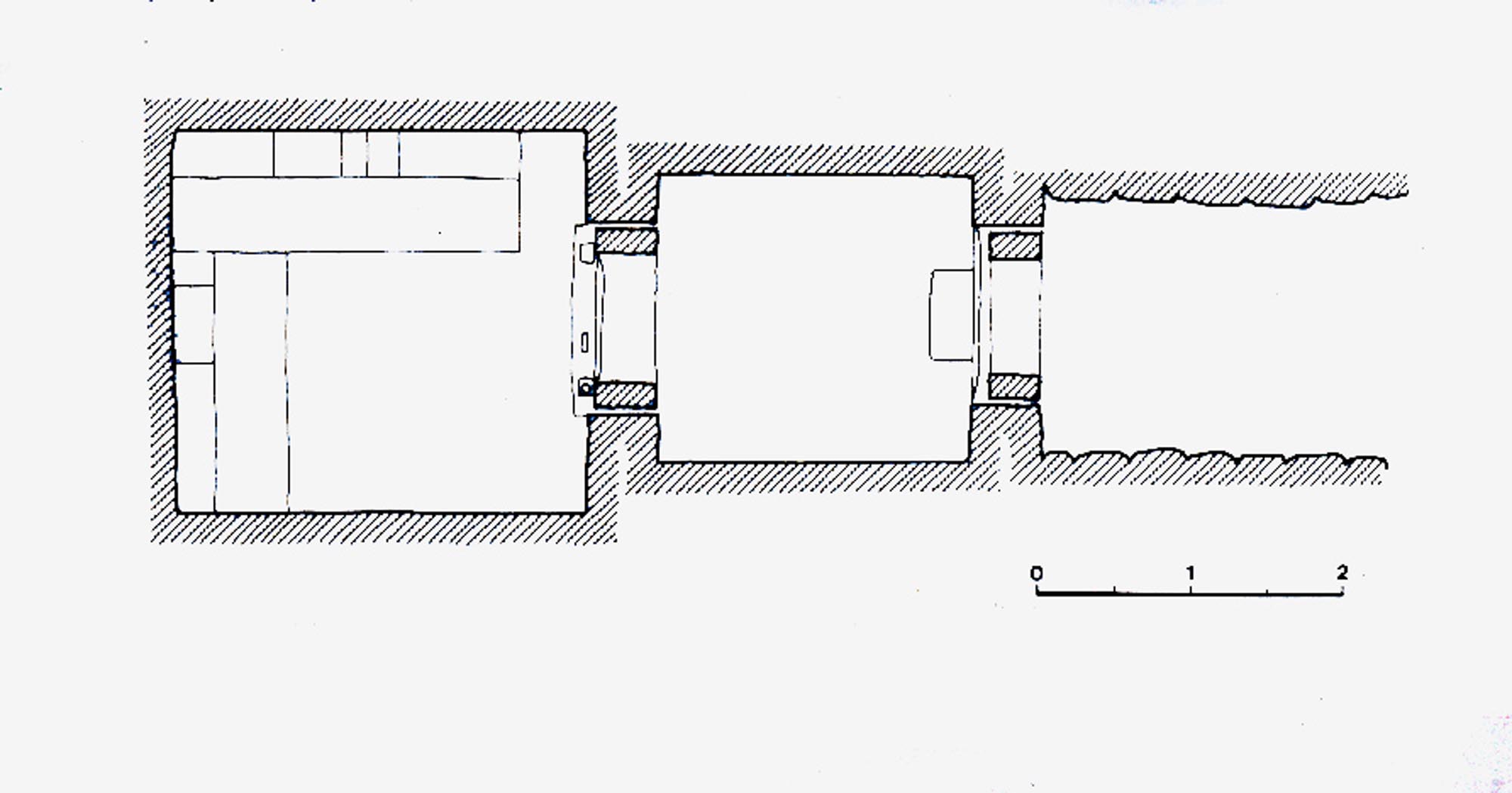
The Tomb of Symbola is rectangular in plan, oriented east-west and with the entrance on the west side. Following the typical layout of Macedonian tombs, it is a two-chamber tomb, consisting of two large, square chambers, the antechamber and the main burial chamber, both accessed by a narrow passageway (dromos) 10.65 m long. The dromos is built of river boulders and only the east part is covered, with a pitched roof of large schist slabs. Three small transverse walls across the dromos blocked access to the tomb.

The antechamber and the chamber of the tomb, measuring 2 x 1.85 x 2.22 m and 2.68 x 2.56 x 2.48 m respectively, are roofed with a corbelled vault with curved walls and a horizontal cover. Both the chamber and the antechamber are built in pseudo-isodomic masonry of large limestone ashlars. The floor of the antechamber consists of small pebbles coated in white plaster, while the floor of the chamber is made of limestone slabs.

Αρχείο ΕΦΑ Ροδόπης/ archive of the Ephorate of Antiquities of Rhodope
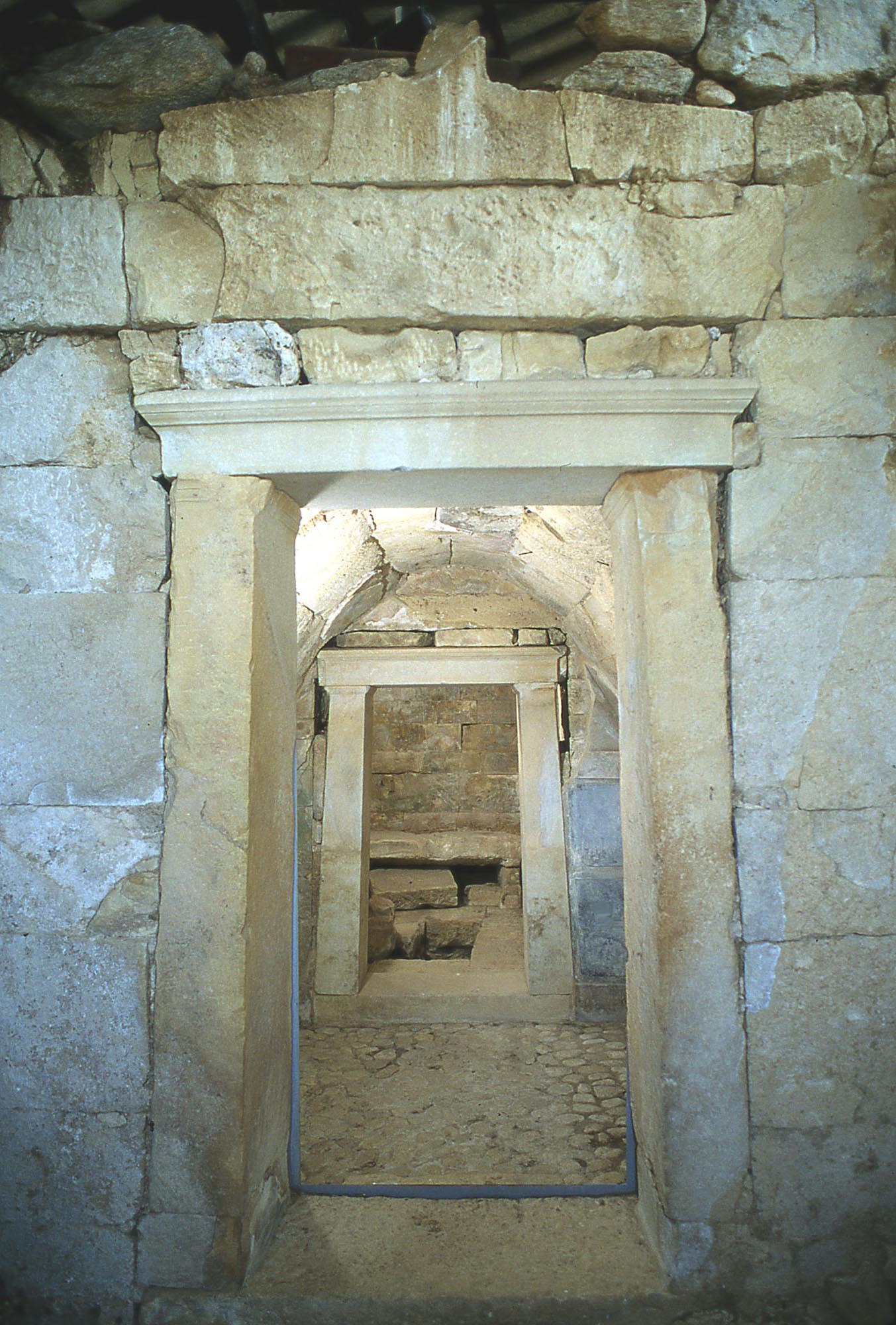
Πρόσοψη του προθαλάμου, φωτ. ΕΦΑ Ροδόπης / Facade of the antechamber, photo: Ephorate of Antiquities of Rhodope

The temple-like façade of the tomb, which would have been coated in coloured plaster, has a simple architectural form. The door of the antechamber is framed by limestone pilasters, while the door of the chamber features marble ones. A marble architrave with a low pediment crowns the pilasters of both chambers. The two-leaf marble doors of the funerary monument were found broken, their fragments scattered in the antechamber and the dromos.

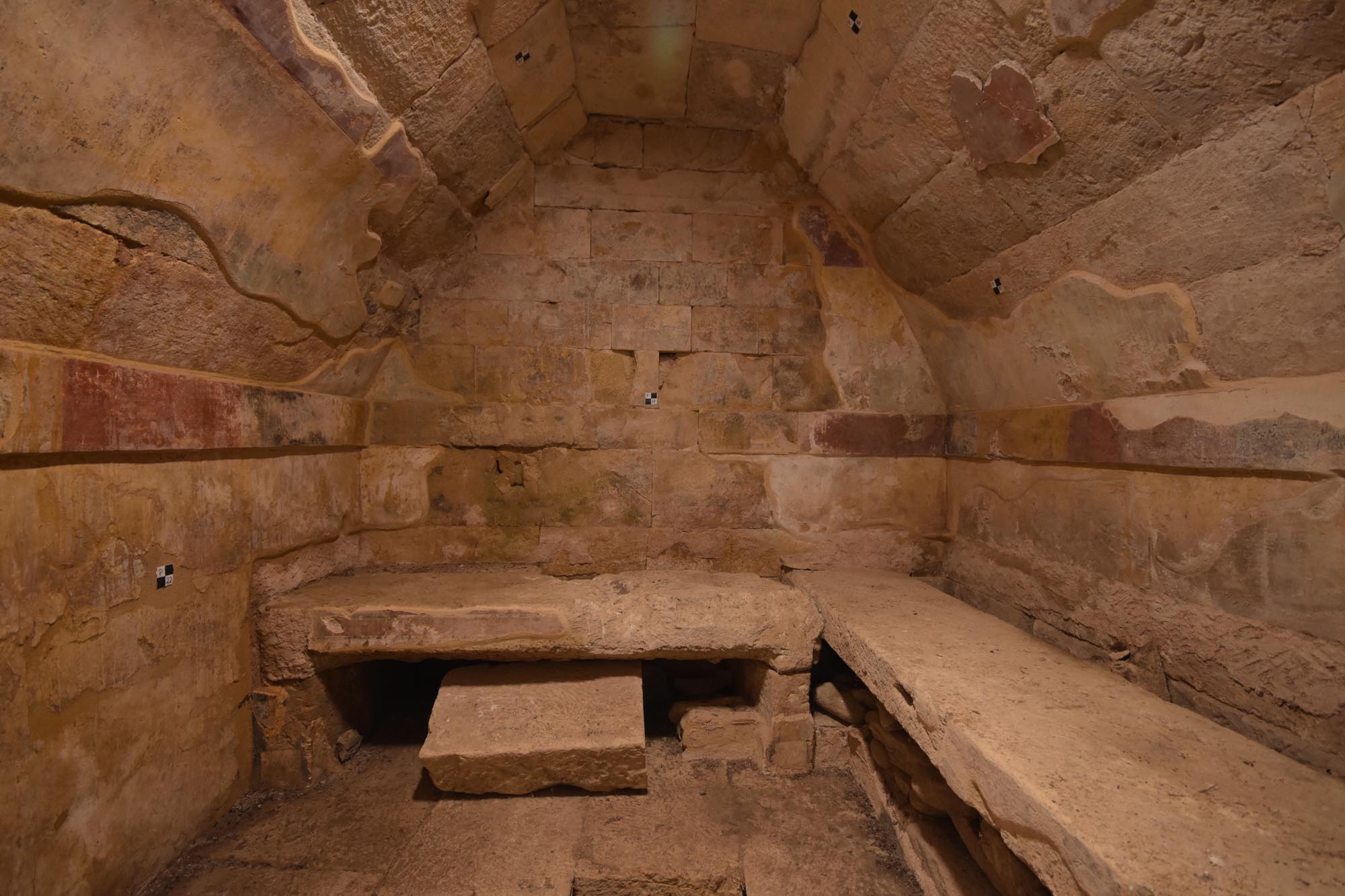
Inside the tomb, the walls of the antechamber and the main chamber feature particularly elaborate painted decoration imitating marble revetment, divided into horizontal zones. The roof of the main chamber is also coated in coloured plaster imitating marble revetment. All four sides of the chamber were surrounded by a band decorated with cymatia (moulding). The clay female figures and a clay bucranium (bull’s head), which were found inside the tomb would have formed part of its decoration.

The chamber contains two stone-built funerary beds arranged in an L shape, which were also coated in coloured plaster. As the tomb had been looted, the only grave goods found in the excavation are a small pseudo-amphora (clay vase), a bronze Silenus head and a sword hilt. The anthropological examination of the bones found scattered in the grave showed that they belonged to three men of around 35 years of age.

The tomb was covered by an earth tumulus that has been almost completely flattened by the continuous cultivation of the field. Burials of the Byzantine period (10th-11th c.) have been uncovered on the surface of the tumulus and around it.

Numerous large built tombs covered with a tumulus have been found within the borders of ancient Thrace, especially in the large part of the region that now belongs to Bulgaria. They belonged to prominent members of the Thracian hierarchy and were usually erected in prominent locations, next to ancient roads, in order to be visible to passers-by.
Άποψη του κυρίως θαλάμου του τάφου, φωτ. ΕΦΑ Ροδόπης / View of the main burial chamber, photo: Ephorate of Antiquities of Rhodope

The vaulted tomb of Symbola is Thracian, although with elements also found in Macedonian tombs. These tombs, among the most imposing of ancient funerary architecture, formed a special category of monumental funerary buildings which were primarily widespread in Macedonia and the wider region between the late 4th and the mid-2nd century BC.

Other stops in the Regional Unit of Rodopi

error: