Polyanthos

Polyanthos, the village of Rhodope with the strong castle

In the southern foothills of the Rhodope Mountains, in the valley of the River Kompsatos, 16 km from the city of Komotini, is the village of Polyanthos, with a mixed Christian and Muslim population. Around the village lie a number of antiquities, indicating the importance of the area during Byzantine and Ottoman times.

Monuments

Castle

The castle is about 1.5 km northwest of the village, standing on a naturally fortified conical hill overlooking the east bank of the River Kompsatos. This is a key strategic location, as this is the point where the river emerges from the Rhodope range and flows into the plain of Komotini. The castle overlooks a large swathe of Thrace, from Peritheorion in the west to Mosynopolis in the east. It also controlled the course of the Via Egnatia, which at this point followed the route of the modern Xanthi–Iasmos–Komotini provincial road, south of Mount Papikion.

No investigations have been carried out inside the castle so far, nor are there any written sources or inscriptions that would allow its secure identification and dating. However, it seems probable that it is one of the castles in the wider area of Komotini which John Kantakouzenos mentions as having been captured by his son Matthew during the Byzantine Civil War of 1341-1347.

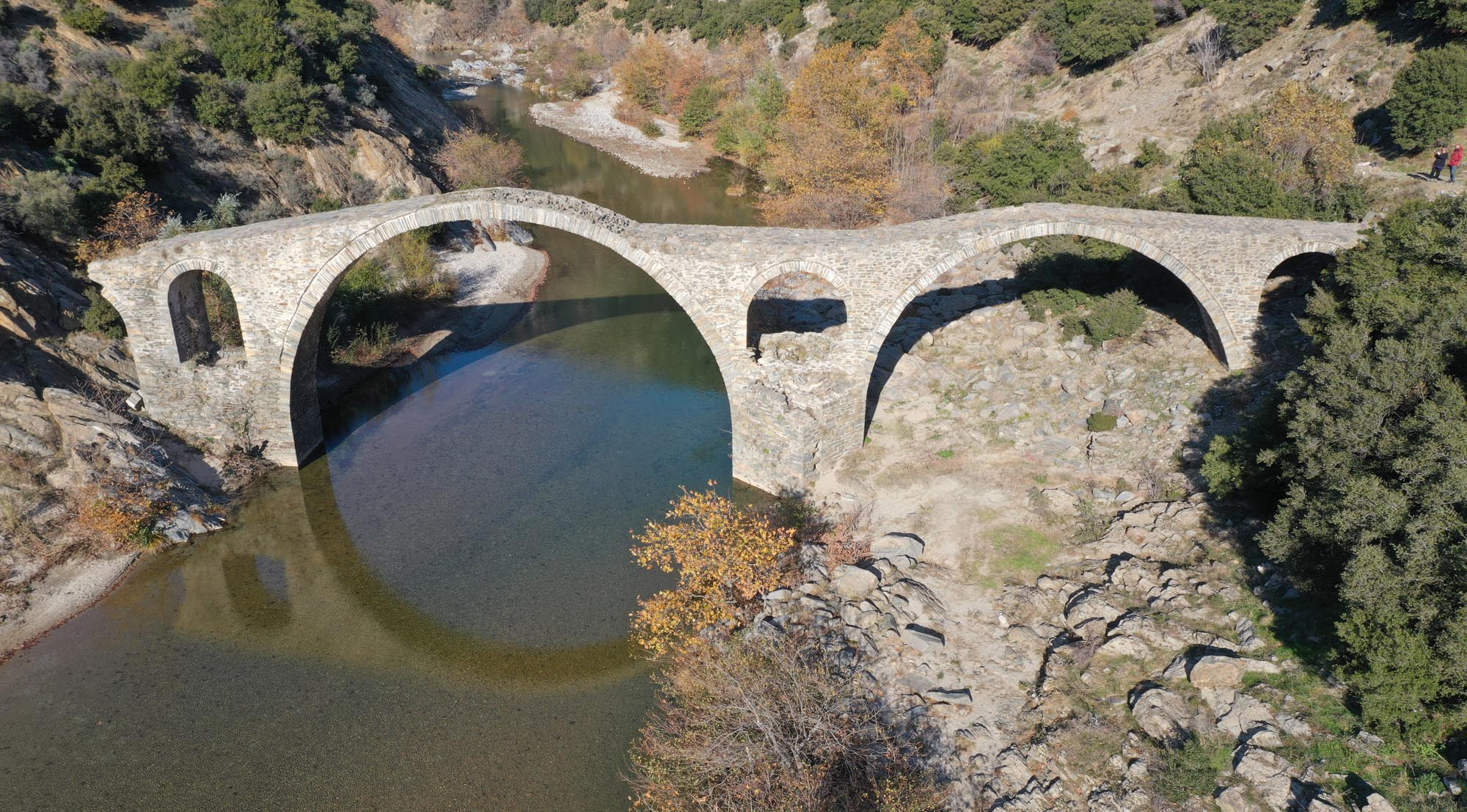
Η γέφυρα Πολύανθου, φωτ. ΕΦΑ Ροδόπης / Polyanthos bridge, photo: Ephorate of Antiquities of Rhodope

The bridge is built below the castle, about 500 m north of the Xanthi–Iasmos–Komotini provincial road, and spans the River Kompsatos, serving the vertical highway that connected the Thracian plain with the mountain villages of Rhodope via the river valley. It is 63 m long and consists of three large arches. The middle arch, which is the largest, is slightly higher than the others. The two massive mid-piers are pierced by arched flood openings to channel the rushing waters of the river when it floods.

The bridge has two construction phases. The east part belongs to the initial phase, while the central and west part was repaired in the second phase. It had collapsed, probably due to the erosion of the bedrock on which the west arch was founded. According to a written testimony, an Ottoman expeditionary force crossed the bridge in 1715. In the following year (1716), an order was issued to build a new bridge in the plain, which was constructed further south and became the main crossing of the River Kompsatos. The remains of this bridge are preserved today near the railway bridge. The semi-mountainous arch bridge of Polyanthos continued in use but only as a secondary crossing.

The date 1715 is therefore considered to be the terminus ante quem for the two building phases of the bridge, which was probably constructed in the 15th or 16th century and repaired in the 18th century.

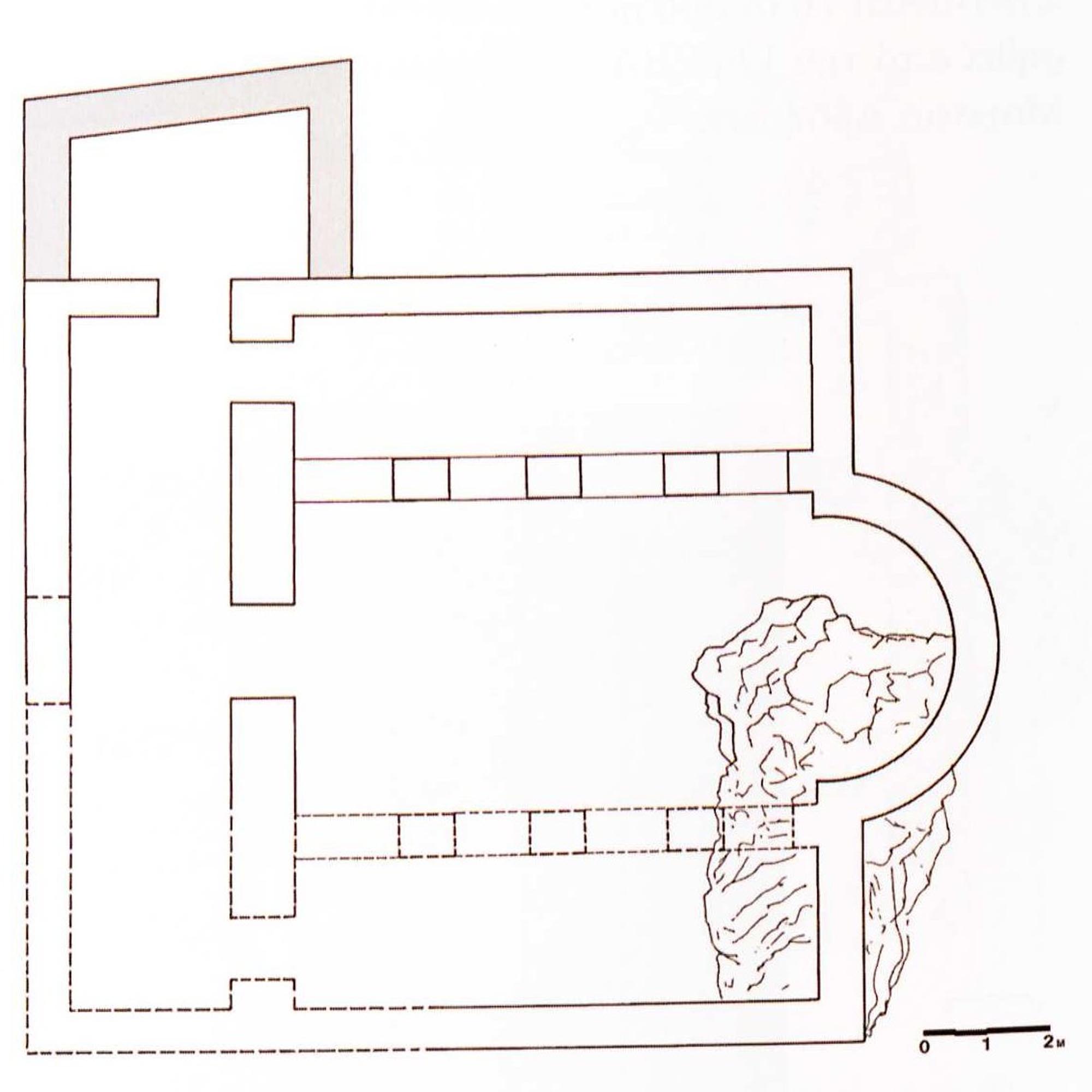
Between the bridge and the village of Polyanthos, 1 km west of the village and 500 m east of the bridge, alongside the Xanthi–Iasmos–Komotini provincial road, a three-aisled timber-roofed basilica has been excavated, dated between the 6th and 10th centuries. A built cist tomb of the 7th-8th century was uncovered in the central nave. It was plastered internally and bore painted decoration of foliate crosses. The crosses were flanked by illegible words, perhaps the name of the deceased, who would probably have been a representative of the local Church, as the tomb lay in an important place inside the church.

Other antiquities have been identified in the wider area, such as a Hellenistic cemetery near the three-aisled basilica, an ancient quarry at Kedik Kaya and a Hellenistic fortification on the hilltop of the same site.

Museum

Museum of Agricultural and Cultural Heritage, Iasmos

Located near the stone arch bridge of the Kompsatos River and along the modern Egnatia Motorway, Iasmos is a small town where some traditional houses are still preserved. One of these houses the museum, which was established on the initiative of the Iasmos Cultural Association in collaboration with the Municipality of Iasmos. The museum recreates the rooms of a traditional Iasmos home, offering visitors a glimpse into the local way of life. Its exhibits include traditional costumes, heirlooms, books, icons and various cultural artifacts.

Other stops in the Regional Unit of Rodopi