Maroneia
Maroneia, a powerful city of Thrace through the ages
Η αρχαία Μαρώνεια, πόλις Ἑλληνίς κατά τον ιστορικό Ηρόδοτο, κτισμένη στις νοτιοδυτικές πλαγιές του όρους Ισμάρου, σε μια ημιπεδινή έκταση περιτριγυρισμένη από πλούσιες καλλιέργειες και τους διάσημους αμπελώνες της περιοχής, βρίσκεται
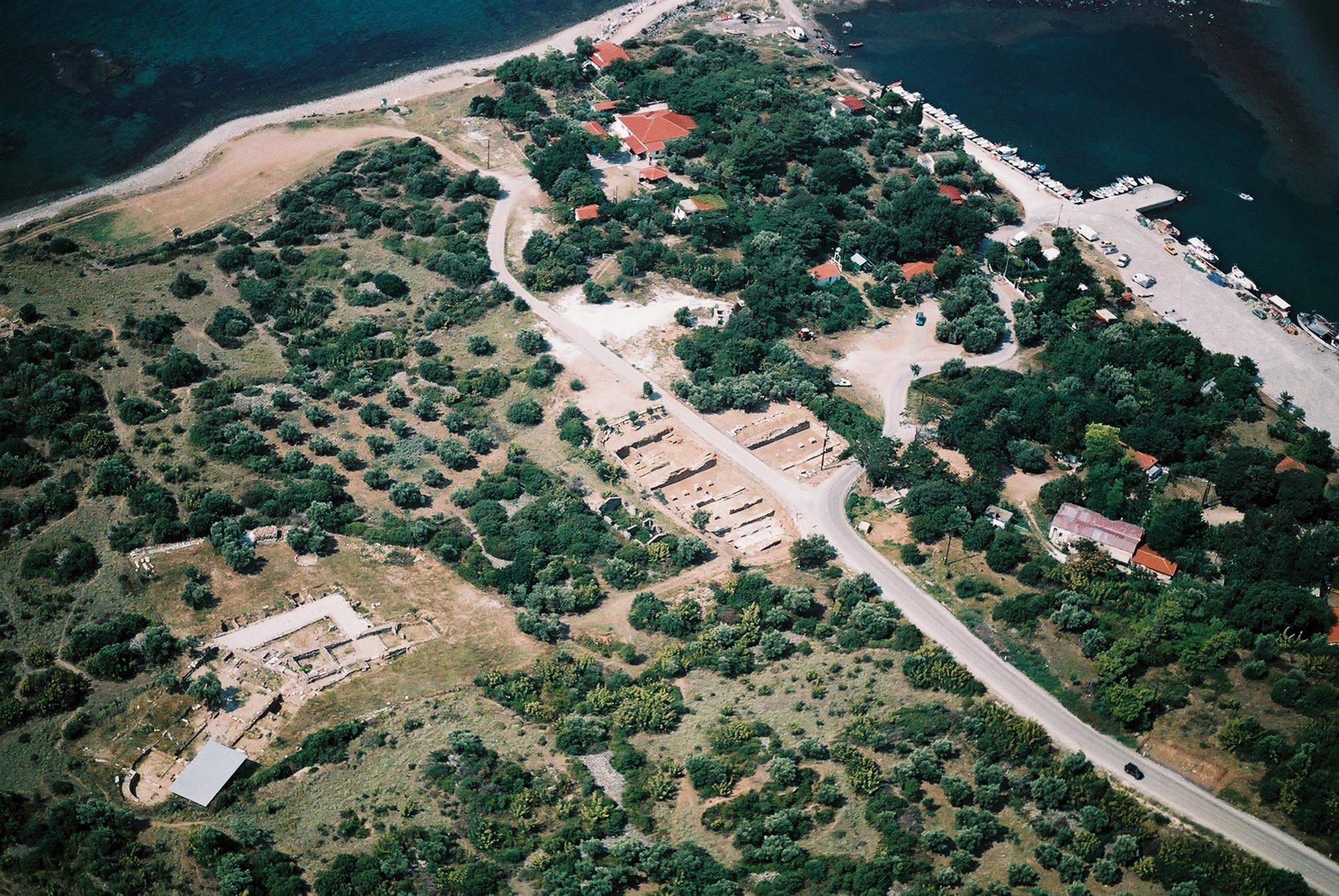
Ancient Maroneia, a “Greek city” according to the historian Herodotus, lies on the southwest slopes of Mount Ismaros, in a semi-lowland area surrounded by rich crops and the famous vineyards of the region, about 4 km southeast of the modern village of the same name and 35 km southeast of Komotini. The small fishing village and harbour of Agios Charalambos now stands on the site of the ancient city’s harbour, the remains of which are visible underwater.
Maroneia was one of the most important and populous ancient cities of Thrace, with a population that probably exceeded 10,000 inhabitants, at least from the middle of the 4th century BC onwards. During the Classical period (5th-4th c. BC), it flourished and became a dominant political and military power in the region, with a powerful army and fleet, which played a regulatory role in Thrace. The wide circulation of its coins, mainly from Archaic to Hellenistic times (late 6th-late 4th c. BC), attests to its flourishing trade and shipping.
During the Early Christian and Byzantine eras, life in Maroneia continued uninterrupted. However, the huge ancient city, retaining its name, was confined to its coastal southwestern edge. The dwindling of ancient Maroneia, like that of the other coastal cities of Thrace, was accelerated by the construction of the Via Egnatia in the late 2nd century BC. This, as in the case of Zone and Abdera, shifted the centre of gravity from the coastal to the inland cities of Thrace. More specifically, the shrinking of the territory of Maroneia was accelerated by the founding, at the beginning of the 2nd century AD, of Trajanopolis on the Via Egnatia. The role that Maroneia maintained in the region in Early Christian and Byzantine times, given its distance from the Via Egnatia, was based exclusively on its port and maritime traffic. Indeed, in the 9th century, St Gregory of Decapolis mentions the port of Maroneia as an intermediate stop on his journey from Thessaloniki to Constantinople. During the Middle Byzantine period, thanks to its port, Maroneia became one of the most important castle-cities in Thrace.
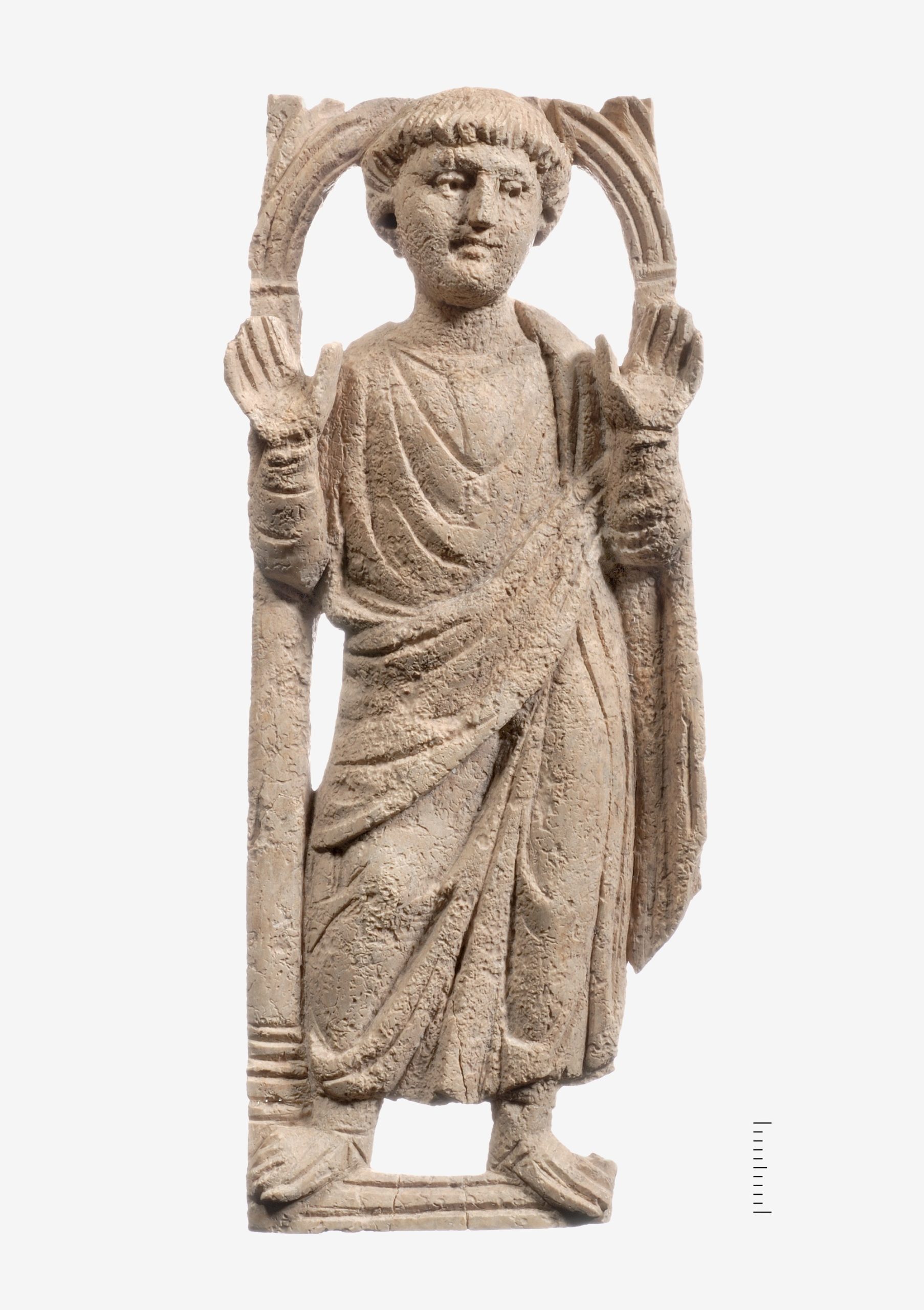
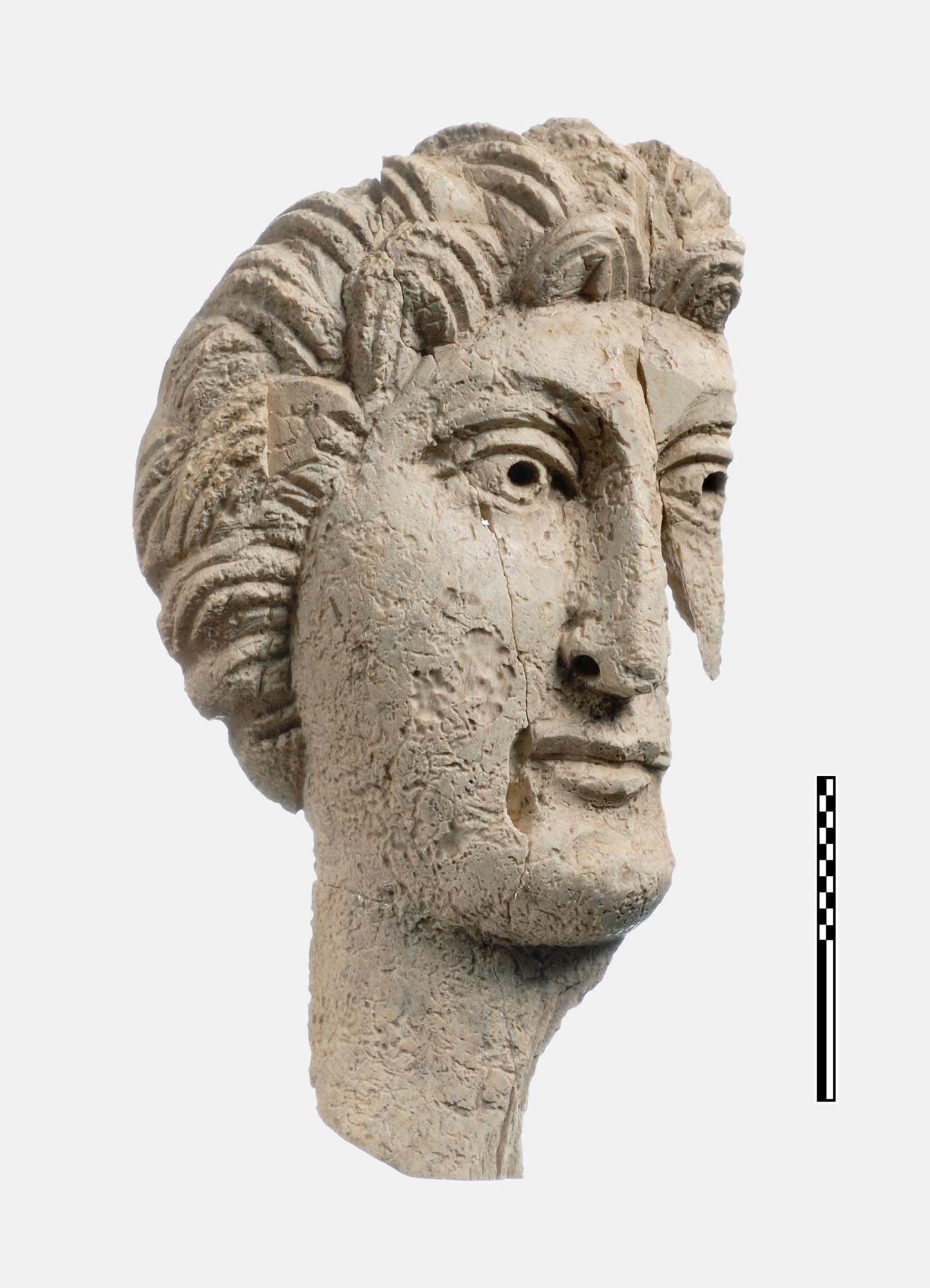
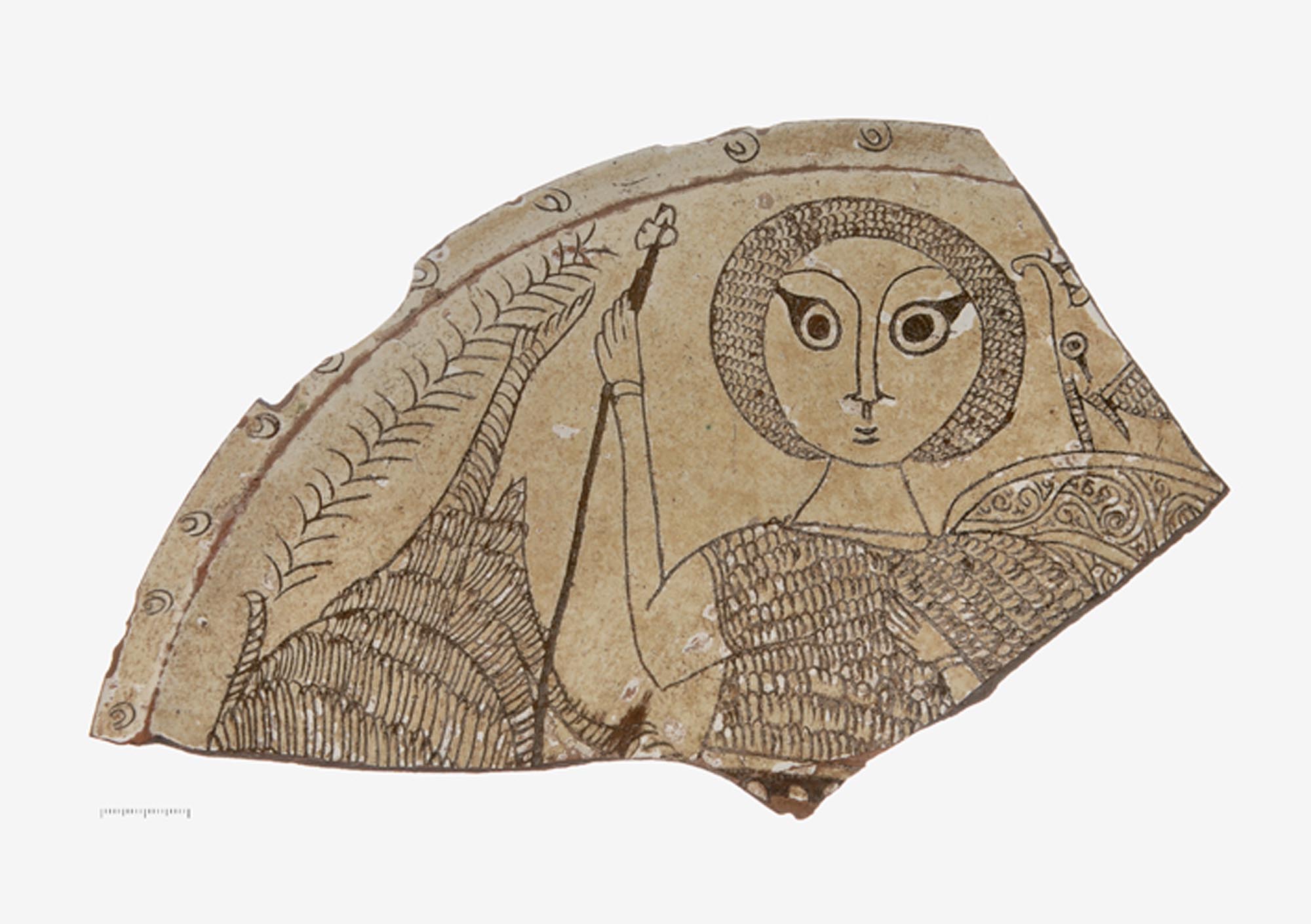
The rich finds from the excavations of ancient and Byzantine Maroneia can be admired today in the Archaeological Museum of Komotini and the Archaeological Collection of Maroneia.
History
Maroneia was founded before the middle of the 7th century BC, by colonists from Chios who settled peacefully on the coast of the land of the Cicones, a Thracian tribe that occupied a large part of ancient Thrace, from Lake Vistonis to the Zonaia Mountains. The eponymous hero of Maroneia is Maron, a priest of Apollo in the city of Ismaros. He is known to us from Homer’s narrative, according to which he offered Odysseus valuable gifts, including the famous Ismarian (Maroneian) wine, which Odysseus used to intoxicate the Cyclops Polyphemus.
Around 513 BC, after the subjugation of the Thracian cities by Megabazus, a general of the Persian King Darius, Maroneia was occupied by the Persians. The date of its liberation is not clear, nor do we know whether the city freed itself whether it was liberated thanks to the Athenian military operations in Thrace. It remained firmly in the Athenian sphere of influence as a member of the Delian or First Athenian League, founded in 478/7 BC. In 378/7 BC it became a member of the Second Athenian League, in which it remained until 340 BC. The high tax paid by Maroneia to the League on some occasions is indicative of the leading role it played in the intense commercial and economic competition among the Greek cities of Thrace, especially the large neighbouring cities of Thasos and Abdera. Maroneia’s privileged position in the trade of the region also was largely due to its close relations with the local Thracian tribe of the Odrysians.
In the middle of the 4th century BC, Maroneia was conquered by Philip II, who, after finally overthrowing the Odrysian state, subjugated the entire region of Thrace and put an end to the Athenian presence in the North Aegean. Maroneia joined the Hellenic League created by Philip II in 338/7 BC. In 246 BC, it came under the dominion of the Ptolemies until 200 BC, when it passed into the possession of Philip V of Macedon. In the 3rd century BC, Maroneia’s power increased as it expanded its territory east of Mount Ismaros, at the expense of the cities of Samothracian Peraia. According to the Roman historian Livy (59 BC-17 AD), the important city of Sale, a colony of Samothrace, which is identified with Makri, had come under the rule of Maroneia.
After a brief interval under the Seleucids (195/4-189 BC), Maroneia fell into Roman hands; however, it retained, along with Abdera and Ainos, the privileged status of a free city. Its favourable treatment by the Romans was sealed by the conclusion of an alliance (foedus aequum) in 167 BC, the text of which has been preserved on a stone stele embedded in the Middle Byzantine wall. At some point, probably in 88 BC, the city suffered considerable destruction by the troops of King Mithidrates VI Eupator of Pontus and Armenia Minor. Full Roman control of southeastern Thrace was effectively achieved under the Emperor Claudius (41-54 AD), with the establishment of the Province of Thrace, which included all the regions east of the River Nestos. Maroneia, however, seems to have retained its privileged status as a free city. At the end of 131 AD, the city was visited by the Emperor Hadrian (117-138 AD), who offered its inhabitants various benefits.
Christianity spread to Maroneia at an early date, with the city having a thriving Christian community as early as the 3rd century AD, while in the following century it became an episcopal see. In the Synecdemus of Hierocles (written shortly before 535 AD), Maroneia is mentioned as one of the seven cities of the Province of Rhodope. During the reign of the Macedonian Dynasty (867-1057 AD), an era of stability and recovery for the whole of the Byzantine Empire, Maroneia acquired all the characteristics of a Byzantine castle-city. Under Leo VI the Wise (886-912), it became an autocephalous archiepiscopal see, a status it retained in the Late Byzantine period. During the Middle and Late Byzantine periods (12th-14th c.), Maroneia was a flourishing castle-city in contact with Constantinople and other cities of the Empire. The city was also home to senior secular and ecclesiastical officials.
According to the Byzantine historian Nicephorus Gregoras, Maroneia was one of the towns destroyed by the Catalans in 1307. This was the period when the region of Thrace was weakened by Byzantine civil strife and the involvement of Catalans, Serbs, Bulgars and Turks, who often engaged in marauding raids. Until the definitive conquest of the region by the Ottomans in 1373 at the earliest, Maroneia had to deal with attacks by Muslim pirates as well as Spaniards, Catalans, Genoese and Slavs. The situation worsened yet further when, in 1332, the fleet of Umur Pasha of Aydın, based on neighbouring Samothrace, launched attacks and plundered the North Aegean coast. Despite the unfavourable situation, however, in 1365 the episcopal see of Maroneia was elevated to a metropolitan see.
In the first half of the 14th century, the settlement was probably moved to the safer, more mountainous location of the present-day village of Maroneia. The new settlement also allowed the inhabitants to flee to the nearby caves of Ismaros in case of danger. An inscription built into the Kato Vryssi fountain of the new settlement of Maroneia bears the date 1435/6, but it is not certain that the inscription has not been brought here from elsewhere and thus, it does not provide evidence for the dating of the settlement’s foundation. The earliest archaeological evidence for the existence of the settlement is much later, in a funerary inscription of 1753 housed in the church of St John the Baptist. After the foundation of the new settlement, the port of Maroneia remained in use, as it is noted in 15th-century portolans with various variations of its name.
The population of the new settlement of Maroneia remained Christian, at least until the 16th century, since an Ottoman document of 1527 states that it had 272 Christian and only 3 Muslim taxable households. The Ottoman traveller Evliya Çelebi, who visited Thrace around 1670, mentions that the “infidels”, i.e., the christian inhabitants of Maroneia enjoyed special tax privileges and exemption from chores due to guarding the Sultan’s Park, the huge forest that covered an entire mountain range of the Balkans. Probably in the mid-18th century, the seat of the metropolitan see of Maroneia was transferred to Komotini. Maroneia flourished from the second half of the 18th century onwards. The inhabitants distinguished themselves as traders – mainly tobacco merchants, money-changers and craftsmen operating in cities such as Constantinople/Istanbul, Smyrna and Odesa.
Monuments - Antiquities
Ancient Maroneia
During the Hellenistic and Roman periods, the city of Maroneia extended over a vast area of 424 hectares. However, the site of the Archaic and Classical city has not yet been identified.
The impressive fortified enclosure of the 4th century BC, in the shape of a large parallelogram, was about 10,400 m long and surrounded the entire city, including the port and the acropolis on the hill of Agios Athanasios. The city walls, built in isodomic masonry (with courses of equal height), had round and quadrilateral towers at intervals.
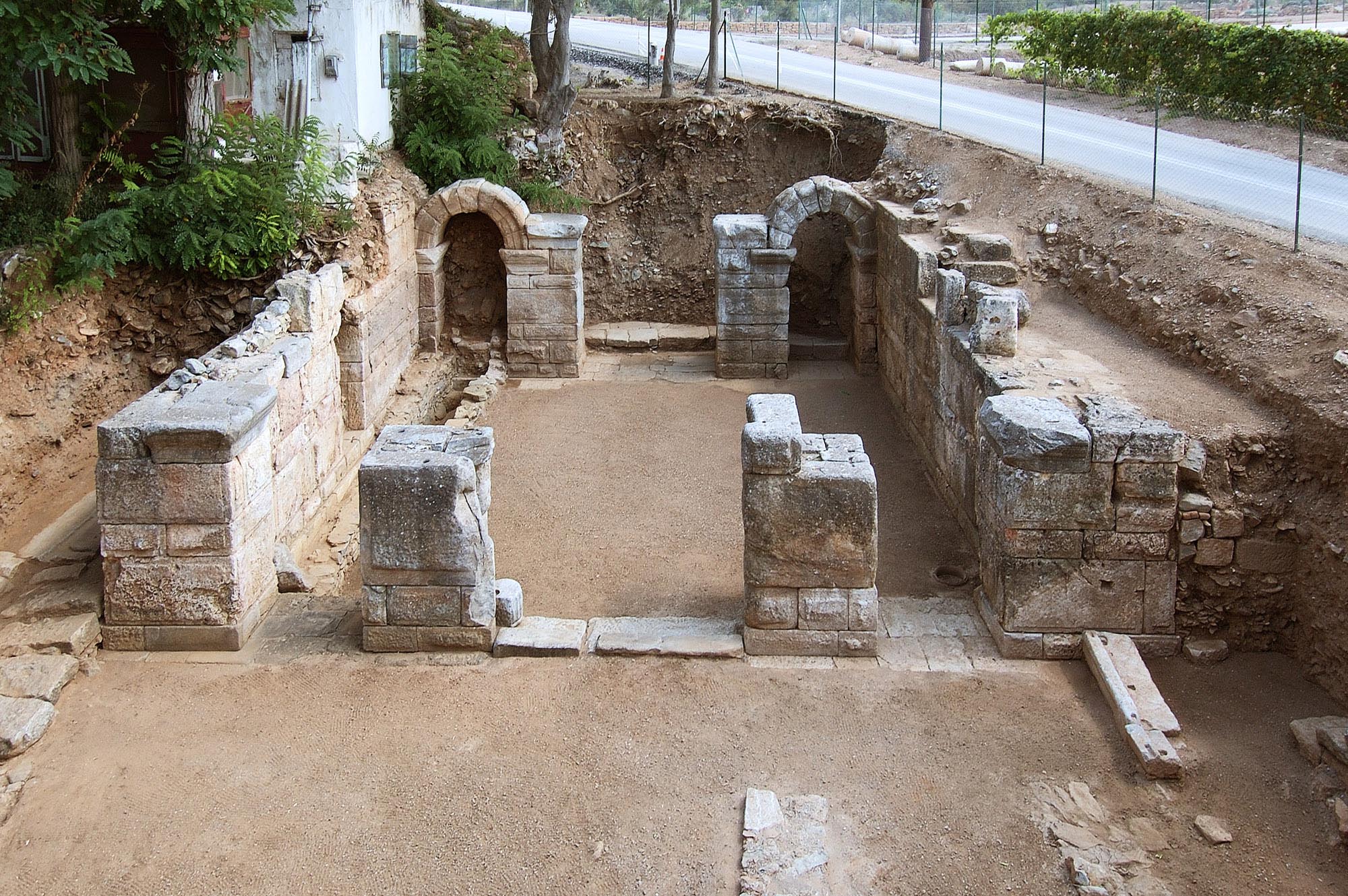
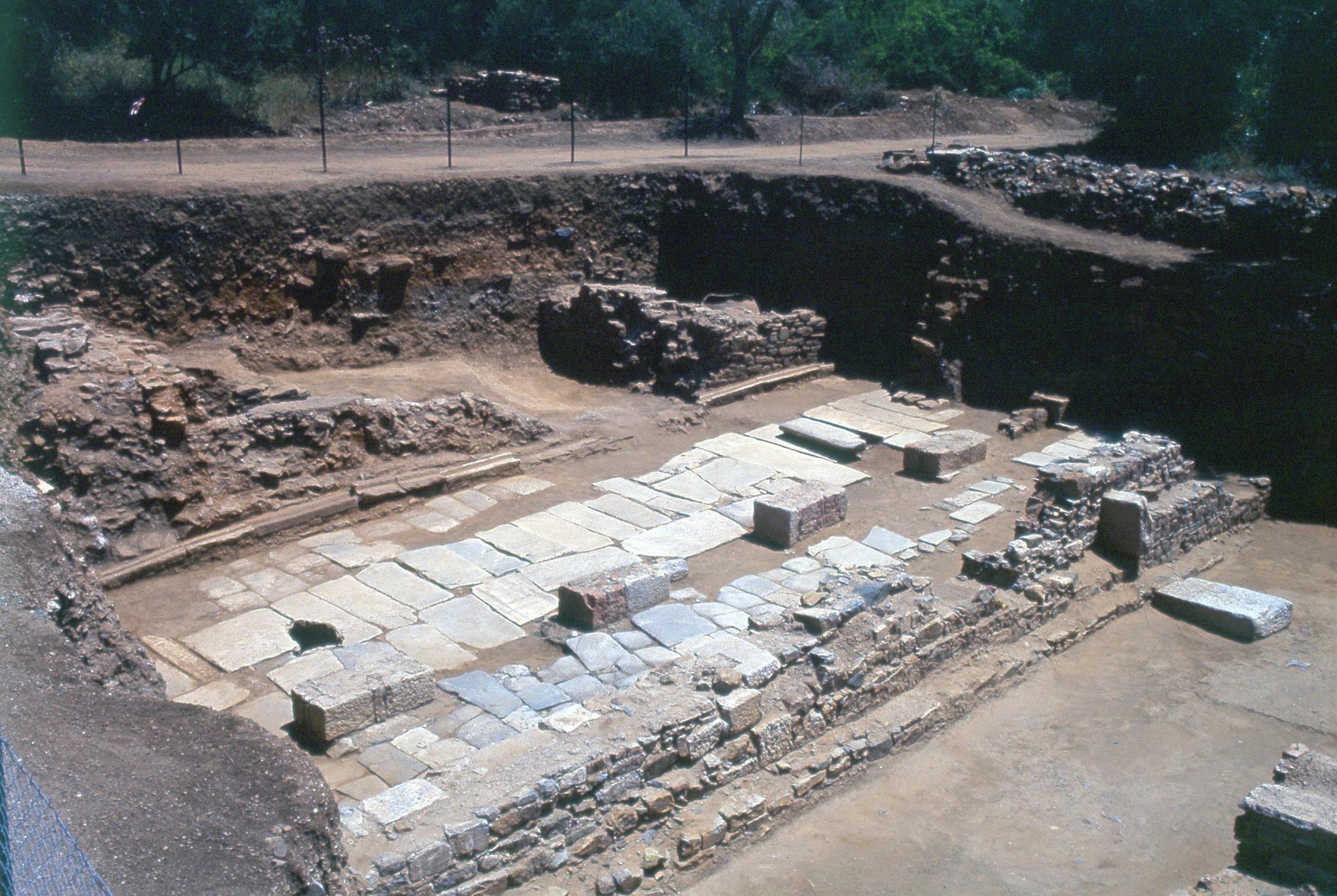
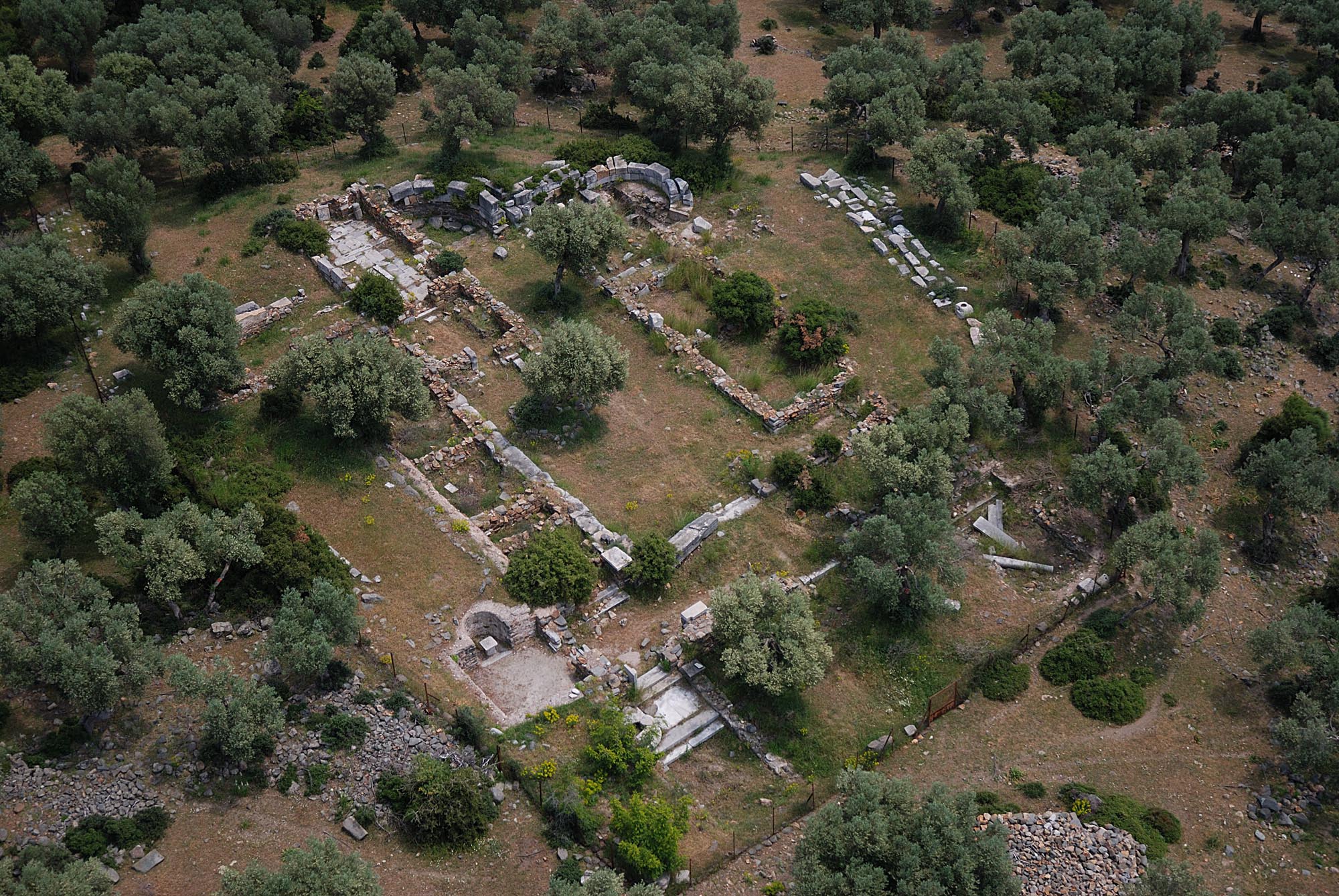
The excavations have brought to light important public and private buildings of the city. The Roman Agora of the city was located in the port area, where the remains of a monumental building consisting of two parallel spaces have been uncovered (late 2nd-early 3rd c. AD). It probably served as a grain warehouse. North of the building, part of a paved road 7 m wide has been uncovered, featuring an underground drainage system and roadside structures identified as small shops. This road led to a particularly imposing monumental propylon of Hadrian’s reign (124-125 AD).
At the Kambana site (Kambanas Rema), within the walls, was discovered the city theatre, which was constructed in the Hellenistic period and remained in use until the 4th century AD.
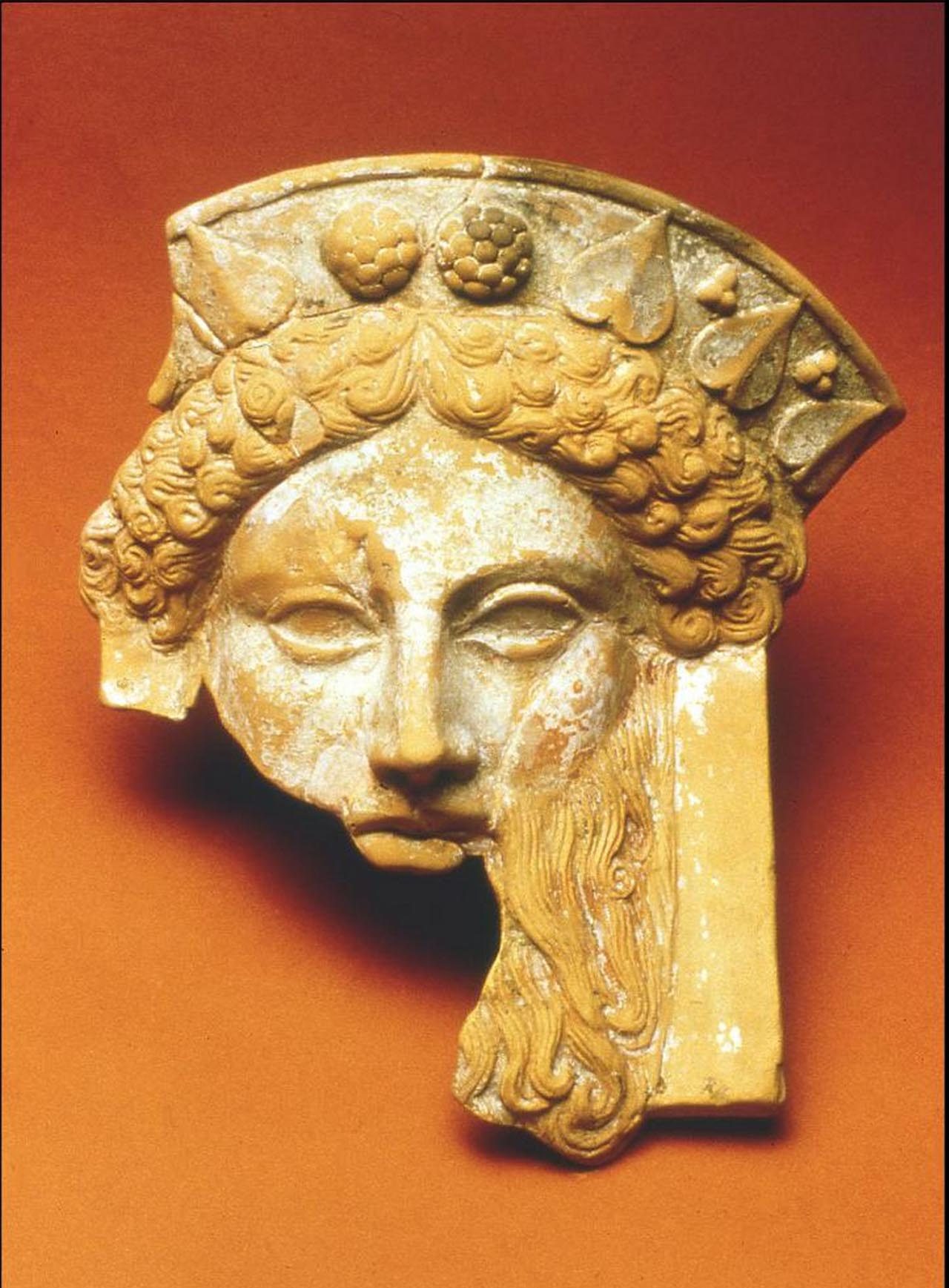
Of the religious buildings of Maroneia, a temple of the second half of the 4th century BC has come to light, west of the theatre. It is probably dedicated to the tutelary deity of the city: Dionysus, patron of wine and viticulture, a highly profitable activity – Maroneia produced the famous Maroneian or Ismarian wine. The temple of the sanctuary is built on a terrace supported by a 2-metre-wide retaining wall; it consists of a pronaos and a cella containing a hearth or the base of a cult statue.
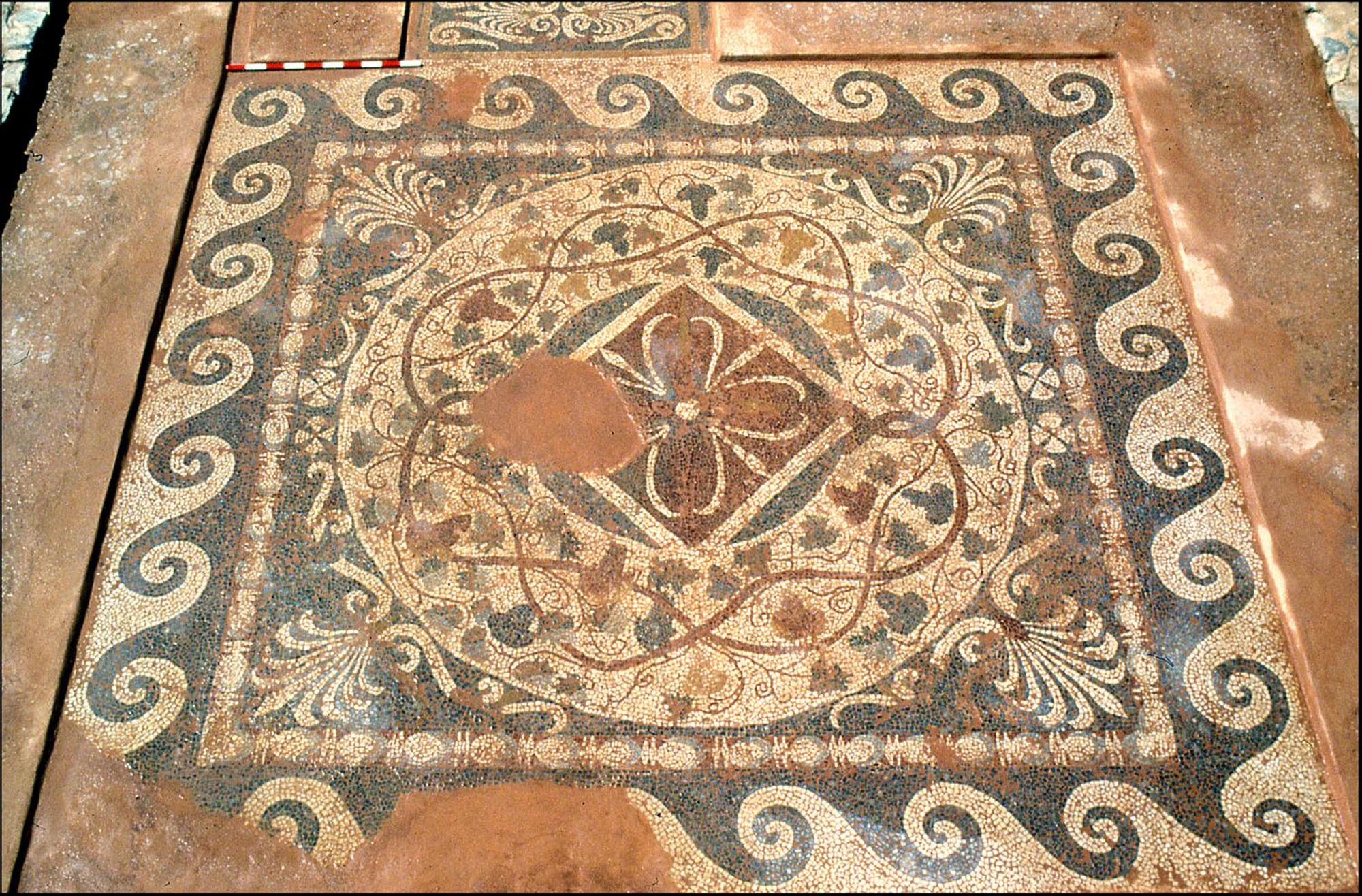
Among the residences, the “House of the Mosaic” stands out. It was uncovered at the Paliopigada site, on the left side of the road leading to the harbour of Agios Charalambos. The house has an almost square floor plan and is notable for its size, covering an area of approximately 654 m2. An exquisite mosaic floor (late 4th-early 3rd c. BC) has been revealed in the andron (mens’ quarters) of the house.
The city cemetery, with burials dated from the 4th century BC to the Roman period, was discovered at the site of Alki, while another extensive necropolis has been revealed at the coastal site of Mesonisi, where the western section of the city wall ends.

Byzantine Maroneia
During the Early Christian and Byzantine periods, Maroneia covered an area of 19 hectares, rather limited, compared to that of the ancient city. The Byzantine castle-city was reduced to the area around the ancient harbour at the southwestern end of the ancient city, at the Palaiochora (Paleochora) site near the small modern village of Agios Charalambos. Today the road leading from the modern village of Maroneia to Agios Charalambos cuts through it.
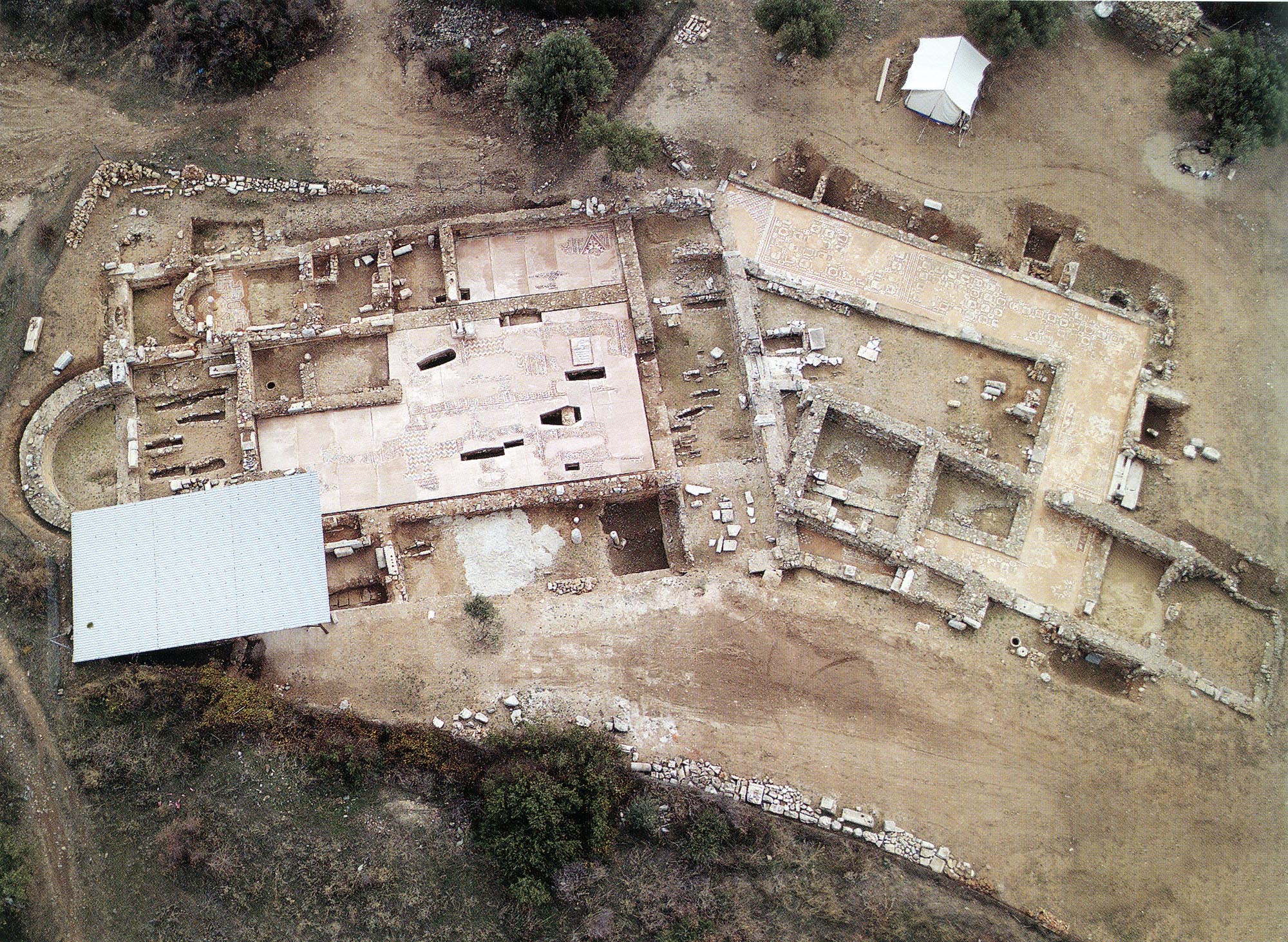
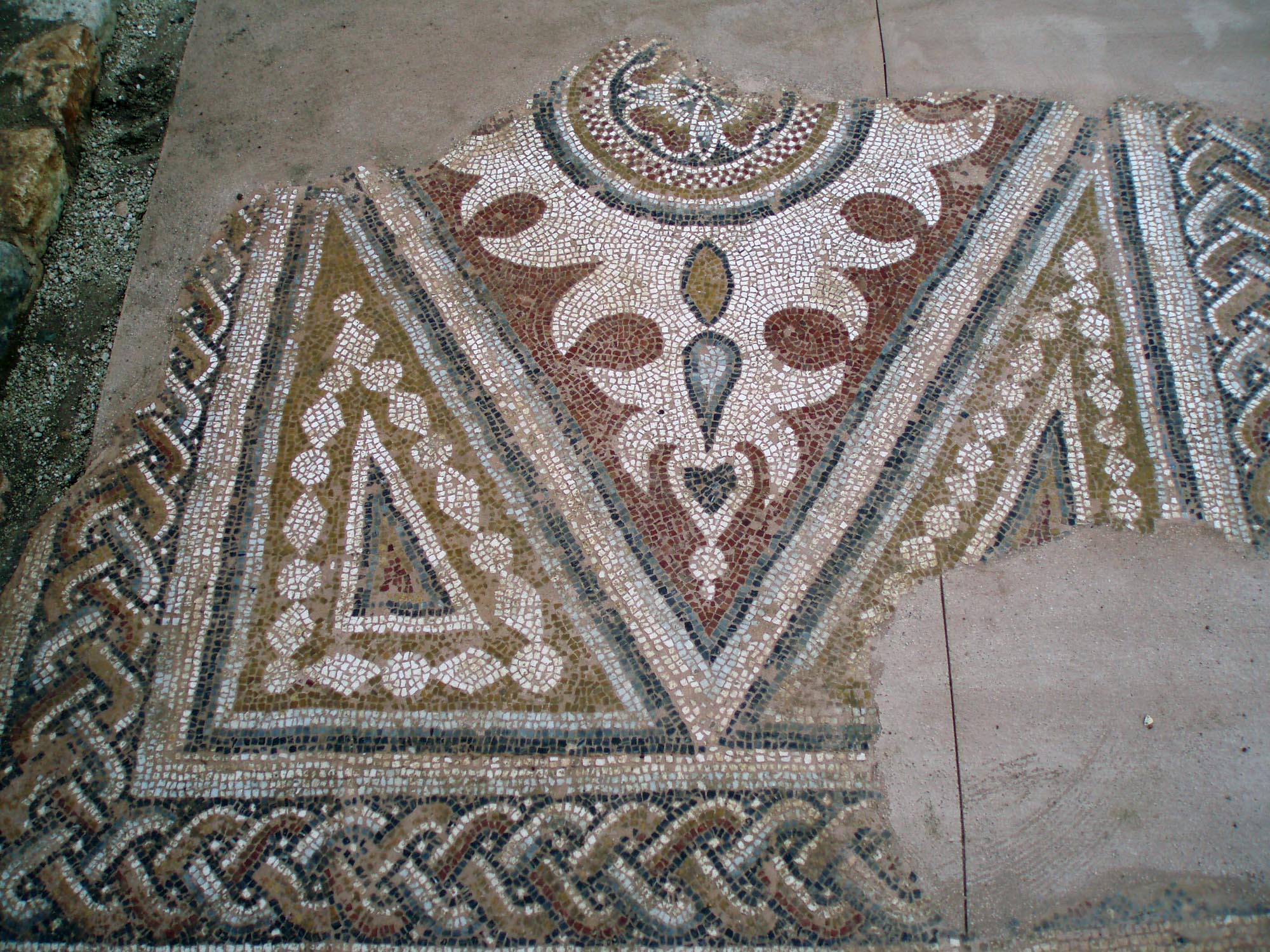
The castle is an irregular trapezoid shape with a wall 1,800 m long. It is reinforced by quadrilateral towers along the sides and at the corners. The north side of the wall, the most vulnerable due to the low terrain, was reinforced with a rampart. Almost in the centre of the Middle Byzantine castle was excavated a large three-aisled Early Christian basilica with a large atrium. It is decorated with high-quality mosaic floors which stand out for the originality of their decoration, the variety of their colours and the perfect execution of their themes, echoing the mosaic art of the late 5th and early 6th centuries AD. After the destruction of the basilica during the Dark Ages (7th-8th c.), the area was converted into a large cemetery.
The ruins of the basilica and the Dark Age tombs were succeeded by the buildings of a Middle Byzantine settlement that was inhabited uninterruptedly from the 9th to the first half of the 13th century. A series of houses and a large tripartite building (a mansion) have been excavated, occupying the atrium of the basilica. The two-storey building stands out for its size and sturdy construction and has been interpreted as the residence of a prominent person of Maroneia. Two small funerary churches were discovered in the area of the Early Christian basilica, while a Middle Byzantine cemetery, succeeding that of the Dark Ages, was established nearby, remaining in use until the abandonment of the settlement (first half of the 13th c.).
In the area of Agios Charalambos, the excavation has brought to light three successive churches of the Middle Byzantine period. The oldest dates from the late 9th century. A single-nave church was built on its ruins in the 10th century. This was succeeded by a 12th-century cross-in-square church identified as the town’s episcopal church. In later times, the site of the three churches was used as a cemetery. The fresco decoration uncovered during the excavation (now in the Archaeological Museum of Komotini), although only partially preserved, is of particular interest. From the area of the prothesis of the 9th-century church comes an example of non-figurative decoration featuring a foliated cross, one of the oldest surviving representations in Thrace. Two well-preserved depictions of the Forty Martyrs (late 11th century.) on the north wall of the same church, which was later incorporated into the 12th-century episcopal church, exemplify the high quality of painting in Thrace during the Middle Byzantine period.
Monuments in the modern village of Maroneia
Churches of St John the Baptist and the Dormition of the Virgin
The two parish churches of the modern village of Maroneia are of the three-aisled timber-roofed basilica type. Their construction is connected with the activity of Patriarch Neophytos VII of Constantinople (1789-1794, 1798-1801), who was ordained metropolitan bishop of Maroneia in 1771, making great efforts to improve education and organise the region’s communal self-governance system.
Traditional houses - Tavaniotis Mansion
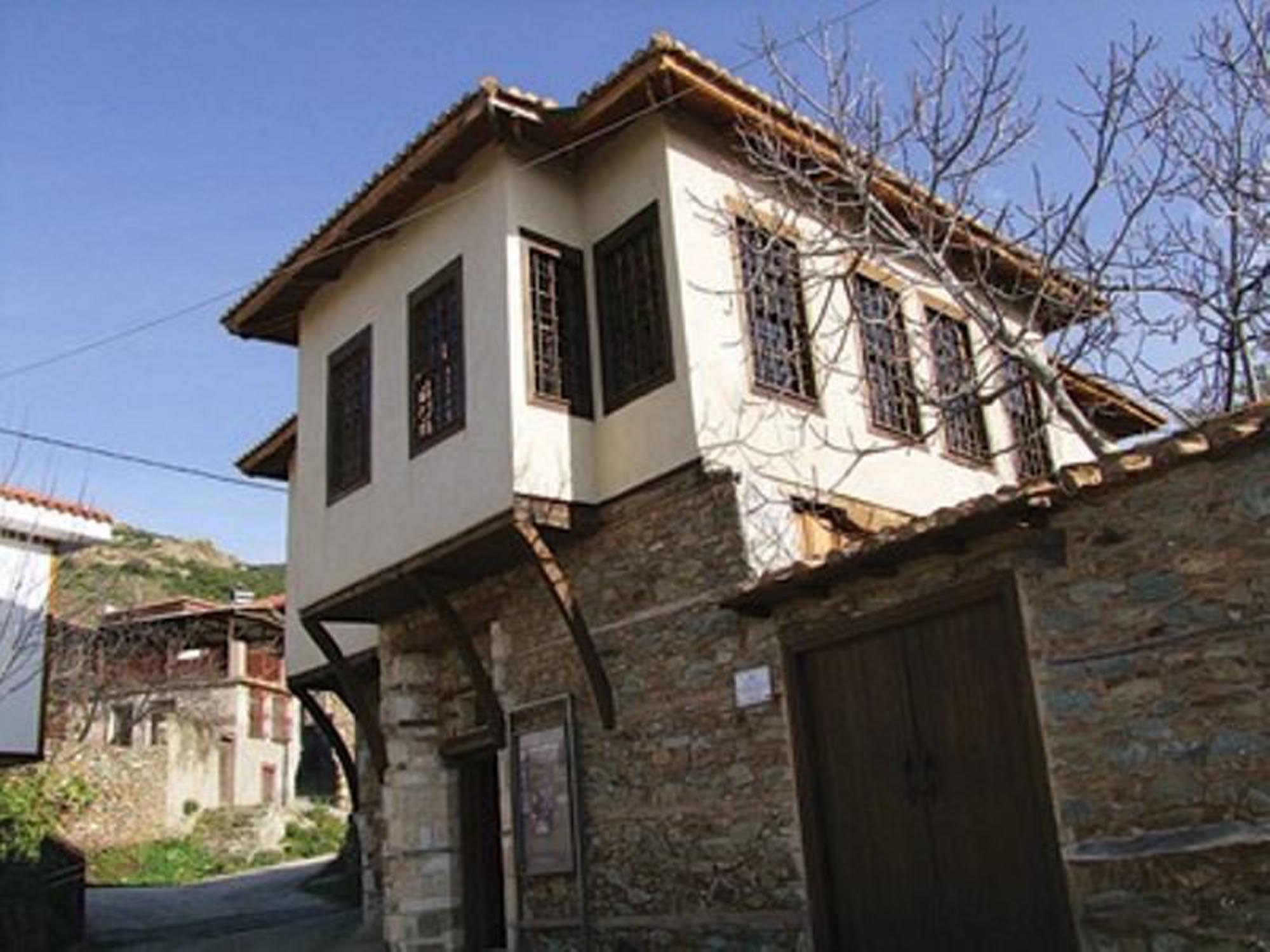
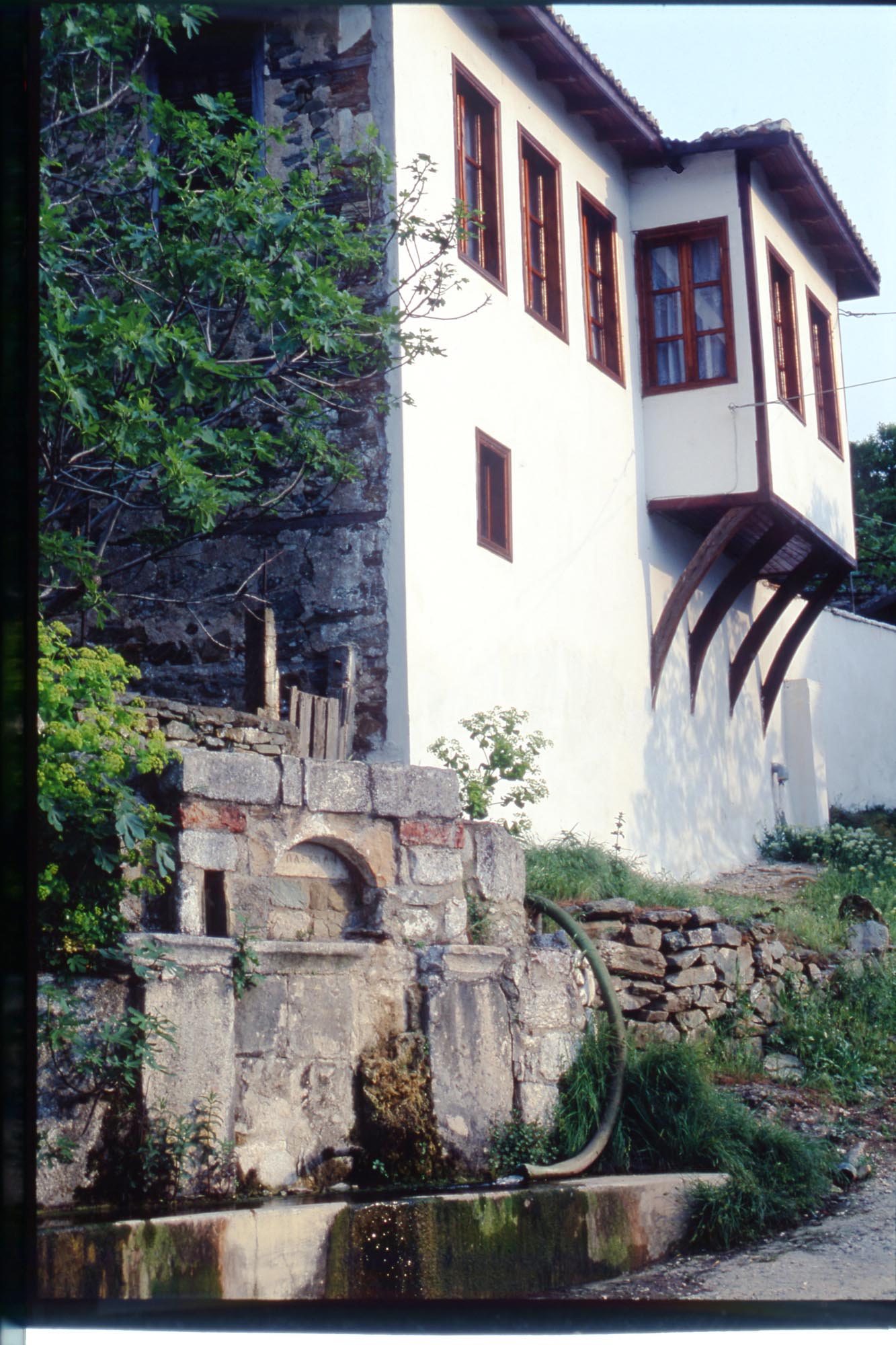
Remarkable traditional residences are preserved in Maroneia today, among which the Tavaniotis Mansion stands out. It was built between 1880 and 1885, a prosperous time for Maroneia, southeast of the church of St John the Baptist, by the Maroneian merchant Parrasios Tavaniotis. The two-storey building features sahinisia, enclosed balconies on the west and south sides of the upper floor. The mansion has been restored and houses an exhibition of antiquities from Maroneia and Ismaros, dating from prehistoric to modern times.
Fountains
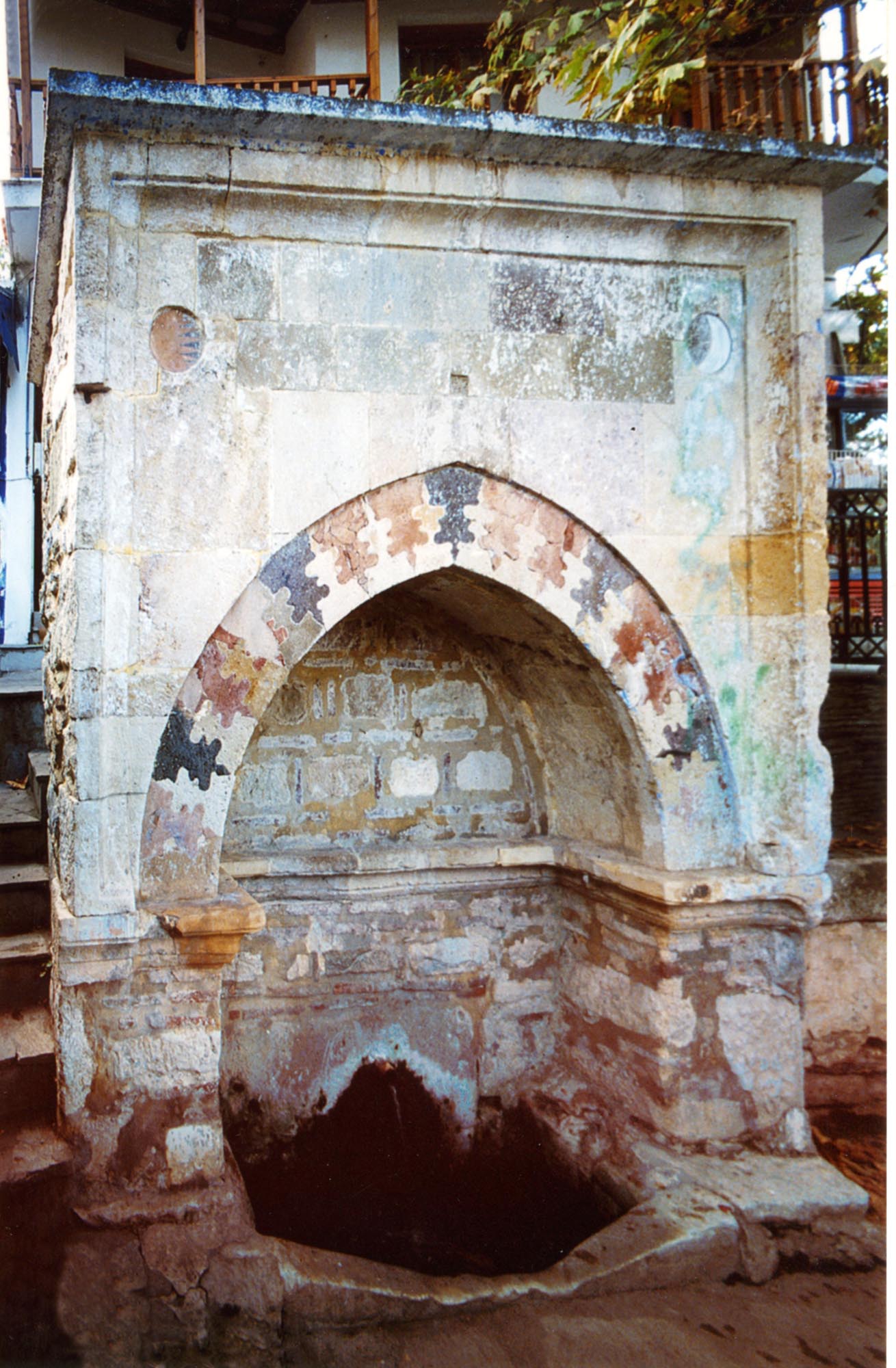
Eight public fountains are preserved in the village of Maroneia, the oldest of which probably dates from the 15th century, while the newest was built in 1933. A particularly important example is the Kato Vryssi (“Lower Fountain”) in the centre of the village, which, according to the surviving dedicatory inscription, was built in 1435/6. It is about 3 m high and stands out for its particularly elaborate front. For centuries it was the centre of the social life of the inhabitants and was directly linked to religious beliefs about the sanctity of the area and the healing properties of water. Thus, for example, local tradition has it that the three centuries-old plane trees shading the fountain symbolise the Holy Trinity, which protects the holy water.
Antiquities in the wider area
Maroneia Cave
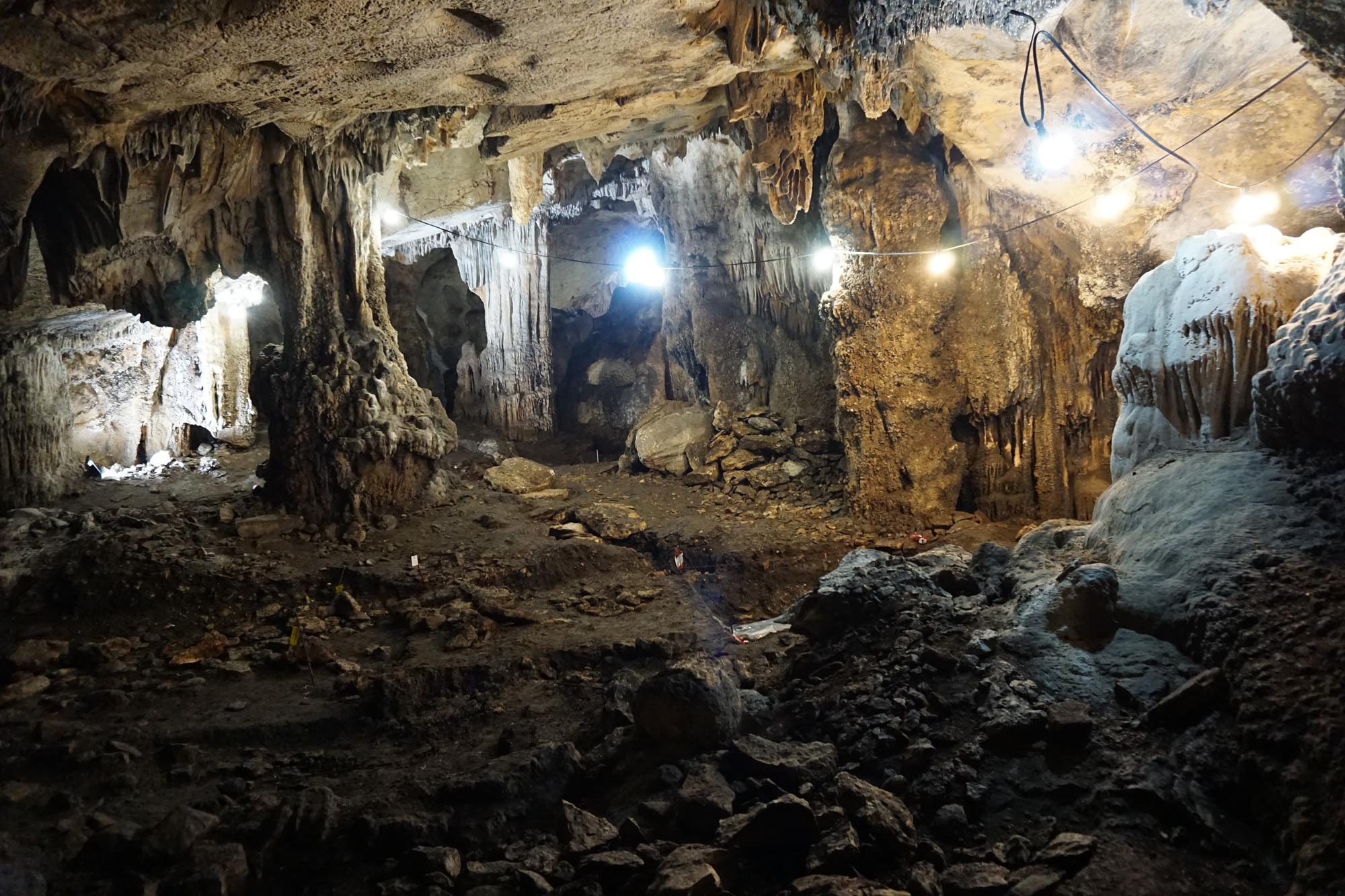
Near the modern village of Maroneia, in the area known as “Koufou to Plai” on Mount Ismaros, is the large cave where, according to tradition, Odysseus intoxicated the Cyclops Polyphemus. The cave has two entrances and an elongated plan, approximately 350 m long 15 to 50 m wide. Formed 8 to 10 million years ago, it has attracted the interest of the scientific community, not only for its colourful stalactites but also because it is home to two rare species of bat, found nowhere else in the world. It is also of great archaeological interest, as finds covering a wide chronological range, from the Neolithic to the Byzantine period, have been excavated inside it.
Acropolis of Agios Georgios Hill (Ismaros)
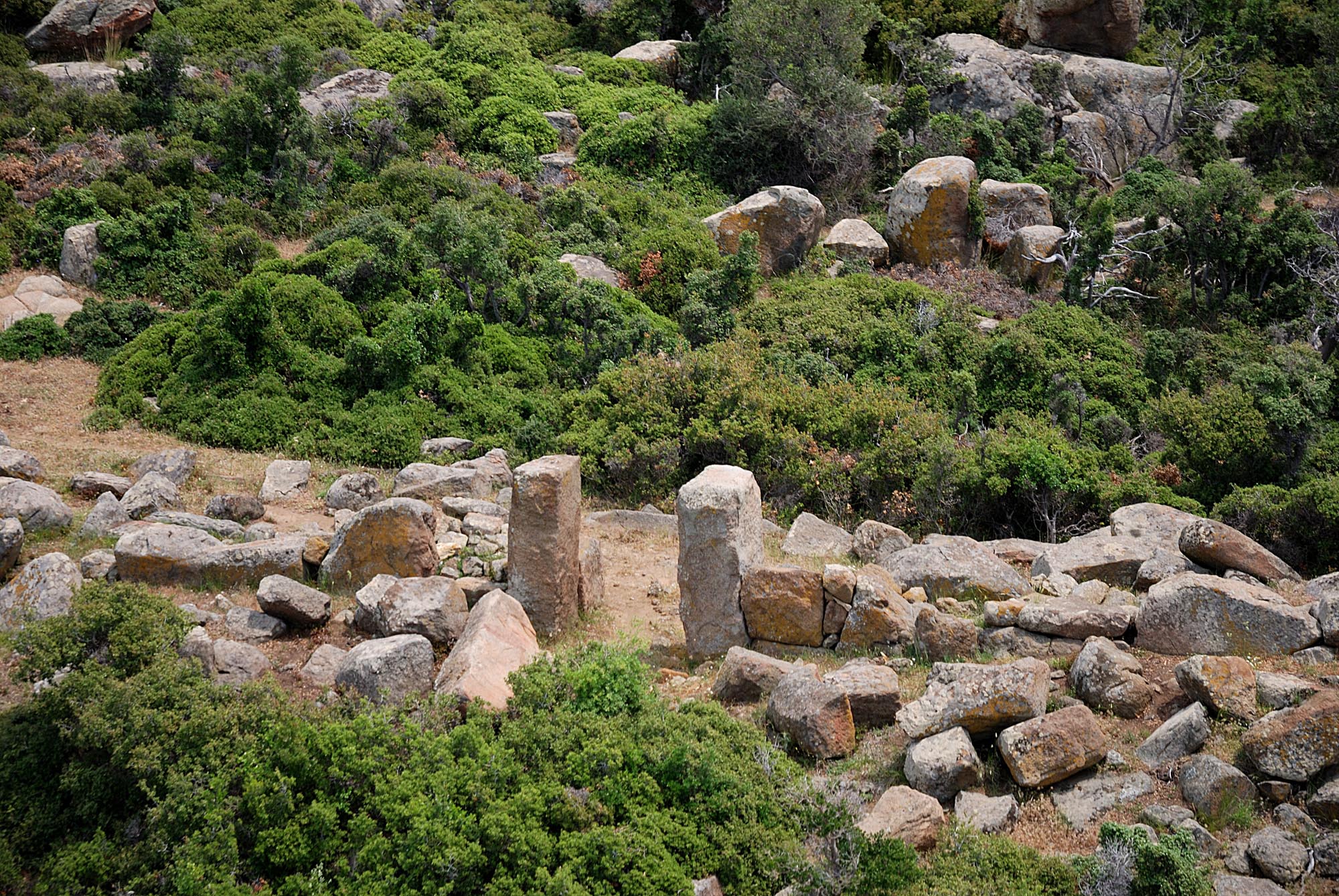
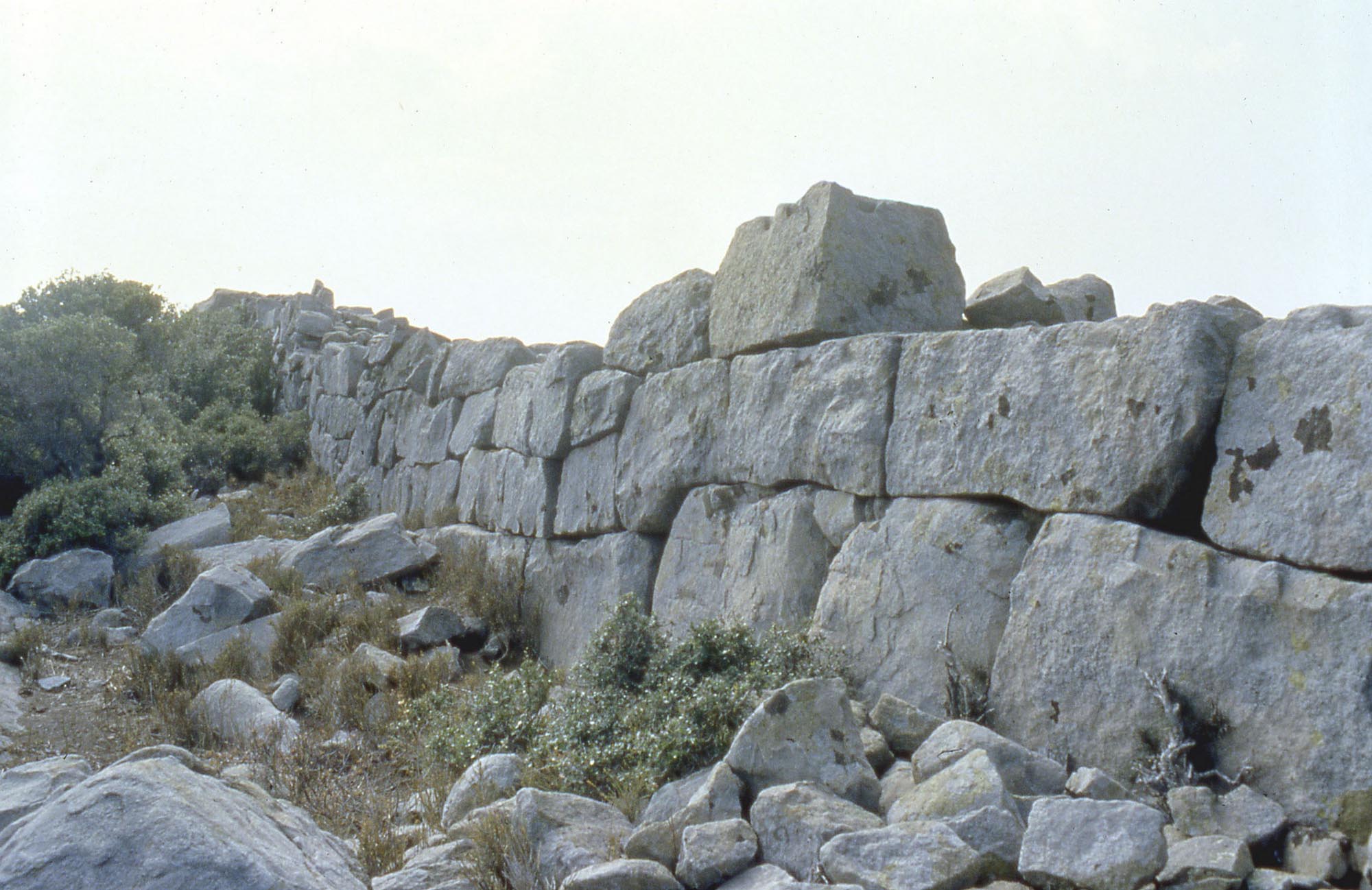
The fortified citadel on the hill of Agios Georgios east of Maroneia is identified with the city of the Thracian tribe of the Cicones Ismaros (Ismara), mentioned by Homer in the Odyssey as Odysseus’ first stop on his return from Troy. Its enceinte is constructed of characteristic polygonal masonry, like that of the Mycenaean citadels, made of large, in some cases cyclopean blocks of local limestone. The excavation has brought to light pottery of the Late Bronze Age, leading the citadel to be dated to the 13th-12th centuries BC. However, it continued in use in Classical and Byzantine times. It has also been argued that the first colonists from Chios settled here and that, after moving to neighbouring Maroneia, they continued to use the site for defensive purposes.
Archaeological site of Synaxis
Approximately 10 km east of Maroneia, next to the sea, a large Early Christian basilica (first half of the 6th c. AD) with three aisles and a transept has been excavated. A monastery was founded on the site of the basilica in the 9th or 10th century, remaining in use until the 13th century. The monastery was surrounded by an enclosure and occupied the whole area of the older basilica. It had two wings of rooms, one occupying the north aisle of the basilica and the other the south. The central nave of the basilica formed the monastery courtyard between the two wings. The katholikon of the monastery, on the east side of the courtyard, is a simple single-nave church.
A large building has been discovered next to the basilica, on the side of the beach. It was used from the 2nd to the 6th century AD and was probably a guesthouse for pilgrims intending to cross to Samothrace to worship at the famous Sanctuary of the Great Gods, which remained in use until the 4th century AD.
Museums
Archaeological Collection of Maroneia(Αρχοντικό Ταβανιώτη)
The Tavaniotis Mansion hosts the exhibition “Maroneia and Ismaros from Prehistoric to Modern Times”.
Folklore Museum of the Cultural Association of Xylagani
The Folklore Museum in the village of Xylagani, 12 km northwest of Maroneia, is housed in a restored flour mill. The museum showcases the villagers’ traditional way of life and occupations.