Mount Papikion
Mount Papikion, “the Mount Athos of Thrace”
Mount Papikion, also known as “Aetovouni” (“Eagle Mountain”) or “Chionovouni” (“Snowy Mountain”), with its highest peak reaching 1,502 m, rises southeast of the Rhodope Mountains on the Bulgarian border, above Byzantine Mosynopolis and the Byzantine Castle of Polyanthos. In Byzantine times, from the 11th to the first half of the 14th century, an important monastic centre developed here, organised according to the models of Mount Athos. The peak of the monastic community’s prosperity is attested today by numerous architectural remains belonging to monastic complexes, churches and other buildings.
The Via Egnatia ran, as the Egnatia Motorway still does today, south of Mount Papikion, along the plain of Komotini. It allowed the monks to stay in close contact with the castle-cities of the surrounding area and Constantinople, as well as other monastic centres such as Mount Athos, which is confirmed by written sources and excavation finds. By means of the Via Egnatia, the monastic centre of Mount Papikion was also accessible to pilgrims, often high officials who bestowed lavish donations on it, as well as artists and craftsmen who endowed the monastic community with their works.
History
The monastic centre, according to the Jerusalem monk Acacius Sabaites (first quarter of the 13th century), takes its name from the first, anonymous ascetic of the area: “And when the Mountain was first inhabited, the first old monk to live there was addressed as “grandfather” and for this reason it is called Papikion” (papik means “grandfather” in Armenian). Acacius states that there were 370 monasteries here, an exaggerated figure, but one that nevertheless demonstrates the importance of the monastic community.
The earliest written reference to Mount Papikion is found in the Typikon of the Monastery of the Theotokos Petritzonissa in Bačkovo, Bulgaria (1083). However, it has been argued that the first installations of the monks should be traced back to the Iconoclastic period (8th – first half of the 9th c.). At that time, Mount Papikion, isolated from the major urban centres where the worship of icons was forbidden, provided the necessary seclusion for the icon-worshipping ascetics and hermits.
Byzantine historians and chroniclers who refer to the historical events of the 12th century note that there were “many semneia” and “phrontisteria”, i.e. many monasteries, in the monastic centre. Eminent Byzantine figures such as Protostator Alexios Axouch, Sebastokrator Alexios Komnenos and the Serbian ruler Stefan I Nemanja, entered monastic orders there. In the early 14th century, two prominent figures of Orthodox monasticism, St Gregory Palamas and St Maximos Kausokalybites, briefly lived here.
On Mount Papikion, as in other monastic centres, the first monks lived close to nature, according to the rules of anchoritic monasticism, isolated in remote hermitages. The abundant running water and level areas between the ravines and gorges, suitable for growing vines and cereals, allowed them to obtain the goods necessary to their daily survival. Later on, the cenobitic monastic system gradually developed on Mount Papikion, with monks living in cenobitic monastic complexes. The written testimonies referring to the Protos of Mount Papikion indicate that the institution of the Protos, the abbot who was the head of the representatives of all the monasteries, was also applied here, as on Mount Athos.
The monastic community of Mount Papikion flourished in the 11th and 12th centuries. From the 13th century onwards, based on the excavation data, some of the monasteries suffered serious damage, mainly by fire. In the 14th century, the civil wars that shook Byzantium and were fought exclusively in Thrace led to the gradual decline of the monastic community, culminating in the Ottoman overthrow of Byzantine rule in the region (third quarter of the 14th c.). Later, in Ottoman times, small hamlets were founded here, usually on or near abandoned monastic complexes, in order to use the arable land of the now-deserted monasteries. Most of these villages are now abandoned, with only a few exceptions: these are still inhabited by Pomaks, a Muslim minority recognised under the Treaty of Lausanne (1923).
Monuments - Antiquities
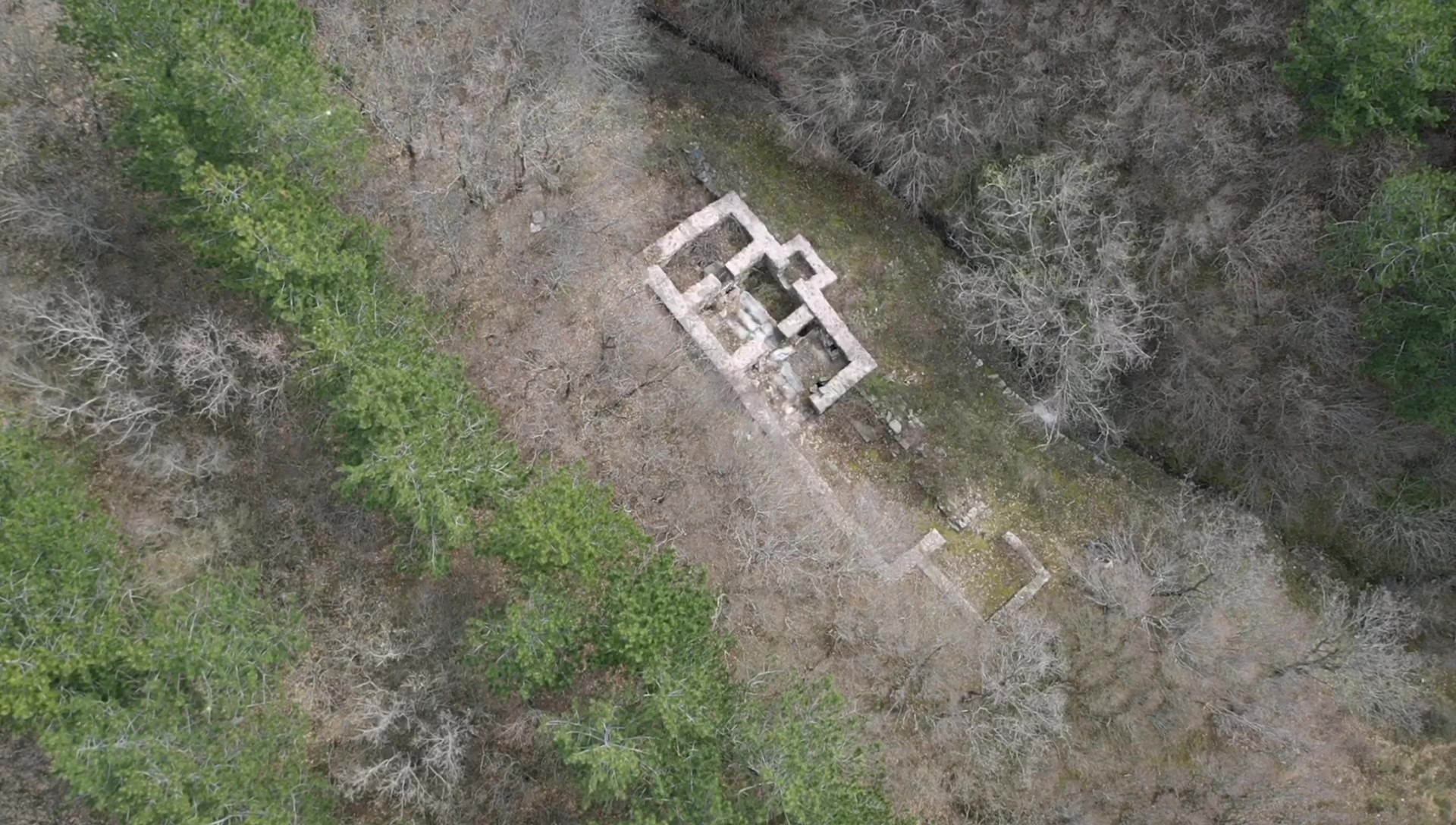
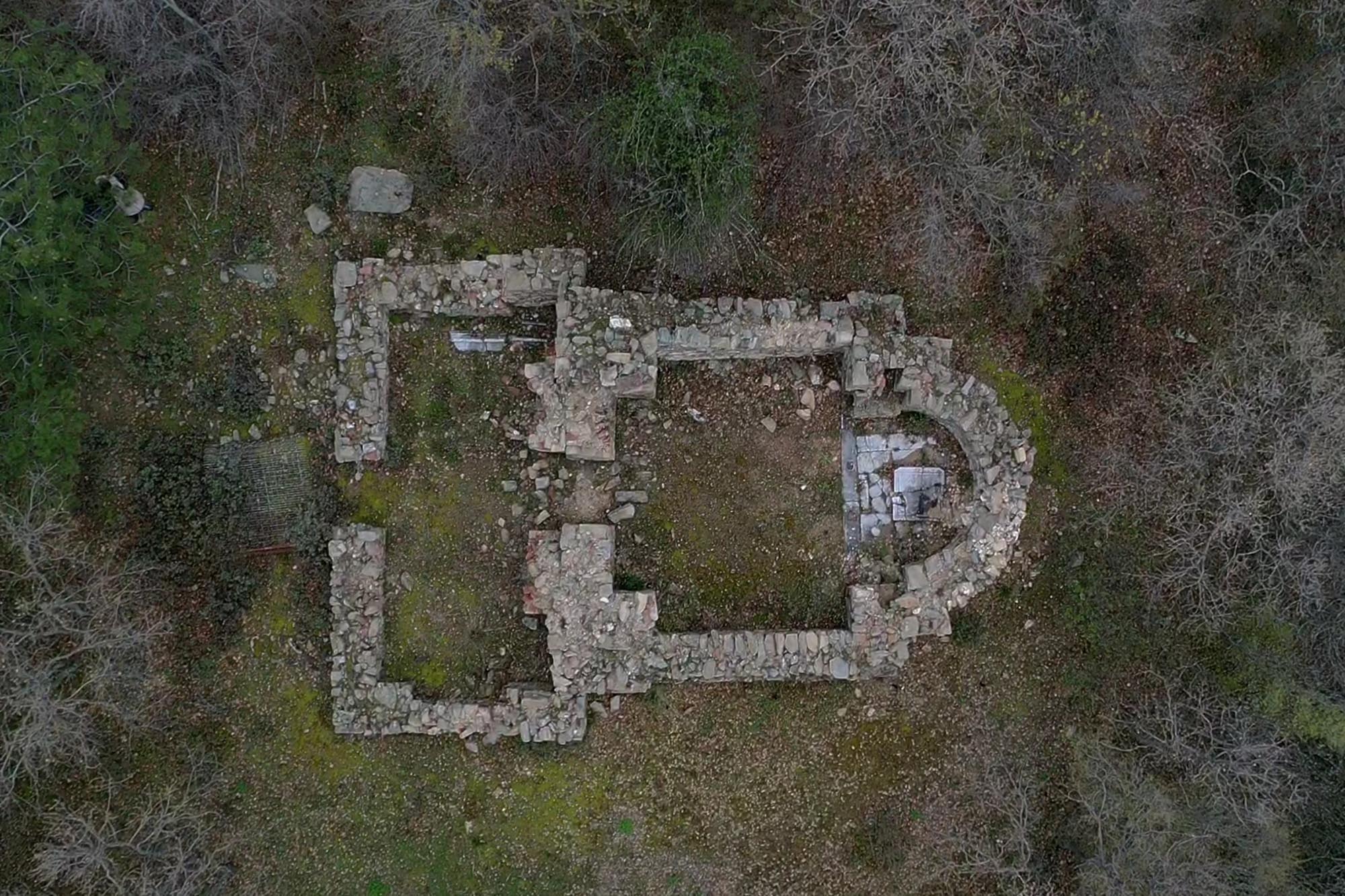
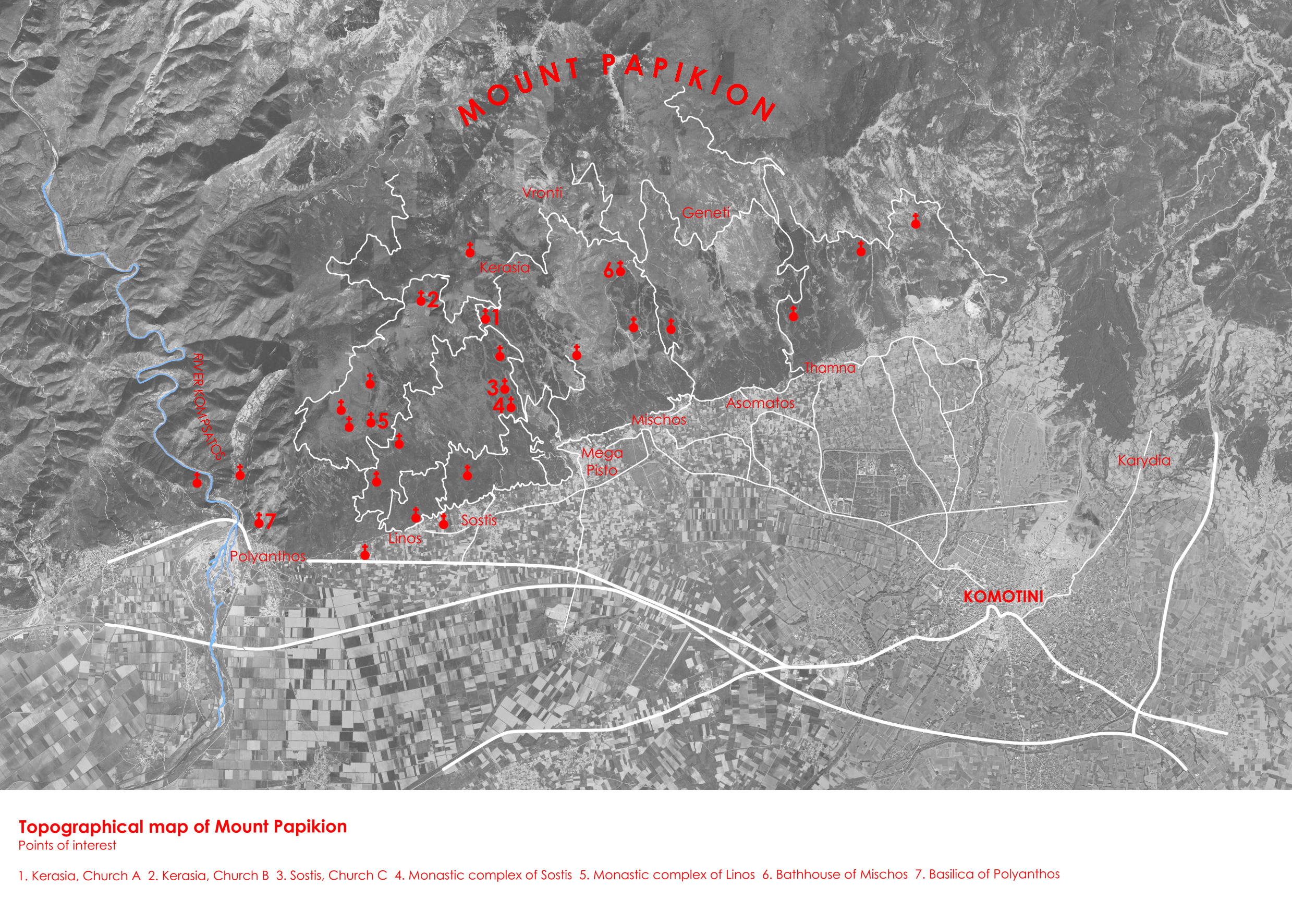
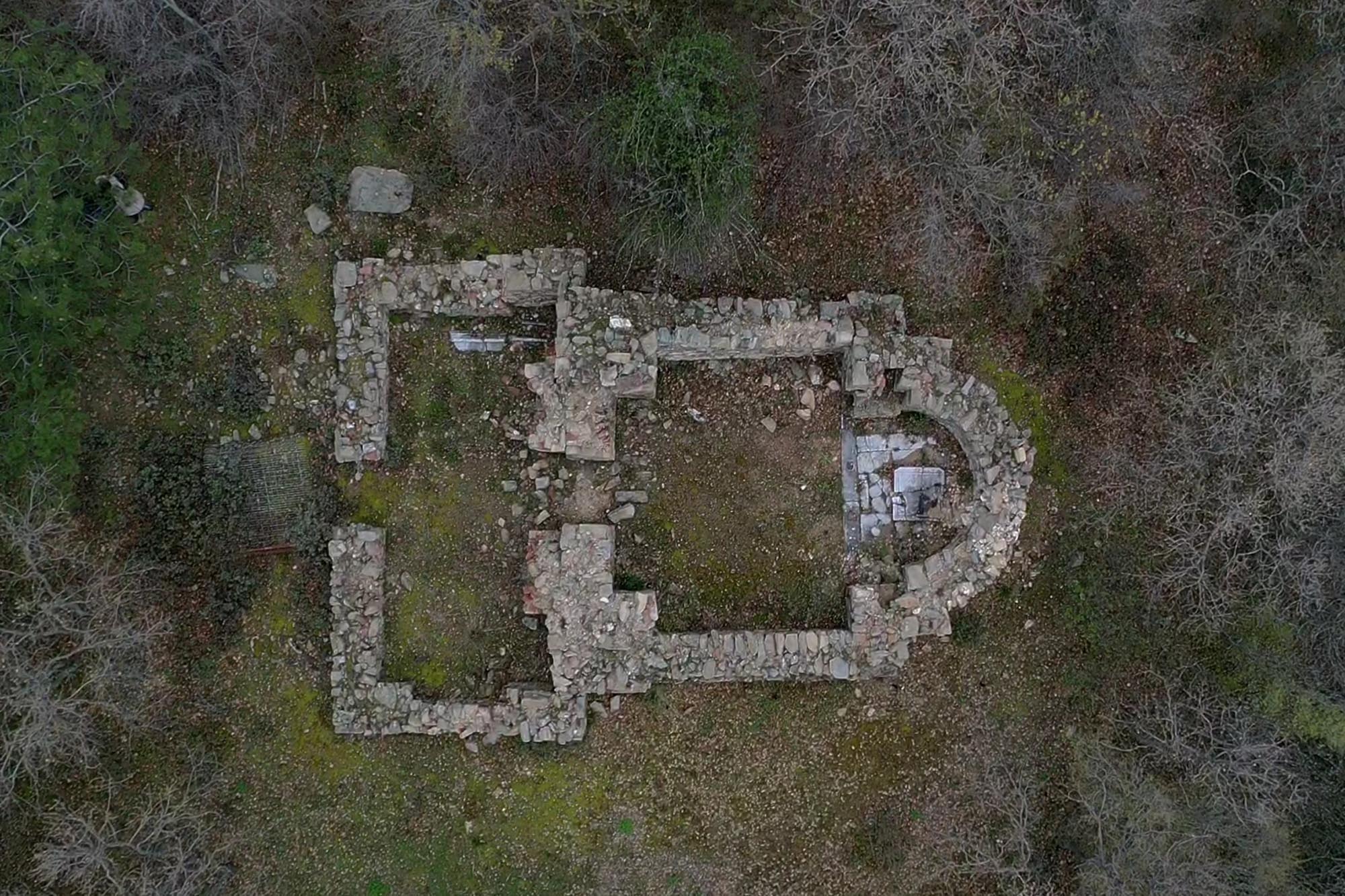
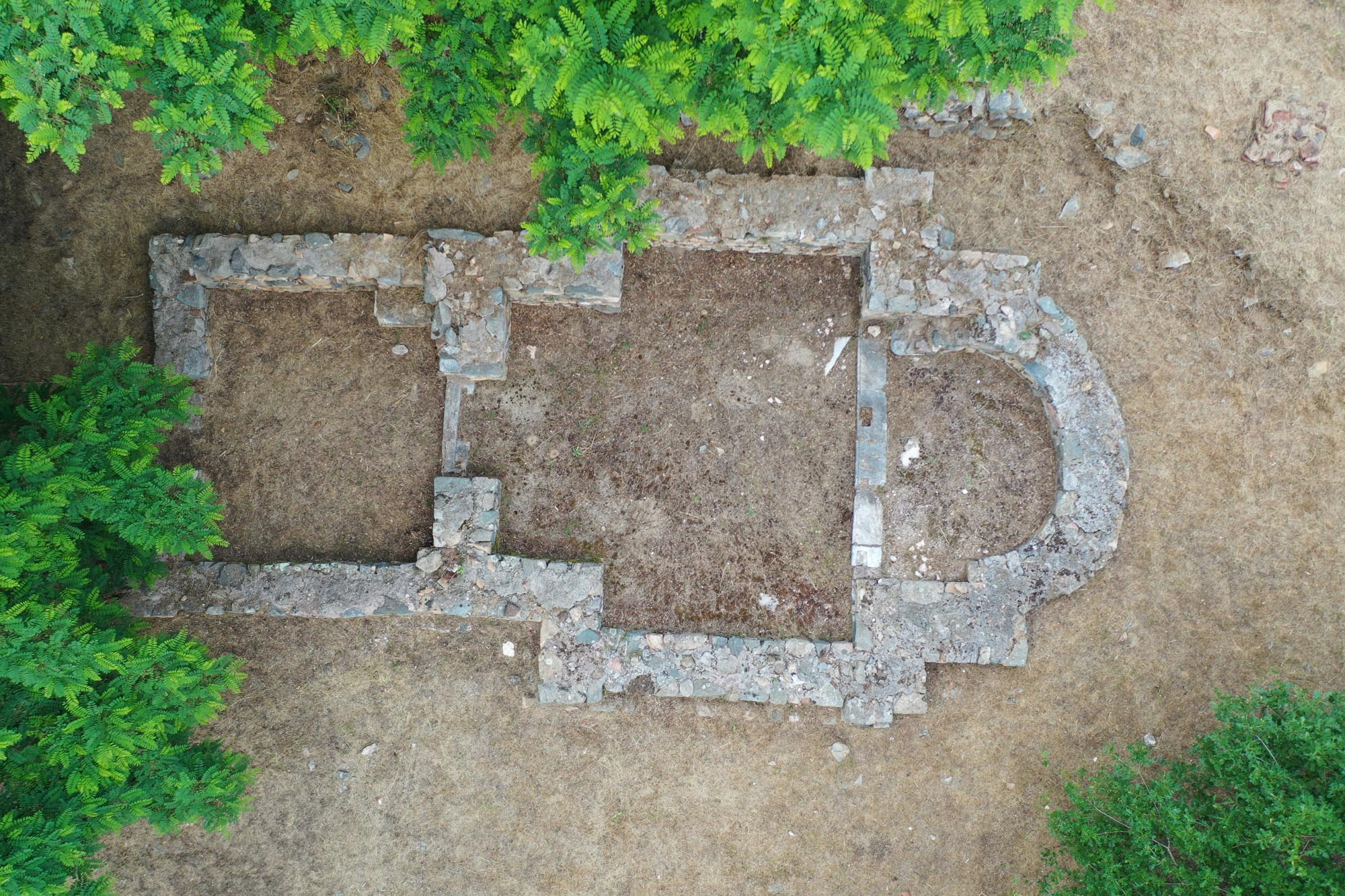
Across Mount Papikion, excavations have brought to light the remains of three churches, two monastic complexes and a Byzantine bathhouse. The three churches date from the 11th-12th centuries and belong to the same architectural type, the single-nave, free-cross plan church with a dome. It has been argued that they were once monastery churches. They are conventionally named after the nearest villages, as the names of the saints to whom they are dedicated are unknown.
Church A, Kerasia
The church is located about 500 west of the now-abandoned village of Kerasia. Its marble floor, which survives almost intact, is divided into panels, the frames of which are decorated with bands of opus sectile (marble inlay). The church had a marble templon (chancel barrier), of which notable sculpted elements survive.
Church B, Kerasia
The church has come to light 2 km southwest of the village of Kerasia. The excavation revealed important marble elements of the templon and the sculptural decoration of the church. The church was decorated with frescoes of the late 11th to early 12th century, of which only a few sections are preserved.
Church C, Sostis
The ruins of the church were discovered in a fragmentary state, about 3.5 km north of the village of Sostis.
Monastic Complex of Sostis
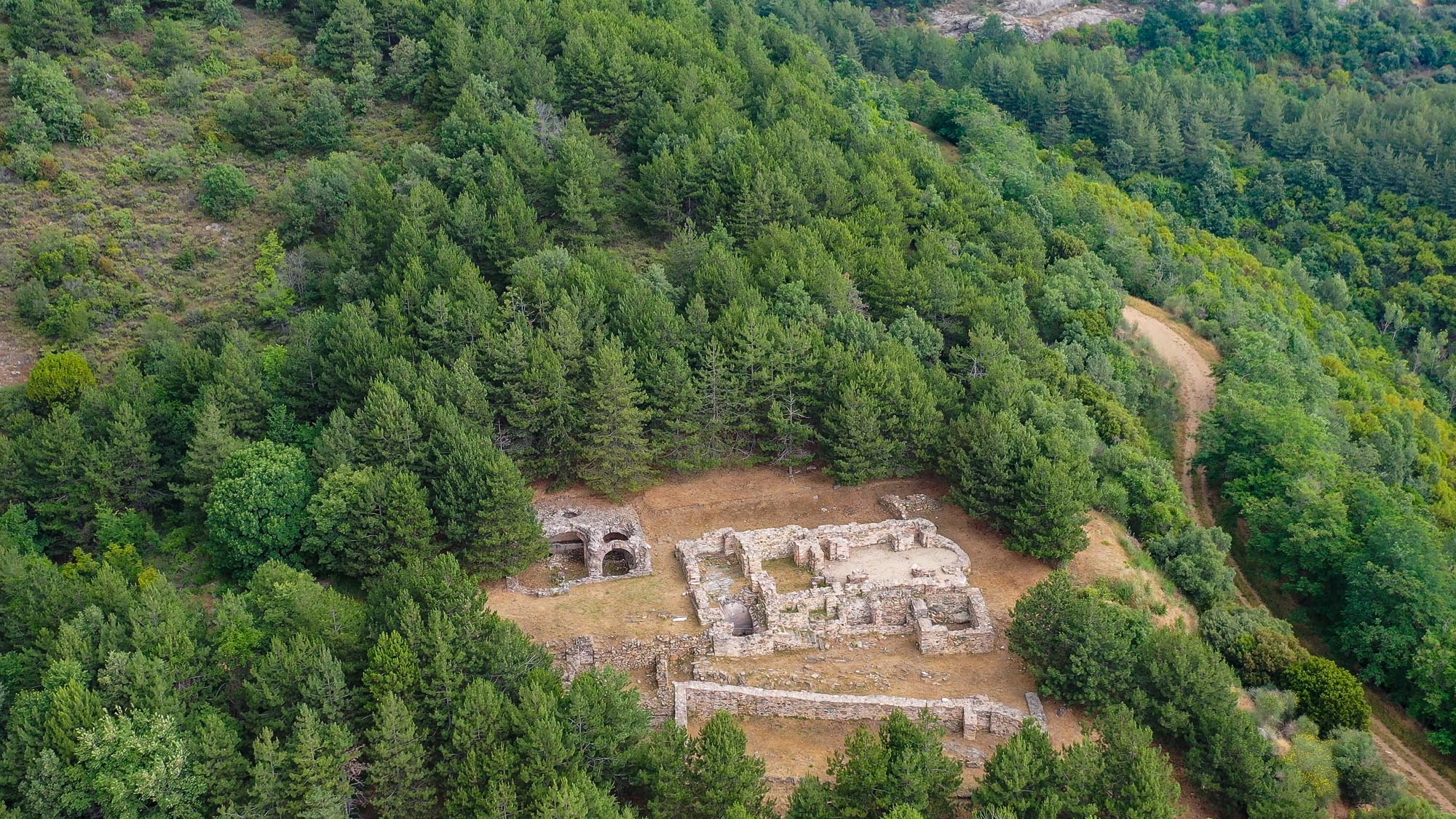
Of the extensive monastic complex, located 500 m south of Church C, the katholicon (main church) and the annexes on the west and south sides have been excavated. The katholicon, in the middle of the monastic complex, is of the three-aisled basilica type. It had an inlaid marble floor, parts of which are preserved in the central and north aisles, and a marble templon, of which notable sculptural elements survive.
Of the annexes of the monastic complex, the refectory stands out in the middle of the west side. This is the common dining area of the monks, a long, timber-roofed hall ending in a semicircular apse on the east. Small, identical rooms were also discovered: these are the monks’ cells. There is also a large colonnade and a large four-sided cistern. Based on the excavation finds, the monastic complex was in use from the 11th to the 14th century, flourishing in the 12th century.
Monastic Complex of Linos
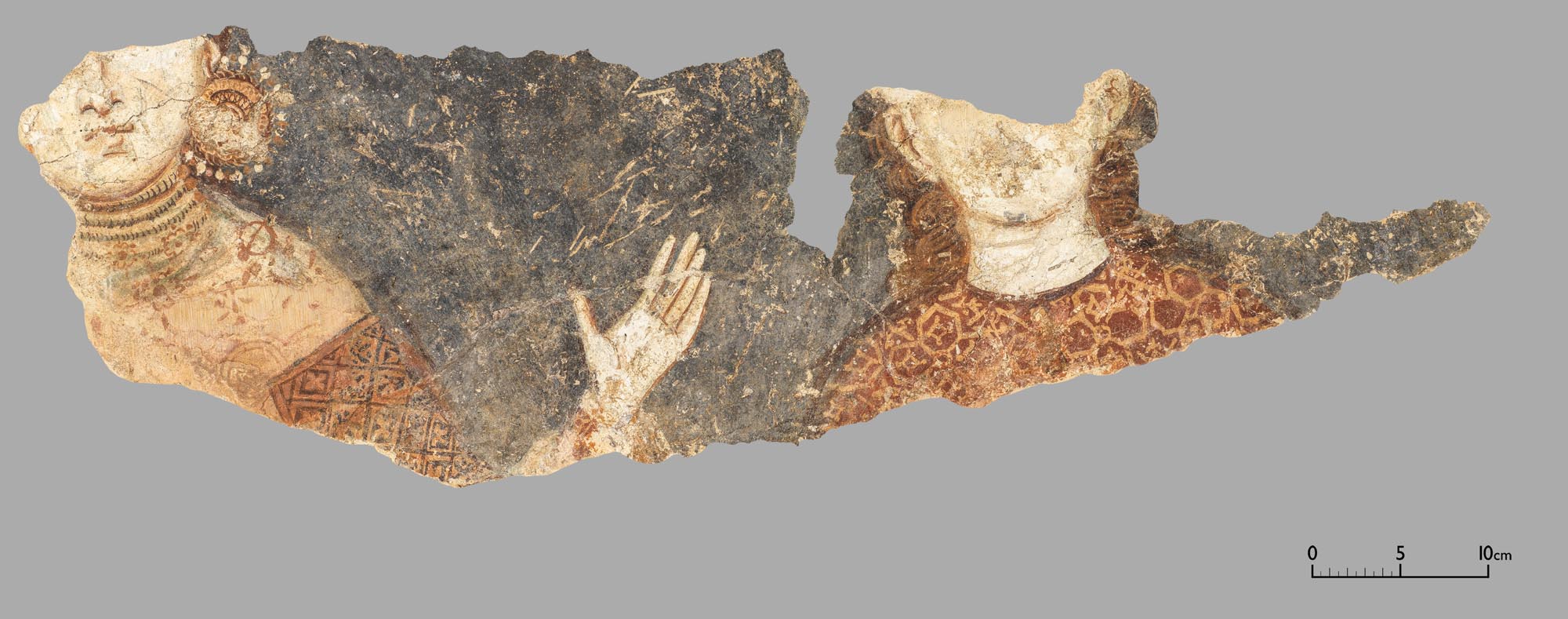
The monastic complex is located 6 km north of the village of Linos. The katholikon (monastery church) was built in the late 10th – early 11th century as a single-nave church. In the 11th century it was expanded and acquired the form of a cross-in-square church. The marble floor, of excellent quality, is divided into large panels with a variety of decorative themes. The central panel bears the highly symbolic “Five Loaves” theme, which is also found in the marble floor of the episcopal church of Maximianopolis/Mosynopolis. The church was decorated with wall paintings in three successive phases (many fragments were found during the excavation). The first phase is dated to the late 11th century and the second to the third quarter of the 12th century. Of particular interest is the third phase (14th c.) located in the narthex, which includes the dedicatory representation of a woman and a youthful male figure in luxurious garments. They were probably members of a local aristocratic family, which financially benefited the monastery and were possibly buried in the area of the church, where an extensive cemetery had developed. Among the findings from the graves of the cemetery, a gold signet ring stands out, which bears the inscription ΜΑΡΗΑC ΒΟΤΩΝΙΑΤΗΝΑ (“Marias Botoniatena”), probably belonging to the Georgian Princess Maria of Alania, widow of Emperor Nikephoros III Botaneiatis (1078-1081). The dynamic and cultured empress would probably have made substantial donations to the monastery, which, based on archaeological evidence, experienced its greatest prosperity during the 11th century.
Of the other buildings of the monastic complex, the monumental semi-subterranean cistern covered with small oval domes, a built fountain and the mankipeion (kitchen), serving the needs of the monastic community, stand out.
Byzantine Bathhouse, Mischos
Scattered antiquities
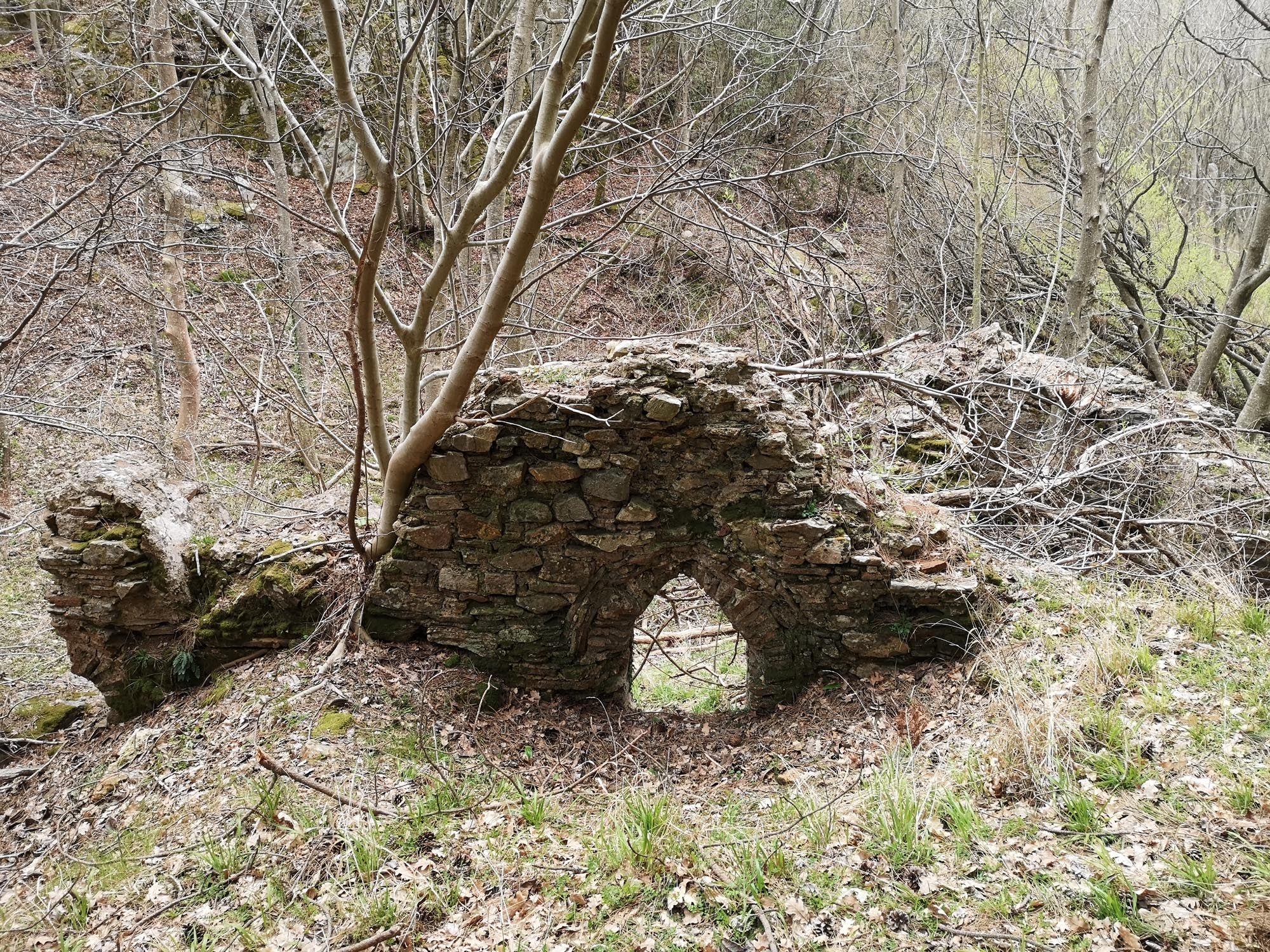
Besides the above monuments, which have been revealed by excavations, the remains of various other buildings are still visible on Mount Papikion. They include the remains of a large cistern and a watermill in the Kilise Dere stream, not far from the monastic complex of Linos.
Other stops in the Regional Unit of Rodopi

This is the title
Lorem ipsum dolor sit amet, consectetur adipiscing elit. Ut elit tellus, luctus nec ullamcorper mattis, pulvinar dapibus leo.