Makri

Makri, a Byzantine castle-city with a “prehistory”

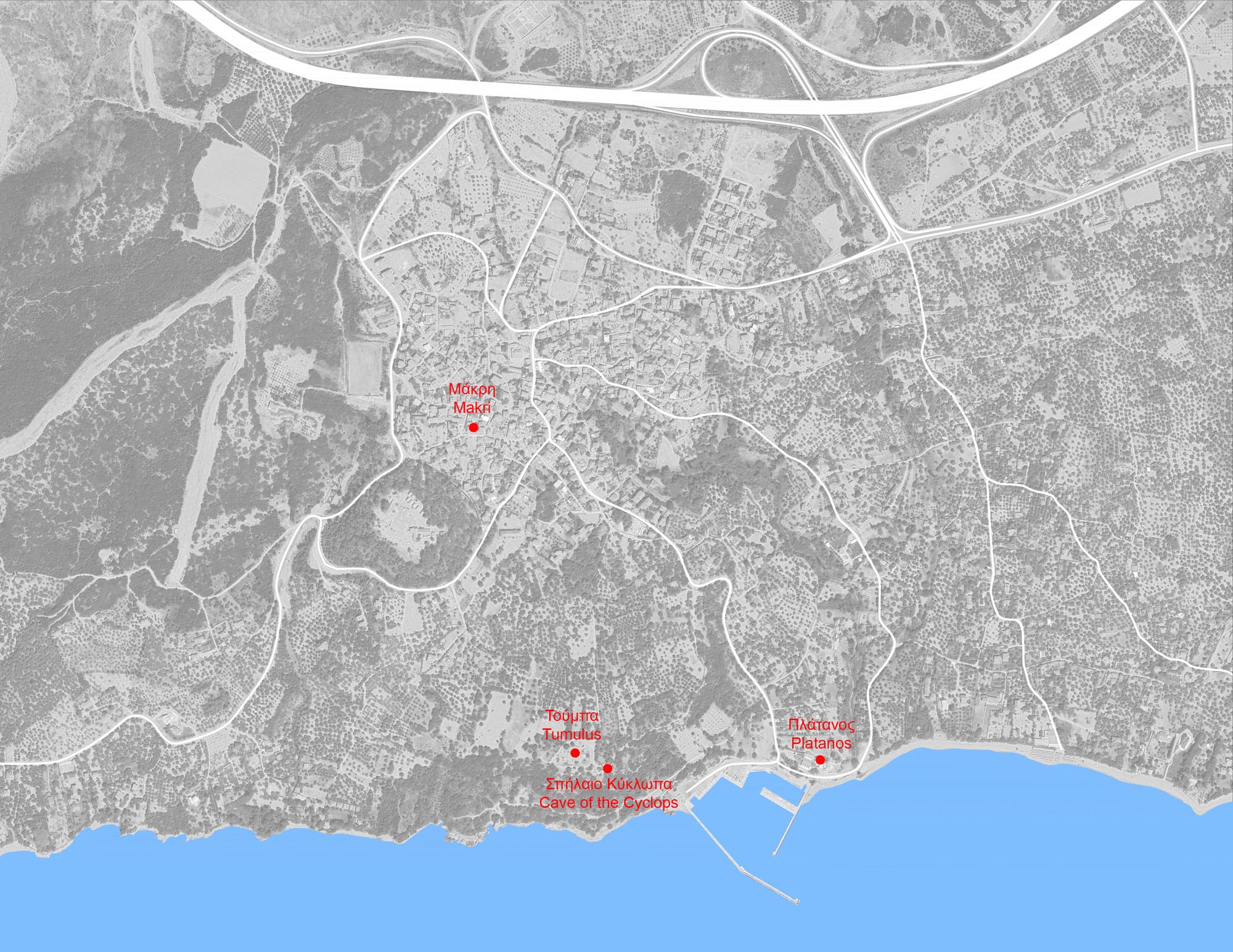
Eleven km west of Alexandroupolis is the community of Makri, one of the most important castle-cities of Thrace during the Byzantine period. In the port of today’s village, the small harbour of Platanos, is the “Cave of the Cyclops”, where, according to local folklore, lived the one-eyed Cyclops Polyphemus, whom Odysseus intoxicated with wine before blinding him. Very close to the cave, on a natural rocky outcrop, a large prehistoric tumulus was discovered when the Bulgarians dug trenches here during the First World War. The tumulus at the site known as Toumba (which actually means “tumulus”) covers an area of 1 hectare. One of the most important Neolithic settlements in the Balkans arose here from 6200 BC onwards, lasting for about a thousand years. The Neolithic settlement was succeeded during the Classical and Hellenistic periods by a small trading post, covering an area of 1,500 m2, which remained in use from the 5th to the 2nd century BC, mainly serving the local trade in wine, olive oil and pottery. During the Roman imperial period (31 BC-330 AD), the settlement was more active, with no changes in the buildings except for the construction of a large retaining wall about 40 m long. The tumulus was in continuous use until Byzantine times, as 11th-century burials have come to light, suggesting that it served as the cemetery of the neighbouring Byzantine Makri. The important movable excavation finds are displayed in the Archaeological Museum of Alexandroupolis.

Scholars formerly believed that the tumulus of Makri was the site of Orthagoria or one of the three of the six colony-cities of Samothracian Peraia (Mesembria, Zone or Dryn). More recent studies, however, have shown that the sources indicate that it is actually Sale, another of the colonies founded by Greeks from Samothrace. In Roman times, Sale was a supply station (mutatio) of the Via Egnatia, according to itineraria which mention the Sale station 7 miles from the Tempyra (Timpiro or ad Unimpara) mutatio. The latter, according to the prevailing view, was located on the site of modern Alexandroupolis. The distance of 7 miles does indeed correspond to the distance of 11 km between Makri and Alexandroupolis. This view is supported by the growth of the Toumba settlement in the Roman imperial period, probably due to the operation of the Via Egnatia, of which it was a station.

In Byzantine times, the castle-city of Makri, just a few metres north of the mound, seems to have remained a station of the Via Egnatia. The establishment of a station there is justified by its key geographical position behind the Zonaia Mountains, which separate the plain of Komotini from that of the River Evros.

History

Ancient Sale is mentioned in written sources from the 5th century BC to the 4th century AD. In the early 2nd century BC, it is referred to as a village that had passed into the sphere of influence of Maroneia. On the founding of Trajanopolis in the early 2nd century AD, it was probably incorporated as a town in the territory of that neighbouring city. The remains of the Classical and Roman periods that have come to light so far are limited and are located only at the site of Toumba or the “Cave of the Cyclops”.

From the 9th century onwards, Makri appears to be an important castle-city, an episcopal see subject to the metropolitan see of Trajanopolis, while during the Byzantine Civil War (1341-1347) it became a metropolitan see itself.

In 1195, Emperor Isaac II Angelos (1185-1195) was captured in Makri by the forces of his rebellious brother, the future Emperor Alexios III Komnenos (1195-1203). He was taken to the nearby Monastery of Panagia Kosmosoteira in Bera (present-day Feres), where he was blinded. In 1204, Makri fell to the Crusaders, while in 1205/6, like many other cities of Thrace, it suffered from the devastating raids of the Bulgarian ruler Kalojan (Ioannitza or “Skyloioannes”). However, Makri continued to exist and even prosper.

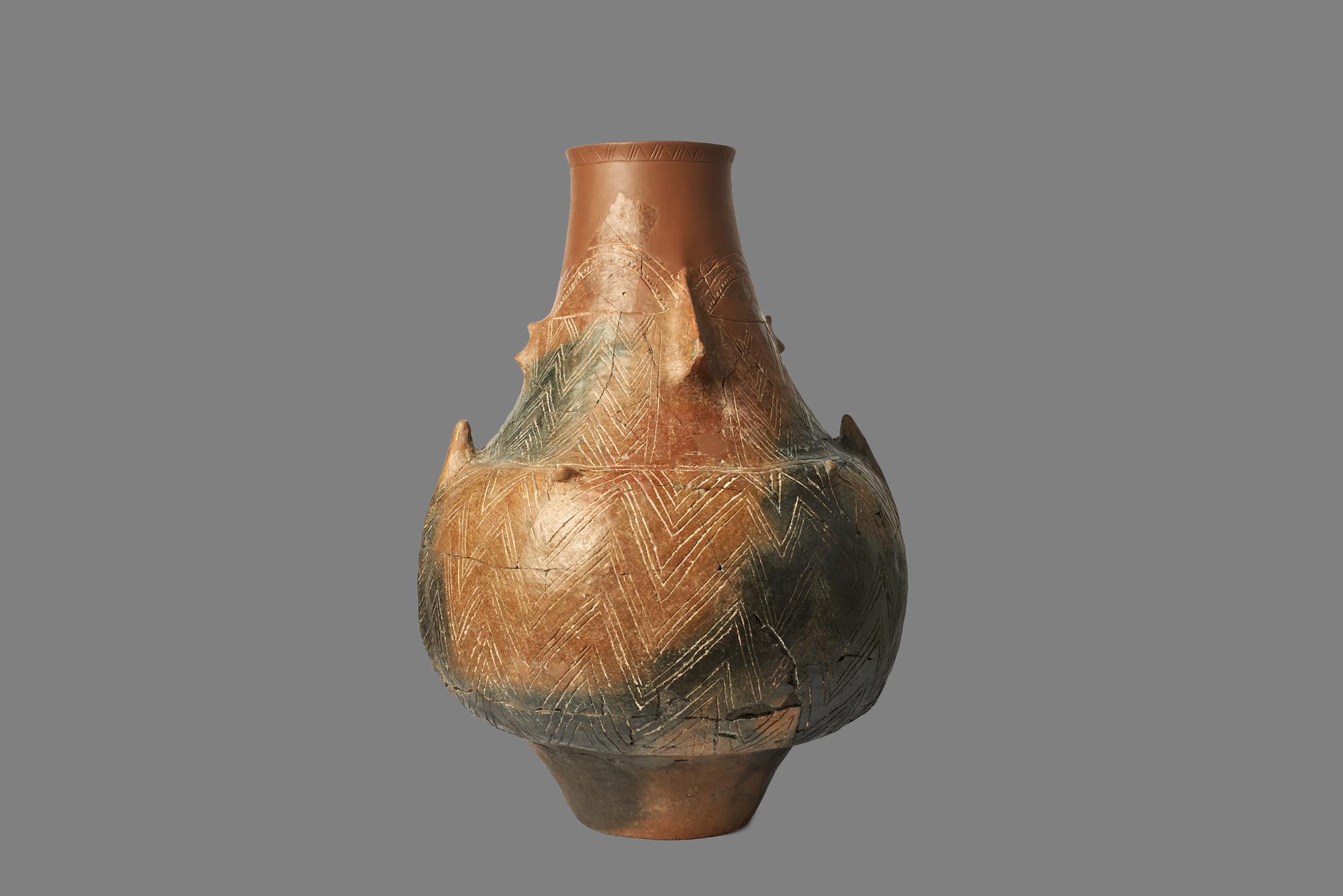
Τούμπα Μάκρης, πήλινο ανθρωπόμορφο αγγείο νεολιθικής εποχής, Αρχαιολογικό Μουσείο Αλεξανδρούπολης / Toumba, Makri, clay anthropomorphic vessel of the Neolithic period, Archaeological Museum of Alexandroupolis
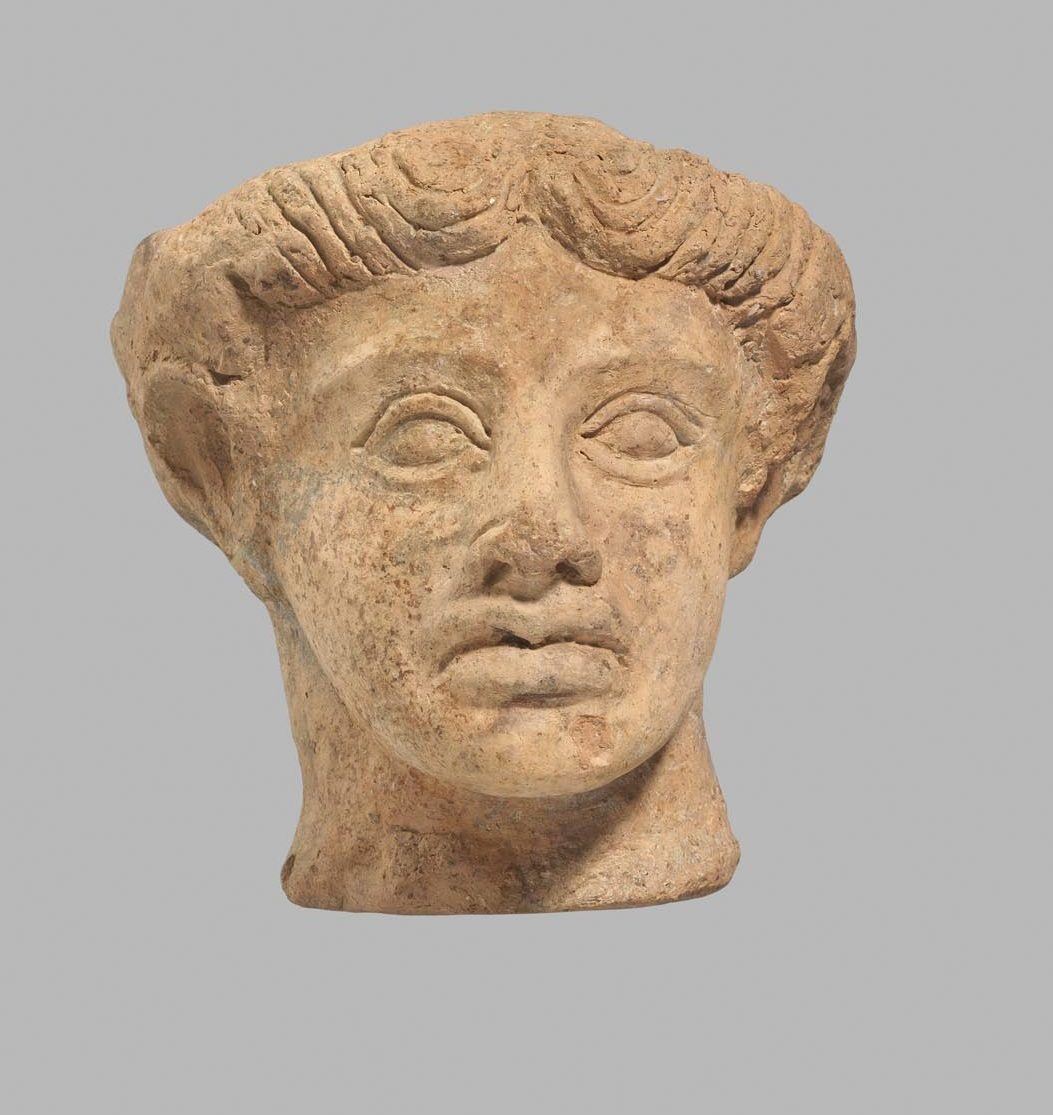
Τούμπα Μάκρης, κεφάλι πήλινου γυναικείου ειδωλίου, 5ος αι. π.Χ., Αρχαιολογικό Μουσείο Αλεξανδρούπολης, φωτ. Ο. Κουράκης/ Toumba, Makri, Head of clay female figurine, 5th c. BC, Archaeological Museum of Alexandroupolis, photo: O. Kourakis

There is no information on the conquest of Makri by the Ottomans. According to the Ottoman traveller Evliya Çelebi, the city was captured by the Ottoman Bey Gazi Evrenos. It is known that the metropolitan bishop of the city was facing difficulties due to the  Ottoman raids as early as 1361. The conquest of the cities of Thrace by the Ottomans to the west of Koumoutzena (Komotini) was completed by 1373.

In Ottoman times, the city was renamed Megri and expanded outside the walls. According to the Burgundian traveller Bertrandon de la Broquière, who visited the city in 1432-1433, it showed signs of decline and was inhabited by “Greeks and Ottomans”. The city was described by Evliya Çelebi, who came here in the late 1670s. At that time, Makri consisted of about 200 houses, 150 of which belonged to Christians and the rest to Muslims. The latter lived in the varosi, the quarter outside the walls. The city had a considerable number of secular and religious buildings, including five hans (inns) for travellers and a public hammam. The main economic activity of the city was trade, followed by fishing, agriculture and olive oil production.

In the modern greek period (6 April 1835), the Five Holy Neomartyrs, Manuel Palogoudas, Theodore Demetriou, George Kourounis and George Kalakikos of Samothrace and Michael of Cyprus, were martyred in Makri by the Ottomans. Their relics are housed in both Makri and Samothrace.

Monuments - Antiquities

Fortifications
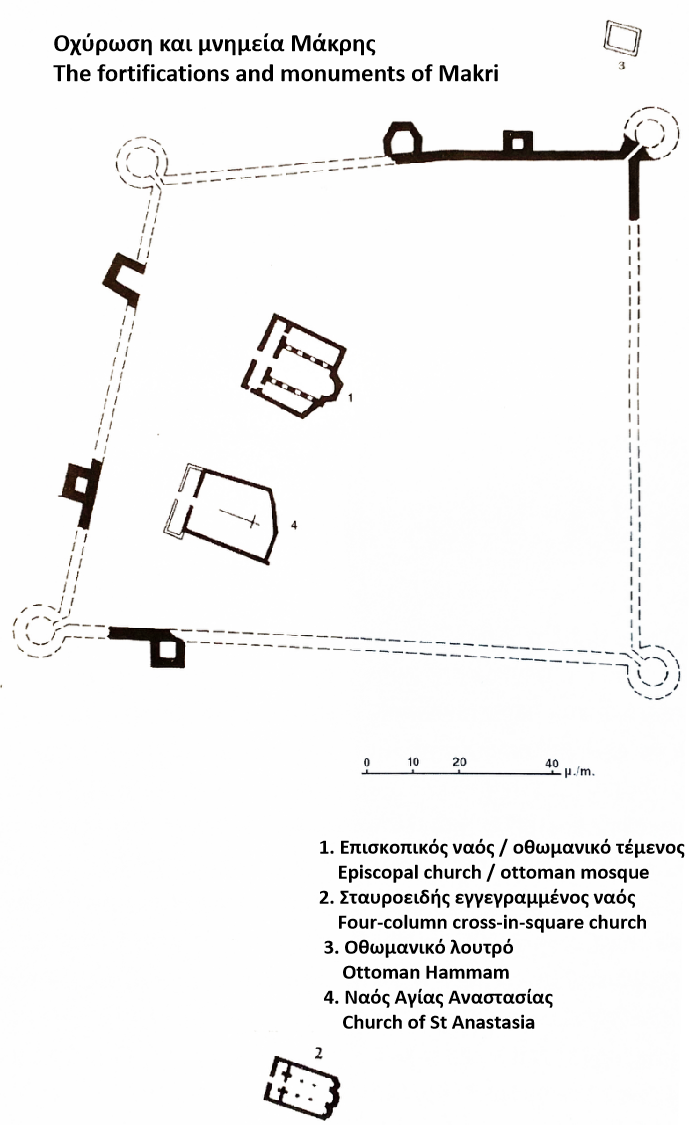
Τοπογραφικό διάγραμμα Μάκρης / Makri, topographic map. Π. Τσατσοπούλου – Ντ. Καλλιντζή – Ν. Ζήκος, Μεσημβρία/Ζώνη - Μάκρη: Αρχαιολογικός οδηγός/Mesembria/Zone – Makri: Archaeological Guide, εικ. 55. Ψηφιακή επεξεργασία /digital processing: ΔΒΜΑ

The Byzantine castle of the town, of which only a few parts survive today, was in good condition until the middle of the 17th century, when Evliya Çelebi visited the area. The enceinte, dated to the 9th-10th centuries, is around 400 m long. There was a round tower in each of the four corners of the wall, while the defences were reinforced by four- and five-sided towers at regular intervals.

Within the Byzantine wall, next to the Church of St Anastasia, are the remains of a Muslim mosque that was built at the beginning of the 20th century. The excavation has revealed the large, rectangular central hall of the mosque and the revak (porch) along its north side. The mosque was founded on the ruins of a 10th-century three-aisled basilica, which is thought to have been the city’s episcopal church. Following the destruction of the basilica in the Late Byzantine period, the site was used as a cemetery. Later, in the Ottoman period, warehouses were built against the outer walls of the church.

Εντός του βυζαντινού τείχους, δίπλα στον ναό της Αγίας Αναστασίας, διατηρούνται τα κατάλοιπα μουσουλμανικού τεμένους, που ανεγέρθηκε στις αρχές του 20ού αιώνα. Η ανασκαφή αποκάλυψε τον κεντρικό μεγάλο ορθογώνιο χώρο του τεμένους και το revak (προστώο) κατά μήκος της βόρειάς του πλευράς.

Το τζαμί ήταν θεμελιωμένο στα ερείπια τρίκλιτης βασιλικής του 10ου αιώνα, η οποία θεωρείται ότι αποτελούσε τον επισκοπικό ναό της πόλης. Μετά την καταστροφή της βασιλικής κατά τους υστεροβυζαντινούς χρόνους, ο χώρος χρησιμοποιήθηκε ως νεκροταφείο. Αργότερα, στην οθωμανική περίοδο, σε επαφή με τους εξωτερικούς τοίχους του ναού ανεγέρθηκαν κτίσματα αποθηκευτικού χαρακτήρα.

In the southeast part of the village, outside the Byzantine walls, in the Episkopeio neighbourhood, excavations have brought to light the remains of a 12th-century church of the cross-in-square tetrastyle type. Erected after the destruction of the Middle Byzantine three-aisled basilica, this was the second episcopal church of Makri, as the place-name “Episkopeio” suggests. The excavation revealed notable architectural members from the marble templon of the church.

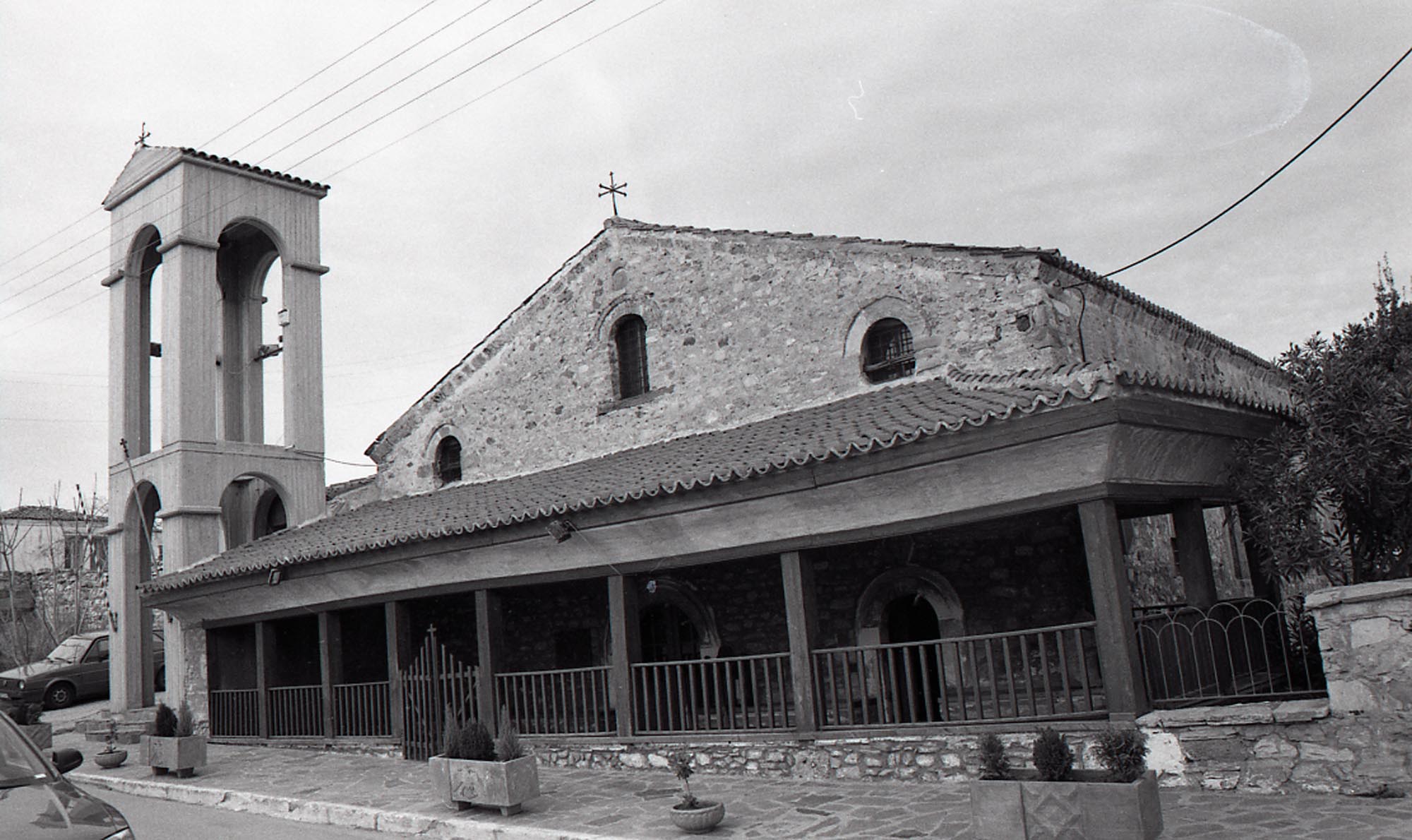
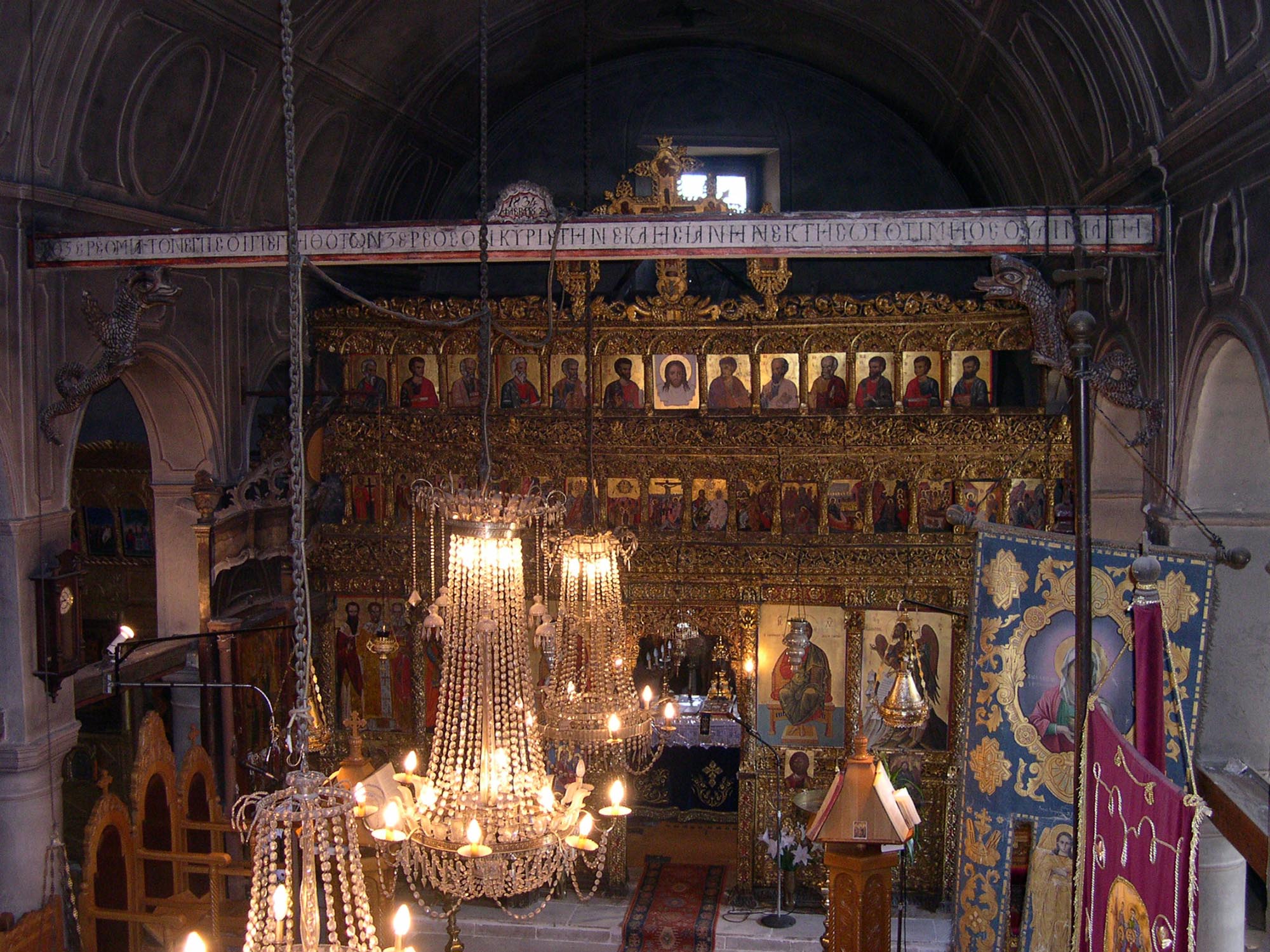
The church is located within the walls. According to the surviving inscription, it was built in 1800, at the expense of Patriarch Neophytos VII of Constantinople (1789-1794, 1798-1801), who served as metropolitan bishop of Maroneia between 1771 and 1789. The construction of the church was also funded by the prokritos (local notable) Hatzimanolakis, the local toutountzides (tobacco-growers) and the “pious Orthodox Christians” of the community. In 1833, the church was renovated with the aid of the members of the Christian community and “the pious guild” of the toutountzides. The church is a relatively small three-aisled basilica, with a large narthex on the west. Of particular interest is the gilded, carved wooden templon which belonged to an earlier post-Byzantine church and dates from the 17th or 18th century.

The hammam is preserved in good condition near the northeast corner of the wall. It dates from the 16th-17th century and was in use until the beginning of the 20th century. It is a small hammam, consisting of four rooms with a total area of 43 m2.

The monuments of the Οttoman period of Makri also include over ten watermills and an arched stone bridge across the stream on the east side of the Byzantine fortifications.

On the road from Makri to the beach of Agia Paraskevi is preserved a türbe (mausoleum) which was part of the Sancaktar Baba tekke (dervish house). The tekke was destroyed in 1826 by Sultan Mahmud II (1808-1839). The earliest reference to the tekke comes from the Capuchin friar Robert de Dreux, who visited Makri in 1666. According to his account, the türbe contained a coffin with a large turban towards the head, with a jar full of fat placed on either side. The fat, which was considered holy, was used by for healing the sick.

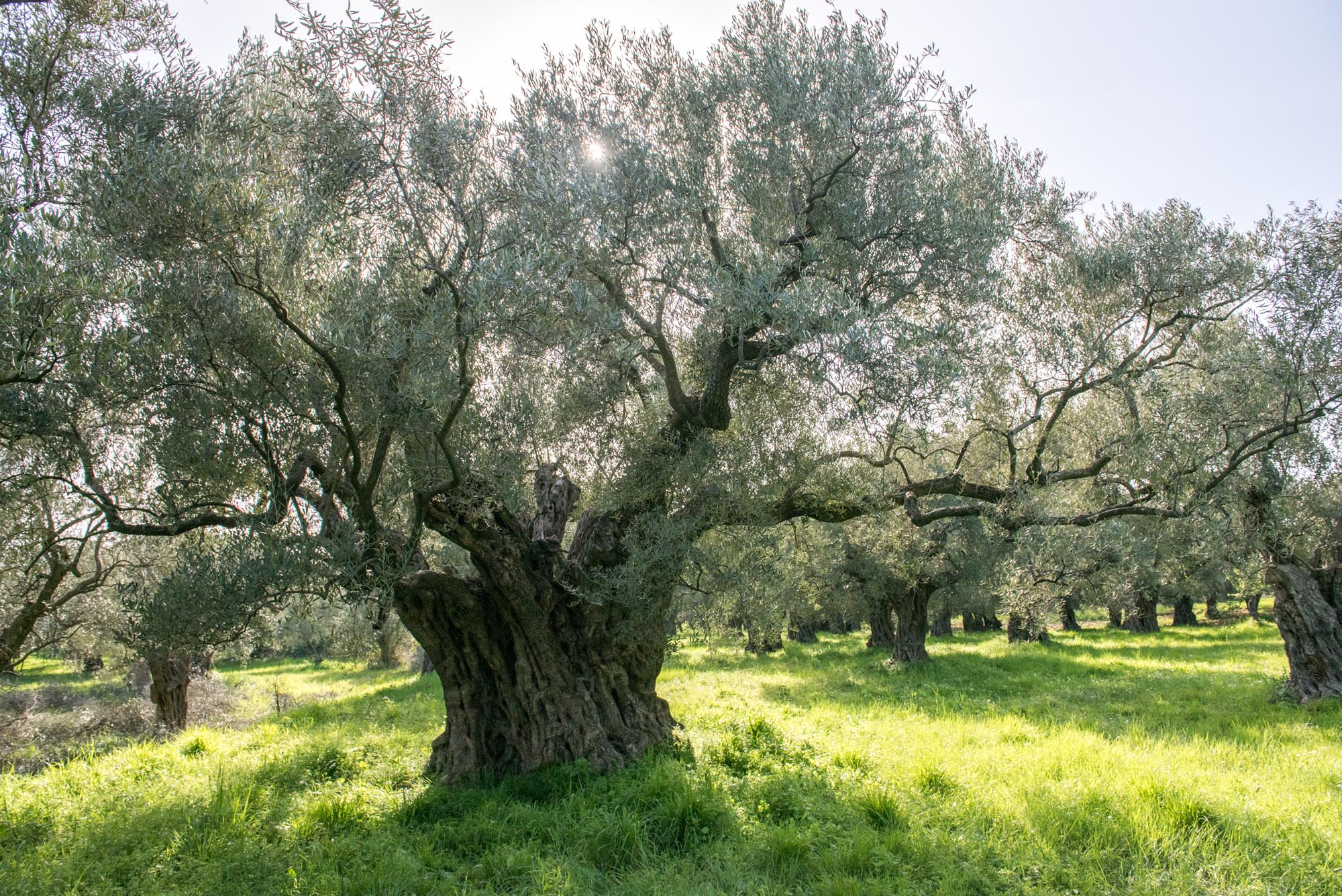
Ελαιώνας Μάκρης, φωτ. Δήμος Αλεξανδρούπολης / Olive grove of Makri, photo: Municipality of Alexandroupolis

At the site of Agios Georgios, 1.5 km east of Makri, where there is a chapel built in 1920, excavations have brought to light the east part of yet another Byzantine church, with the three conches of the apse. Based on the movable finds, the church is dated to the 13th-14th centuries. It is believed to have been the katholikon of a monastery. The site is located in the famous olive grove of Makri, which contains around 220,000 ancient olive trees over a century old. The top-quality olive oil they produce, recognized with Protected Designation of Origin (PDO) status by the European Union,  highlights “The culture of the olive and olive oil” inscribed in Greece’s National Inventory of the Intangible Cultural Heritage.

Other stops in the Regional Unit of Evros

error: