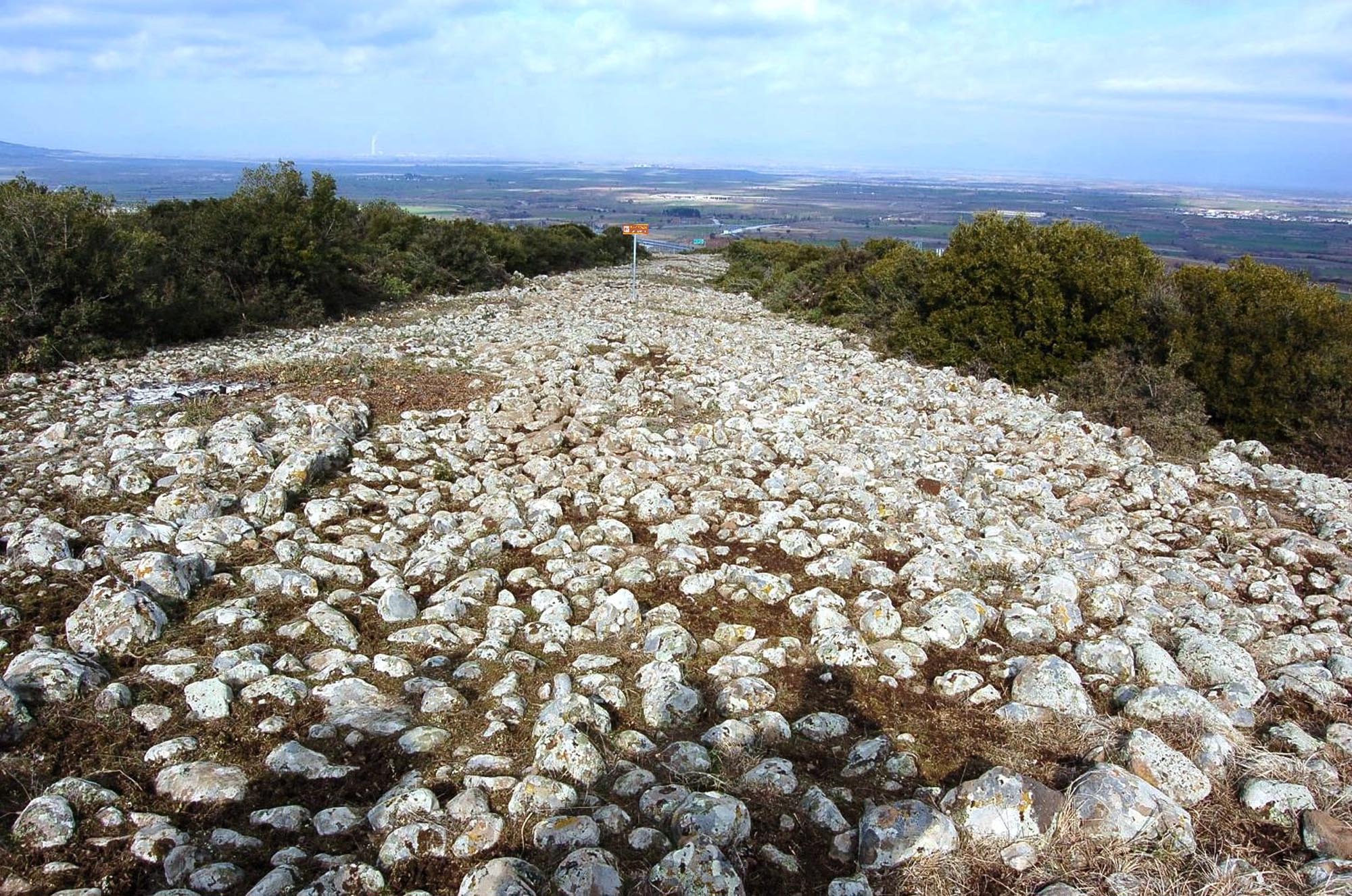
Section of the ancient Via Egnatia
Evros, where the ancient Via Egnatia is preserved better than anywhere else
The Regional Unit of Evros has the most and best-preserved sections of the Via Egnatia than anywhere else in Greece. The parts of the ancient Via Egnatia visible today have been preserved by the Ministry of Culture.
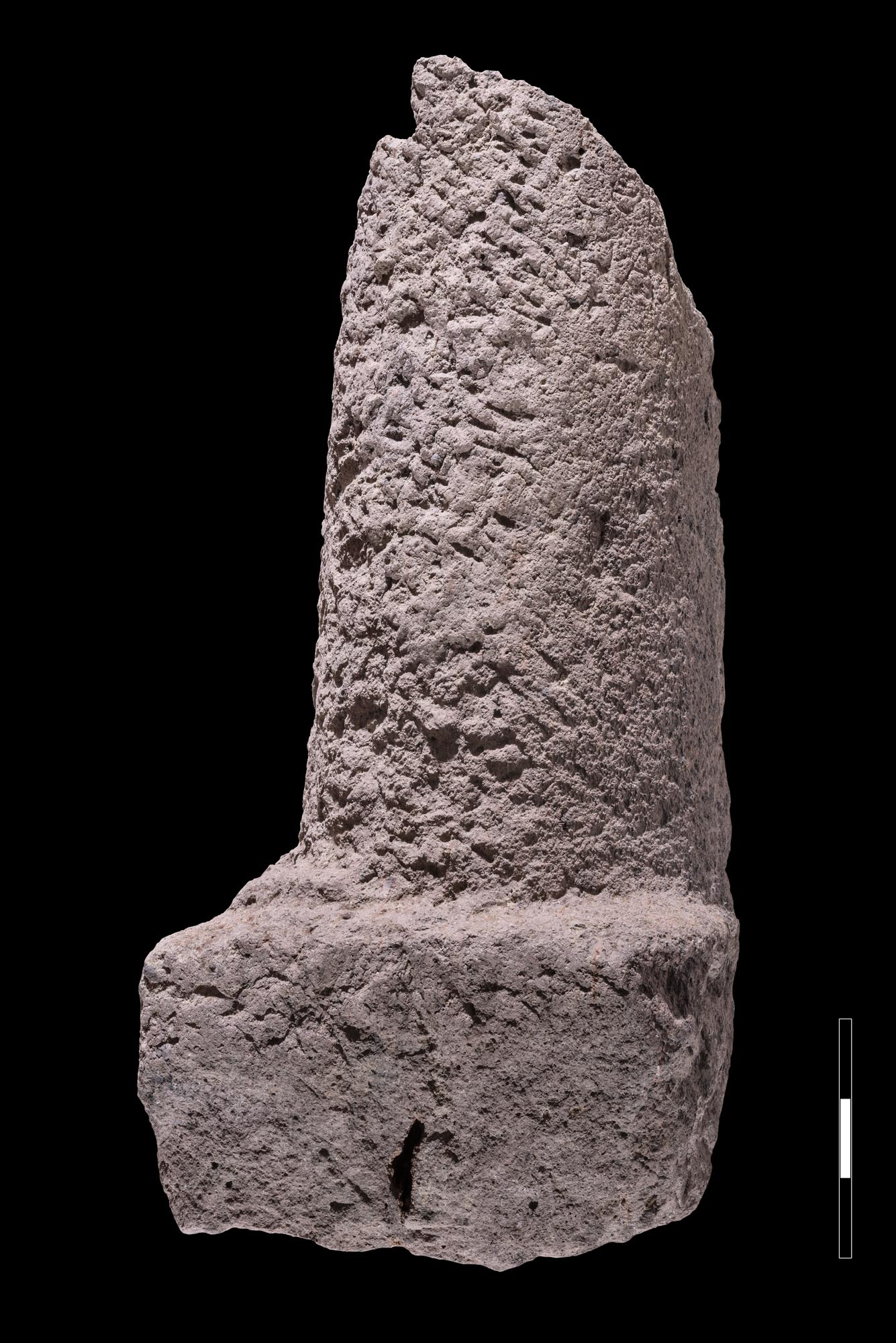
Some of the best-preserved sections, along a route about 5 km long, are visible in the eastern part of the Regional Unit of Evros, between the archaeological site of Trajanopolis and the village of Monastiraki. In this section, the ancient Via Egnatia runs east-west, following the foot of the hills along the modern Alexandroupolis–Kipoi highway, in order to avoid the marshes of the River Evros. The longest section, 300 m long, lies about 1.5 km before the modern village of Doriskos, where the ancient city of the same name, one of the most important in Thrace, is located at the site of Saraya, on a low hill overlooking the plain around the Evros Delta. In ancient Doriskos was found a milestone of the Via Egnatia dated to the Roman imperial period (31 BC–330 AD). It is now exhibited in the Archaeological Museum of Alexandroupolis.
A long stretch of the ancient Via Egnatia is also preserved in the western part of the Regional Unit of Evros, on the border with the Regional Unit of Rhodope, where it crosses the Zonaia Mountains, linking the plains of Alexandroupolis and Komotini. This section of the Via Egnatia follows the ancient “Royal Road” along which Xerxes’ great army moved during the Second Persian War (480 BC). It is still a marvellous example of route planning to this day, being perfectly adapted to the local terrain: it avoids sharp bends and steep gradients, which is why in some places it does not follow the shortest route, but runs along smooth ridges, avoiding the flow of water. A few metres east of the ancient Via Egnatia, the modern Egnatia Motorway and the Komotini–Alexandroupolis national highway pass through the deep gorge of Vathyrema (Karanlik Dere). Excavators were used to cut the two modern roads through the gorge, something which was not possible in ancient times.
Many of the sections of the ancient Via Egnatia in the Zonaia Mountains were not previously visible and were identified during works to highlight the road carried out by the competent Ephorate of Antiquities. In some areas, the ancient roadbed has been destroyed by the cutting of modern forest roads, which faithfully followed the route of the ancient road. An archaeological excavation 1.5 km northwest of the village of Komaros studied the particularly careful construction of the road, which is 8 m wide at this point, with a pronounced curvature of up to 8%. The roadbed is 1.20 m deep. Large stones have been placed at the edges of the road, projecting above the surface to prevent carts from slipping. A row of long stones runs down the middle of the carriageway, separating the two lanes.
The sections of the Via Egnatia in the Zonaia Mountains have been conserved and highlighted in the framework of a European Union project for the promotion of Roman roads in the Mediterranean. Today, one can walk along the mountainous route of the Via Egnatia, following the signs placed by the Ephorate of Antiquities of Evros.
Along the route of the Zonaia Mountains a series of fortified mounds have been identified, which protected the coastal positions of Samothracian Peraia. These fortified positions form an arc of mutually supported peaks which fully control the passes of the Zonaia Mountains and have an excellent view of the plains of Komotini and Alexandroupolis, and the Thracian coast.
In the plain of Alexandroupolis, in the southern foothills of the Zonaia Mountains, written sources mention a changing station (mutatio) of the Via Egnatia named Melalico, Milolito or Micolito, which is located either between the modern villages of Dikella and Mesimvria, or a little further west, near the archaeological site of Sidiropigado. It makes sense that there would be a way station here for a rest and an overnight stop before the demanding crossing of the Zonaia Mountains, where there were no supply stations.
Correspondingly, there was another station (mansio) of the Via Egnatia to the north of the Zonaia Mountains, in the plain of Komotini, called Brendice, Bricize, Brenzici or Berozicha. This station is located in the environs of the village of Aetolofos, where a milestone of the Via Egnatia has been found, dated between 235 and 238 AD.