Lithochori

Lithochori, a Roman cemetery with burials of humans and horses with their chariots

 The rescue excavation carried out in 2006-2007 at the Lithochori site of the Municipality of Nestos, 5 km west of the River Nestos, during the construction of the Egnatia Motorway, revealed finds of great archaeological significance. A total surface area of over 1,700 m2 was excavated, bringing to light part of an extensive cemetery and a few architectural remains: the foundations of a five-room building and a tower. Just 300 m northwest of the site, which was unknown prior to the excavation, is a hill where surface pottery of the Hellenistic and Roman periods has been found, probably related to the settlement to which the cemetery belongs. The site lies within the boundaries of ancient Thrace, in an area inhabited by the Thracian tribe of the Sapaeans, and is located just 6 km southwest of the city of Topeiros, the station of the Via Egnatia known from ancient sources.

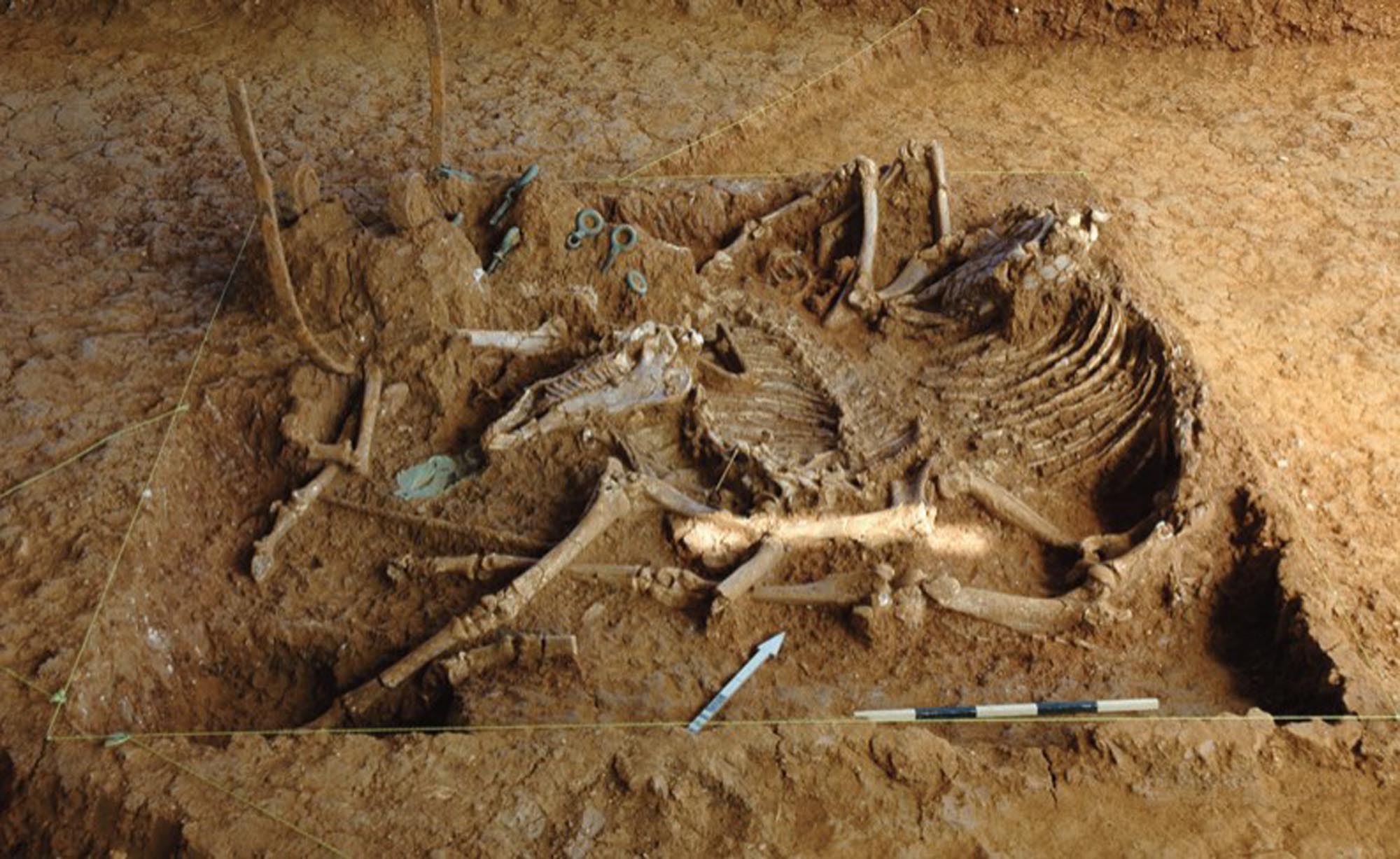
Ταφή ζεύγους αλόγων και κατάλοιπα ιππήλατης άμαξας, ΕΦΑ Καβάλας / Burial of a pair of horses with remnants of a horse-drawn chariot, Ephorate of Antiquities of Kavala

The most important excavation finds come from the cemetery, which contains human cremations and burials, accompanied by burials of horses  along with their chariots. This particular burial custom was widespread in ancient Thrace from the 5th century BC to the 4th century AD. Burials of humans and horses have been found in Bulgaria, into which Northern Thrace extended, and in Greece, in one of the largest tumuli in Thrace, at Ploutos, between the villages of Mikri Doxipara and Zoni in Evros Prefecture (90-120 AD).

The cemetery of Lithochori has two main phases of use, the first in the 5th-4th century BC, and the second from the middle of the 1st to the first quarter of the 3rd century AD. During the second phase, in the Roman period, it was laid out in an organised manner and divided into two sections, north and south, by the construction of a long, large wall. The south part of the cemetery is dominated by two circular burial enclosures of uneven size, dating from the late 2nd to the early 3rd century AD, each with a cremation tomb in the centre.

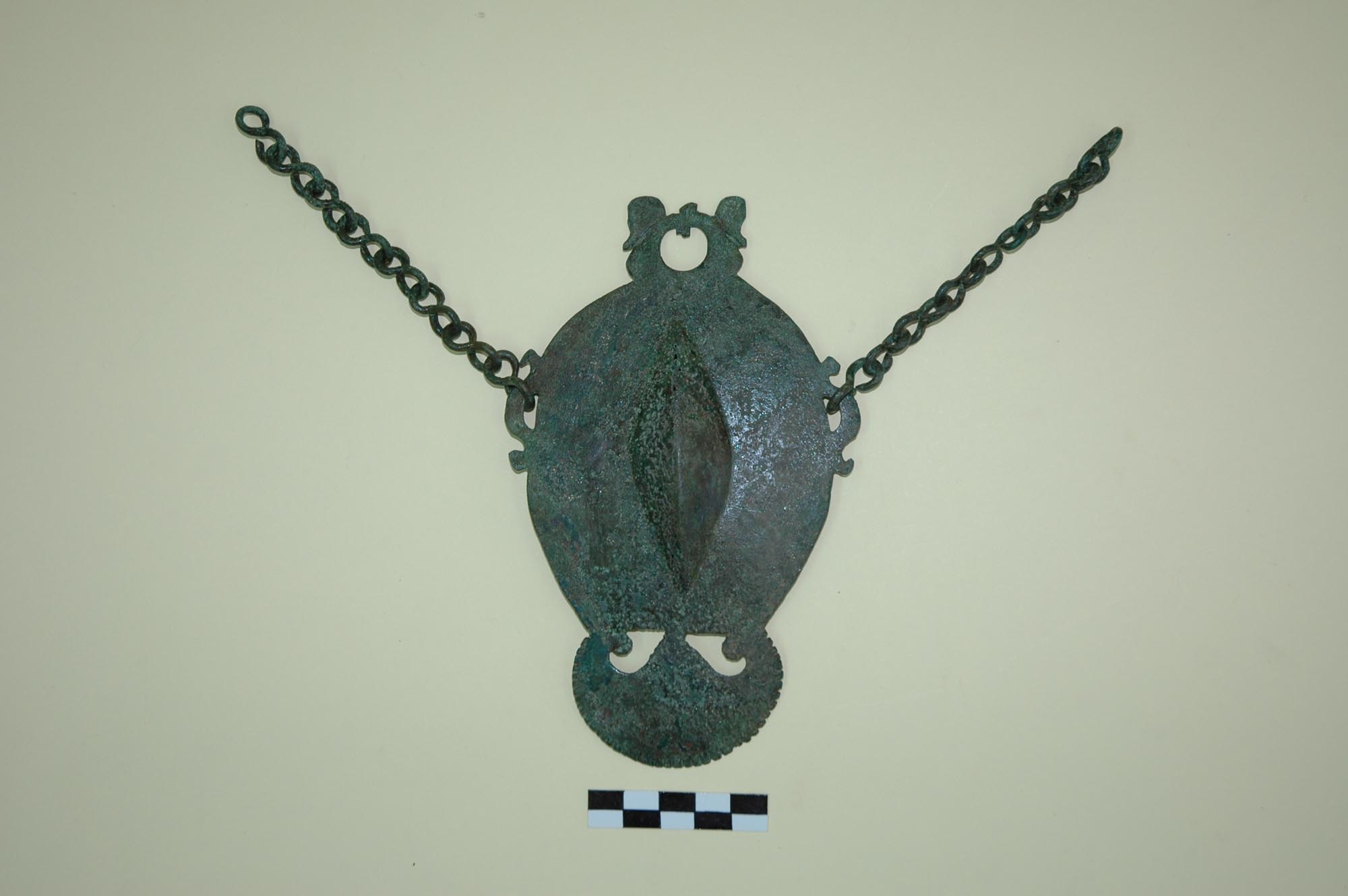
The finds in the north part of the cemetery, during the second phase of use of the site, are particularly important: they include two burials of people with their horses and 14 horse burials, four of them in pairs. Most of the horses were wearing harnesses, of which the bronze and iron trappings survive, some of them tin-plated to look like silver. Among the grave goods, which include bronze and iron weapons, bronze and clay vessels, and coins, the remains of two horse-drawn chariots stand out; they were found together with the skeletons of the pair of horses that drew them. One of the two vehicles is preserved in better condition and bears elaborate bronze decoration in the form of a Doric frieze with three metopes, depicting three of the labours of Hercules. Another important excavation find is a bronze shield boss bearing the name of its owner, Titus Gaius Sitas, who may have been a Thracian of noble birth, a Roman citizen, who served as a general or senior official of Sapaica, an administrative district of ancient Thrace, between 61-75 AD.

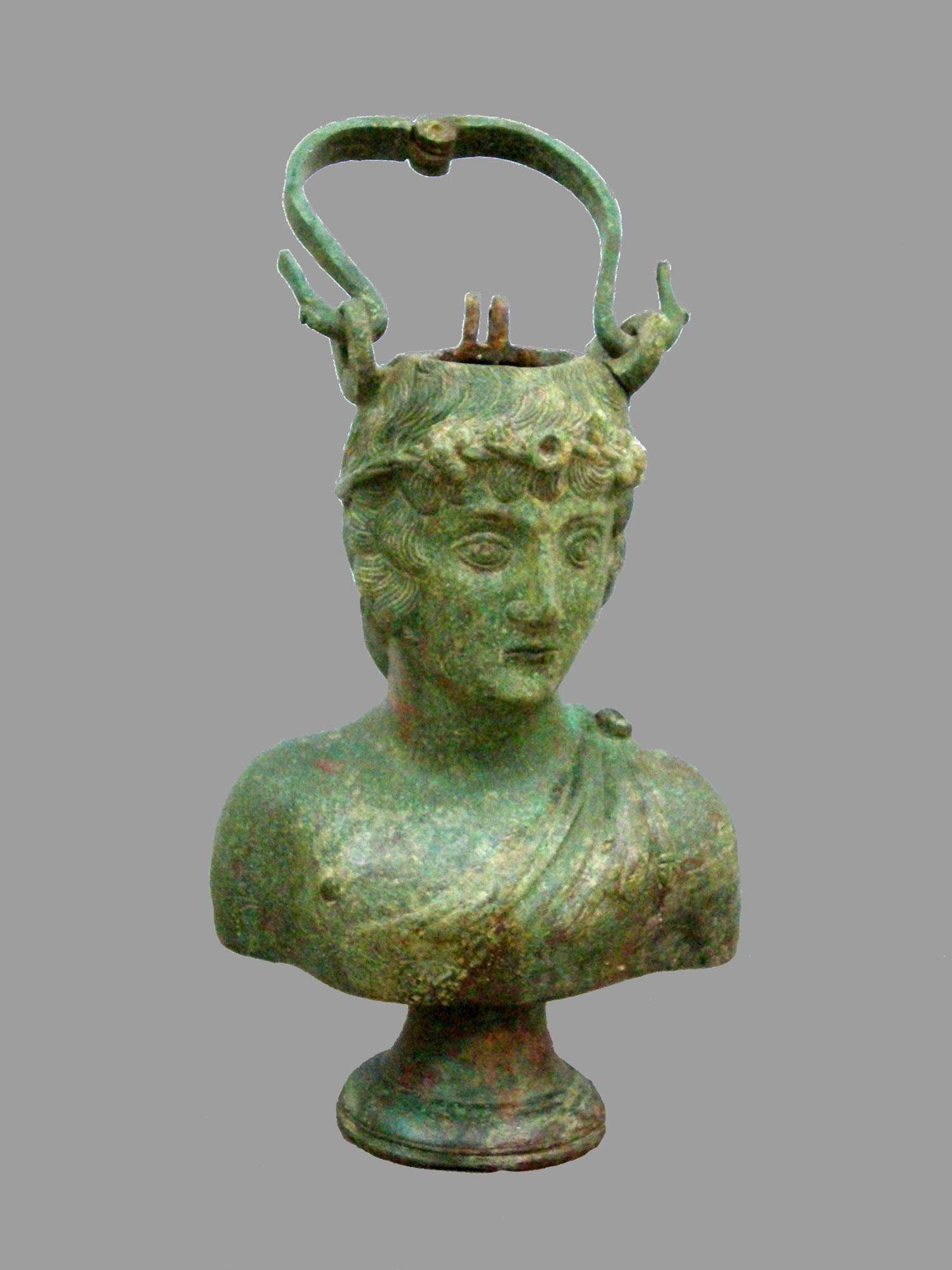
Χάλκινο πλαστικό αγγείο σε σχήμα προτομής Διονύσου, ΕΦΑ Καβάλας / Bronze plastic vessel in the shape of Dionysus head, Ephorate of Antiquities of Kavala
Χάλκινο προμετωπίδιο, εξάρτημα ιπποσκευής, από ταφή αλόγου, β΄ μισό 1ου αι. μ.Χ., ΕΦΑ Καβάλας / Bronze frontal plate, horse harness fitting, from a horse burial, 2nd half of 1st c. AD, Ephorate of Antiquities of Kavala

Titus Gaius Sita and the other prominent members of the local community who are buried in Lithochori along with their weapons, their luxury chariots and their horses, would certainly once have travelled over the paved surface of the ancient Via Egnatia which ran nearby, between the excavation site and the Kavala–Xanthi highway.

The architectural remains of the very long (27.45 m) five-room building, in use from the late 1st to the mid-4th century AD, are probably also linked to the ancient road. The building was discovered south of the cemetery and is either a farmhouse with a courtyard or a building that served travellers on the ancient Via Egnatia.

Just outside the cemetery, the foundations of a rectangular building measuring 4.70 x 3.70 m were uncovered. Its massive walls (2 metres thick) and its solid construction of rubble masonry and lime mortar indicate that the upper part would have been very tall. It is probably a watchtower and is dated between the second half of the 1st and the first half of the 2nd century AD.

Among the movable finds of the excavation, a bronze moulded vase in the shape of a bust of Dionysus finally stands out.

During the construction of the Egnatia Motorway, part of the excavation was filled in and preserved. The part of the cemetery with the horse burials was left in place once the archaeological remains had been consolidated and conserved.


Other stops in the Regional Unit of Kavala

error: