Akontisma

Akontisma, the ancient settlement and station of the Via Egnatia east of Neapolis (modern Kavala)

On the naturally fortified hilltop that rises east of today’s seaside town of Nea Karvali, on the Bay of Kavala, are preserved the remains of an ancient castle. According to the most widely accepted view, this is the polisma (small town) of Akontisma known from written sources. In Roman itineraria, Akontisma is mentioned as the first station (mansio) of the Via Egnatia after Neapolis (modern Kavala) and 9 Roman miles distant from it, a distance that does in fact coincide with the roughly 13 km between the ancient settlement and Kavala. Akontisma is mentioned on a milestone found in Kalambaki, Drama, which refers to repairs to the Via Egnatia in 112 AD, during the reign of the Roman Emperor Trajan (98-117 AD). In the village of Lefki, just north of Nea Karvali, another milestone has been found which refers to repairs carried out to the Via Egnatia in 216-217 AD, during the reign of Caracalla (198-217 AD), but the end of the inscription, where the station of the ancient road would probably have been recorded, is missing. The Roman historian Ammianus Marcellinus (4th c. AD) describes the area of Akontisma as mountainous and full of narrow passes. In the Synecdemus of Hierocles, compiled shortly before 535 AD, Akontisma is mentioned as one of the 32 cities of the province of Illyricum, a large administrative district of the Byzantine Empire.

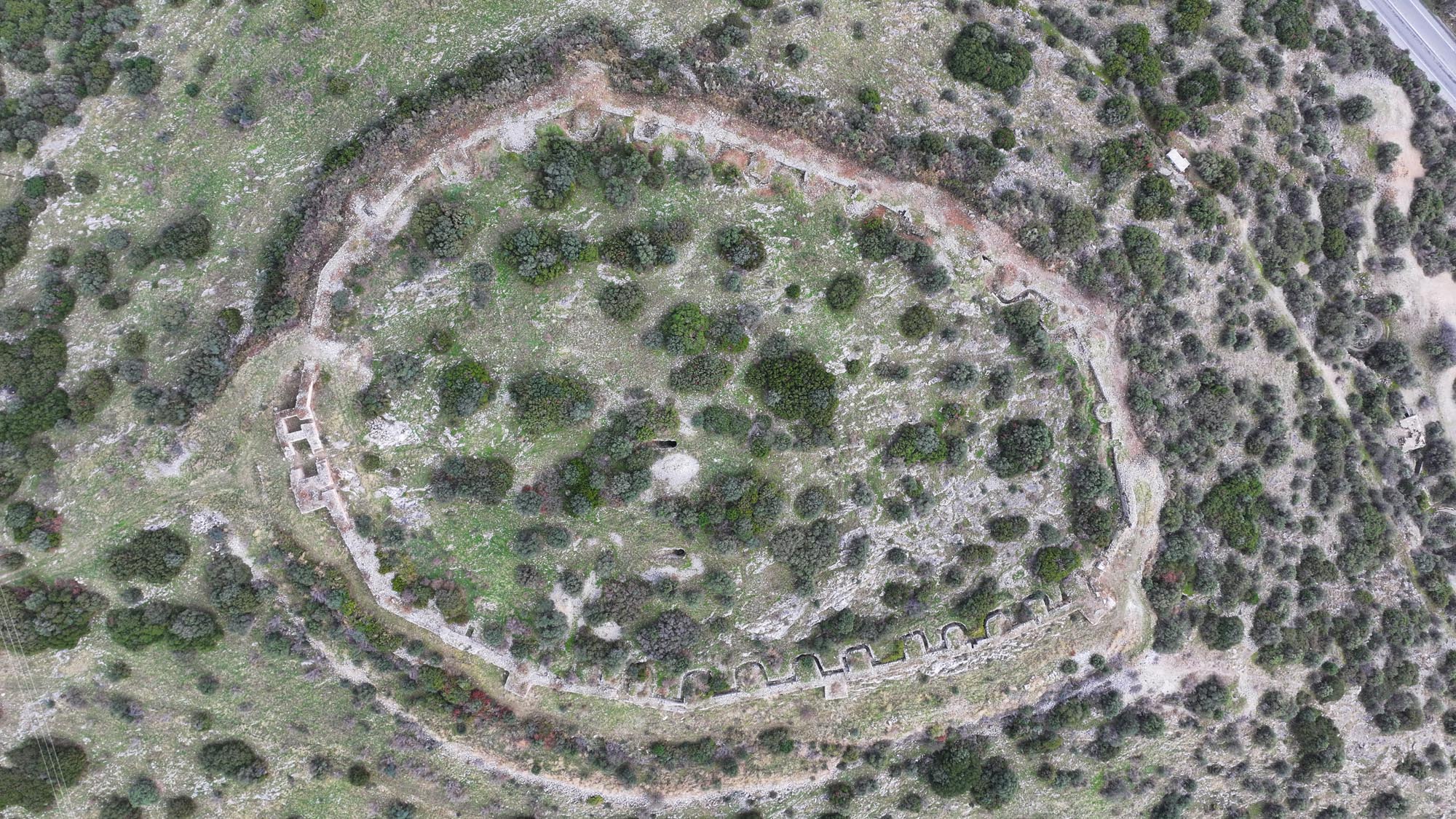
Αεροφωτογραφία του κάστρου, ΔΒΜΑ, φωτ. Κ. - Μ. Ξενικάκης / Aerial photograph of the ancient castle, DBMA, photo: K. - M. Xenikakis

The hill on which Akontisma is built is of particular strategic importance, as it is located on a narrow strip of land between the coastline and the southern foothills of Mount Lekani. This position – which in ancient times was probably a coastal one, as the coastline has changed due to silting – ensured control of the Via Egnatia, which crossed the plain of Chrysopolis after Neapolis, continuing east towards the River Nestos and Thrace. The ancient road probably passed over the neck of the hill, outside the main north gate of Akontisma, where the modern Egnatia Motorway now runs. Alternatively, the Via Egnatia may have passed south of the hill, parallel to the coast, following the course of the old Kavala–Xanthi national highway, but this seems less likely. The remains of an old roadbed, though not necessarily that of the ancient Via Egnatia, have been found on the north side of the fortified hill, directly above the tunnel of the Egnatia Motorway.

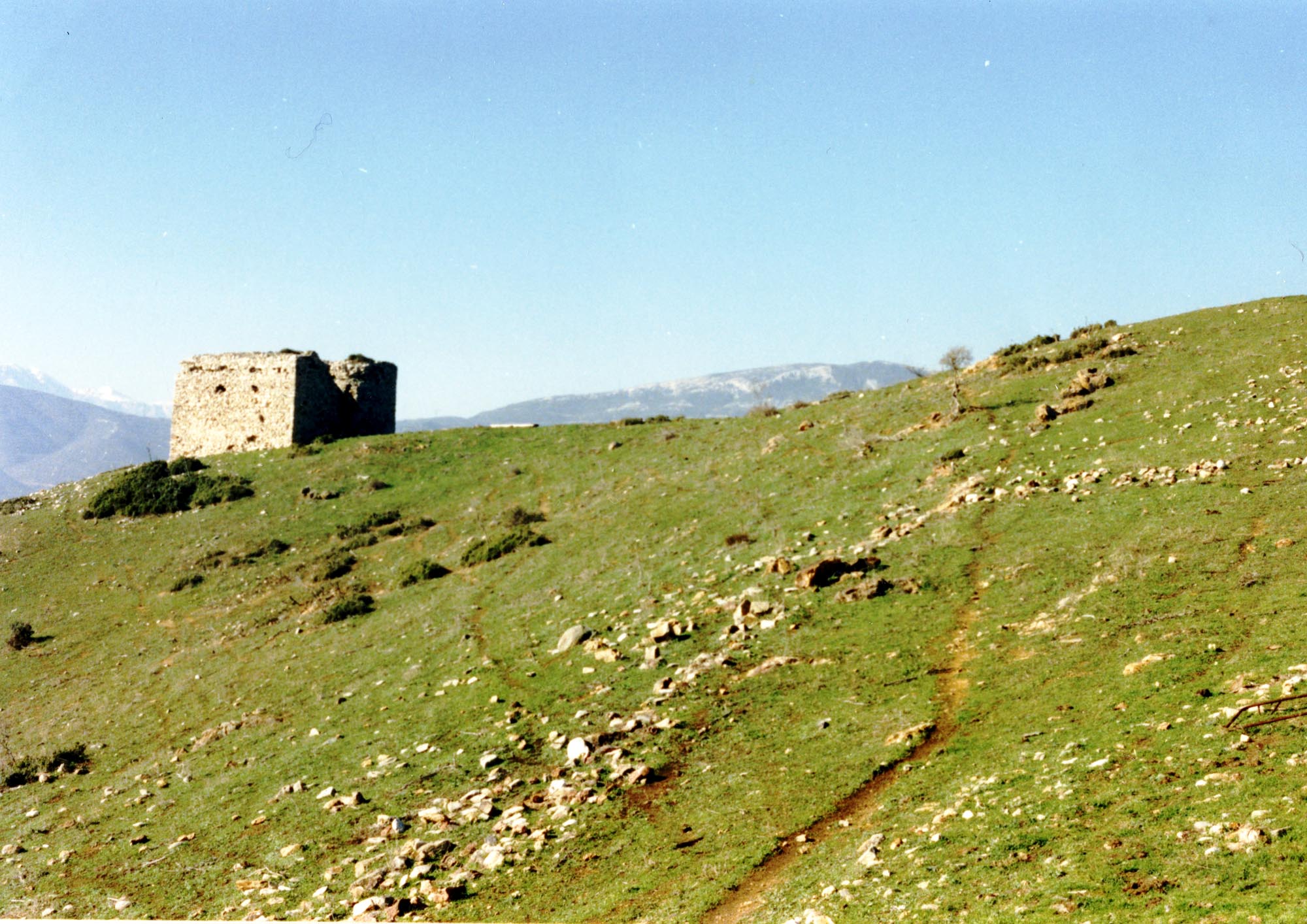
The special strategic interest of the wider area is proven by the existence of a second stronghold, dating from the late 6th to the mid-4th century BC, west of Nea Karvali and a short distance from Akontisma. Its identification remains problematic, with researchers expressing different opinions, but it is believed to be one of the many trading posts, known from written sources, established by the Thasians on the coast opposite their island for the exploitation of the timber- and ore-rich hinterland. On the hill of Eski Kapu (“Old Gate”) above the beach of Aspri Ammos, near the community of Chalkero between Kavala and Akontisma, are preserved the remains of a long stretch of cross-wall. It is formed of two parallel walls 0.75-0.80 m thick, separated by a corridor 1.00-1.10 m wide for soldiers to move along. Professor Konstantinos Tsouris identifies it as the Cross-wall of Akontisma, which, according to the historian Ammianus Marcellinus, was erected in Macedonia in 395 AD by the magister militum per Illyricum (senior military officer) Aequitius. This identification is, however, subject to reservations, as the rough, simple rubble masonry of the cross-wall is quite unlike the strong, solid fortifications of the 4th century AD. A strong rectangular tower measuring 10.95 x 9.10 m is also preserved on the same hill. It was built during the Ottoman period, probably in the 16th century.

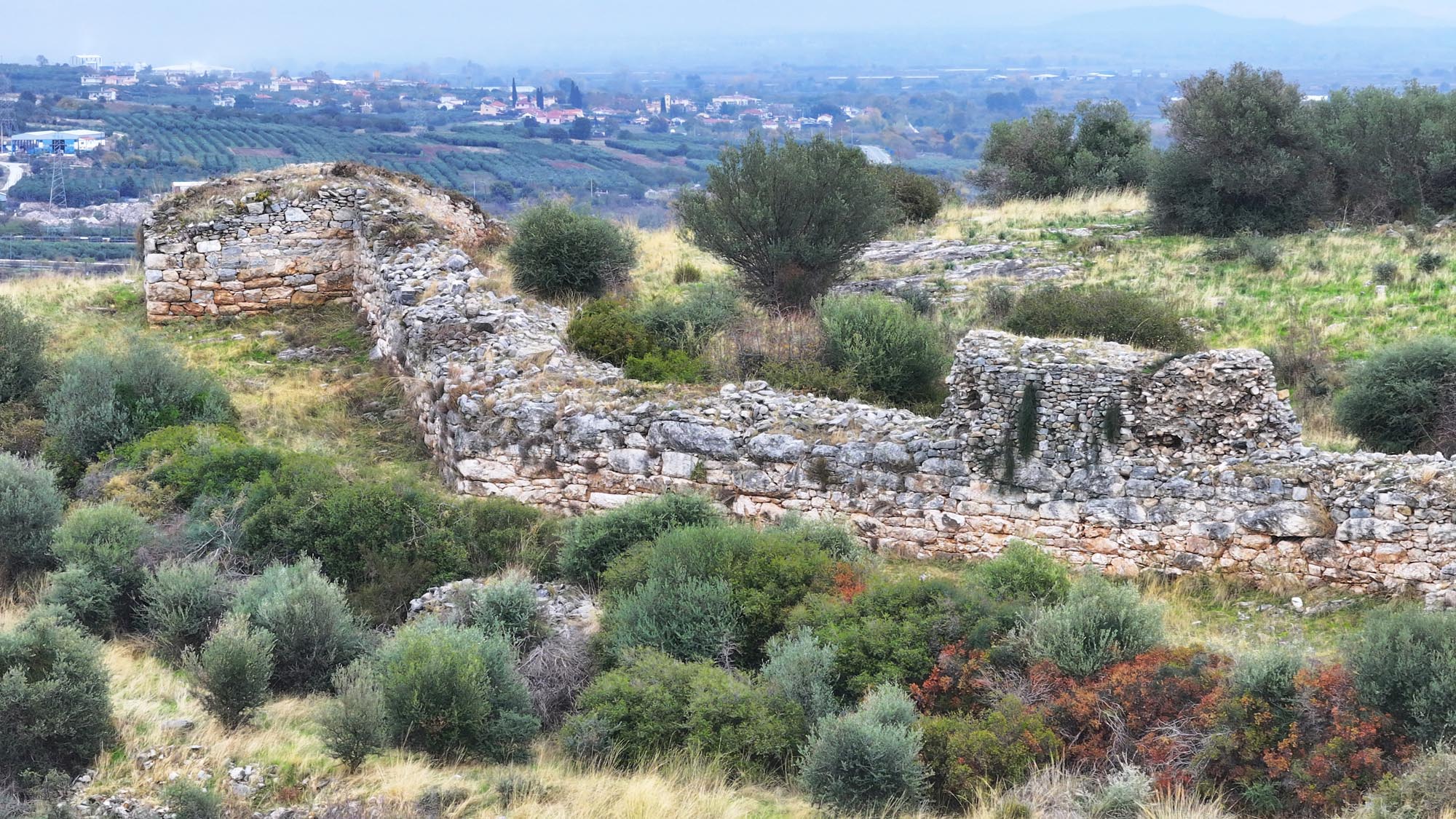
The oval fortified enclosure of Akontisma is reinforced with four-sided towers at intervals. It is preserved to a maximum height of 3.5 m and is built of roughly dressed quadrilateral stones, arranged in courses of the same height, without mortar. The main gate of the castle is on the north side, protected by two strong towers. There is a second gate in the west wall.

Based on the results of the small-scale excavation carried out at Akontisma, the settlement was founded in the late 4th century BC, during the reign of King Cassander of Macedonia (316-297 BC). The possibility that it was another Thasian trading post of the late 6th century BC cannot be ruled out. Due to the key location of the settlement, the walls have undergone subsequent interventions at various times, the most identifiable being those of the Late Roman and Middle Byzantine periods (late 10th-early 11th c. AD). In the early 20th century, during the First World War, the Bulgarians dug extensive trenches on the hill.


Λεπτομέρεια του οχυρωματικού περιβόλου, όπου διακρίνονται οι διαφορετικές οικοδομικές φάσεις ΔΒΜΑ, φωτ. Κ. - Μ. Ξενικάκης / Detail of the defensive enclosure, showing the different construction phases, DBMA, photo: K. - M. Xenikakis
Ο οθωμανικός πύργος στο ύψωμα Εσκί Καπού (Παλιά Πύλη), αρχείο ΕΦΑ Καβάλας / The ottoman period tower on the hill of Eski Kapu (“Old Gate”), archive of the Ephorate of Antiquities of Kavala

MUSEUM

Historical and Ethological Museum, Nea Karvali
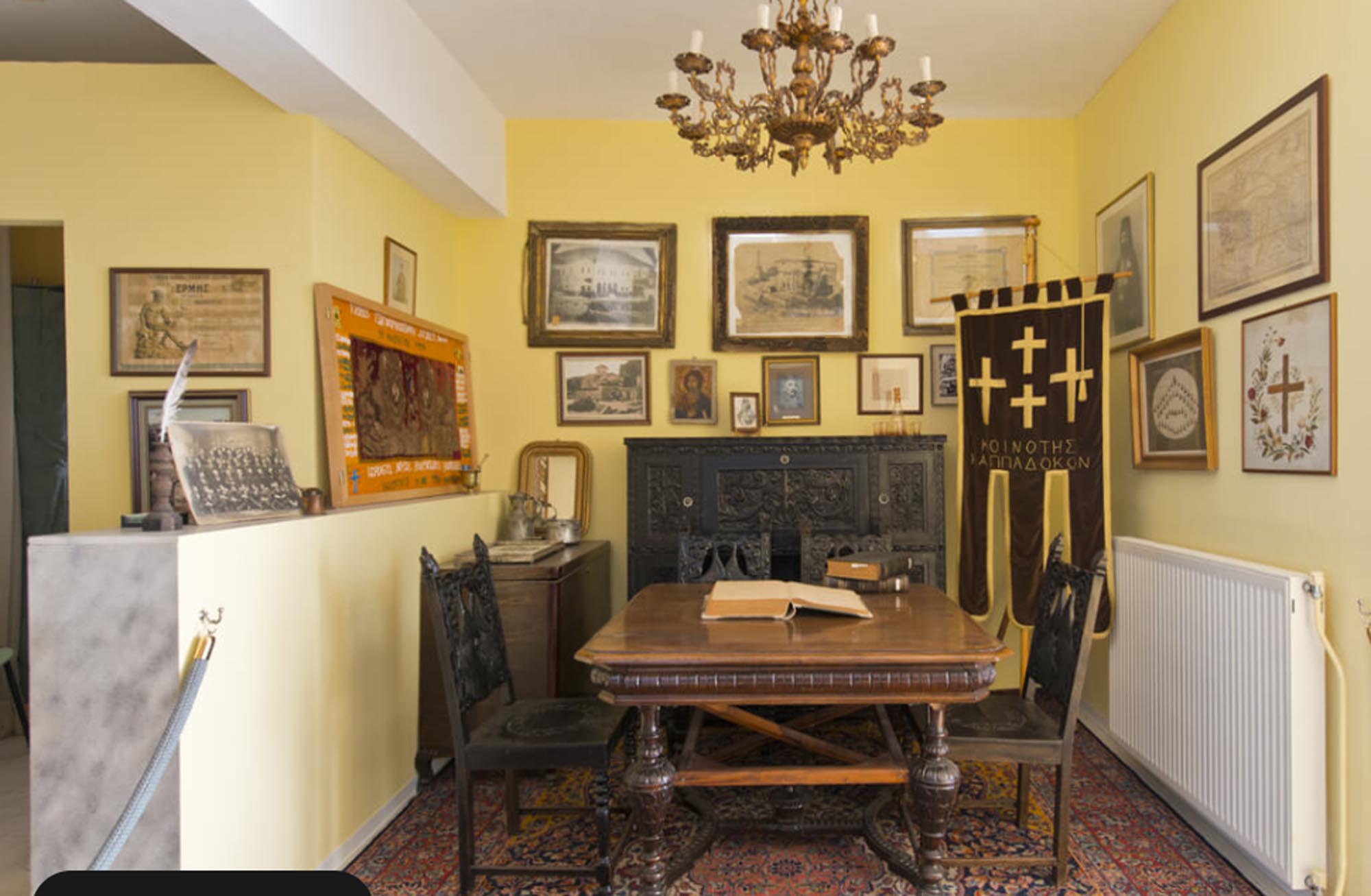
Εθνολογικό Μουσείο Νέας Καρβάλης / Historical and Ethological Museum of Nea Karvali. Δήμος Καβάλας / Municipality of Kavala - visitkavala.gr, photo: Artware

The museum was created in order to preserve and disseminate the history of the Greeks of Cappadocia, since most of the population of Nea Karvali is descended from refugees from Asia Minor who arrived here in the exchange of populations following the Asia Minor Catastrophe (1922). The museum exhibits include important relics, everyday objects and a rare collection of books. Of particular interest are the old newspapers, magazines and schoolbooks in Karamanli Turkish, a dialect written in the Greek alphabet.

Other stops in the Regional Unit of Kavala

error: