Selino
Türbe (mausoleum) of Kütüklü Baba, a notable funerary monument
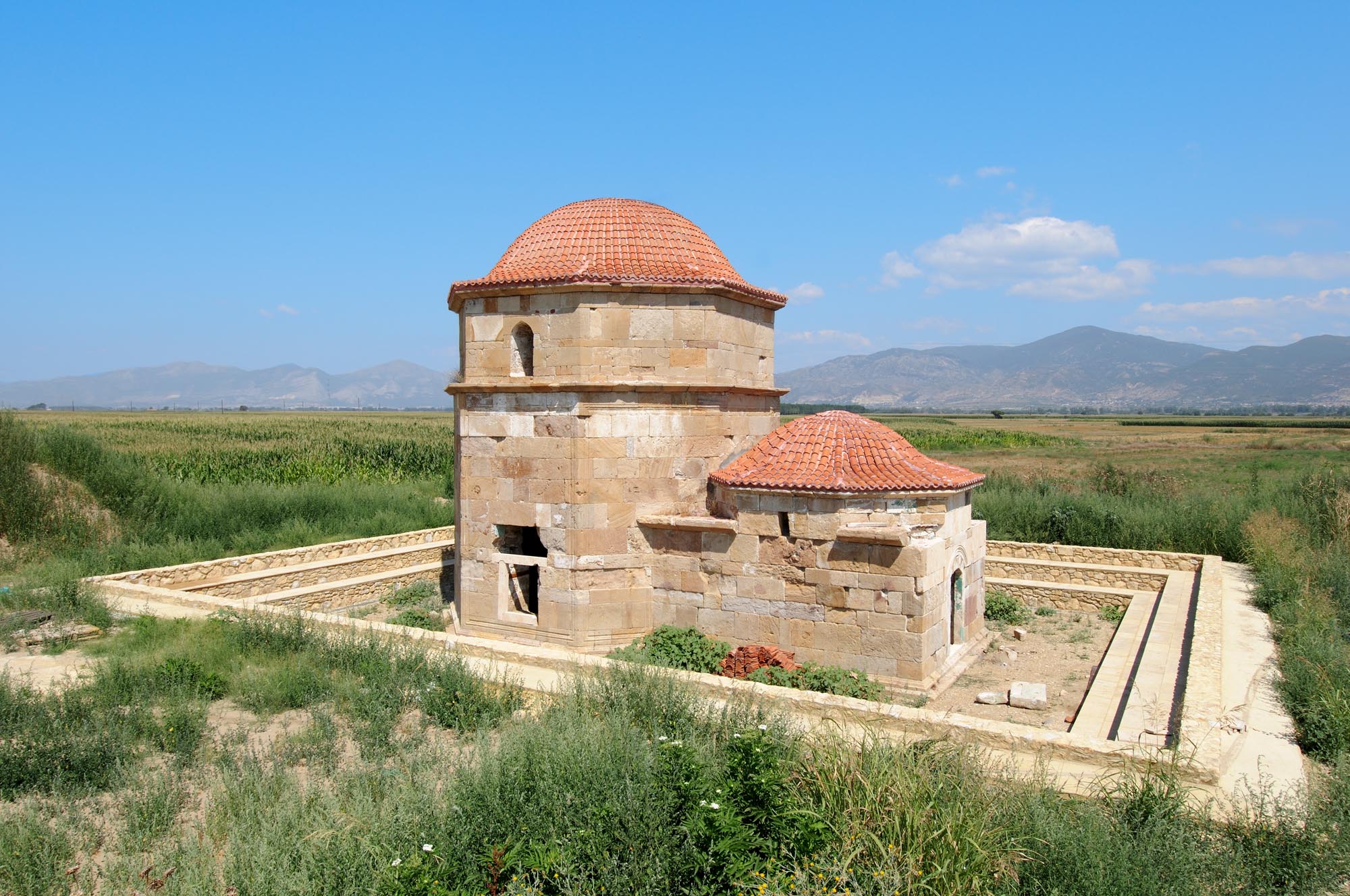
The türbe or mausoleum of Kütüklü Baba, one of the most important Ottoman funerary monuments in Thrace, lies west of Lake Vistonis, near the modern village of Selino and only a short distance from Anastasiopolis/Peritheorion. The monument, which rises in the midst of a large cultivated area called Kalami by the local inhabitants, formed part of the tekke (dervish house) of Kütüklü Baba. The dervishes of the tekke belonged to the Bektaşî order, one of the most widespread dervish brotherhoods. Τhe Islamologist Eustratios Zenginis records a testimony according to which, when refugees from Eastern Thrace settled in the area, dervishes lived in one- and two-storey houses around the tekke. The tekke with its buildings was described by European travellers in the first thirty years of the 19th century: they reported that it lay in an enchanting spot in an elm wood. No other building of the complex survives today.
The tekke is located very close to the ancient Via Egnatia and is a typical example of an Ottoman building which largely owes its renown to this proximity. It has been argued that it was located on the route of large numbers of Muslim pilgrims, who contributed decisively to its great prosperity.
Numerous tekkes of the Bektaşî order of dervishes were founded in Thrace immediately after the Ottoman conquest (third quarter of the 14th c.), often with the support of the sultans themselves. The order was founded by Haji Bektash Veli, one of the greatest saints of Islam, who lived in the 13th century.
The tekkes usually included a ceremonial area and a set of buildings for the accommodation of the dervishes and to serve their daily needs. The original purpose of their establishment was to provide spiritual uplift to the Muslims who resorted to them, and also to prevent social injustice. Later on, the tekkes were gradually placed at the service of the Ottoman Empire, their main duty being to provide military or social services. Thus, for example, tekkes were used as outposts or supply centres for military units, as educational centres or as psychiatric hospitals.
Most of the tekkes of Thrace, including that of Kütüklü Baba, were destroyed in 1826 by a firman (decree) of Sultan Mahmud II (1808-1839), who abolished the Bektaşî order, expelled its sheiks and ordered the confiscation of the property of the tekkes.
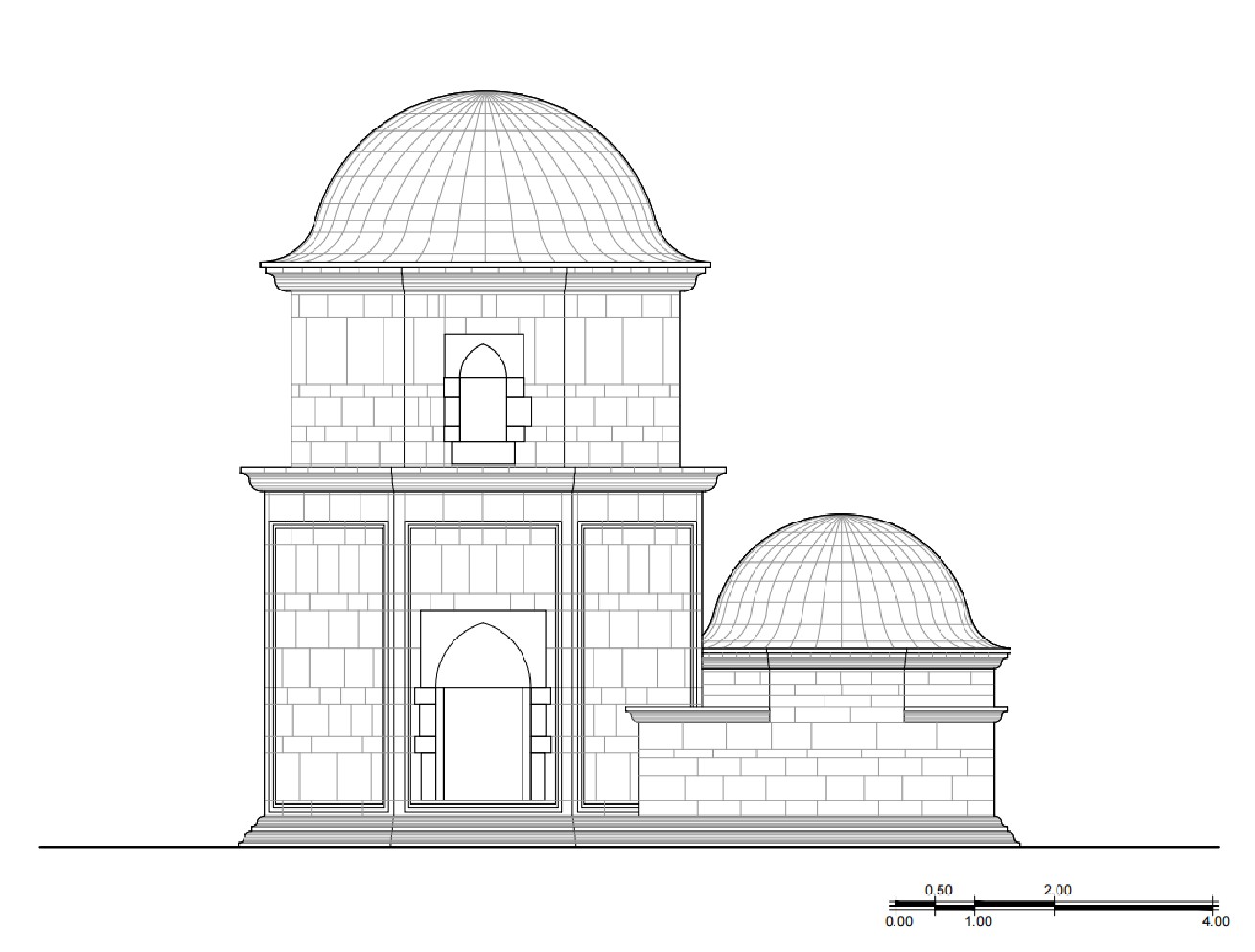
The Türbe of Kütüklü Baba, now restored and open to visitors, is octagonal in plan with each internal side measuring 3.24 m. It is 6 m high and covered with a hemispherical dome. It has two entrances, one on the east and one on the south. On its east side is a lower (2.5 m) square antechamber, also with a domed roof, measuring 4 m a side. In the main chamber is a damaged tomb covered with a green cloth. This is a particularly elegant structure with elaborate masonry of dressed local brownish-yellow calcareous sandstone. The türbe is generally thought to be an early-15th-century building, although the Ottomanist Heath W. Lowry has recently suggested an early-16th-century date.
There was once a tradition that the monument was a Christian church dedicated to either St Nicholas or St George. The Christian inhabitants of the area, believing it to be a Christian building, used to hang pieces of thread and cloth from the window bars, in accordance with the customary Christian practice.