REGIONAL UNIT OF THESSALONIKI: TRADITION AND CONTEMPORARY CULTURE

Cultural events in the city of Thessaloniki

A pioneer of the arts and culture, Thessaloniki has always provided a hospitable home for cultural events. Music, dance, theatre and film flourish here throughout the year.

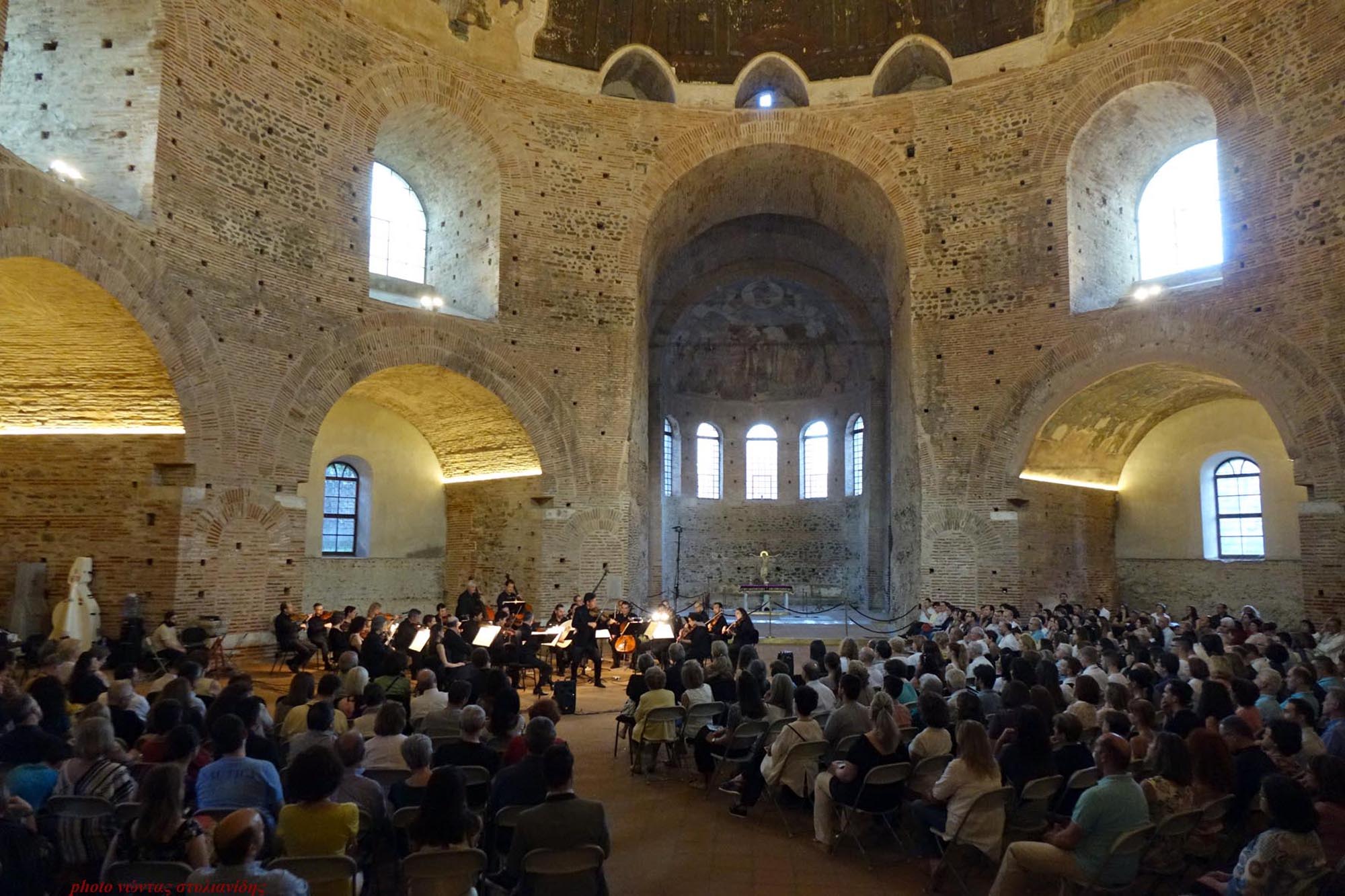
Κρατική Ορχήστρα Θεσσαλονίκης, «Οι Τέσσερις Εποχές» του Βιβάλντι στη Ροτόντα (9 Ιουνίου 2017), φωτ. Ν. Στυλιανίδης/ Thessaloniki State Symphony Orchestra, Vivaldi’s “Four Seasons” at the Rotunda (9.6.2017), photo: N. Stylianidis

The Thessaloniki Concert Hall presents a rich programme of select music and arts events such as the International Chamber Music Festival. The Thessaloniki State Symphony Orchestra, the most important symphony orchestra in Northern Greece and one of the country’s premier cultural institutions, enjoying international acclaim, performs concerts and implements a wide range of educational and social programmes at the Concert Hall and other cultural venues. The State Conservatory of Thessaloniki, one of the oldest musical institutions in Greece, organises arts events, concerts, exhibitions, competitions and high-quality educational programmes including the Thessaloniki Piano Festival.

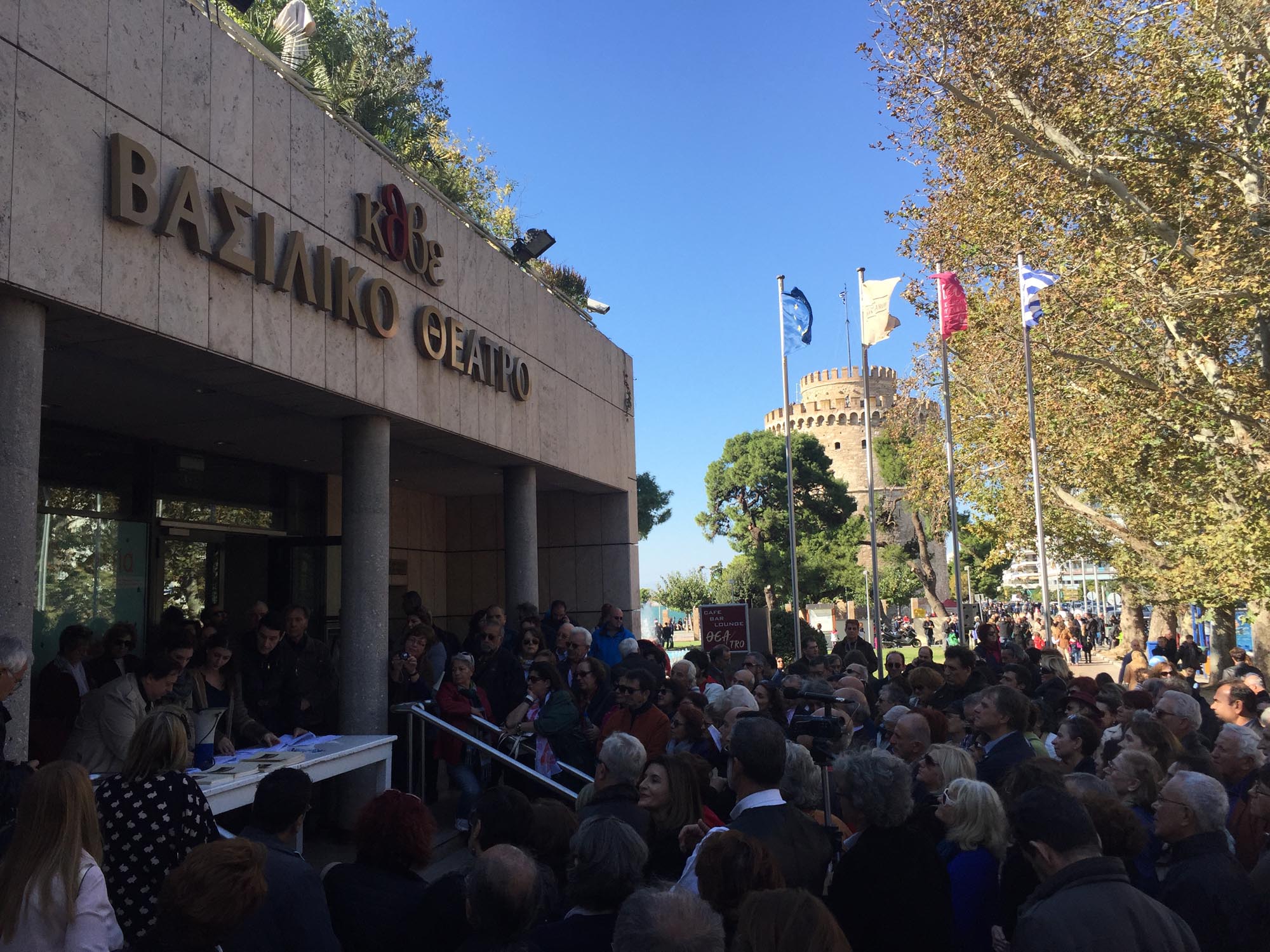
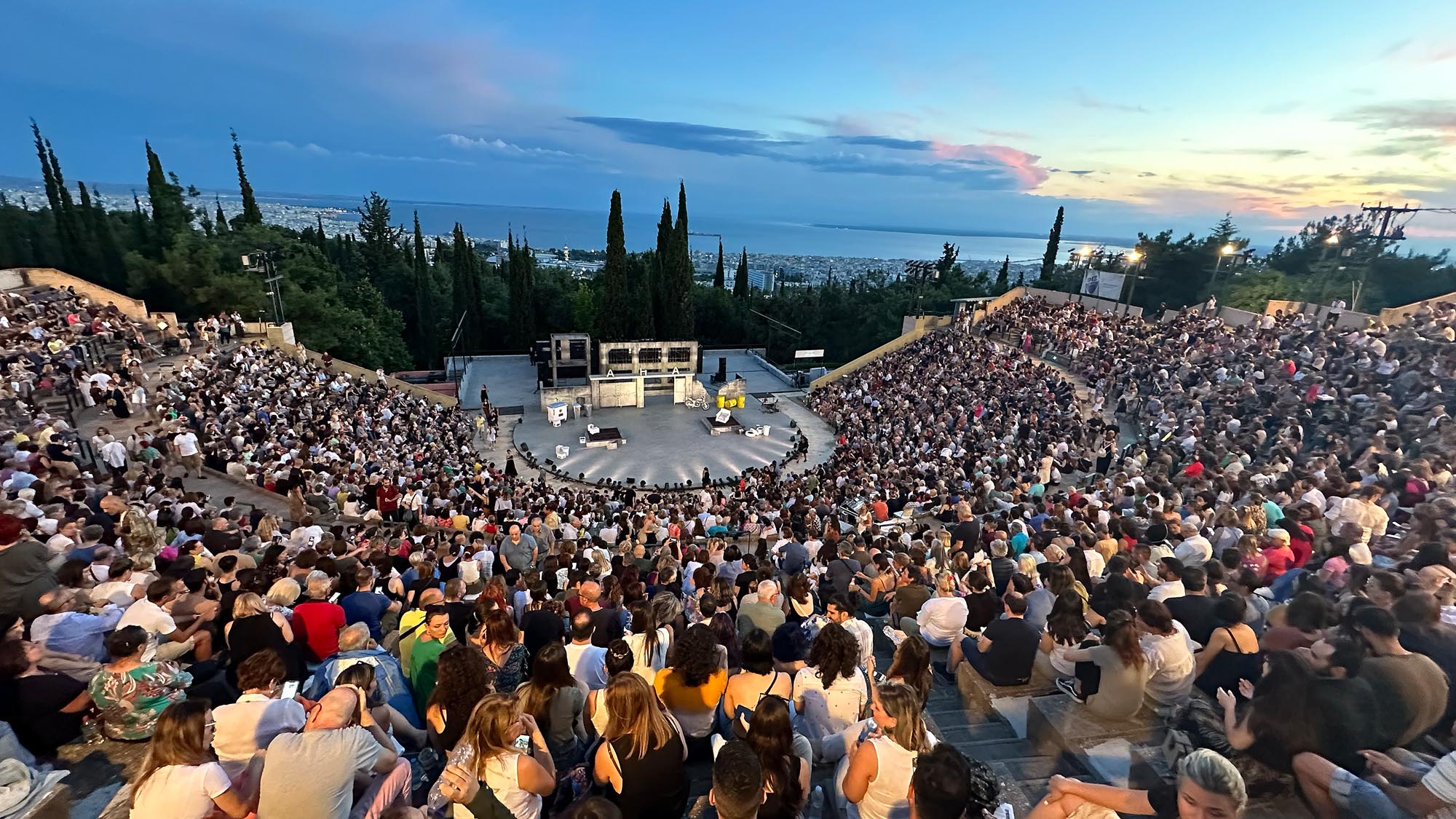
The National Theatre of Northern Greece presents a rich programme of plays every year, as well as various cultural events such as the International Forest Festival. The Cultural Centre of the Region of Central Macedonia organises cultural activities such as the Heptapyrgion Festival in the summer, in collaboration with the Ephorate of Antiquities of Thessaloniki City. The Non-profit Organisation of Moni Lazariston, together with the Region of Central Macedonia and the Pavlos Melas Municipality, organises the Lazarist Monastery Festival in the courtyard of the iconic monastery. The Mercoureia Festival of the Municipality of Neapoli–Sykies is a byword for summer plays in Thessaloniki. One of the most dynamic and innovative drama festivals in Greece, it hosts municipal and regional theatre companies from all over the country.

Βασιλικό Θέατρο, εξωτερική όψη, Κρατικό Θέατρο Βορείου Ελλάδος, φωτ. Δήμητρα Βαλεοντή/ Exterior view of the Royal Theatre, National Theatre of Northern Greece, photo: D. Valeonti

Two major city institutions take place in the autumn. In September, the Thessaloniki International Fair, the most important trade fair in the Balkans, also hosts concerts and numerous entertainment and educational activities. The Dimitria, the autumn cultural festival, is held in October each year on the initiative of the Municipality of Thessaloniki in collaboration with other city bodies. The name refers to the age-old trade fair in honour of St Demetrios, the patron saint of the city. In its modern form since its revival since 1966 it features a rich programme of cultural activities.

Θέατρο Δάσους, Κρατικό Θέατρο Βορείου Ελλάδος, φωτ. Mike Rafail/ Forest (Dasous) Theatre, National Theatre of Northern Greece, photo: Mike Rafail

Two prominent festivals connect the city with international contemporary creative trends. The Thessaloniki International Film Festival, the most important cinematic institution in Greece, is held in November. The TIFF is a competitive film festival with tributes, exhibitions, concerts and workshops. The Thessaloniki Documentary Festival, with screenings of short and feature-length documentaries and international premieres, is held in March. Finally, in the spring is the Thessaloniki Dance Festival, the biggest dance-sport event in the country.

«65ο Φεστιβάλ Κινηματογράφου», Τελετή έναρξης στον ιστορικό κινηματογράφο Ολύμπιον, Φεστιβάλ Κινηματογράφου Θεσσαλονίκης, φωτ. Β. Βερβερίδης/ 65th Thessaloniki International Film Festival, Opening ceremony at the historic Olympion Cinema, Thessaloniki International Film Festival, photο: V. Ververidis

Performances in the wider region

The rich folk tradition of Thessaloniki is represented in the National Inventory of Intangible Cultural Heritage by three customs, respectively intended to ensure a good coming year, to make the land fruitful and to honour a patron saint.

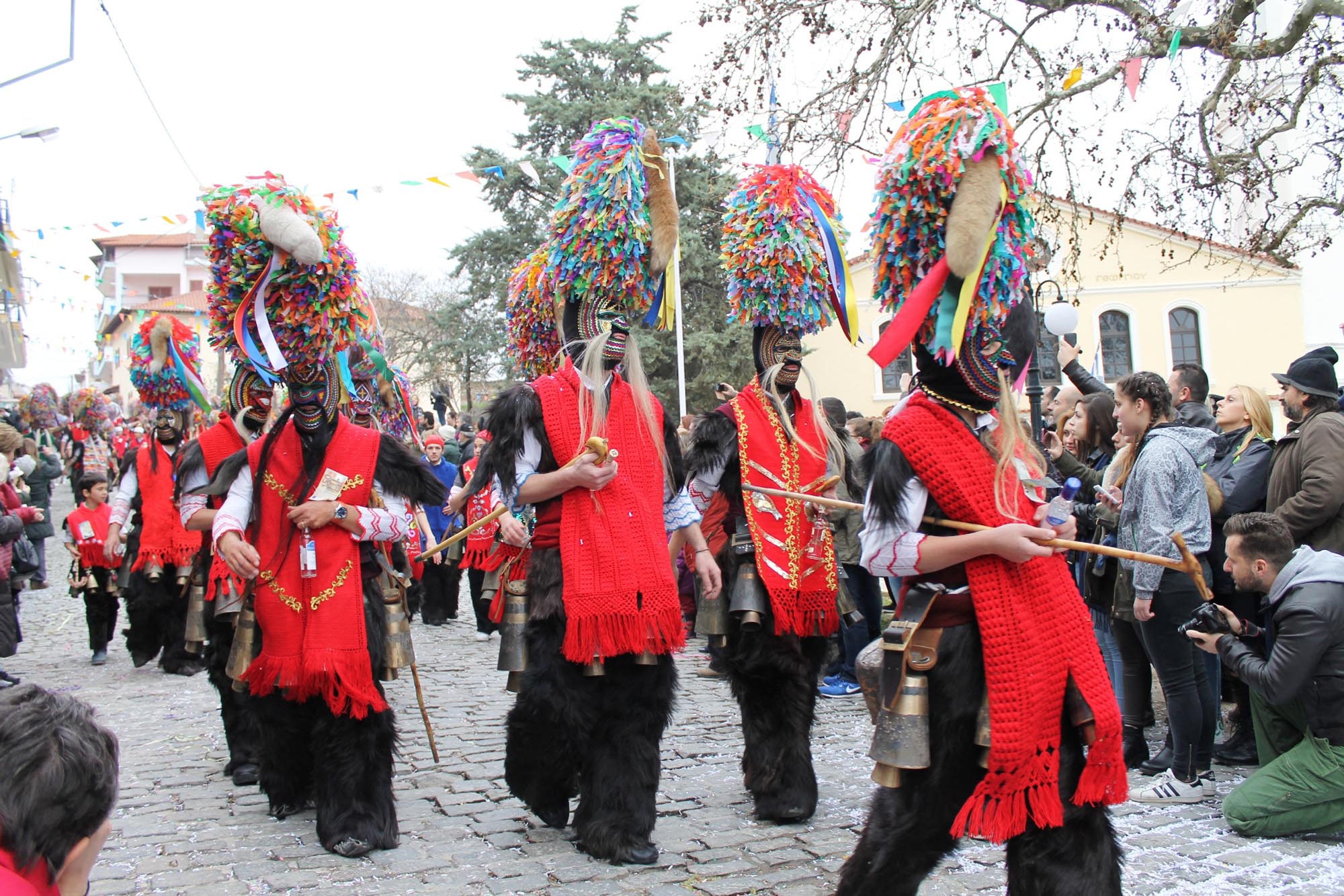
Σοχός, τα καρναβάλια διασχίζουν το δρόμο με ρυθμικό βηματισμό (2017), Διεύθυνση Νεότερης Πολιτιστικής Κληρονομιάς κατά παραχώρηση της Λαογραφικής Ομάδας Γυναικών Σοχού, φωτ. Κώστας Ασλανίδης/ Sochos, carnival processions march along the street in rhythmic steps (2017), Directorate of Modern Cultural and Intangible Cultural Heritage, courtesy of the Sochos Women’s Folklore Group, photο: K. Aslanidis

The Kamiles and Divitzides (Camels and Camel-drivers) performance is usually revived on New Year’s Eve or New Year’s Day in areas settled by refugees from Eastern Rumelia, such as Mikro Monastiri and Koufalia in Thessaloniki. The camel with its clanging bells and the divitzis (camel-driver) striking his topouzi (phallus-shaped club) on the ground attempt to “awaken” nature to be fruitful. The participants celebrate and wish each other a happy new year, with good health and a good harvest.

The famous Sochos Carnival, in the mountain town of the same name, begins in the pre-Lenten period and culminates on the last Sunday of Apokries (Carnival Season) and Clean Monday (the first day of Lent). The people of Sochos celebrate the custom, which has its roots in ancient fertility rites to ensure a good year, with great enthusiasm to this day. Key features of the carnival are the black goatskins and the bells on the costumes, the rhythmic step, the serenade and the offering of treats.

v

Other stops in the Regional Unit of Thessaloniki

error: