Kozani
Kozani, the city of merchants
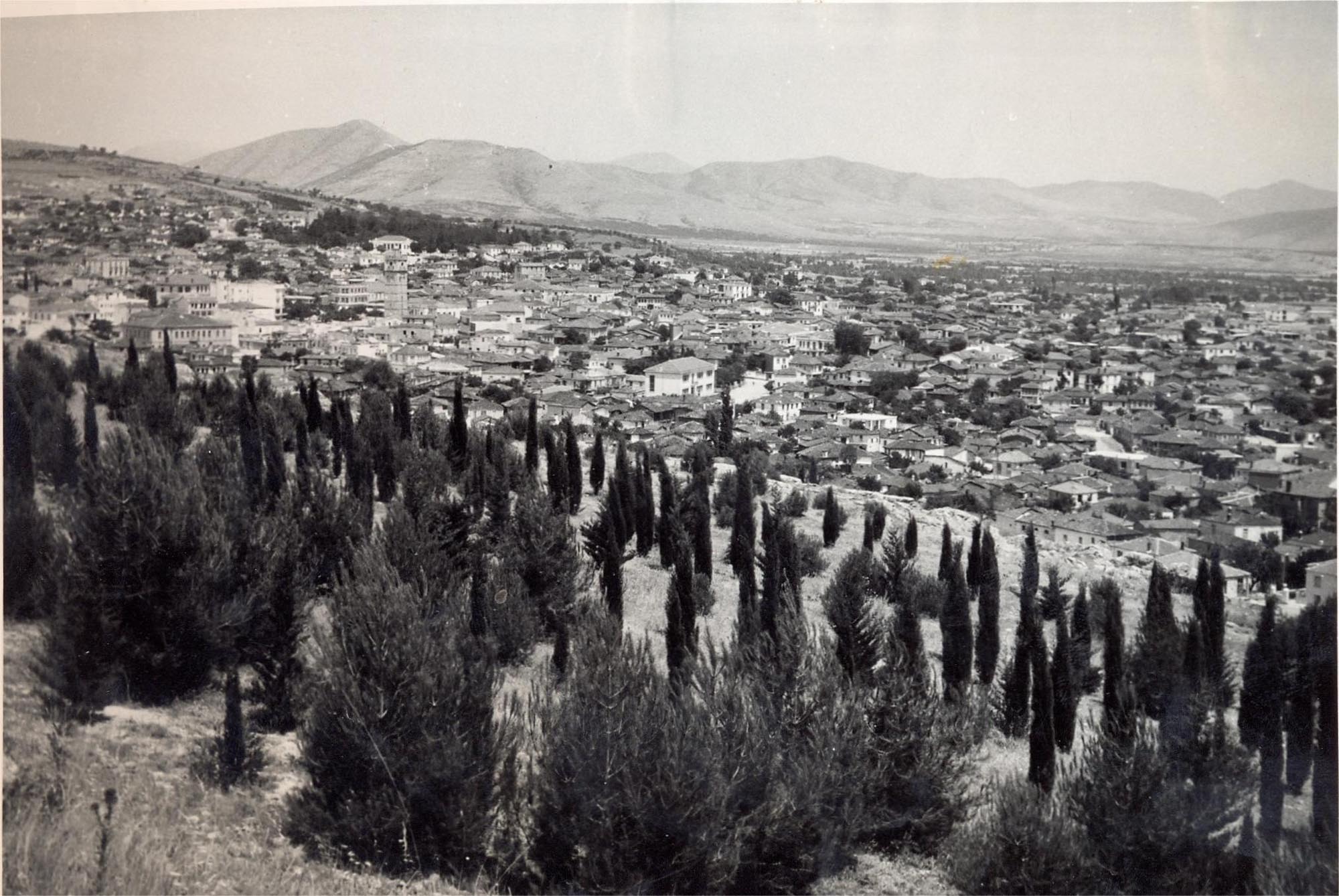
The first major city after Veria, heading along the Egnatia Motorway towards Igoumenitsa, is Kozani, today the capital of the Regional Unit of the same name and seat of the Region of Western Macedonia. Lying between the mountain ranges of Vermio, Vourinos and the Pierian Mountains, it is one of the cities that arose in the key space of Western Macedonia after the Ottoman conquest of the area in the late 14th century, developing in the following centuries into one of the largest and most prosperous urban centres of the region.
The city’s growth was largely due to its geographical location, as major roads passed through it: one of these ran from Veria to Kozani, Grevena, Metsovo and Ioannina, following a similar route to an important main branch of the Roman Via Egnatia. Southwest of Kozani lies the middle valley of the Haliacmon. There, through the Sarantaporo Pass, Thessaly and Eastern Central Greece were connected with Servia and from there with Kozani and the rest of Western Macedonia. In his study of Kozani and the wider region published in 1872 in the journal Pandora, doctor Konstantinos Gounaropoulos aptly notes the “easily travelled” yet “hidden” nature of the land where the city stands. Four “public roads” started from its marketplace: the first headed east to Veria, Niagousta (Naoussa) and Thessaloniki, the second west to Siatista, Grevena, Ioannina and the rest of Epirus, the third north to Kalliarion (Ptolemaida), Vitolia (Bitola) and the rest of Northern Macedonia, and the fourth south to Servia, Elassona, Trikkin (Trikala), Larissa and the rest of Thessaly.
History
The area was inhabited since prehistoric times. The excavations carried out at times in the modern city of Kozani have brought to light a significant number of finds, mainly funerary, dating from the Neolithic period to the Byzantine era. The key geographical position of the area, its abundant water sources and its fertile soil, all ensured that it was used through the ages, although the existence of one or more organised settlements of antiquity has not been confirmed by excavations so far.
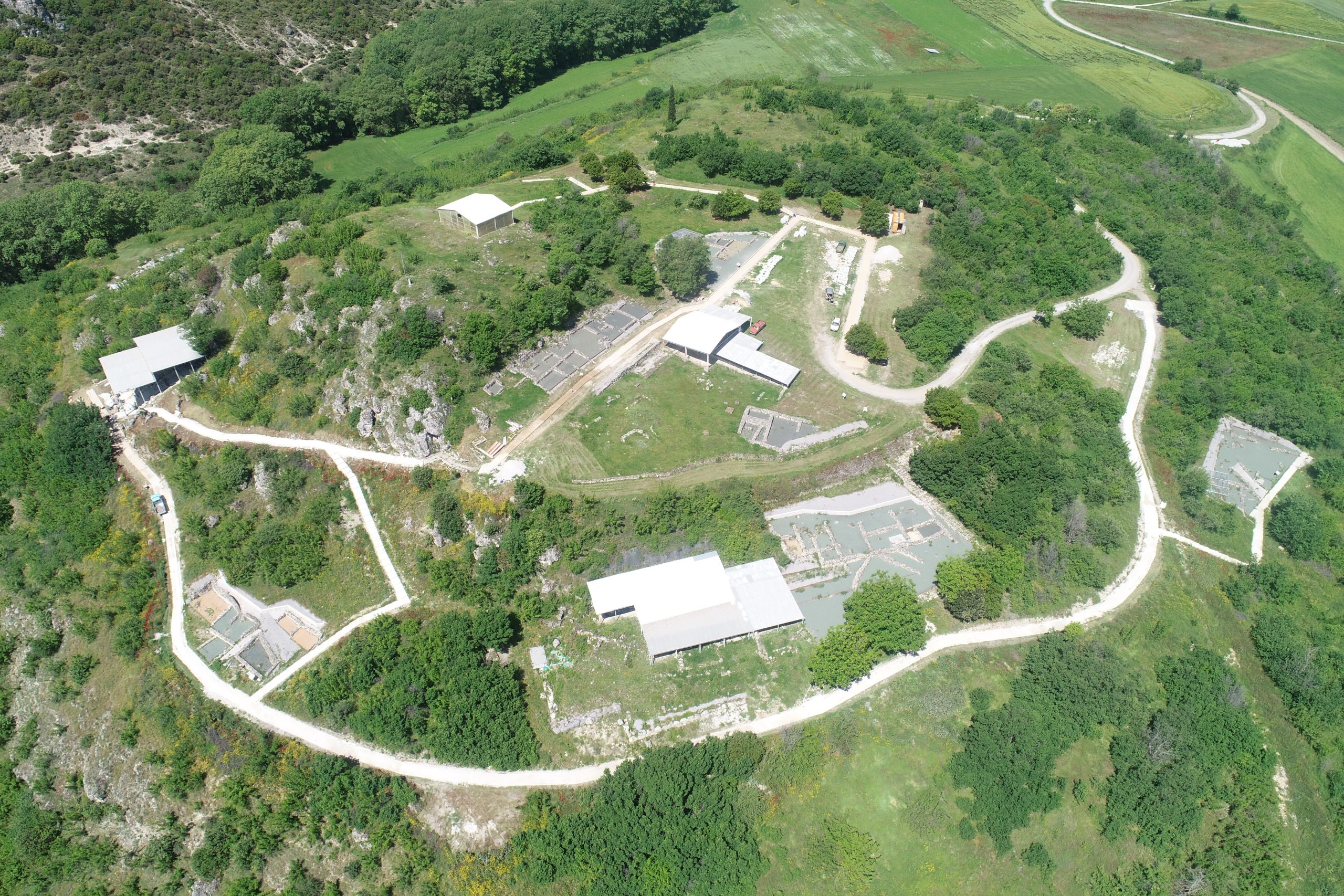
Ιmportant finds of the excavations in the modern city are those from the ancient necropolis discovered during the opening of Philippou II Street, one of the main roads in the east of the city, leading to the centre. Most of the tombs, dating from the 5th to the 3rd century BC, contained particularly rich grave goods, indicating that there was a flourishing urban centre in the area, prosperous and with highly developed art. Near the main square of Kozani has been found an honorary inscription of the 2nd century AD which refers to a decision of the boule and the demos, attesting to the existence of a Roman city with basic civic institutions. Important funerary antiquities have also been uncovered in the area of the central 25th of March Square (“Tis Bilios ta nimoria” site), as well as in the south of the city, on the hill of Agios Athanasios and near the church of St Constantine (Tria Dendra or Tridendro site). Very close to the church, on Arkadiou Street, was discovered a monumental built family tomb-heroon of the 1st-2nd c. AD, with an access corridor and a rectangular burial chamber. Finally, about 8 km north of the city, on the hill of Agios Eleutherios, near the community of Drepano, are the architectural remains of an important ancient settlement of the 3rd century BC, fortified with strong walls, which continued to flourish even after the Roman conquest.
In antiquity, what is now the Regional Unit of Kozani was part of the kingdom of Elimeia or Elimiotis, which occupied the southern part of mountainous Upper Macedonia. Its first known king was Arrhidaeus (first half of the 5th c. BC). Its capital was Aiani, an important city of antiquity, which has been excavated on the slopes of the Megali Rachi hill, a short distance from the modern town of Aiani, 22 km south of Kozani. The particularly rich finds from Aiani are exhibited in the local Archaeological Museum. An important milestone in the history of ancient Elimeia was its incorporation into the Macedonian Kingdom in the time of Philip II, after 358 BC. In 168 BC, on the dissolution of the Macedonian Kingdom by the Romans, the area was incorporated into the Roman Empire. It was originally part of the Fourth Meris (regio), a self-governing region with Pelagonia as its capital, before becoming part of the Roman Provincia Macedoniae, created in 148 BC with Thessaloniki as its capital.
During the lengthy Byzantine period, a wide network of strongholds was built to protect the people of the wider area of Kozani and the valley of the Haliacmon. The most important of these was the Byzantine castle-city of Servia, which from the 12th century onwards was the seat of the theme of the same name. Remains of other Byzantine castles have been found at various sites, for example near the village of Kteni, south of Kozani, while we know from written sources that there were also other important castles in the area, such as Staridola and Soskos.
Between 1342 and 1344, the wider region of Western Macedonia was conquered by the Serbian Kralj (king) Stefan Uroš IV Dušan. After his death (1355), his extensive state was split up into many smaller dominions, and Western Macedonia passed into the hands of Serbian rulers: Radoslav Hlapen, Thomas Preljubović and Nikola Bagaš Baldovin. In the 1380s the region was definitively conquered by the Ottomans.
The years following the Ottoman conquest were marked by significant population, residential and economic shifts in the region, with the settlement of Muslim populations, Yörüks and Konyars, mainly in lowland and fertile areas, the abandonment of the defensive network of powerful Byzantine castle-cities in the Haliacmon basin, and the emergence of new settlements including Kozani. Kozani is believed to have been founded in the late 14th or the 15th century, with the settlement there of people from the surrounding lowland areas, which had been occupied by Yörük and Konyar settlers in the meantime. Kozani was probably also settled by populations from other regions such as Epirus. The Byzantine-era finds that have occasionally come to light in excavations in the modern city of Kozani are too fragmentary to clarify the nature of the existing settlements in the area, but it has been argued that Kozani may also have been formed from the coalescence of small settlements.
The settlement of Kozani (Kozana, Kojani), belonging to the kaza of neighbouring Servia, is first mentioned in an Ottoman register of 1498-1502. It is recorded as having 137 households, compared to 830 households in Servia, which remained the most important town of the region until the early 17th century. Thus, in a 1613 inventory, the number of households in Kozani had increased to 203, while the size of Servia remained relatively stable (842 households). Gradually, however, from the middle of the 17th century, the number of households in Kozani increased significantly and it grew from a “village”, as it is referred to in the Parrhesia (list of names of priests and laymen) of Codex 201 of the Monastery of Zavorda in 1534, into one of the largest and most prosperous cities in the region, with around 10,000 inhabitants at the time of its incorporation into the Greek State (1912). The growth of the city’s population was boosted by periodic influxes of people from nearby areas. The population remained largely Christian, leading Metropolitan Photios to describe it as a “pure Macedonian paradise” in the first doxology following the incorporation of the region into the Greek State. It is worth noting that Nikolaos Schinas, in his valuable account of his travels in Macedonia, states that in 1886 the city numbered 8,000 Greeks and only 500 Ottomans. We also know from Ottoman registers that a few Jewish families had settled in Kozani, as they had in Servia.
The establishment of Kozani as a large urban centre was marked in 1745 by the transfer of the seat of the episcopal see of Servia to Kozani, now the episcopal see of “Servia and Kozani”, still subject to the metropolitan see of Thessaloniki. In 1882, the episcopal see was elevated to a metropolitan see directly dependent on and subject to the Ecumenical Patriarchate of Constantinople. The ecclesiastical officials of the city contributed greatly to its spiritual and artistic development. The first Bishop of Kozani, Meletios (1745-1752), who had lived in Rome and Florence, acquiring cosmopolitan habits, had a bishop’s palace built in the city centre. It is one of the largest and most beautiful buildings of Kozani, while the famous Stoa, one of the city’s first schools, was constructed next to it. Eugenios Pateras, bishop and later first metropolitan of the town (1849-1889), contributed to the construction of the bell tower and the Girls’ School in 1862, introducing women’s education to Kozani.
Alongside the demographic growth of Kozani, commerce began to develop from the 17th century onwards, reaching its peak at the beginning of the 19th century. Kozanite merchants traded in the permanent city market, the “common çarşı”, while they also sold their goods at the two trade fairs held in Kozani on the feasts of St Demetrios and St George, as well as at the trade fairs of neighbouring cities such as Servia and Mavronoros in Grevena. However, the emergence of Kozani as one of the largest commercial centres in Western Macedonia was decisively advanced after the middle of the 17th century by the activity of Kozanite merchants in Central European cities, mainly in Austria and Hungary, such as Vienna, Pest and Szentes, as well as in Transylvania and Germany, in Balkan cities such as Belgrade and Bucharest, in Constantinople/Istanbul, in Venice and even as far as Russia. Their goods were packed and transported by caravans led by caravan masters known as kyratzides (from the Turkish kiraci), who took advantage of the favourable conditions for European trade created by the signing of three treaties: the Treaty of Karlowitz (1699), the Treaty of Passarowitz (1718) and the Treaty of Küçuk Kaynarca (1774). In the cities where Kozanite merchants were active, they established shops and companies (kompanies or syntrofies) in partnership with their fellow Kozanites. After the middle of the 18th century, the economic development of the city was also boosted by the establishment of guilds (roufetia or isnafia), the first being that of the fur traders (1768).
The merchants of Kozani traded the surplus of the city’s mixed farming production, which remained the basis of its economy up to shortly after its incorporation into the Greek State. This is attested by the official geographical census of 1914, which recorded large numbers of sheep and goats, vineyards, almond, apple and pear trees, and quantities of cereals, both for human consumption and animal fodder. The people of Kozani also produced, among other things, barley, lentils, vegetables and the famous saffron, which was cultivated in the valley of the Haliacmon and in the lowland villages of the Tsiartsiabas region, south of Kozani, which was inhabited by Muslims. They also engaged in viticulture, making wine, tsipouro, raki and other spirits. The craft sector was also highly developed. Kozani was famous for its tanners, who produced various items such as shoes, tsarouchia and boots: 31 tanneries are recorded in the city in 1914. Fur manufacture and sericulture, using silk from silkworms fed on the leaves of the abundant mulberry trees in the region, also played an important part in handicraft production. Textile manufacture and dyeing was another major industry, including yarn-making and the production of various types of clothing and household textiles, such as hand-woven kilims, alatzades (colourful cotton and silk fabrics) and blankets woven from Spanish broom.
As a result of the economic boom, Kozanite merchants abroad, having come into contact with the doctrines of the Enlightenment, became benefactors of their city and displayed a special concern for education, founding schools and making donations to educational institutions. The beginnings of educational activity in Kozani date from the end of the 17th century, with the establishment of a school at which the scholar hieromonk Gregory Kontaris, later Bishop of Servia and Metropolitan of Smyrna, taught from 1676 to 1679. After 1745 there were three schools in Kozani: the Stoa (1745-1774?), the School of the Kompania, which was exclusively funded by the Kozanite merchants’ guilds of Hungary (1756-1769), and the Hellenic Museum or Pagounis School (1776-1799), which was supported by the bequest of the benefactor Dimitrios Manolis Pagounis. The eminent educator Eugenios Voulgaris taught at the first school, named the Stoa because it was surrounded by arches and peristyles, in 1745-1748/9, while hieromonk Amphilochios Paraskevas of Ioannina, the most prominent teacher in Kozani after Voulgaris, taught at the third school between 1782 and 1797. During the 19th century, educational activity in Kozani continued with the establishment of numerous schools at which leading scholars of the city taught, such as Georgios Sakellarios (1765-1838) and Charisios Megdanis (1769-1832).
At the end of the 18th century, Ali Pasha of Ioannina attempted to extend his rule in the region, causing bloody conflicts. In 1821, Kozanite fighters such as Georgios Lassanis and Ioannis (Nannos) Tsontzas were active participants in the Greek Revolution. At the end of the 19th and in the first decade of the 20th century, Kozani was at the centre of the national liberation struggle in Macedonia. On 11 October 1912, after the Battle of Sarantaporo, the region was incorporated into the Greek State. In 1923, with the exchange of populations between Greece and Turkey, refugees from Asia Minor settled here, mainly in the southeast of the city. After the middle of the 20th century, and especially after the 1970s, lignite deposits began to be mined in the Kozani – Ptolemaida – Amyntaio basin, playing a key role in the local economy but also causing serious ecological damage to the environment and ecosystems.
Monuments - Antiquities
Metropolitan church of St Nicholas
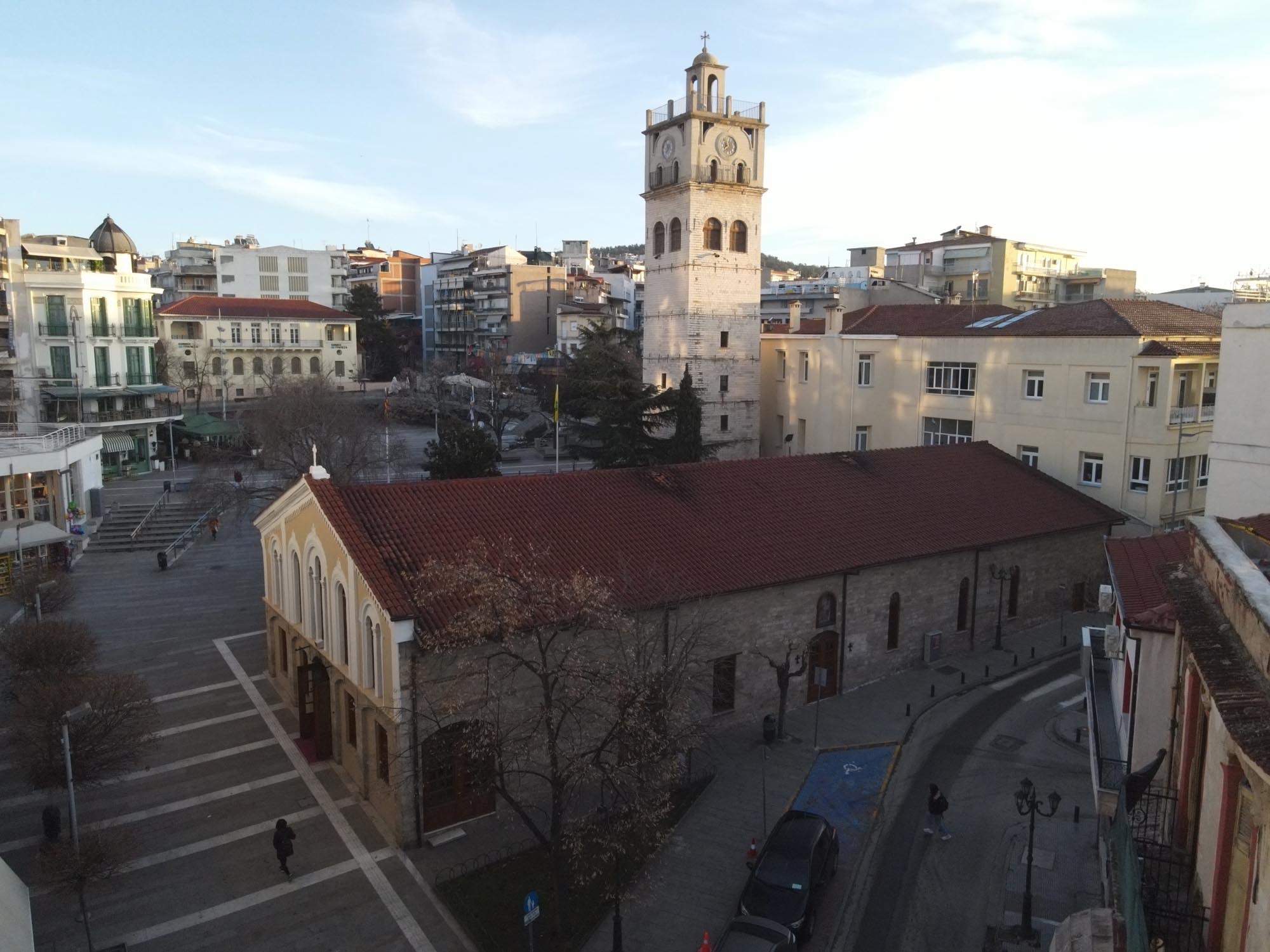
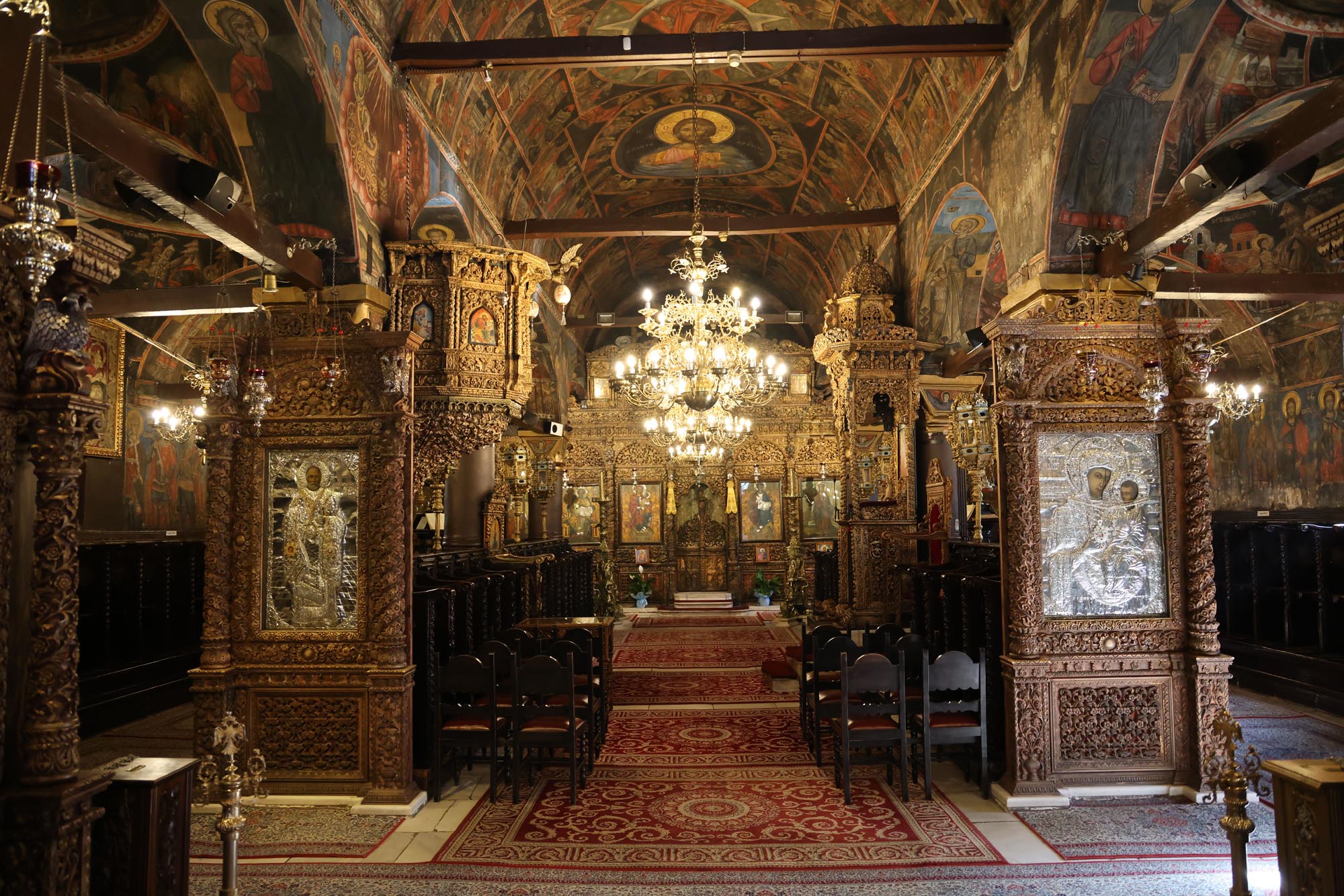
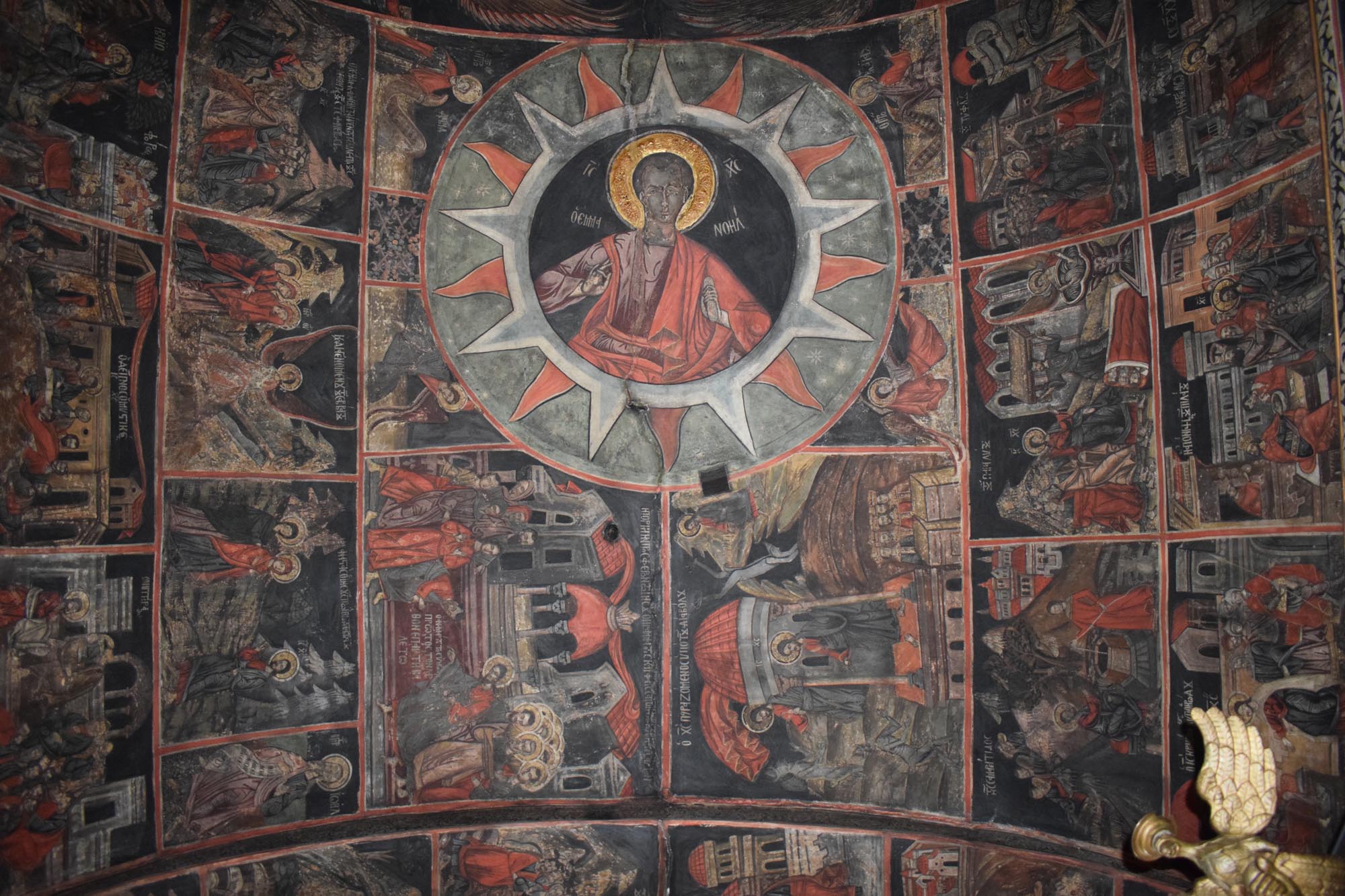
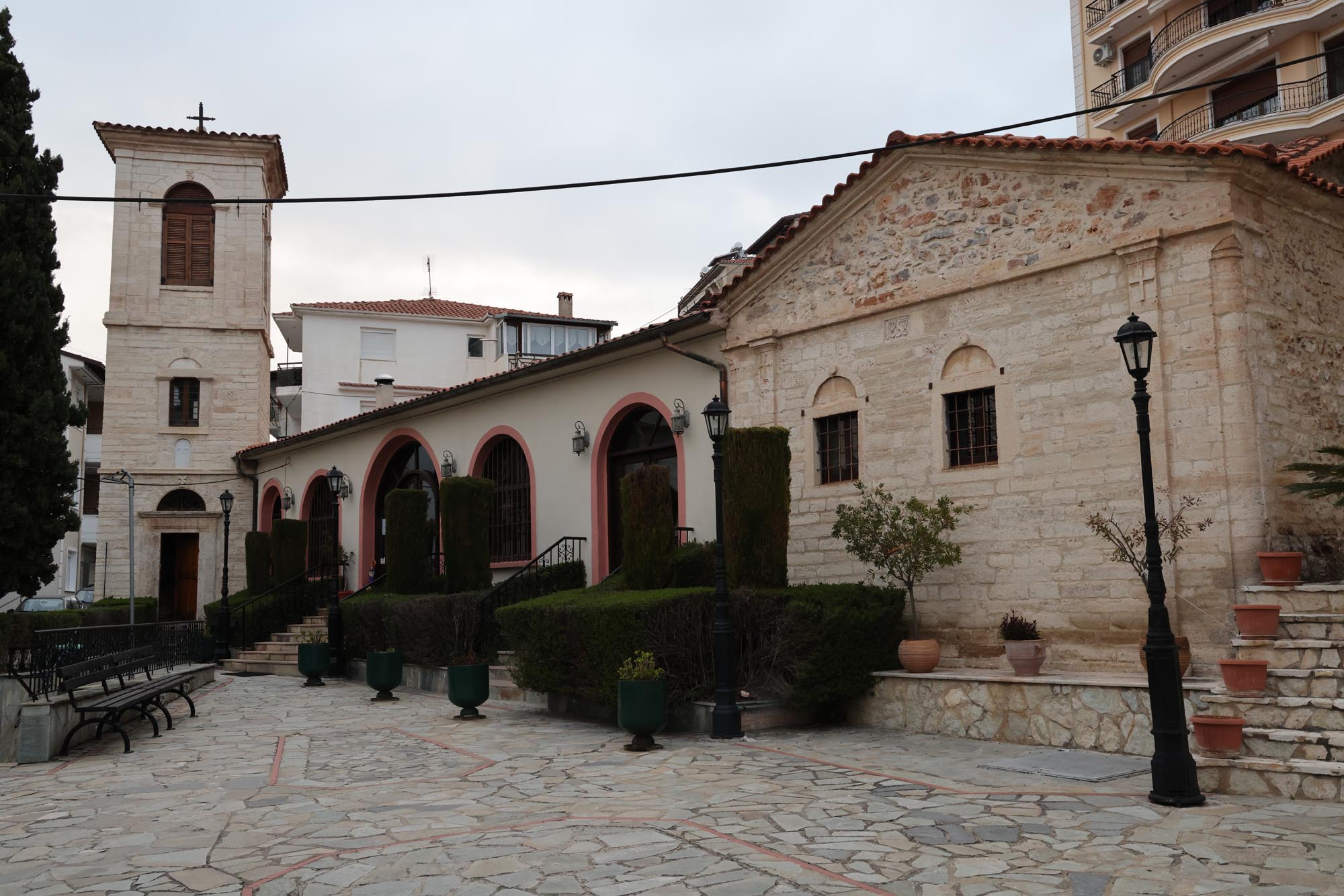
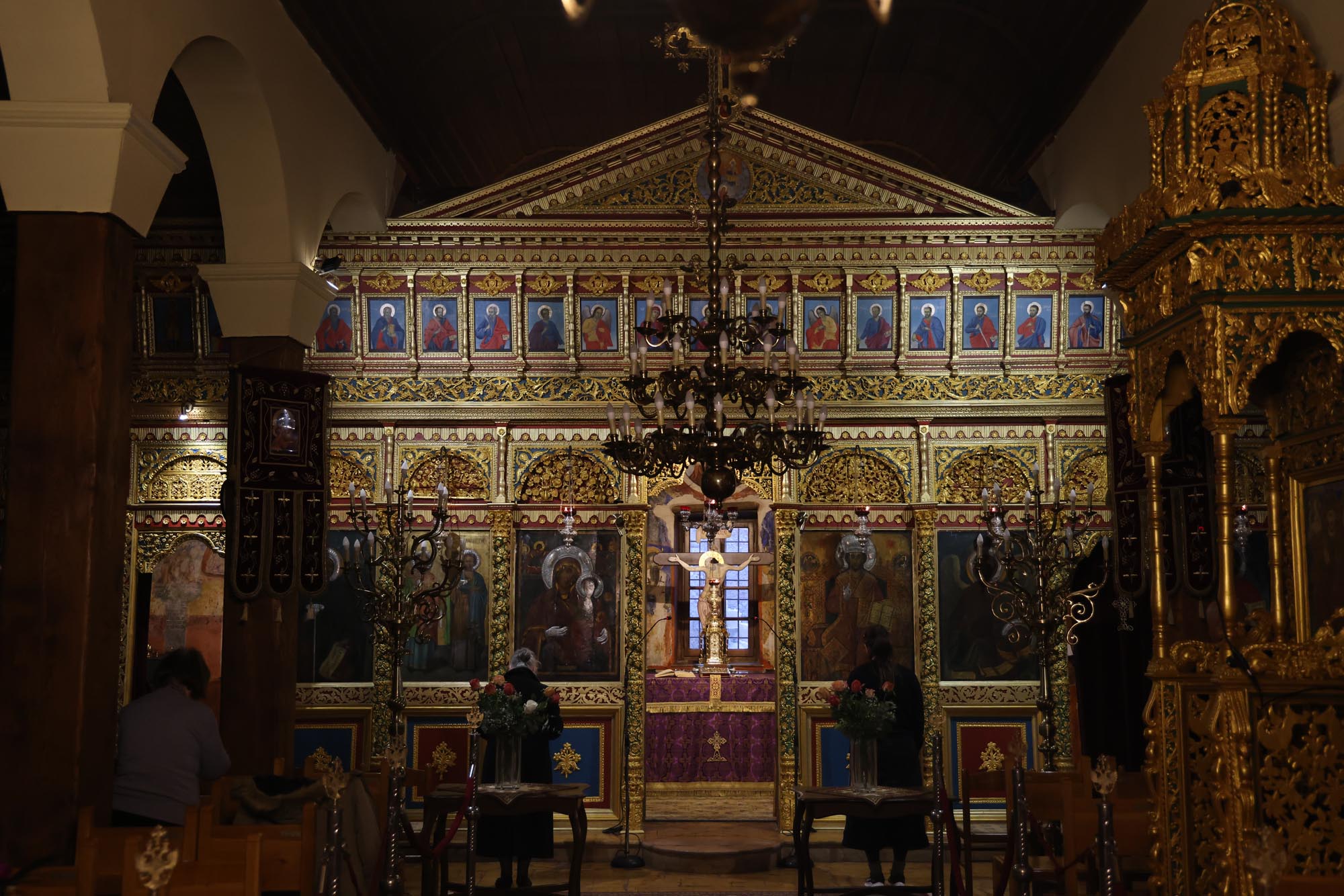
This magnificent church, just a few metres from Nikis Square in the city centre, is, together with its tall bell tower, one of the most distinctive landmarks of Kozani. It was constructed, according to the surviving dedicatory inscription, in 1721, on the site of an earlier church built in the 17th century, perhaps in 1664 at the expense of the city notable Charisios Trantas, or, as others have argued, even earlier, in the 15th century. The construction of the new church was completed with the contribution and cooperation of all the inhabitants, clergymen, monks, lords and laymen, who took care to secure a firman (imperial decree) beforehand, on the pretext of the damage caused to the earlier church by an earthquake. The church of St Nicholas is a three-aisled, barrel-vaulted basilica with a two-storey gynaikonitis (women’s gallery) on the west and a long, pillared portico on the north. The frescoes of the church were painted in 1730, a few years after its construction, by the brothers Nikolaos and Theodoros of Ioannina. Between 1747 and 1751, the templon and the other wooden furniture of the church, such as the bishop’s throne and the processional Epitaphios (Bier of Christ), were carved by the wood-carver Bandoveris, probably from the Ionian islands. The despotic icons of the templon are dated 1755 and are the work of the painter Apostolis Longianos Vodeniotis of Edessa. At the beginning of the 19th century, the chapel of St John the Baptist was added on the northeast side of the open portico. In 1855, the original six-storey bell tower was erected by the kalfas (master builder) Hatzi Andreas of Selitsa (modern Eratyra). A seventh storey was added in 1939, with a clock on all four sides of the bell tower.
The church was once surrounded by a high stone enclosure and formed part of a large complex including the bishop’s palace, the council house of the Demogerontia (Odas t’s Choras), the grain merchants’ shops with an arched arcade (alevropazaro or flour bazaar), hostels and a candleworks. In the early 19th century (c. 1810), a school was built in the church precinct, followed in 1813 by the Community Library and a second building used as a reading room and a meeting place for the city’s scholars (Oikos Veltioseos, or House of Improvement). All these buildings, however, were demolished in the first half of the 20th century, when extensive work was also carried out on the church, significantly altering its original architectural form.
Other churches
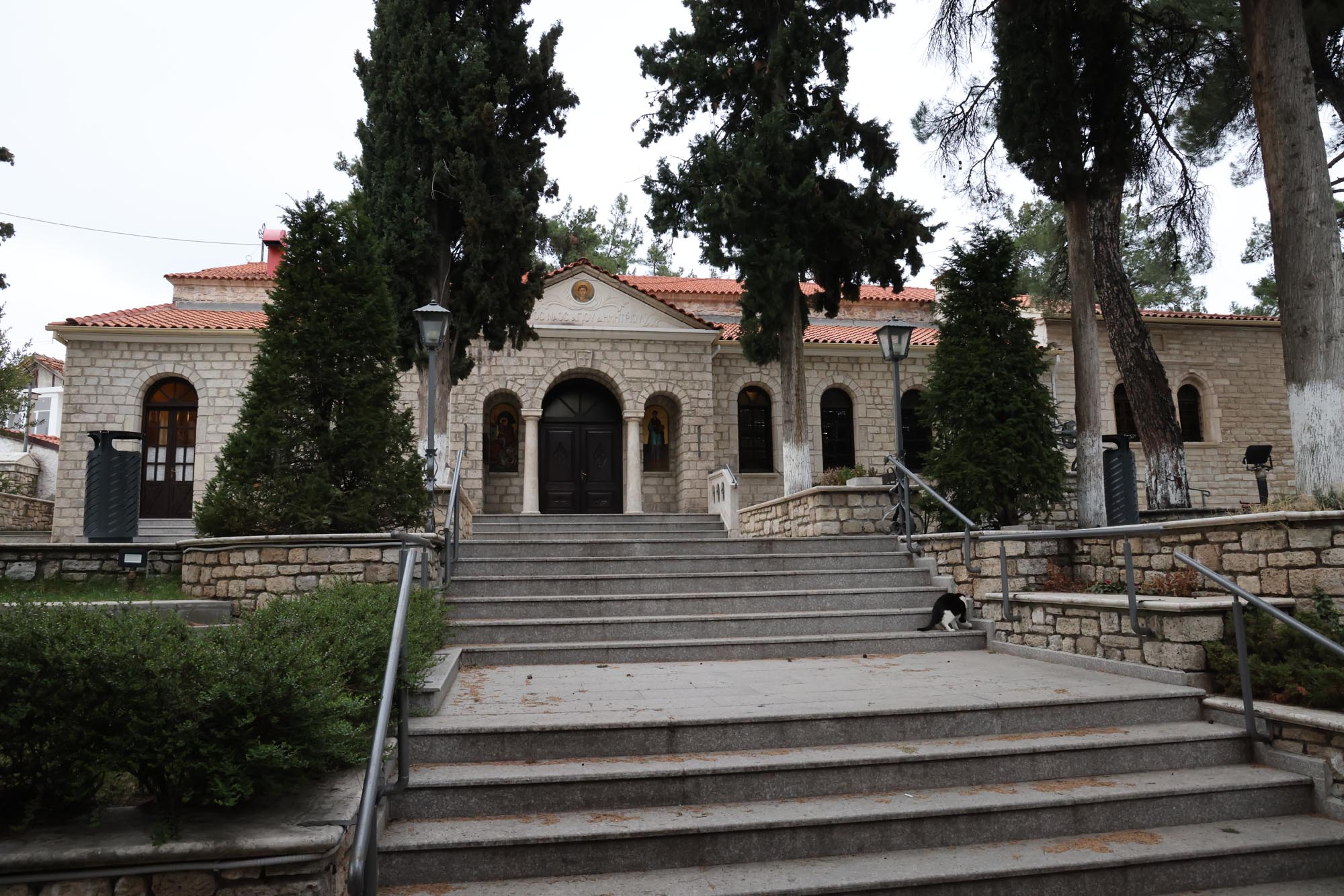
Three other churches of Kozani were founded in the 17th century, but they have been altered by later interventions, following the prevailing trend after the 18th century of demolishing older churches and building new, larger ones in their place. Unlike the church of St Nicholas, which stands in the centre of the city, the three churches are located on the periphery, in the individual districts. One of the oldest churches in the city is thought to be that of St Demetrios, in the pine park of Agios Dimitrios in the northeast of the city. It was erected before 1612 and renovated in 1754 and 1863. Today it has been fully restored after a devastating fire in 1993. Nearby is the church of the SS Anargyroi or Holy Unmercenaries (late 16th-early 17th c.), originally a single-nave church, which was rebuilt from the ground up as a three-aisled basilica in 1815. Another of the oldest churches in Kozani is that of St Athanasios, on the hill of Agios Athanasios in the south of the city, although the exact date of its construction is unknown. According to inscriptions, it was restored after being burnt down in 1688 and subsequently rebuilt in 1863.
Public buildings and residences
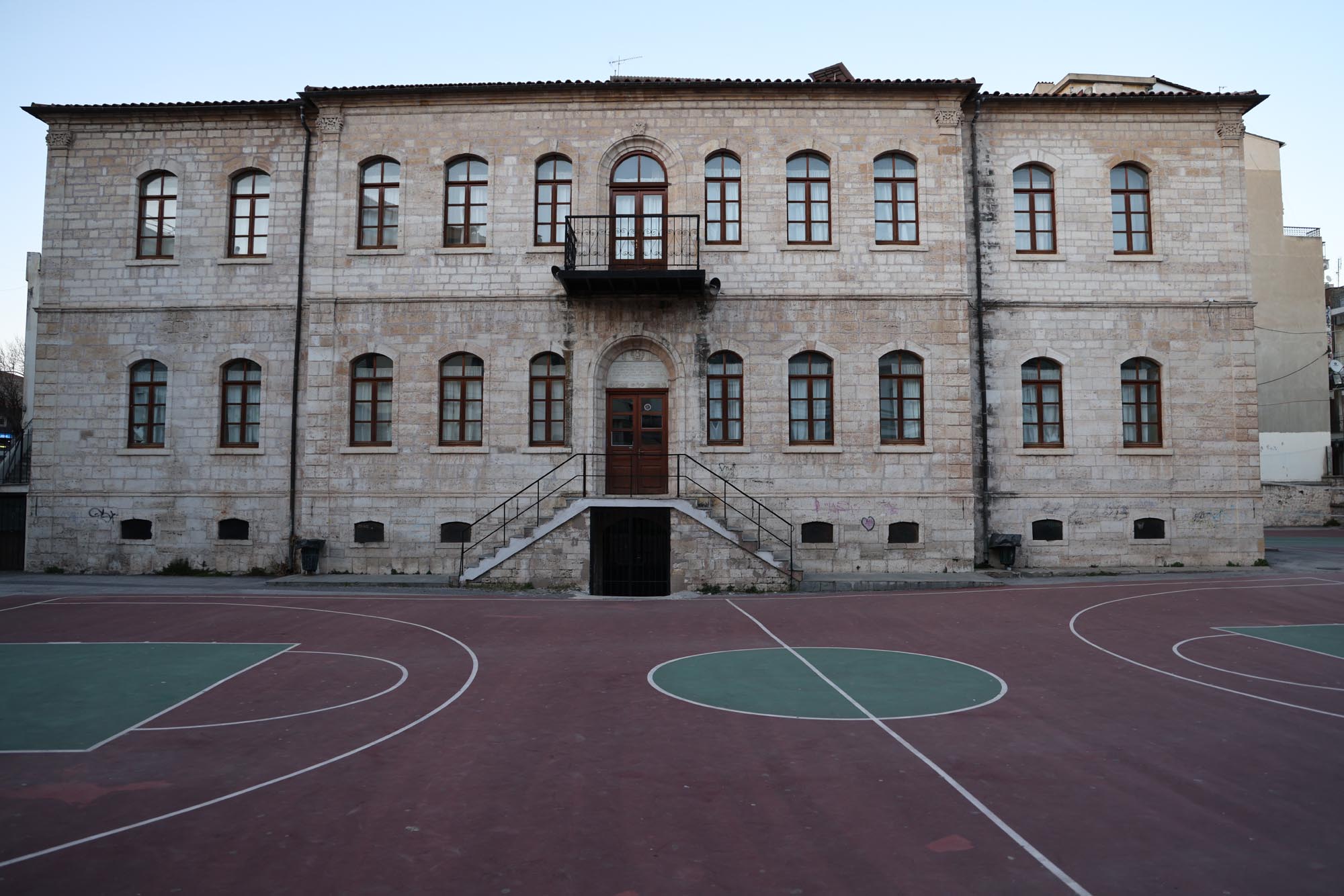
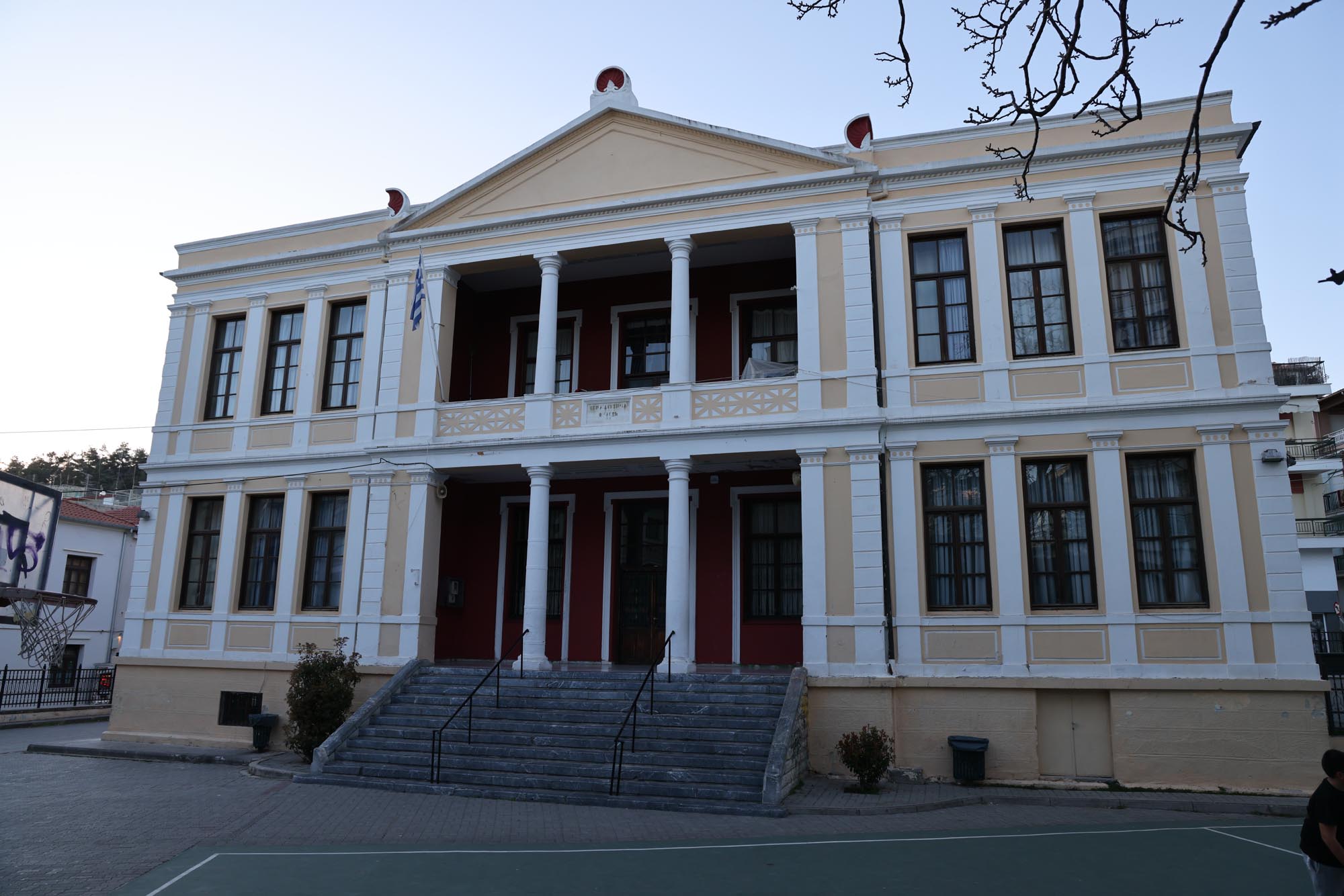
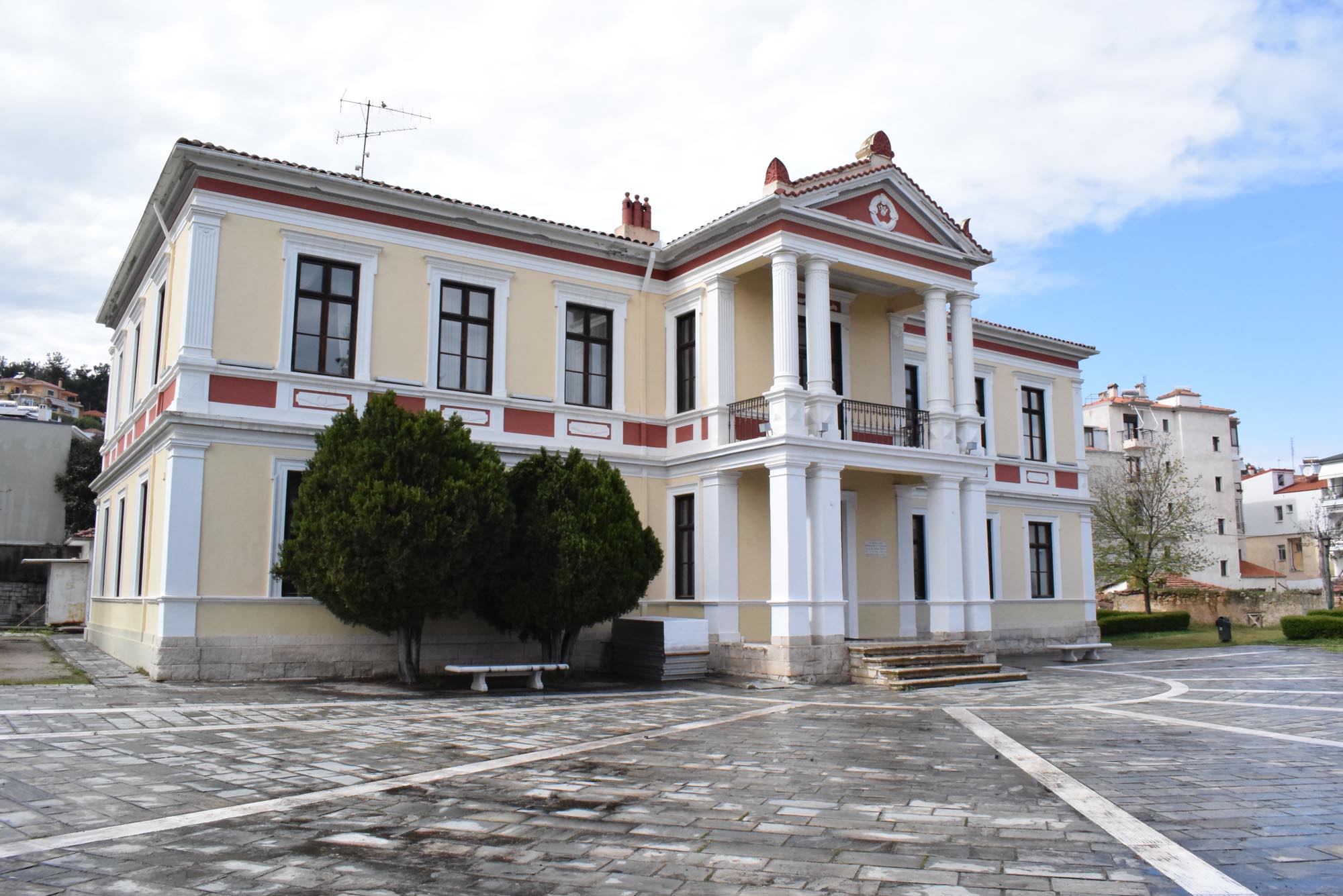
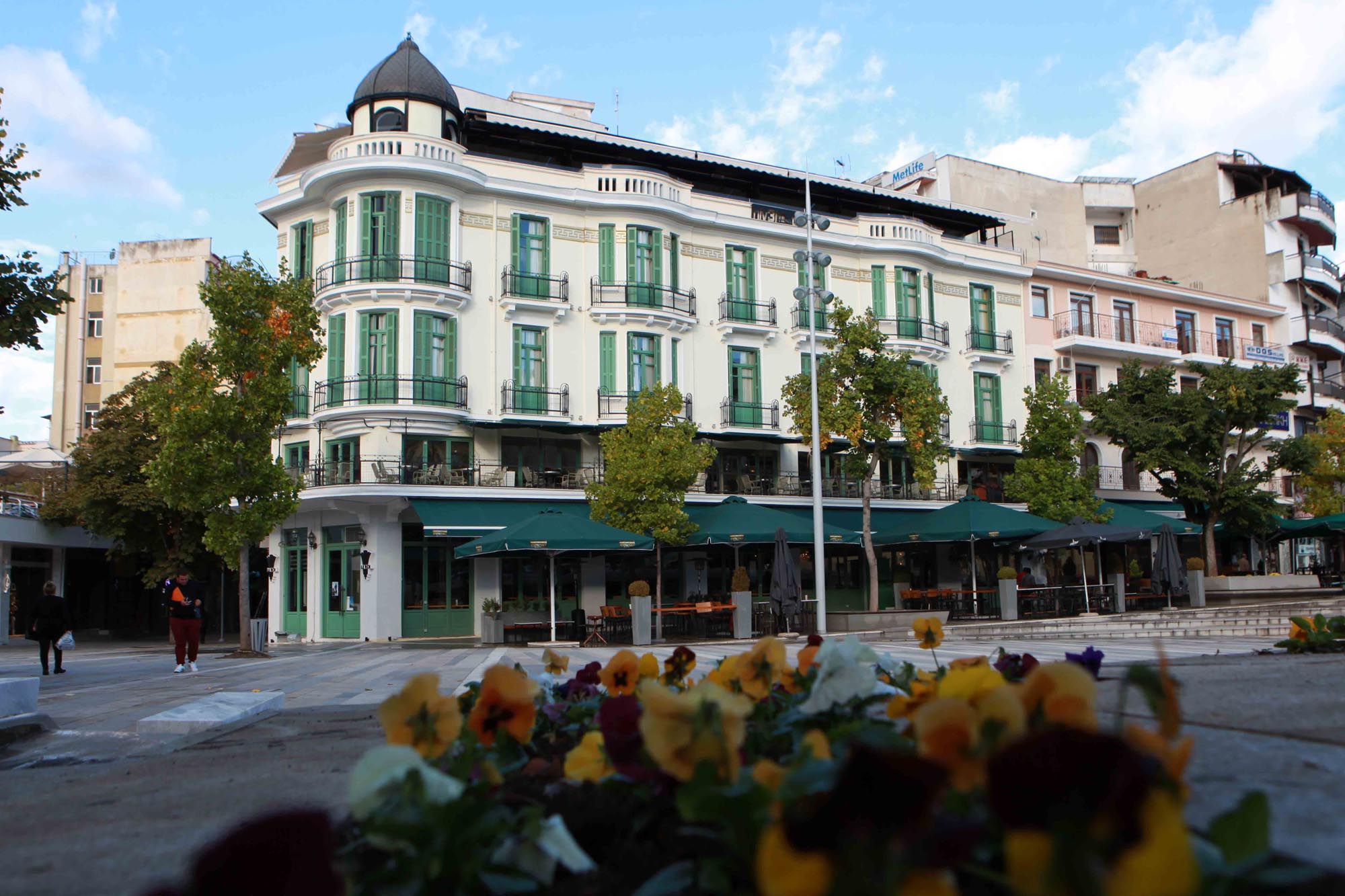
Many listed houses and public buildings are preserved in Kozani today, representative examples of the architectural trends of the late 19th and early 20th century, such as the Valtadoros High School, the Charisios Moukas Primary School and the Drizis Mansion. Three of the city’s most historic buildings, the Town Hall, the National Bank and the Ermionio Hotel, the work of the architect Maximilian Rubens, are concentrated on the central Nikis Square.
Among the most important examples of Kozani’s architectural heritage are the mansions, the chief witnesses to the city’s prosperity after the mid-17th century. Also of interest are the few plain vernacular houses that survive today and follow the general layout of the mansions in a simplified form.
Mansions
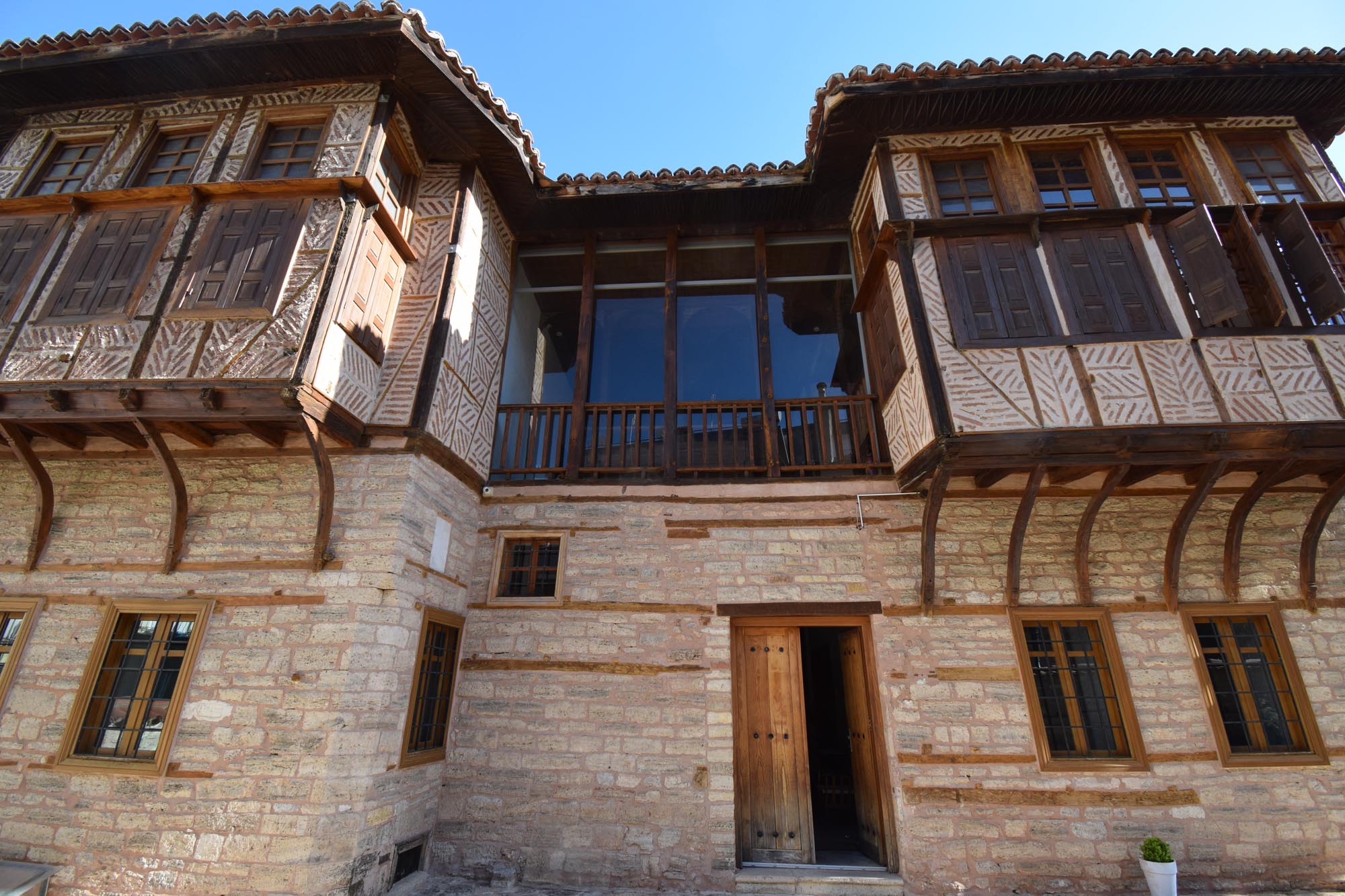
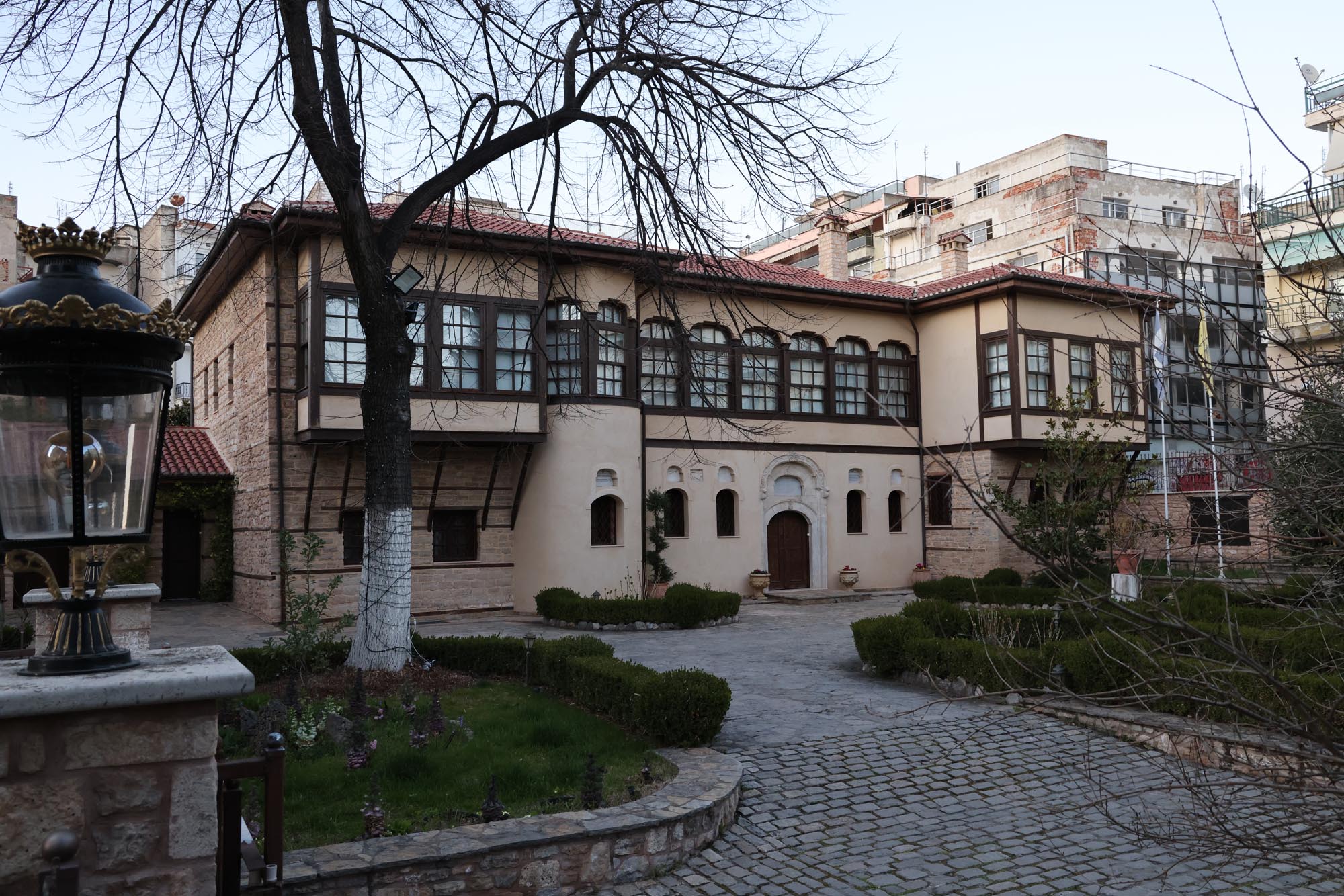
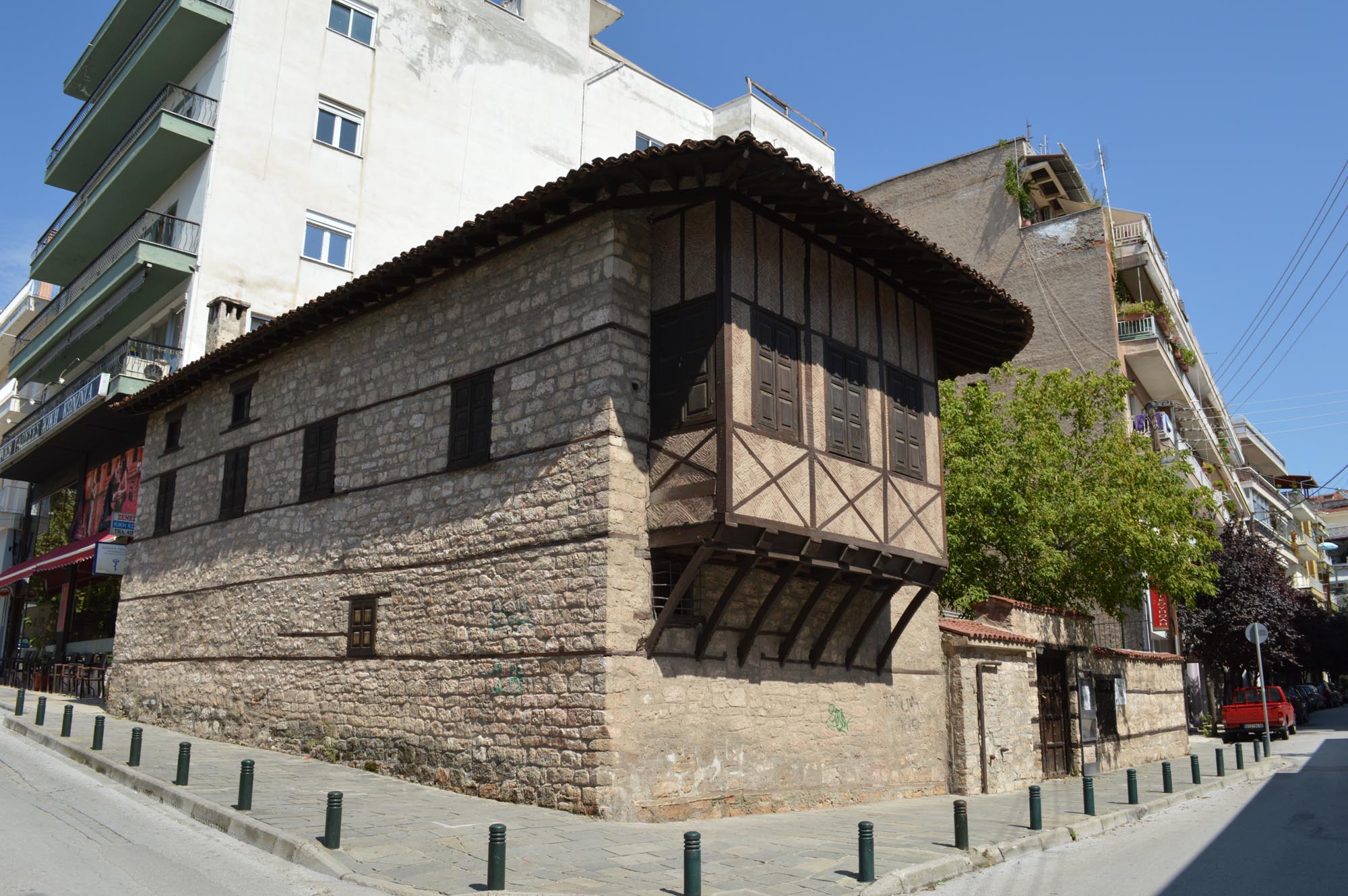
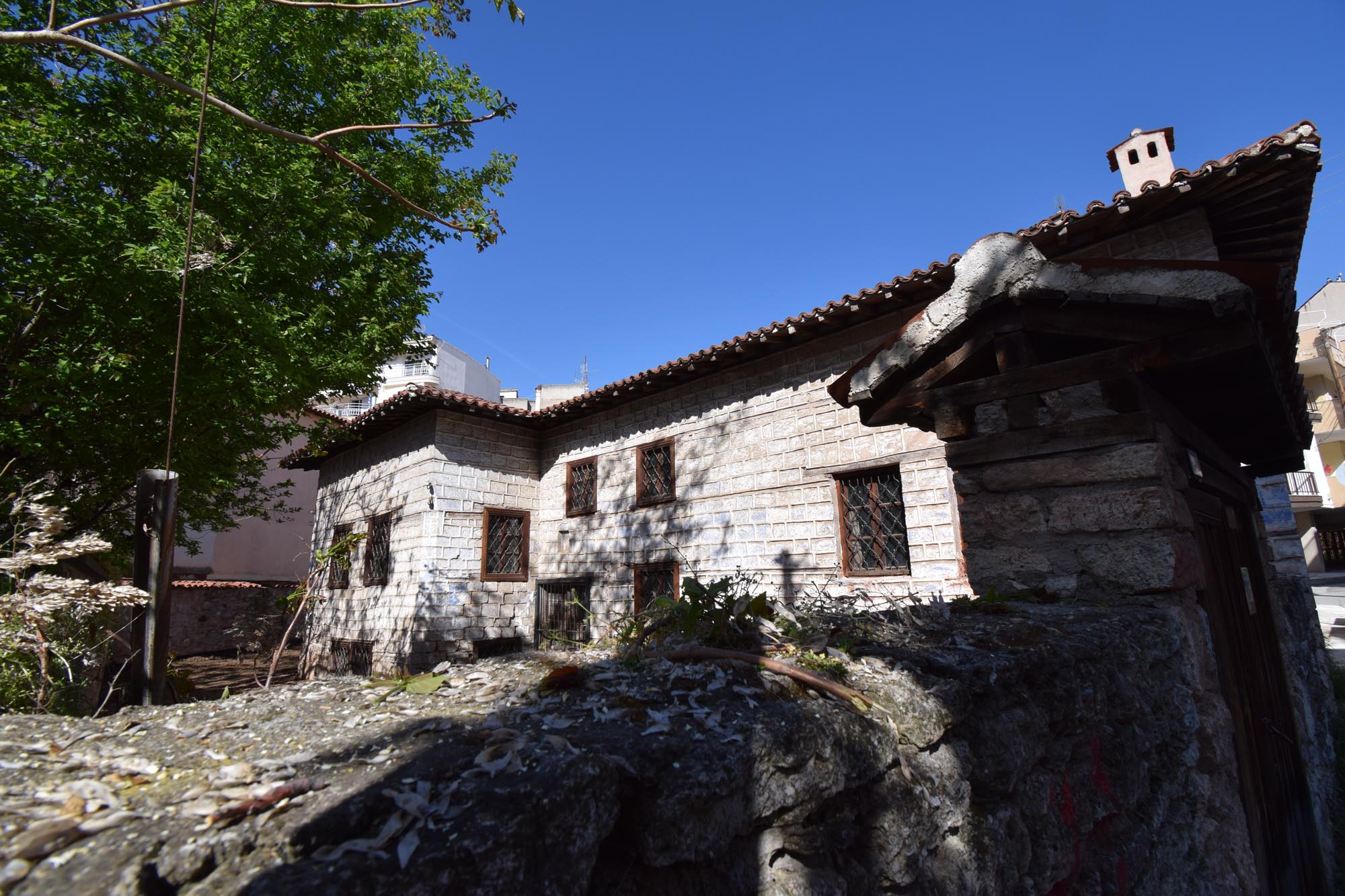
A considerable number of mansions were once preserved in Kozani, but most have been demolished, mainly in the 1960s, a period of intensive rebuilding. One of the oldest and most impressive was the residence of the Christian notable of Kozani Charisios Trantas in Güler-Mahalas, the most beautiful district of the city centre. Built between 1650-1660, the mansion was demolished in 1911 and the Neoclassical Girls’ School of Kozani erected in its place. Today, the few mansions of Kozani that have survived the rebuilding of the modern era include the mansions of Grigorios Vourkas, dated 1743 (8-10 Dimogerontias Street) and Nikolaos Vourkas or Athanasios Katsikas, dated 1762 (junction of Adamantidou Philippou and Armenouli Streets), which have been expropriated by the Ministry of Culture; the Episkopeion or Bishop’s Palace (after 1745), which now houses the offices of the Holy Metropolis of Servia and Kozani and the Ecclesiastical Museum; the Zisis Pagounis – Evangelos Vamvakas Mansion, dated 1786 (Ioannou Tranta Street); that of the revolutionary Georgios Lassanis (1793-1870), today housing the Municipal Map Library (Lassani square); and the Goutsourlis Mansion (Chalkia Street).
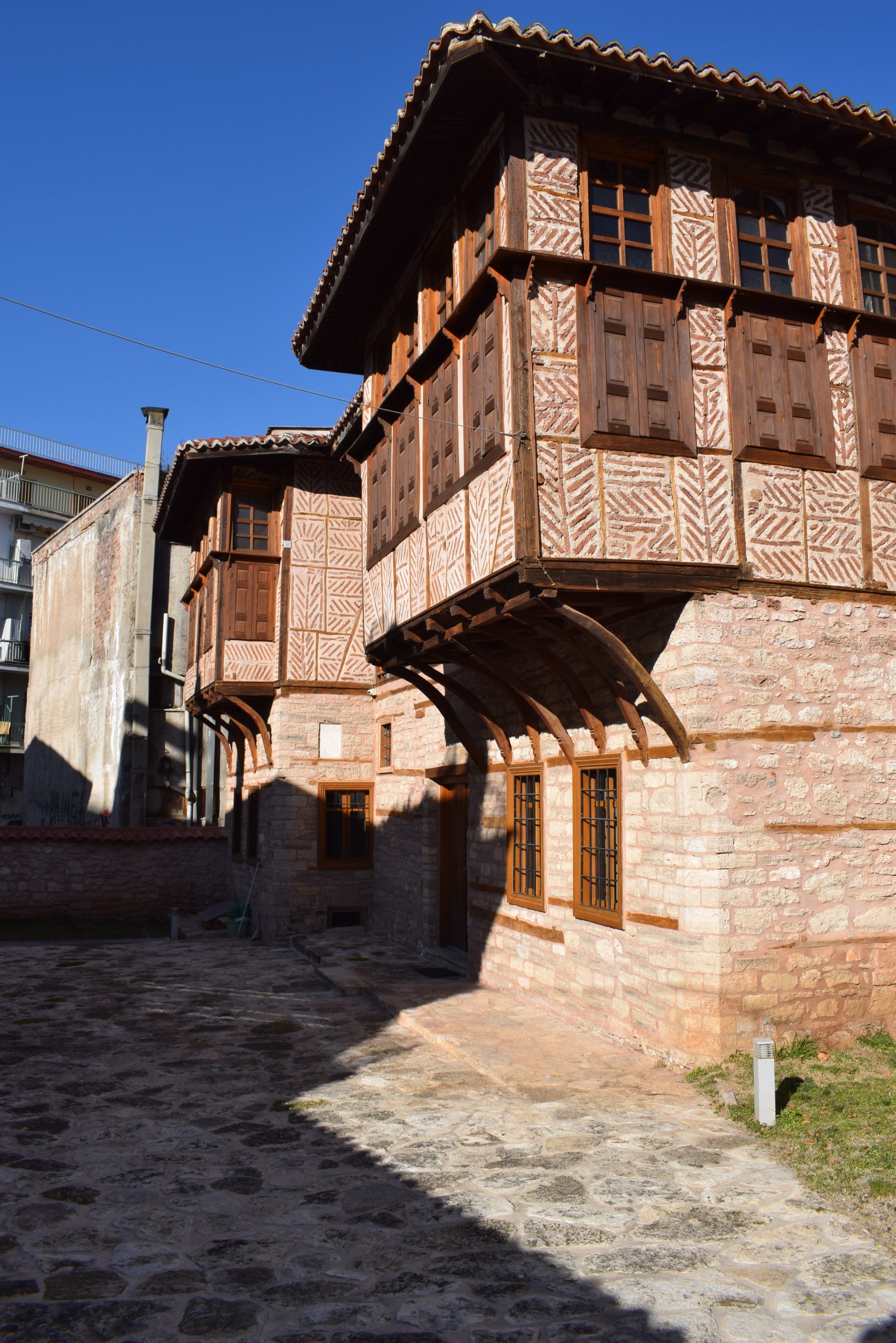
The mansions of Kozani, constructed by famous guilds (sinafia) of Macedonia and Epirus, display the typical features of the Macedonian traditional architecture. They are usually two-storey or rarely three-storey buildings, of a strongly defensive, inward-looking design. The urban layout of Kozani did not follow a predetermined plan and, as the city had never acquired a fortified enclosure, its defence was based primarily on the fortress-like nature of its houses, with the high walls around their courtyards and the severely plain stone façades of their ground floors, with visible timber frames but no doors or windows. Escape in times of danger was facilitated by the maze of narrow alleyways and a complex system of communication among the houses via their courtyards. The safety of the inhabitants was also ensured by the cellars found in most Kozani mansions; these are a peculiarity of Kozani architecture, rarely found in the mansions of other cities of Northern Greece. These cellars often had a hiding-place, the krypsana, with a secret emergency exit through a tunnel communicating with other mansions.
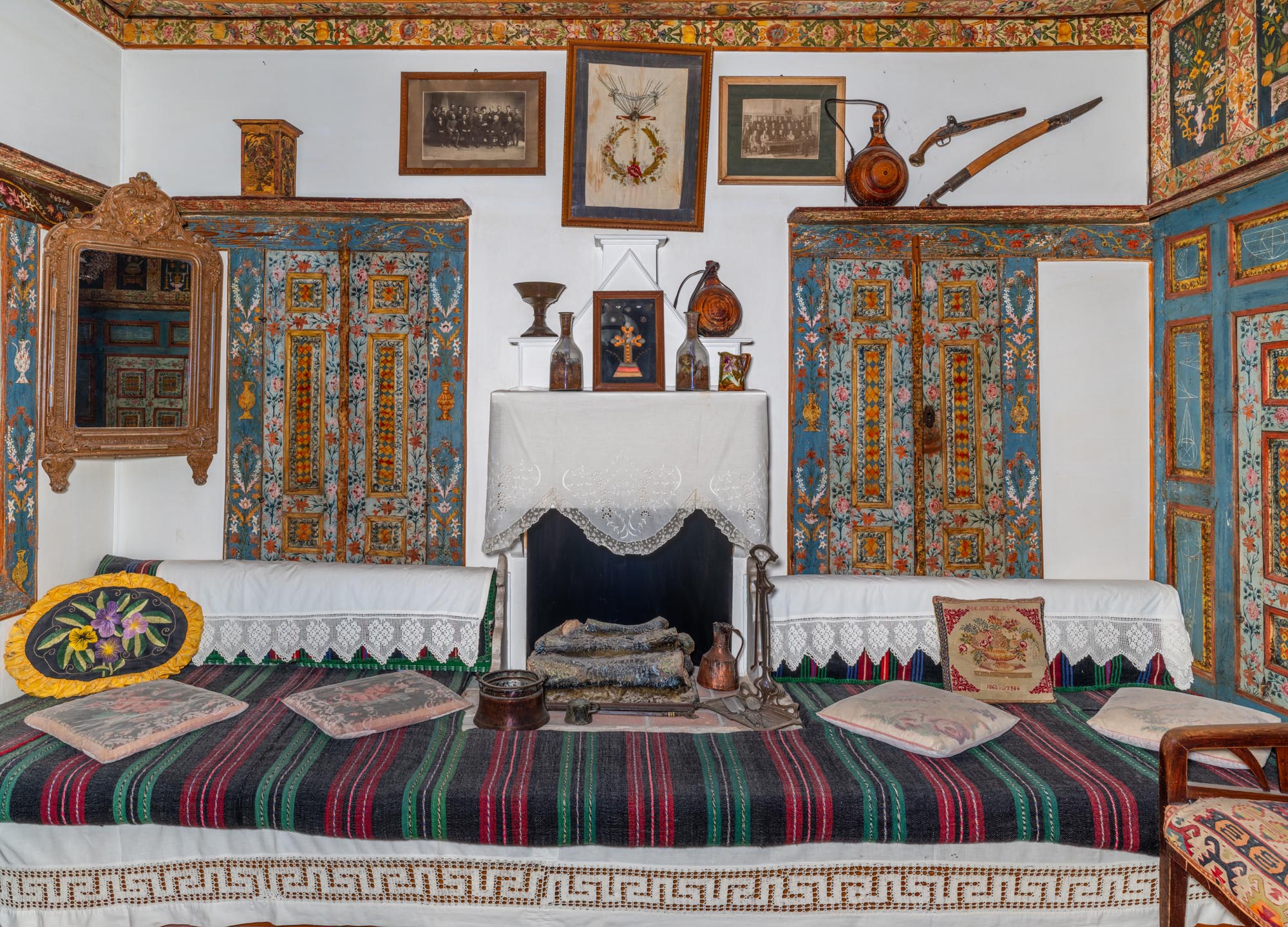
On entering the ground floor of the mansions of Kozani by the main door, you finds yourself in a spacious central space (mesia or embati), around which all the ground floor rooms are arranged, including the pantry (magazes), the various auxiliary rooms and more rarely the kitchen (maereios), the workshop or shop in cases where the owner’s profession required it, the winter living room (heimoniatiko or aniliako) which was heated by a fireplace (bouhari), and one or more rooms for receiving guests, heated by a mangal brazier (kafe odas) or a fireplace (heimerinos odas, bas odas or mousafir odas). On the upper floor with its overhanging covered balconies (şahnişins) typical of the Macedonian traditional architecture, which allow plenty of light to enter, are arranged the family living quarters used during the summer months (odades). They are, however, furnished with fireplaces, so they can be used on chilly summer evenings or in winter. The upper floor also has rooms for receiving guests (mousafir odades) and a raised central entertainment hall (doxato or axato). The odades and reception rooms often have a low divan running around the room (tiklizi, minderi or menderi). The mansions often feature a mezzanine between the ground and first floor, with the winter and utility rooms for household crafts. In the vaulted cellars, agricultural goods and wine were stored in large barrels (vaenia) on racks. The houses opened onto the internal, usually paved courtyard, through doors and covered verandas (hayats) where the family would spend much of their time. In the courtyard (nouvouroudi), which people and beasts of burden entered through a heavy double door reinforced with distinctive studs (folies), was the garden, the well (arvanikos) and various outbuildings such as storerooms, stables, the oven, the kitchen, the laundry room, the wine press (karoutostasi), fur-processing areas and the lavatory (hales or hreia).
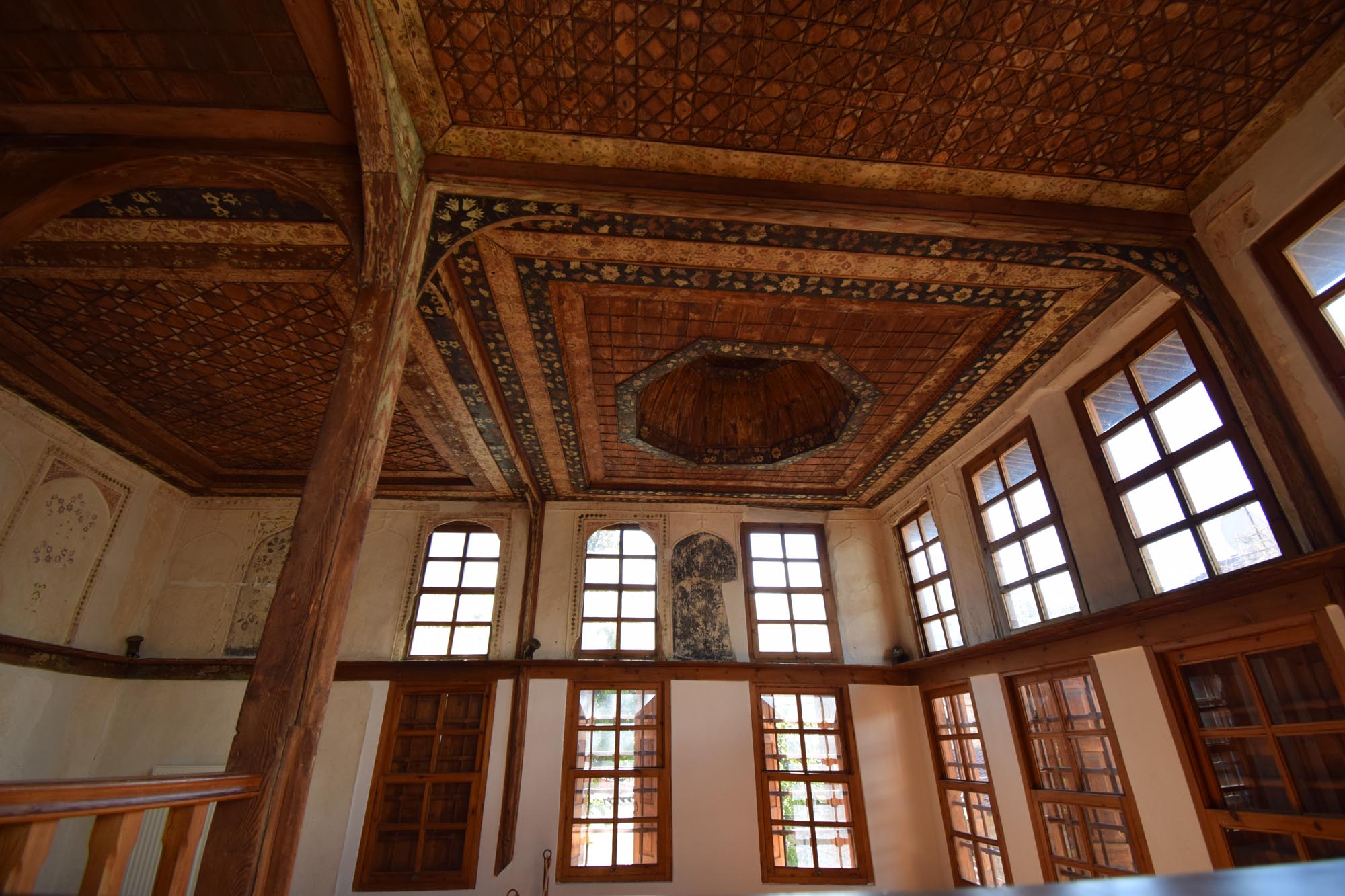
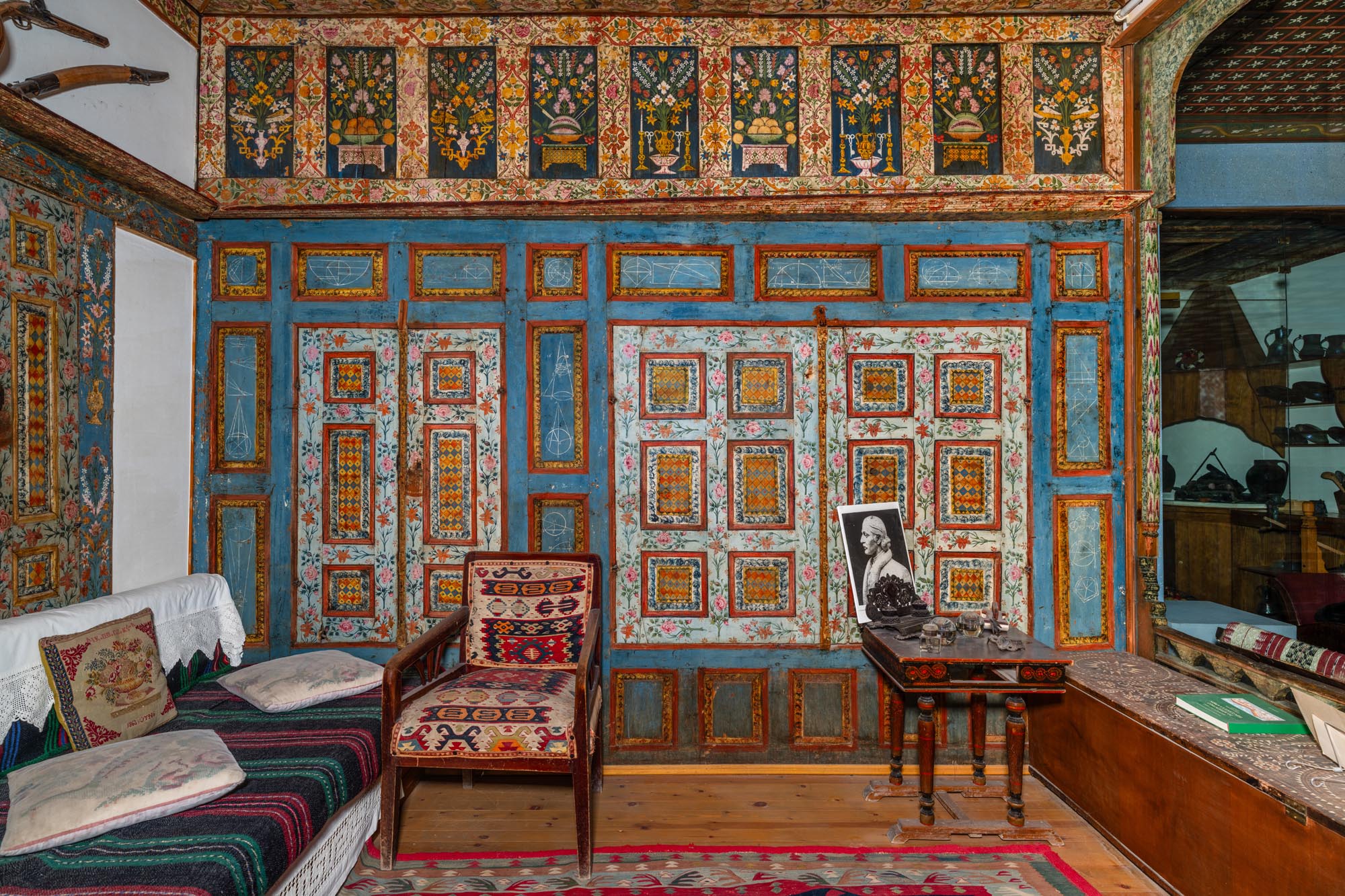
The chief characteristic of the mansions of Kozani is their particularly elaborate interior decoration, especially on the first floor, where visitors were received and celebrations were held. The walls and fireplaces feature ornamental plasterwork. The wooden ceilings (davania) are richly decorated, with the typical thin slats (vergia) forming various geometric motifs. The decoration of the central square, hexagonal or octagonal ceiling frame (tavlas) is more elaborate, often forming arabesques influenced by Islamic art. In some cases, a richly decorated pseudo-dome (noufalos), a recess in the form of a small hemispherical dome, is also inscribed in the central ceiling panel. The other wooden elements and structures of the mansions are decorated in a similar fashion: these include the wooden wall panelling, the doors, the panelled cupboards (amaria) and the mesandres or mousandres, large wardrobes with panelled doors (kanatia) where bedding, textiles, clothes and other household goods were stored. The decoration of the ceilings and other wooden structures of the Kozani mansions is embellished with rich and colourful painted decoration depicting traditional, mainly floral themes, influenced by the 18th-century decorative trend known as “Turkish Baroque”, which combines elements of the Islamic tradition and the European Baroque and Rococo styles. In the more affluent mansions of Kozani, the doors, cupboards and wardrobes in the “good rooms” (kaloi odades) are richly carved and in some cases gilded; this ornamentation may even extend to the fireplaces or the wooden panelling covering the upper part of the walls, a particularly rare practice in mansions in the Macedonian style. Especially luxurious are the “good rooms” of the now-demolished Trantas and Sakellarios Mansions, exhibited in the History and Folklore Museum of Kozani, and those of the Tsiminakis-Dimoxenis and Takiatzis Mansions in the Benaki Museum.
As regards the exterior decoration of the mansions of Kozani, they feature the typical transom windows above the windows of the şahnişins, with decorative plaster frames and colourful stained-glass panes. On the Grigorios Vourkas Mansion, the brickwork patterns set within the wooden frame of the şahnişins on the upper floor are also characteristic, reminiscent of the ornamental brickwork on the exterior of Byzantine churches.
These features of the mansions of Kozani are also seen in the mansions that have survived in other towns and villages of the region, such as Velvento, Siatista, Eratyra, Tsotyli, Pentalofos and Agia Sotira in the Voio area.

Museums
Archaeological Collection of Kozani (8 Dimokratias St.)
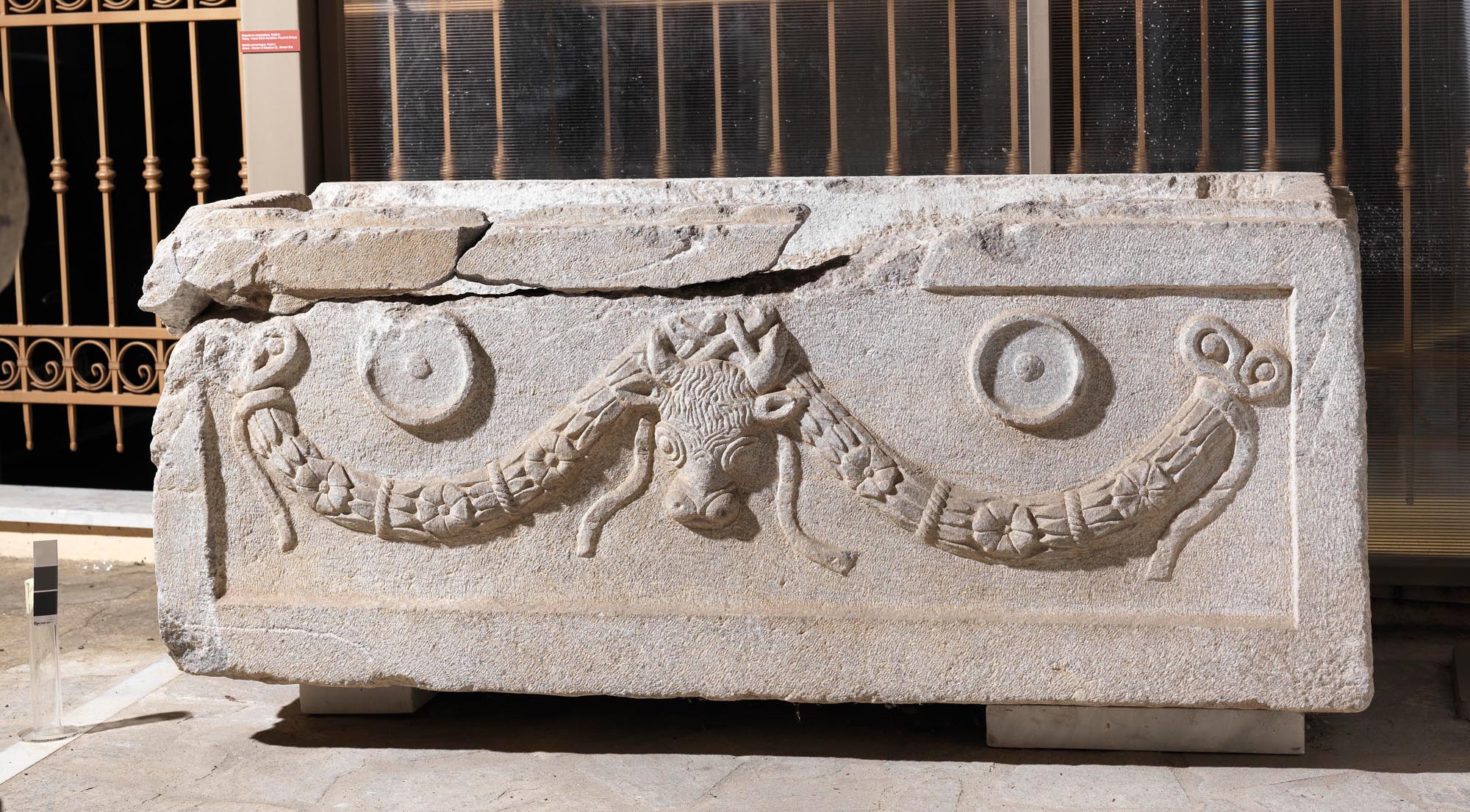
The Archaeological Collection is housed in a two-storey Neoclassical building also known as the Katsikas House. Through its rich collection, it presents habitation and the development of the arts in the wider Kozani area through the ages, from prehistoric times to the Roman period. Exhibits include the Palaeolithic hand axe of Palaiokastro, the oldest tool found in Greece, dating back 100,000 years, and the stone anthropomorphic stelai from the area of Kranidia Community, near the shores of the artificial Lake Polyphytos. These constitute one of the earliest statue types, probably dating from end of the Neolithic period (mid-3rd millennium BC).
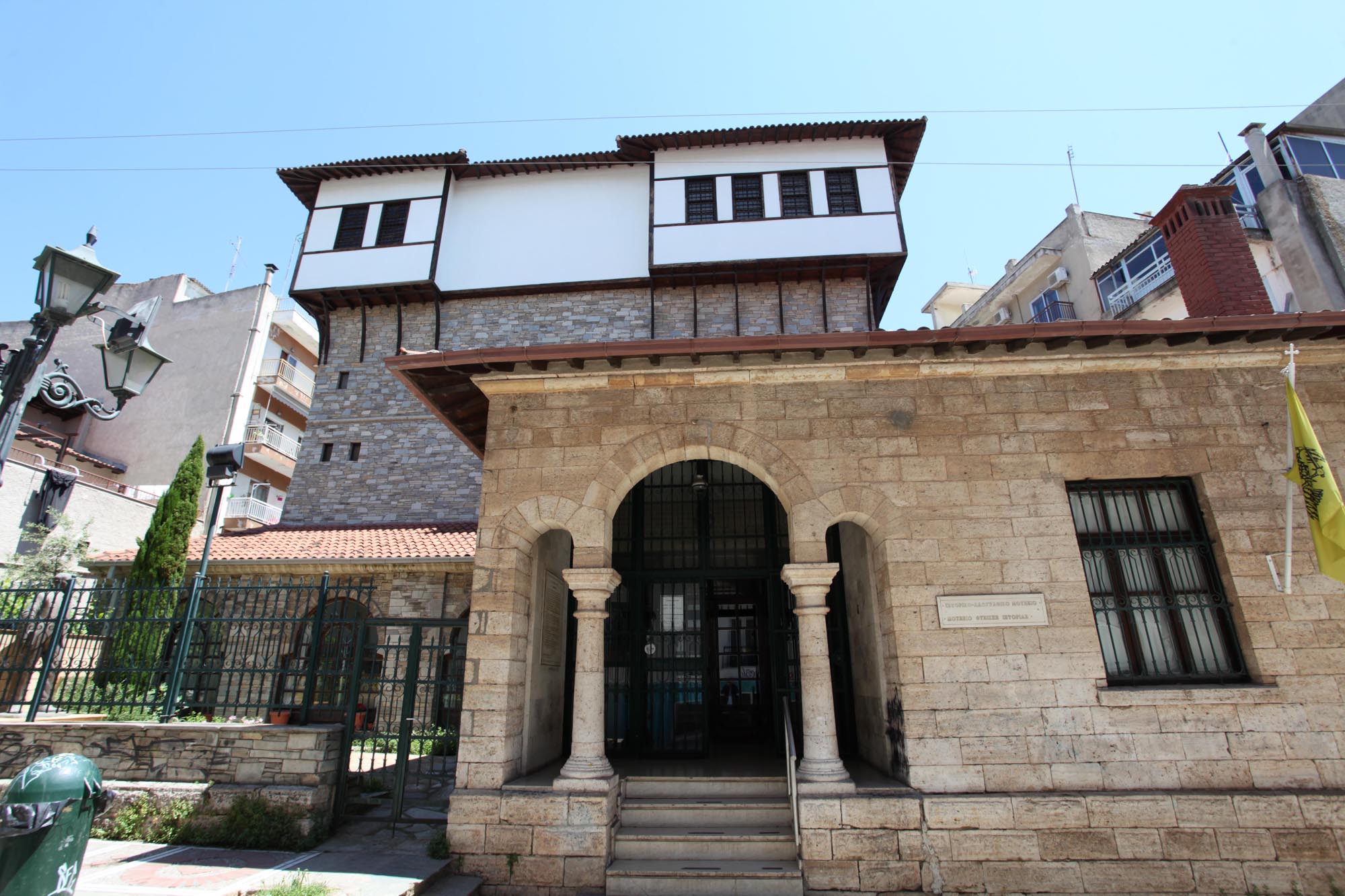
History, Folklore and Natural History Museum of Kozani (9 Ionos Dragoumi St.)
The Museum was founded in 1969 by the Literary and Arts Association of Kozani Prefecture, and presents various aspects of the daily life of the inhabitants of the region through a rich collection of objects. The Museum comprises the Folklore Exhibition, the Natural History Exhibition presenting the evolution of life on Earth, the Archaeological-Historical Exhibition with archaeological finds from the wider area of Kozani and exhibits related to the more recent history of the region, the Art Gallery, with icons and paintings of the modern era as well as photographs and architectural plans documenting the architectural heritage of Kozani, the Stamp Exhibition and the Radio Exhibition.
Koventareios Municipal Library of Kozani (9 Konstantinou Davaki St.)
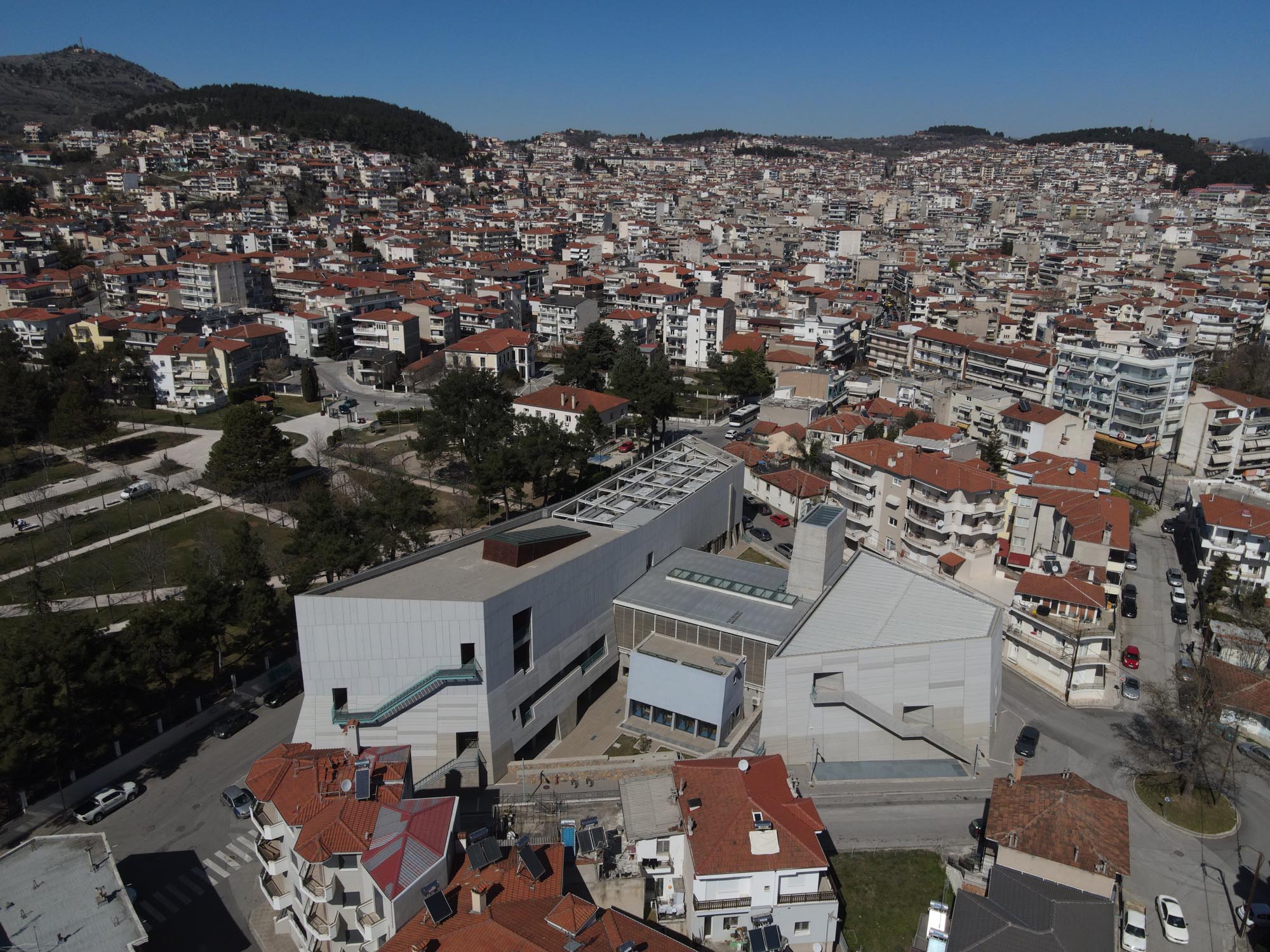
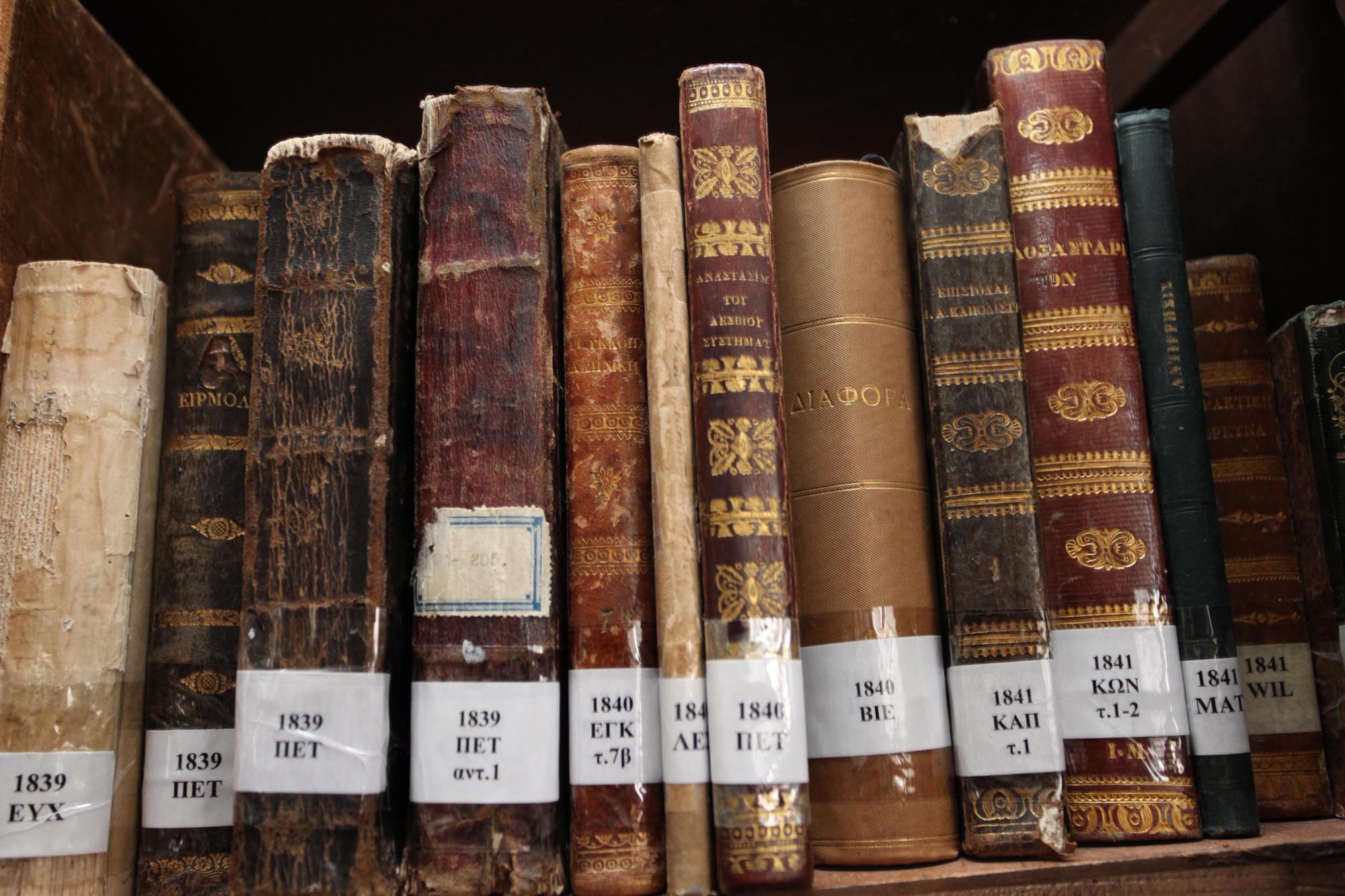
This is one of the most historically significant libraries in the country, founded as a school library in the late 17th century, accompanying the operation of the first school in Kozani. After 1745 and the establishment of the episcopal see of Servia and Kozani, the library was housed in the bishop’s palace of the city. In 1813 the Community Library was founded, housed in a separate purpose-built building in the precinct of the church of St Nicholas. Between 1916 and 1923, the Kozani Reading Room was founded, which took over the operation of the Community Library, while in 1923 the Library passed into the jurisdiction of the Municipality of Kozani, operating as a municipal library ever since. It is now named after the brothers Konstantinos and Dimitrios Koventaros, who financed the extension of the city hall in which the Library was housed from 1963 to 1986. The construction of the new building complex of the Library and its Museum was completed in 2018. This houses the valuable collections of the Library, which have been enriched over the centuries with an extremely large number of manuscripts, old publications and maps. The local archival material of the Greek and Ottoman documents of the Library is a particularly valuable resource for students of the history of Kozani and the wider region.
Municipal Map Library of Kozani (Lassani Square)
The Map Library is housed in the Georgios Lassanis Mansion and hosts the permanent exhibition “Kozani in the World of Maps”. It also engages in a wide range of research activities, holding temporary exhibitions, workshops, lectures, talks and seminars.
Museum of Contemporary Local History (29 Vitsiou St.)
The Museum was founded by the Municipality of Kozani and the Society for the Preservation of Historical Archives, and presents the recent and contemporary history of the wider Kozani region.
Ecclesiastical Relic Depository of the Holy Metropolis of Servia and Kozani, “St Symeon the New Theologian” (6 Charisiou Megdani St.)
Housed on the ground floor of the Bishop’s Palace, it displays numerous ecclesiastical relics, such as sacred vessels, portable icons and liturgical vestments.