Dodona
Dodona, “the most ancient oracle in Greece”
Continuing westwards after the Ioannina basin, the Egnatia Motorway passes a short distance north-northwest of the small local communities of Dramesioi, Dodona and Manteio of the Municipal Unit of Dodona. There lies the archaeological site of the Sanctuary of Zeus, the father of the gods, “the most ancient oracle in Greece”, according to the historian Herodotus, and the great theatre, one of the most recognisable landmarks of Epirus. The ancient Sanctuary of Dodona (also spelled Dodona or Dodone), in the heart of the hinterland of Epirus, about 20 km southwest of Ioannina, lies on the northern edge of the closed, narrow valley of Dodona. It is built on a low range of hills, 620-650 m above sea level, forming part of the eastern foothills of Mount Olytsika (ancient Tomaros), from where the rivers Louros and Acheron spring.
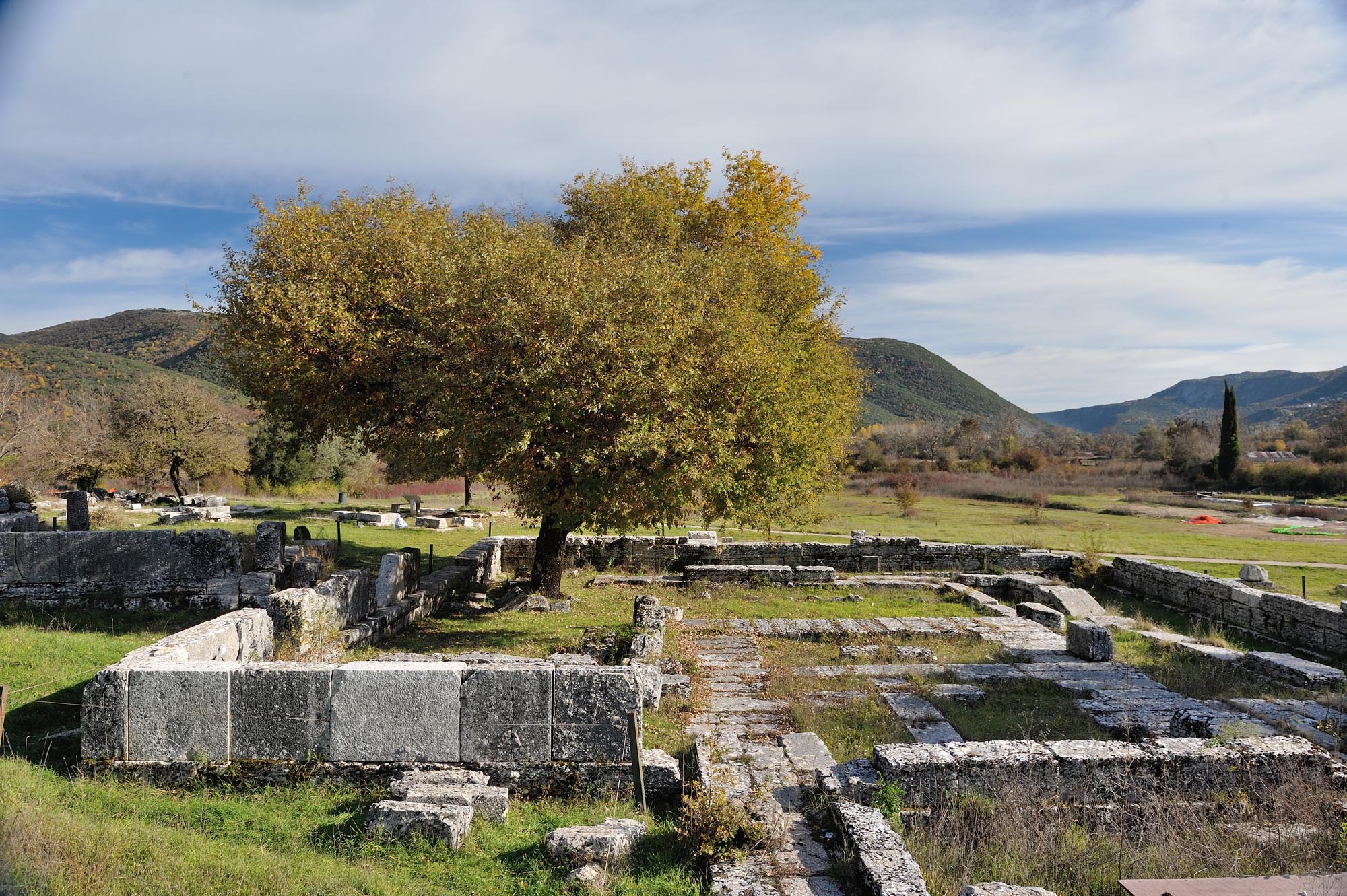
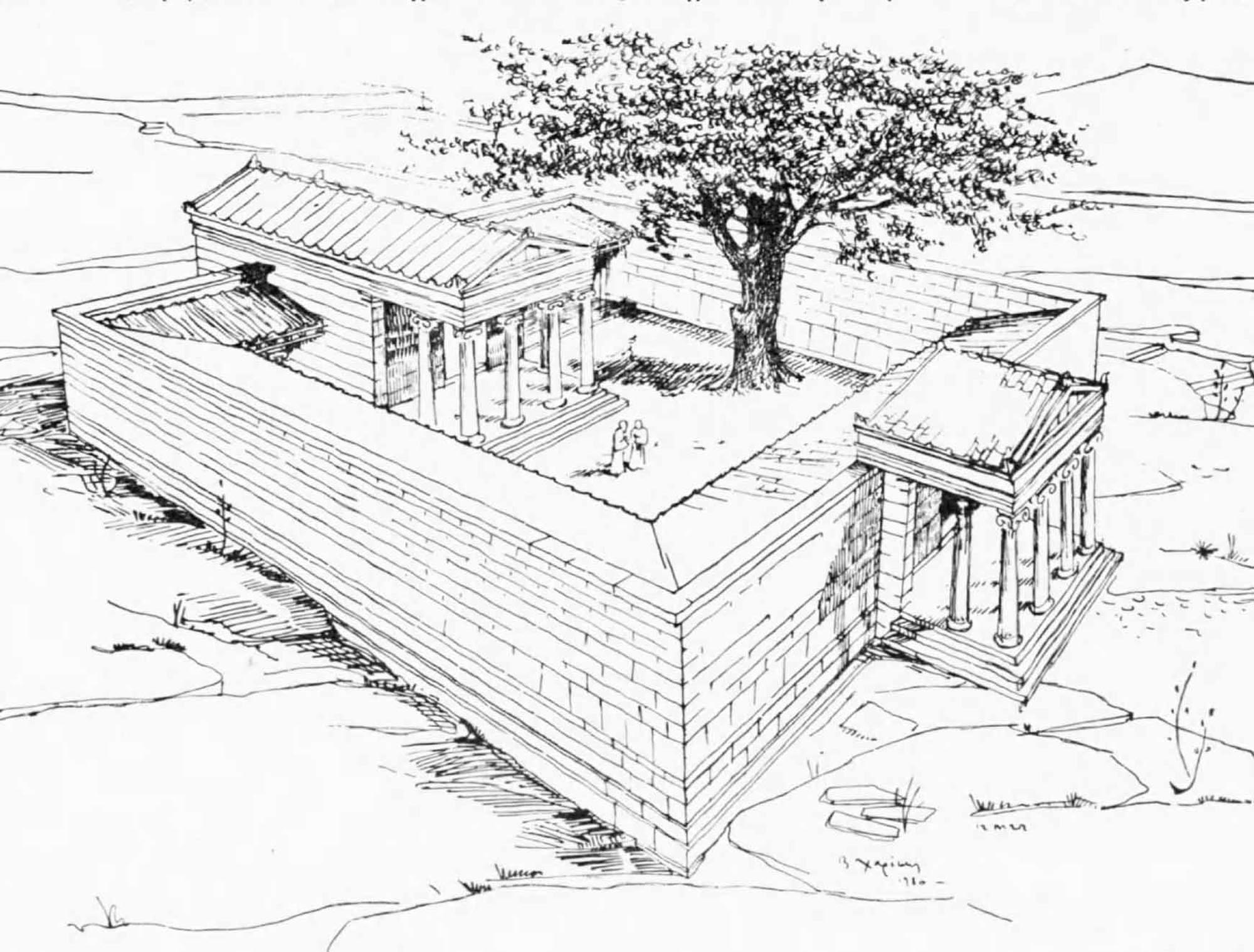
This was the earthly residence of Zeus Naios, who dwelled (naio means “to dwell”) at the roots of the sacred oak tree. The oracular tree was the core of the Sanctuary, as it played a key role in the process of divination. Around it were later erected the Hiera Oikia (the Temple of Zeus) and the other cult buildings of the Sanctuary. The inscriptions and other archaeological finds attest that other gods of the Greek Pantheon were also worshipped at Dodona. They include Dione Naia, the wife of Zeus, “she who shares his house and temple”; Themis, another goddess with oracular powers, also called Naia; and Hercules, Aphrodite, Apollo, Artemis, Dionysus and the Nymphs. The chief god of the Sanctuary, however, was Zeus, who was worshipped by various epithets, such as Dodonaios (“Zeus of Dodona”), Pelasgikos (“Zeus of the Pelasgians”) and Phegonaios (“Zeus of the Oak Tree”). The festival of the Naia in honour of Zeus Naios was celebrated at Dodona, probably every four years. It gradually became a panhellenic event, including dramatic contests (tragedy and comedy) and athletic games, and perhaps also musical and equestrian contests and chariot races.
The earliest reference to the Sanctuary is found in Homer (8th c. BC), but cult in the area goes back much further, based on the archaeological finds and the wealth of references in ancient writers. Dodona is closely connected with ancient Greek myths such as the flood of Deucalion, the expedition of the Argonauts and the Trojan War. The Sanctuary gradually became not only a religious but also a political centre of the Epirote tribes, the “nations”, according to ancient sources, that inhabited Epirus; it was the seat of their federal states, initially Apeiros or the Epirote Alliance and later the Epirote League. The oracle’s reputation spread throughout the ancient Greek world, attracting worshippers not only from Epirus and neighbouring regions but also from distant lands such as Sicily and the north coast of Africa.
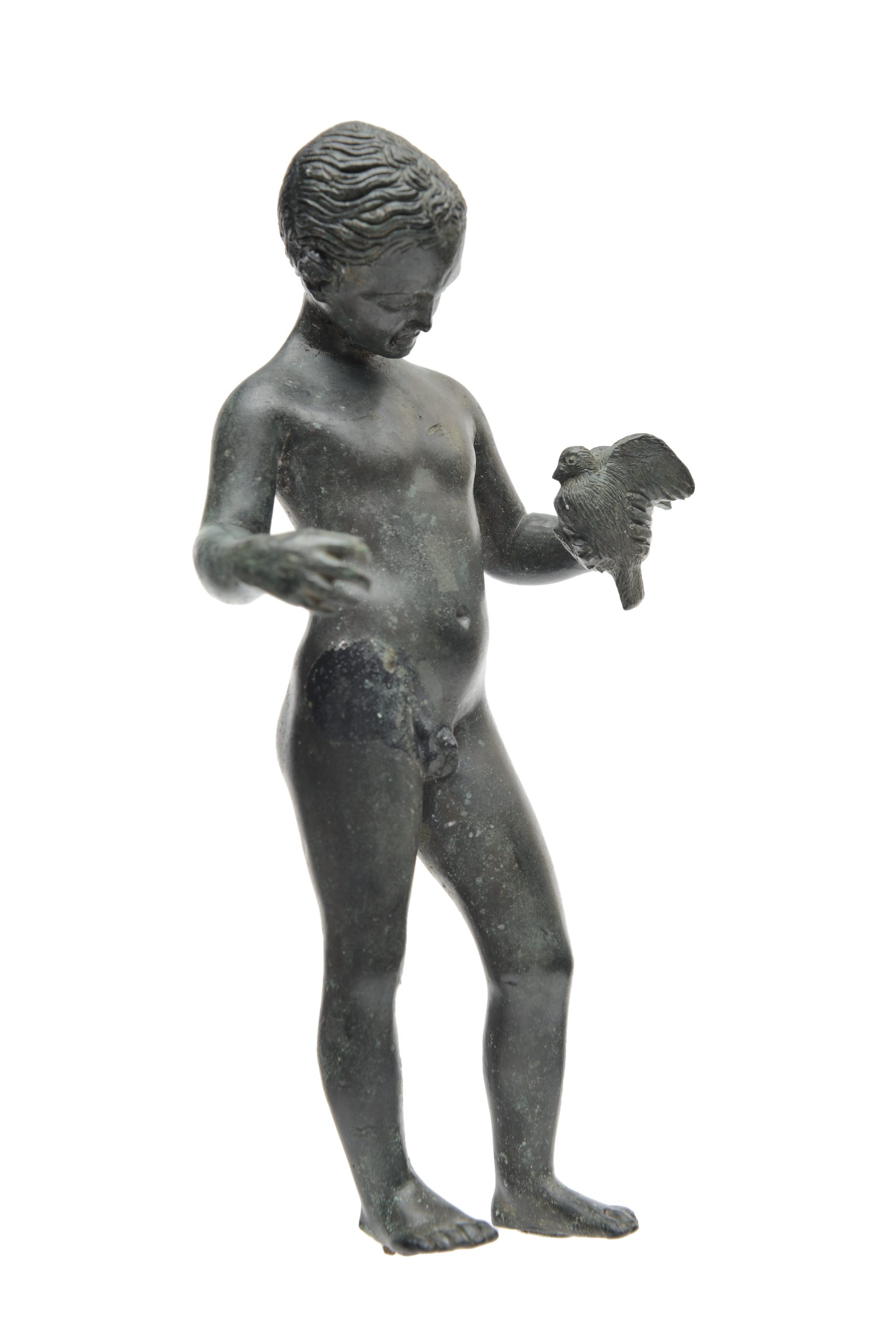
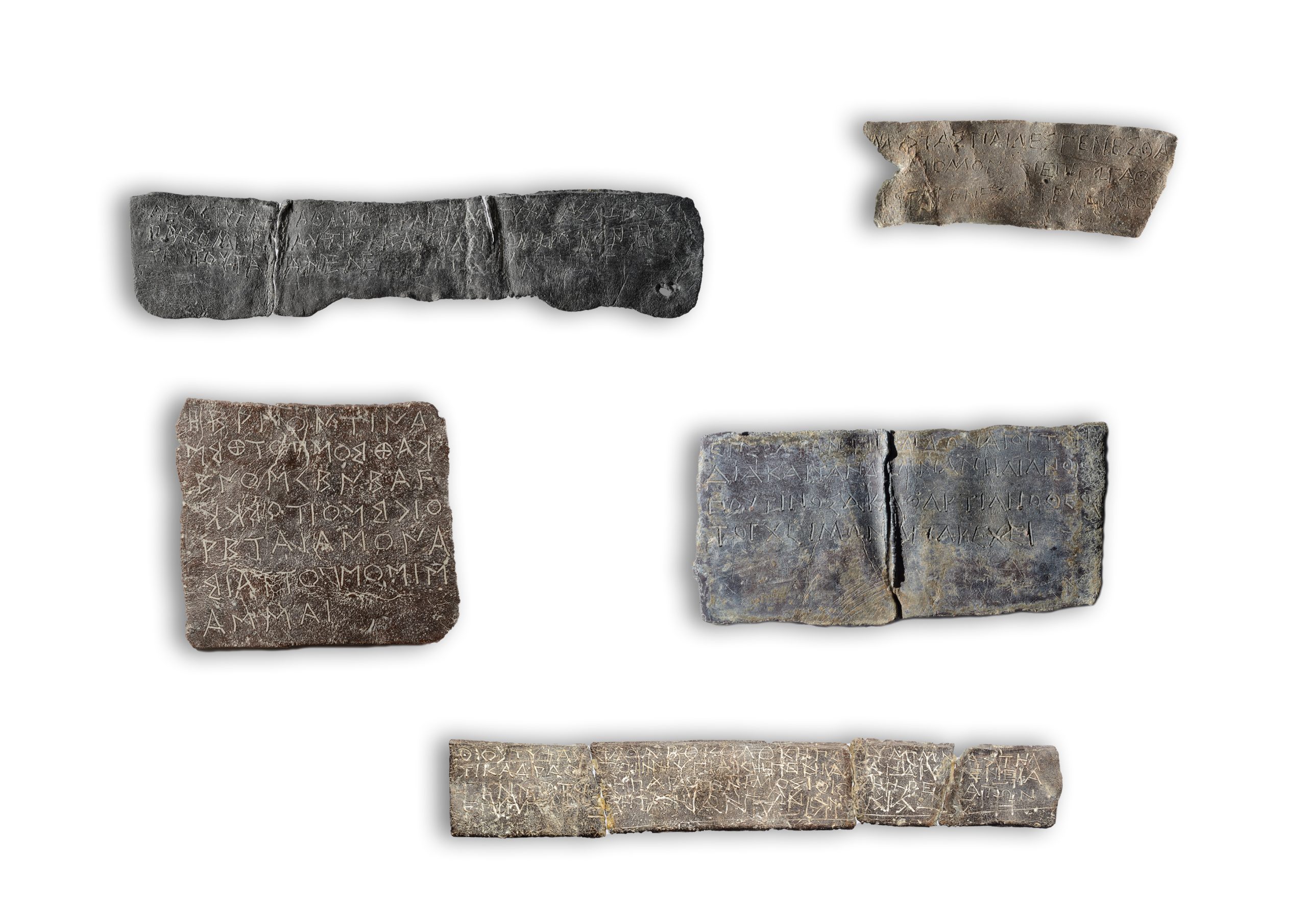
The oracles were given based on the rustling of the leaves of the sacred oak tree, the twittering of the birds that nested in its branches, the murmur of the water of the Naia spring at its roots and the sounds created by the air as it passed over the bronze cauldrons set on tripods around the sacred tree. The priests and priestesses of the oracle followed primordial practices in order to stay in direct contact with the earth, such as going barefoot, not washing their feet and sleeping on the ground. They answered the questions of the faithful concerning various issues of a public or private nature, many of which still concern people today, such as health, financial and professional matters. Originally, the questions of the faithful were submitted to the oracle verbally, but from the late 6th century BC they were written on small strips of lead known as oracle tablets. The excavations have so far brought a large number of 4,126 tablets to light, covering a wide chronological range (late 6th – mid-2nd c. BC) and written in a variety of alphabets and dialects. They constitute a unique assemblage that enriches our knowledge of every aspect of the ancient Greek world and has been included in the UNESCO Memory of the World Register since 2023. Oracle tablets and other finds from the Sanctuary, including votive offerings, chiefly jewellery, statuettes and bronze vessels that are often exceptional examples of ancient bronzework, are exhibited in the Archaeological Museum of Ioannina.
History
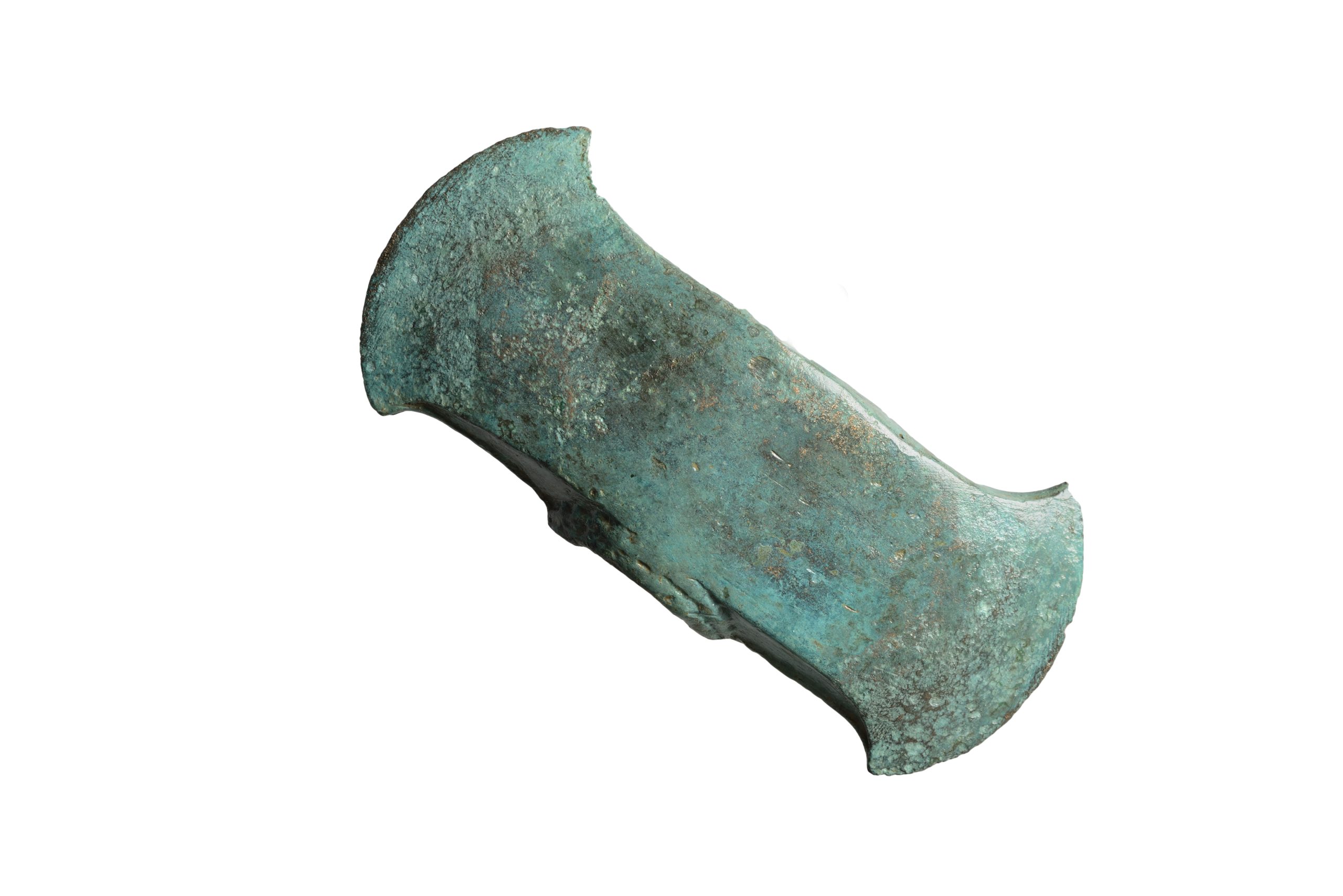
Sporadic architectural remains and structures in the area of the Sanctuary of Dodona, ranging from the beginning of the second millennium to the Late Bronze Age and the Early Iron Age (c. 1300-700 BC), attest to the presence of a small prehistoric settlement. The buildings do not appear to have served cult purposes; however, prehistoric cult in the area of the Sanctuary is indirectly inferred from numerous Late Bronze Age and Early Iron Age movable finds of a highly symbolic and votive nature, such as a group of non-utilitarian bronze weapons, an assemblage of handmade clay miniature vessels, and a handmade clay figurine with apotropaic characteristics. The provenance of some of these finds from Southern Greece further suggests that the reputation of the Sanctuary had already expanded beyond the narrow geographical boundaries of the region even at this early date
It has been argued that in prehistoric times, Dodona was probably the place of worship of Mother Earth or the Mother Goddess, a chthonic deity associated with tree cult and divination. The cult of Mother Earth was probably replaced by that of the god Zeus at the end of the 2nd millennium BC, on the arrival of the Thesprotians, one of the main Greek-speaking tribes of Epirus, along with the Molossians and the Chaonians, under whose control the Sanctuary remained until the mid-5th century BC.
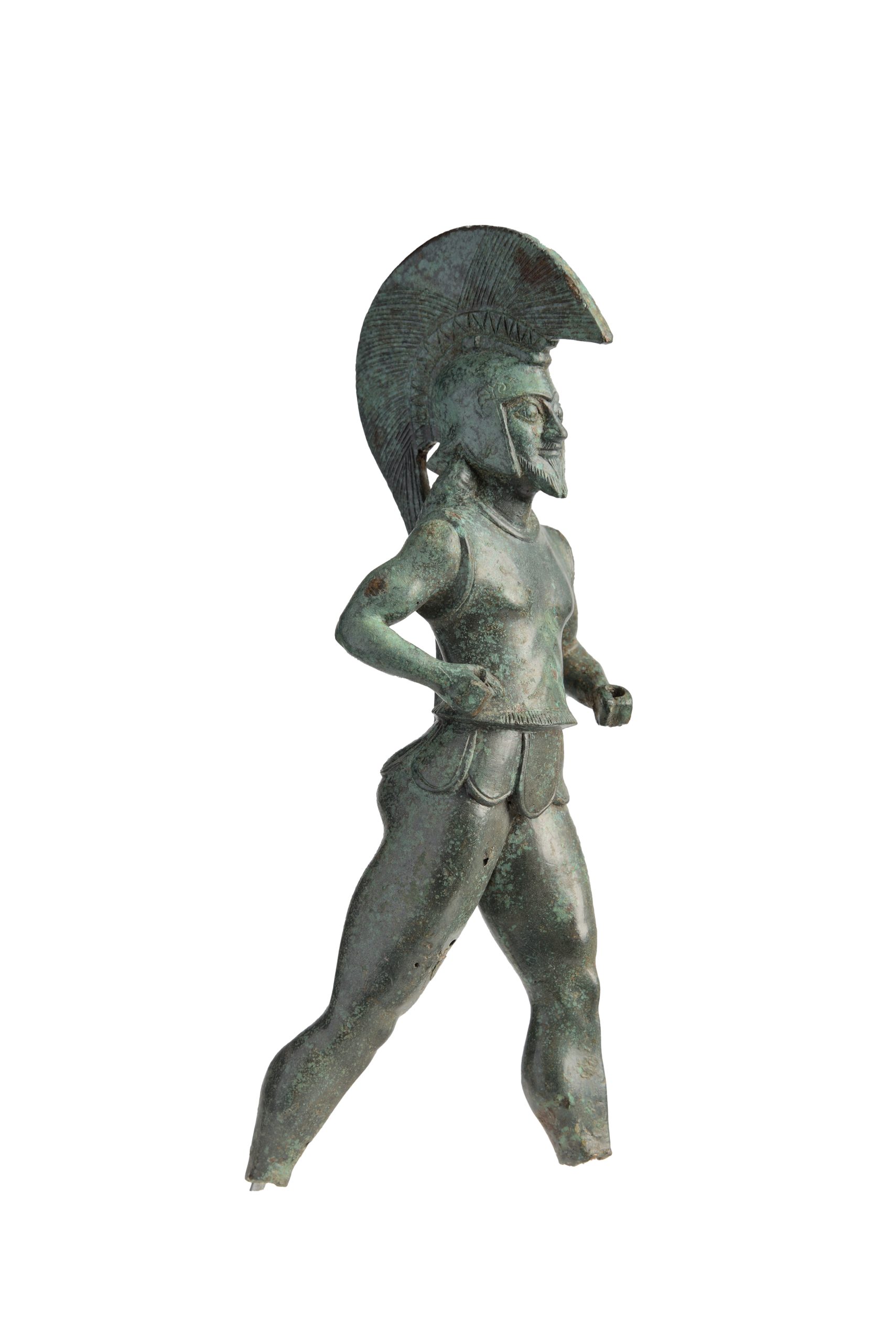
From the 8th century BC, as evidenced both by written sources and by the movable excavation finds, the reputation of the Sanctuary was firmly established and spread throughout the rest of the Greek world, probably due to the expanding Greek colonisation and the increasing commercial interest of the major Peloponnesian cities in Epirus and the Ionian and Adriatic coasts. The finds of the Archaic period (8th-6th c. BC) include a remarkable set of bronze human or animal figurines which were attached to the handles of sacred tripod cauldrons or other vessels. The fact that many of these originated from the great artistic centres of the period, such as Corinth, Argos, Laconia, Attica, Magna Graecia and Alexandria, illustrates the scope of the Sanctuary’s fame among ancient Greek cities. From the second half of the 6th century BC, the questions of the faithful were submitted to the oracle in written form using oracle tablets.
The history of the Sanctuary in later centuries is closely linked to political and military events in the wider region of Epirus. In the 5th century BC, references to the Sanctuary by ancient writers become more frequent, probably due to increasing Athenian interest in the area. The votive offerings of this period complement the testimonies of the ancient writers on the Sanctuary. At the end of the same century, control of the Sanctuary passed from the Thesprotians to the Molossians, during the reign of King Tharrhypas (423-404 BC). Educated in Athens, Tharrhypas organised his state with a series of legislative and political reforms, some of which appear to have concerned the Sanctuary of Dodona.
During the next century, the Molossians alternately allied with the Athenians and the Spartans. They then entered the Macedonian sphere of influence when Philip II (359-336 BC) married Olympias, the daughter of the Molossian King Neoptolemus I. Philip II reinforced the Molossian state and placed Alexander I, the brother of Olympias, on the throne. After the death of Alexander I there followed the brief reign of Olympias with her daughter Cleopatra (331-324 BC), during which Apeiros or the Epirote Alliance was formed (c. 329/5-233/2 BC). This was a political entity in which the various Epirote tribes participated, led by the king of the Molossians.
In the 4th century BC, when the Sanctuary of Dodona was under Molossian control, the construction of the first buildings began, while the acropolis was walled with a strong enclosure. At the beginning of the century, the first temple of Zeus was built in the area of the sacred oak tree, followed by the first temple of Dione and Aphrodite after the middle of the century. It is interesting to note that until then no monumental building had been erected in the area of the Sanctuary, despite its long-standing renown throughout Greece. The worship of the god seems to have been performed outdoors, centred on the sacred oak tree, the only structure perhaps being an enclosure formed of bronze tripod cauldrons around the oracular tree.
Then, in the 3rd century BC, the Molossian kings, having strengthened their position among the other Epirote tribes, used the Sanctuary as a means of ostentation and propaganda, implementing an ambitious building programme which was launched during the reign of the dynamic King Pyrrhus (297-272 BC), the most important representative of the Aeacids (the ruling dynasty of the Molossians), and completed by his successor Alexander II (272-242 BC). During this period, the existing temples of the Sanctuary were embellished and the two new temples of Heracles and Themis erected. At the same time, the first monumental public buildings, the Bouleuterion, the Prytaneion and the Theatre, were added to the hitherto purely religious buildings of the Sanctuary.
Following the assassination of Deidameia, the last representative of the Aeacid dynasty, the Epirote League was founded (233/2-168 BC). This new federal state of the Epirote tribes had no king but was led by a general elected by the assembly (ekklesia) of the Epirotes.
In 219 BC the Aetolians, the strongest power of the time in Central Greece, invaded Epirus and set fire to the Sanctuary of Dodona, razing almost all its buildings to the ground. The following year, King Philip V of Macedon, with whom the Epirotes had formed an alliance, invaded Thermos, the seat of the Aetolian League. The Epirotes used the spoils of the invasion to rebuild the Sanctuary of Dodona, which subsequently enjoyed its second great period of prosperity, until 167 BC. Efforts were made to reshape and enlarge the Sanctuary on a monumental scale in accordance with the principles of Hellenistic architecture, by carrying out extensive repairs to the existing buildings, providing them with imposing stoai (porticos) and enriching the area with numerous votives and statues. The newer temple of Dione and the Stadium were also constructed during this period.
In 167 BC, after the defeat of Perseus, the last king of Macedon, by the Romans (168 BC), the Epirote tribes that had allied themselves with him were exemplarily punished by decision of the Roman Senate. The Sanctuary of Dodona did not escape the destruction. A few years later, in 88 BC, it was devastated yet again by the Thracian mercenaries of King Mithridates VI Eupator of Pontus. Probably due to these destructions, the geographer Strabo reports that in the late 1st century BC the Sanctuary was almost deserted.
After the victory of Octavian Augustus at the naval battle of Actium in 31 BC and the founding of Nicopolis, near modern-day Preveza, various repairs were made to individual buildings of the Sanctuary. During the same period, the Naian Games were re-established and a mint was founded; some of its bronze issues display the head of Zeus Dodonaios on the obverse. The movable excavation finds, though few in number, indicate that the Sanctuary continued to be a place of pilgrimage in the following centuries. In the 4th century AD, the statue of Zeus Dodonaios was taken to Constantinople by either Constantine the Great or Theodosius the Great. During the same period, in 362 AD, the Emperor Julian, who had shown a special interest in Epirus and Nicopolis, requested an oracle from the Oracle of Dodona before his campaign against the Persians.
Scholars place the definitive end of the Sanctuary and oracle of Dodona in 391 AD, when, by decree of Theodosius the Great, divination and pagan shrines were banned and a sacrilegious Illyrian cut down and uprooted the oracular oak tree. The view that the oracle was destroyed by the Visigoths in 397 is not widely accepted.
During the Early Christian period, after the oracle had ceased operation, Dodona survived with the legal status of a city. It is mentioned in the Synecdemus of Hierocles (before 535 AD) as one the eleven cities of Epirus Vetus (Old Epirus), one of the two large provinces into which Epirus was divided during the reign of Diocletian, with Nicopolis as its seat. From at least the 5th century onwards it was the seat of an episcopal see, with the first reference to a bishop of the city appearing in the minutes of the Third Ecumenical Council of Ephesus (431 AD). Archaeological research has brought to light scattered building remains of Early Christian times, the most important of which is undoubtedly a large basilica in the area of the Hiera Oikia. During this period, the settlement seems to have engaged in some industrial activity: a pottery kiln has been discovered in the area of the Prytaneion, and the remains of a dyeworks producing Tyrian purple for luxury fabrics has come to light in the area of the Bouleuterion. Just 2.5 km from the archaeological site of Dodona, at the Agia Triada site of the mountain village of Dramesioi, a small bathhouse of the 4th-5th century AD has been excavated. It was probably part of a private residence or a station on the pass between Dodona and Thesprotia. The discovery of walls around the bathhouse may indicate the existence of an Early Christian settlement.
The historian Procopius says that Dodona was sacked in 551 AD by the Ostrogoths who raided Corfu and Epirus, but this is disputed by scholars, as the Ostrogoth raids do not appear to have extended into the hinterland of Epirus but were limited to its coast. The Early Christian city was probably destroyed once and for all in the period of the raids and settlement of the Slavs (late 6th-early 7th c.), when the area was renamed Tsarakovitsa or Tsarkovista – a lingering memory of the ancient oracle, as the name means “city of the sanctuaries”. It is interesting to note that Dodona occasionally appears in later Byzantine sources. These are, however, interpreted as anachronistic literary references, as no finds of the Byzantine period have been discovered in the area of the Sanctuary to date, with the exception of a group of five bronze bracelets, at least one of which bears similarities to examples of the Middle Byzantine period.
Monuments - Antiquities
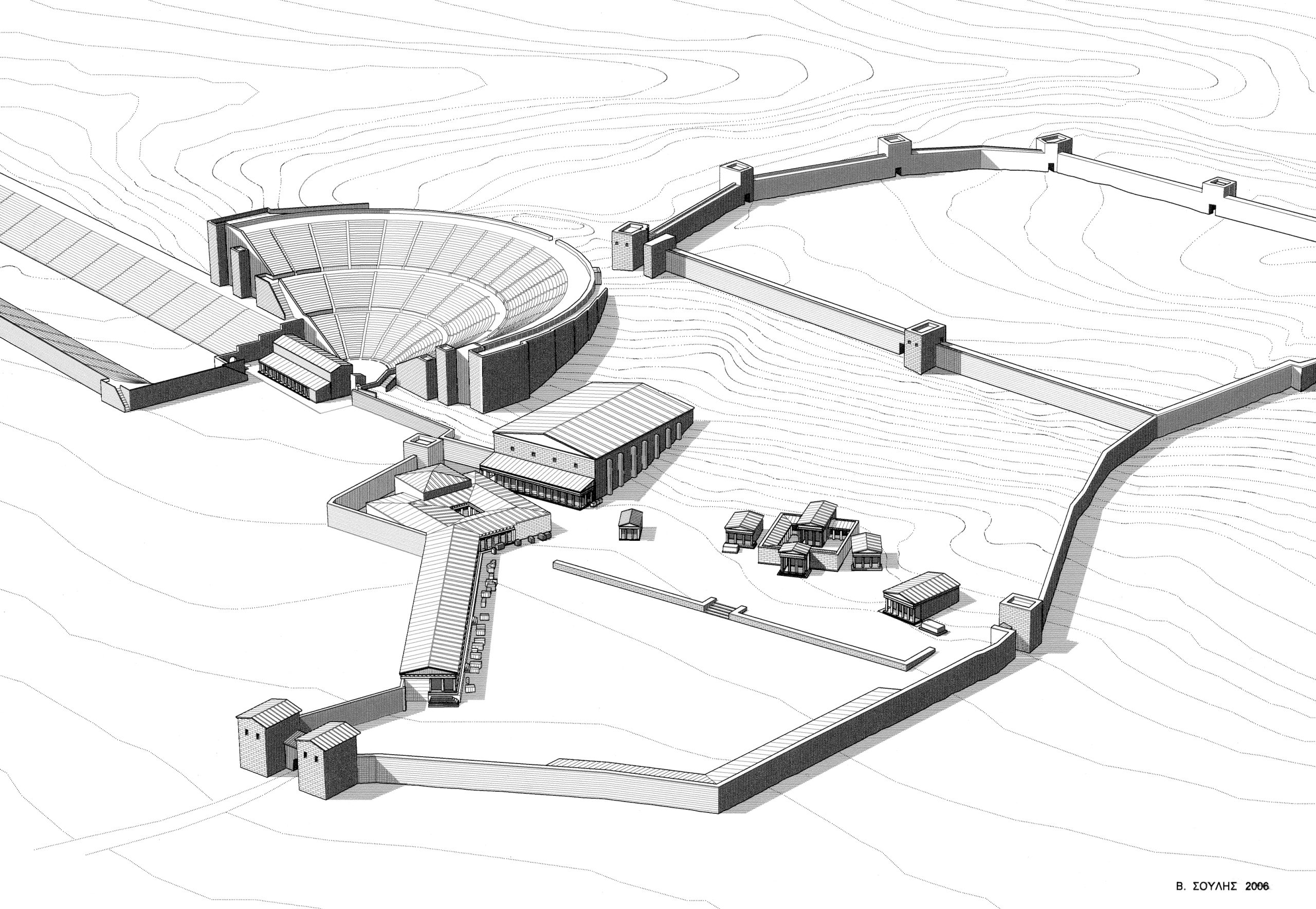
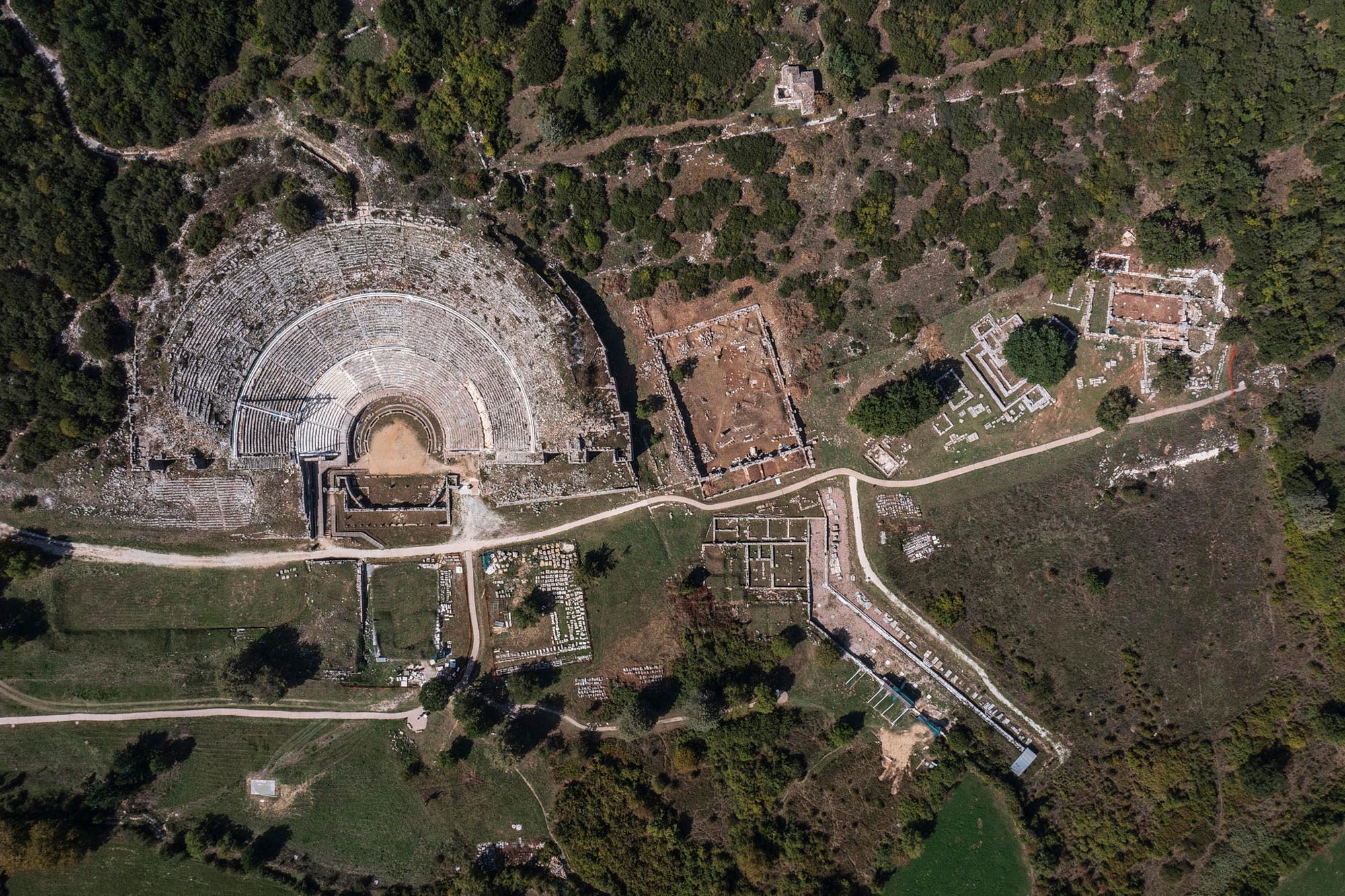
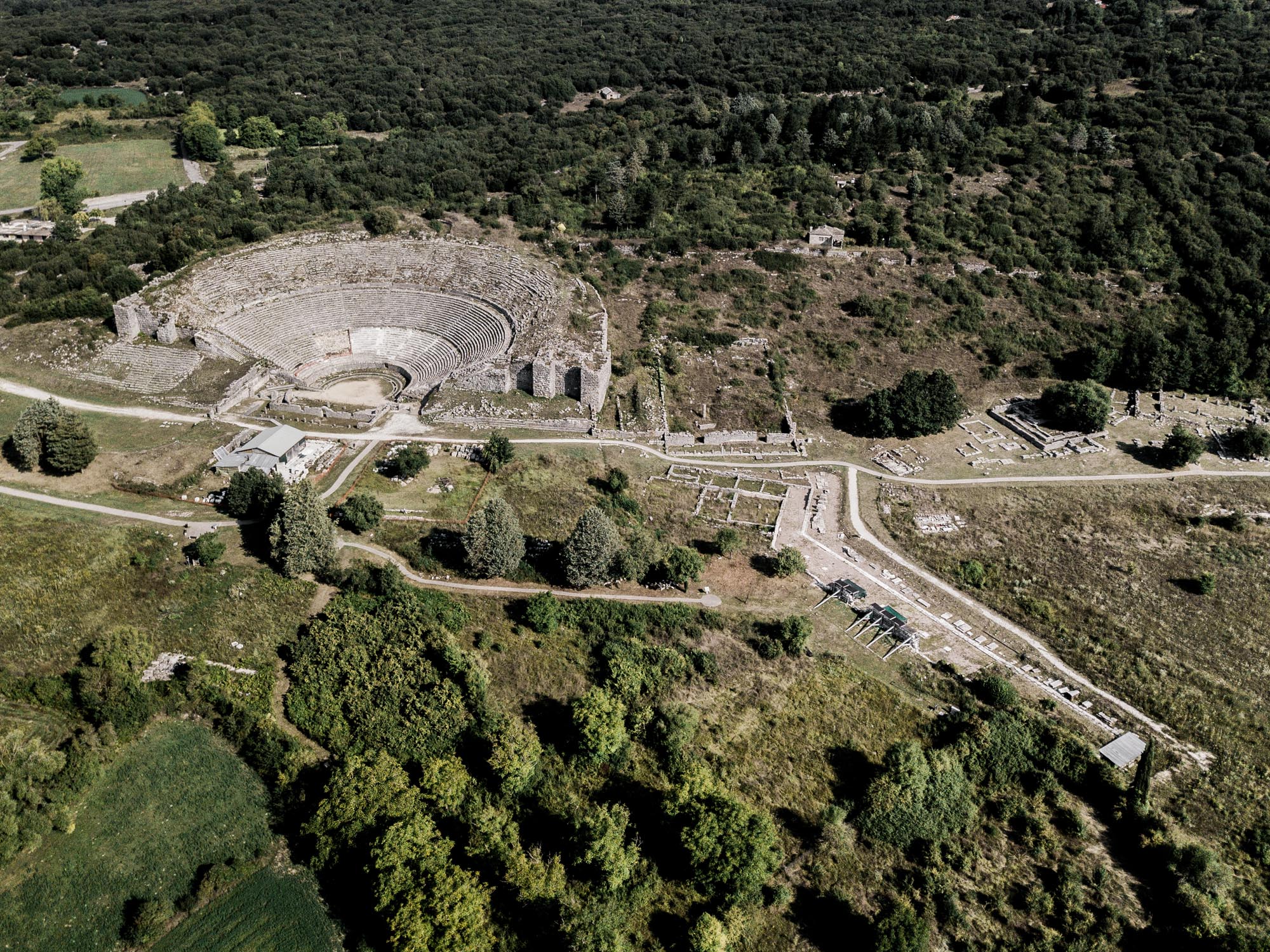
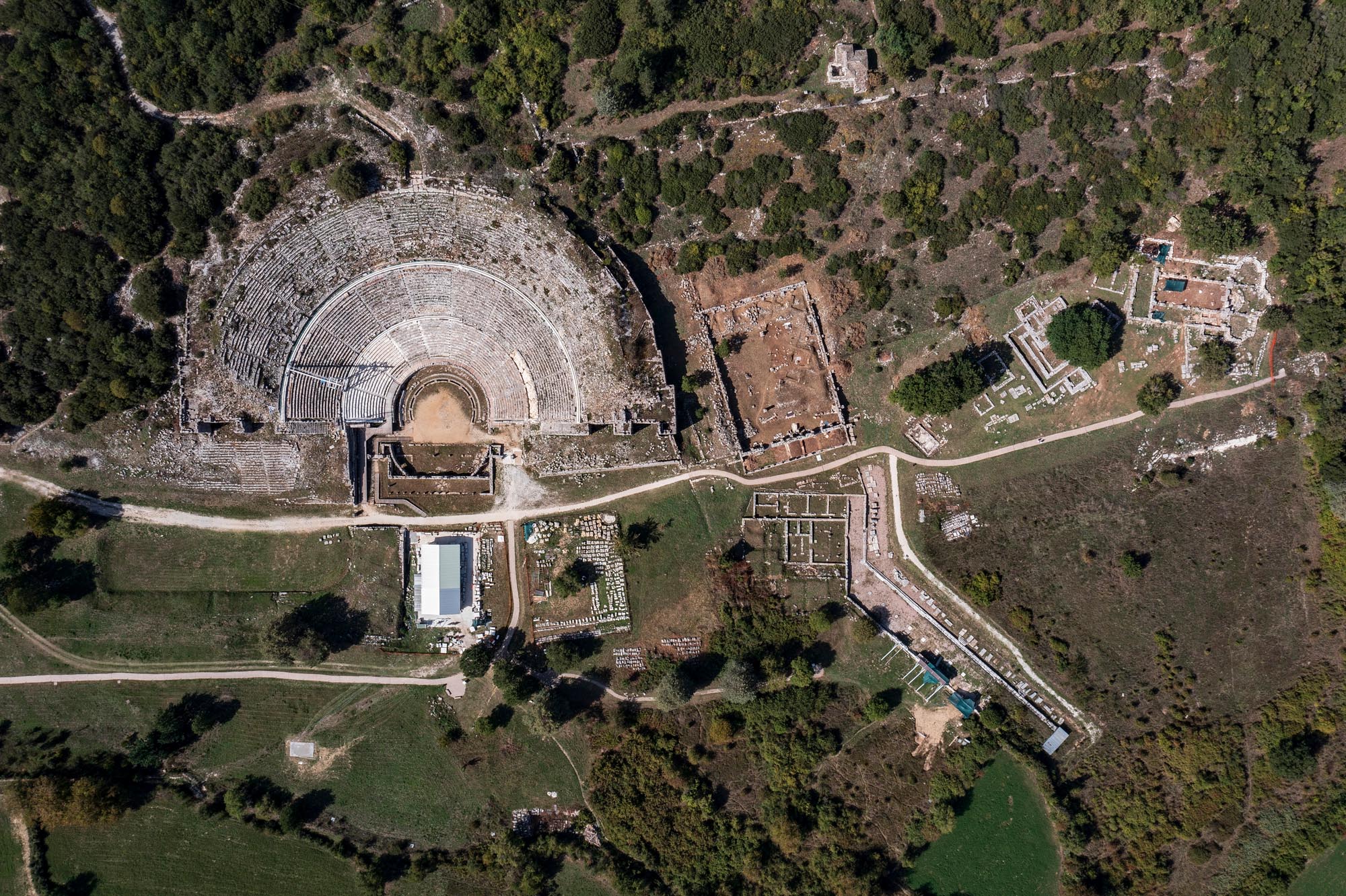
The Sanctuary, harmoniously set in a beautiful landscape, is laid out on three levels at the foot of a low range of hills. The acropolis stands on the hilltop, while the cult and public buildings, surrounded by a monumental enclosure, are on the second, lower level at the foot of the hill. In the east part of the precinct, where the sacred oak tree stood, is the Hiera Oikia or Sacred House (the Temple of Zeus), occupying the most prominent, central position and surrounded by the other cult buildings of the Sanctuary. In the west part of the precinct are the monumental public buildings of the Sanctuary, the Bouleuterion and the Prytaneion, the seats of the local rulers. On a third, even lower level, is an open square with the central entrance of the Sanctuary, at the southeast end of the enclosure. Outside the enclosure, to the west of the Prytaneion and the Bouleuterion, are the Theatre and the Stadium, the construction of which is connected with the celebration of the Naian Games.
Acropolis
The acropolis occupies an area of 3.4 hectares and is surrounded by a wall of the 4th century BC built in isodomic masonry (with courses of equal height), approximately 750 m in circumference. The wall is reinforced at intervals with strong rectangular towers, especially on the more vulnerable west and north sides. Of the gates of the acropolis, the southwest great gate communicated with the Sanctuary, while the east gate led to the plain of Ioannina. As the area of the acropolis corresponds to a population of only about 1,000 inhabitants, it seems to have served more as a refuge for the inhabitants of the settlement in times of danger, as well as being the permanent residence of the Sanctuary authorities. The settlement, which would have been larger, probably extended across the surrounding area, especially in the mountain range east of the Sanctuary, where the remains of an ancient building have come to light.
Hiera Oikia (Temple of Zeus)
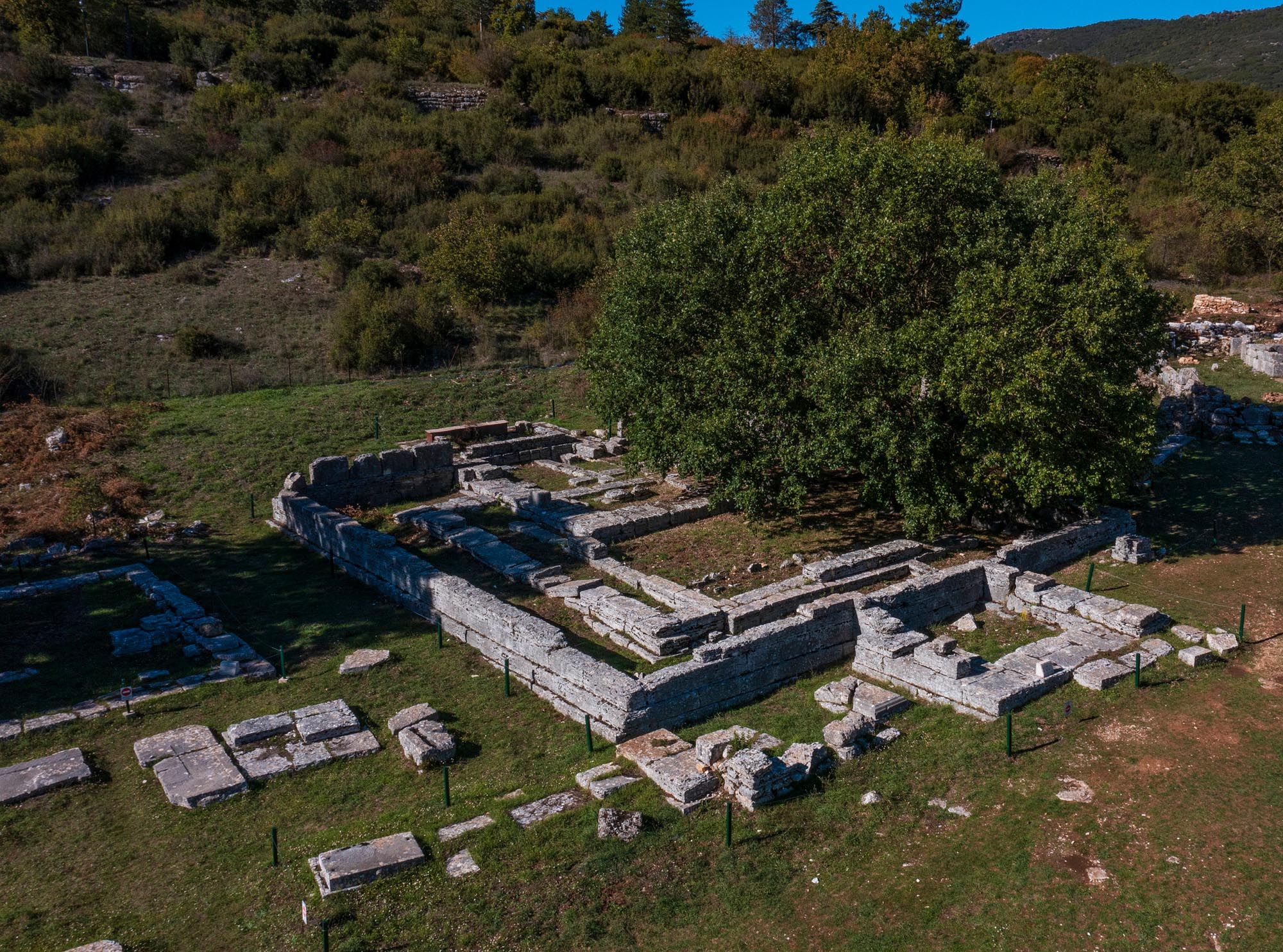
The original Hiera Oikia or Sacred House, the Temple of Zeus, was only erected at the beginning of the 4th century BC. It was a small, plain temple with a sekos (cella) and pronaos (antechamber), which served the cult of the god and housed the most valuable offerings of the Sanctuary. It later underwent various repairs and extensions. One of the most important was the addition, at the end of the same century, of a large enclosure in isodomic masonry surrounding the temple and the sacred oak tree. At the beginning of the 3rd century BC, during the reign of King Pyrrhus, the original enclosure was replaced by a new and larger one, with Ionic stoai on the north, west and south sides. The east side, where the oracular oak tree stood, remained open. At the end of the 3rd century, following the destruction of the original temple by the Aetolians (219 BC), a new, larger temple with four Ionic columns on the façade was erected in its place. At the same time, the temple enclosure was rebuilt and a monumental Ionic propylon (porch) constructed at the entrance.
Other ancient sanctuaries
Immediately east of the Hiera Oikia, a temple of almost square plan with a sekos, a pronaos and four Ionic columns on the façade, dedicated to the goddess Dione, was erected in the second half of the 4th century BC. At the back of the sekos are the remains of the pedestal of the cult statue of the goddess, the edos, which the Athenians adorned with rich gifts every year. This temple was destroyed by the Aetolians in 219 BC and replaced at the end of the 3rd century BC by a smaller temple just south of the original one and of the same architectural type. East of the Hiera Oikia is the second-largest temple of the Sanctuary, dedicated to Heracles and consisting of a pronaos and sekos with four or six Doric columns on the façade. It is dated to the early 3rd century BC.
West of the Sacred House is the Temple of Themis, who was particularly celebrated in the Sanctuary. The temple, of the 3rd century BC, had a pronaos and sekos with four Ionic columns on the façade. Close to the Temple of Themis is the small, plain Temple of Aphrodite. It differs from the other temples of the Sanctuary, as it is distyle in antis, with two Doric columns on the façade instead of the four or six columns seen in the other temples. The sekos was probably built in the second half of the 4th century BC and the pronaos at the beginning of the next century.
Bouleuterion
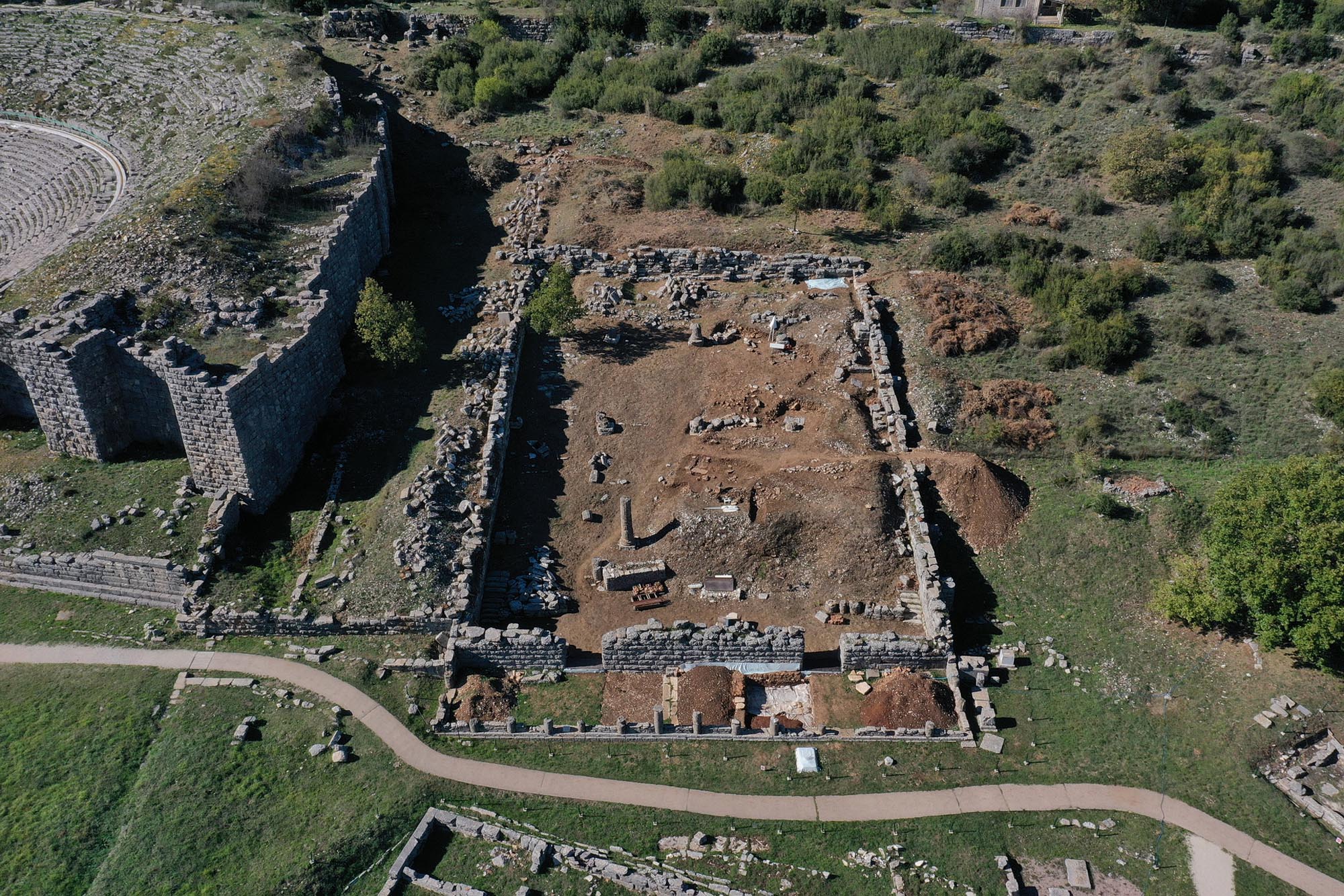
This impressively large assembly house, where the representatives of the tribes of the Epirote Alliance and League met to make decisions and adopt laws and resolutions, was constructed in the early 3rd century BC as part of King Pyrrhus’ ambitious building programme. It comprises a large rectangular hall, measuring 43.60 x 32.50 m, with a south-facing façade, in front of which is a Doric stoa of equal length. As the building is built on the south slope of the rocky hill, its interior is divided into two sections of different height and size: a smaller, lower, flat section on the south, where there was an altar dedicated to Zeus Naios, Dione and Zeus Bouleus (“the Counsellor”), and a second, larger, sloping section on the north, where the councillors’ seats were arranged in tiers. The central part of the building had two rows of three Ionic columns on two levels. The walls of the hall were reinforced either internally or externally with buttresses. They were built of regular courses of ashlars up to a height of 4 m, and from there upwards of large bricks, many of which have come to light during the excavations.
The excavation of the building has not yet been completed, making it difficult to draw firm conclusions on various questions concerning its construction, such as the roof or the arrangement and number of seats.
After the destruction of the Sanctuary by the Romans (167 BC), the Bouleuterion was repaired, hosting the now-weakened Epirote League, which was under Roman control. The exact date of the building’s abandonment is unknown. In Late Roman times, the area of the Bouleuterion was used for burials and a purple dye workshop.
Prytaneion and West Stoa
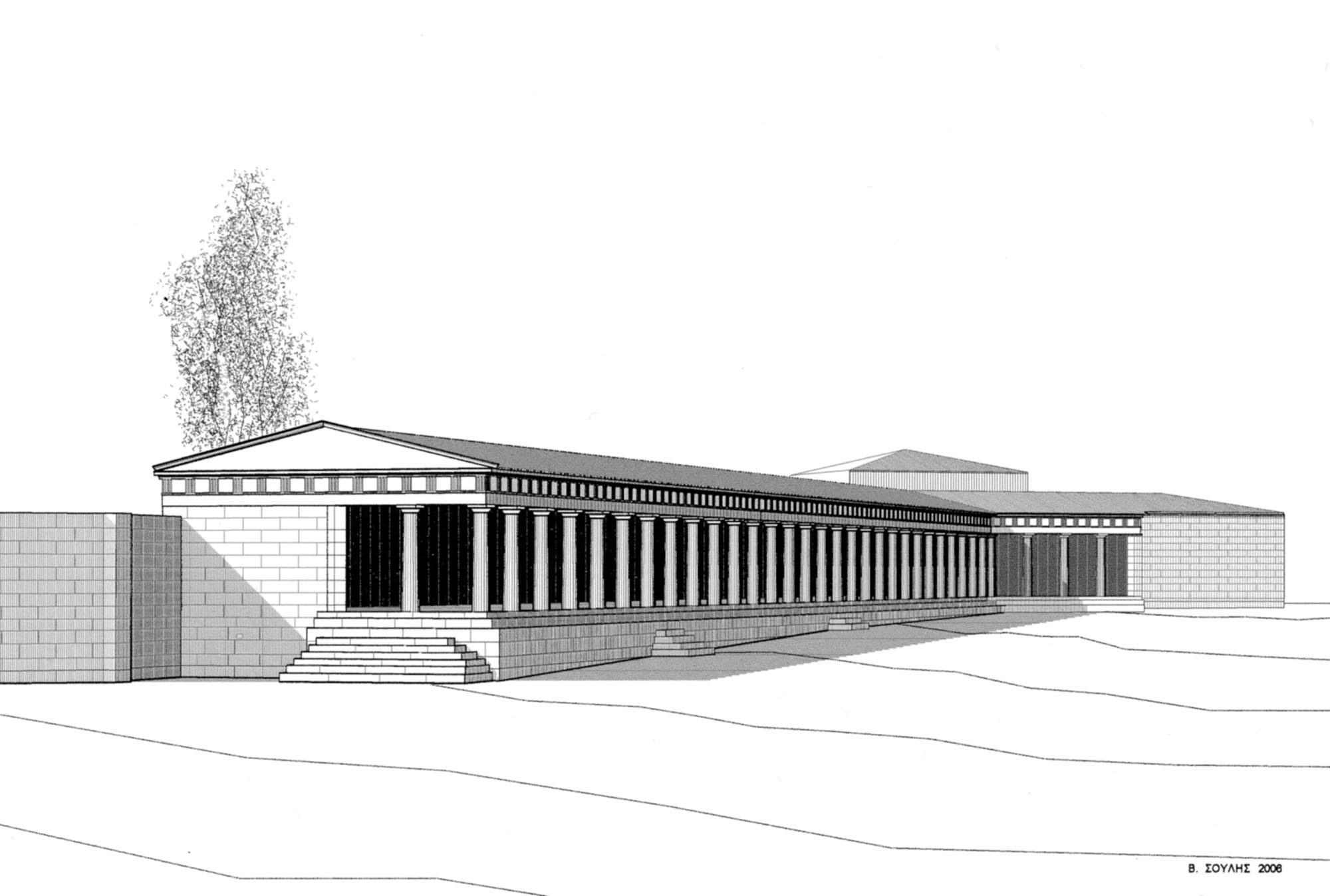
South of the Bouleuterion and during the same period was constructed the Prytaneion or seat of government, one of the few prytaneia of antiquity to preserve its full ground plan. The core of the complex is a rectangular building with a façade on the east, in the architectural type of the ancient Greek house. It is divided into two halls, a square hall on the west and a rectangular hall on the east with an open-air peristyle court. In the centre of the square hall was the sacred hearth in which burned the eternal flame. Around the inside of the hall ran a double platform-like step which provided a better view of the sacred hearth and the ceremonies held in the room. In a second building phase, during the time of the Epirote League (233/2-168 BC), the Prytaneion was transformed into a monumental building measuring approximately 34 x 34 m, with the addition on its north and south of two wings that served as a public guesthouse for representatives of the Epirote tribes and official guests. In one of the two wings, movable finds, such as clay sealings and coin flans (blanks), indicate the operation of an archive and a mint. The monumentality of the building was enhanced by the Ionic stoa of the same date constructed along its east façade. The extensive building programme for the embellishment of the Sanctuary after its destruction by the Aetolians included the construction of a long, large stoa in the west part of the Sanctuary (West Stoa), which the east stoa of the Prytaneion façade joined onto. Thus the Stoa became L-shaped, with two sections: the south section, 77.25 m long, had a double colonnade, while the north section (the east façade of the Prytaneion) was 20.40 m long with a single row of columns. The outer colonnade of the Stoa had 34 Doric columns and the inner one, in the south section of the Stoa, had 14 columns, probably Ionic. In front of the Stoa, 32 pedestals of votive monuments were found during the excavations.
Following the destruction of the Sanctuary by the Romans (167 BC), various repairs were carried out to the Prytaneion, the main one being the addition of stone seats in the hall with the hearth. After the Sanctuary fell into disuse (late 4th c. AD), the site was occupied by makeshift houses.
Ancient Theatre
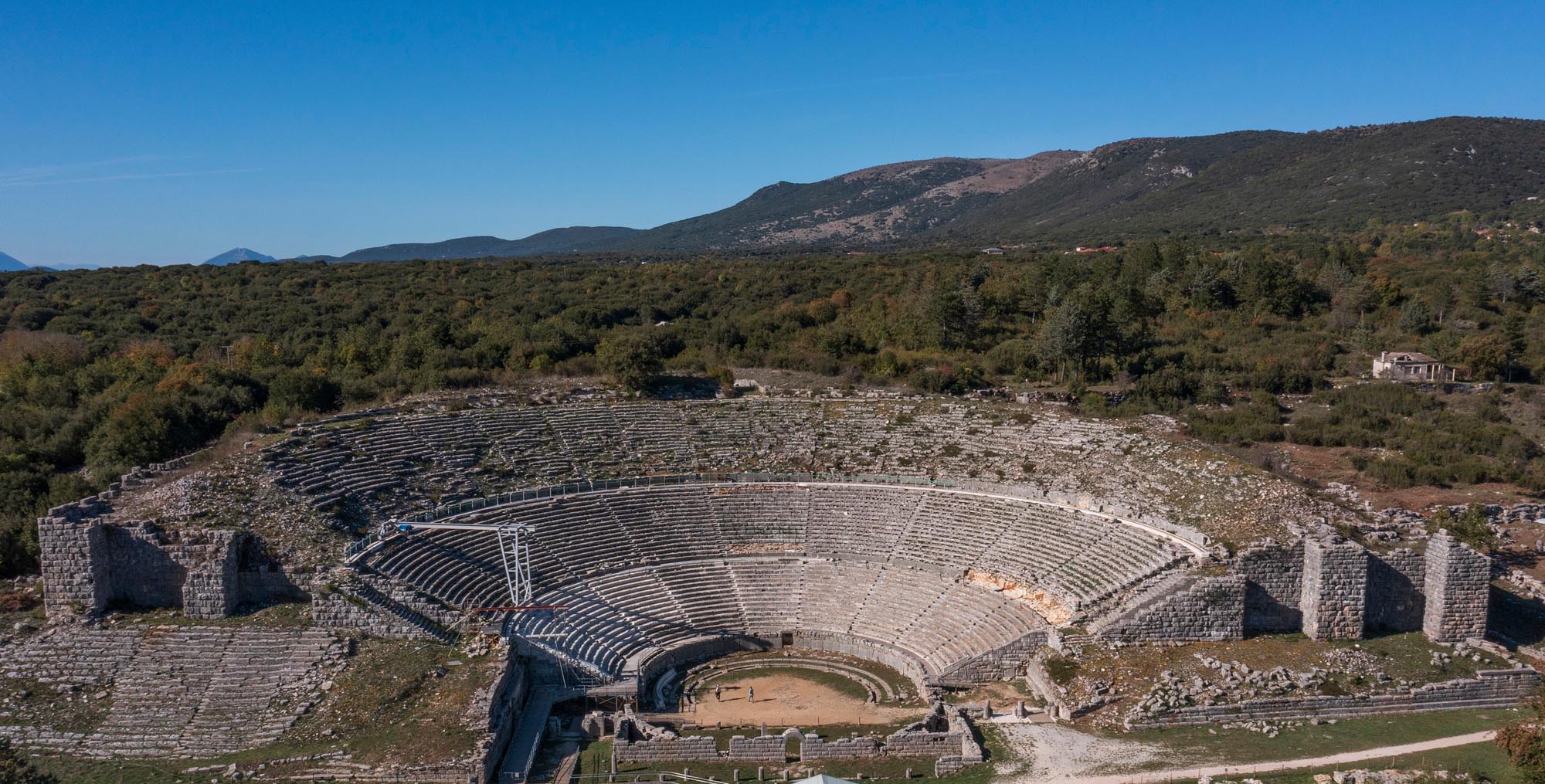
The theatre on the southwest slope of the rocky hill, built exclusively of two types of local limestone, is one of the largest of antiquity, with three tiers and a capacity of around 17,000 spectators. It was constructed at the beginning of the 3rd century BC as part of King Pyrrhus’ ambitious building programme. The large cavea of the theatre is 135 m in diameter, exceeding the width of the natural concavity of the rock, so its ends are supported on huge artificial embankments and held by large retaining walls, meticulously built in isodomic masonry. The retaining walls on the south side of the cavea are reinforced by four strong rectangular towers, two on each side of the orchestra. Ten radial staircases divide the first two tiers of the cavea into nine cunei (wedge-shaped sections). The epitheatre, the uppermost tier of the theatre, has 19 staircases dividing it into 18 cunei. In the lowest tier were the seats (proedria) for officials and guests of honour. The orchestra, with the base of the altar of Dionysus (thymele) in the centre, forms a partial circle 18.70 m in diameter.
The shape of the stage building is due to the extensive work that took place during the second building phase of the theatre, after the destruction of the Sanctuary by the Aetolians (219 BC). To the original rectangular stage building, built in isodomic masonry, a stone proscenium was added on the side of the orchestra, with 18 Ionic semi-columns on the façade. South of the stage building was a hall of the same length open to the Sacred Way, which runs south of the theatre. During the second building phase, the hall assumed the form of a stoa, with the addition to its façade of a colonnade of octagonal columns with Doric capitals. Another particularly important work of the same period is the construction of the monumental propyla of the two parodoi (side entrances) of the theatre, with double entrances and Ionic semi-columns.
The theatre also had later building phases. During the Roman period, after the 2nd century AD, it was used for wild beast fights and underwent extensive modifications, including the abolition of the stage building and the conversion of the orchestra into an arena.
After many years of restoration work, continuing to this day, a large part of the ancient theatre has been restored and now hosts performances and other events of the Dodona Festival.

Stadium
The Stadium is located just southwest of the theatre and lies along an east-west axis. It was built at the end of the 3rd century BC as part of the extensive building programme implemented after the destruction of the Sanctuary by the Aetolians (219 BC). Only the east side of the stadium has been excavated, so only the width of the conistra (part of the gymnasium) is known: 26.30 m. The floor of the stadium is of tamped earth. At least the east part of the north and south sides had 21-22 rows of stone seats for the spectators, which rested on entirely artificial earthen embankments, held by strong retaining walls. The main entrance to the stadium, where the Sacred Way begins, is at its east rounded end, the sphendone. The entrance, of which the central pillar is preserved in situ, was probably an arched gateway with a double door.
Early Christian basilica
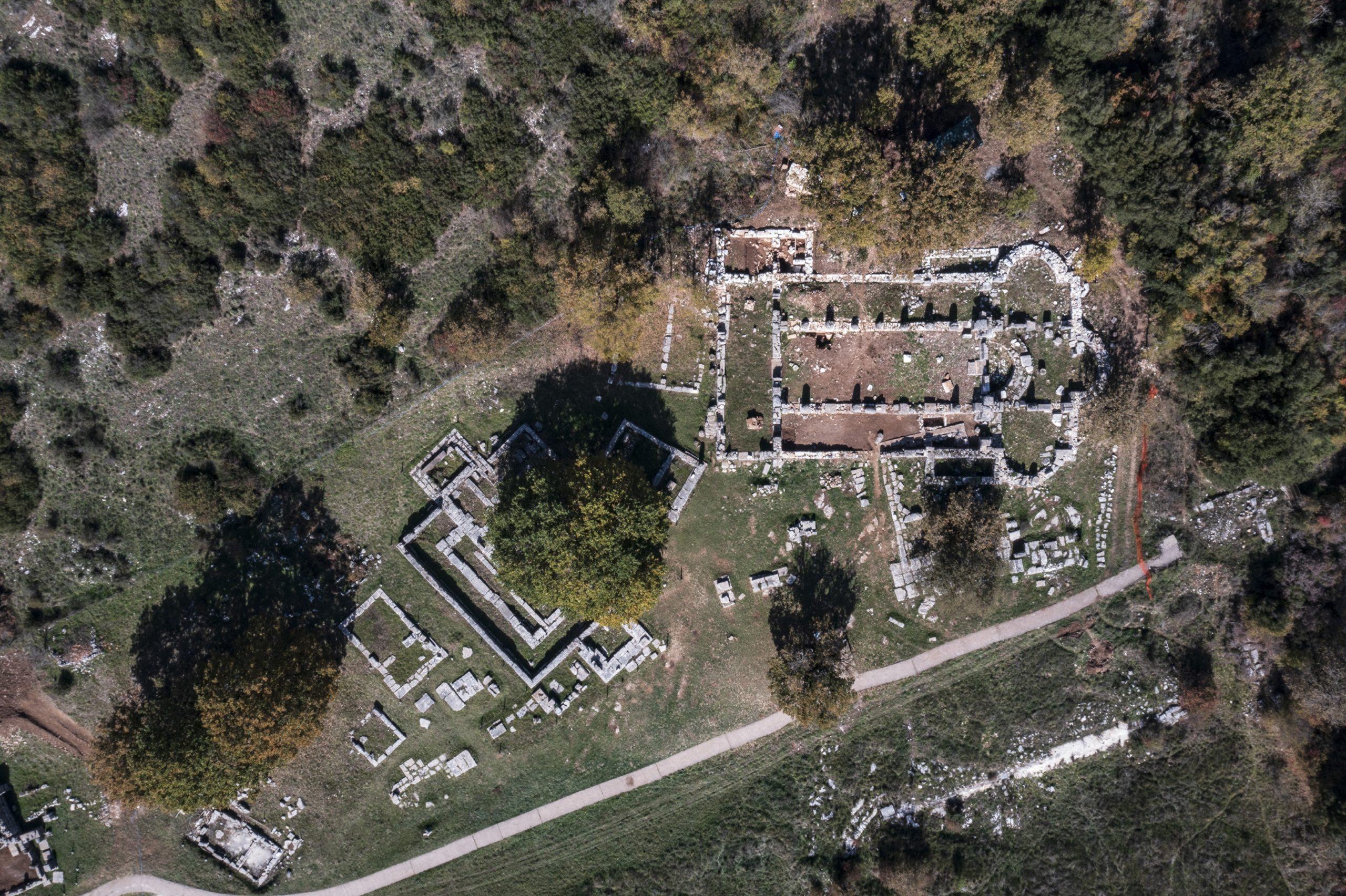
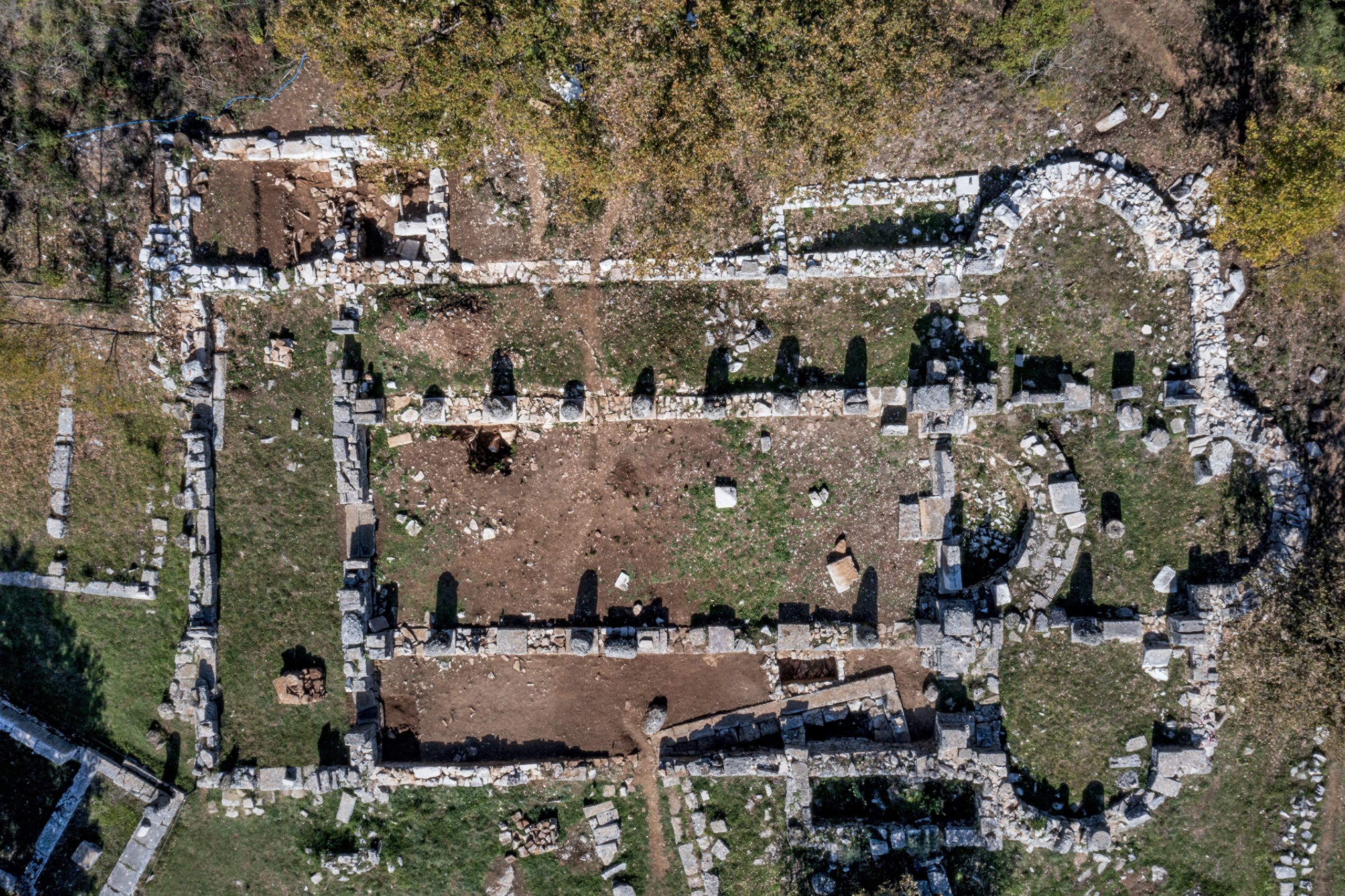
The basilica is built on the site of the cult buildings of the Sanctuary. It is a three-aisled basilica with a large semicircular apse on the east and a narthex on the west, measuring 41 x 19 m. Similarly to other Early Christian churches of Epirus, the basilica has a transept which protrudes slightly past the side walls, giving it a T-shaped plan. In the west part of the church, against the north wall, is a rectangular two-room annexe, probably a funerary chapel housing the tomb of a prominent figure. The basilica was erected in the late 5th or early 6th century AD. Probably in the middle of the 6th century AD, it underwent a second building phase and was extended on the east, the transept and the original apse being replaced by a spacious three-part sanctuary with protruding semicircular conches on the east and the two lateral sides.
Bridge over the Megas Lakkos stream, Dramesioi
The bridge is near the community of Dramesioi, north of the Egnatia Motorway, from which it is visible today. The stone bridge consists of a large arch with a span of 5 m over the Smolitsas, a tributary of the River Kalamas (the ancient Thyamis). It was built in 1933 on the instructions of Minister Notis Botsaris and is an excellent example of folk architecture.