Aigai

Aigai, the royal metropolis of the Macedonians

A short distance, about 13 km, southeast of Veria and the Egnatia Motorway is the small town of Vergina, founded in 1922 by refugees from the Black Sea region. In November 1977, the front page of The New York Times featured one of the most important discoveries of all time, described as the “find of the century”: Professor Manolis Andronicos and his colleagues had excavated the Great Tumulus, a huge earth mound 13 m high and 110 m in diameter, and brought to light four monumental royal tombs. Two of these, the “Tomb of Philip II” and the “Tomb of the Prince” or “Tomb of Alexander IV”, were found intact and unlooted, containing a unique group of finds of exceptional artistry which add significantly to our understanding of not only the prosperity but also the high level of culture of the ancient Macedonians. The uncovering of the tombs of the Great Tumulus, which was completed in 1980, also reinforced the view expressed in 1968 by the British historian Nicholas Hammond, a connoisseur of Macedonian topography, that the remains of the ancient city already revealed by the first archaeological investigations of the mid-19th century south of Vergina were those of Aigai, the first capital of the Macedonian Kingdom – an identification now accepted by most researchers. Since then, the excavations, which continue to this day, have brought to light the strong walls and some of the most imposing secular and religious buildings of the city, together with numerous funerary monuments and masterpieces of art that testify to the historical significance of the ancient Macedonian capital and make the archaeological site of Aigai one of the most important in Greece. It has been inscribed on the UNESCO World Heritage List.

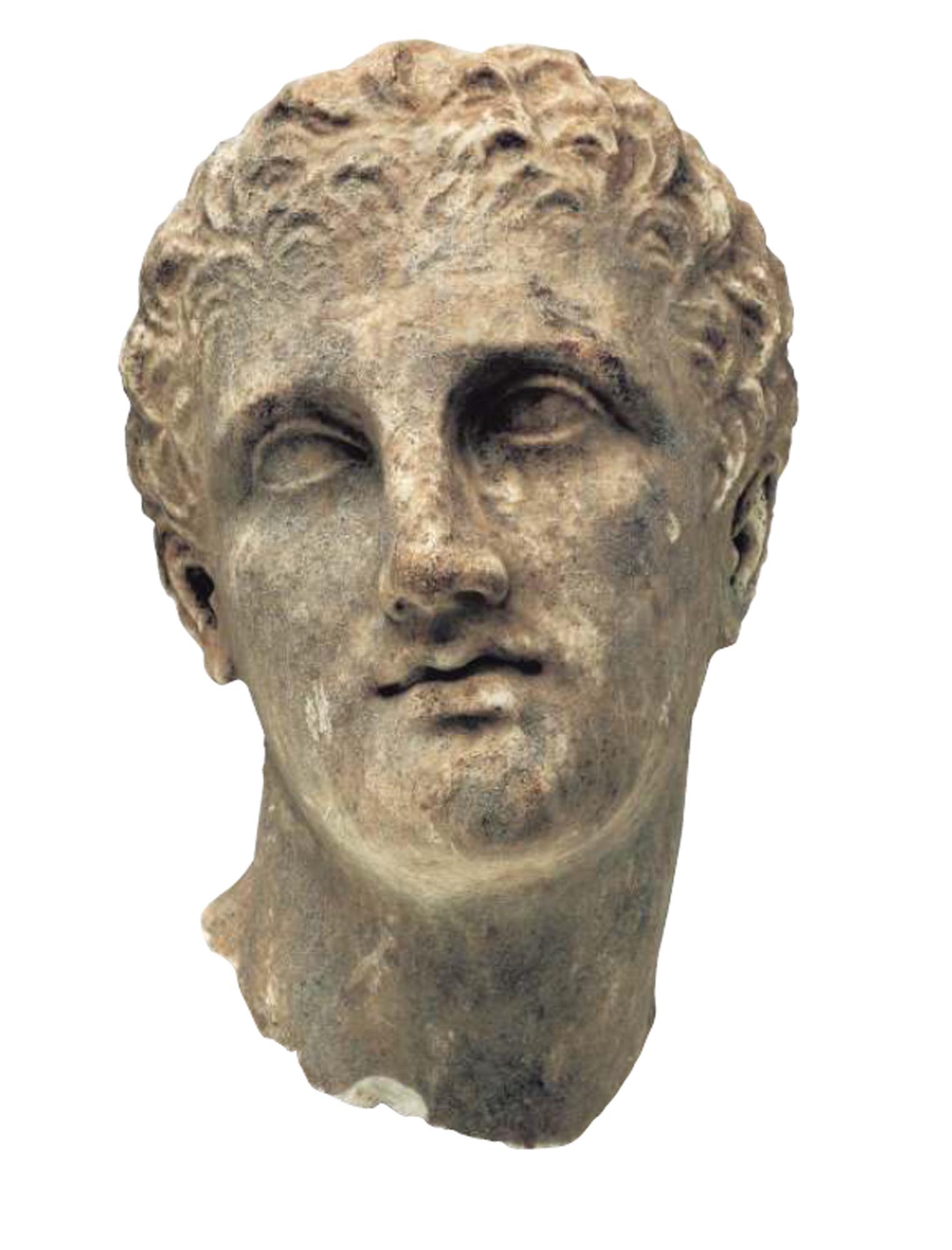
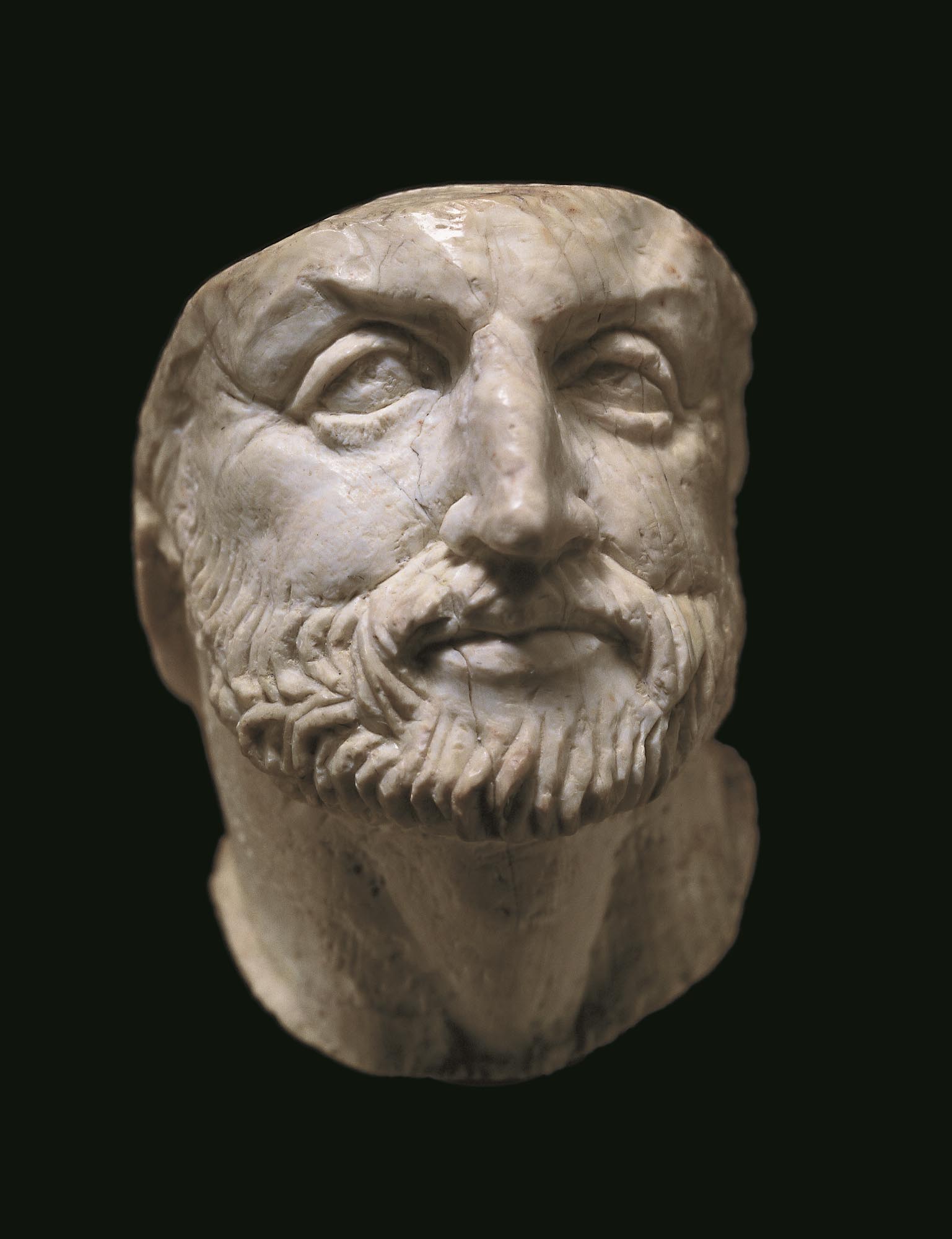
Κεφαλή που ταυτίζεται με τον Φίλιππο Β. Πολυκεντρικό Μουσείο Αιγών/ Ivory head identified as Philip II. Polycentric Museum of Aigai, Royal Tombs–Treasures Exhibition

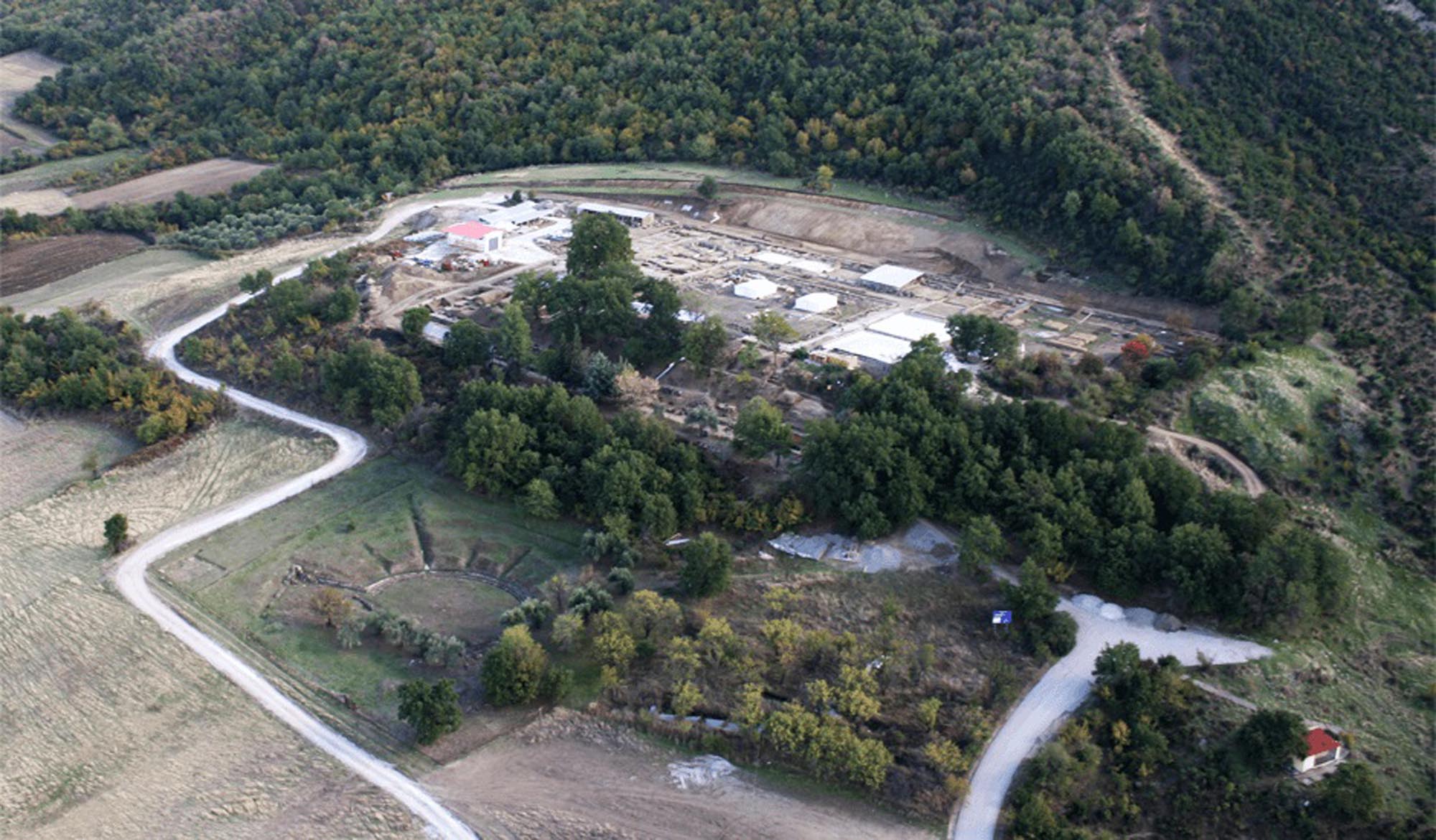
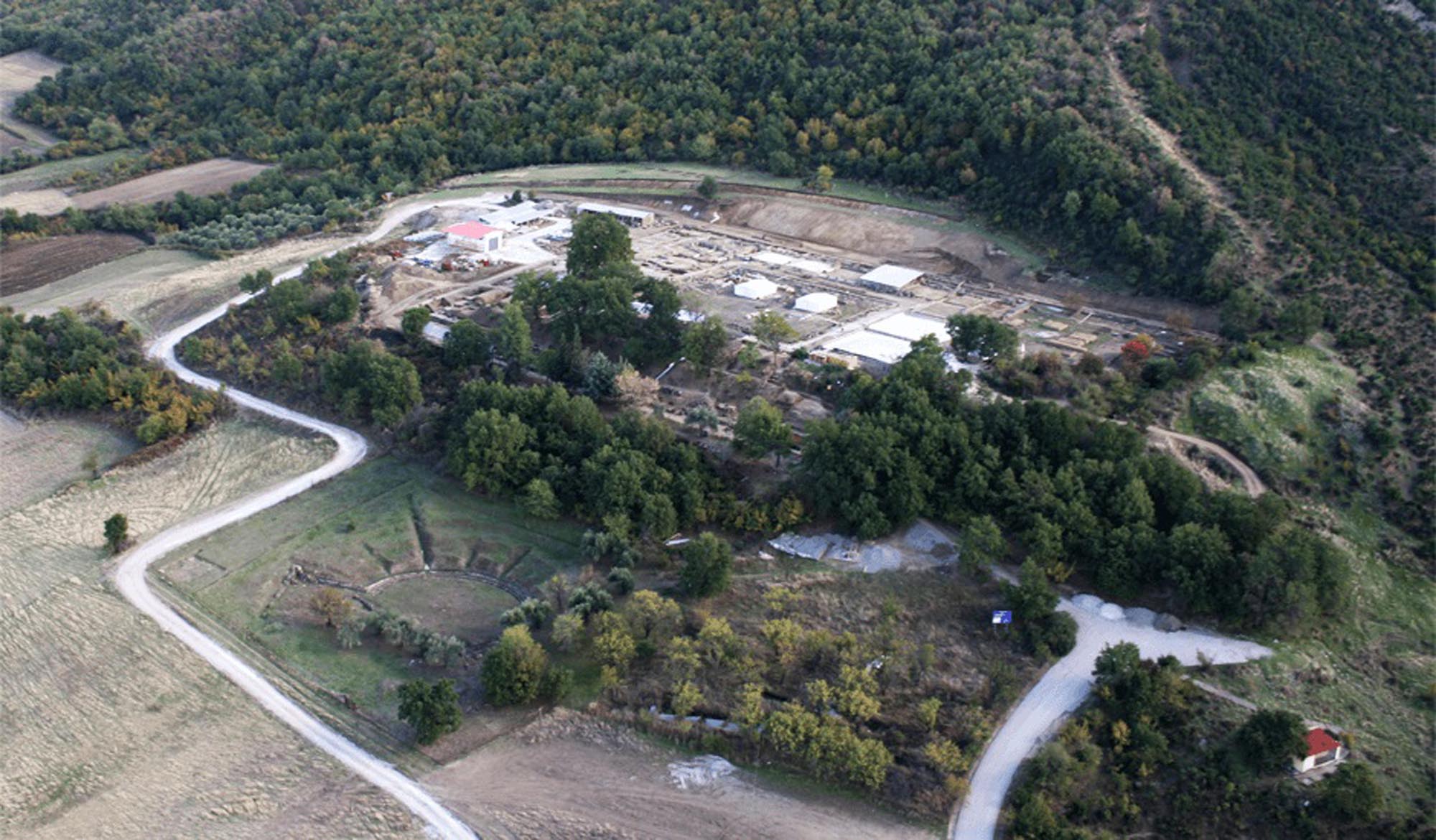
The city of Aigai is built in a naturally fortified location in the northern foothills of the Pierian Mountains, overlooking the fertile Macedonian plain spread out before it. The location of the city is also one of particular strategic importance, because the road that crossed the Pierian range, connecting the regions of Macedonia with Southern Greece, passed through Aigai. The necropolis extends across the plain, outside the walls, over a vast area of about 54 hectares between Vergina and Palatitsia, a small community about 3 km east of Vergina. The natural boundary of the extensive chora, the territory of Aigai, covering an area of about 6,500 hectares, is the River Haliacmon to the northwest. The river, which was navigable, protected the city from danger to the north and also enabled it to communicate with the sea, which penetrated deeper inland in antiquity, covering much of what is now the plain of Imathia. Today, in order to reach Vergina from Veria, one passes through the idyllic landscape around the Haliacmon dam, which was built in the mid-1950s, creating the artificial Lake of Agia Varvara or Lake Haliacmon.

History

The first traces of human presence in the area are found in a tumulus of the Early Bronze Age (3000 BC), near the banks of the Haliacmon. During the Iron Age and the Early Archaic period (11th-7th c. BC), the wider area of Vergina was very densely populated, as evidenced by the large number of settlements and cemeteries of this period scattered over the plain and the surrounding hills in a wide radius, up to 7 km from Vergina. In the city of Aigai itself, the hundreds of tumuli of the necropolis with their particularly rich grave goods, dating between the 11th and 7th centuries BC, attest to the presence, already from this early date, of a powerful, flourishing centre which maintained close contacts with the rest of the Greek world.

The founding of Aigai is lost in the realms of myth, especially since references to the city by ancient writers are not particularly frequent. The pre-existing scattered settlements in the wider area of Vergina and the fact that the name “Aigai” is a plural, like other ancient Greek mythical centres (Athenai/Athens, Thebai/Thebes, etc.), suggest that the city was organised komedon or kata komas, with a central residential nucleus, the asty, around which small or larger settlements called komai were scattered. The region south of the Haliacmon was the famous “land of Macedonia”, famed for its pastures and timber. This was the cradle of the Macedonians, who lived from ancient times in the Pierian Mountains and engaged in nomadic pastoralism. The founder of Aigai was believed to be either the mythical royal forefather of the Macedonians, Caranus or Karanos, son of King Temenus of Argos and a descendant of Heracles, or, according to a different view, Perdiccas I, a descendant of Caranus, on whose origins and activity there are various traditions. According to the historian Herodotus, in the mid-7th century BC Perdiccas I fled from Argos to Macedonia, managing to ascend the Macedonian throne and establish the Temenid dynasty. The dynasty was to rule the Kingdom of Macedon for three and a half centuries, its most prominent members being Philip II (359-336 BC) and his son Alexander the Great (336-323 BC). The historian Diodorus Siculus records the oracle associated with the name of the city, given to Perdiccas I by the Oracle of Delphi. Zeus commanded Perdiccas to found the capital of his state in the place where he would find goats as white as snow, with shining horns, surrendered to a deep sleep. The name Aigai is interpreted as “the city with herds of goats”, from the ancient Greek aix, meaning “goat”.

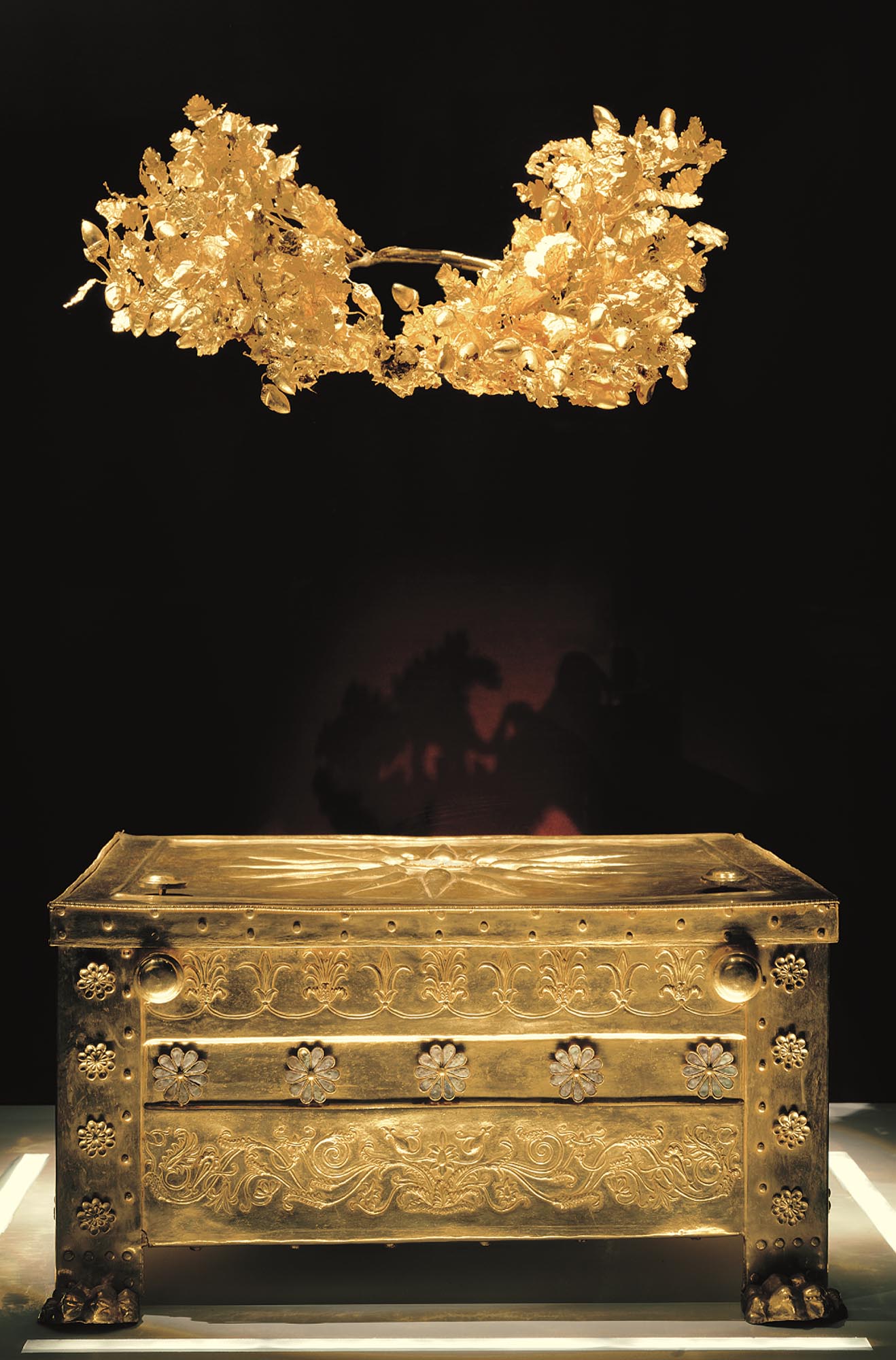
Χρυσό στεφάνι & λάρνακα, τάφος Φιλίππου Β. Πολυκεντρικό Μουσείο Αιγών/ Gold wreath & larnax from the tomb of Philip II. Polycentric Museum of Aigai, Royal Tombs-Treasures Exhibition
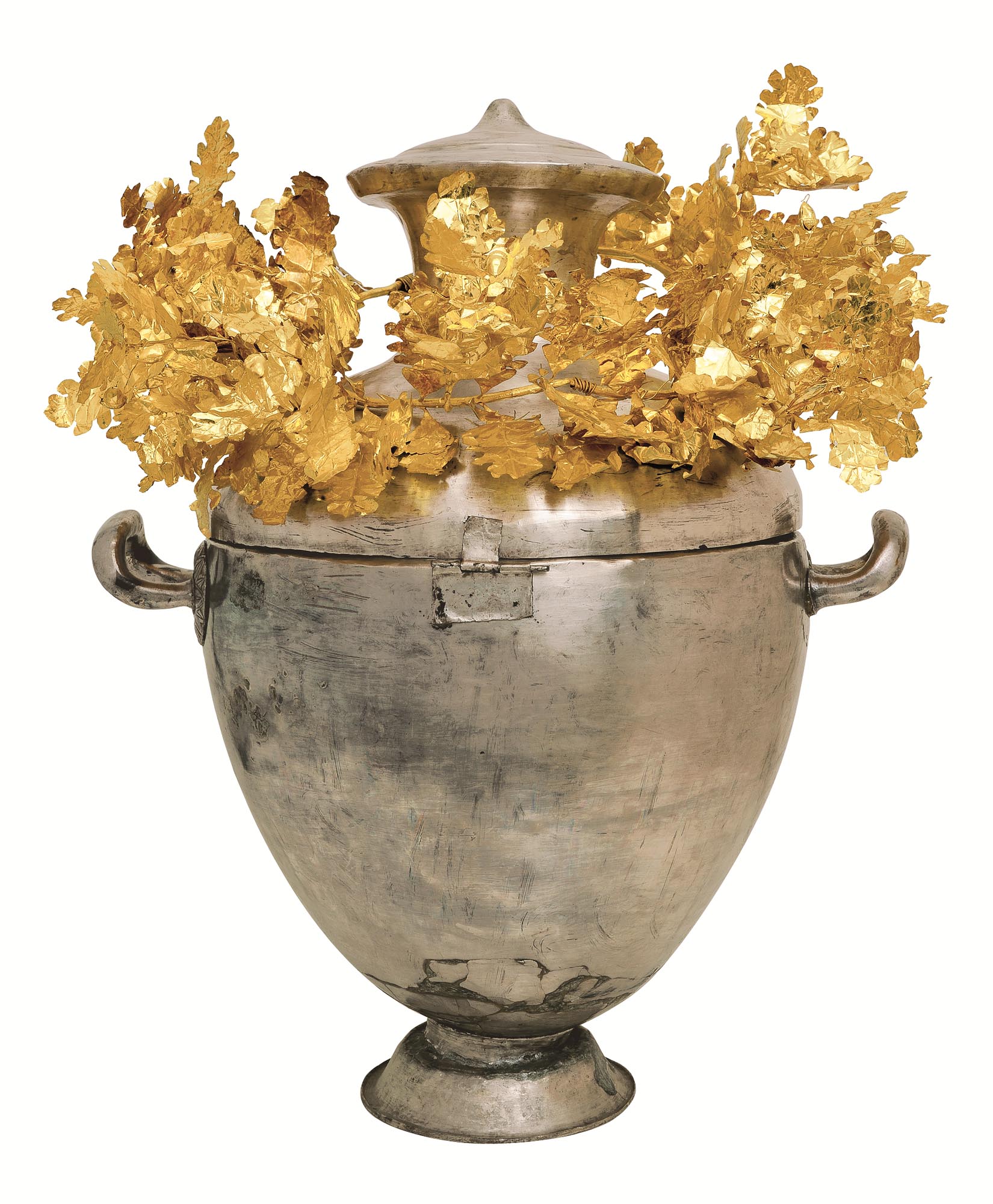
Αργυρή υδρία & χρυσό στεφάνι, τάφος “Πρίγκηπα”. Πολυκεντρικό Μουσείο Αιγών/ Silver hydria and gold wreath, tomb of the “Prince". Polycentric Museum of Aigai, Royal Tombs-Treasures Exhibition

Over the following centuries, the successors of Perdiccas I transformed the city of Aigai into the seat of one of the most powerful kingdoms of antiquity, which quadrupled in size in the first half of the 5th century BC, during the reign of Alexander I the Philhellene (c. 495-454 BC). The powerful Macedonian kings also made Aigai a flourishing artistic and intellectual centre, inviting some of the greatest thinkers and artists of antiquity to their court.

In the first half of the 4th century BC, in the reign of Archelaus (413-399 BC) or, according to other scholars, during the turbulent period following his assassination, in the reign of Amyntas III (393-368 BC), the administrative centre of the Macedonian Kingdom was transferred to Pella, which was closer to the sea. Aigai remained, however, the burial place of members of the royal family and the traditional centre where the important sacred ceremonies and great festivals of the kingdom were held.

The excavations, which have so far revealed only a small percentage of the ancient city of Aigai, have brought to light very few remains of buildings of the Archaic and Classical periods (7th – first half of the 4th c. BC). However, the picture of the city, populous and flourishing during this period, is again revealed by the burials of the vast necropolis, which are impressive in both their size and their wealth of grave goods. The imported artefacts accompanying the deceased, such as clay vases from Athens, Corinth and eastern Ionia and glass vases from Rhodes and Phoenicia, also bear witness to the wide-ranging commercial contacts between Aigai and the major economic and productive centres of the time.

Aigai enjoyed a new period of great prosperity during the reign of Philip II, described as the “golden age” of the city. The brilliant general and superb diplomat, highly educated himself, became a generous patron of letters and the arts and implemented an ambitious building programme in Aigai, erecting important public buildings including the magnificent palace. Philip II is also credited with the construction of the great theatre, where he was assassinated in 336 BC, during the brilliant celebrations for the wedding of his daughter Cleopatra to her uncle, King Alexander I of Epirus. It was at Aigai, immediately after the assassination of Philip II, due to the critical situation, that Alexander the Great was proclaimed king.

In the time of the successors of Alexander the Great, Aigai gradually declined, while in 276/5 BC it suffered great destruction after the defeat of Antigonus Gonatas by King Pyrrhus of Epirus. Pyrrhus’ Gallic mercenaries plundered the treasures from the tombs of the kings and even threw out the bones of the dead to insult them. The violent destruction of the necropolis is confirmed by the discovery of a large number of shattered funerary steles in the fill of the Great Tumulus. In 168 BC, after the defeat of Perseus, the last Macedonian king, Aigai, like Pella, was destroyed by the Romans, who levelled its walls and razed its buildings to the ground. During the long period of Roman rule, life in the city of Aigai continued, but stripped of its former glory; the splendid buildings of the Hellenistic period were never rebuilt. The ruins were now occupied by houses and sanctuaries constructed of spolia from the previous buildings, as well as various workshops including textile workshops and dyeworks.

In the 1st century AD, the city of Aigai seems to have been abandoned for good, as a major landslide in the Pierian Mountains buried and destroyed a large part of the city. During the Early Christian period, a new settlement seems to have arisen a short distance from Aigai, about 1 km northeast of the town of Vergina. The complex of a large three-aisled basilica with three building phases (late 4th-early 5th AD, late 5th-early 6th AD and late 6th-early 7th c. AD), including a baptistery and other annexes and decorated with elaborate mosaic floors, has been excavated on the site. The remains of a pottery kiln used to make bricks and tiles have also been discovered northwest of the basilica.

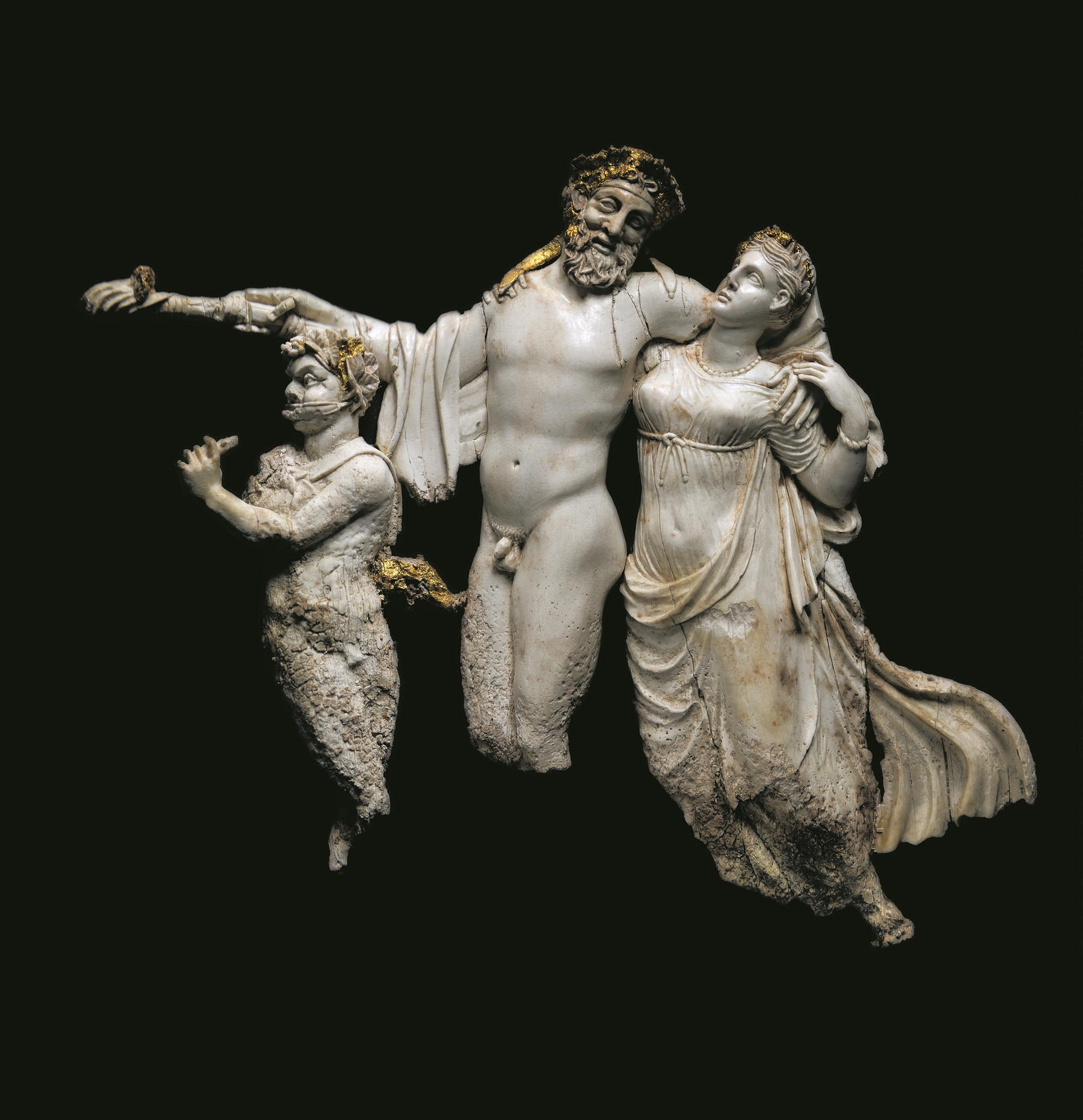
Διακοσμητικό σύμπλεγμα από τον τάφο του “Πρίγκηπα”. Πολυκεντρικό Μουσείο Αιγών/ Decoration (detail) from the tomb of the “Prince”. Polycentric Museum of Aigai, Royal Tombs-Treasures Exhibition

The sources are silent on the wider area of Vergina until much later. The neighbouring village of Palatitsia appears in 14th-century documents as Palatitzia or Palatitzia (“little palaces”), a name thought to be a memory of the ruined palace of Aigai. The continuing habitation of the settlement in later times is confirmed by the post-Byzantine church of St Demetrios and by references in documents of the 17th to the 19th century. On the site of the palace of Aigai, the remains of the monastic complex of the Holy Trinity, probably dating from the 14th century, were preserved until 1861. They were demolished by the first excavators of the archaeological site, the French archaeologist Léon Heuzey and the French architect Honoré Daumet. A topographical map drawn by the two researchers also shows two hamlets: Barbes, on the site of present-day Vergina, and Koutles, a little higher up in the northern foothills of the Pierian Mountains, below the ancient city of Aigai. They stayed at the latter during their brief visit to the area.

Monuments - Antiquities

Urban plan

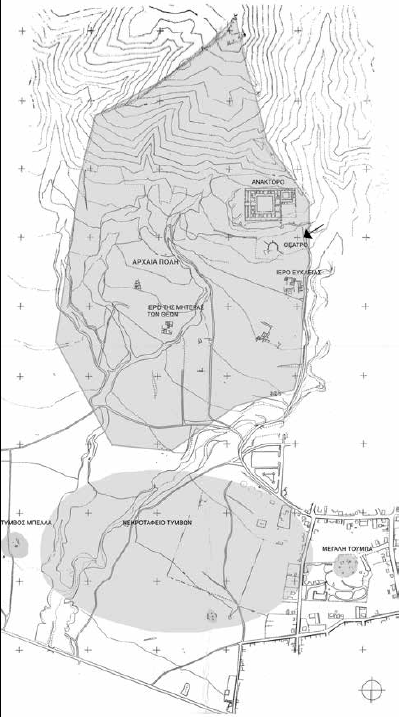
The city of Aigai, which has an elongated, irregular polygonal shape and occupies an area of 76.88 hectares, was protected by strong walls. The southern part of the town lies in the forest, in the foothills of the Pierian Mountains, where the acropolis, with an area of 0.52 hectares, stands on a hilltop forming a natural stronghold, 320m above sea level. The northern part of the city lies on the plain. The southern, mountainous part, set on a slope, is laid out on terraces, lacking an organised urban plan of regular residential blocks and roads on a grid pattern. Of the secular and religious buildings of the city, the palace, the theatre and two sanctuaries have been excavated to date. Based on the excavation data, the walls and most of the city’s buildings were destroyed in the mid-2nd century BC, after the Battle of Pydna (168 BC).

Of the city wall, which was about 3.3 km long, a large section of 2.5 km has been uncovered. The wall is 2.20-2.90 m thick and consists of a stone base on which lay the upper courses of mudbricks, which do not survive today. The stone base, up to 1.90 m high, was built of roughly worked or unworked local limestone, poros stone (marly limestone) ashlars, and clay as a binding material. In the most important sections, especially the part of the wall lying in the plain, the stone base is more elaborate and only poros stone is used. The top of the wall was covered with Laconian tiles along its whole length, to protect the mudbricks of the superstructure from the weather. The wall was reinforced at intervals with strong semicircular and rectangular towers, with five gates at key points, four outer and one inner gate between the city and the citadel. The outer gate in the east wall was the main gate of the city, from which the road leading to the ports of Pydna and Methoni started. As it opens onto the lowland, more vulnerable part of the wall, it is carefully constructed as a symmetrically designed complex covering 0.1 hectare, protected by two strong semicircular towers.

According to the findings of the excavation carried out by the Aristotle University of Thessaloniki from 1981 to the present day, the wall was built in a single phase after 305 BC, during the reign of King Cassander (316-297 BC). However, the excavation carried out in 2003-2004 on the northwest part of the wall, next to the cluster of the “Tombs of the Queens”, by the 17th Ephorate of Prehistoric and Classical Antiquities, revealed that the wall was built in the reign of Perdiccas II (454-413 BC) and rebuilt at the beginning of the reign of Philip II (359-336 BC).

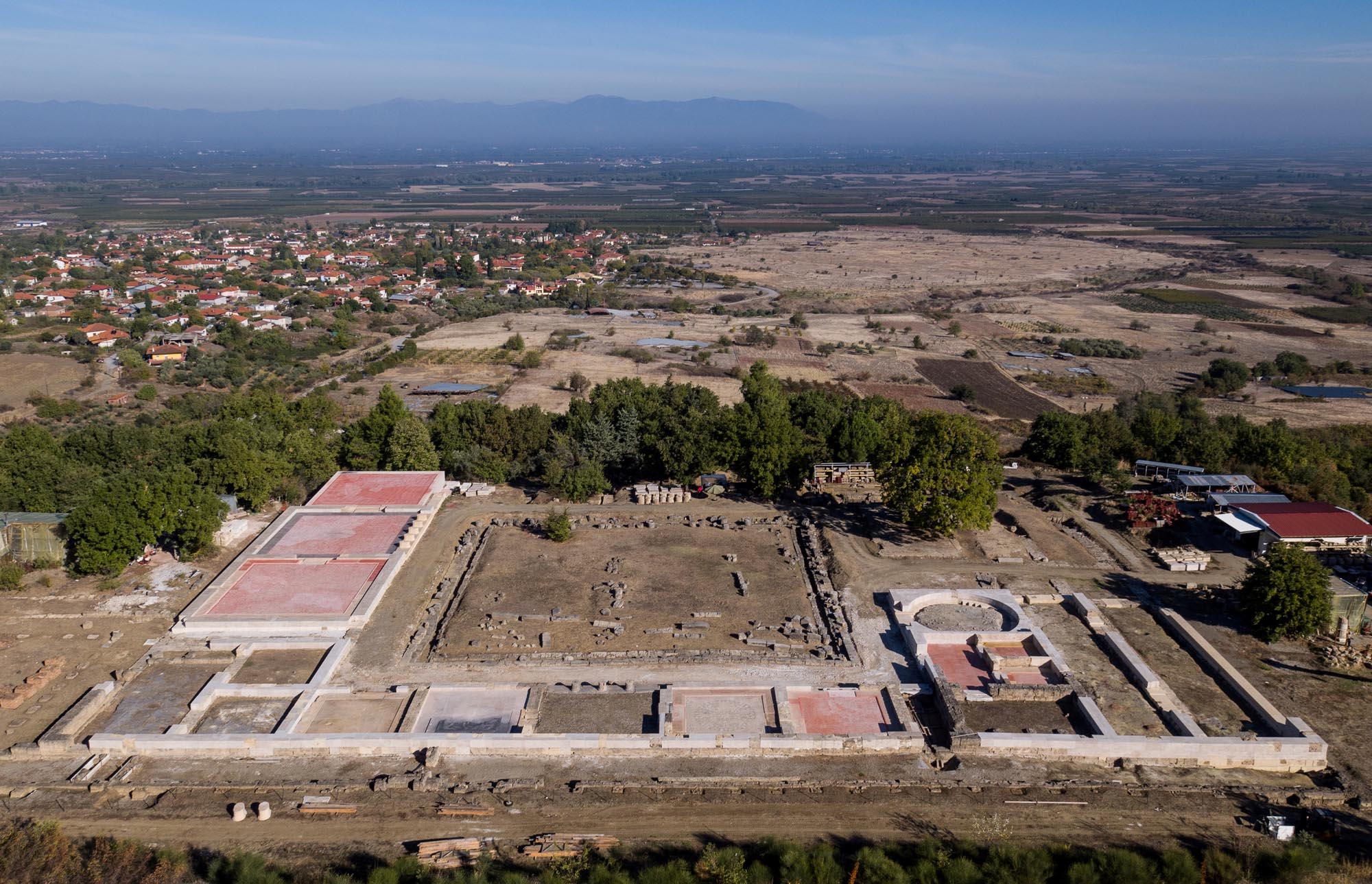
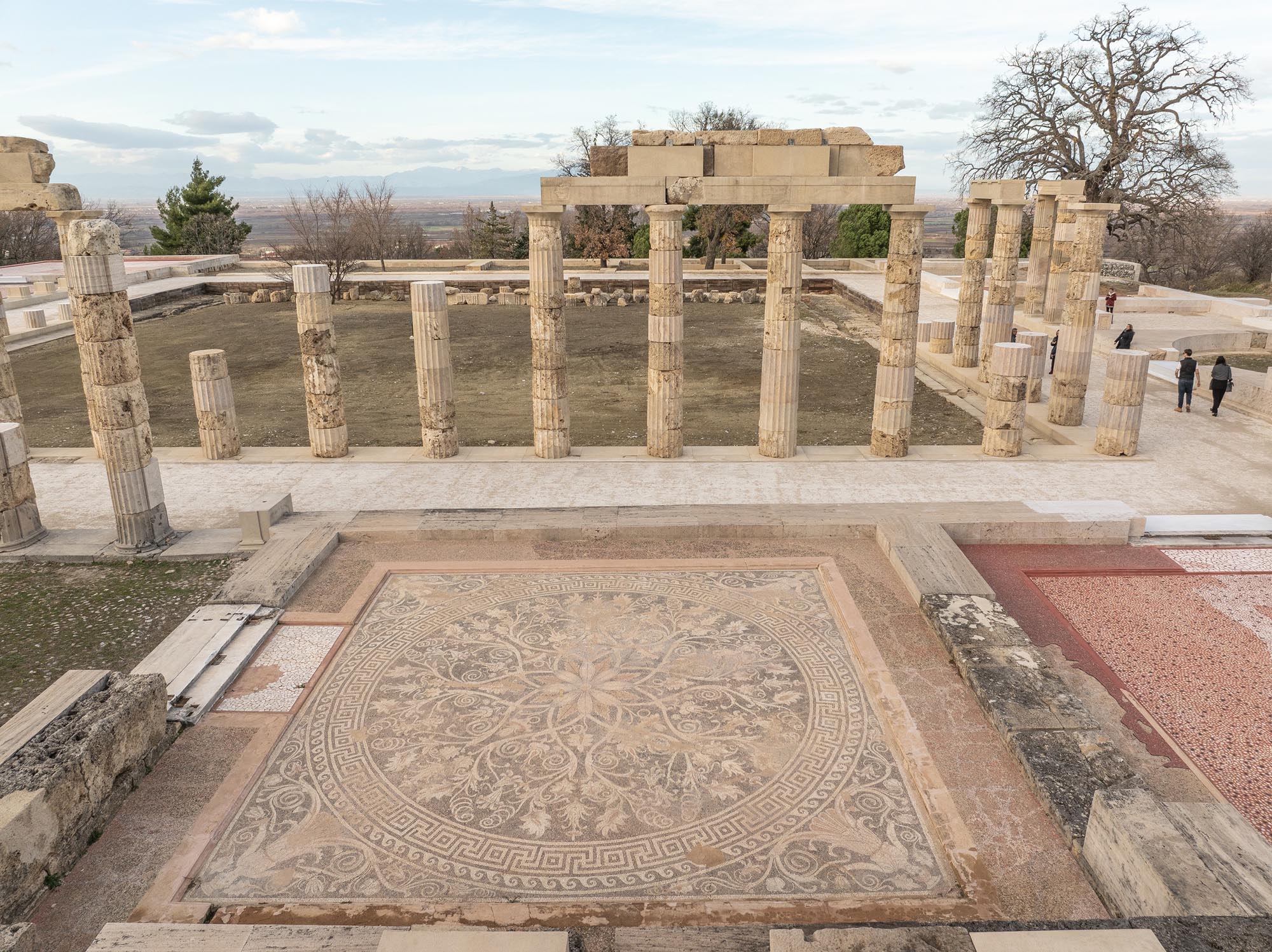
The basileion (palace) of Aigai is built on a raised terrace at the foot of the hill of the acropolis, near the west side of the wall. It is one of the largest buildings of antiquity, with a total area of 1.25 hectares. Its creation was a major feat of engineering, requiring the construction of a monumental terrace 104 m long and 7.5-12.5 m high. The central nucleus, the “heart” of the palace, is the great square peristyle court, measuring 0.4 hectares, around which the various spaces of the palace are arranged, forming a unified whole.

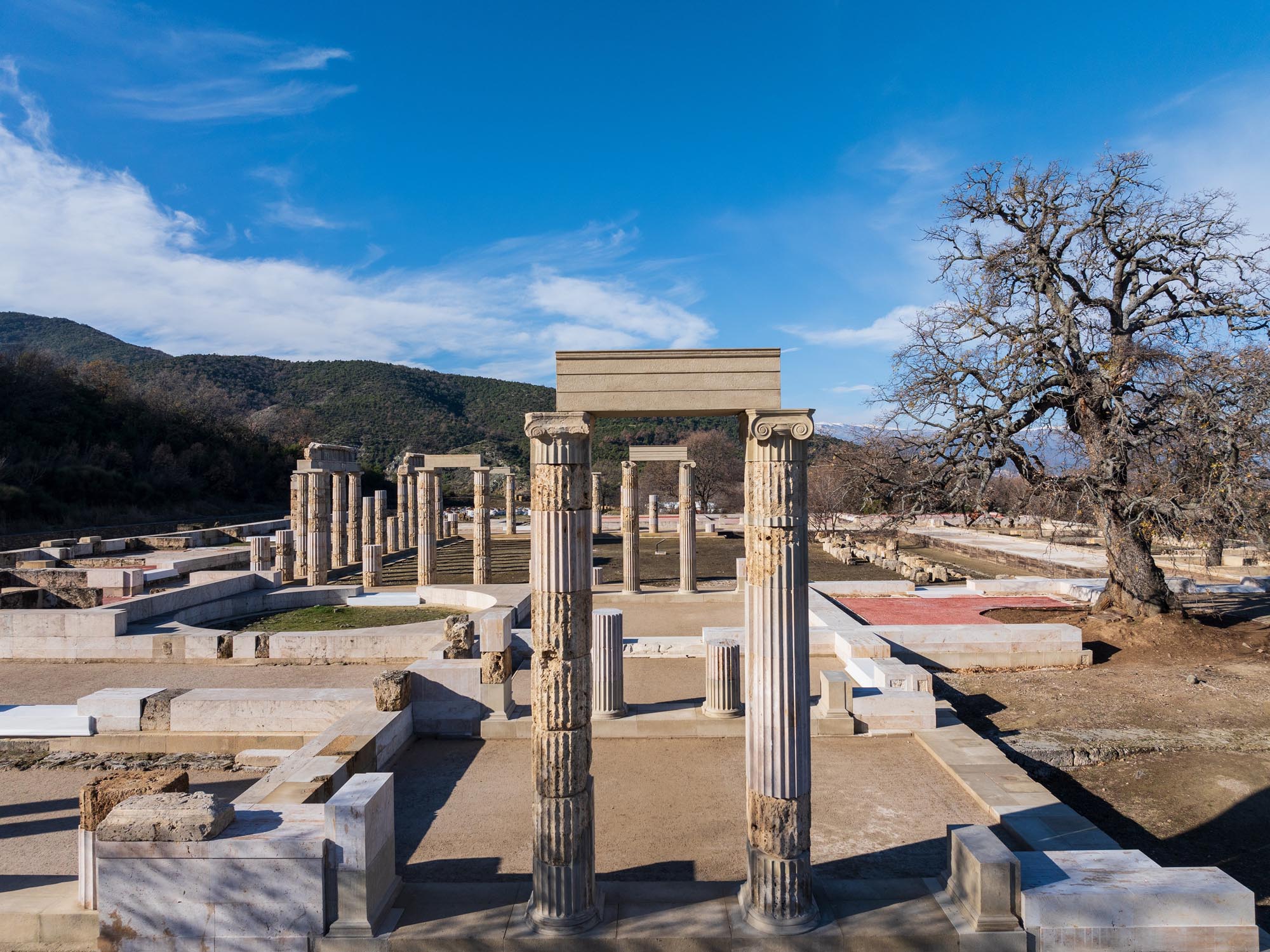
The modern restoration and reconstruction work on the palace, which began in 2007, has provided the opportunity for a thorough study of the monument, shedding light on various research issues such as the reconstruction of the ground plan and the exact dating of its founding, which is placed in the mid-4th century BC, during the reign of Philip II. The research highlights the fact that the complex was designed by a remarkable and resourceful architect, who applied a particularly intricate layout and followed the rules of the famous golden ratio with absolute consistency. He also adopted innovative solutions, for example by having the imposing propylon of the monumental façade of the palace flanked by two two-storey stoai with Doric columns on the ground storey and Ionic double-sided pillar-columns on the first storey, the first fully developed two-storey stoai in classical architecture. The great halls, 280 m2 in area, of the huge tripartite apartment on the west side of the palace, are also the largest buildings in ancient Greek architecture known to date that are covered with a single roof, without internal supports. Luxurious construction materials, extensive opus sectile (marble inlay), magnificent mosaic floors and a flawless drainage and water supply system, among other features, make up a monumental building that stood out from afar, a landmark of power and authority, housing all the necessary structures for the exercise of government. The original form of the palace remained unchanged until its destruction in the mid-2nd century BC, except for a few additions and modifications made in the 3rd century BC, during the Antigonid period.

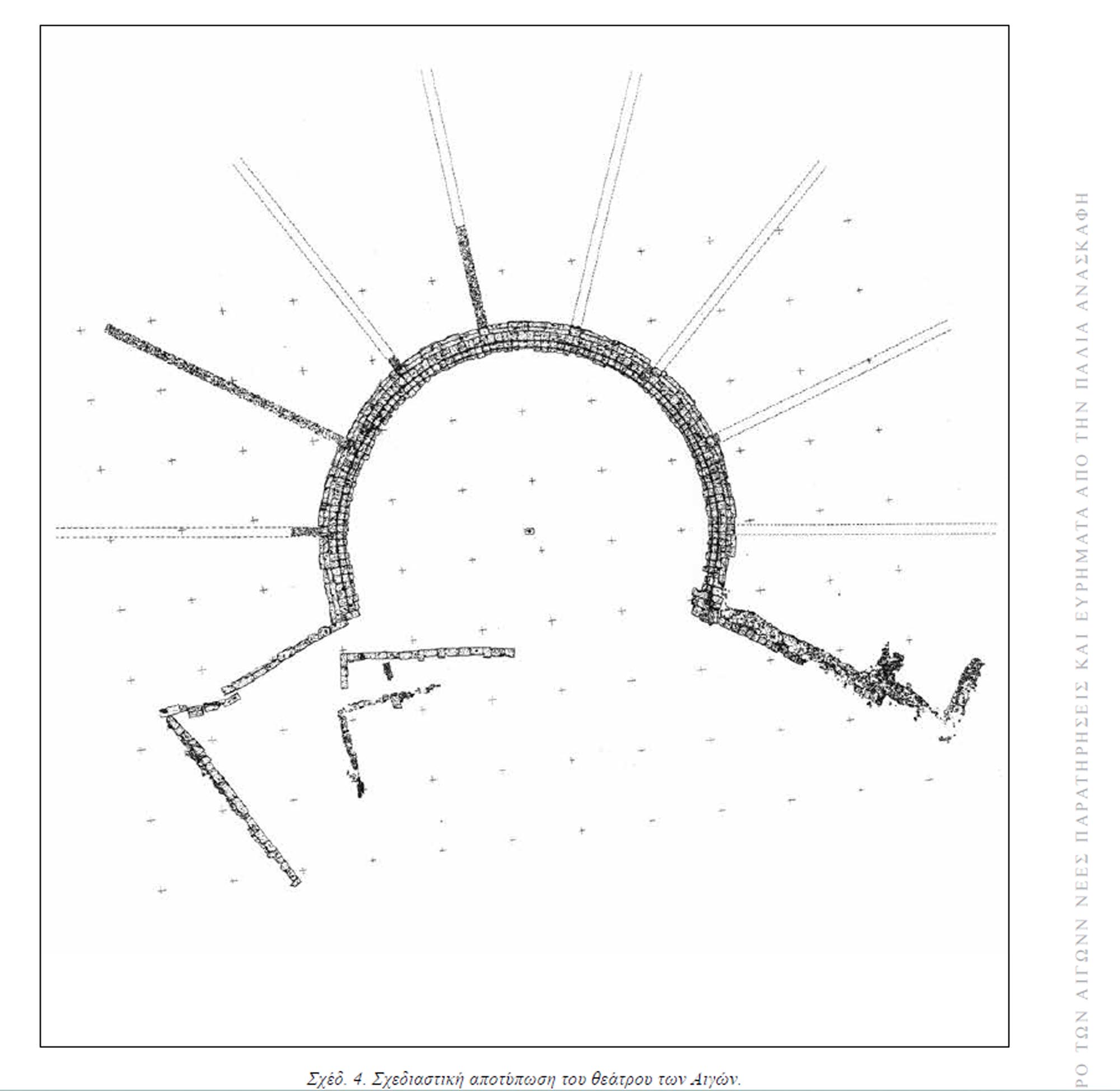
The theatre is located about 50m north of the palace; palace and theatre form part of a unified architectural design, making the connection between the cultural and intellectual life of the city and its political and administrative functions clear. The excavation data and especially the close relationship between the theatre and the palace show that they date from the same period, at the end of the reign of Philip II (359-336 BC).

The theatre of Aigai stands out for its particularly large orchestra, 28.40 m in diameter, making it one of the largest known orchestras of antiquity. It has an unpaved earthen floor, while in the centre is the four-sided stone base of the thymele, the altar of Dionysus. The stage building, of which only a small part is preserved at the level of the foundations, was an elongated stoa 25 m long, open on the side facing the orchestra. The cavea is divided into nine cunei (wedge-shaped sections). Only the first row of seats was made of stone, meaning that either the cavea was earthen or the theatre was never completed.

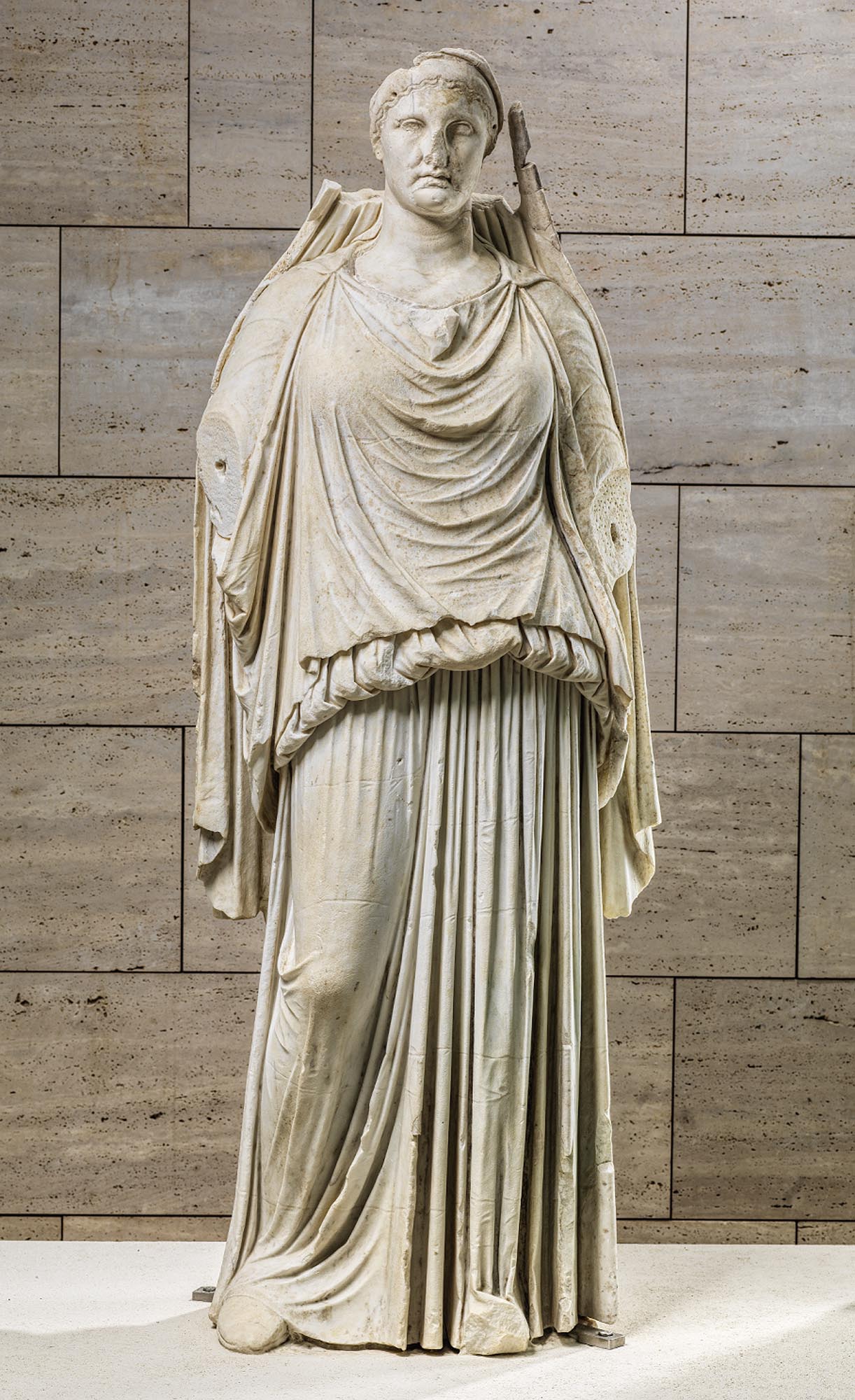
The Agora of the city of Aigai lies below the monumental complex of the palace and theatre, where the remains of the sanctuary of Eukleia, a goddess with a strong sociopolitical aspect worshipped in the agorai of ancient Greek cities, have been excavated. The main temple of the sanctuary has come to light: it is a two-room Doric temple in antis measuring 12.30 x 9.30 m, with the entrance on the east side. A tripartite Doric stoa and a monumental altar have also been revealed. The monumental complex was constructed as part of the same building programme as the palace and theatre (second half of the 4th c. BC). Later, in the 3rd century BC, more buildings were added to the sanctuary, including a new two-room temple. The sanctuary, which was in continuous use until the 1st century AD, has produced some of the most important finds associated with the religious and political life of the city. They include the inscription of Eurydice, the mother of Philip II, and a unique group of original sculptures of the 4th century BC which were placed in deposits around the Doric temple, including a colossal snake and a large-than-life-size female statue, which has been identified as the queen Eyridice. An unexpected discovery was that of three cremations of the late 4th century BC, well hidden under a 3rd-century BC clay floor, accompanied by valuable cinerary vessels and grave goods of exceptional artistry, including a golden oak wreath.

The sanctuary, dedicated to the Mother of the Gods, the Asian Cybele, was discovered on a plateau in the east of the city. Founded in the late 4th century BC, it is a large four-sided structure, measuring approximately 32 x 32 m, of the ancient oikia (house) type, with spacious rooms arranged around a central courtyard. The layout is plain rather than monumental, with earthen floors, and walls with stone foundations and a brick superstructure. In contrast to the simple architectural plan of the sanctuary, the movable excavation finds are particularly rich and numerous, contributing substantially to the interpretation and understanding of the chthonic mystery cult of the Great Goddess, which was widespread in Macedonia.

The vast necropolis of Aigai, also known as the Cemetery of the Tumuli, containing an astounding 530 burial mounds, is one of the largest and longest-lived funerary sites in Greece. Today it is an archaeological park open to the public. Although only about one-hundredth of the necropolis has been explored to date, some 2,500 tombs and graves have been excavated, covering a wide chronological range from the Iron Age and the Early Archaic period (11th-7th c. BC) to the 2nd or 3rd century AD. The oldest tombs bear witness to the long history of the region even before the formation of the Macedonian state. The growth and boundaries of the necropolis during its long period of use, and the dating of the burial monuments and their attribution to specific historical figures are just some of the questions raised by the excavation, which continues uninterrupted to this day.

The Macedonian tombs of the Hellenistic period (late 4th – mid-2nd c. BC) stand out among the burial structures of Aigai, with their characteristic imposing façades, marble doors and rich painted decoration. The most important, according to the most widely accepted view, were the burial places not only of prominent figures of the Macedonian Kingdom but also of members of the royal family of the Temenids. The earliest examples of this monumental type of funerary architecture have been revealed in the necropolis of Aigai. Found in a great variety of architectural designs, they feature exceptional paintings that reveal the high standard of monumental painting in antiquity, the originals of which are largely known today through the descriptions of ancient writers.

In the excavated parts of the necropolis, the groups of tombs concentrated in three clusters, associated by researchers with the ruling house of the Temenids, are particularly important. These are the Cluster of the Great Tumulus or Philip II (Cluster A), at the eastern edge of the town of Vergina, where they are now protected by the Royal Tombs – Display of Treasures museum building; the Cluster of the Royal Tombs (Cluster B), prominently placed right next to the northwest gate of the ancient wall; and the Cluster of the Temenids (Cluster C) to the south of the first cluster, near the old Town Hall of Vergina.

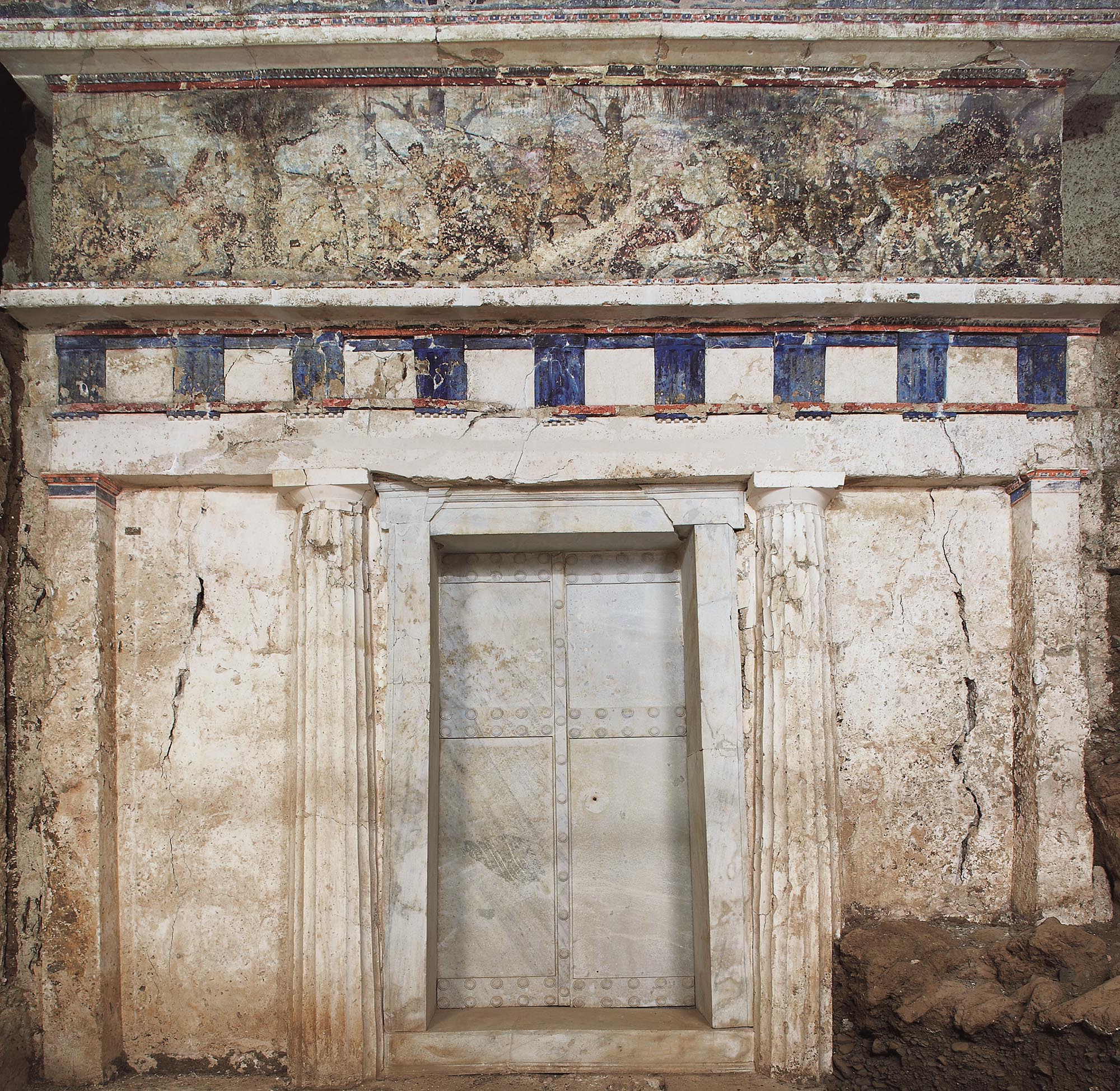
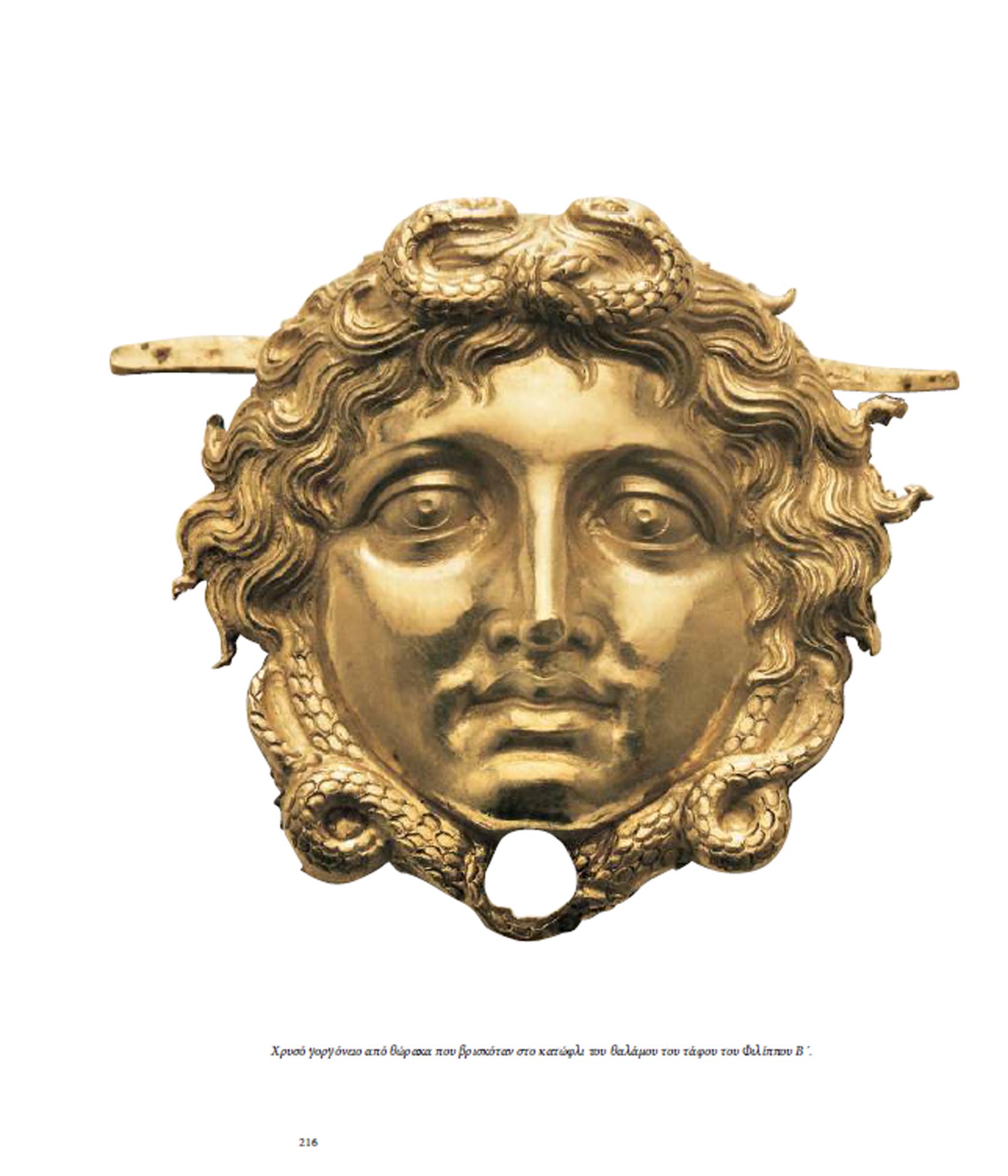
The first cluster includes the four magnificent tombs excavated by Professor Manolis Andronicos and his team. These are cist Tomb I (Tomb of Persephone) and the three Macedonian tombs: Tomb II (Tomb of Philip II), Tomb III (Tomb of the Prince or Tomb of Alexander IV), and Tomb IV or (Tomb of the Free-Standing Columns). There is also the Heroon, an above-ground structure probably intended as a monument to honour the dead of the adjacent tombs. Two of the four tombs, attributed by most scholars to King Philip II and Alexander IV, the grandson of Philip II and son of Alexander the Great, were found unlooted, containing a unique treasure trove of invaluable grave goods, “masterpieces of the greatest artists of the time”. These include an impressive number of iron, bronze, silver and gold artefacts, such as the resplendent iron cuirass decorated in gold, the pair of bronze greaves, the unique gold cinerary larnakes, the exquisite golden oak wreaths and the lustrous silver banqueting vessels. Also exceptional are the small-scale ivory reliefs of mythological or historical scenes that adorn the gold-and-ivory ceremonial shield and the priceless gold-and-ivory deathbeds that accompanied the deceased in the two tombs. Besides the precious grave goods, the tombs are decorated with excellent paintings, especially the large composition of royal hunting scenes on the impressive façade of the Tomb of Philip II and the scene of the Abduction of Persephone by Pluto in the Tomb of Persephone, both masterpieces of ancient art. From an architectural point of view, the imposing temple-like façade of the Tomb of Philip II, which combines the Doric and Ionic orders, stands out: the marble double doors, imitating wooden originals, are flanked by Doric semi-columns and pilasters and crowned with a Doric architrave and cornice. The upper part of the façade is dominated by an unusually tall Ionic frieze, 5.56 m long, bearing the painted hunting scene.

In the second cluster was found the unlooted monumental stone cist tomb of the “Lady of Aigai” of the early 5th century BC, the richest known female burial of the period. Various views have been expressed as to the identity of the deceased noblewoman, who is adorned with a wealth of gold and silver jewellery, her garments and shoes decorated with strips of gold sheet. Among the tombs of the same cluster is the large Macedonian tomb thought to be that of Eurydice, the mother of Philip II. It contained an ornate, two-metre-high marble throne, its back painted with the divine couple of the Underworld, Pluto and Persephone.

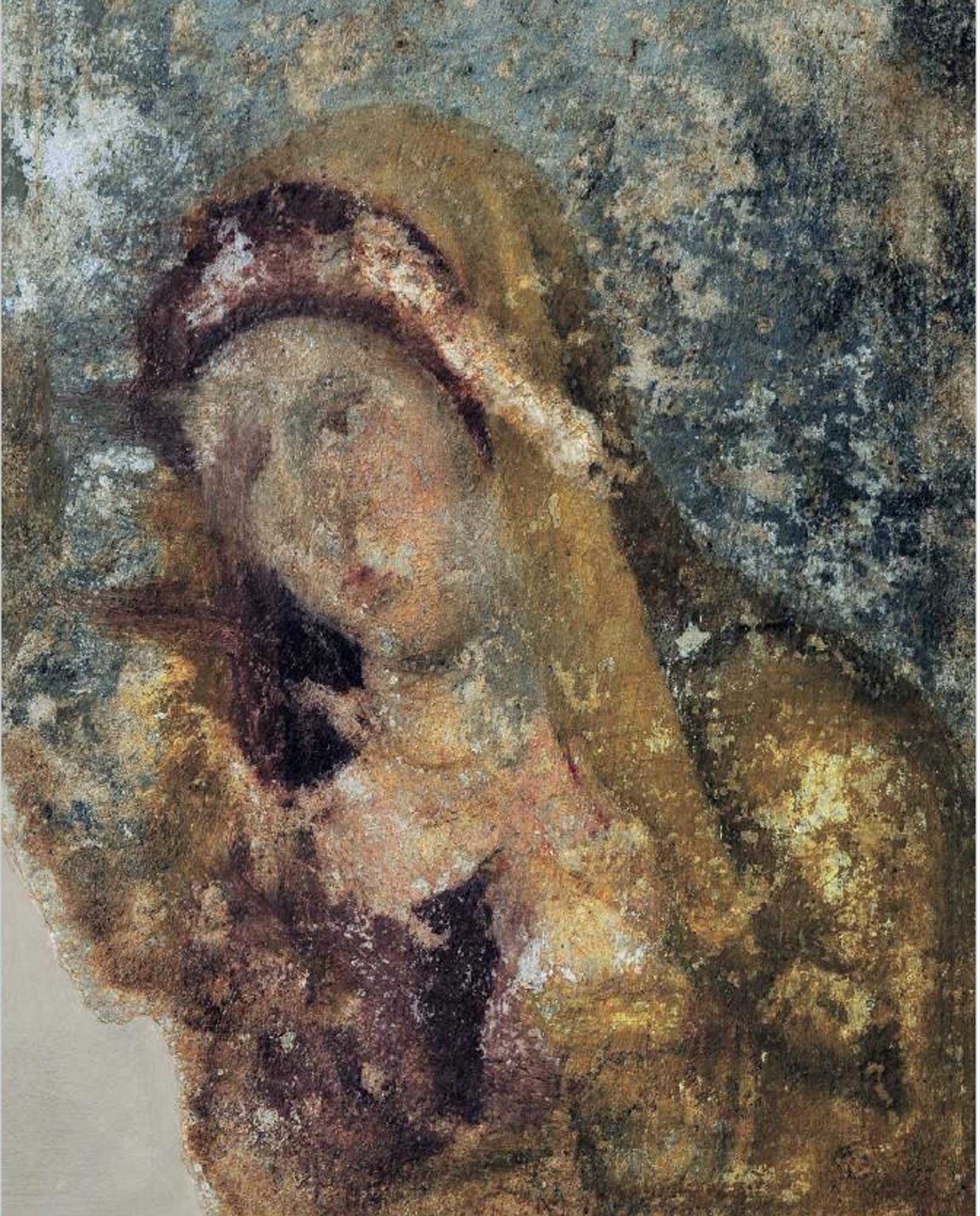
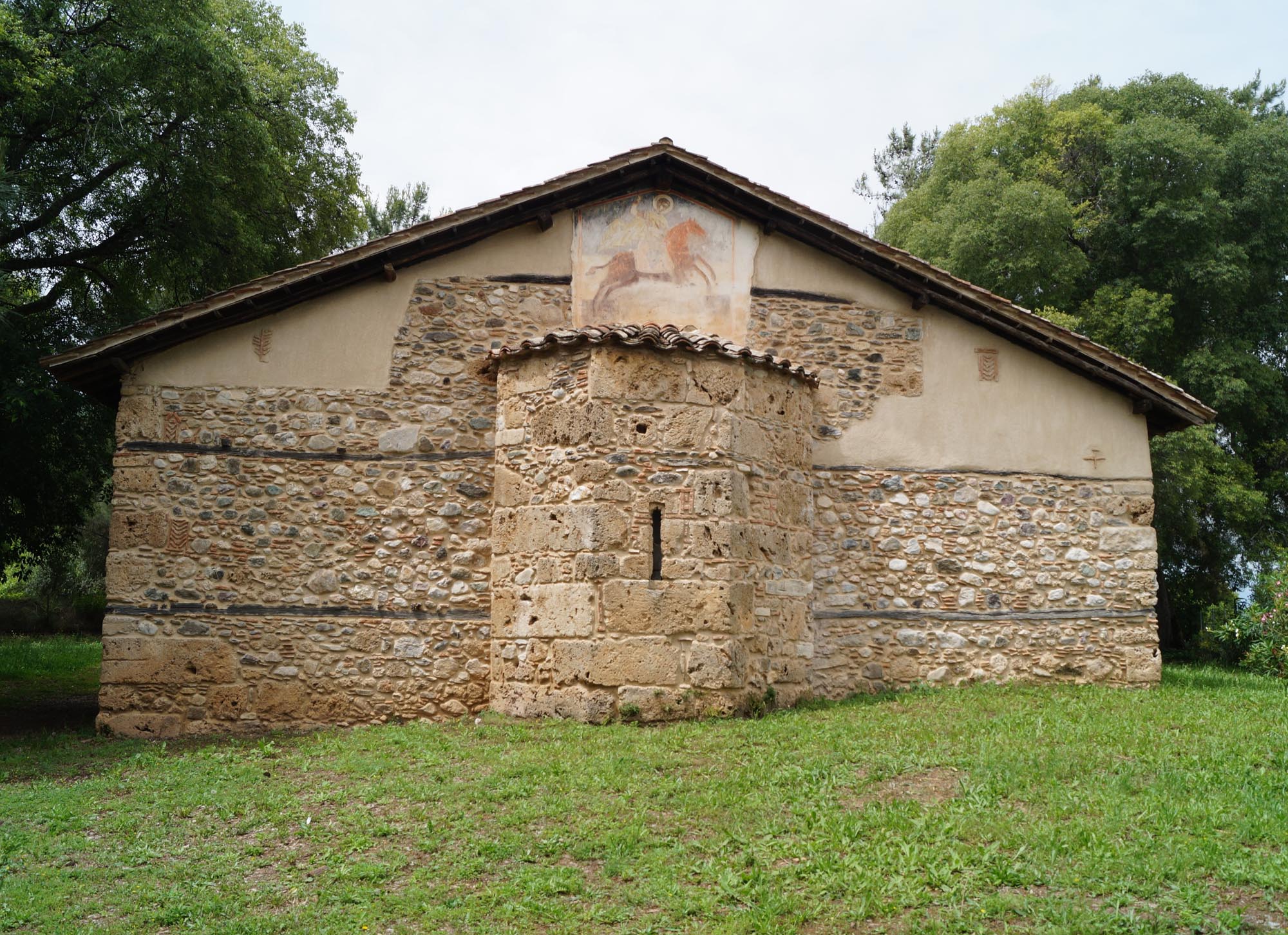
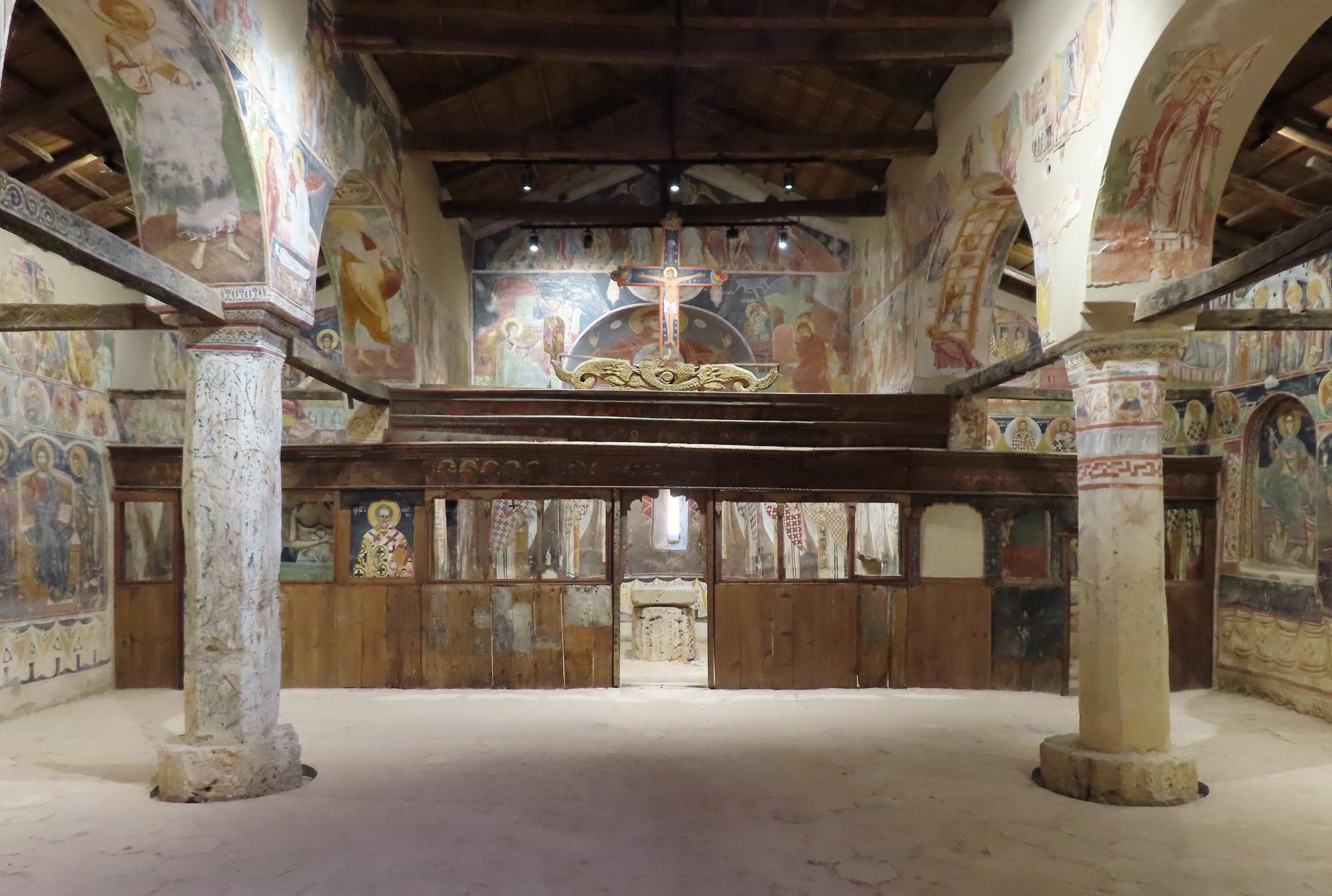
The church, located just a few metres outside Palatitsia, is a three-aisled timber-roofed basilica with an enlarged trapezoidal narthex. It is built of plain, rough masonry incorporating ancient spolia from neighbouring Aigai. The columns of the two colonnades of the church are also set on Doric column drums from the Palace of Aigai. The interior is richly decorated with frescoes which, according to the surviving dedicatory inscriptions, were created in 1570 by the painter Nikolaos of Linotopi, a small village of Kastoria in the Grammos mountain range, the birthplace of several painters active from the 16th to the 18th century across a wide area of the southern Balkans. According to the inscriptions, the narthex was added and painted with frescoes a few years later, in 1592. The frescoes of the narthex bear close stylistic similarities to frescoes of the same period preserved in churches in neighbouring Veria.

Museums

Polycentric Museum of Aigai

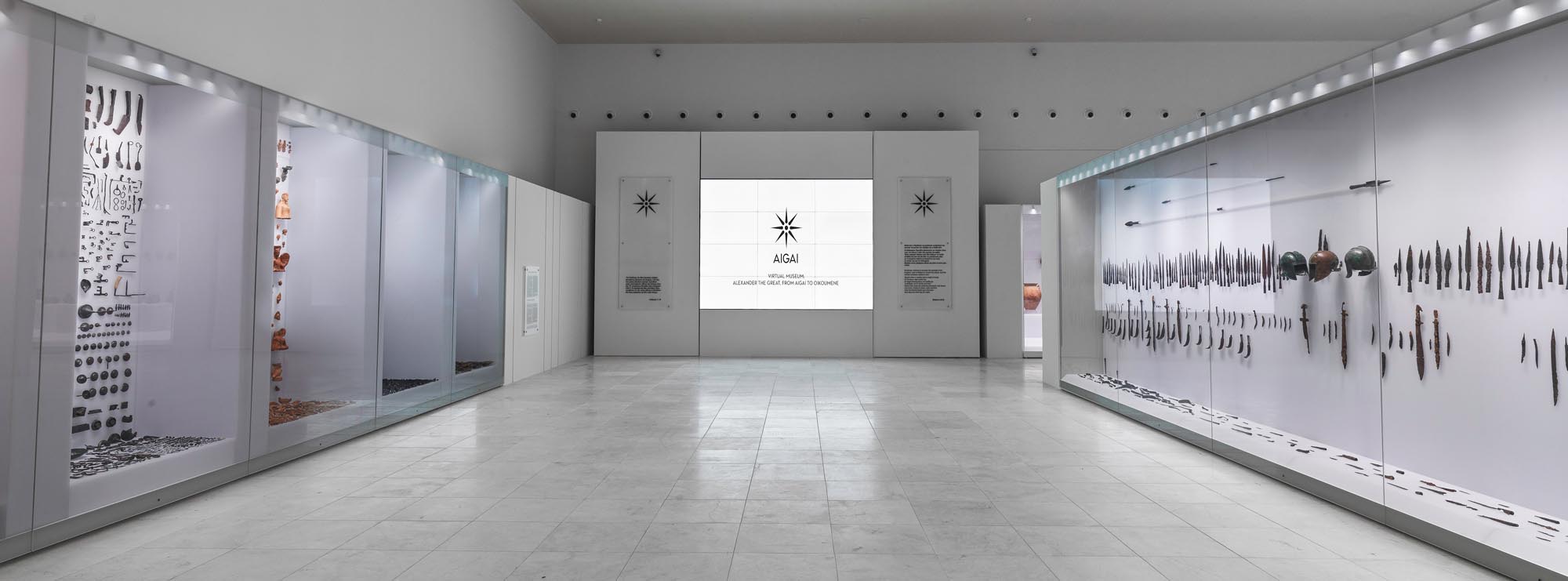
The Museum takes a new, holistic and dynamic approach to the relationship between archaeological site, museum and visitor, integrating and uniting the Central Museum Building with the archaeological site of Aigai as a whole, which includes the Palace and the Theatre, the Cemetery of Aigai – Royal Burial Cluster of the Temenids Archaeological Park, the Royal Tombs – Display of Treasures (former Museum of the Royal Tombs of Aigai) and the post-Byzantine church of St Demetrios in Palatitsia.

Αρχείο ΕΦΑ Ημαθίας / Archive Ephorate of Antiquities of Imathia

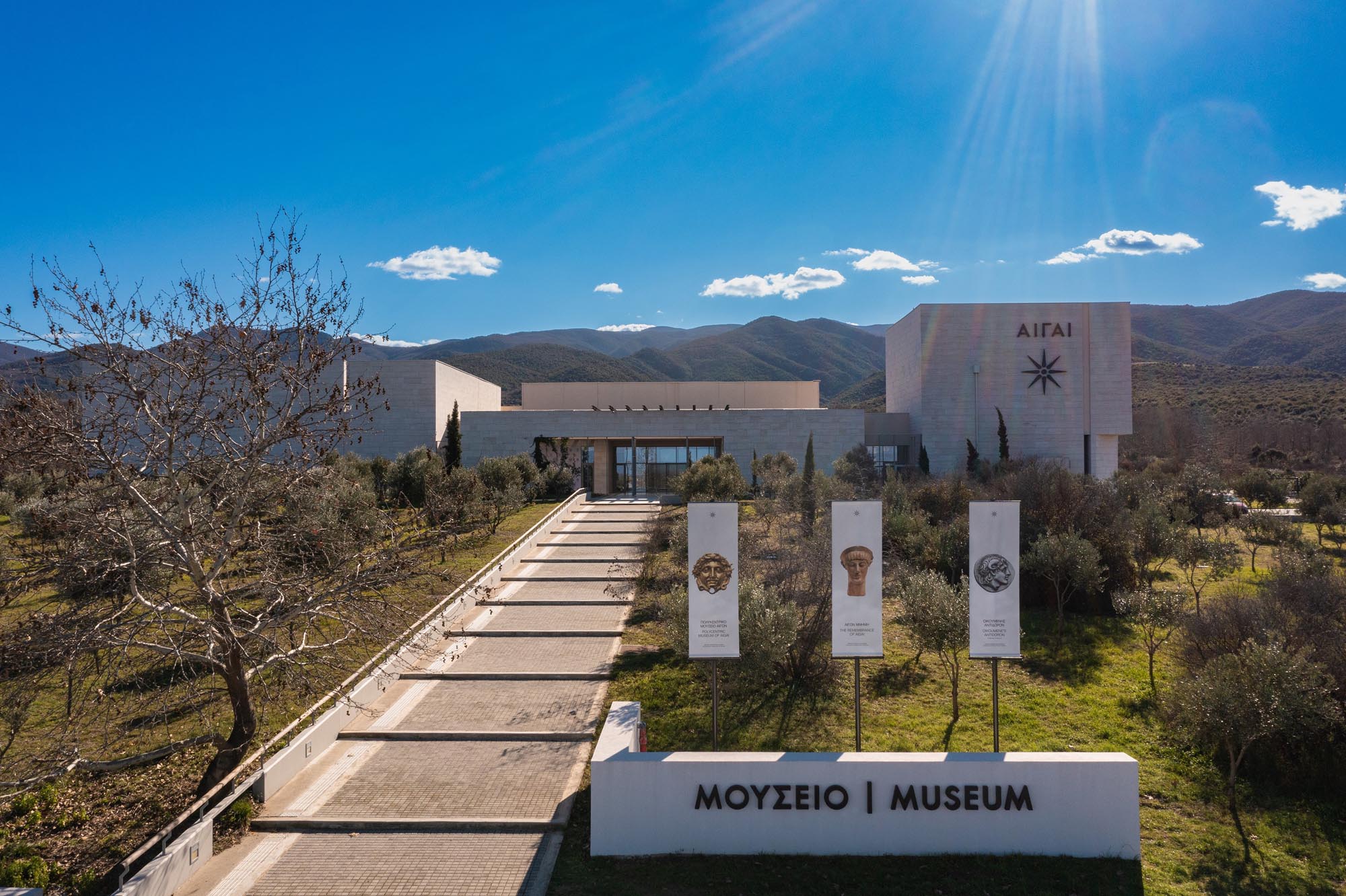
The reference point and hub of the Polycentric Museum is the Central Museum Building, which was inaugurated in 2022 and designed as the conceptual gateway to the archaeological site and the history of Aigai, to the history and culture of the Macedonians and of the vast Hellenistic world, since it is to host the physical headquarters of the digital museum “Alexander the Great: from Aigai to Oikoumene”.

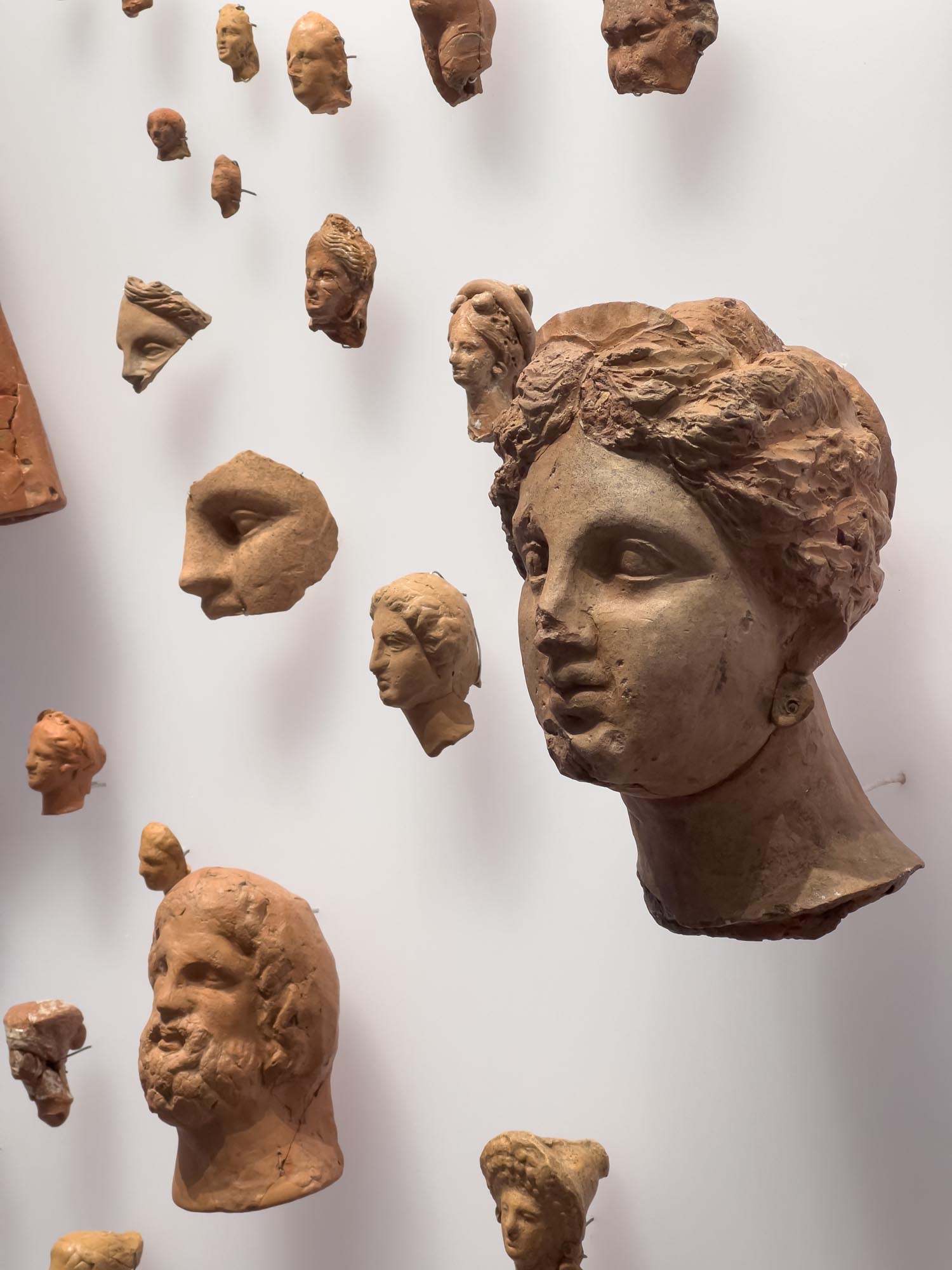
Besides the introductory exhibit “A Window into the World of Alexander the Great”, the Museum hosts three permanent exhibitions: the exhibition of architectural members, the central exhibit being the 30-metre-long reconstructed section of the upper storey of the central part of the façade of the Palace of Aigai, the sculpture exhibition and the central exhibition “Memory of Aigai”, showcasing finds from the excavations of Aigai. The Museum also houses the temporary exhibition “Oikoumenis Antidoron”, which, in cooperation with the Numismatic Museum and collector Theodoros Aravanis, deals with the phenomenon of the Hellenistic World through the figures of its protagonists as they are depicted on coins, as well as the exhibition “Material Memory” featuring works by painter Christos Bokoros.

The underground building of the royal tombs, which takes the external form of a tumulus, was constructed in 1993, enclosing and protecting the ancient burial monuments of the Great Tumulus, maintaining the temperature and humidity conditions necessary for the preservation of the paintings that adorn them. All the treasures found in the royal tombs are exhibited here.
In the town of Meliki, about 8 km east of Vergina, journalist and researher of the folk Greek culture Giorgos Melikis established a research and exhibition space in his family home, dedicated to both tangible and intangible aspects of folk culture. The centre boasts a particularly fascinating collection of masks from all over Greece, votive offerings from popular religious practices, and exhibits related to significant local customs and traditions.
Other stops in the Regional Unit of Imathia

error: