Mieza

Mieza, the place where Aristotle taught Alexander the Great

Ancient Mieza, one of the most important cities of the Macedonian Kingdom, lies in the green foothills of Mount Vermio, on the natural terraces rising east of the Naoussa plateau. Built on the road that led from Veria and Aigai to Pella, the two successive capitals of the Macedonian Kingdom, it was continuously inhabited from prehistoric times probably up to the Middle Byzantine period. The antiquities of the area were already known to 19th-century travellers, but it was Professor Fotis Petsas, who conducted excavations here in the 1950s and 1960s, who identified the site as that of ancient Mieza. Mieza, often mentioned by ancient writers such as Pliny and Ptolemy, became famous thanks to the historian Plutarch, who relates that this was the place where Aristotle taught Alexander the Great. The great philosopher was invited by Philip II in 343 BC to supervise the education of his thirteen-year-old son and the other royal children, the scions of noble Macedonian families. The fact that Aristotle and the young Alexander, whose personality was strongly shaped by Aristotelian thought, lived in Mieza at the same time makes the ancient city a historical site of global importance.

History

Mieza was a city of ancient Bottiaia, a region of ancient Macedonia inhabited by the pre-Hellenic Thracian tribe of the Bottiaeans. According to the ancient myth passed down by the author Stephanus of Byzantium, Beres, the legendary king of Macedonia, had two daughters, Mieza and Beroia, after whom the respective cities were named, and a son, the god Olganos, who gave his name to the local river. The first traces of habitation in the area date from the Late Bronze Age (end of the 2nd millennium BC), while sporadic finds confirm that people continued to live here during the Iron Age, and the Archaic and Classical periods. The settlement is believed to have become a city during the reign of Philip II (359-336 BC), a period which includes the first construction phase of the ancient theatre and the monumental public complex identified as the ancient Gymnasium. The period of the city’s greatest prosperity then began, reflected in the six magnificent Macedonian tombs excavated to date, which were constructed after the return of the veterans of Alexander’s campaign (late 4th c. BC). Other tombs of all types – rock-cut chamber tombs, pit graves and cist graves – mostly dating from the Late Archaic up to and including the Roman period, have been excavated in the cemeteries of Mieza. The grave goods, which include vases imported from Attica and Corinth, provide strong evidence of the city’s relations, as early as Archaic times, with the major centres of Southern Greece.

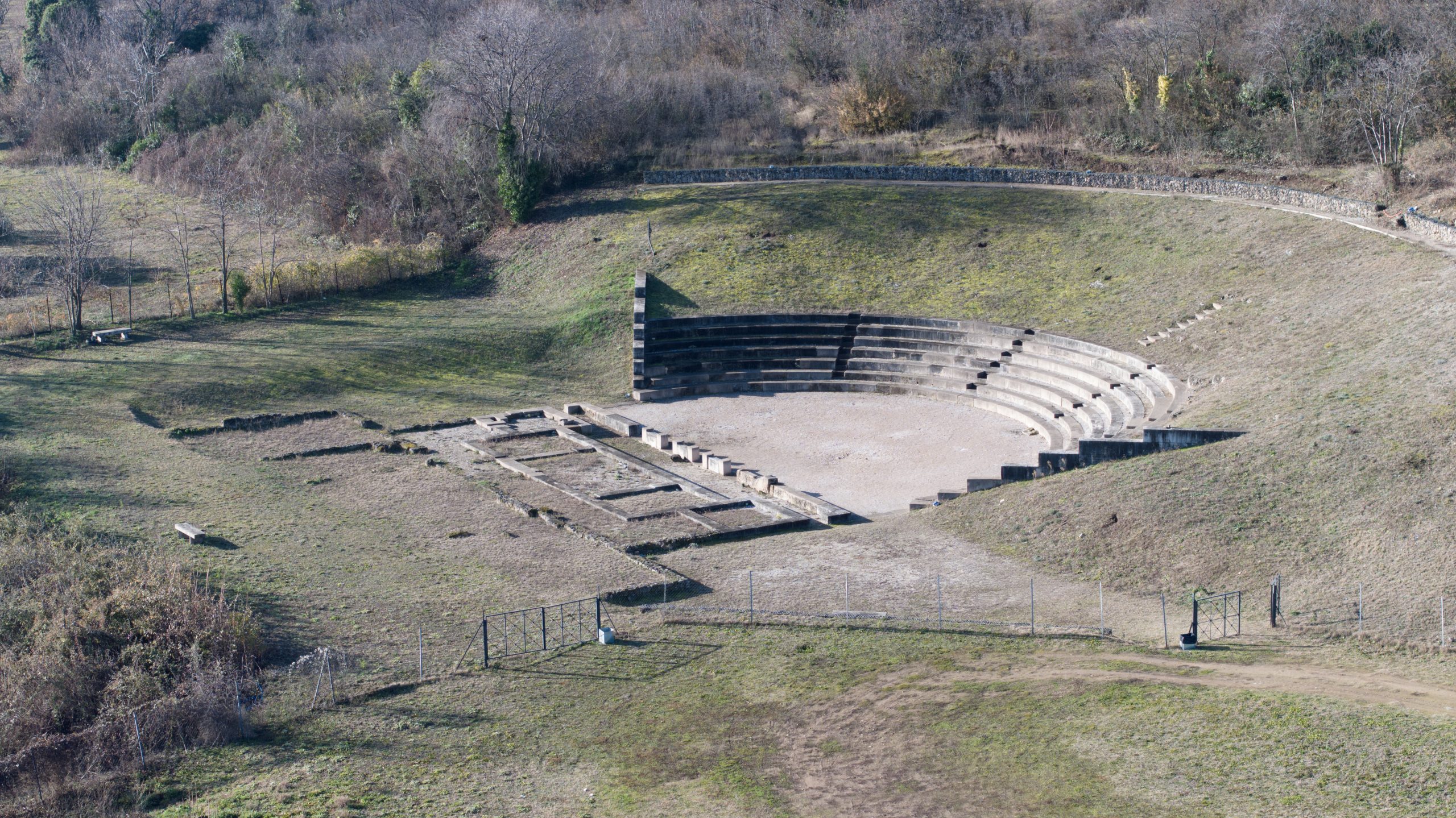
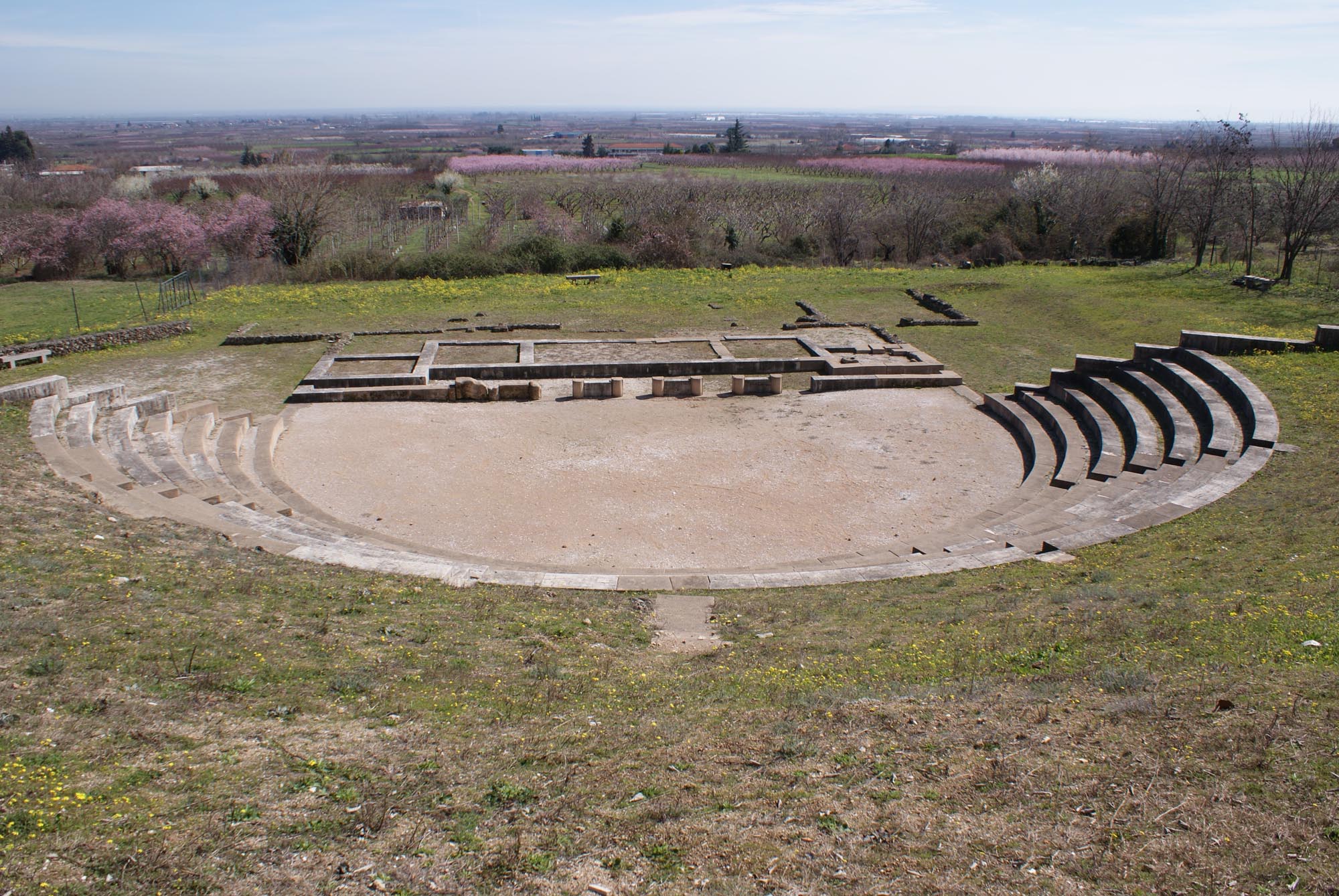
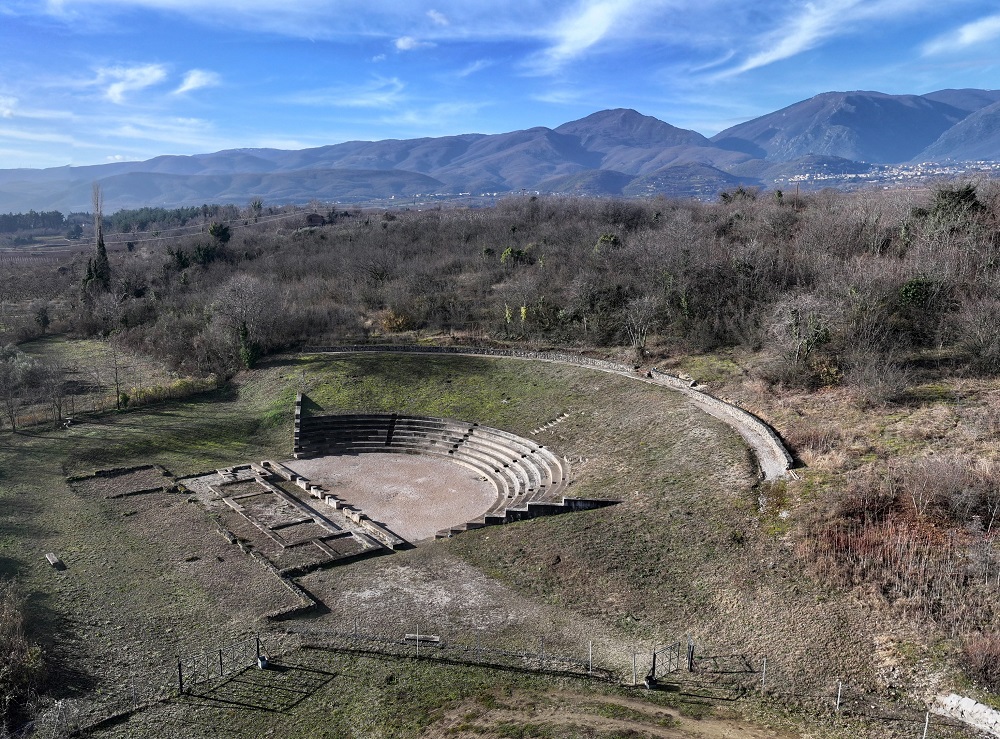
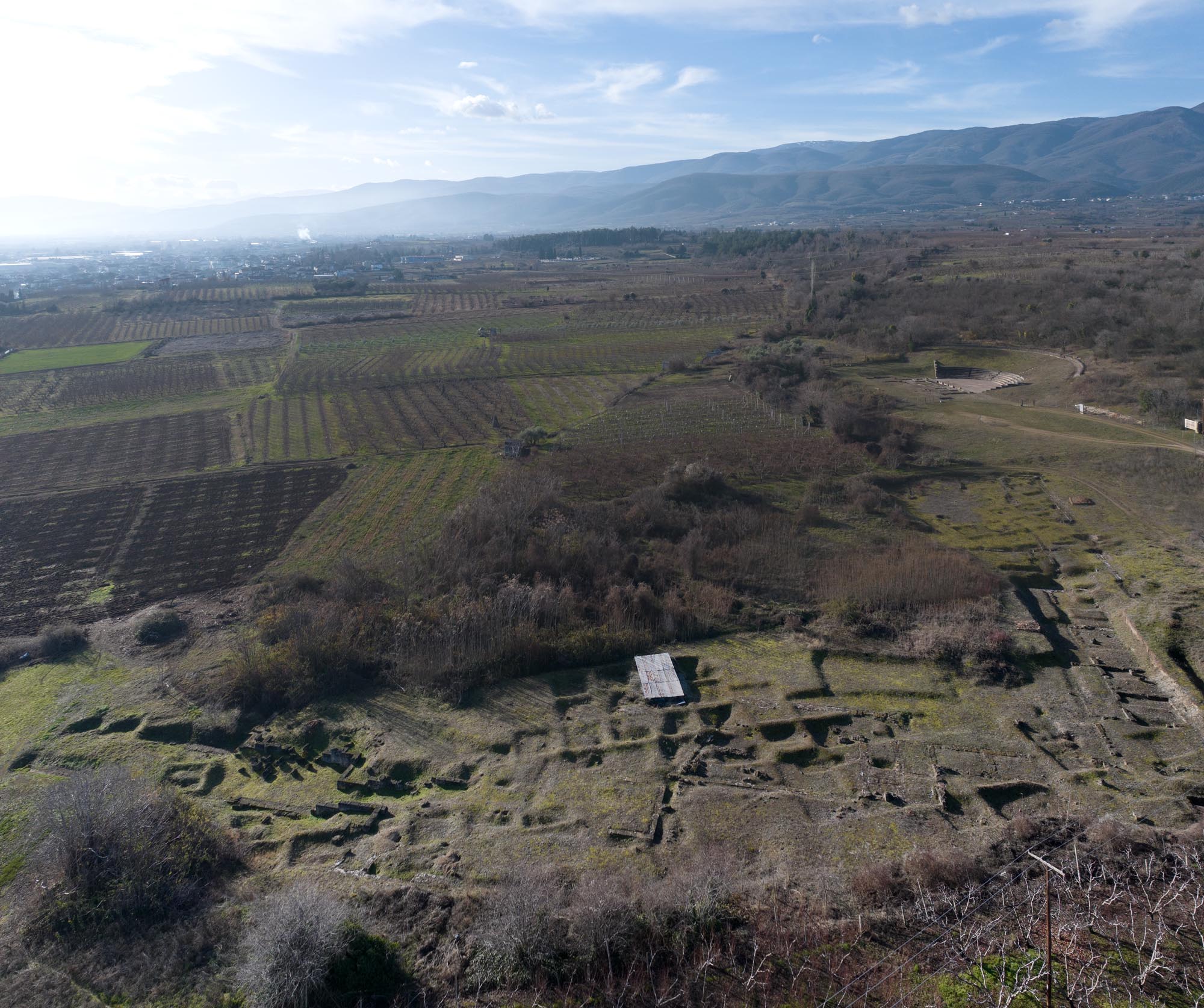
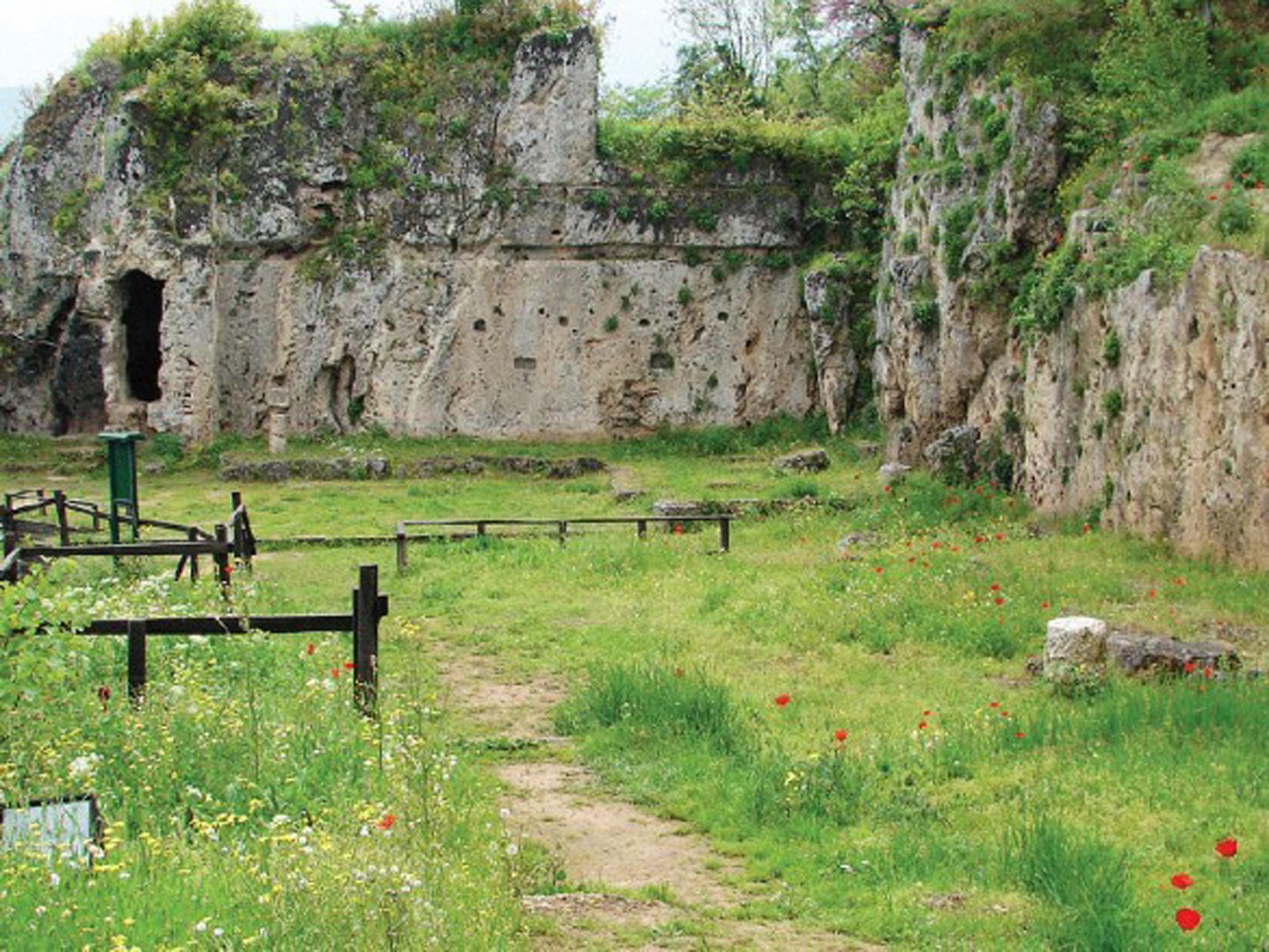
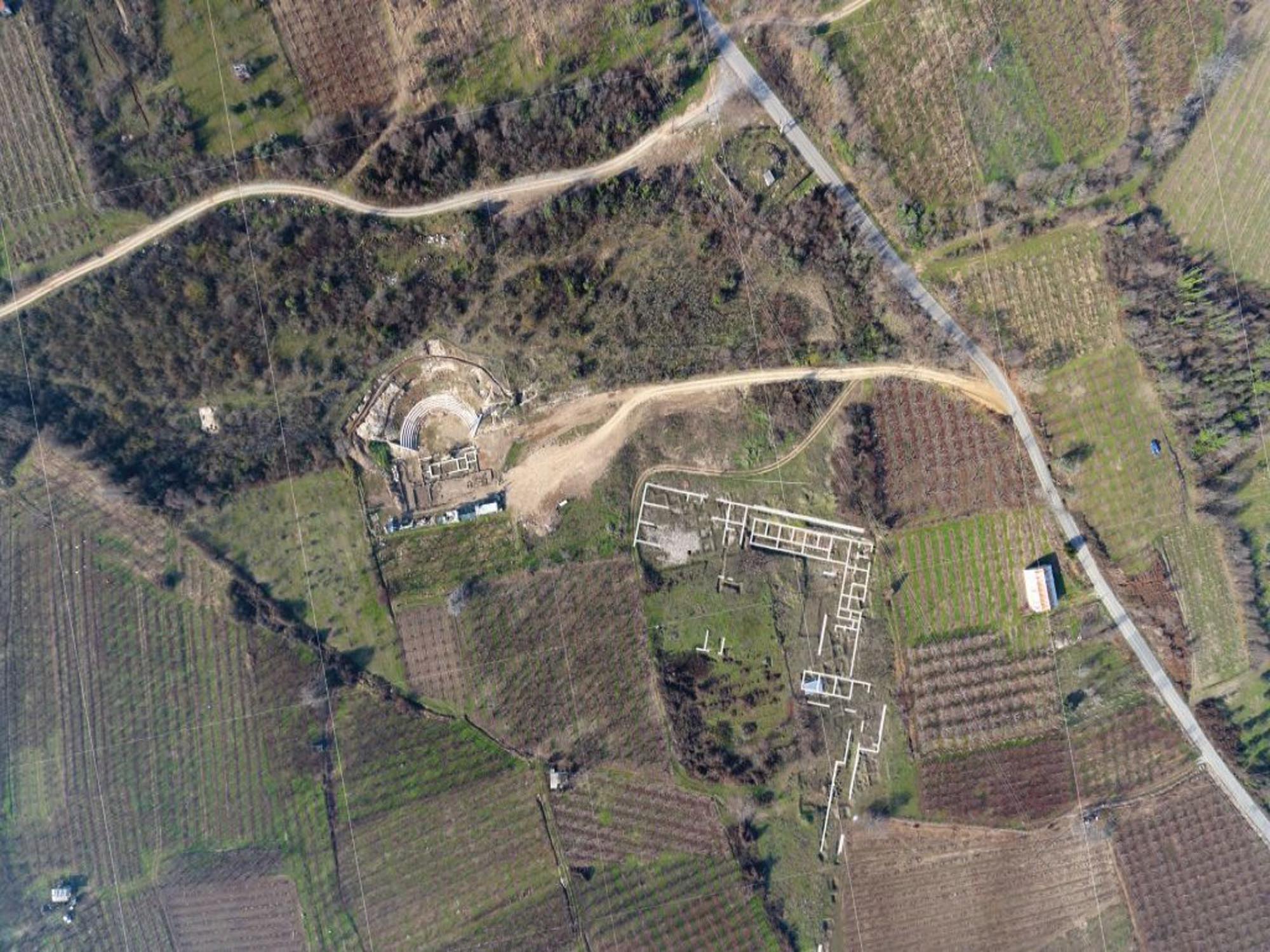
Ο αρχαιολογικός χώρος, το θέατρο, το Γυμνάσιο / Τhe archaeological site, the theatre and the Gymnasium (αρχείο ΕΦΑ Ημαθίας/ archive Ephorate of Antiquities of Imathia)
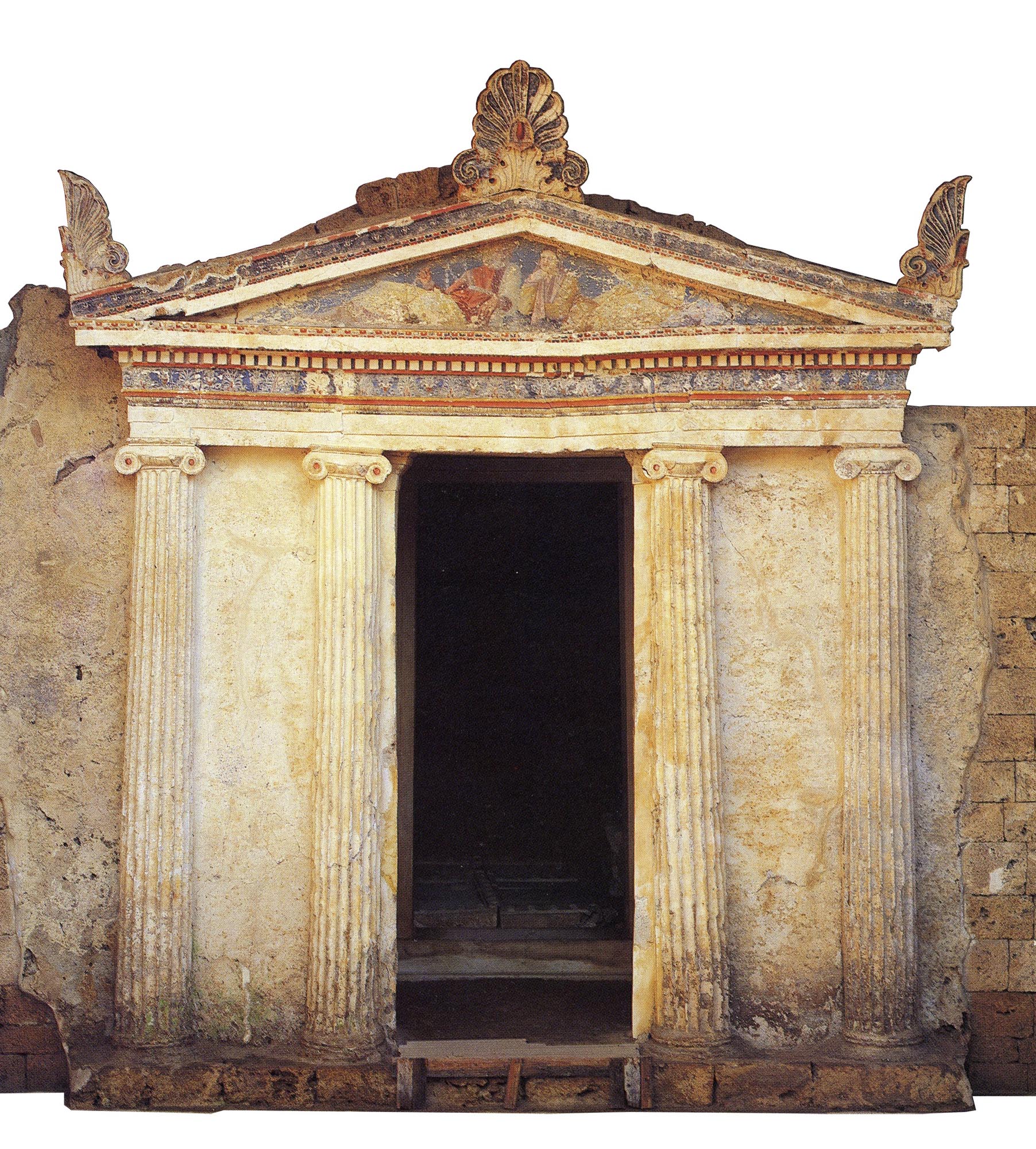
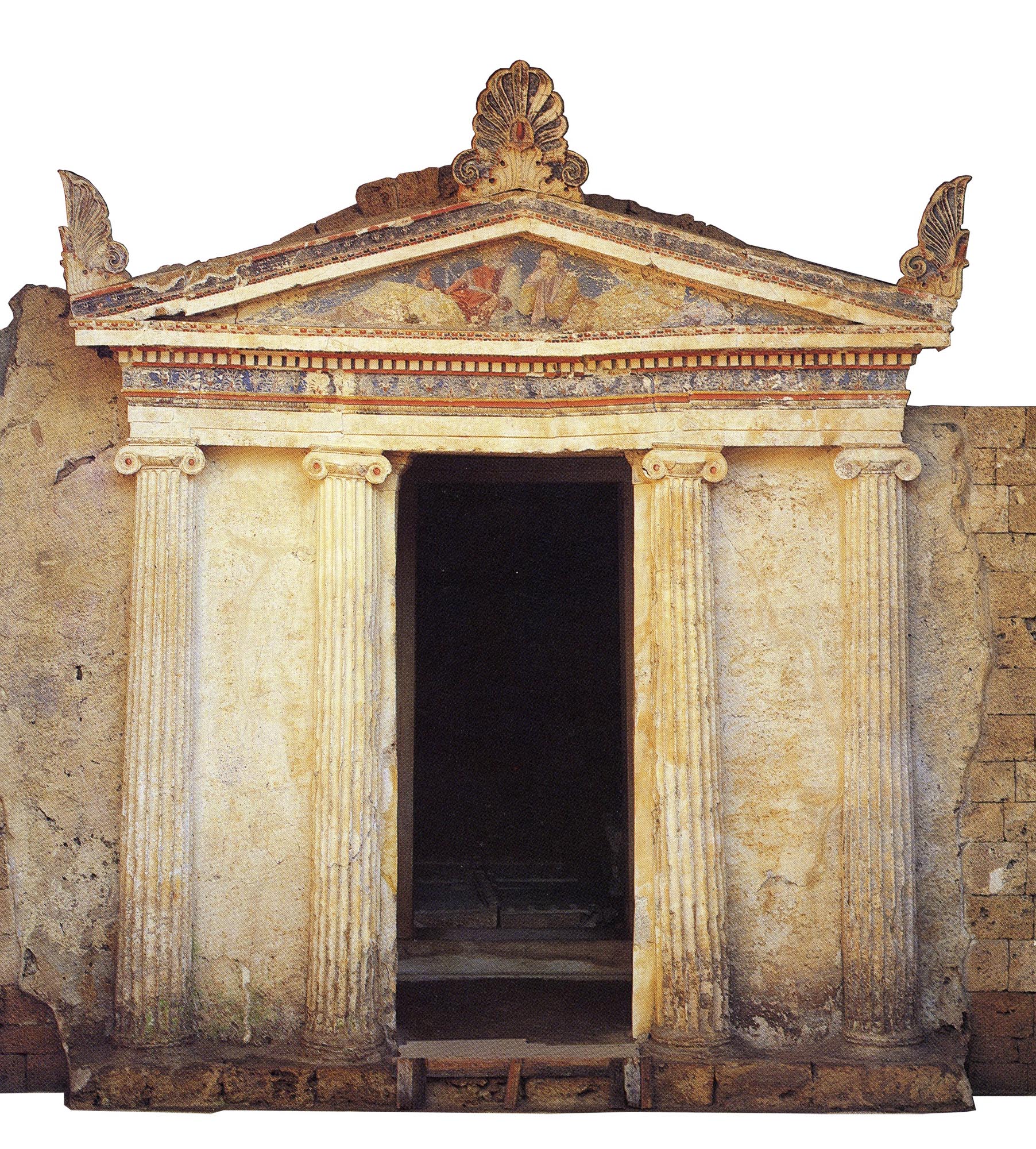
"Τάφος των Ανθεμίων"/ “Tomb of the Palmettes” (αρχείο ΕΦΑ Ημαθίας/ archive Ephorate of Antiquities of Imathia)

After the Roman conquest of the region (168 BC), Mieza remained one of the most important cities in Macedonia, as the large number of movable finds, tombs and buildings of this period attests. The city continued to be inhabited during the Early Christian era. Finds of this period include a 6th-century bathhouse complex decorated with elaborate mosaic floors, and the kilns of a pottery workshop of the late 5th to 6th century discovered near Lefkadia. Part of an Early Christian basilica and rock-cut tombs have been excavated at the Tsifliki site. The excavation has also revealed scattered portable finds and tombs of the Middle Byzantine period, indicating that the area continued to be inhabited even at this late date.

The excavation finds associated with ancient Mieza extend over a wide area between the modern town of Kopanos to the south and the modern village of Lefkadia to the north. The area of the ancient city, the line of whose walls has not been yet been revealed, is broadly delineated by its cemeteries, which lie around its edge, outside the walls. The centre of the city is believed to have been located on the wide, soft, elevated slope south of Lefkadia, to the west of the ancient theatre, where the excavations, although limited, have revealed numerous residential remains. The boundary of the city to the north is believed to be the “Acropolis” at the naturally fortified site of Tsifliki, delimited by two branches of the Arapitsa River, where, among other things, part of a strong fortification of the Early Hellenistic period has come to light.

As in every city of the Macedonian Kingdom, the chora, the countryside of Mieza, was dotted with rural villas and open-air sanctuaries. Scattered rural villas with elaborate mosaic floors and opus sectile (marble inlay), rarely found in Greece, of the Late Hellenistic and Roman periods have been uncovered over a large area, from Kopanos to the city of Naoussa itself. A building of Roman times, probably a sanctuary, has also been uncovered in the Kopanos area, outside the ancient city limits. There was found the inscribed Roman bust of the river god Olganos, now in the Archaeological Museum of Veria.

c
Αρχείο ΔΒΜΑ, φωτ. Κ. Ξενικάκης/ Archive DBMA, phot. K. Xenikakis

Monuments - Antiquities

Ancient Theatre

The theatre is located at the Belovina site, outside the walls and to the south of the ancient city. It was constructed in the second half of the 4th century BC, during the reign of Philip II, but its present form is the result of the extensive reconstruction it underwent in the Antonine period (2nd c. AD) and successive interventions during its long period of use, up to the 4th century AD. Built on a hillside overlooking the plain, the ancient theatre has now been restored and is open to the public, hosting various events and performances. It is a provincial theatre of relatively large dimensions, with an estimated capacity of around 1,500 spectators. The cavea, most of it carved out of the bedrock, is divided by four staircases into five cunei (wedge-shaped sections). Each section contained at least 19 tiers of limestone seats, of which the first seven are preserved today. The orchestra forms a regular semicircle 22 m in diameter with a floor of beaten earth. The stage building, made of local limestone and consisting of a stage, a proscenium and two parascenia, is preserved at the level of the foundation and is believed to have had two storeys.

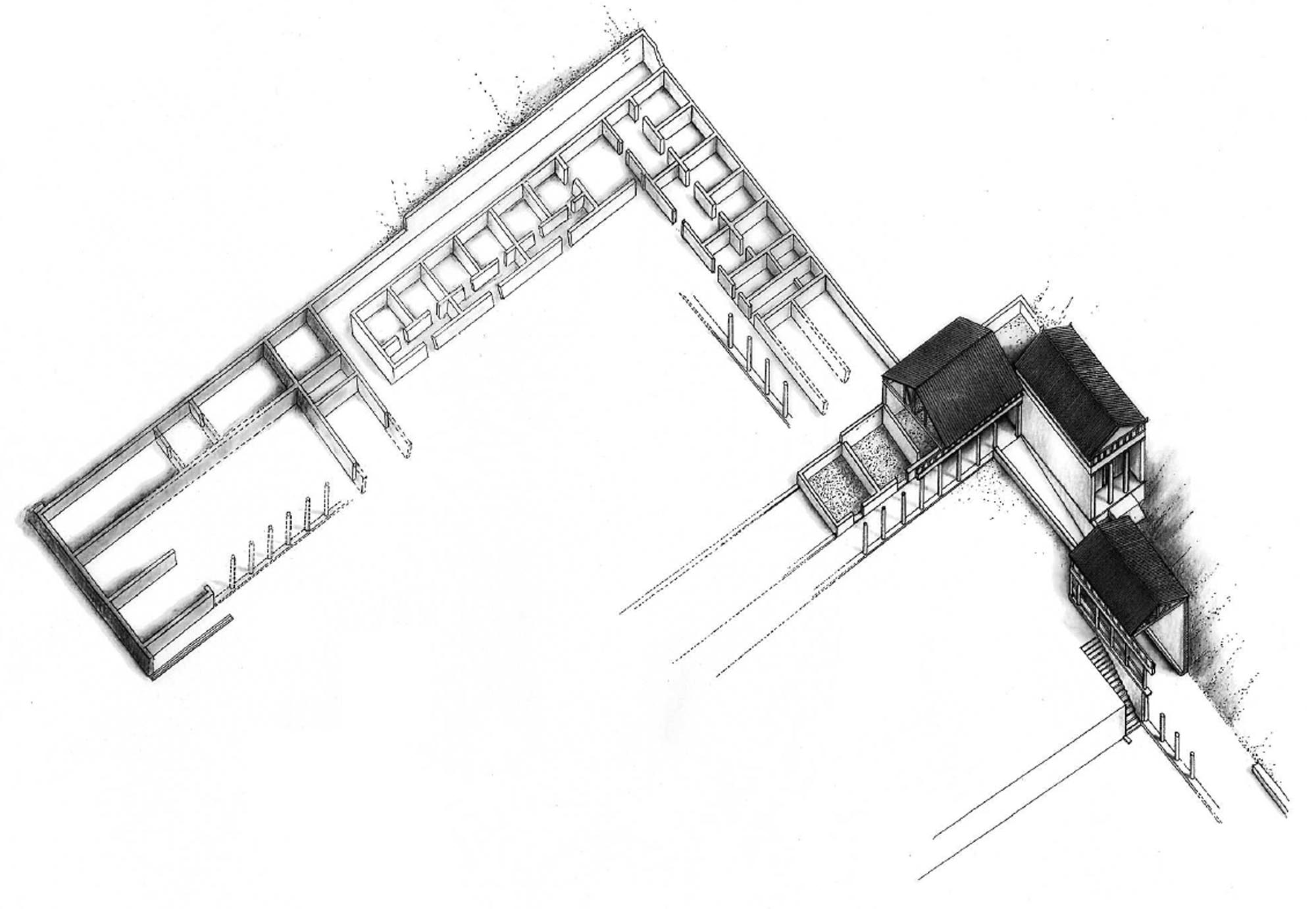
The large public building which has been excavated to the northeast of the theatre and also dates from the reign of Philip II forms part of the same complex. Previously identified as the Agora or perhaps an Asklepieion, modern research has shown that it was the city’s Gymnasium, where the young scions of the powerful families of the Macedonian Kingdom exercised and were taught the art of war. Modern scholars also believe the Gymnasium to be the site of the famous School of Aristotle, where the great philosopher tutored Alexander and other adolescents of the kingdom.

The building, impressively large by the standards of the time, covers an area of about 3.5 hectares, of which only a small part, measuring 0.6 hectares, has been excavated to date. The north side of the complex has been uncovered; it is bounded by a long, imposing portico with a Doric colonnade nearly 200 metres long. This has been identified as the xystos, the covered portico for exercise that was a typical feature of Hellenistic gymnasia. The northwest part of the Gymnasium complex has also come to light. It is a palaestra, a large peristyle court measuring approximately 4,000 m2 with imposing Doric porticos. The 11 rooms on the north and west sides of the palaestra are identified, based on their layout and the movable finds, as banqueting halls. Despite the poor state of preservation of the complex, its similarities to the royal palace of Aigai are evident, both in terms of its overall layout and in its individual morphological and structural features. Apart from its size, it is also impressive for the meticulousness of its construction, exclusively of limestone, even at the foundation level, and the luxuriousness of its individual architectural elements, such as the marble thresholds, the pebble floors, and the white and coloured plaster on the walls and columns.

 

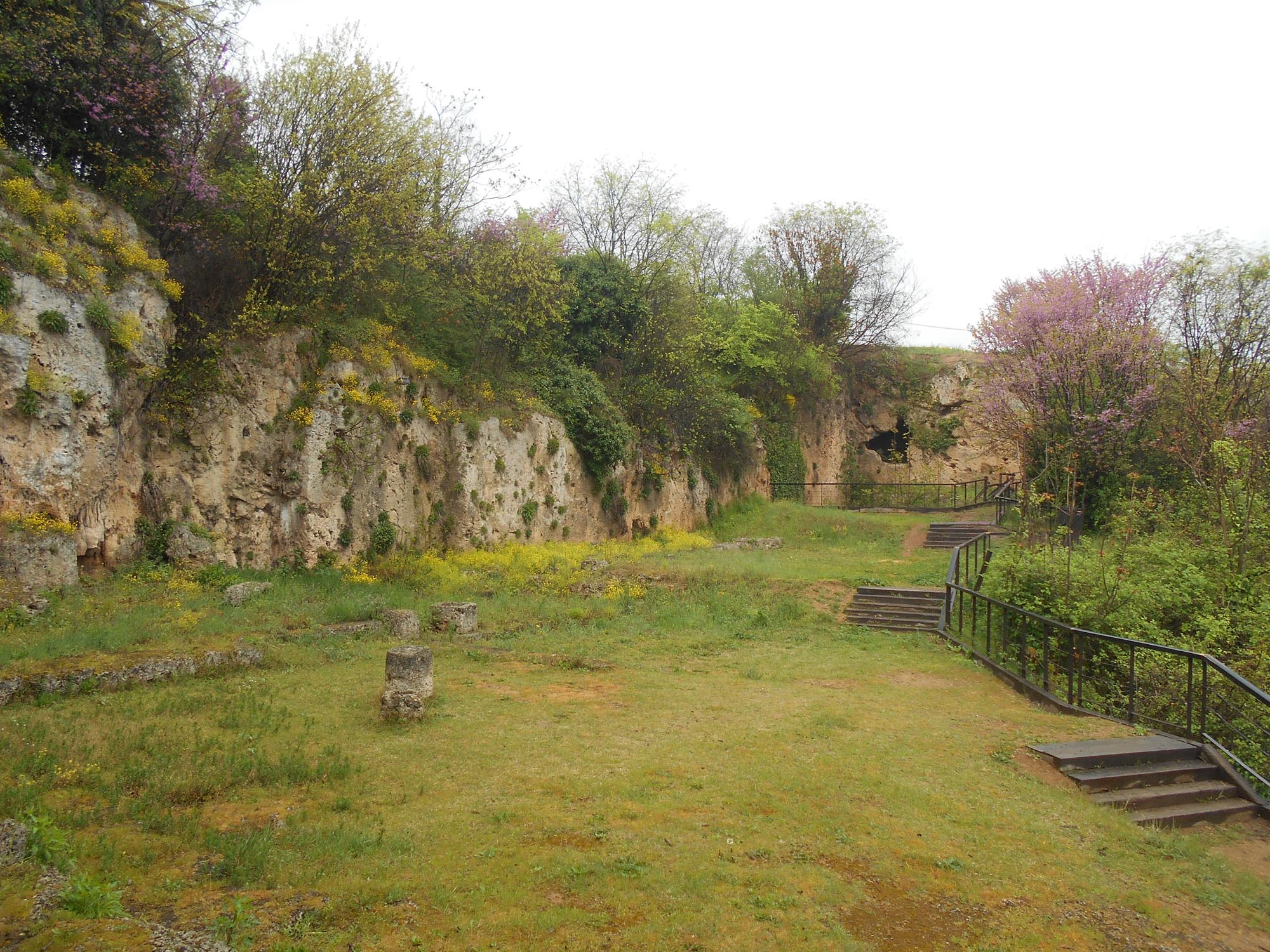
At the Isvoria site west of Mieza, in a verdant landscape of springs, streams and lush vegetation next to the Arapitsa River, are three natural caves associated with the cult of the Nymphs. The rocky hill in which the three caves lie was previously used as a limestone quarry, which fell into disuse and was replaced by a Nymphaeum, perfectly suited to the idyllic surroundings. In the second half of the 4th century BC, a small L-shaped portico with an area of about 80 m2 was constructed outside the entrance to the caves, to serve the needs of the sanctuary. The excavator of the site, Professor Fotis Petsas, identified the Nymphaeum as the “School of Aristotle”, and the small portico as the place where the great philosopher’s lessons took place. The idyllic scene does indeed recall Plutarch’s description of the shady walks and stone seats of the famous School, the premises of which, however, according to the latest research data, should rather be sought in the monumental building of the Gymnasium.

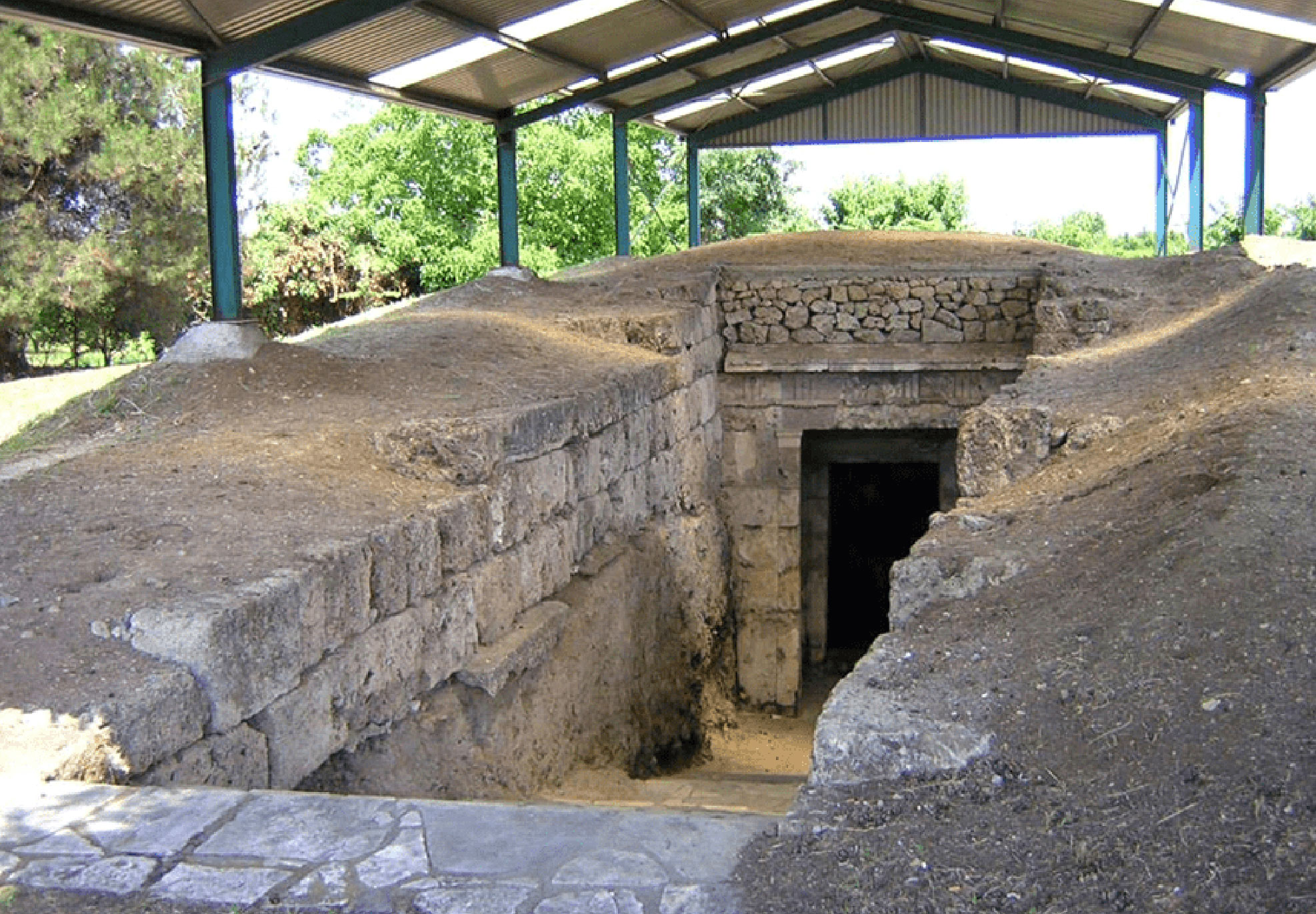
Of the six Macedonian tombs investigated to date, the four most important, near the village of Lefkadia, are two-chambered with a vaulted or flat roof and are built along the road that led west to east from the centre of Mieza to Pella. All the tombs were already looted in antiquity, but they are magnificent examples of this monumental type of Macedonian funerary architecture. Their rich pictorial compositions reveal the high level of monumental art that developed in the Macedonian Kingdom during the Hellenistic period.

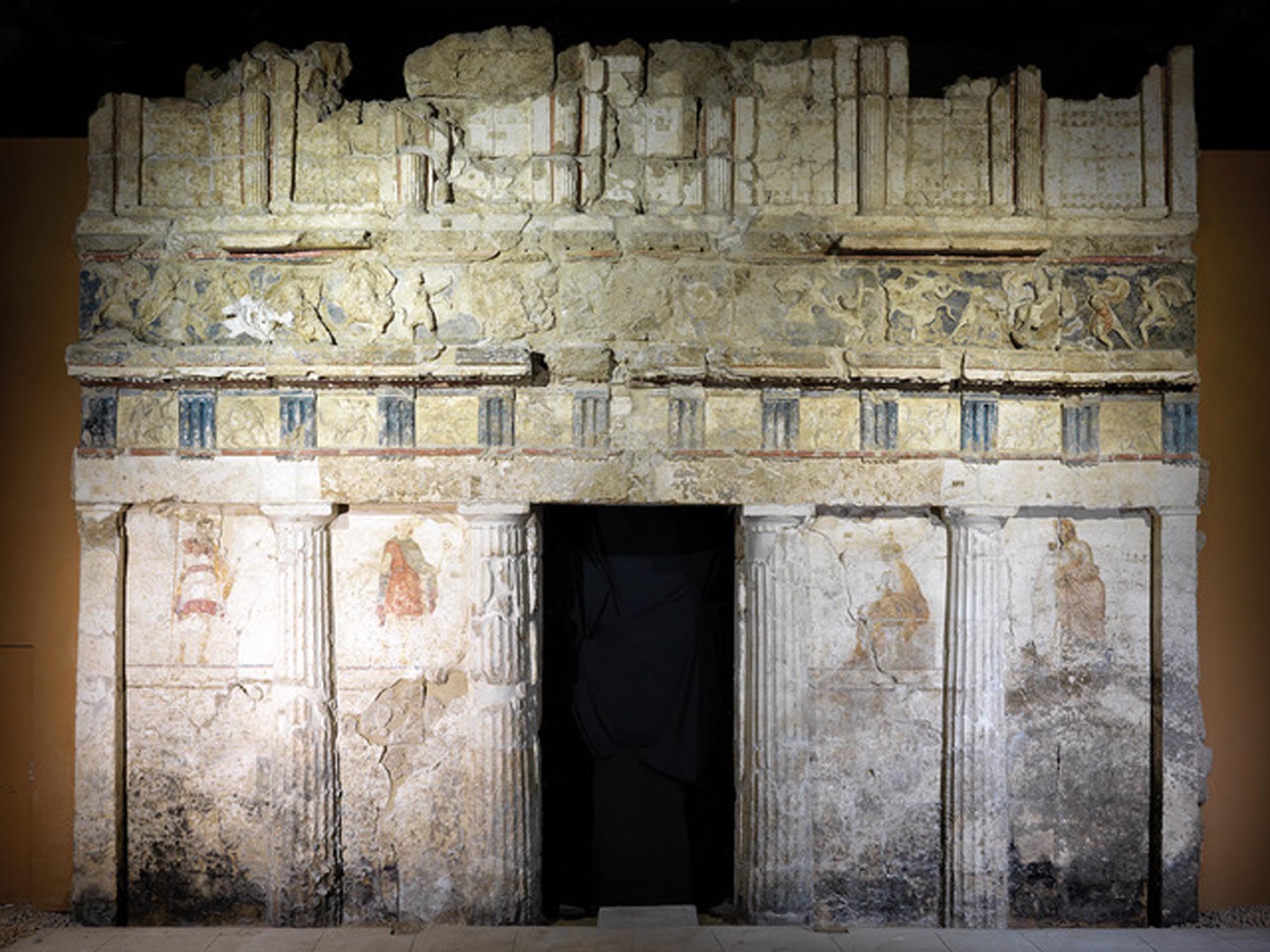
The tomb, also known as the “Great Tomb” due to its size, which makes it one of the most impressive funerary monuments of ancient Macedonia, stands out for its unique façade, which recalls that of the propylon of the palace of Aigai and gives the impression of a two-storey building crowned with a pediment, combining two architectural styles, the Doric on the lower storey and the Ionic on the upper storey. On the façade is the painted scene, rare in ancient art, of the Judgement of the Dead, to which the tomb owes its name. The depiction is inspired by Plato’s dialogue Gorgias and depicts Hermes Psychopompus leading the dead warrior to the judges of the Underworld Aeacus and Rhadamanthys. The tomb dates from the late 4th century BC and, it has been argued, probably belonged to Peucestas of Mieza, the triearch (trireme commander) of Alexander the Great, whom the latter entrusted with the government of Persis.

Αρχείο ΕΦΑ Ημαθίας / Archive Ephorate of Antiquities of Imathia

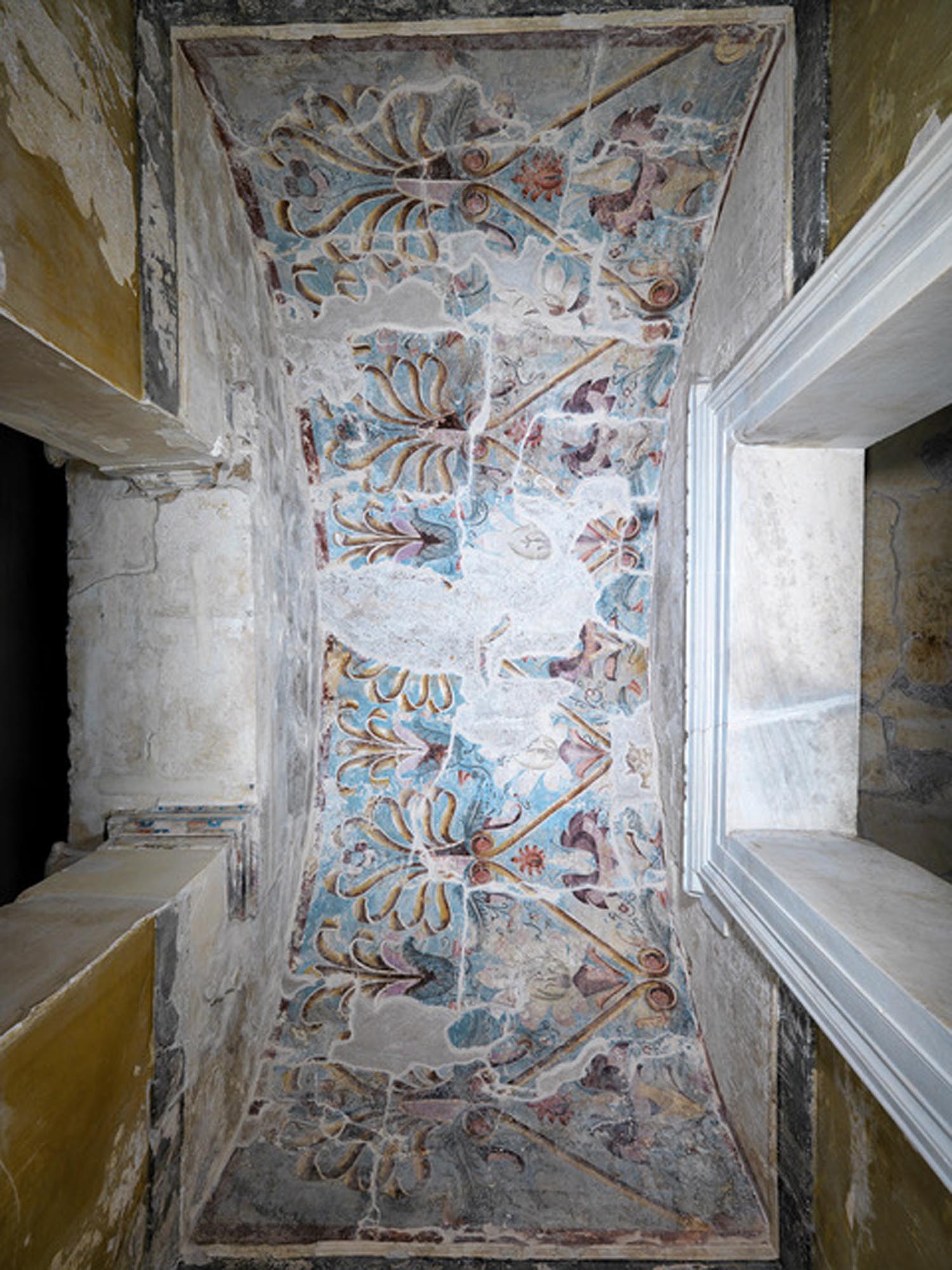
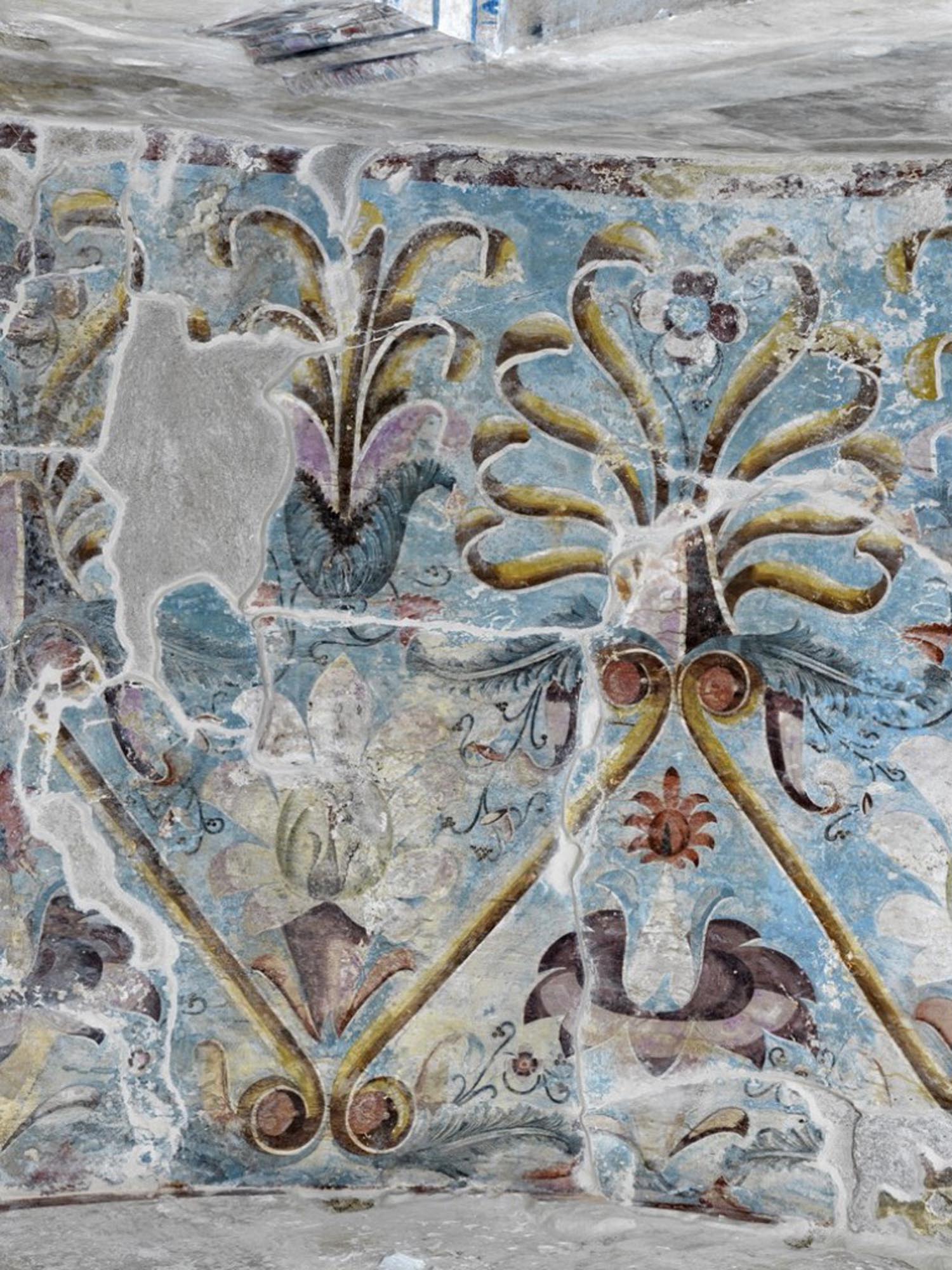
The tomb dates from the first half of the 3rd century BC and is located 150 m east of the “Tomb of Judgement”. It owes its name to its sculptural and pictorial decoration, in which a floral palmette motif predominates. The façade of the tomb is in the Ionic style, with four Ionic semi-columns and a pediment crowned with three large acroteria (pedimental ornaments) in the shape of palmettes, with brightly painted leaves carved in high relief. On the tympanum is a painting of a mature man and woman, semi-recumbent and facing each other, as at a symposium. On the ceiling of the antechamber is preserved an exquisite, vividly coloured painting of large palmettes alternating with water lilies on a blue-green background, a design unique of its kind to date.

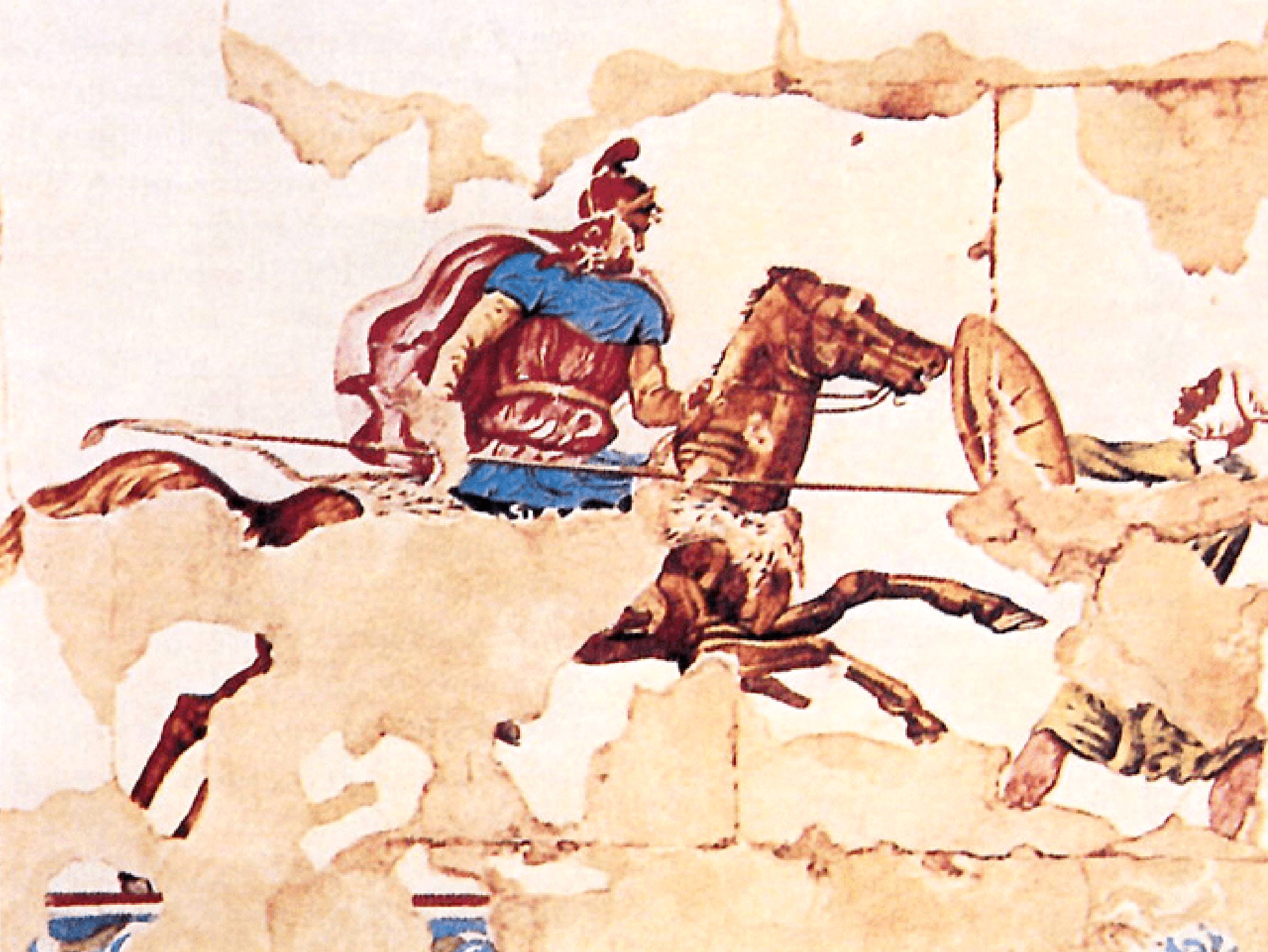
The tomb bearing the name of the Danish architect Karl Frederik Kinch, who first explored it between 1887 and 1892, is of the same period. The façade is in the Doric style but lacks columns, with only two pilasters with capitals flanking the entrance. The painted decoration of the tomb, which included a Macedonian horseman with a spear charging at a Persian, does not survive today and is known only from Kinch’s drawings.

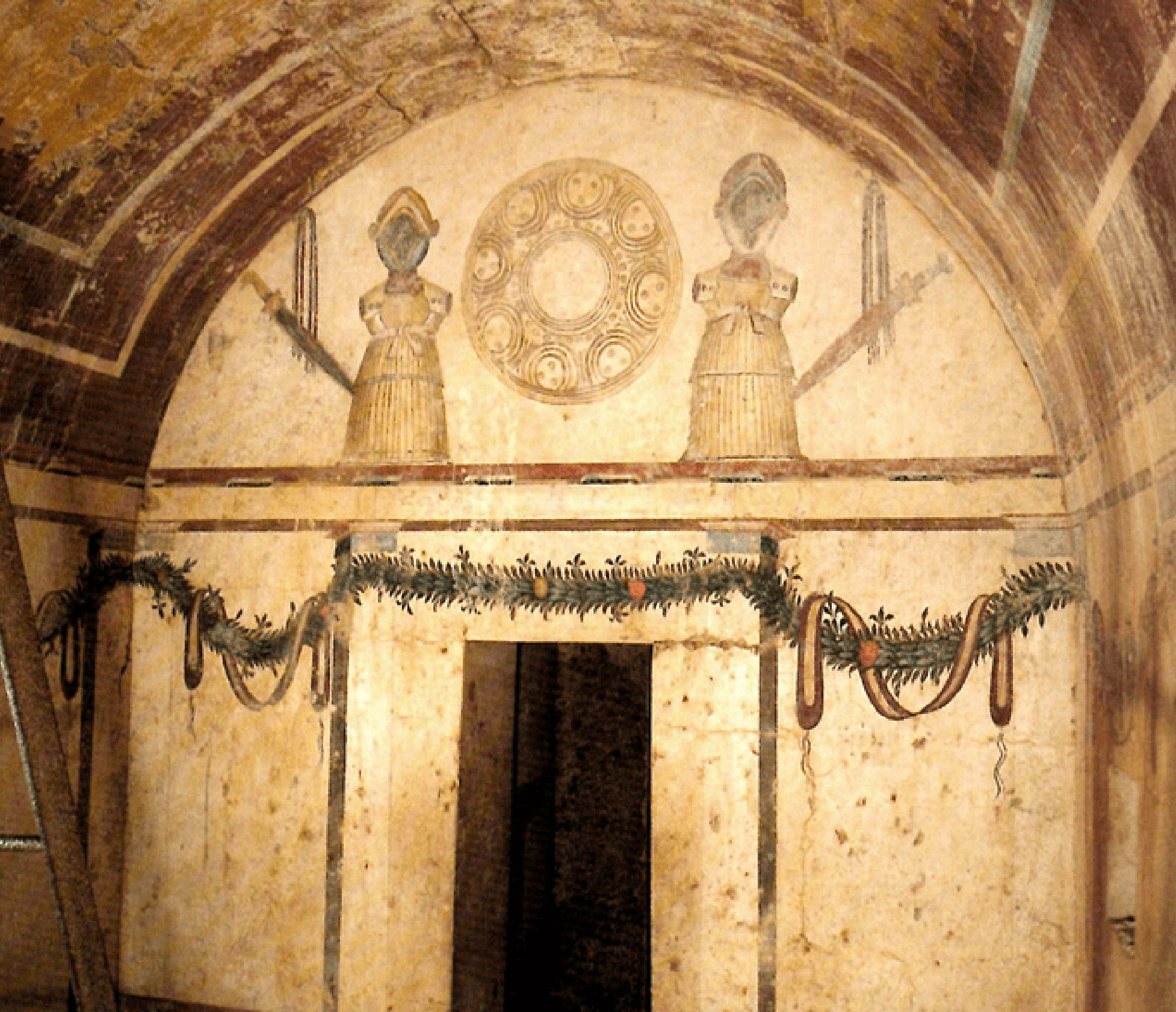
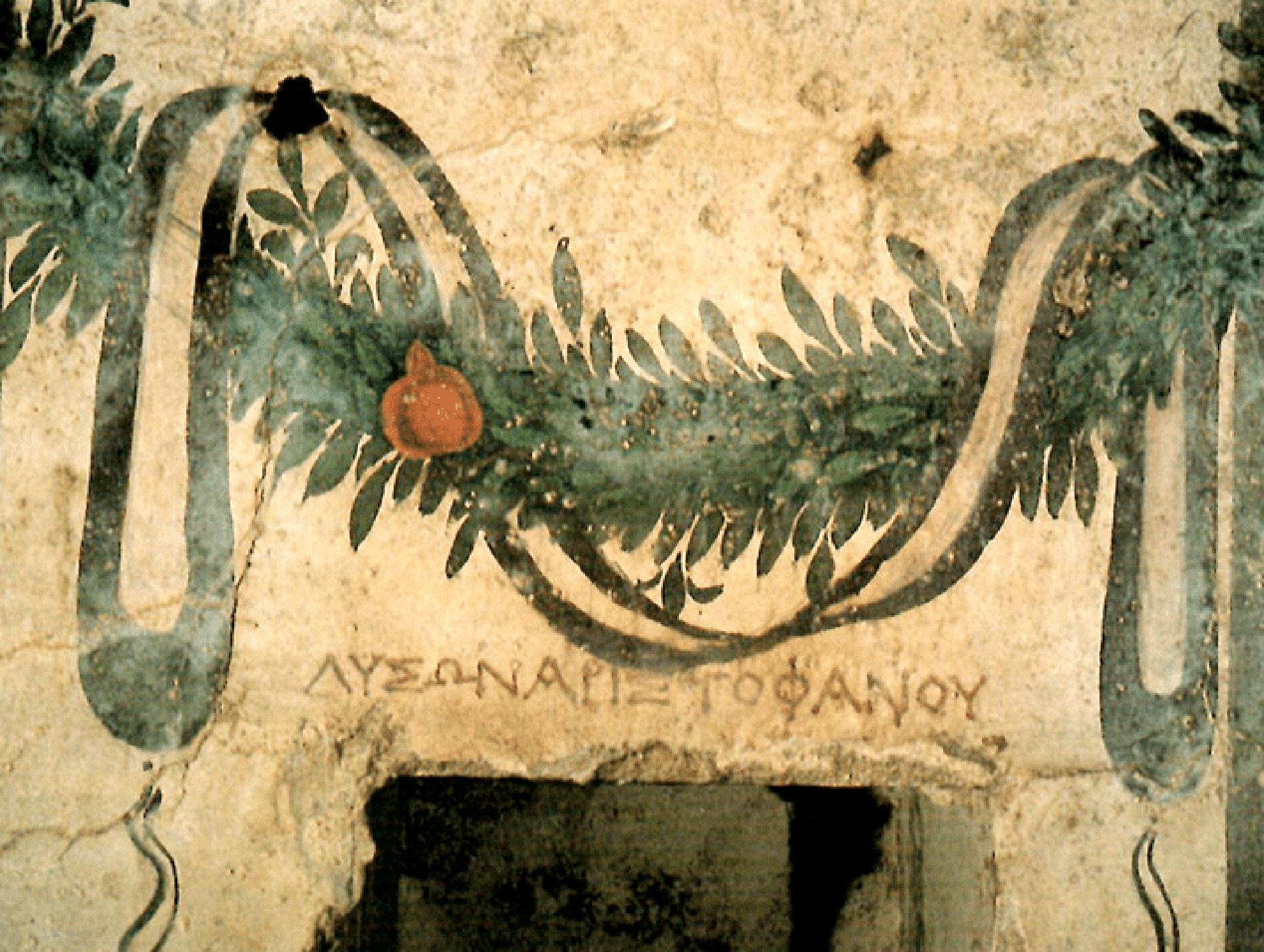
The tomb of Lyson and Kallikles, sons of Aristophanes, according to the surviving inscription on the lintel of the doorway between the antechamber and the main chamber, is the smallest of the four tombs of Lefkadia. It consists of two chambers but the antechamber is particularly narrow. In contrast to its simple façade, adorned with only a bas-relief pediment, the well-preserved painted decoration of the main chamber is particularly important. The vertical surfaces of the walls all around the chamber are painted with a row of pilasters with Ionic epistyles, standing on a crimson base. The chiaroscuro rendering of the pilasters creates a trompe-l’oeil impression of a real peristyle. The upper part of the peristyle is crowned with a continuous garland of ribbons, myrtle flowers and pomegranates, quintessential funerary symbols. On each of the semicircular tympana of the narrow walls is painted a different type of Macedonian shield and a set of armour (helmets, greaves, swords and cuirasses or trophies). The similarities between the paintings of the tomb and what is known as the Second Pompeian Style attest to the contacts and relationships that had arisen between the Hellenistic world and Rome. The tomb was a family tomb dating from the late 3rd to the middle of the 2nd century BC. In the walls on three sides of the main chamber are 22 rectangular cases arranged in two rows, containing the cremated remains of the deceased. The inscriptions above each niche reveal that they were members of five generations of the family of Aristophanes, the founder of what was probably a prominent military family of the Macedonian Kingdom, as the painted decoration of the tomb indicates. The cases in the upper row were intended for male family members, while those in the lower row were for women.

Other stops in the Regional Unit of Imathia

error: