Serres

Serres, the “prosperous city”

The city of Serres occupies a special place among the cities associated with the route of the Via Egnatia and the important road networks of the Byzantine and Ottoman periods. Today it is the capital of the Regional Unit of the same name and the second largest town in Macedonia after Thessaloniki. It has been continuously inhabited from antiquity to the present day. Built on the banks of the River Strymon, on the slopes of Mount Menoikion and in the middle of the fertile plain of Serres, it emerged during the Byzantine period as one of the most important castle-cities of the Empire in the region of Macedonia. It was described by Byzantine writers as a “great and wonderful city”, “large and rich” and “a prosperous city”. In Ottoman times the city, now called Serez or Siroz, continued to be an important administrative centre of the region as the seat of the kaza of the same name, while experiencing an economic and commercial boom. In the late 19th century, the city’s thriving Greek Orthodox community engaged in intense intellectual and educational activity, leading Serres to be described as the “Athens of the North”.

A key factor in the development of Serres into one of the strongest fortified cities of Macedonia was its strategic position between Amphipolis and Philippi, next to the River Strymon. The formerly navigable river was the main communication route between the Aegean Sea and the Balkan hinterland, and one of the chief ways by which the Slavic tribes moved south. At the Strymonic Delta, the products of the wider region were gathered and transported by sea.

Moreover, during Byzantine and Ottoman times, the city was probably a central station on the Via Egnatia, although it was originally off its main route. This view is supported by the fact that the city was the seat of the Theme of Strymon, which was established in order to strengthen the administrative and military power of the region, at least at the end of the 9th century, when the first reliable reference to the theme is found in written sources. The fortified town is thought to have defended the Macedonian territory against the threat of the Slavic tribes during Byzantine times and contributed to the smooth operation of the Via Egnatia.

History

The city is found in ancient written sources and inscriptions under many variations of its name, such as “Serrai”, “Sirai” and “Seira(i)”. The first confirmed historical reference to the name “Sirra” is in Theopompus, a historian of the 4th century BC. According to the Roman historian Livy (59 BC – 17 AD), Sirra was a city of the Odomantes, an ancient Thracian tribe of the valley north of the Strymon. In 356 BC it came under the rule of King Philip II, who, after conquering Amphipolis (357 BC), invaded the regions east of the Strymon, extending the eastern borders of the Macedonian Kingdom. In 168 BC, following the Roman conquest of Macedonia and its division into four administrative regions (merides), the city was placed in the First Meris with Amphipolis as its capital. During the Roman imperial period (31 BC – 330 AD), Serres occupied a prominent position among the cities of Odomantice.

Our picture of the city in ancient and Roman times is fragmentary. The few archaeological remains show that, already from the Late Archaic period (6th c. BC), the core of the ancient city was probably located on the fortified hill, the “Koulas”, in the northern part of the modern city, where the acropolis of the Byzantine castle-city later arose. As in Byzantine times, the main urban fabric of the ancient city extended along the southern sloping foot of the hill, between two seasonal streams.

In Early Christian times, Serres was included in the network of 32 cities of the province of Macedonia Prima, an administrative region of Illyricum. It has been argued that the first local Christian church in the city was built as early as the middle of the 1st century AD, when the church of Philippi was founded by St Paul the Apostle. However, the first ecclesiastical officials of Serres are mentioned in much later sources, in the 5th century, when the city was an episcopal see subject to the metropolis of Thessaloniki. There is little archaeological information on the Early Christian period. The first building phase of the city’s castle is dated to this period, while excavations have brought to light part of the Early Christian cemetery and the remains of a building, probably a basilica, incorporated into the later church of the Saints Theodore.

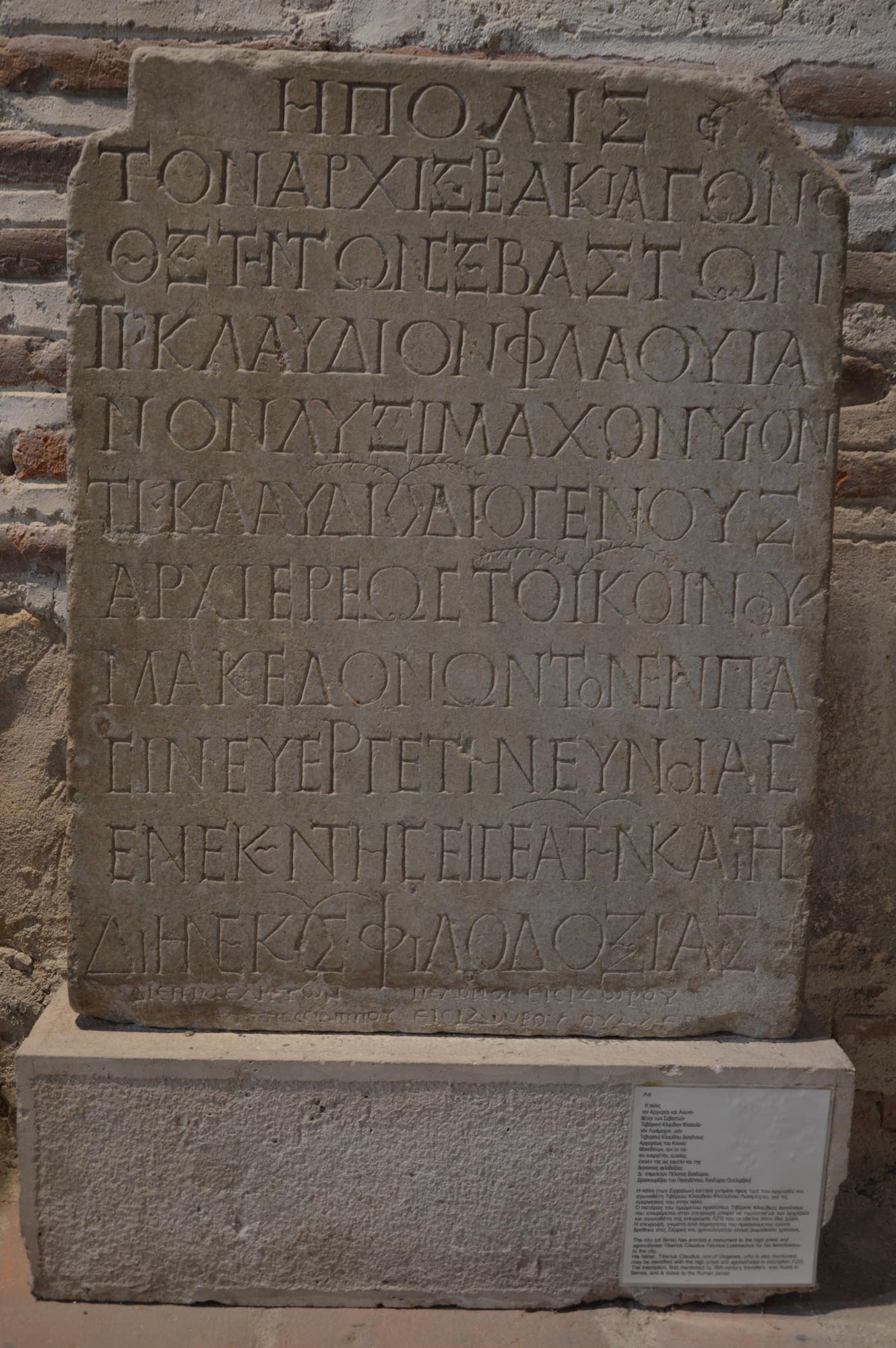
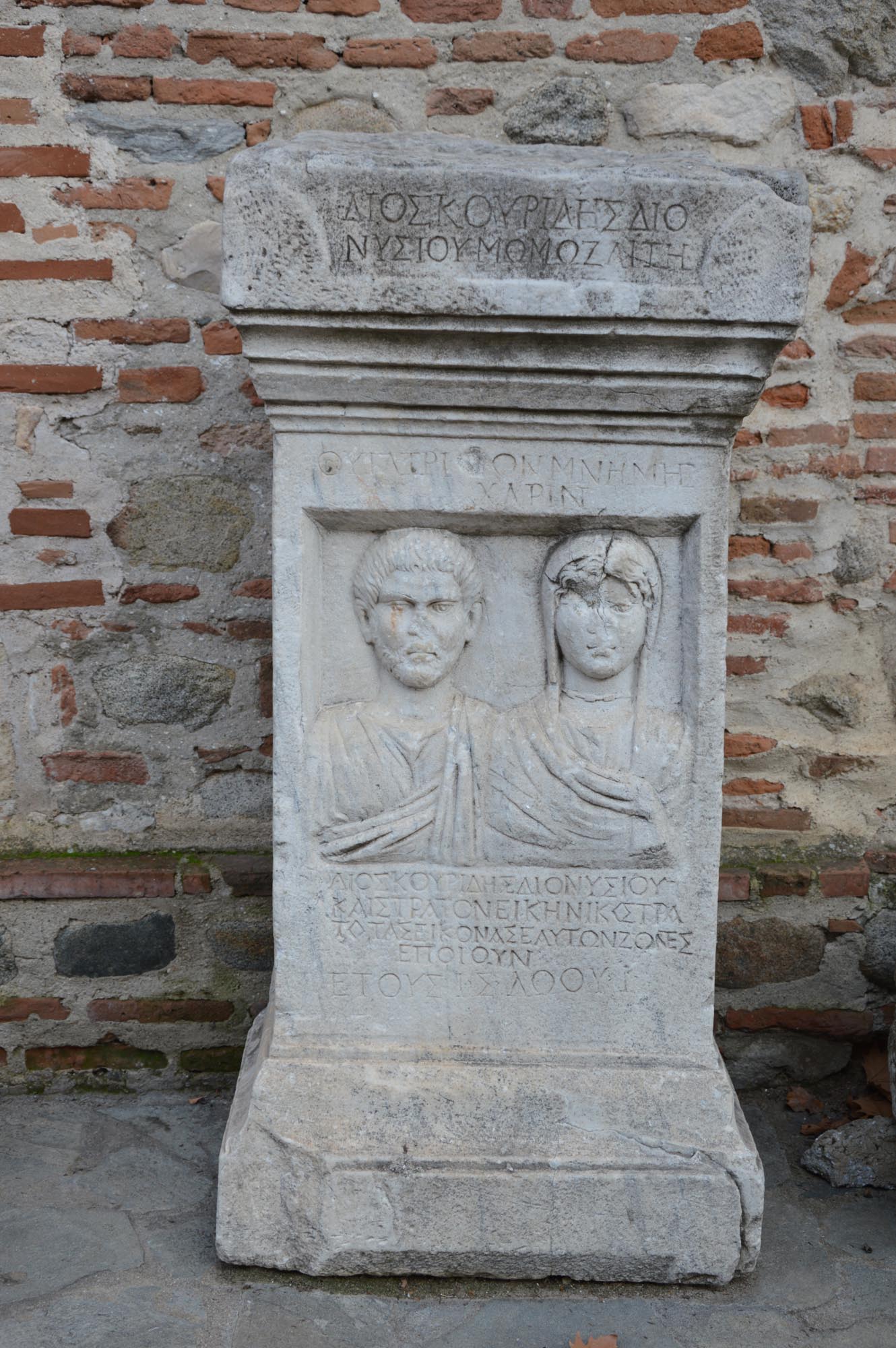
Ρωμαϊκή επιτύμβια στήλη από την ακρόπολη Σερρών, Αρχαιολογικό Μουσείο Σερρών / Roman funerary stele from the acropolis of Serres, Archaeological Museum of Serres
Ρωμαϊκή επιγραφή, Αρχαιολογικό Μουσείο Σερρών / Roman Inscription, Archaeological Museum of Serres

An important milestone in the historical development of Serres is its emergence as the seat of the Theme of Strymon, probably in the late 9th century. At the end of the 10th century, Serres was elevated to a metropolitan see. Of particular value for the understanding and study of the ecclesiastical history of the metropolis of Serres in the 11th and 12th centuries are five lead bullae (seals) of the metropolitans of the city, which, alongside the written sources, reveals the noble origins and excellent literary education of the city’s ecclesiastical officials.

During the Byzantine period, the history of Serres reflects the turbulent picture of Macedonia, which was claimed by Bulgarians, Franks, Serbs and Ottomans. During the war of Basil II Boulgaroktonos (the “Bulgar-Slayer”) (976-1025) against Tsar Samuel of Bulgaria, Serres became a strategic centre of imperial operations due to its key position. At the Battle of Kleidion (29 July 1014), Samuel’s Bulgarians were defeated by Basil II. Four years later they pledged allegiance to the Byzantine emperor himself in the city of Serres. It is even claimed that a church dedicated to St Basil was built at his expense.

In the 11th and 12th centuries, following the dissolution of the Bulgarian state, Serres and Thessaloniki constituted a single military-administrative unit, militarily subject to the head of the tripartite Theme of Voleron, Strymon and Thessaloniki. During this period the city enjoyed great demographic and economic growth, becoming an important intellectual centre of the region and home to noble lords temporal and spiritual, highly educated and connected to the imperial circles of the capital.

After the Sack of Constantinople by the Latins (1204), Serres was initially included in the possessions of the Latin Kingdom of Thessalonica. In 1205 it was occupied by the Bulgarian ruler Kalojan (Ioannitza or “Skyloioannes”), who fired the city and razed its walls. The city was then seized from the Latins by Theodore Komnenos Doukas, ruler of the Despotate of Epirus, shortly before he captured Thessaloniki (late 1224). Soon afterwards, Serres became part of the Empire of Nicaea. From the middle of the 13th century, and especially in the first half of the 14th century, the role of Serres as the administrative centre of the region was reinforced.

During the two civil wars that shook Byzantium in the first half of the 14th century, Serres came to the forefront of military operations, while also enjoying an economic and artistic flowering. In 1345, after a lengthy siege, Serres fell to Stefan IV Uroš Dušan, who was crowned “King and Emperor of the Serbs and the Romans” in the metropolitan church of the city. The capture of the city was decisive for the expansion of Serbian rule in Eastern Macedonia, up to the River Nestos. After the death of Stefan Dušan, the city’s role was further enhanced, as it became the capital of the Serbian state. The future Emperor Manuel II Palaiologos recaptured the city from the Serbs after their crushing defeat by the Ottomans at the Battle of Marica in 1371. The city was only briefly to remain under Byzantine administration. A few years later, in 1383 according to the prevailing view, it surrendered to the Ottomans.

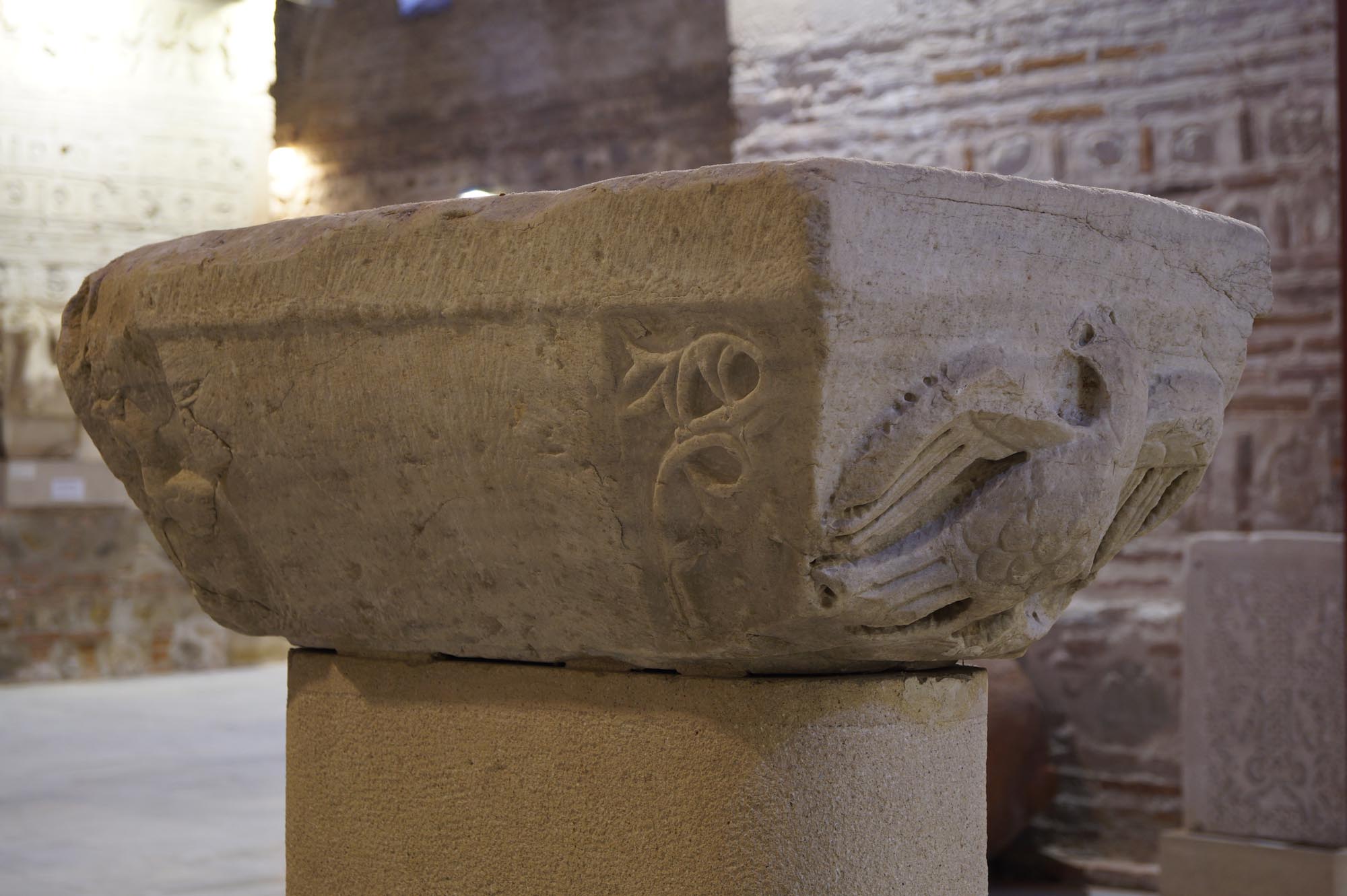
Αρχιτεκτονικό μέλος παλαιοχριστιανικών χρόνων, Αρχαιολογικό Μουσείο Σερρών / Early Christian architectural member, Archaeological Museum of Serres
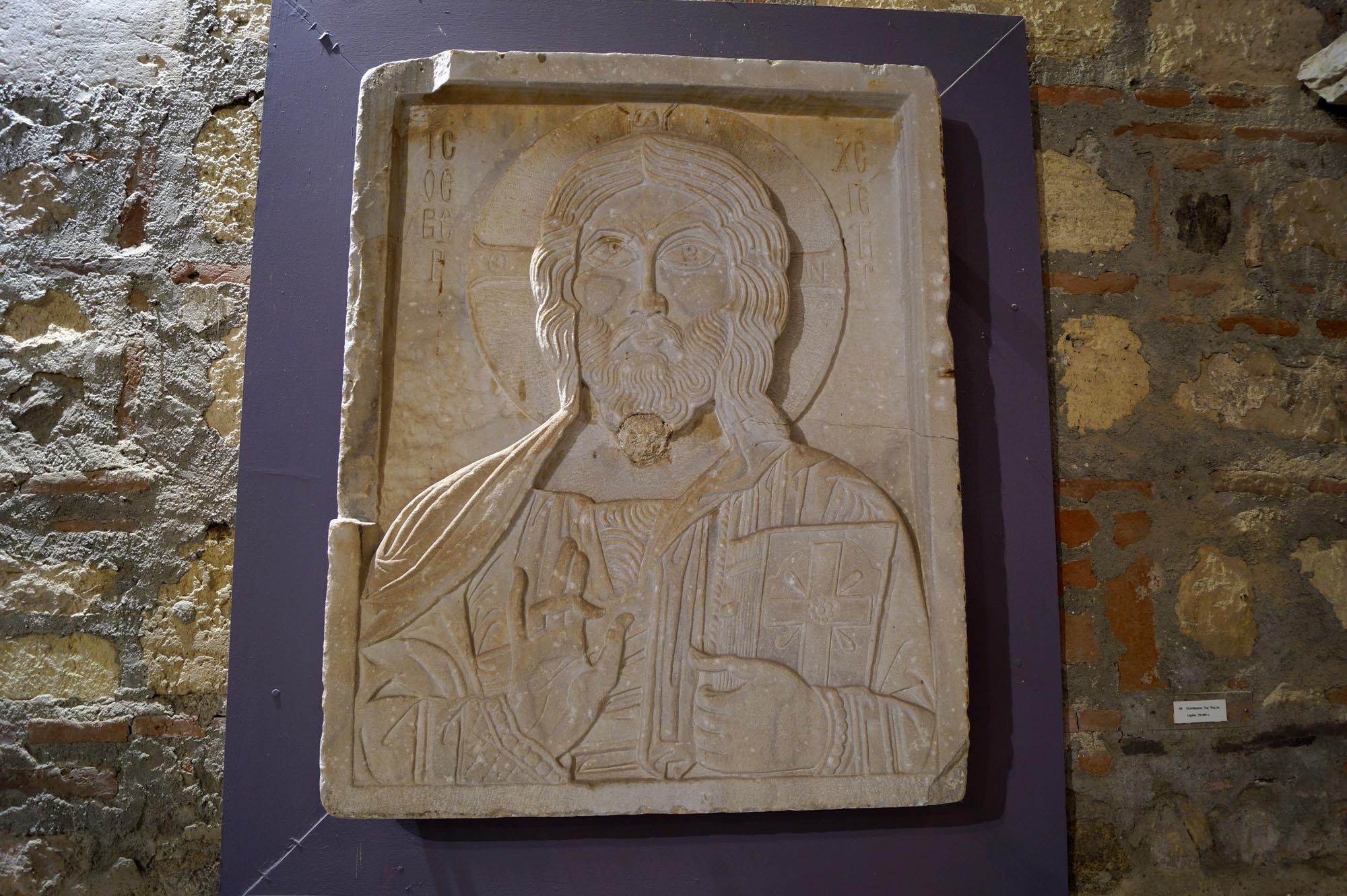
Μαρμάρινη εικόνα Χριστού μεσοβυζαντινών χρόνων, Αρχαιολογικό Μουσείο Σερρών / Middle Byzantine marble icon of Christ, Archaeological Museum of Serres

The documents of the Monastery of St John the Baptist (Timios Prodromos) on Mount Menoikion and the monasteries of Mount Athos provide important information on the organisation and operation of Serres during the Late Byzantine period. The city contained a large number of churches and monastic complexes. Economic activities were concentrated in the market, the “Emporion”. The workshops and shops of the city were concentrated near the west gate of the wall, the “Royal Gate” or “Market Gate”, and along the main road leading from it. Archaeological research has also documented the production of Byzantine glazed pottery in Serres. It is also interesting that monastic documents refer to the mankipeia (bakeries) of the city. The agricultural economy of the town was largely based on wool production and processing, as it had a large number of sheep and goats, as well as the cultivation of flax and cotton, which continued into Ottoman times.

The capture of Serres by the Ottomans, probably in 1383,  gave them a foothold in the region of Macedonia, as they used the city as a base of military operations. In 1385, the city was the base of operations for Sultan Murad I for the conquest of Serbia, and in 1430 for Sultan Murad II for the capture of Thessaloniki. Immediately after its conquest by the Ottomans, Serres acquired the form and features of a typical Ottoman city, with the establishment of Muslim settlers and the construction of a series of large and impressive religious, commercial and charitable buildings. Just two years after the conquest of the city, the first Muslim mosque, the Eski Mosque (Old Mosque), was erected by Hayreddin Pasha. It was located in what is now the central square but was demolished in 1937. The new Muslim inhabitants settled outside the walled Byzantine city, with the Christians remaining inside it. The Ottoman city initially developed around the Eski Mosque and the Βedesten, southwest of the castle. It later expanded west and northwest to the present-day districts of Kamenikia and Imâret, and to the lowland areas to the south and southeast. The older districts bore the names of famous figures, such as Evrenos Bey, Hayreddin Pasha, Hajji Ali and Esleme Hatun. The special importance of the city to the new rulers is indicated by the establishment of a mint and its choice as a place of residence for Ottoman princes and princesses.

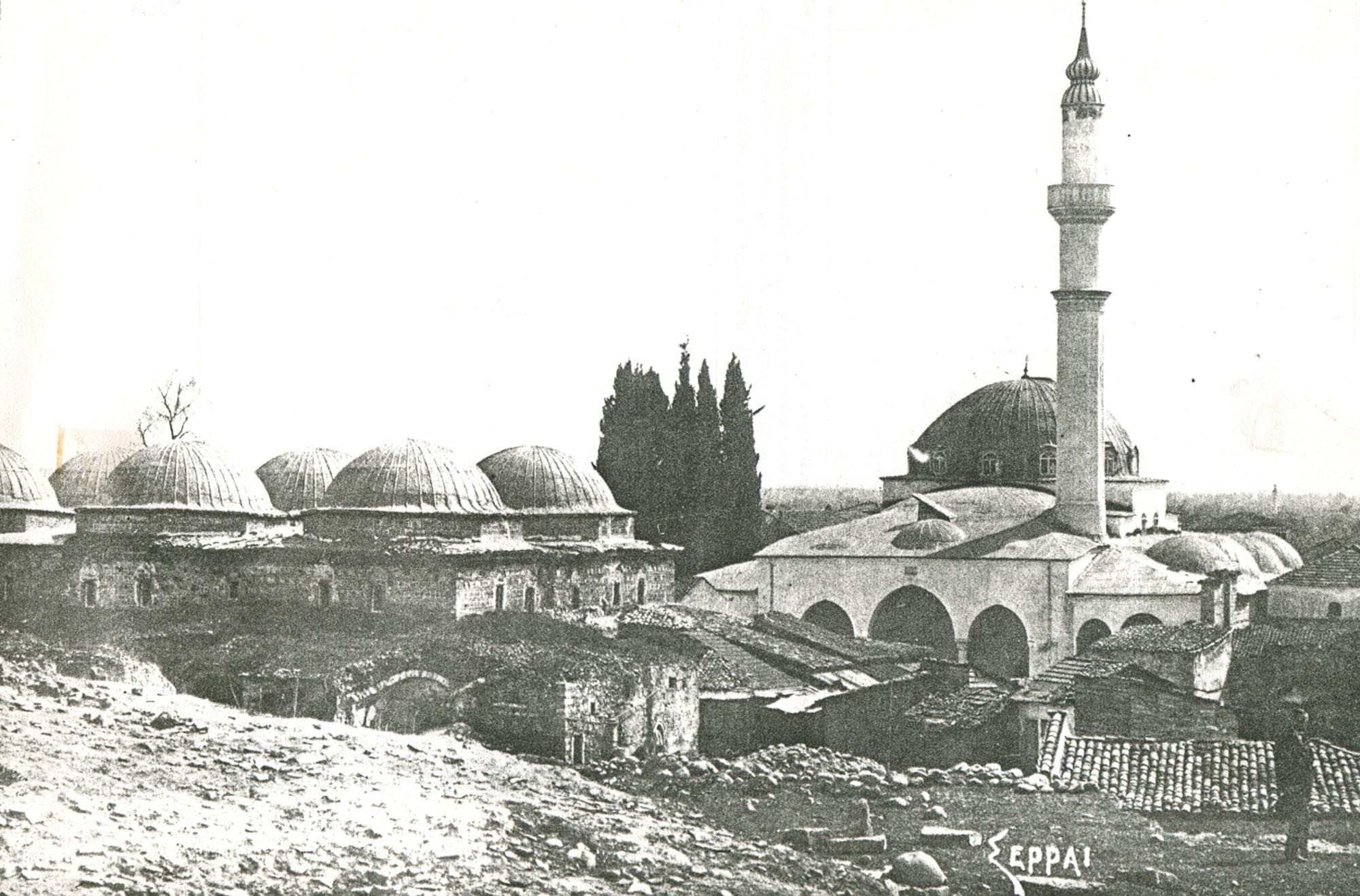
Μπεζεστένι και Εσκί Τζαμί, περ. 1920 (ΓΑΚ, Αρχεία Π.Ε. Σερρών) / The Bezesteni with the now demolished Eski Mosque, c. 1920 (General State Archives- Archive of the Serres Prefecture)

The rich agricultural production of the area, which was based, as in Byzantine times, on the cultivation of the plain of Serres, contributed to the great economic development of the city. Wheat, cotton and tobacco were the main products of the region. Cotton was produced in particularly large quantities and exported to other Ottoman cities, as well as to European countries and America, both by land, with the famous caravans, and by sea from the Strymonic Gulf and Thessaloniki. The American Civil War (1861-1865) boosted the cotton production of Serres due to the disruption of American cotton exports and the increased demand in other countries. There were cotton gins in the city, allowing the cotton to be exported either raw or processed. Serres gradually became an important commercial centre of the region, where a wide variety of goods were traded. The city’s famous annual trade fair (kervani) gradually became the centre of trade for the whole plain. The commercial development of the city led to the establishment of trading companies and shops by major European companies. Consuls and commercial correspondents from Britain, France, Austria, Greece, Italy and Russia resided in the city. From the beginning of the 16th century there is evidence of the establishment of a Jewish community in the city, as in other commercial centres in Greece, which was mainly active in the trade and craft sectors. In 1876, Serres was the third most populous city in the region, after Thessaloniki and Monastir. The Ottoman traveller Evlija Çelebi, who visited the city in 1668, describes its multinational character: in addition to Muslims, there were “Greeks, Armenians, Latins, Bulgarians and Serbs”. He tells us that the city had 30 Muslim and 10 Christian districts, with many secular and religious buildings, including 91 mosques, madrasas (religious schools), tekkes (dervish houses), five public and many private hammams, 710 fountains, 71 sebilhane (covered fountains), 2,000 shops and nine bedestens (covered markets), 17 hans and several bridges. The city’s commercial traffic was served by numerous caravanserais and hans. Koca Mustafa Pasha and Hadım (Atîk) Ali Pasha, the Grand Viziers of Sultan Bayezid II (1481-1512), each built a han and a caravanserai in Serres, as well as a tannery and several shops.

From the 18th and especially during the 19th century, Serres engaged in intense educational and intellectual activity. The city gradually became a major educational centre with the establishment of many Greek educational institutions at which important scholars taught. In 1722, a Greek School was founded on the initiative of the Phanariote Nicholas Alexandros Mavrocordatos, ruler of Hungary and Wallachia, while in 1835 the Metropolitan Gregorios Fourtouniadis founded an Allelodidactic School. In 1849, seven schools were established in the city of Serres, while its educational institutions multiplied in the late 19th and early 20th centuries. In 1870, the Macedonian Educational Association of Serres was founded, the first of its kind in Macedonia at the time. At the same time, the city witnessed a remarkable artistic and theatrical activity, including notable theatrical performances and the first steps of cinema (first decade of the 20th c.). The city’s musical tradition was also important, with philharmonic orchestras, choirs and conservatories.

A leading figure of  the Greek Revolution of 1821 was Emmanuel Pappas, a member of the Philike Etaireia from the villafe Dovista, east of Serres, which was renamed in his honor in 1933 as Emmanouil Pappas. During the period of the Macedonian Struggle (1904-1908), Serres was an important centre of anti-Bulgarian operations. During the First Balkan War, Serres was occupied by the Bulgarians from October 1912 to 29 June 1913, when the victorious Greek Army advanced to the city. Τhe Bulgarians set fire to the city during their retreat, destroying most of it. Immediately after the incorporation of Serres into the Greek State, Greek refugees from towns such as Stromnitsa (Strumica), Meleniko (Melnik) and Petritsi (Petrich) settled there. In June 1915, 21,000 refugees from Bulgaria, Thrace, Asia Minor and the Caucasus settled in the Serres area. After the devastating fire of 1913, the municipal authorities set up a committee to redesign it. Notable buildings were constructed in the burnt zone, radically changing the face of the city.

The Bulgarians were to reoccupy Serres during the First World War (1916-1918), causing significant losses to its population, accompanied by the destruction of monuments and objects kept in the local churches and monasteries. The Asia Minor Catastrophe and the Treaty of Lausanne (1923) brought a new wave of refugees from Asia Minor, the Black Sea and Eastern Thrace. During the Second World War, on 9 April 1941, German troops occupied Serres, followed on 25 April by a third brutal occupation of the city by the Bulgarian army. This lasted until September 1944, during which time the Jewish community of the city was exterminated.

Monuments

Today only a few of the city’s Christian and Muslim monuments survive, due to repeated disasters, the worst being the fire of 1849, during which a large part of the city was burnt down, and the fire of 1913, which also caused significant damage. Serres was rebuilt on the basis of an urban plan drawn up in 1920.

The castle

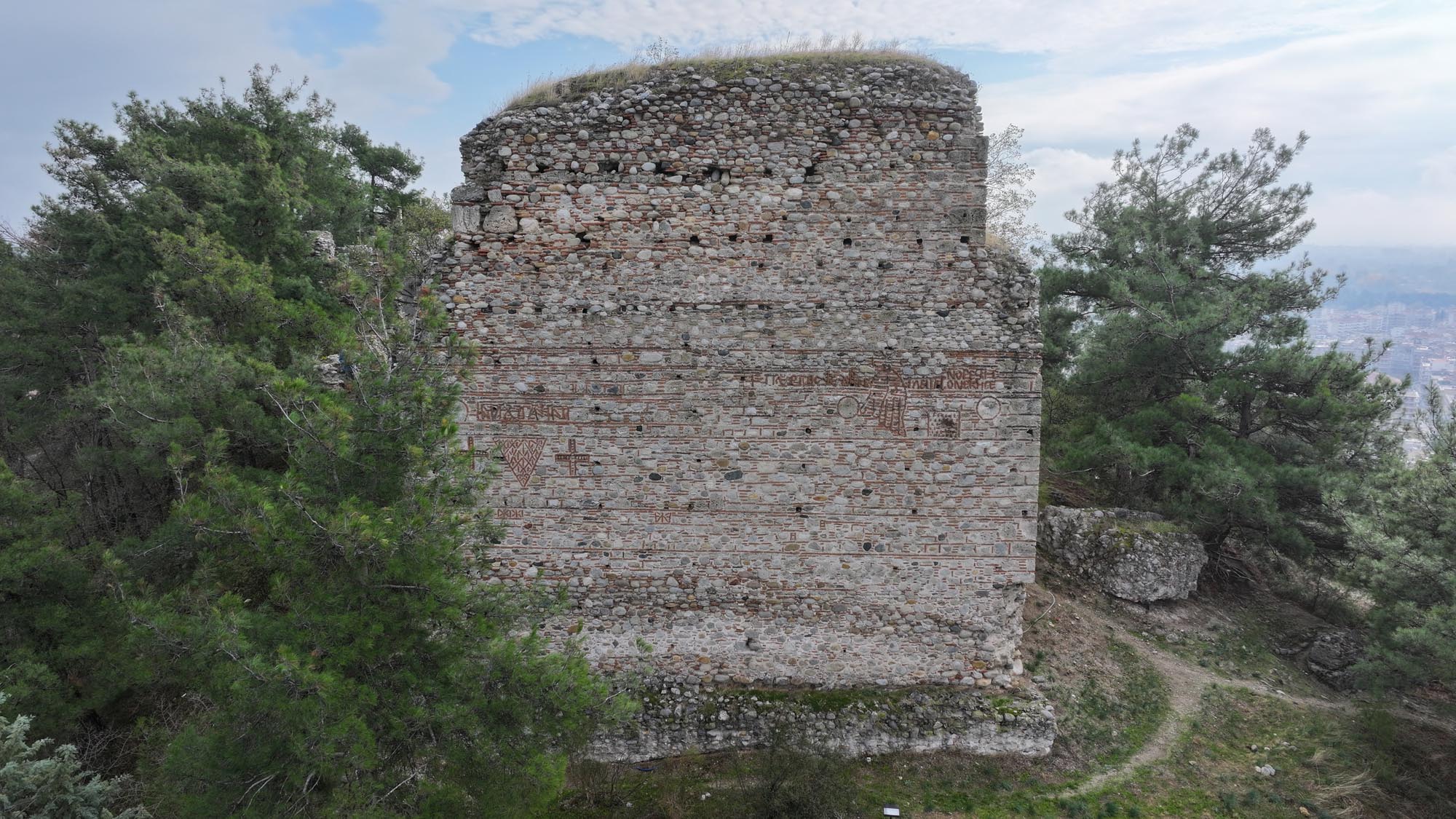
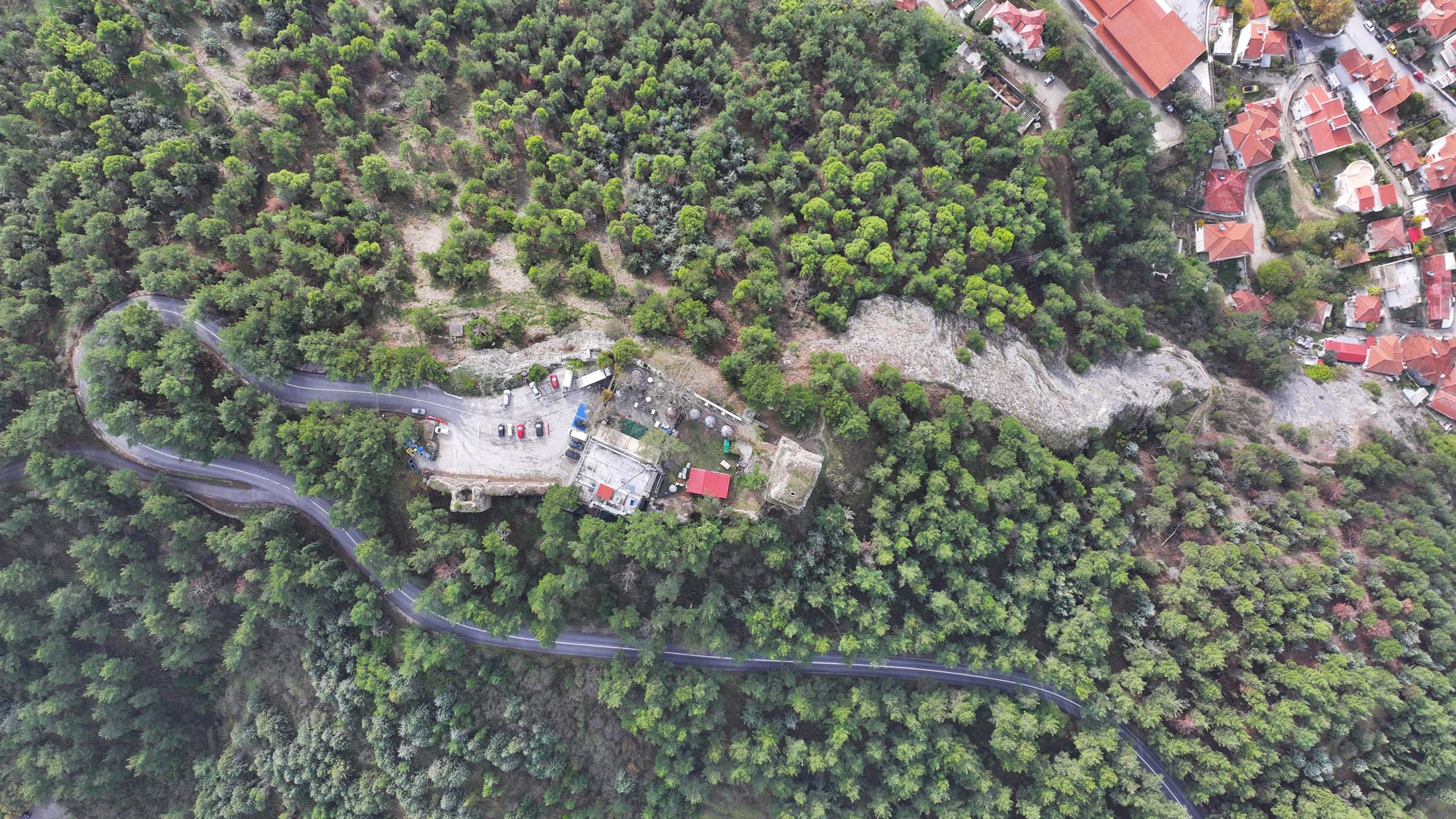
The castle is preserved today in places, to a sufficient length for its course to be reconstructed with reasonable certainty. It was polygonal in plan. On the hilltop was the citadel, where the large central tower, known as “Orestes” Tower”, still stands to this day. According to two surviving inscriptions, the tower dates from the mid-14th century and is thought to be the work of Orestes, the commander of the city during the period when it was ruled by Stefan IV Uroš Dušan. A series of square and rectangular towers reinforced the enceinte, which surrounded not only the acropolis but also the part of the city at the southern foot of the hill.

The city fortifications do not belong to a single period but are the result of successive interventions and repairs. The first phase of their construction is dated to the Late Roman and Early Christian period, while another two main building phases can be identified, one of the Middle and the other of the Late Byzantine period. According to the sources, the construction of fortification works in Serres in the Middle Byzantine period is linked to the emperors Nikephoros Phokas (963-969) and Basil II (976-1025), who showed a general interest in the fortification works of the provincial cities of the empire. The city walls were destroyed in 1205 during the sack of the city by the Bulgarian ruler Kalojan and repaired a year later by Boniface of Montferrat. In Late Byzantine times, it was probably Andronikos III Palaiologos (1328-1341) who largely completed the fortification of the city. Finally, the fortification works carried out in Serres include the interventions of the Serbian emperor Stefan IV Uroš Dušan (1331-1355).

φωτ. Κ. Ξενικάκης / phot. K. Xenikakis

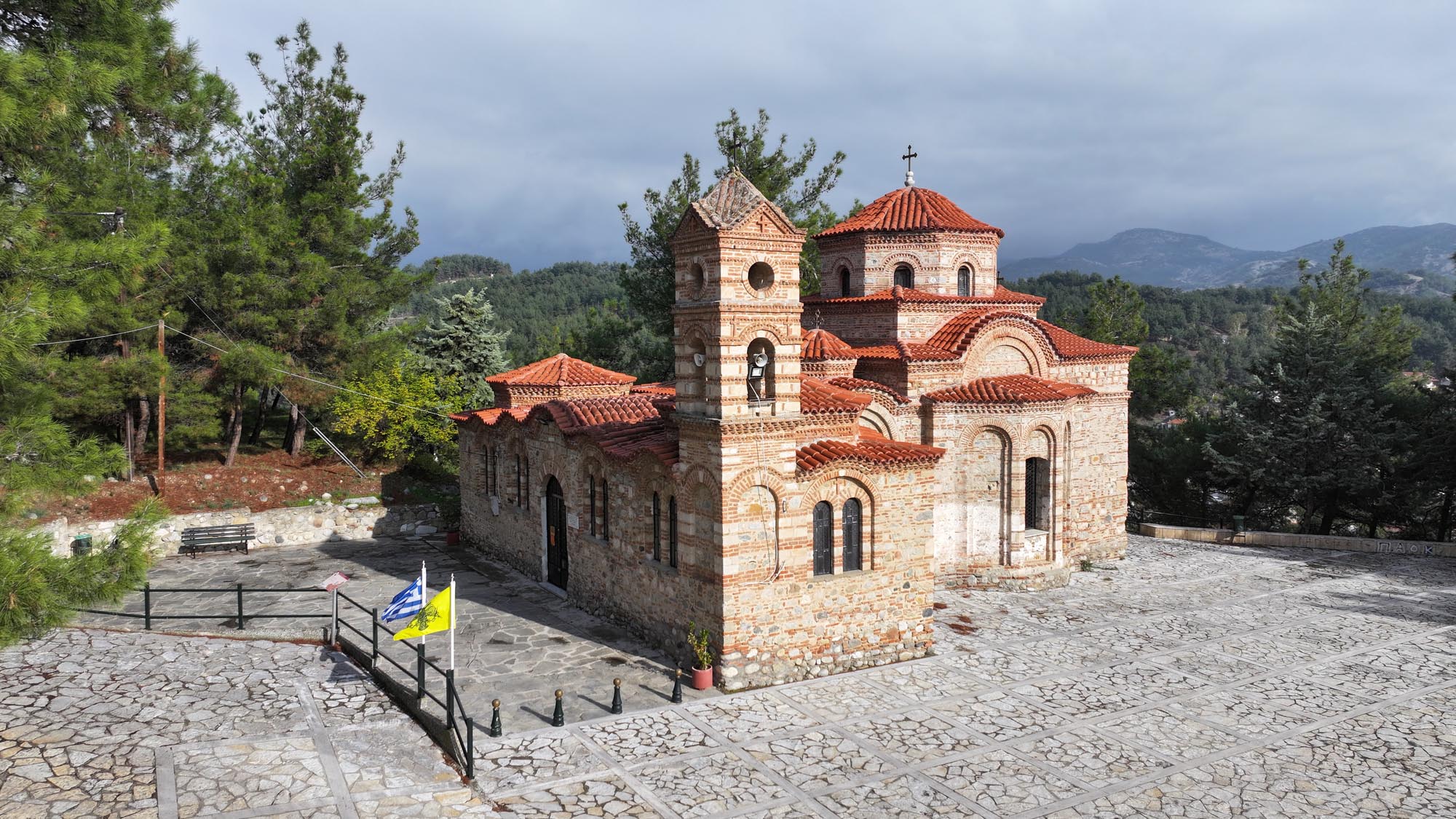
The church is located on the northeast side of the citadel of Serres and is a single-nave triconch church with a narthex on the west side. It dates from the first half of the 14th century. It was restored in the 1930s, without strictly adhering to its original architectural plan, and decorated with frescoes by the notable painter Georgios Paralis.


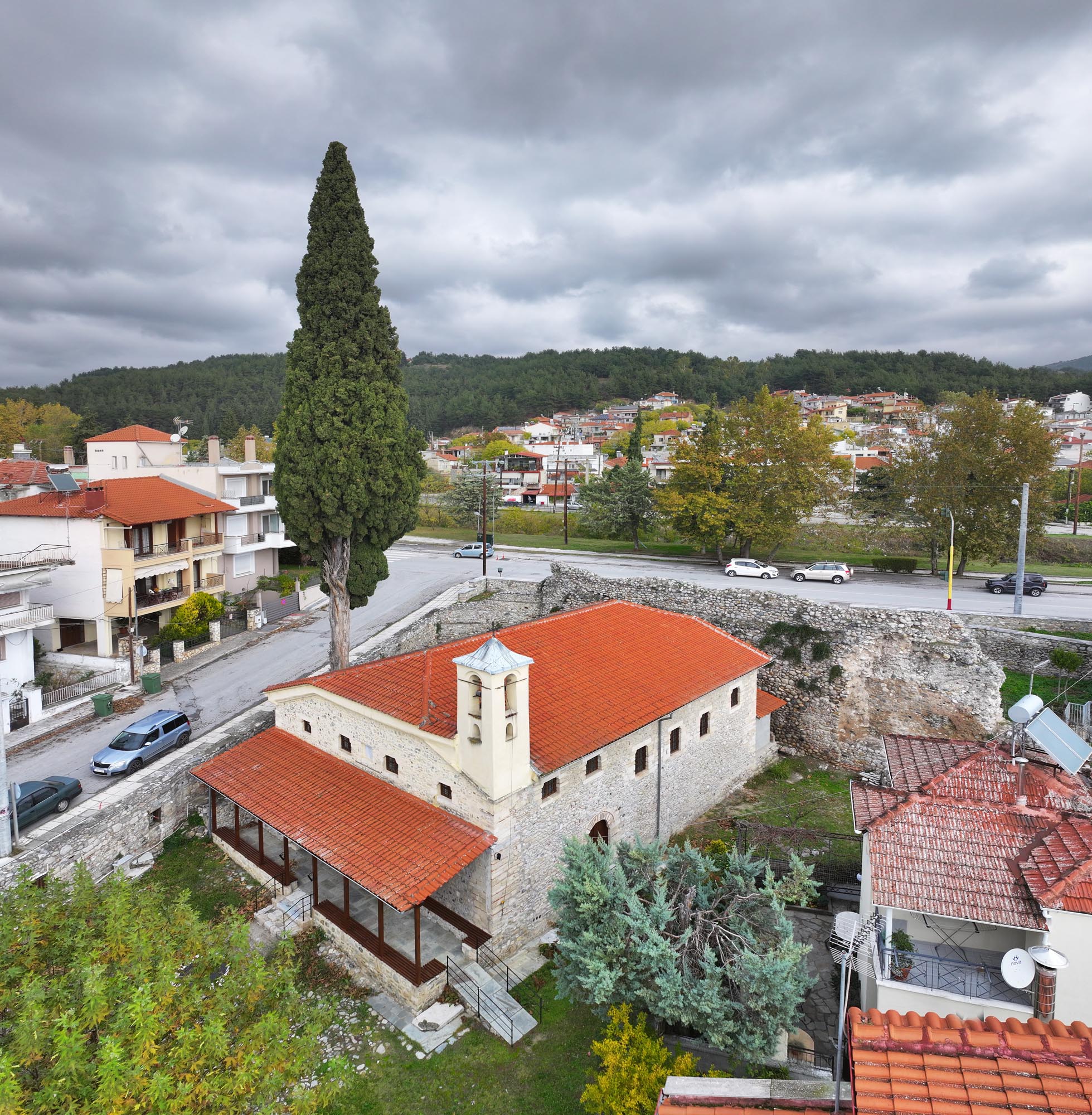
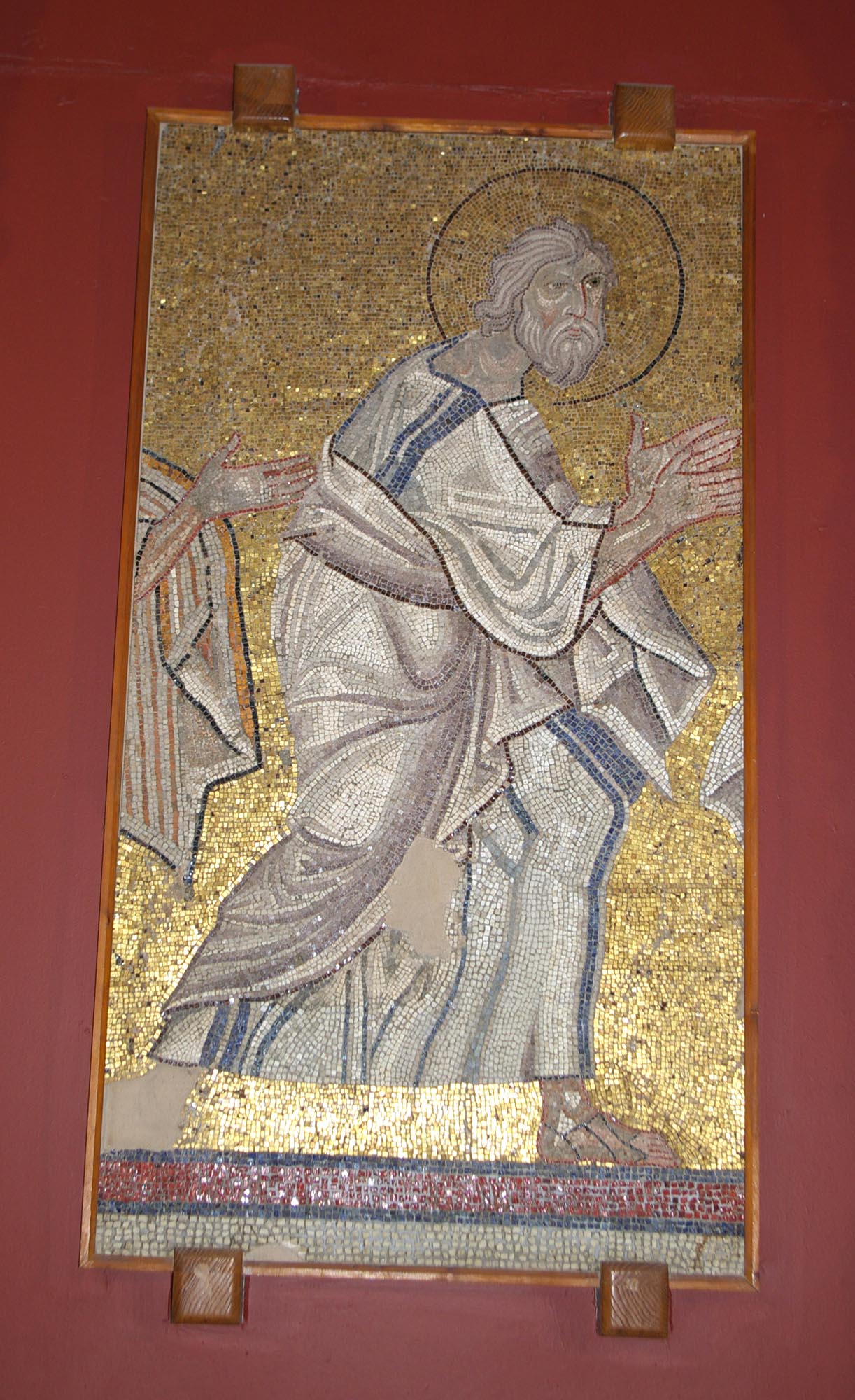
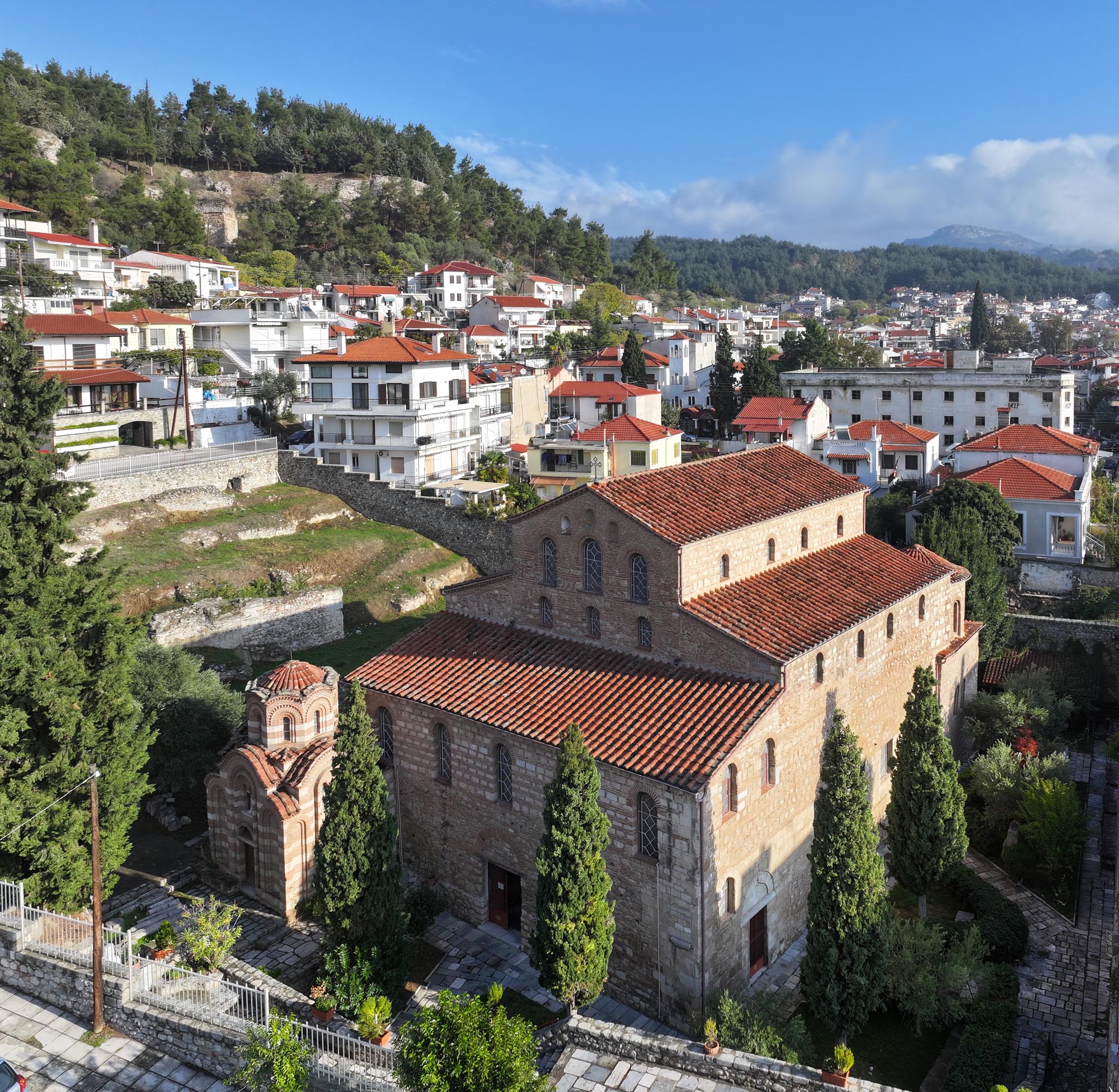
One of the most important monuments of Serres, it is also known as the “Old Metropolis”, as it has served as the metropolitan church of the city from Byzantine to modern times. It was located on the main street that once crossed the Byzantine city. It is a three-aisled timber-roofed basilica believed to date from the late 10th or early 11th century. Its masonry includes the walls of an older Early Christian building, probably a basilica. Over the centuries it has undergone many renovations and alterations, and it was severely damaged by the fire of 1913. The monument is described by the 14th-century Byzantine scholar Theodore Pediasimos, who admires its fine mosaic decoration. The scene of the Communion of the Apostles was preserved until the early 20th century but was almost completely destroyed in 1913; only the figure of St Andrew the Apostle (late 11th-early 12th c.), now exhibited in the Archaeological Museum of the city, survives today. The church is also adorned with fragmentary frescoes of the mid-14th century.

At the northwest corner of the church is a funerary chapel in the form of a contracted cross-in-square church. Tradition has it that this is the mausoleum of the Patriarch of Constantinople Kallistos I, who died in Serres in 1364. The sanctuary of the chapel is decorated with frescoes contemporary with its construction (after 1364), which have suffered considerable damage.

The ruins of a Late Roman bathhouse, now the site of a holy water font, are preserved in the church courtyard. When the church of the Saints Theodore was reopened after its restoration (1991-1993), an exhibition of its remarkable Byzantine sculptures was installed.
Προδρομούδι (φωτ. Κ. Ξενικάκης) / Prodromoudi (phot. K. Xenikakis)

During the 19th century there was an explosion of construction activity in the wider area of Serres. Among them stands out the three-aisled, timber-roofed basilica of St John the Baptist (Prodromoudi), which is located in the Palaio Konaki district in the northeast the city (at the junction of Ionos Dragoumi and Exochon Streets). It was renovated from the ground up in 1819, on the site of an earlier church of the 14th century. The churches of the SS Anargyroi or Holy Unmercenaries (1817) and SS Anthony and Marina (1826) belong to the same architectural type of the three-aisled basilica and date from the same period.
αρχείο ΔΒΜΑ, φωτ. Στ. Στουρνάρας / archive of DBMA, phot. St. Stournaras

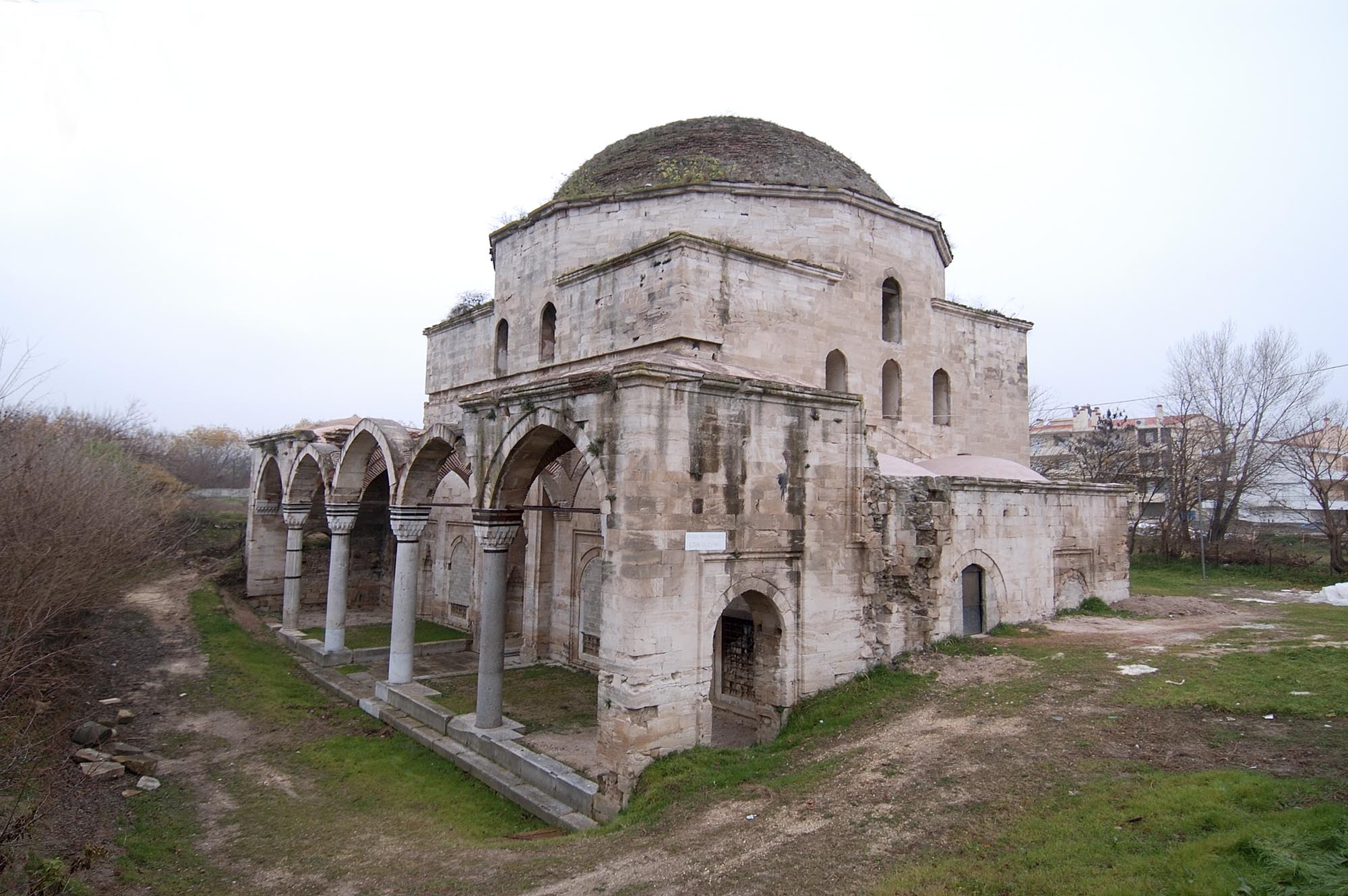
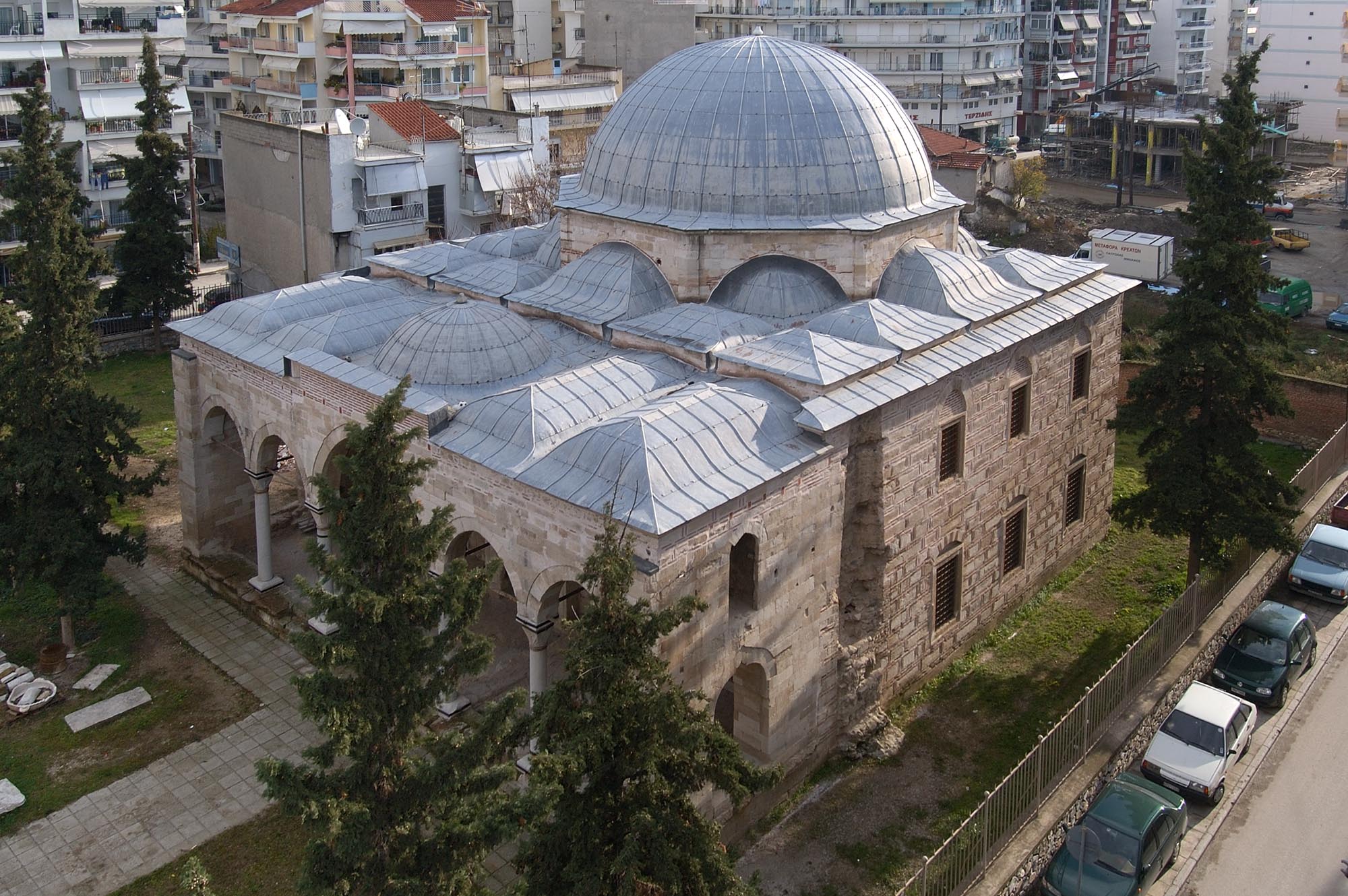
This is the oldest and largest mosque in the city and one of the largest in the whole of the Balkans. It was erected in 1492-1493 on the southeast outskirts of the city, next to the stream of Agioi Anargyroi, by Mehmed Bey, son of Grand Vizier Ahmed Pasha and spouse of Princess Selçuk Hatun, the daughter of Sultan Bayezid I (1389-1402). Mehmed Bey lived in Serres in the late 15th century and was responsible for the construction of a number of religious and secular buildings in the city. The mosque stands out for its spacious interior and its large dome, 14.58 m in diameter, which reminded the local inhabitants of Hagia Sophia in Constantinople/Istanbul, earning it the nickname “Hagia Sophia”. According to the Ottoman traveller Evliya Çelebi, it was one of the most beautiful mosques in the “land of Rum” and was surrounded by a garden of exceptional beauty.

αρχείο ΔΒΜΑ, φωτ. Στ. Στουρνάρας / archive of DBMA, phot. St. Stournaras

The mosque was built in 1519 in the Kato Kamenikia district, in the west of the city, by Mustafa Bey, whom scholars identify as Davutpașaoǧlu Mustafa Bey, son of Grand Vizier Davut Pasha, who owned estates in the area and was the sancak bey of Serres. The building has a construction phase prior to 1519, which may be dated either between 1501 and 1519 or in the second half of the 15th century.

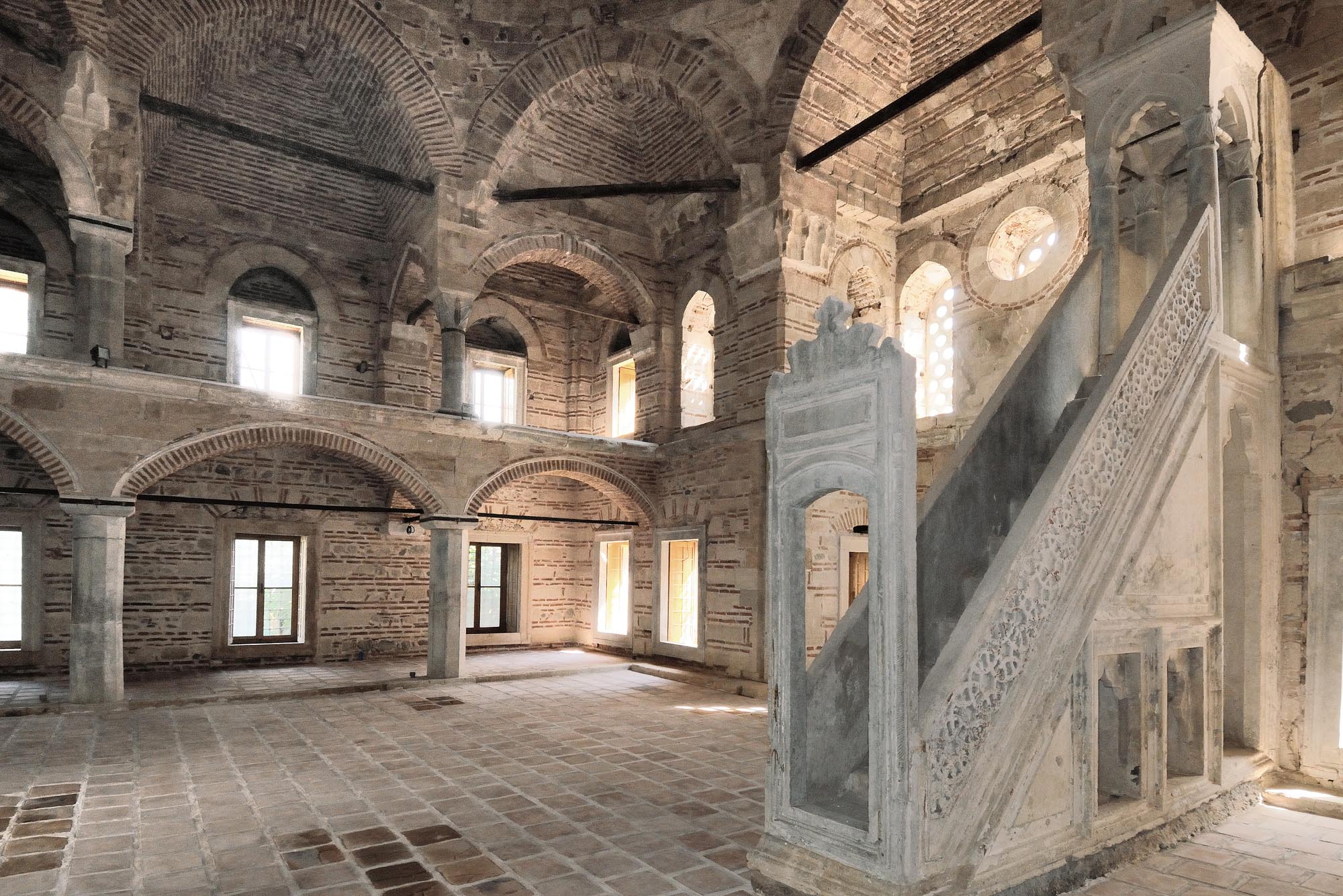
The mosque is located in southwest Serres, in one of the most densely populated districts, and is one of the most impressive Muslim monuments of the city. The architectural form and features of the lead-roofed mosque, now restored, place it among the group of buildings of the second half of the 16th century that survive in Constantinople/Istanbul and are associated with the school of Sinan, the great architect of the classical period of Ottoman architecture. However, dendrochronology probably dates the building to the late 15th century. The marble minbar is one of the best preserved of its kind in the Greece.

The remains of the complex which consists of two buildings, possibly a  mosque or a mescit (small neighborhood mosque), and a türbe (mausoleum) have been revealed during an excavation in the Kato Kamenikia district. Parts of the mosque were preserved as part of a refugee house that was demolished. A Muslim cemetery came to light around the two buildings. Their founding in the Early Ottoman period, in the late 14th to early 16th century, is linked to the settlement of the lowland expansion to the southwest of the city in the first century after the Ottoman conquest.

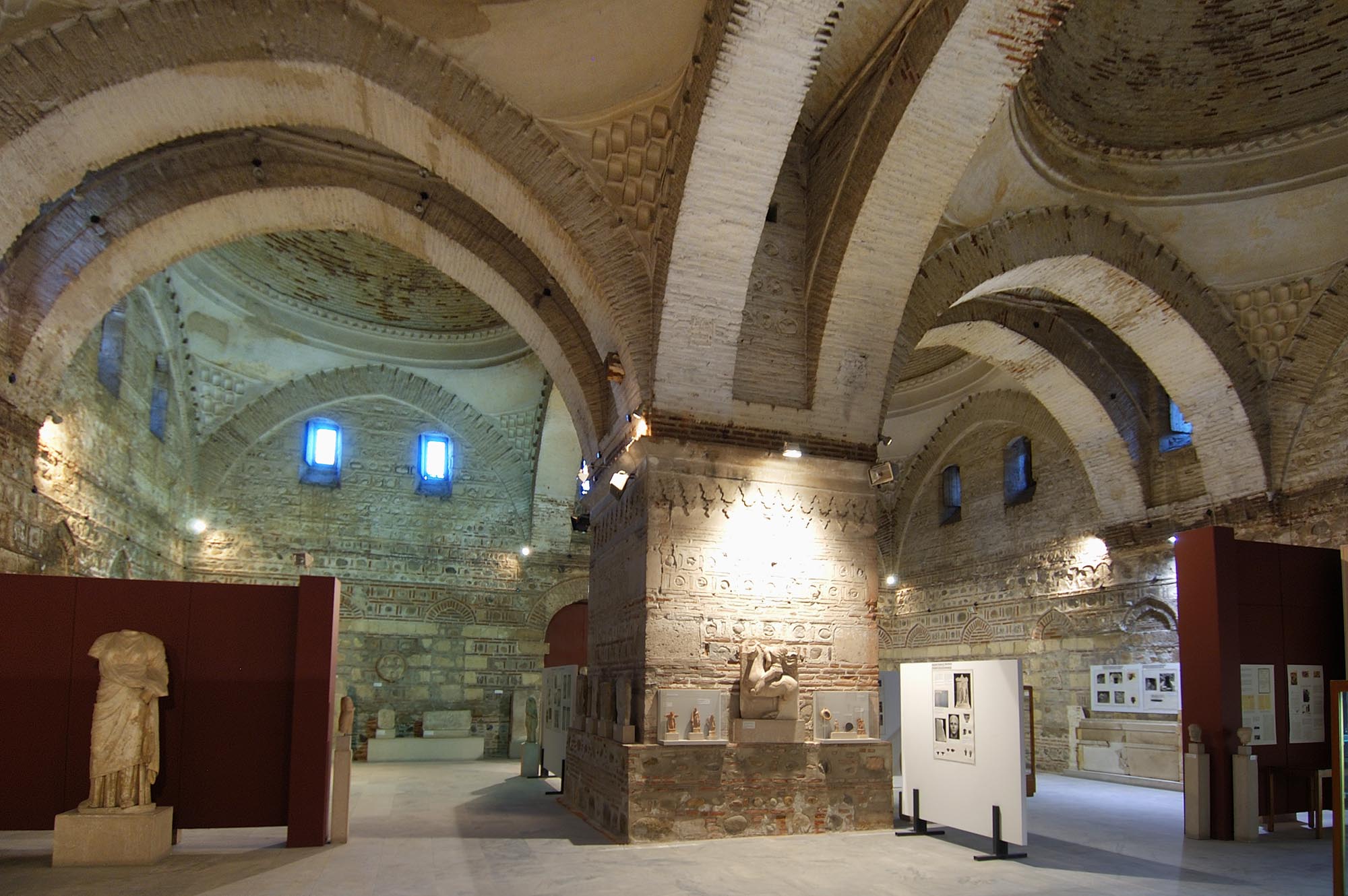
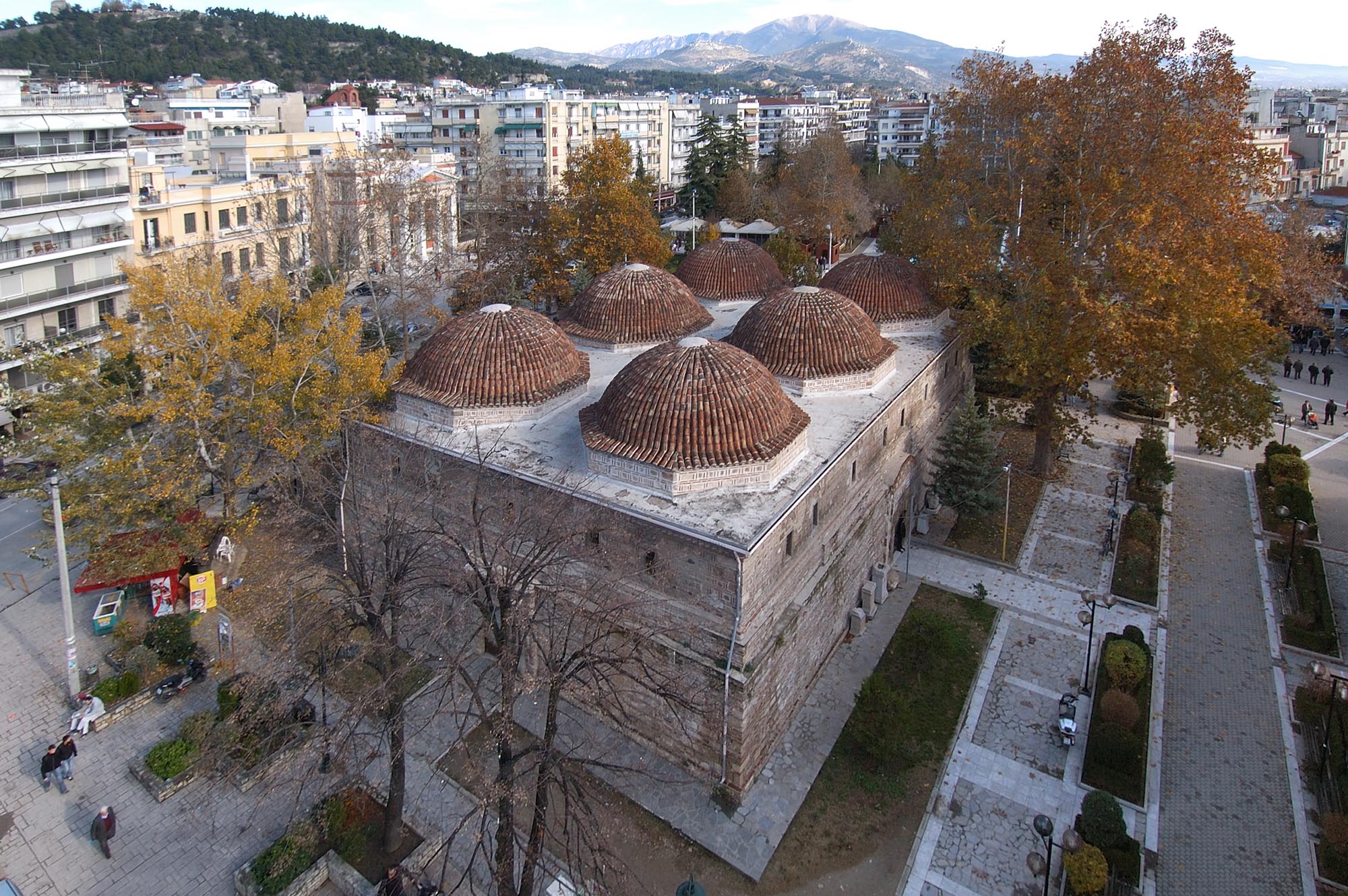
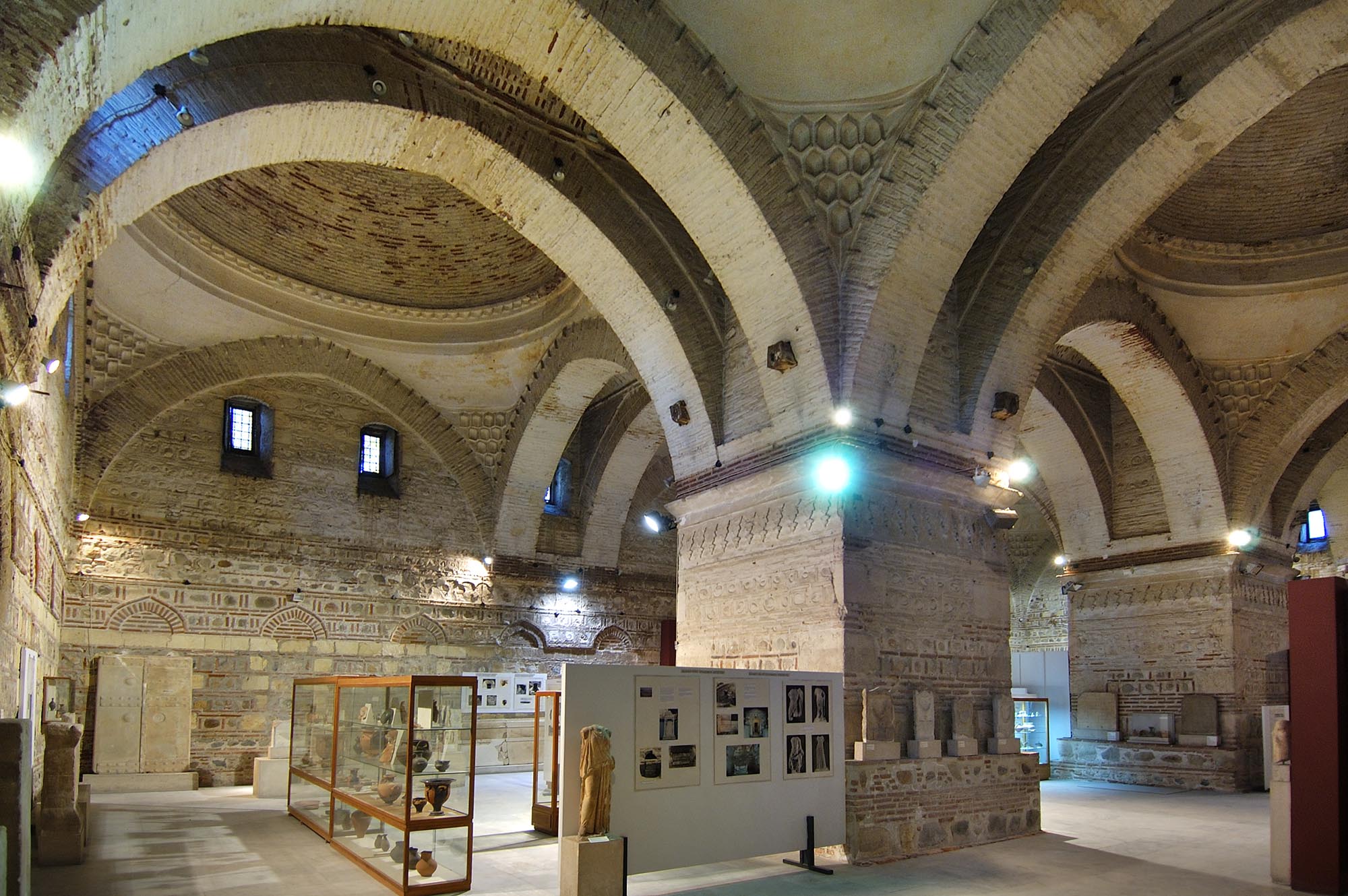
Built outside the castle, in the southwest part of the city, adjacent to the demolished Eski Mosque, the Bezesten is now located in the main square of Serres. According to Evlija Çelebi, it was one of nine covered markets where textiles and precious objects were traded. It was built shortly before 1494 by the senior official Ibrahim Pasha and was of the simple bedesten type, with no external shops. It is roofed with six domes arranged in two rows. The monument, now restored, houses the Archaeological Museum of the city.

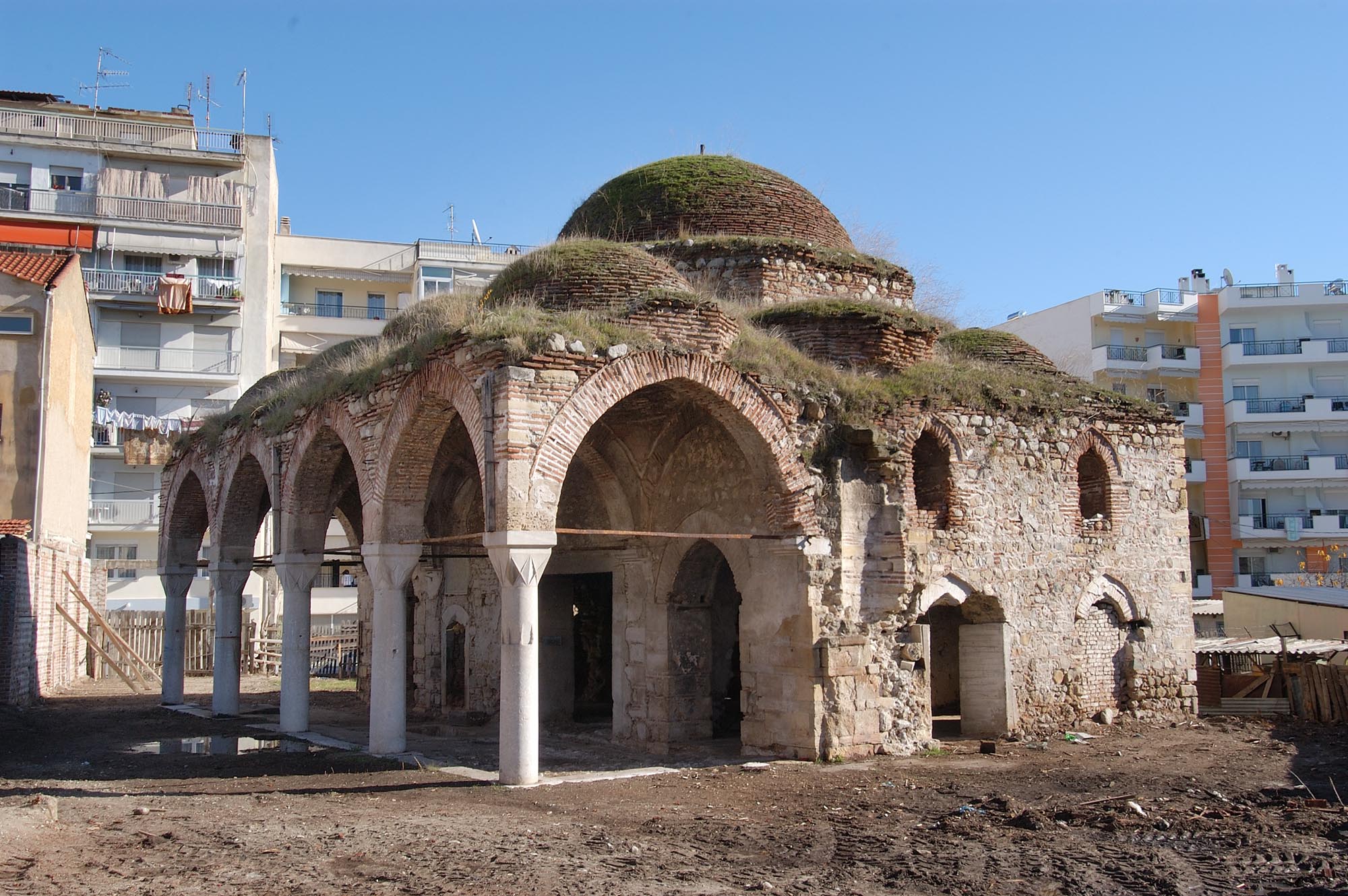
Λουτρό στα Άνω Καμενίκια (φωτ. ΕΦΑ Σερρών) / Hammam in the Ano Kamenikia (phot. Ephorate of Antiquities of Serres)

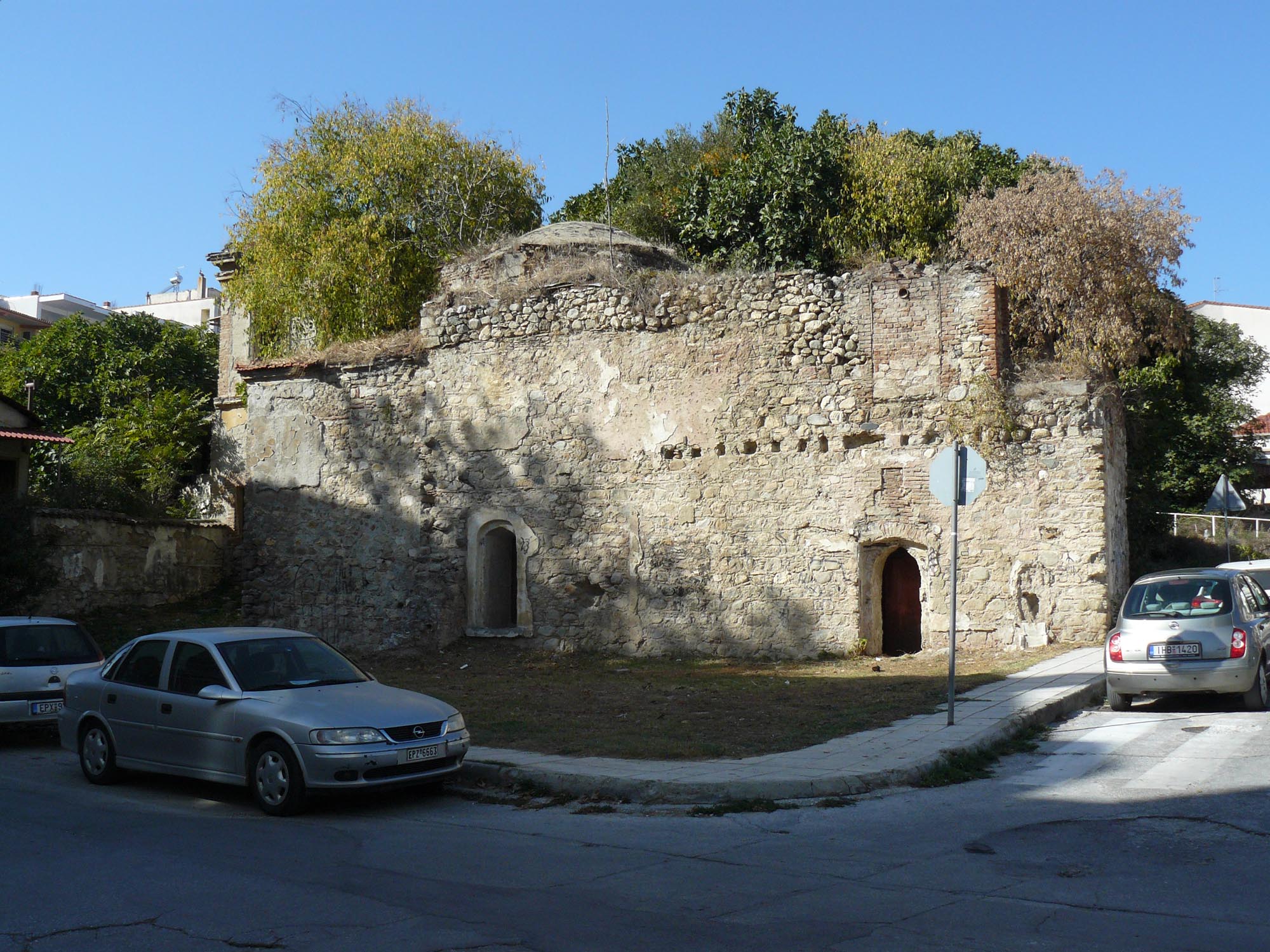
During the Ottoman period, Serres had a large number of public and private baths, of which only two are preserved today. Their number reflects the importance of the city in Ottoman times. In fact, this is one of the few cities in Greece that had more than one double hammams, i.e. with separate areas for men and women. The oldest of the city’s baths was the Eski (Old) Hammam or Hayreddin Pasha Hammam, to the east of the now-demolished Eski Mosque, near today’s Eleftherias Square. Only a few parts of the double hammam, which covered a total area of over 1,000 m2, are preserved today. It was probably built two years after the Ottoman conquest of the city (1385). A second double hammam, probably of the late 15th century, was preserved at the junction of Eleftherias Square and Kyprou Street, but has now been demolished.

Of the two surviving hammams in the city, one is located in the Ano Kamenikia district (junction of Emmanouil Pappa and Mavromichalis Streets). It is a large 17th-century building consisting of five vaulted rooms. The second bath dates from the late 15th century and is located at the junction of Chatzipantazi and Romanou Streets, near the Mehmed Bey Mosque. It consists of a single room covered with a dome.

φωτ. ΕΦΑ Σερρών / phot. Ephorate of Antiquities of Serres

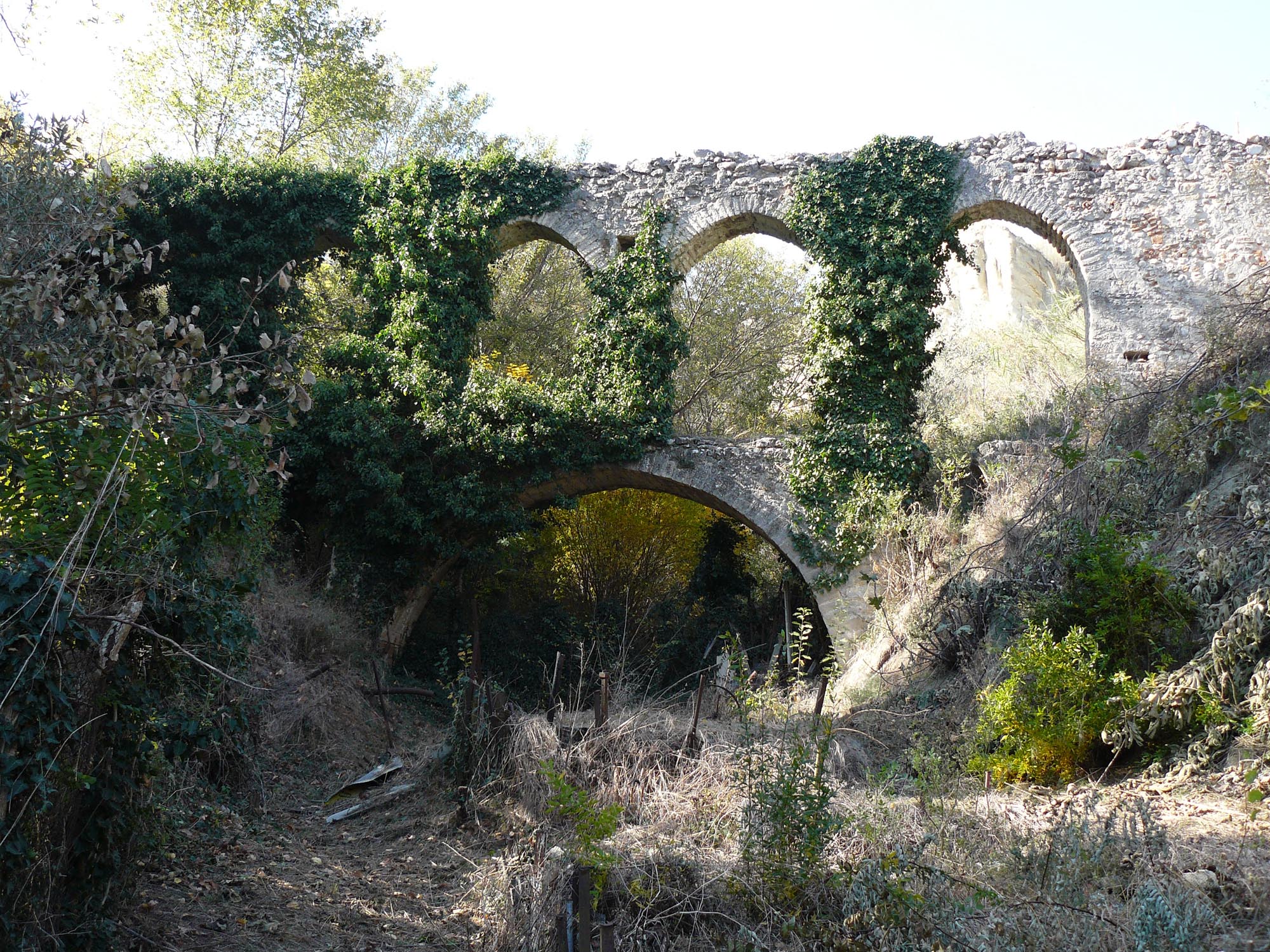
On the northern outskirts of Serres is preserved an aqueduct bridge of the Early Ottoman period, which crossed the valley of the Klopotitsa, known as Tsomlek Dere (Pottery Stream”). The aqueduct, about 25 m long and 8.5 m high, has two levels of arched openings. It supplied water to the part of the city that developed in the Ottoman era outside the castle, in the area of what is now Eleftherias Square. The district contained numerous baths and religious buildings, all of which required a water supply network and abundant running water.

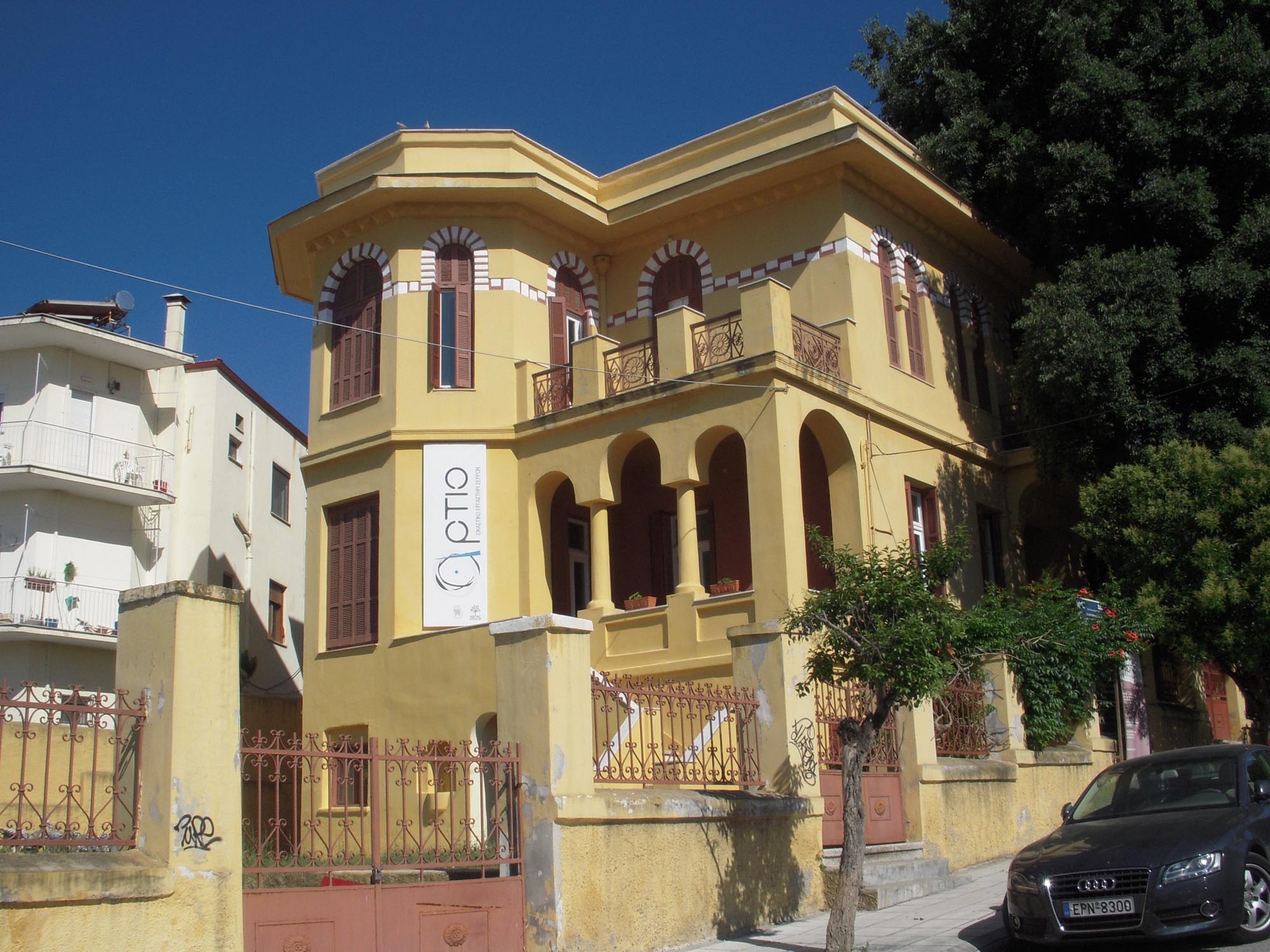
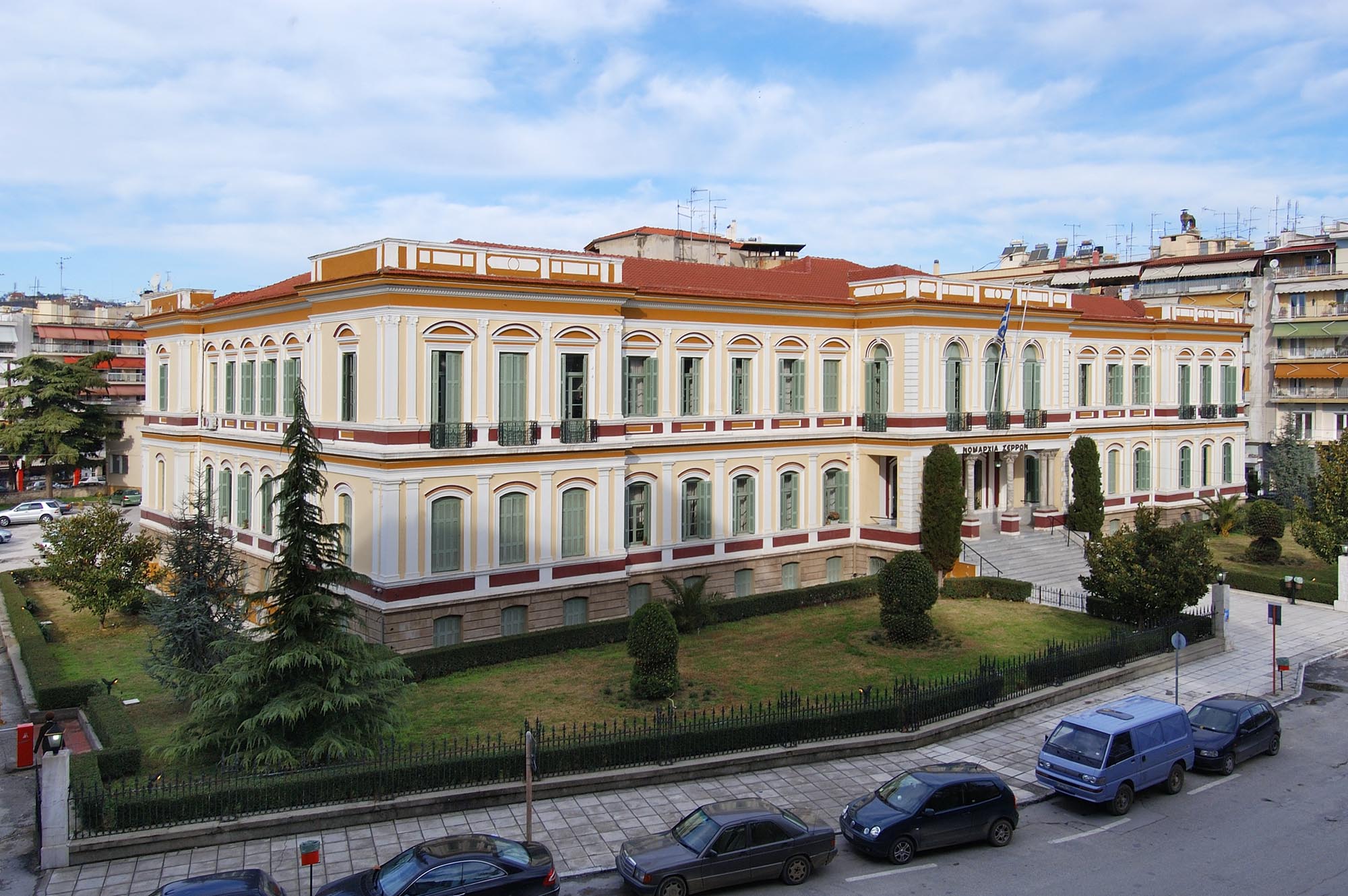
In the late 19th century and the beginning of the 20th century, the commercial boom of the city enabled the construction of important public buildings, such as schools, the Old Hospital (1885, today Primary School) and the Government House in Merarchias Street, which was erected between 1898 and 1905, designed by the important architect Xenophon Paionidis (it now houses the services of the Regional Unit of Serres). Important buildings of the late 19th century also include the house of the painter Umberto Argyros and the Leventis’s house. After the 1920s, the city underwent a major reconstruction. Representative examples of interwar architecture include, among others, the buildings of the National Bank, the Majestic” Hotel and the residences of Maroulis, Patsiokas, Mallios, Schinas and Papavassiliou.

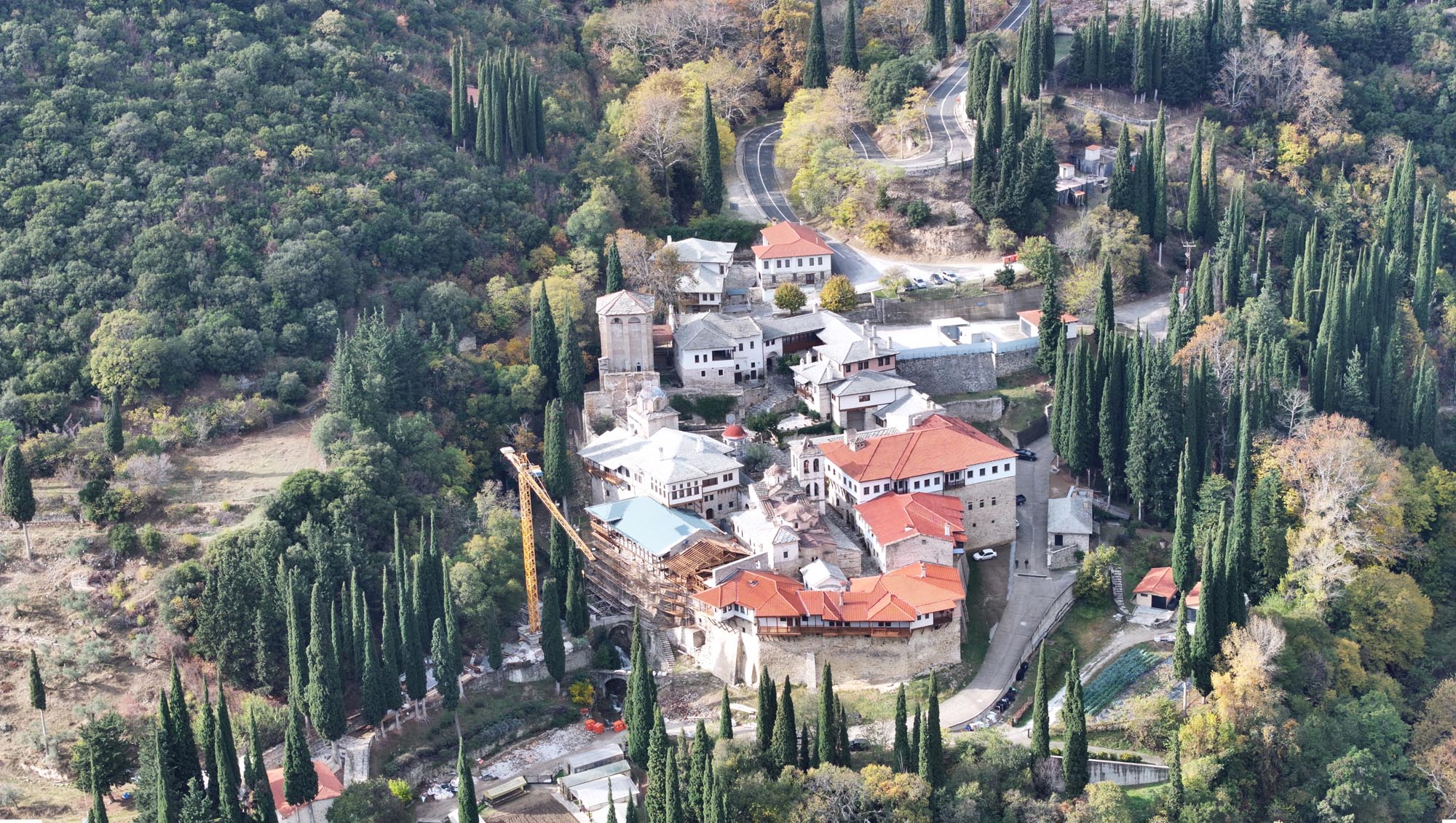
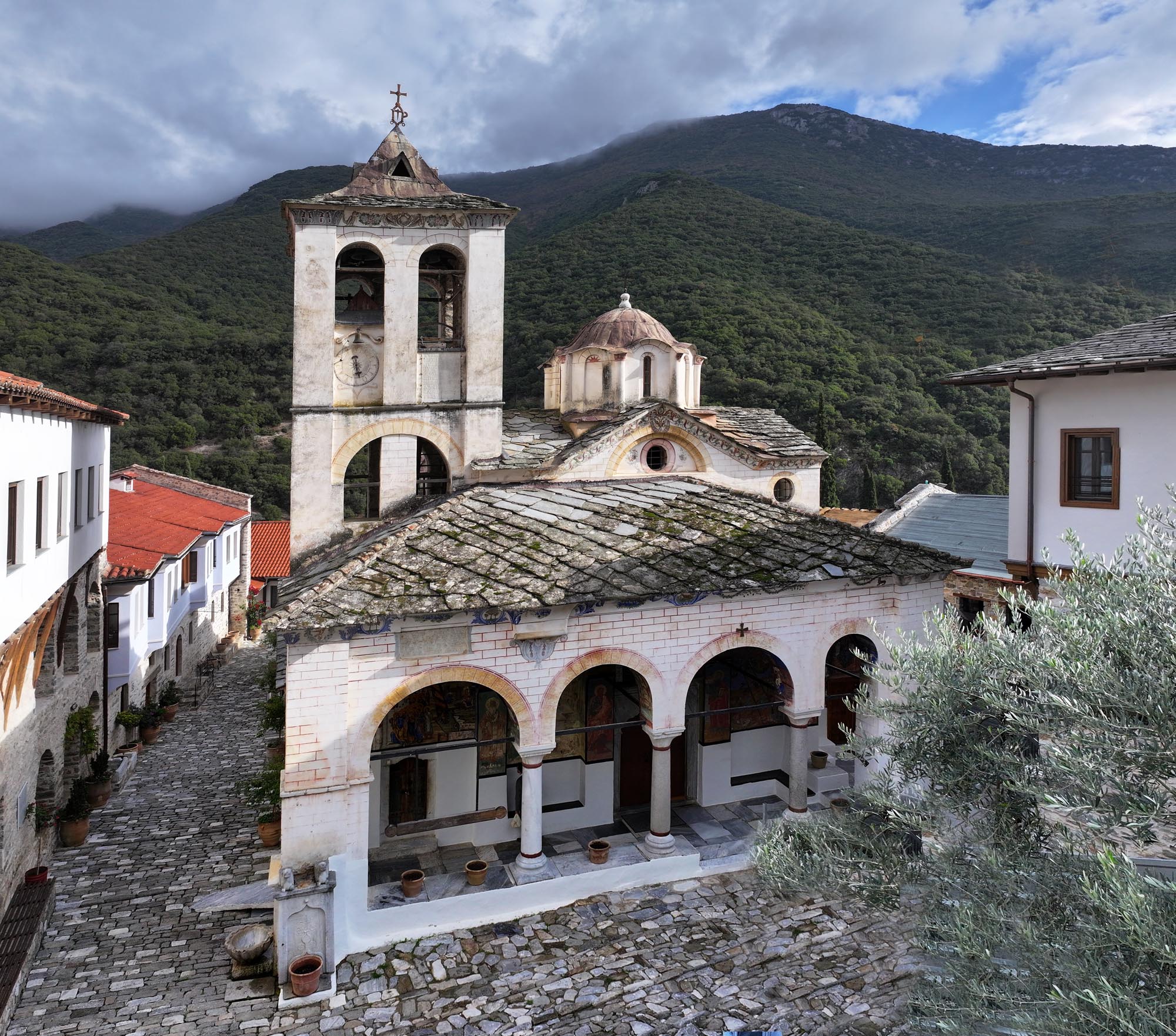
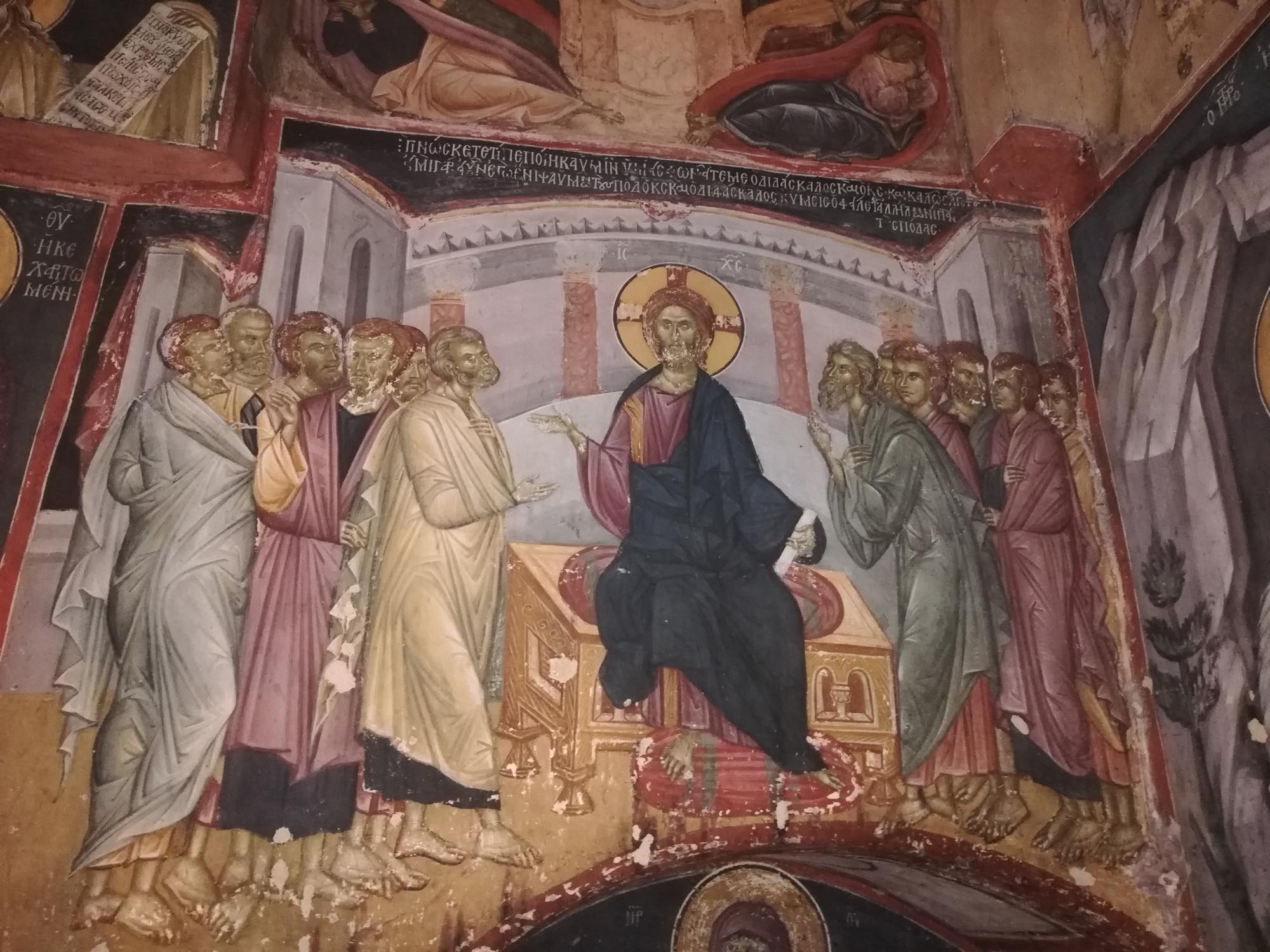
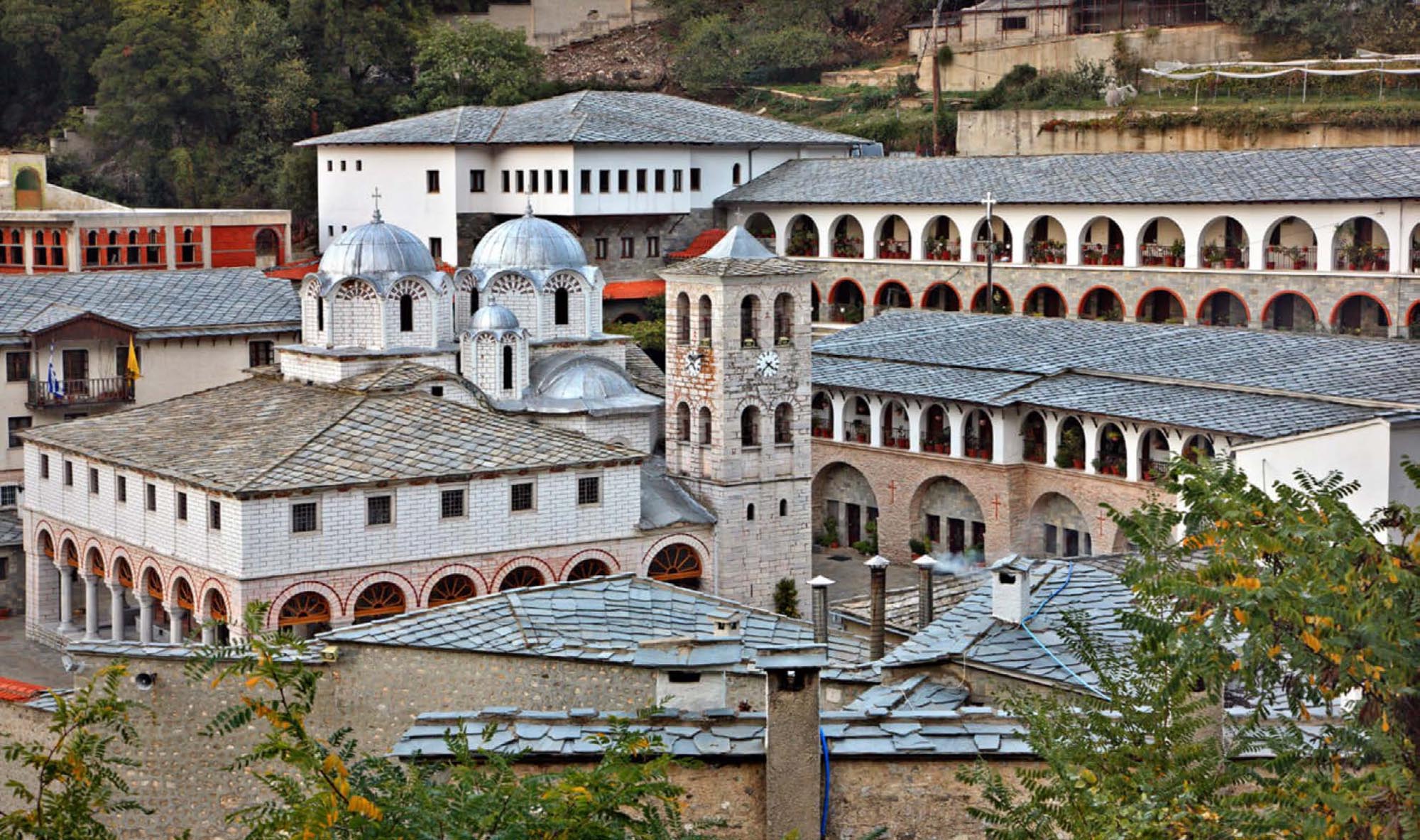
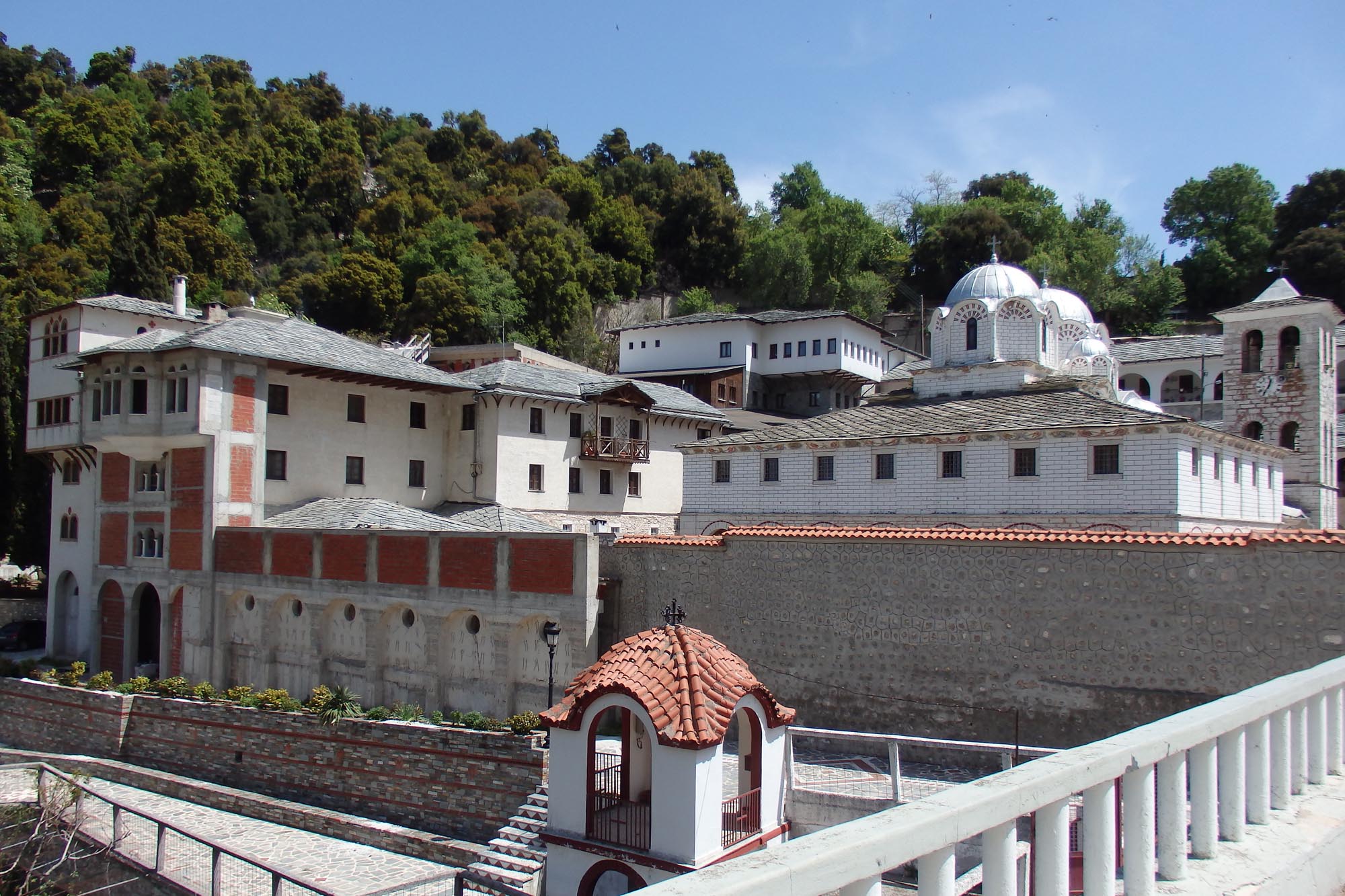
The monastery lies 12 km northeast of Serres, at the bottom of a gorge in the western foothills of Mount Menoikion. It is one of the most historically significant monasteries of Macedonia, founded, according to the currently accepted dating, around 1270. However, a recent architectural study of the monastic complex confirmed the existence of an earlier building phase. The monastery was founded by the monk Ioannikios from Serres, who initially lived on Mount Athos and then served as Bishop of Ezevai (today’s Daphne, south of Serres). From the very first years of its foundation, the monastery was favoured by the Byzantine emperors and members of the aristocracy of Constantinople and the royal court of Serbia, whose donations allowed it to acquire considerable property, rapidly developing into an important monastic centre. The picture of a small fortified town that we see today is the result of successive building repairs and extensions. Remarkable frescoes are preserved in the katholikon and the chapels of the monastery, covering a lonh period of six centuries (14th-19th c.), while numerous ecclesiastical relics reflect the spiritual importance of the monastery from its establishment to the present day. Today one of the wings of the monastery houses a display of old tools used by the monks for processing olives and producing various other agricultural goods.

Standing on the north slopes of Mount Pangaion, at the boundary of Serres and Kavala, but ecclesiastically subject the metropolis of Drama, this is one of the oldest and most important pilgrimage sites in Greece. The monastery was founded around the 9th century by Hosios Germanos. It is famed for its miraculous, protective, acheiropoietos (“not made by human hands”) icon of the Virgin (Panagia), to which it owes its name, as well as for the wealth of its relics, which bear witness to its long history.

Museums

Archaeological Museum (Eleftherias Square)
αρχείο ΔΒΜΑ, φωτ. Στ. Στουρνάρας / archive of DBMA, phot. St. Stournaras

The restored Bedesten houses the Archaeological Museum of the city, which displays representative finds from the Serres area dating from prehistoric times to the Byzantine period.

The exhibition includes remarkable portable icons, ecclesiastical vessels and liturgical vestments from the parishes of the Metropolis of Serres and private donations.

The Museum was awarded the European Museum of the Year Award (Prix du musée européen de l’année) in 1987 and presents through a rich collection the traditional way of life of the Sarakatsani.

The exhibits that make up the museum’s collection exceed 5,000 objects, including works of ecclesiastical art, traditional musical instruments, traditional costumes and silversmith jewelry.

The museum’s rich folk collection,aimed at presenting the folk culture of the Vlachs, includes, among other exhibits, a representation of the odas (reception room) of a Vlach house.

Through the museum’s rich collection, visitors can explore every stage of the work of the ip prominent artist Konstantinos Xenakis (1931-2020) using modern technological tools and audiovisual materials.

Other stops in the Regional Unit of Serres

error: