Prespes

Great and Little Prespa, two lakes with important Byzantine and post-Byzantine monuments

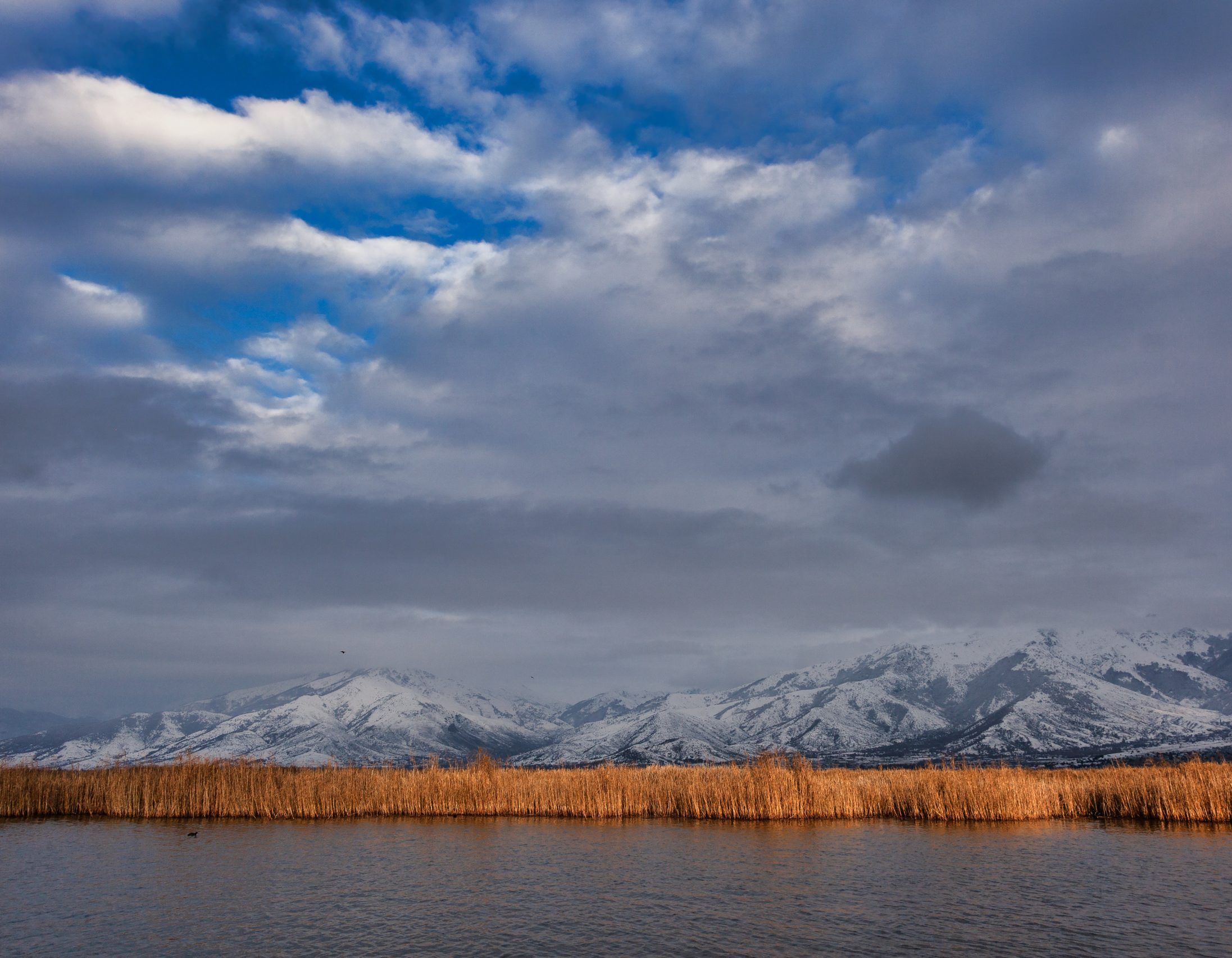
In the northwest corner of Greece, in a landscape of outstanding natural beauty, lie the Great and Little Prespa Lakes. Once a single body, they are now separated by a narrow strip of land. Great Prespa in the north, with a total area of 250 km2 and a maximum depth of 48 m, is the third-largest lake in the Balkans, after Lakes Skadra and Ohrid. It is divided between Greece, Albania and North Macedonia, to which most of it belongs. Little Prespa to the south, with a total area of 48.5 km2 and an average depth of 4 m, mostly lies in Greece, with a small part in Albania. There are two islets, Agios Achilleios and Vidronisi, in Little Prespa. On Agios Achilleios is a small village of the same name, one of only two in Greece built on a lake island – the other is on the Island of the Lake of Ioannina. Agios Achilleios is now connected to the nearest bank by a 650-metre-long pontoon footbridge. Before its construction in 2000, the island’s inhabitants could only cross by boat. The local terrain was different in antiquity, as the island of Agios Achilleios was part of a small peninsula which was gradually cut off from the land by the rising waters of the lake.

The Prespa region stands out for its high biodiversity, its rich and rare flora and fauna making it an ecosystem of global importance. Due to its ecological significance, it has been declared a National Park with defined protection zones, and is included in the Wetlands of International Importance of the Ramsar Convention and the protected areas of the Natura network. In 2000, the Transboundary Prespa Park was established by a joint declaration of the three countries to which it belongs.

The basins of the two lakes form a large plateau encircled by high mountains rising a short distance from their banks, from Mount Varnous or Peristeri to the east, to Mount Vrontero to the west and Mount Triklario to the south. Due to the mountainous terrain, the only access to the Prespa region is through three passes: the Pisoderi Pass, between Mount Varnous and Verno (Vitsi) leading to Florina; the Krystallopigi Pass leading to Albania; and a pass leading to Bitola (Monastir) in North Macedonia. The Prespes are therefore a geographically isolated area with controlled accesses, a key factor in the development of the region through the ages. Besides its unique natural wealth, it boasts a particularly important cultural heritage, with archaeological sites and monuments ranging from prehistoric to modern times. Especially significant are the Byzantine and post-Byzantine monuments of the two lakes, scattered in all three countries, which highlight the intense cultural activity that developed in the area even though it lay far from the major roads of the time.

History

Habitation in the wider Prespa basin is documented as early as the Neolithic period (6500-3000 BC) and continued throughout the Bronze Age (3000-1100 BC) and the Iron Age (1100-700 BC). Typical sites of these periods have been identified in the Cave of Treni near the village of the same name in Albania, at the southern end of Little Prespa, on the islet of Malingrad in the southwestern, Albanian part of Great Prespa, and further north in the lakeside village of Kallamas. The studies conducted by the Ephorate of Palaeoanthropology and Speleology of Northern Greece, which identified and mapped 40 caves, potholes and rock shelters on the banks of the Great Prespa Lake in 2011-2019, provided important information on the prehistoric occupation of the area. The significant drop in the water level of Great Prespa has revealed many previously underwater caves which were completely unknown or whose true dimensions were concealed. Research in the caves of the area has yielded finds of various periods covering a wide chronological range from the Late Neolithic to the Early Bronze Age, with individual finds that can be dated to the Early Iron Age and Late Antiquity.

In antiquity, the two lakes were named Little and Great Brygeis. The wider area probably formed part of Orestis, a region matching the modern Regional Unit of Kastoria, although it has also been argued that the two lakes were located in the territory of Lyncestis or Lyncus, more or less corresponding to the modern Regional Unit of Florina.

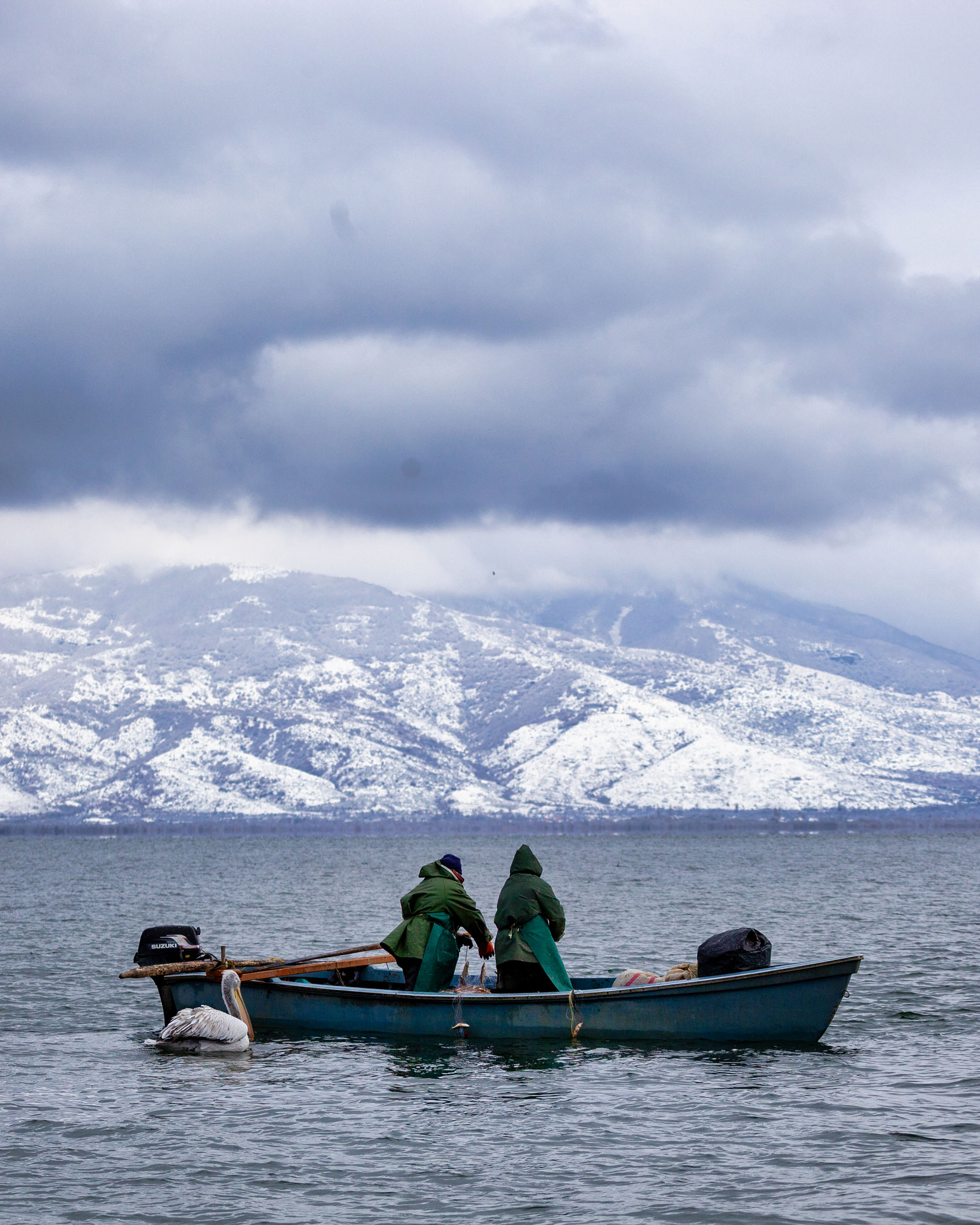
Μεγάλη Πρέσπα / Great Prespa (αρχείο Περιφέρειας Δυτ. Μακεδονίας, φωτ. Π. Μεράκος / Region of Western Macedonia, phot. Periklis Merakos)
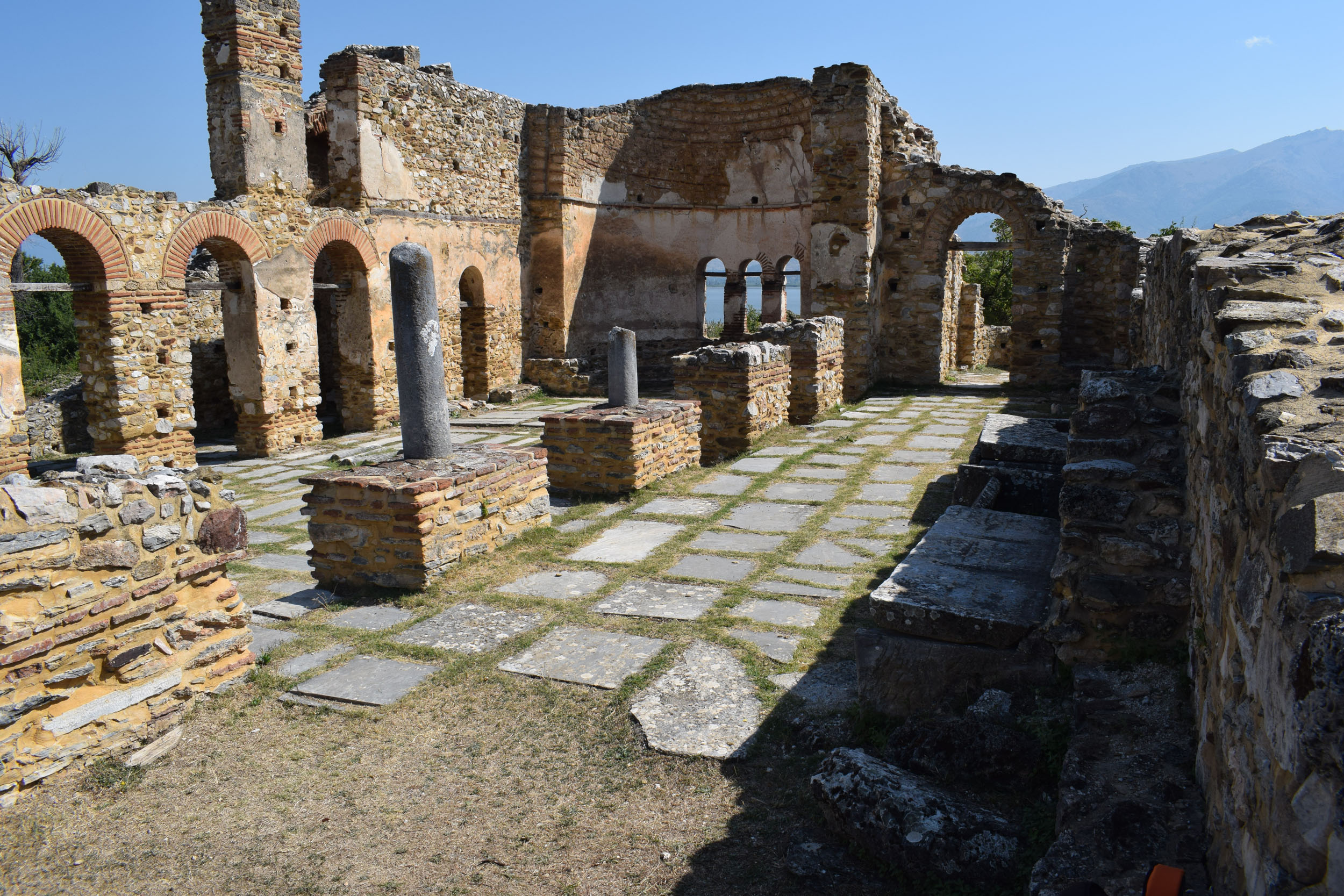
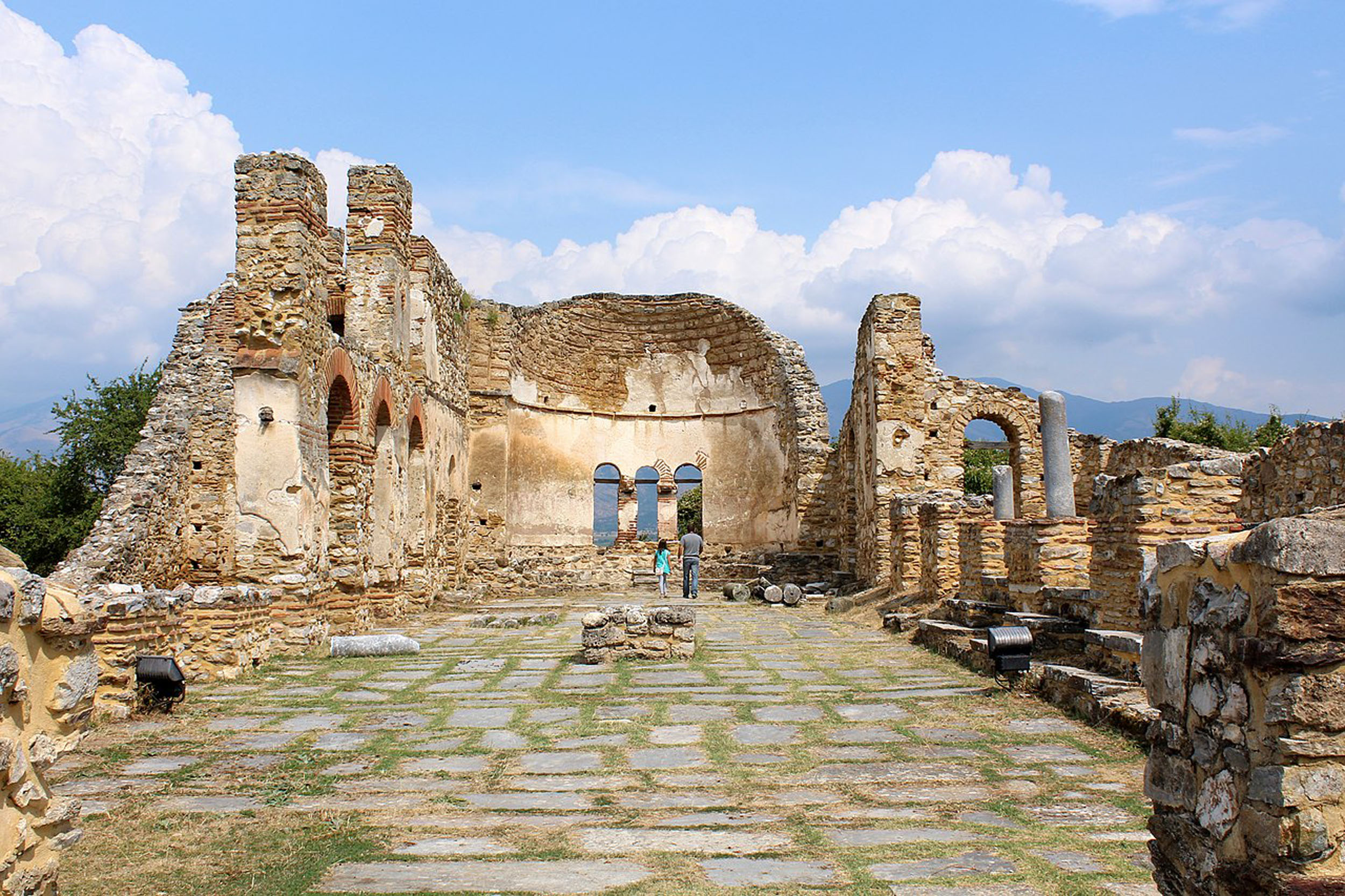
Βασιλική Αγ. Αχιλλείου/ Church of St Achilleios (φωτ. ΕΦΑ Φλώρινας, phot. Ephorate of Antiquities of Florina)

The limited excavation data, combined with the numerous sculptures of the ancient Greek, Roman and Early Christian periods (inscriptions, funerary stelae, columns, etc.) found by chance or immured in the later Byzantine monuments of the Prespa region, suggest that the area has been continuously inhabited since ancient times. On the islet of Agios Achilleios, excavations have brought to light an ancient sanctuary near the church of the Holy Apostles; many spolia from the sanctuary were used in the construction of the Byzantine church. An important urban centre of the area was the city of Lyca, known from ancient inscriptions. Its location was identified thanks to the archaeological remains uncovered at the southwest end of the islet.

The Prespa region came to the forefront of historical events during the 9th century, when it was occupied by Tsar Simeon of Bulgaria (893-927). In 971/2, Emperor John I Tzimiskes dissolved the eastern part of the Bulgarian state, but the western part, which included the Prespes, remained under Bulgarian rule.

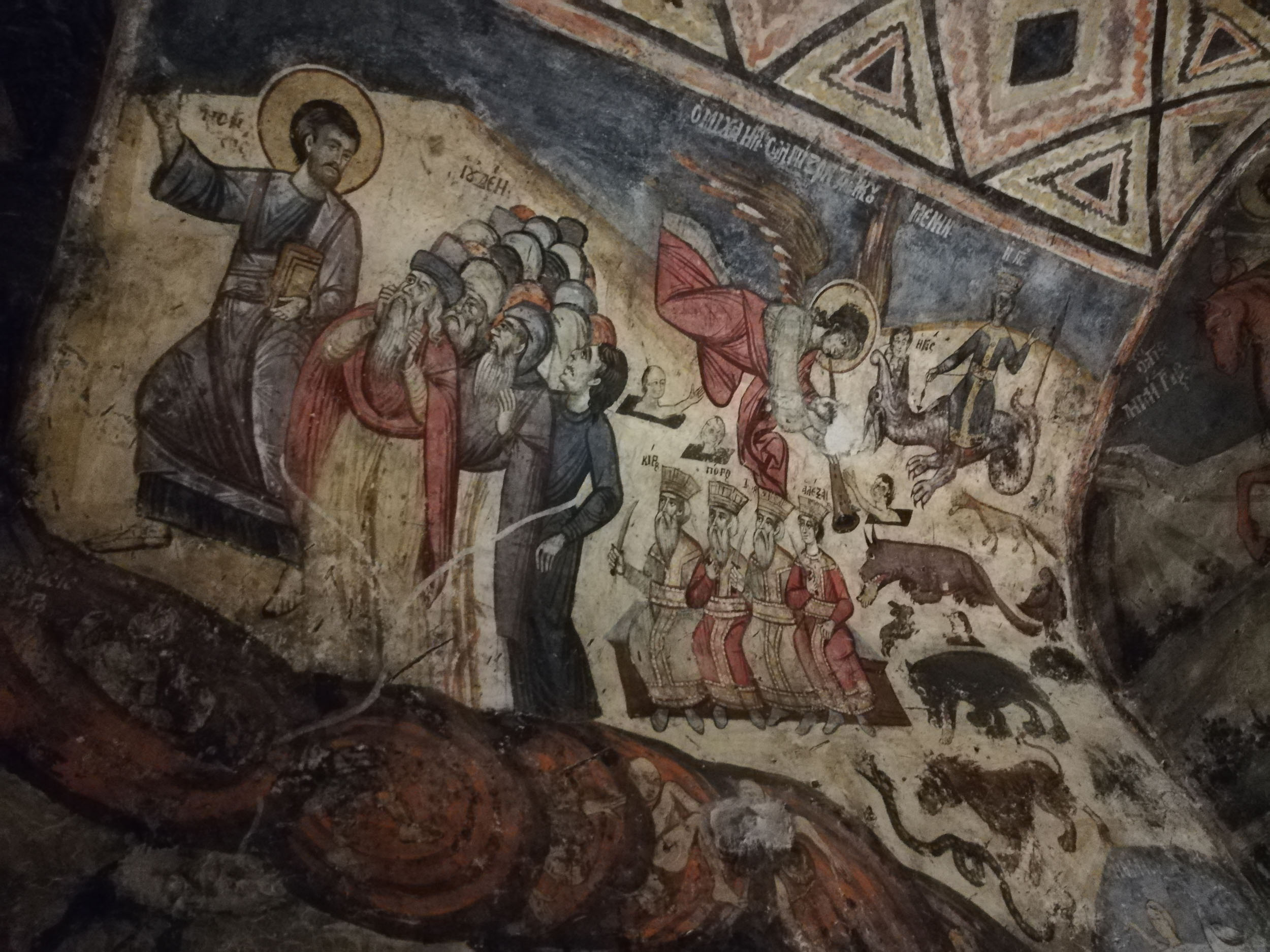
After his death in 976, the Kometopοuloi, the brothers Samuel, David, Moses and Aaron, appeared on the scene and launched a new war against Byzantium. David was murdered at Kalai Dryes, between Kastoria and Prespa. After the deaths of his other two brothers, Samuel remained the sole and undisputed leader of the Bulgarians. He created his short-lived state, often called the Western Bulgarian state, and reached the height of his power around 997, when he captured Dyrrachium. Although he had recovered Preslava, the city which had been the capital of the First Bulgarian State and had grown significantly in the years of Tsar Simeon and his successor Peter (927-968), Samuel chose not to move his seat there, preferring to rule first from Prespes and later from Ohrid – it is not known exactly when he transferred his capital from the former to the latter. In 985 or 986, Samuel conquered Larissa and moved its inhabitants to Prespes. He also translated the relic of St Achillius, the patron saint of Larissa, to the island of Agios Achilleios in Little Prespa. The island was still a peninsula, where he had his palaces, his “kingdoms”, as the historian John Skylitzes (Kedrenos) tells us. There he erected a church dedicated to St Achillius (“building a most beautiful and large church in his name”), to house the relic of the saint and serve as the seat of the anti-canonical Bulgarian “patriarchate”. It has been established that Samuel’s actions were not only intended to bestow prestige on his seat, it being a point of pride for every new city to have holy relics; they also expressed his ambition to create a new state, an empire, supported not only by the Slavic-Bulgarian population but also by the local people. Along with the relic of St Achillius, Samuel also brought from Larissa the relics of Saints Reginus of Skopelos and Diodore of Tricca (Trikala), while he subsequently obtained further holy relics from other Balkan cities: those of St Oecumenius of Tricca and St Tryphon of Cotor (Cattaro) in Dalmatia.

It is now believed that the church built by Tsar Samuel to house the relic of St Achillius was the imposing three-aisled basilica on the island of Agios Achilleios. Four tombs have been excavated in the south aisle by Professor Nikolaos Moutsopoulos, who says that they contained the skeletons of high officials, probably members of the Cometopuli royal family. According to him, the skeleton in one tomb was that of Samuel himself. Of the objects found in the tombs, the most remarkable is a piece of gold brocade woven with eagles (today at the Museum of Byzantine Culture in Thessaloniki).

Another particularly interesting artefact is a tombstone, now lost, which was discovered in the late 19th century during the digging of the foundations of the church of St Germanos in the village of Agios Germanos. The tombstone bore a Slavic inscription dated 992/3, stating that it came from the tomb of the parents of Tsar Samuel and his brother David. The inscription has been studied by many scholars and its authenticity has been questioned by part of the scientific community, especially since recently it has been argued that there is insufficient evidence to attribute the construction of the church of St Achillius to the Bulgarian ruler.

Tsar Samuel’s reign was cut short in 1014 after the overwhelming victory of Emperor Basil II Boulgaroktonos (the Bulgar-Slayer) at the Kleidi Pass on the River Strymon. In an act of unbelievable brutality, Basil had the prisoners taken in the Battle of Kleidion blinded – the sources mention 15,000 prisoners. Tsar Samuel, who had managed to escape, died of a heart attack at the sight of his blinded soldiers.

A few years later, in 1018, Basil II succeeded in overthrowing the Bulgarian state once and for all. On his return from Ohrid, he built two strongholds in the Prespa region: Vasilida on Great Prespa and Constantion on Little Prespa. The location of the first castle remains unknown, but the second is identified with the ruins of the fortified enclosure that have been identified on the islet of Agios Achilleios.

In 1072 the church of St Achillius was plundered by “western tribes” (Alamans and Franks according to John Skylitzes, or Alamans and Varangians according to his continuator). The damage to the church seems to have been repaired by Theophylact, the active Archbishop of Ohrid (c. 1090-1114/5 or 1124), who asked Macrembolites, the lord of Prespes, to restore it because he intended to convene a local synod there. It is interesting to note that the synod that took place at the end of the 11th century was convened in the church of St Achillius rather than Ohrid, the archiepiscopal see.

In the 12th century, it has been argued, the Prespes region became an independent theme with a military and civil governor, while ecclesiastically it was raised to an episcopal see, subject to the Archiepiscopate of Ohrid, the great administrative and ecclesiastical centre of the region. The annual festival of St Achillius on 15 May was attended by the clergy of Ohrid.

In the following centuries, important events in the history of the region include its conquest by the Serbian ruler Stefan Uroš IV Dušan (1331-1355). Following his death in 1355 and the dissolution of the vast Serbian state, the Prespes, together with neighbouring Florina, became part of the territory of the Serbian kings who ruled the western part of Macedonia, with Prilep in present-day North Macedonia as its capital. Around 1385, the Prespa region was conquered by the Ottomans. During the Ottoman period, the Prespes were part of the Sancak of Ohrid in the Eyâlet of Monastir. Ecclesiastically, they continued to belong to the Archiepiscopate of Ohrid until 1767, when the see was abolished by decree of the Sultan, and the Metropolis of Prespa and Ohrid (Lychnidos), with its seat in Ohrid, was created its place, subject to the Ecumenical Patriarchate of Constantinople.

Μικρή Πρέσπα / Little Lake Prespa (ΔΒΜΑ / archive DBMA)

It is interesting that most of the Byzantine sources refer to the wider area and the two lakes as “Prespa” in the singular, implying that there was a powerful castle-city of that name in the area. To date, however, no remains of a large urban centre have been found around the lakes, and none of the settlements in the area is said to have been called Prespa. If indeed there was a strong centre here, it should perhaps be sought on the island of Agios Achilleios, where, apart from the church of St Achillius, which served as an episcopal church, and the fortress at Kale, there were also another three churches and a monastic complex. Excavations have also revealed an extensive cemetery in the area around the church of St Achillius. Its size (500 m2) and long period of use (12th-early 15th c.) imply the existence of an adjacent settlement, which must have expanded continuously during the Middle and Late Byzantine periods.

From the 14th century onwards, there are increasing reports of small settlements around the two Prespa lakes, such as the villages of Drenovo (the now-abandoned village of Kranies), Nivitsa (today’s Psarades) and Robous (today’s Laimos). Most of them seem to have been founded during this period, with a few earlier exceptions. Evliya Çelebi, who visited the area in the late 1670s, confirms that there is no large urban centre in the Prespa region and lists 40 fertile villages of similar size: “each is like a small town”. He describes the villages as prosperous, populous and highly productive.

Monuments

Little Prespa, islet of Agios Achilleios

Despite its small size, many Byzantine monuments of different periods are preserved on the islet of Agios Achilleios. The most important is the church of St Achillius, one of the most remarkable monuments of the Prespa region. At the southeast end of the island, on the peak of Mount Kale, are preserved the remains of a castle identified by Professor Nikolaos Moutsopoulos as Costantion, founded by Basil II Boulgaroktonos (the Bulgar-Slayer) after the restoration of Byzantine rule in the region in 1018. The castle has an oval enceinte enclosing an area of approximately 2.5 hectares. A small single-nave church has been excavated on the hilltop.

A short distance southeast of the village, the ruins of the small church of the Holy Apostles are preserved to the height of the foundations. This is a three-aisled basilica with a narthex, its aisles separated by colonnades. It dates from the 11th or 12th century.

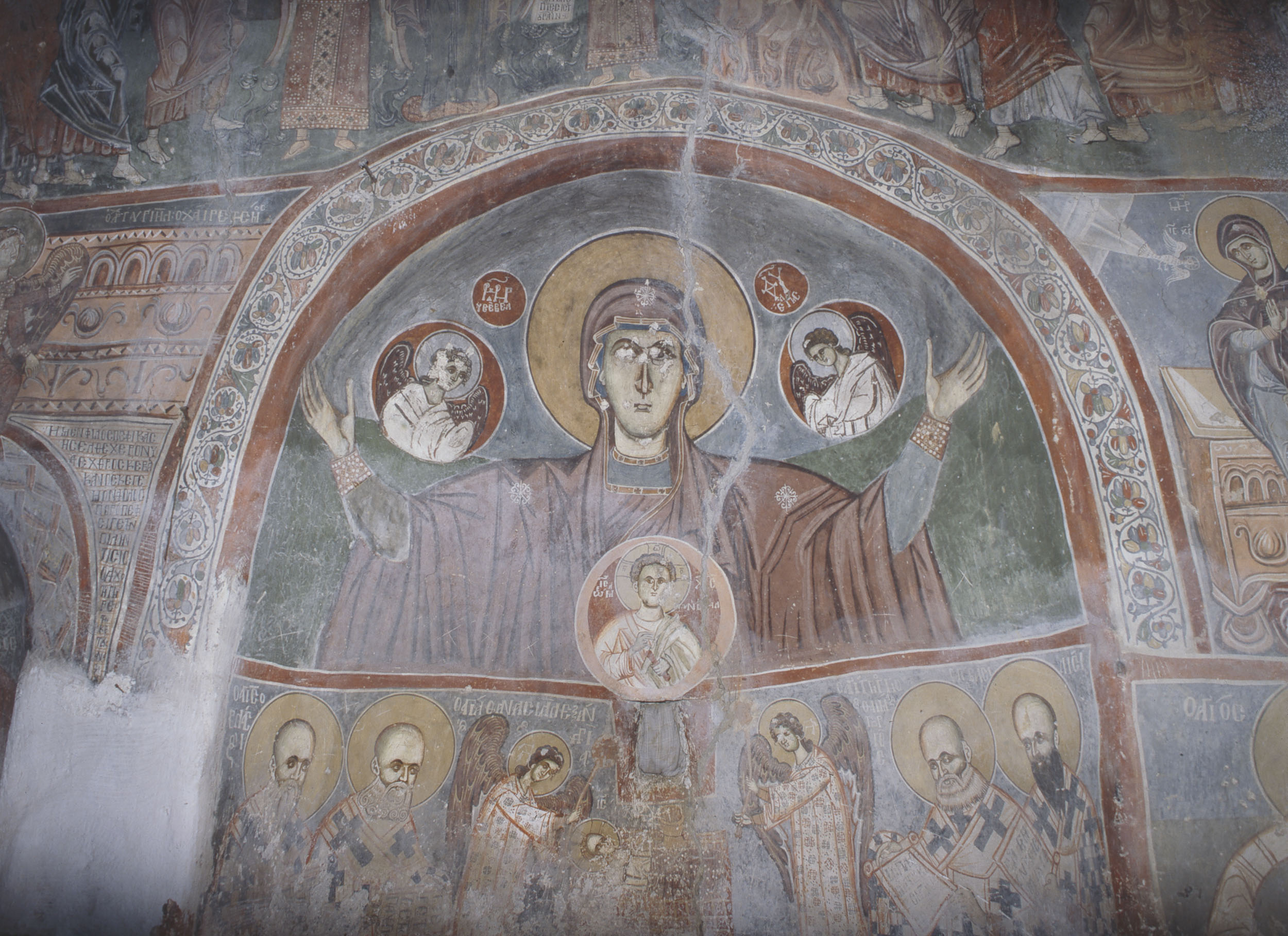
Near the Holy Apostles are the ruins of the small single-nave church of St Demetrios, of which only the east and south walls are preserved to a low height. A fresco in the sanctuary apse depicted the Melismos (Christ on the Altar), a seraph and a bishop. The fresco has been removed and is now on display in the Archaeological Museum of Florina. It dates from the 14th century, which is probably when the church was built.

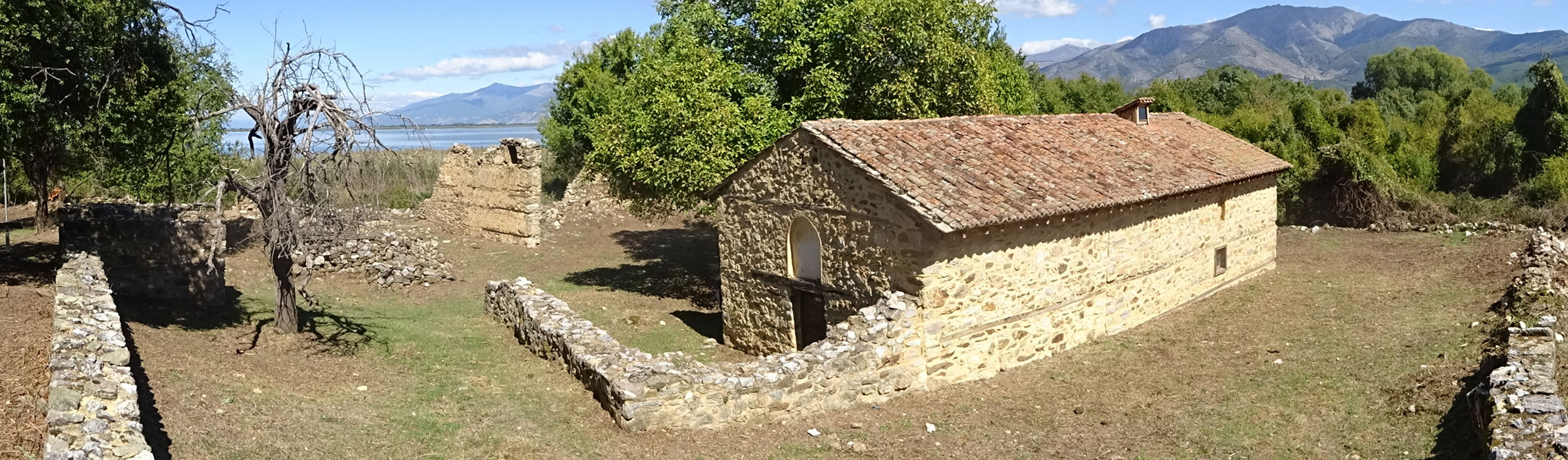
Just north of the church of St Achillius is the church of St George, which is now the funerary church of the small village on the island. It is a single-nave church with a timber saddleback roof and a wooden portico (hayat) along its south side. The three-sided sanctuary apse preserves rudimentary decorative brickwork up to the height of the double-light window and belongs to the initial phase of construction of the church, which, based on the preserved fresco decoration, is dated to the end of the 15th century. The present form of the church, however, is the result of later interventions. The surviving frescoes in the sanctuary are executed in the folk style.

At the southeast end of the islet is the small single-nave, timber-roofed church of the Panagia Porphyra, with a later narthex. It was once the katholikon of a monastery, of which the remains of the cells and other auxiliary buildings are preserved today. The monastery buildings suffered considerable damage from Italian bombing in 1941. Two building phases can be identified in the katholikon: only the west wall belongs to the original phase. It is adorned with frescoes that, according to the surviving dedicatory inscription, were executed in 1524 and constitute a remarkable group of paintings influenced by the artistic production of Kastoria and Ohrid. The carved wooden doorframe is a particularly remarkable feature of this phase. In the second building phase, in the early 18th century, the church was radically renovated and acquired its present form. Apart from the frescoes of 1524, two more layers of frescoes are preserved. The second layer comprises the frescoes on the west front of the church, which are dated shortly after those of the first phase, in the mid-16th century. The frescoes of the third layer are located in the sanctuary apse and on the south wall. According to the surviving dedicatory inscription, they were painted in 1741 at the expense of “all the Christians of the surrounding area”, during the term of Bishop Parthenios. The frescoes of the third layer are attributed to the painters Konstantinos and Athanasios from Korytsa (Korçë), who, two years later, worked on the church of St Germanos in the eponymous village of Prespes.

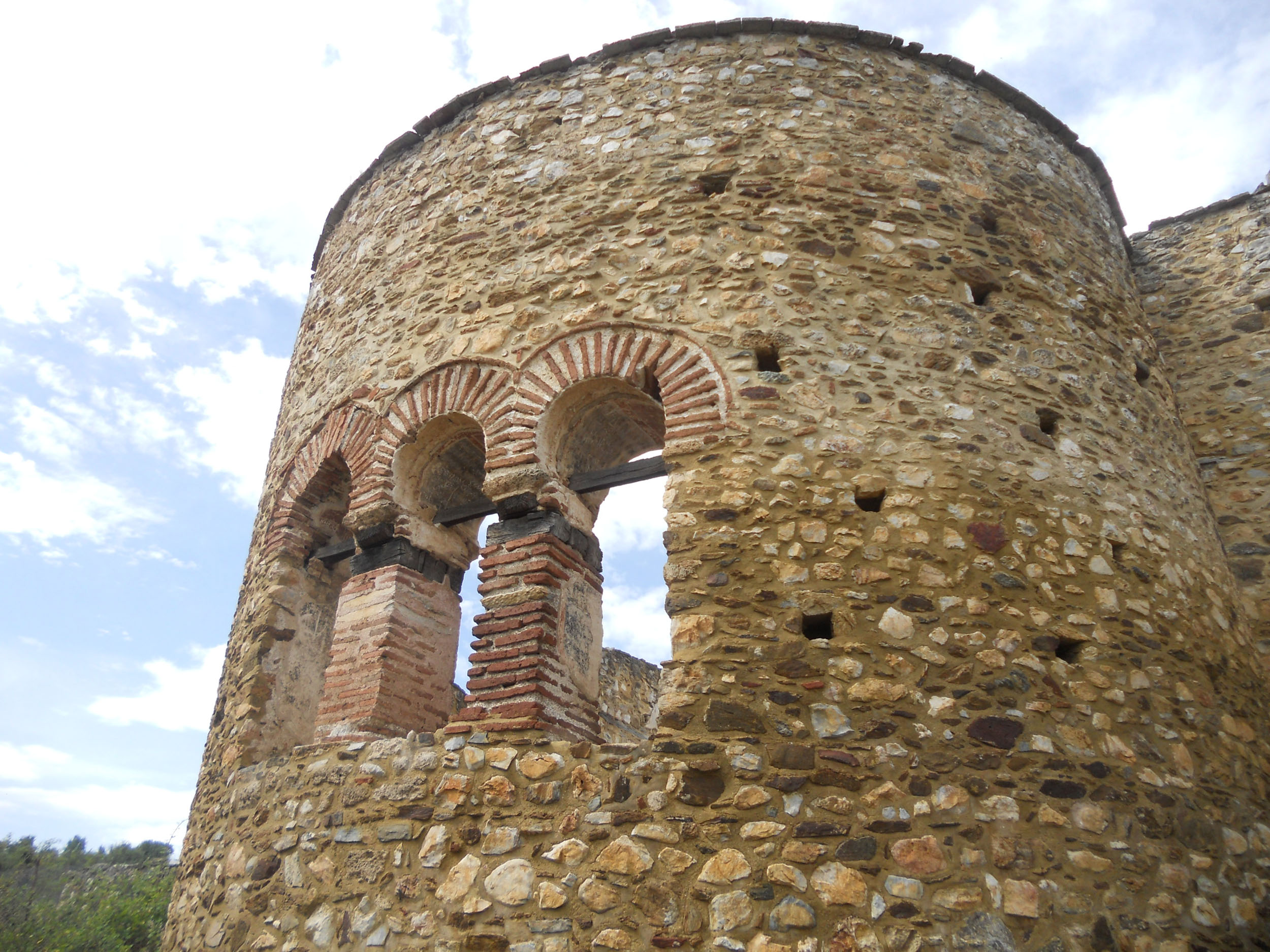
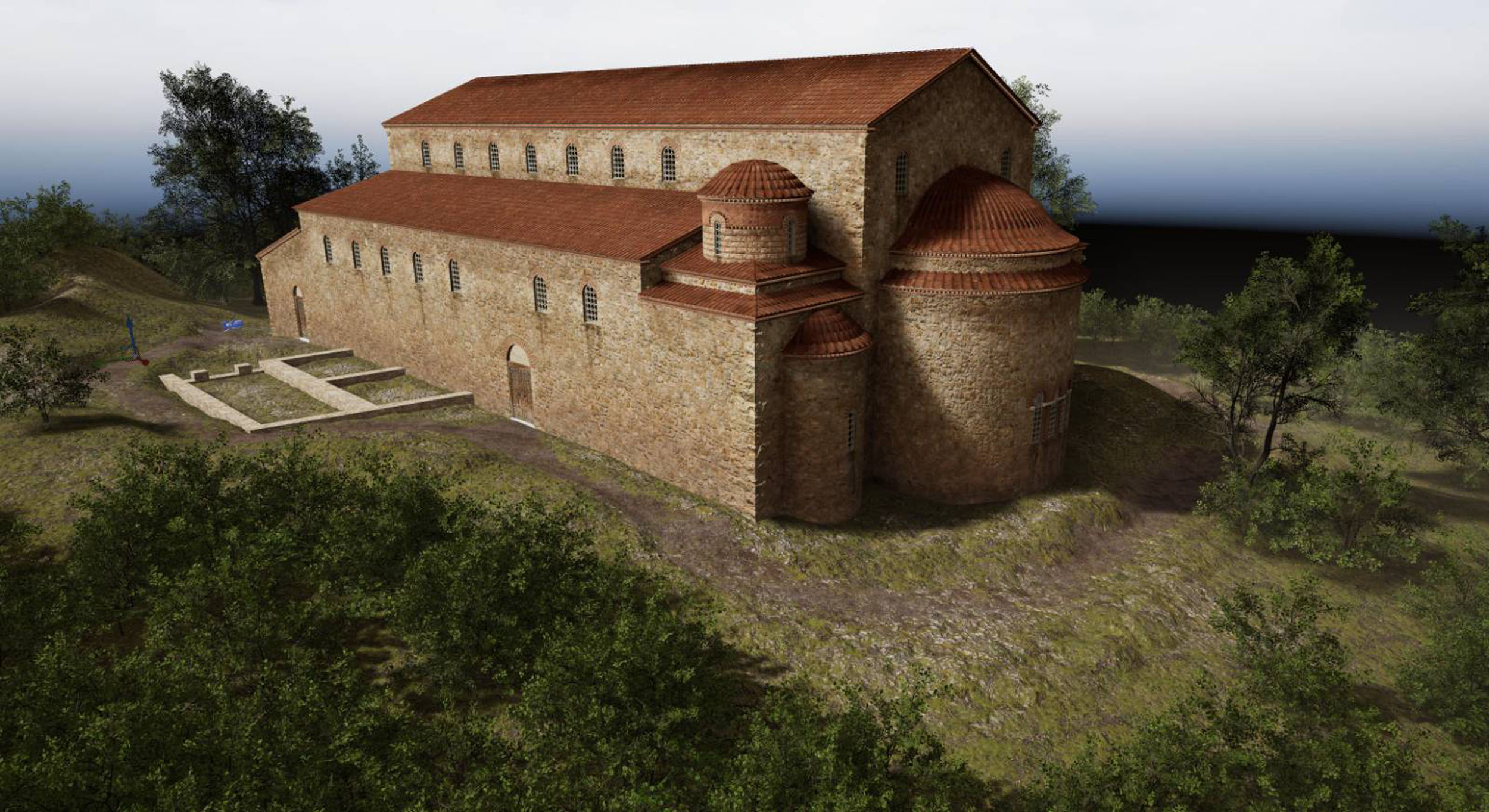
The church, which stands on a hillside on the northeast side of the islet, is a large (44.70 x 22 m) three-aisled timber-roofed basilica with a narthex. Only some parts of the church, mainly the east side, are preserved today.

As has been established in research, despite the differing opinions that have been expressed recently, the church was built by Tsar Samuel of Bulgaria after the conquest of Larissa in 985 or 986, in order to house the relic of St Achillios and serve as the seat of the Bulgarian patriarchate. Later, after the restoration of Byzantine rule in the region (1018) and the establishment of the episcopal see of Prespa (12th c.), it served as an episcopal church. According to the excavation data, it remained in use until the early 15th century.

The architectural type of the church is a survival into the Byzantine period of the corresponding Early Christian type. The semicircular apse of the sanctuary, which is significantly larger than those of the prothesis and the diaconicon, has a stepped synthronon, confirming that this was an episcopal church. The church was previously thought to have had galleries, but this view disputed by some researchers. The prothesis and diaconicon have the plan of a contracted cross-in-square church and were covered with two small cylindrical domes. The floor of the church is paved with rectangular stone slabs, spolia probably taken from ancient tombs. The church is built of undressed stones joined with white lime mortar, with much use of wooden reinforcement, the imantosis (belting system) of the Byzantine period. More elaborate cloisonné brickwork and a variety of brickwork ornaments are visible on the exterior of the drum of the small dome over the prosthesis, of which only a small part survives. The foundations of a tripartite funerary annexe built in the Late Byzantine period are preserved in contact with the exterior of the south side of the basilica.

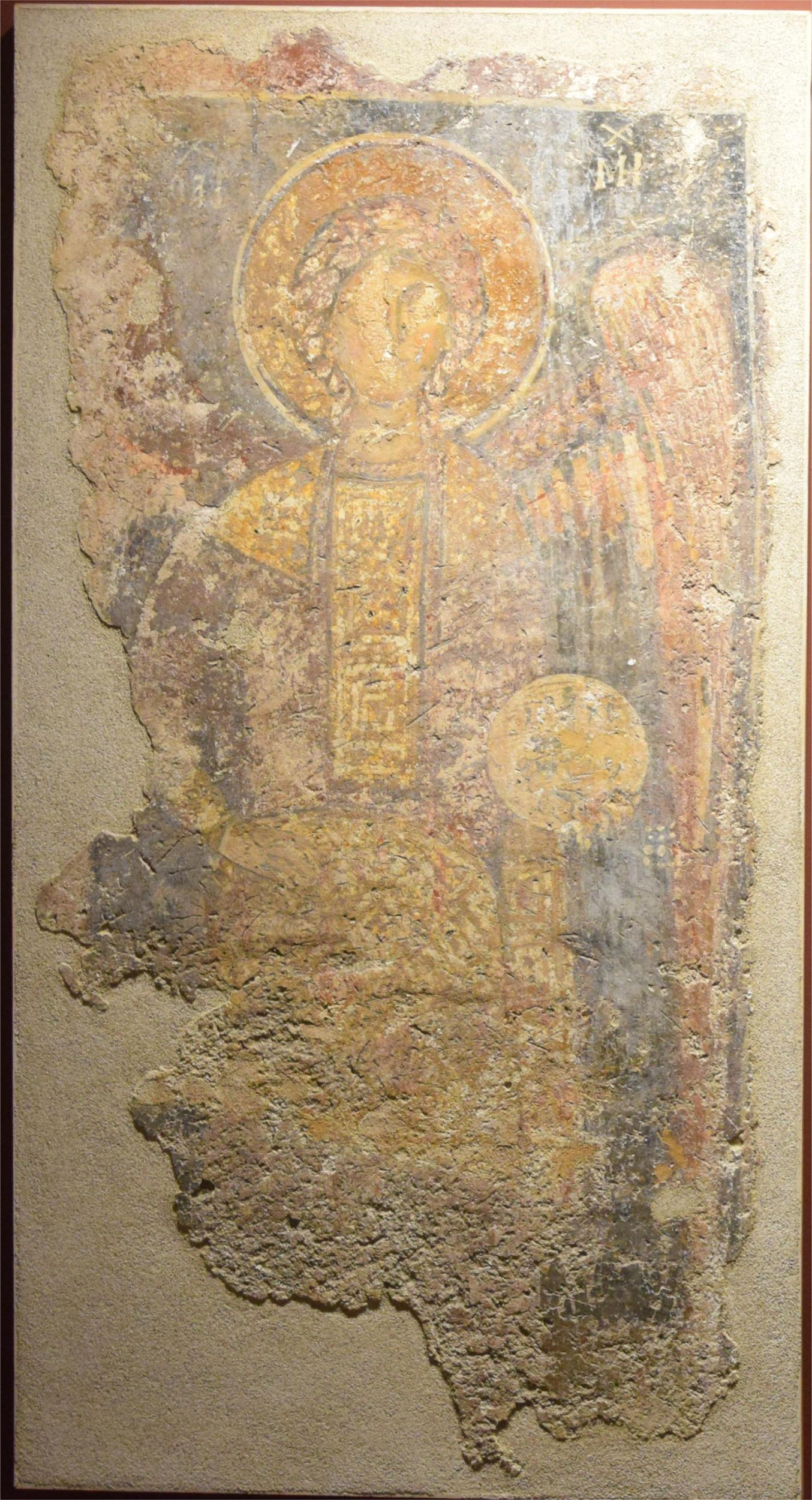
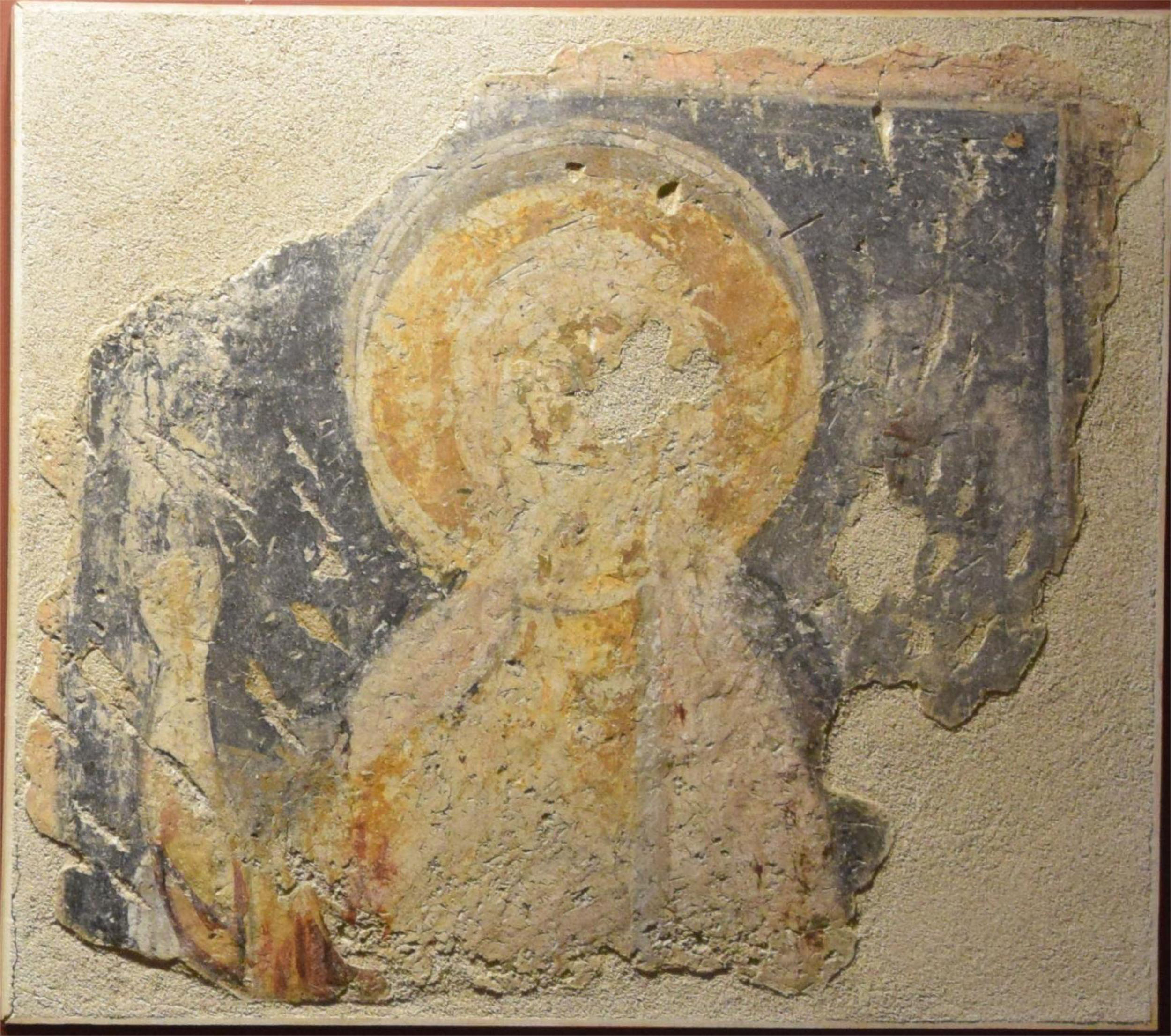
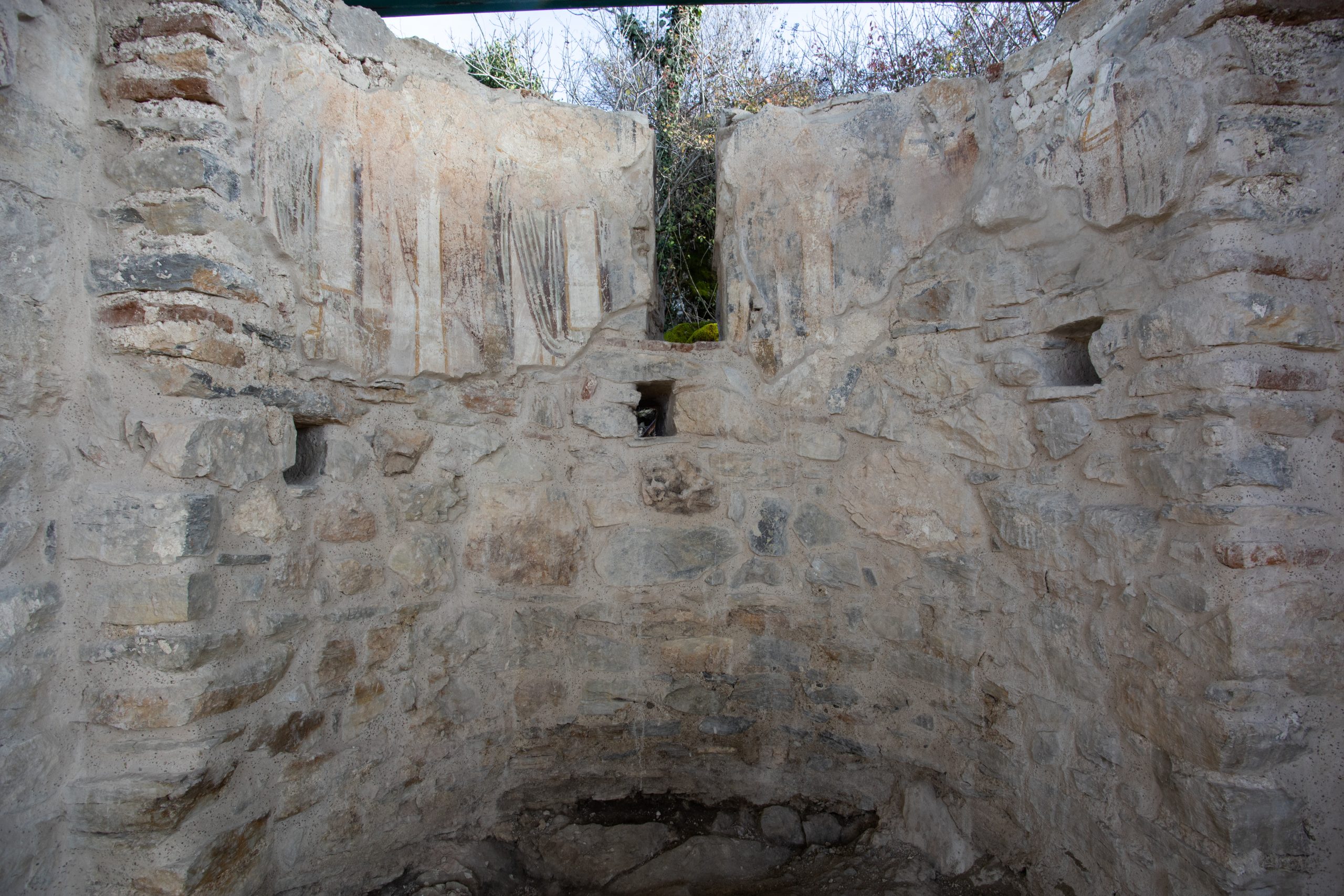
Of the once-brilliant frescoes of the church only a few sections are preserved today, belonging to two layers whose poor state of preservation makes them difficult to date. According to the prevailing view, they belong to the mid-11th and late 12th centuries. The frescoes of the monument have been removed for protection and the best- preserved pieces are on display in the Archaeological Museum of Florina. Of particular interest are the 14 (or, according to other scholars, 18) arches painted in red in the lower part of the sanctuary apse, inscribed with the names of the bishops’ seats subject to the archiepiscopate of Ohrid.
In 2022, under the scientific supervision of the Ephorate of Antiquities of Florina, a three-dimensional model of the monument was made available to the public via a digital platform using an augmented reality (AR) application.

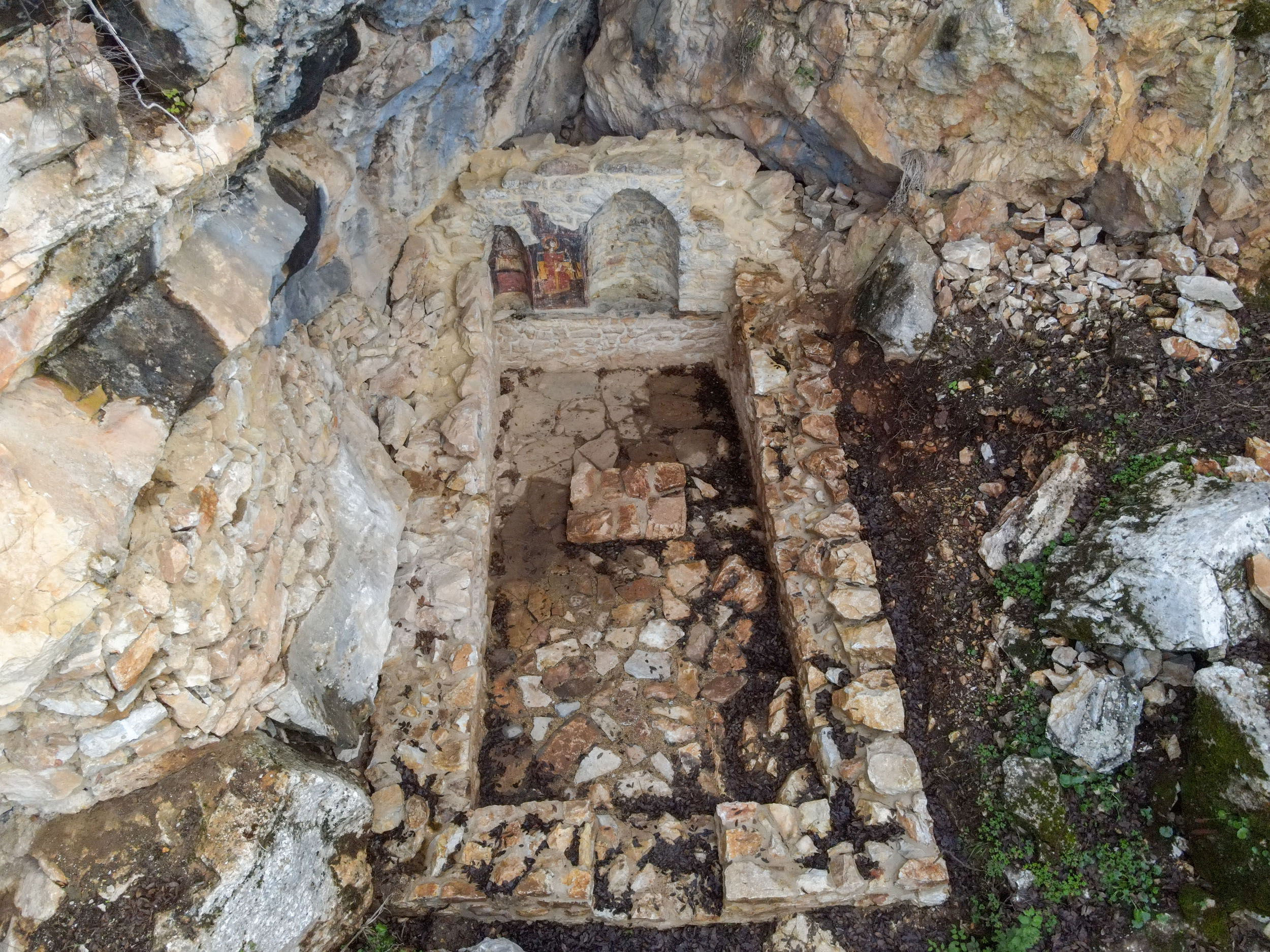
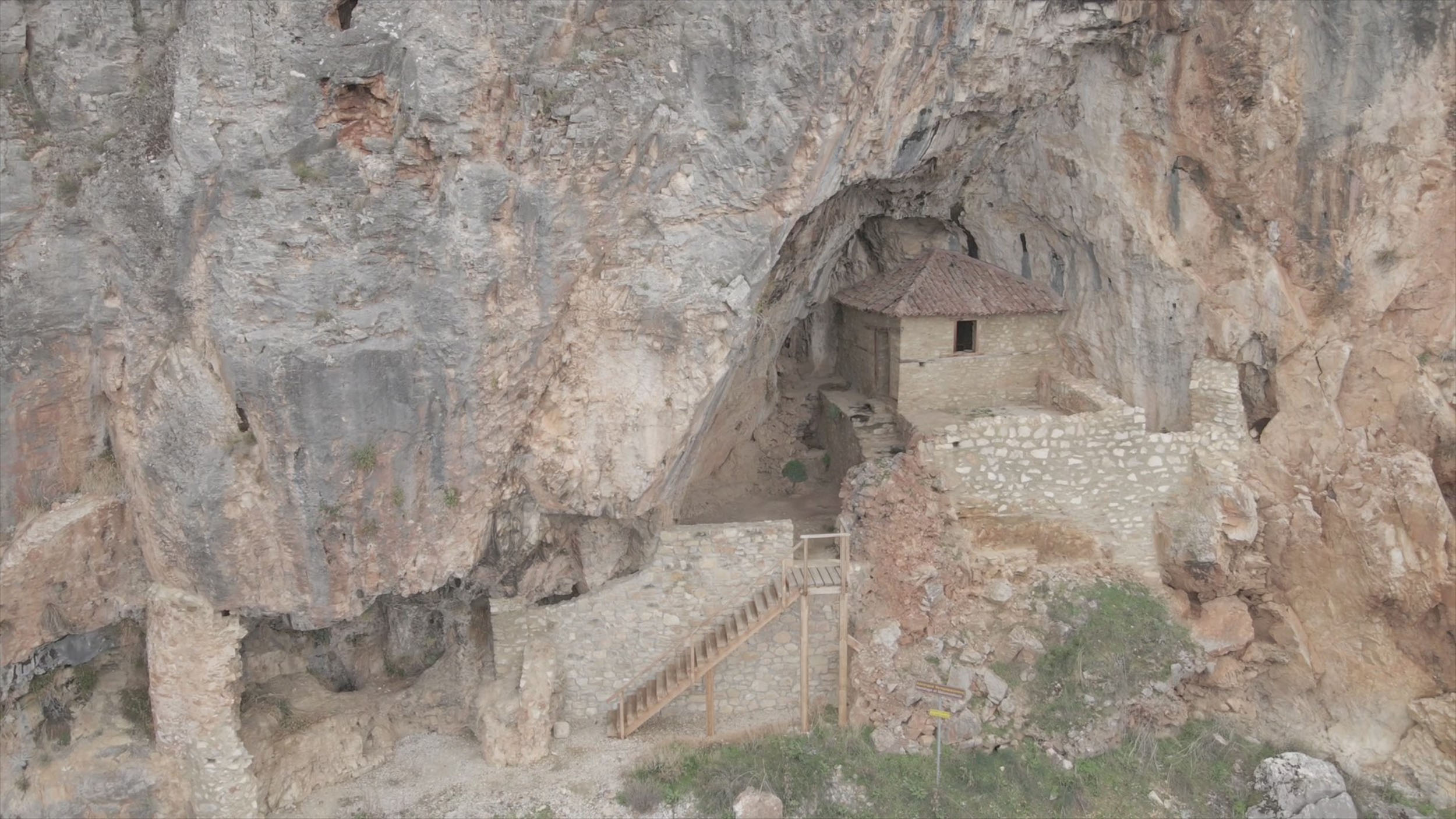
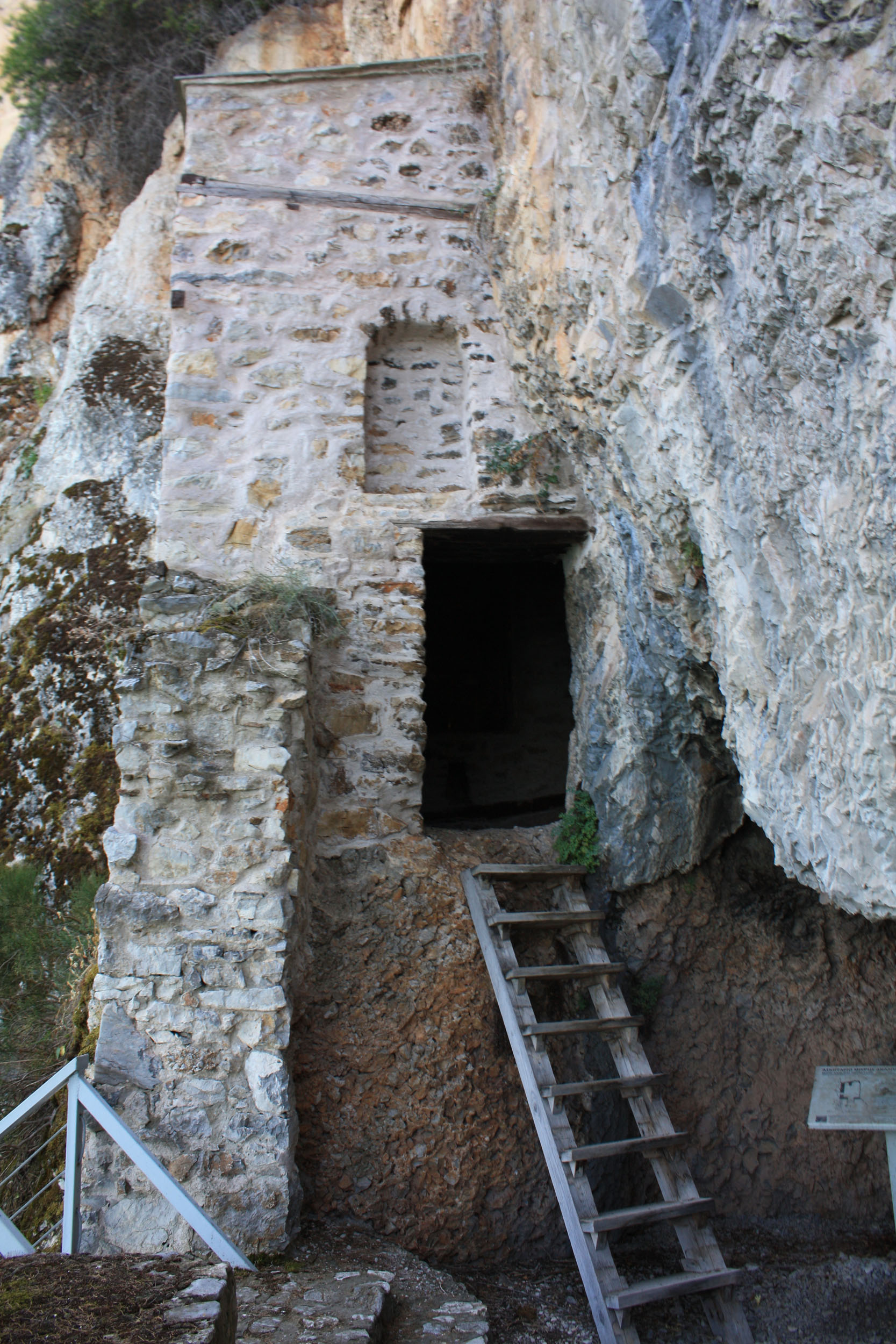
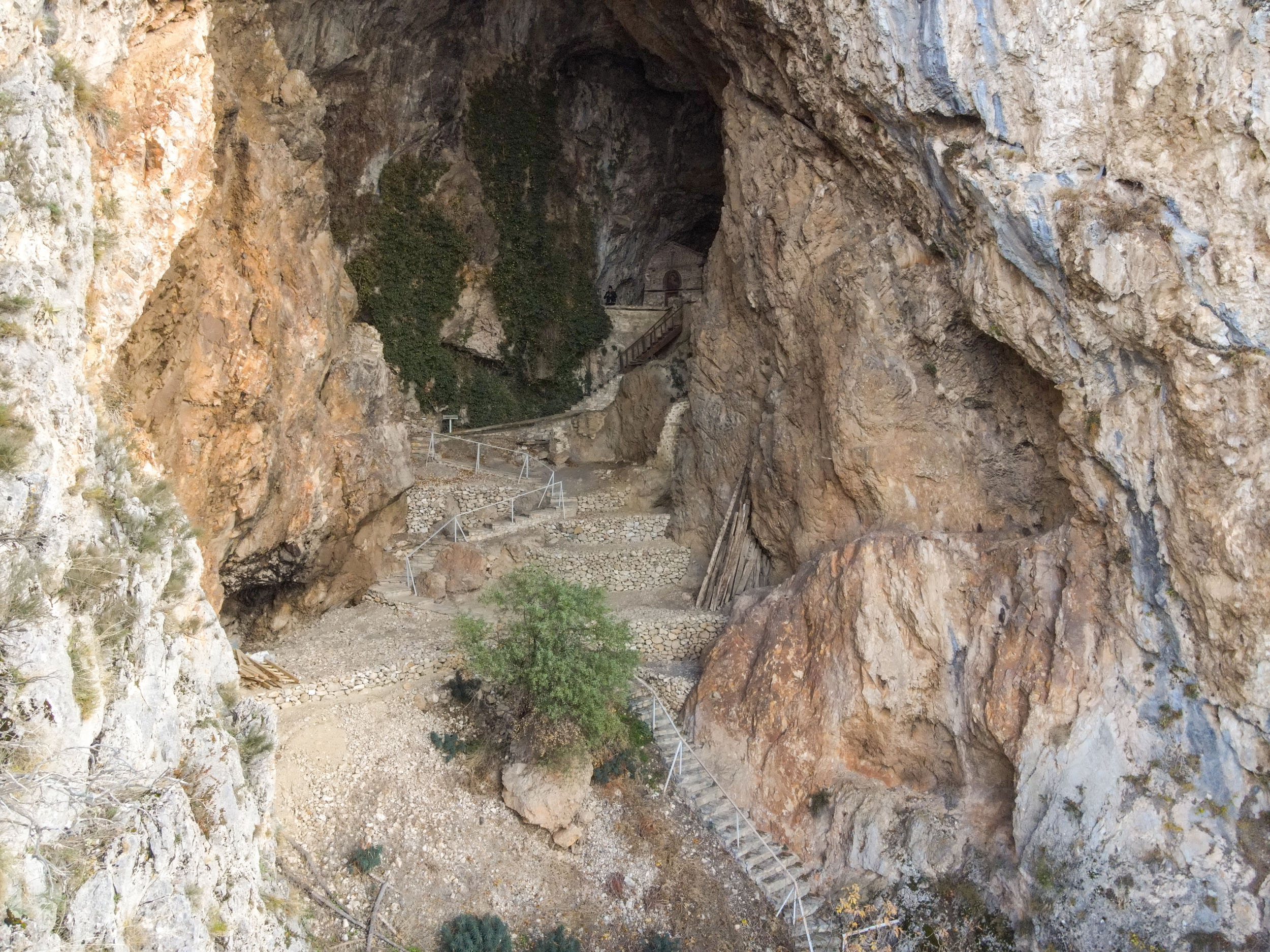
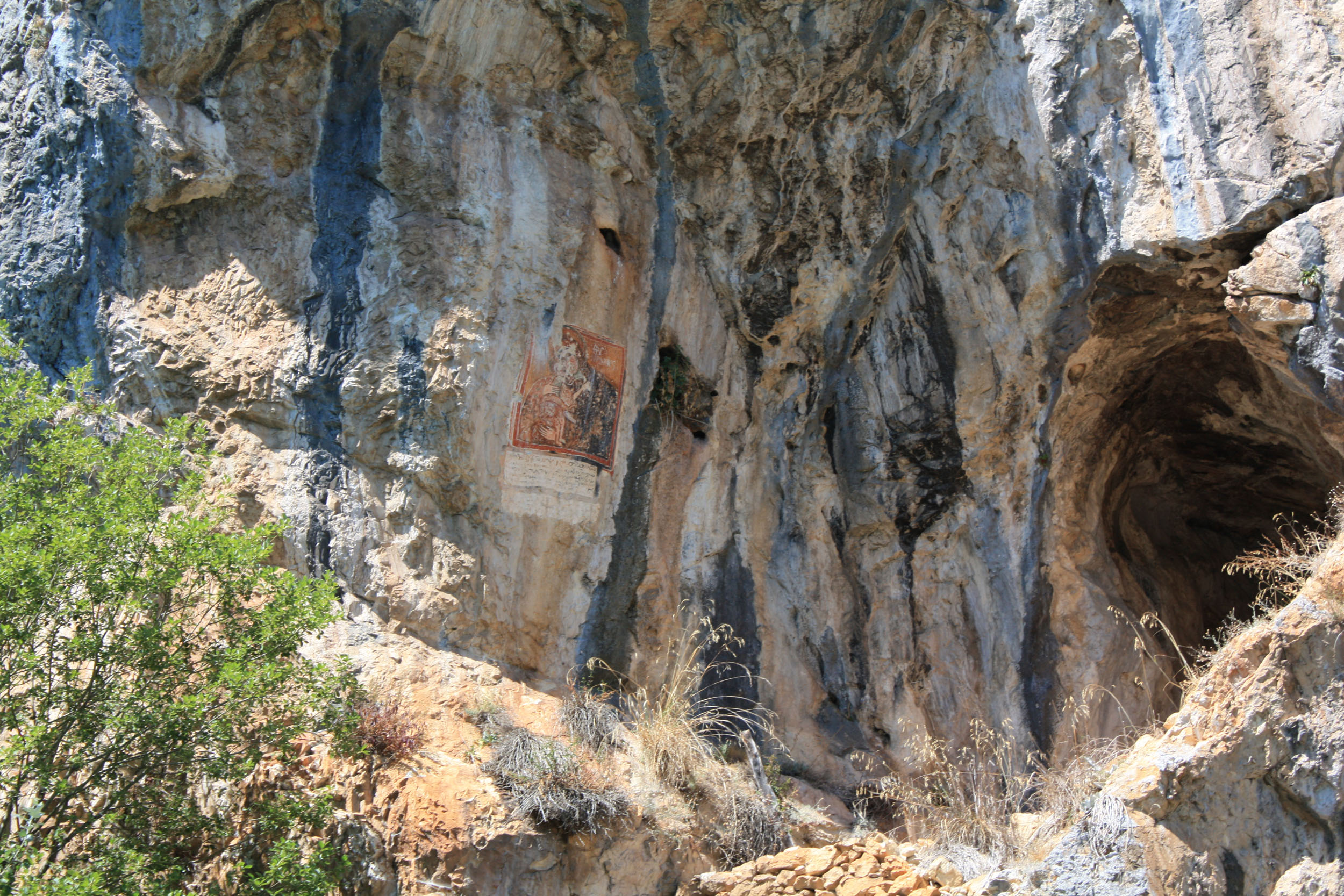
On the rocky banks of the Great Prespa Lake, a distinctive type of ascetic monasticism developed after the 13th century and flourished throughout the Ottoman period into the 19th century. The otherworldly landscape of the lake and its geographical isolation were key factors in the flourishing of eremitism in the area. The hermitages are located in isolated caves on the rocky banks of the lake and in most cases have small churches and auxiliary buildings to meet the hermits’ needs. The closest village to the hermitages of Great Prespa is Psarades (formerly Nivitsa or Nivista), which appears in written texts before the mid-14th century. The geographical distribution of the hermitages, which are especially densely crowded around Psarades, has led to the view that the development of monasticism in the area is closely linked to the founding of the village.

In the Greek part of the lake there are seven hermitages, the most famous being those of the Transfiguration, the Small Ascension and Panagia Eleousa. The other four preserve only fragments of architecture and painted decoration. However, the actual number of hermitages is probably considerably higher, based on the findings of the investigations of the Ephorate of Palaeoanthropology and Speleology of Northern Greece, which have identified previously unknown caves on the banks of Great Prespa, in at least two of which (Raksanets I and Panagia Glykophilousa) pottery dating from the post-Byzantine to the modern period was found. The difficultly of accessing and living in the hermitages of Prespes indicates that they were exclusively male monasteries. Due to the very limited space available for their development, only a few, such as the Transfiguration and Panagia Eleousa, may have operated as coenobitic monasteries with many hermits.
Three of the hermitages on the Albanian side of the lake, those of the Archangel Michael in Trstenik, the Annunciation near the village of Globočani, at the site of Blashtojne or Crna Pešta, and the church of the Virgin at Globoko, are of special architectural interest, as each is laid out on two levels: on one level is the hermitage church and on the other the hermitage itself, the hermits’ place of residence. One of the most important hermitages of Great Prespa is located on the island of Mali Grad, in the Albanian part of the lake, and is dedicated to the Nativity of the Virgin Mary. The hermitage church preserves remarkable frescoes of three phases, precisely dated by inscriptions to 1344/5, 1368/9 and 1607.

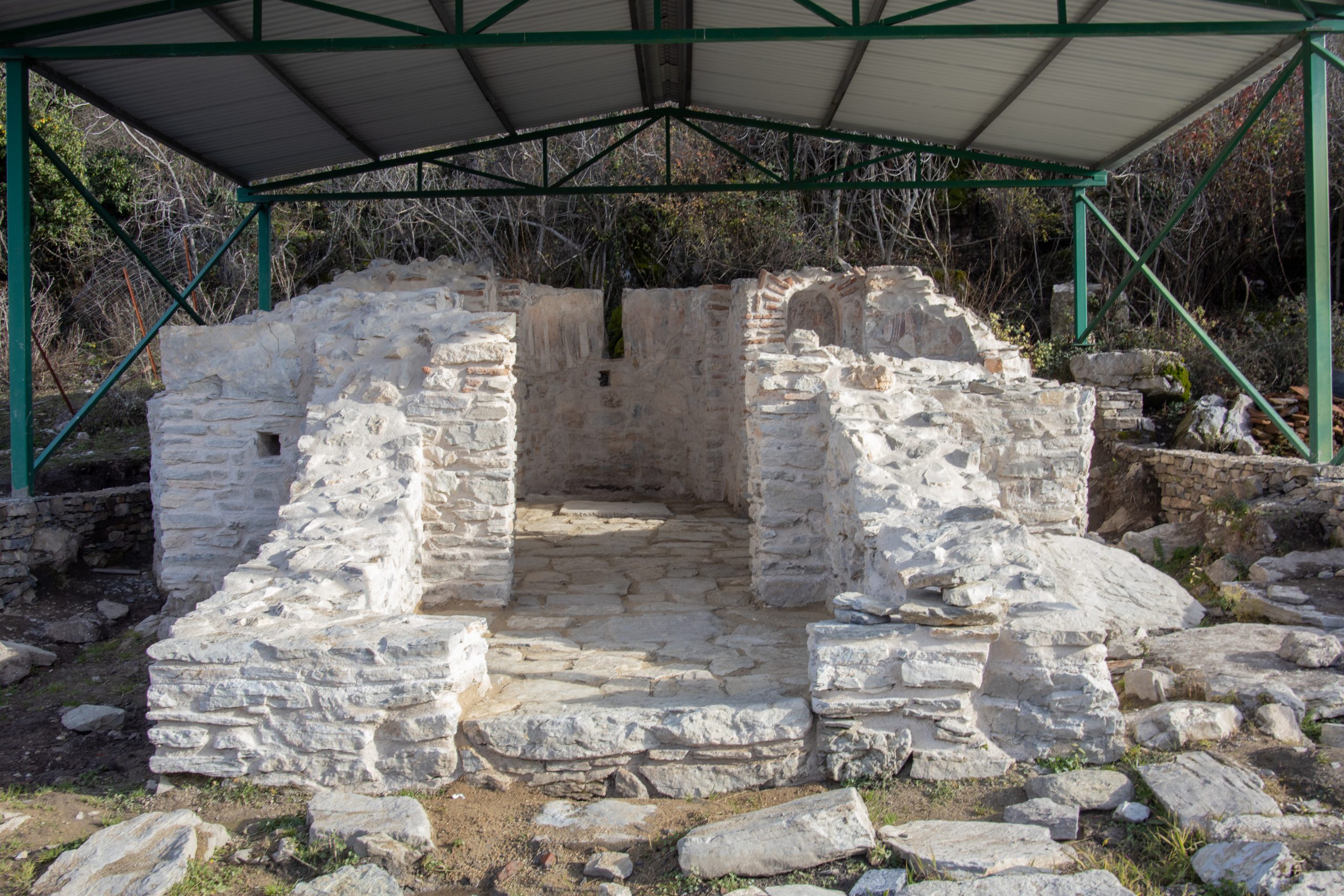
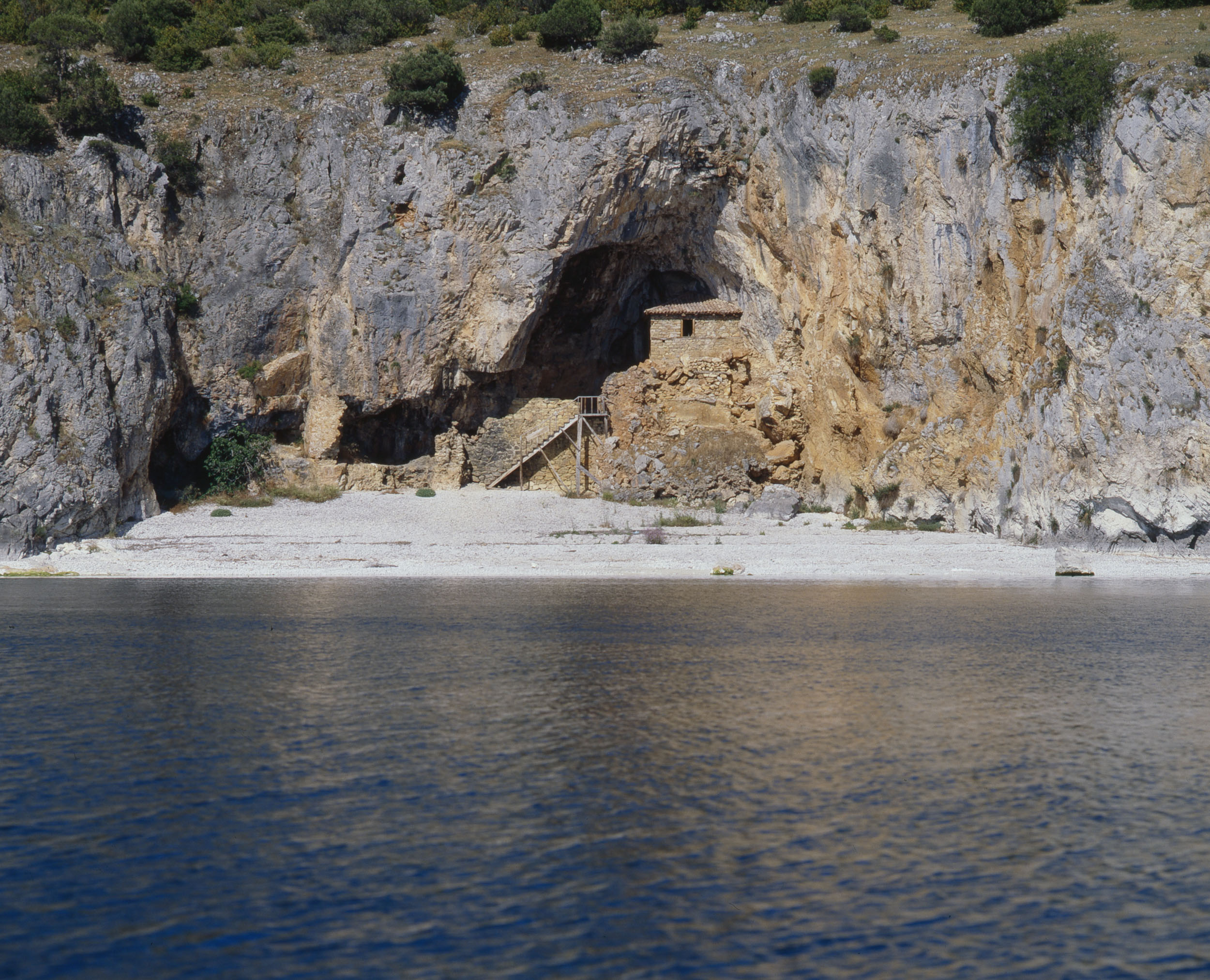
The hermitage is located in a small cove on the Great Prespa Lake, west of the village of Psarades. The small single-nave, barrel-vaulted hermitage church is built inside a shallow cave, on a higher level now accessed by a small metal staircase. It is thought to be the oldest hermitage in the region, founded in the 13th century, based on the dating of the carved decoration of two panels of the original wooden templon, which are now exhibited in the Archaeological Museum of Florina. The two carved wooden panels are considered particularly important due to the rarity of similar works of this period. Fragments of frescoes are preserved in the vault of the church, probably dating from the time of its construction. A second room was added to the original church at a later date, probably intended as a narthex or a monastic lite. It contains the remains of 16th- or 17th-century frescoes.

The annexes of the hermitage include two buildings housing the monks’ cells, a room that was probably used as a refectory, and a storeroom.

The hermitage is easier to access than the other hermitages of the lake. This, together with the antiquity of the hermitage, its size and its auxiliary buildings, has led to the hypothesis that it served as the dominicum (main church) of all the hermitages in the area.

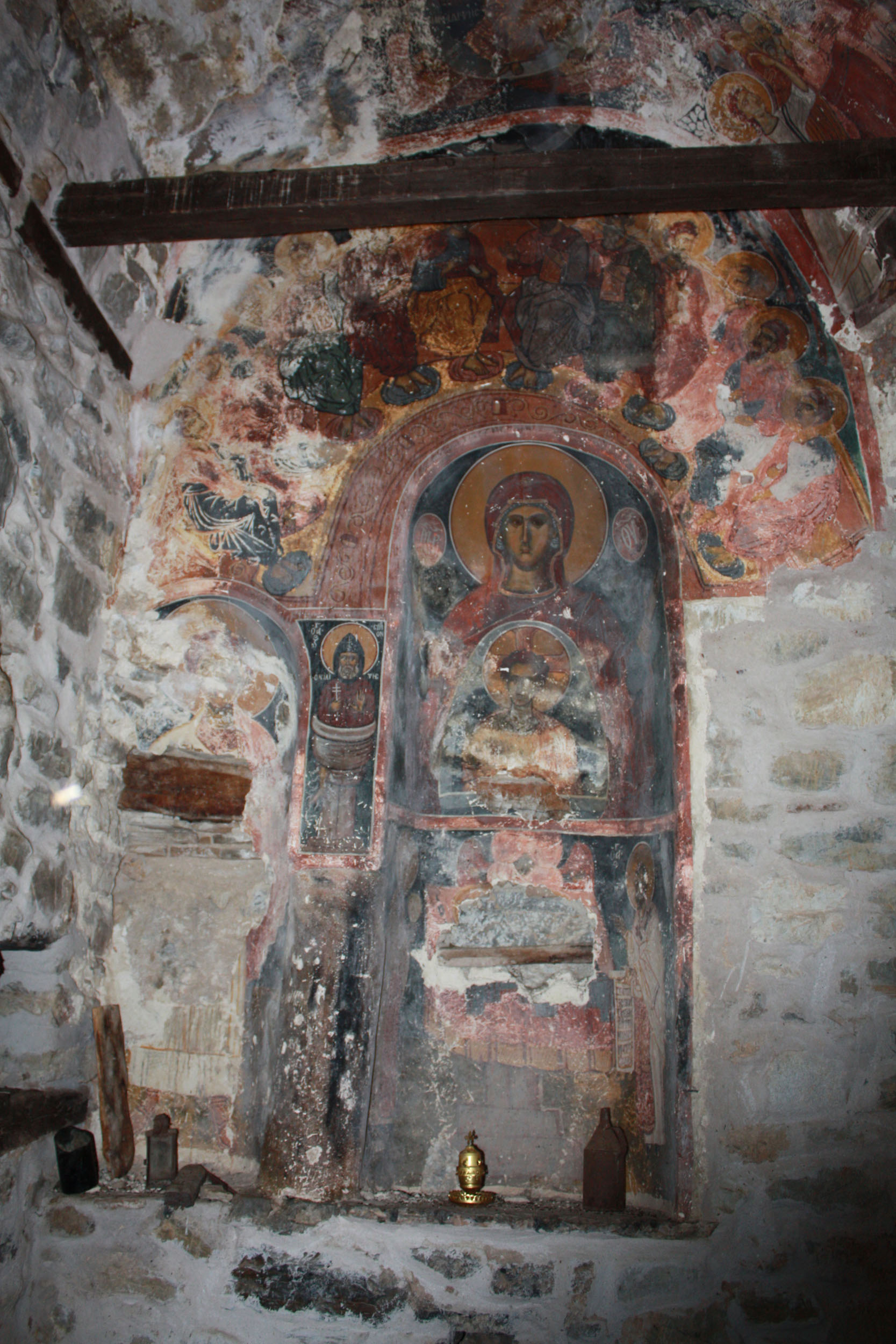
All that remains of the hermitage of the Small Ascension is a small single-nave, barrel-vaulted church without a narthex, high up in a niche in the rocks. Access to the church, once extremely difficult, is now via a set of metal stairs. Inside the church, frescoes are preserved in the sanctuary and the east part of the barrel vault. They are dated to the early 15th century on the basis of stylistic criteria.

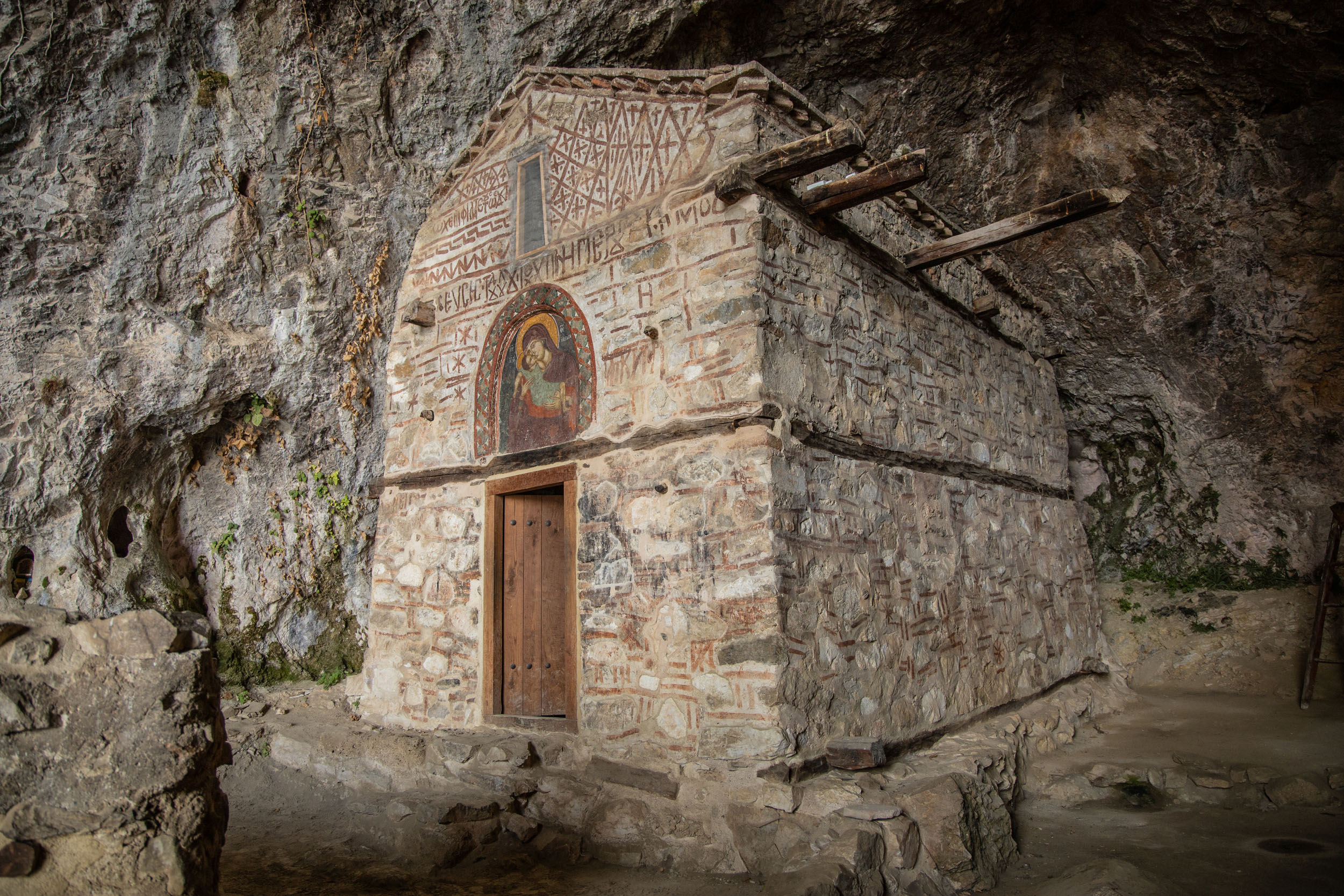
This is the largest hermitage in the area, located on a small beach on the south bank of Great Prespa. It lies inside a large cave, the entrance to which is 40 m above the level of the lake. It was formerly accessed by steps built or carved into the bedrock, and by a wooden staircase for the last few metres. Today, a long stone staircase leads up to the monument. The small hermitage church is built at the back of the cave and is a single-nave barrel-vaulted church without a narthex. Apart from the katholikon, remains of the built walls of the cells of the monastic community and a low built enclosure in front of the church are preserved. Some cist graves have also been excavated around the foundations of the church.

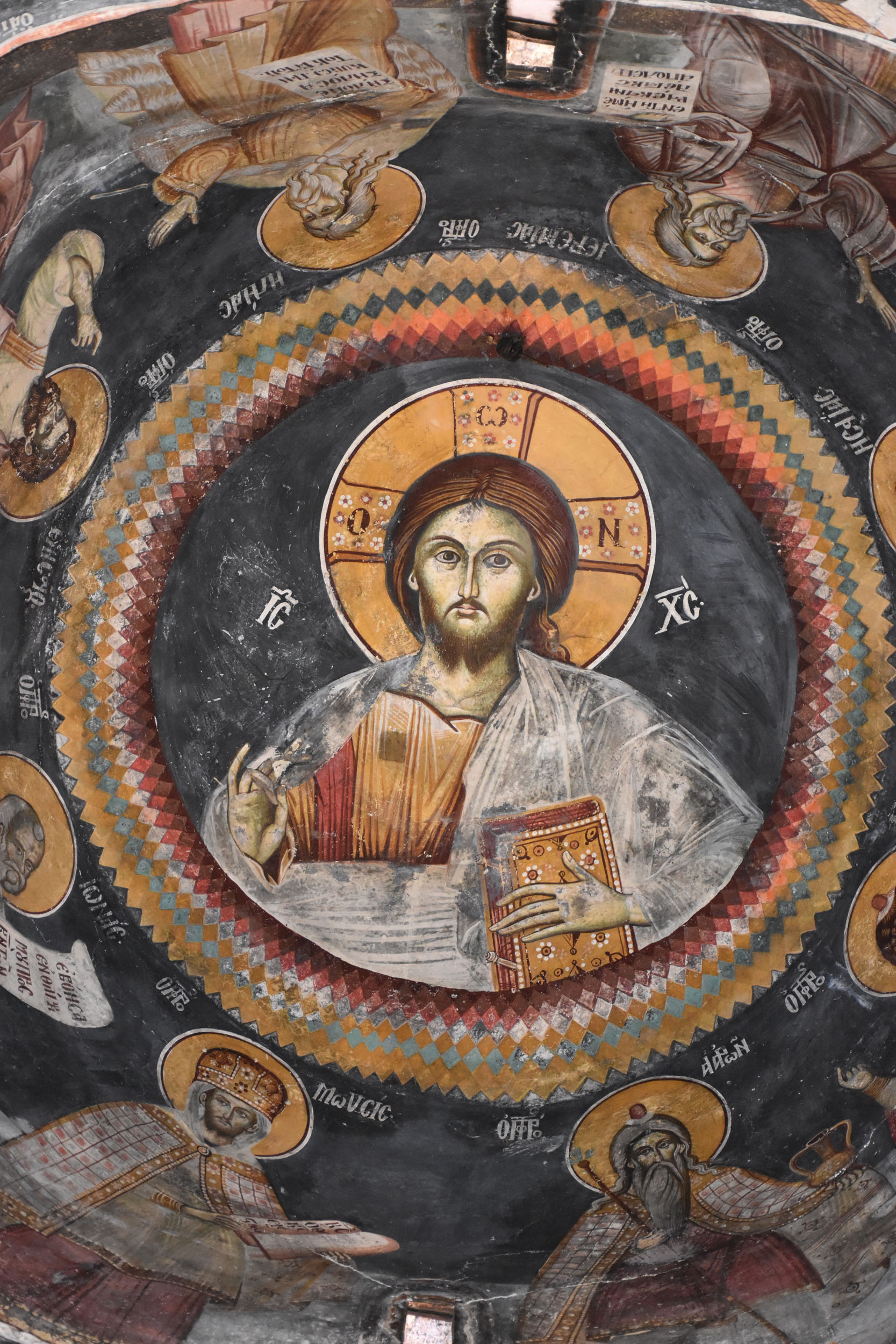
A special feature of the church is the good preservation of the external painted decoration on all four sides, imitating the cloisonné masonry of Byzantine churches. In other words, because bricks were difficult to make or transport to this part of the lake, the painter used red lines to render the bricks surrounding the stones in churches built in the cloisonné system. He also painted a variety of brickwork ornaments and other symbolic themes. The rich aesthetic effect of the façades of the church of Panagia Eleousa is reminiscent of the highly decorated cloisonné façades with brickwork ornamentation of the Middle Byzantine churches of Kastoria. The practice of imitating cloisonné masonry in paint is also seen in other churches in Macedonia and Serbia dating from the 11th to the 14th century.

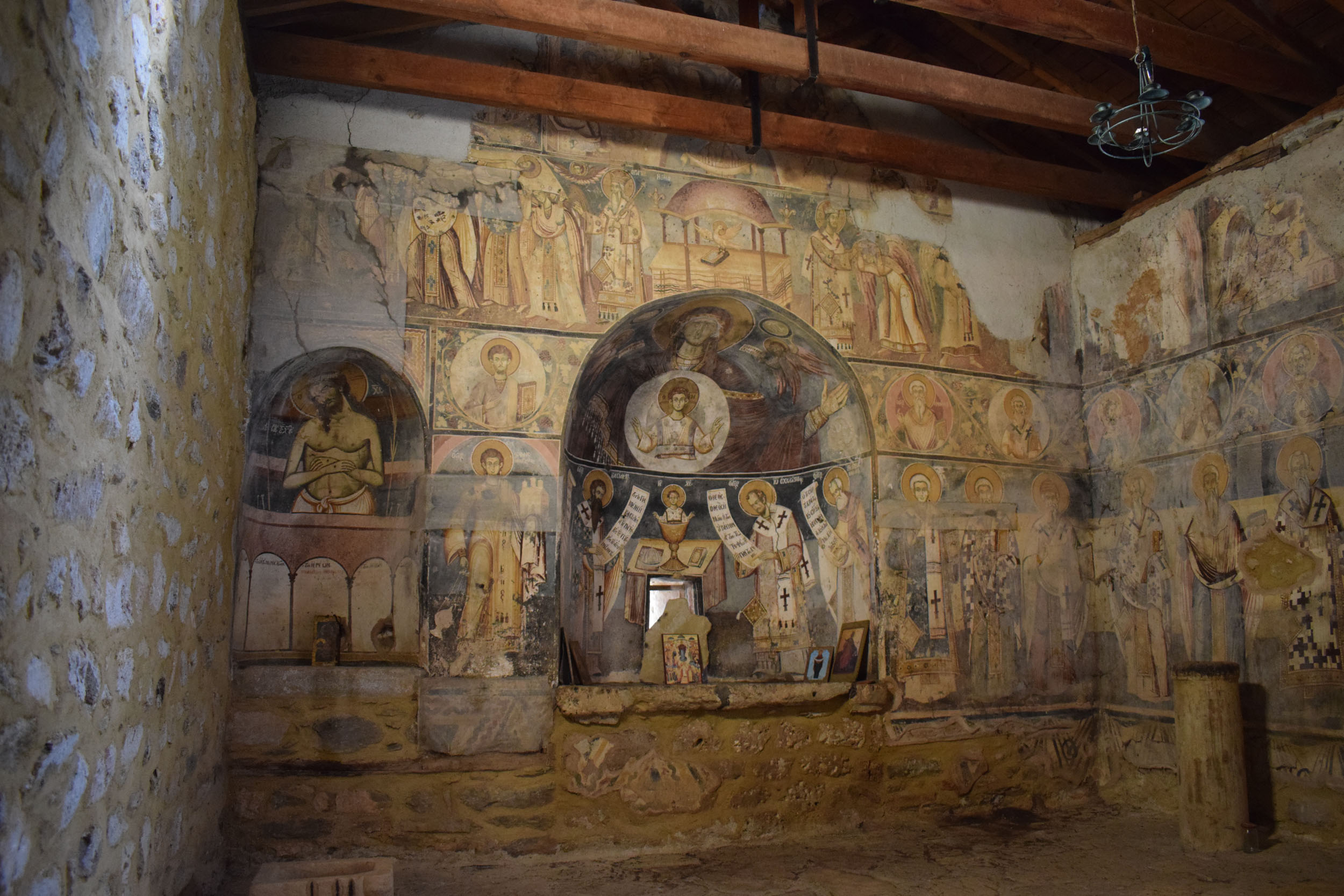
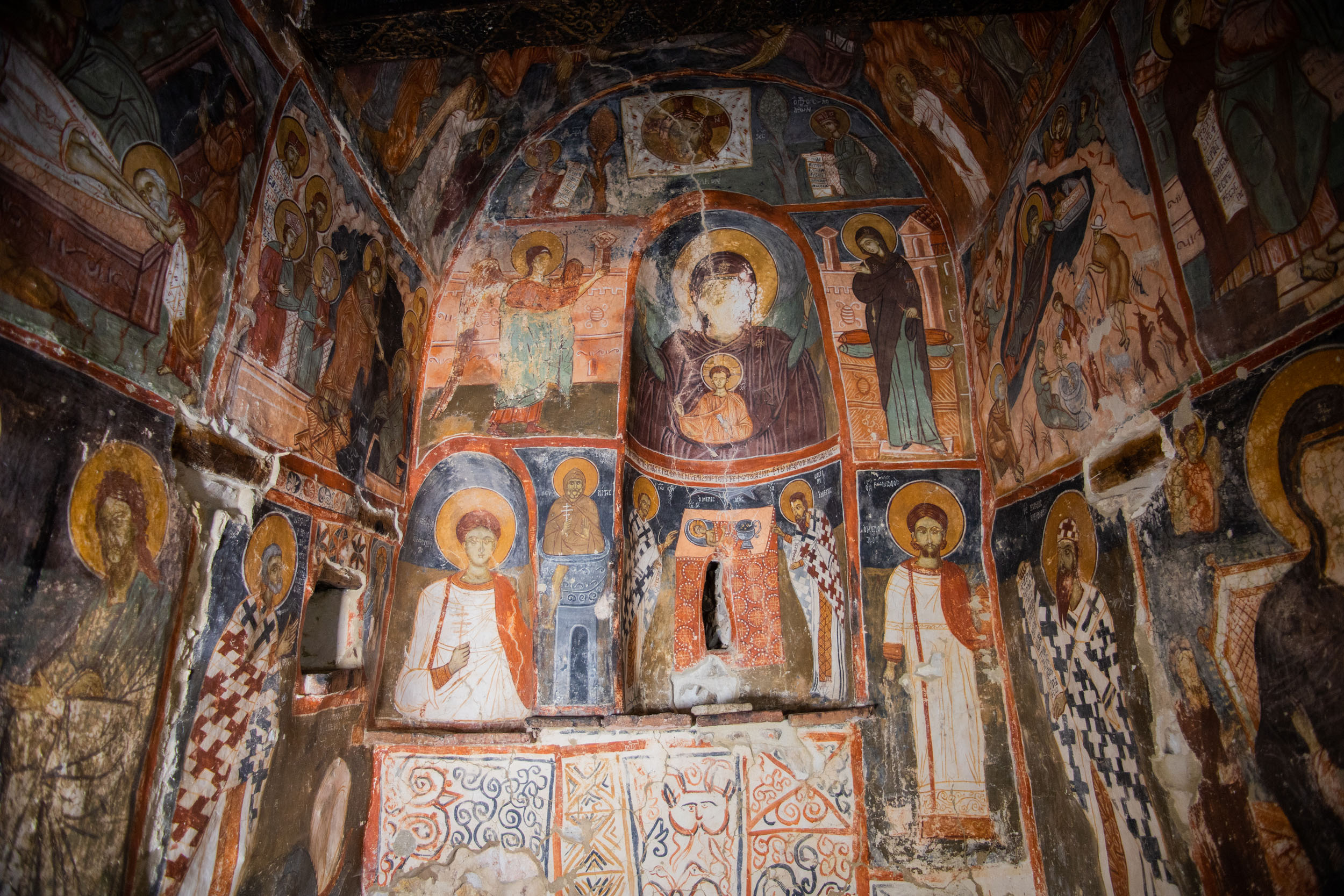
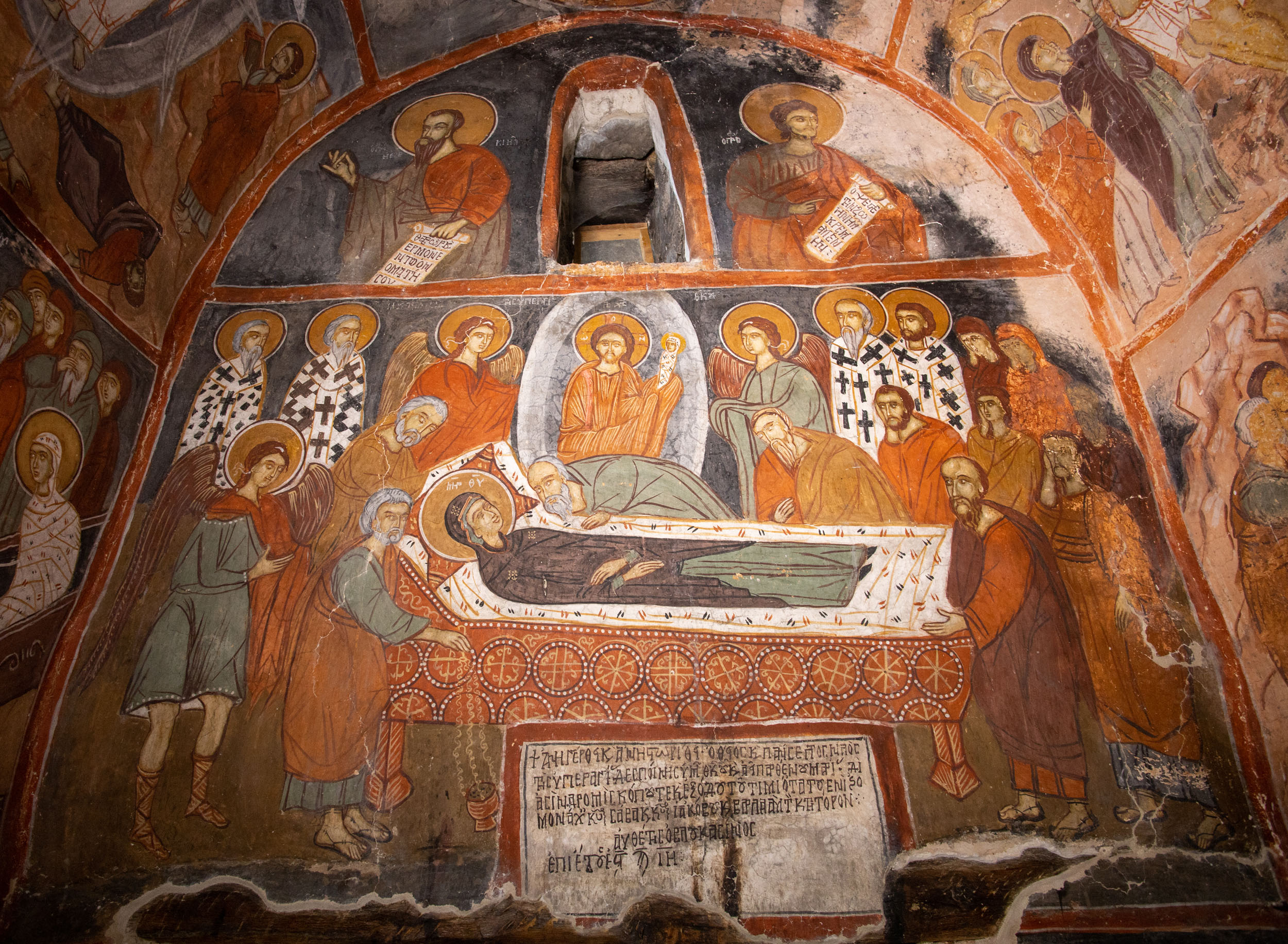
According to the surviving dedicatory inscription, the church was erected and painted in 1409/10 at the expense of three patrons, “kyr Savvas, the most venerable among the hieromonks”, “kyr Iakovos” and Varlaam. The Serbian Kralj (king) Vukašin Mrnjavčević, who ruled the area several years earlier (1355-1371), is also mentioned in the dedicatory inscription. The church is adorned with remarkable frescoes which stylistic analysis reveals were executed by two painters. One of the inscriptions on the church records the name of one of the two, Hieromonk Ioannikios. The paintings of Panagia Eleousa form part of the artistic production that arose during this period in the major artistic centres of the wider region of Macedonia, in Kastoria, Ohrid, Korytsa (Korçë) and Veria.

αρχείο ΕΦΑ Φλώρινας / archive Ephorate οf Antiquities of Florina

This is the only hermitage accessible by a path from the village of Psarades. Its single-nave church has suffered significant damage from rockfalls and preserves frescoes dating from the first half of the 16th century.

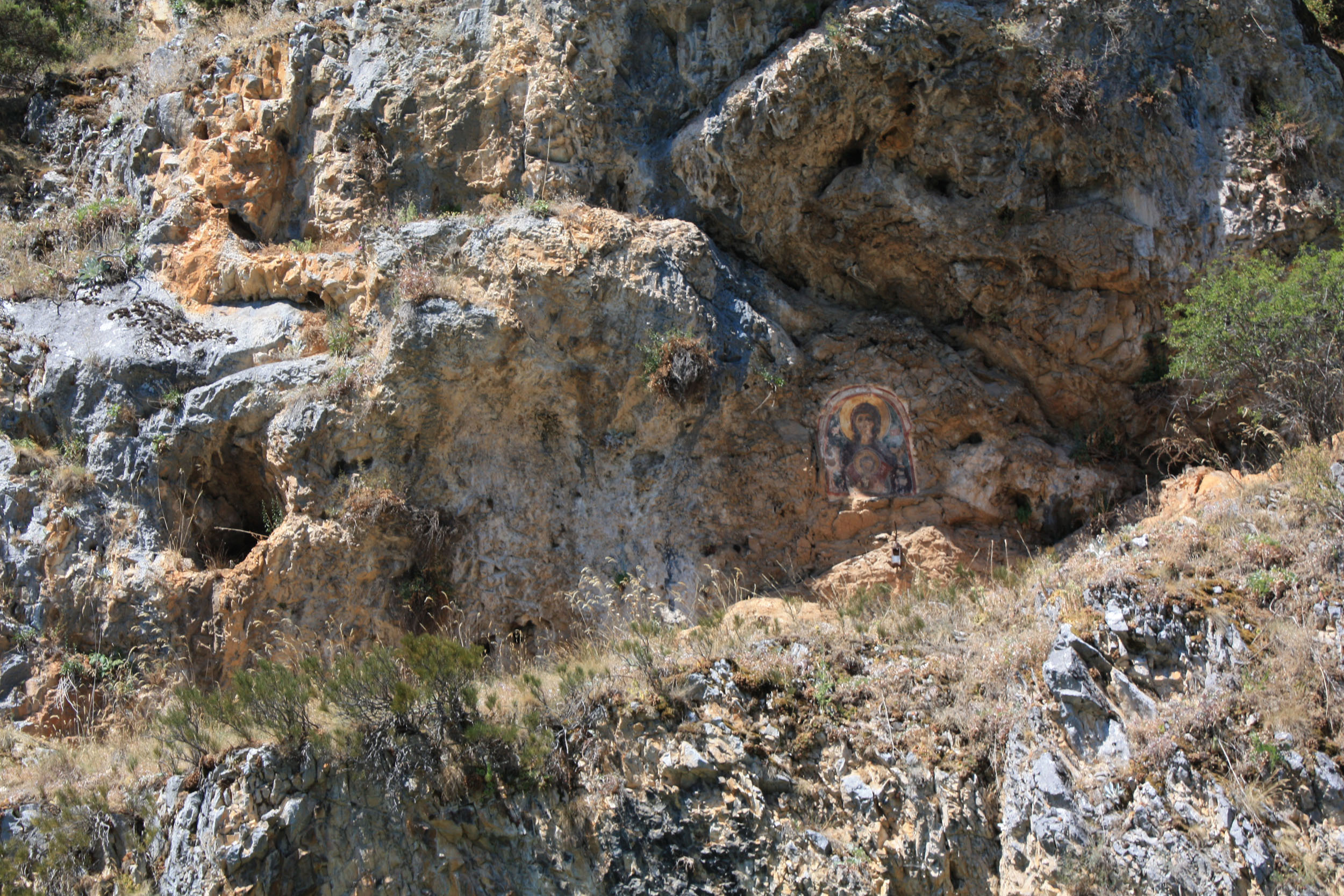
In the bay of Psarades, on the sheer cliffs opposite the village, inaccessible by land, are two frescoes depicting the Virgin Mary set close to each other. Rough walls and traces of cuts made in the rock in the area of the two frescoes indicate that they once belonged to isolated hermitages. According to the surviving inscriptions, one of the paintings dates from 1373 and the other from 1455/6. In the dedicatory inscription of the first scene, the Virgin Mary is named “The Joy of All”, and the names of the dedicators Michael, Constantine and Manouil Dragasis are recorded. The well-known surname of the three patrons, who seem to have been laymen rather than monks, shows that there were families of noble origin in the Prespes area.

The presence of yet another hermitage is indicated by the fresco of St Nicholas on a rock to the northeast, outside the bay of Psarades. The image of the saint is accompanied by a dedicatory inscription dated 1827.

Two caves in the Prespes are connected to the modern history of the region. The first is located 1 km west of the village of Pyli and was a hideout of Nikos Zachariadis, the General Secretary of the Communist Party of Greece, during the Greek Civil War. The second, known as the “Guerilla Hospital”, is located on the west bank of Little Prespa, about 3.5 km past the village of Vrontero. It was used in 1949 as a field hospital treating wounded soldiers of the Democratic Army of Greece.

Byzantine and post-byzantine monyments in the villages of Prespes

Church of St Germanos, village of Agios Germanos

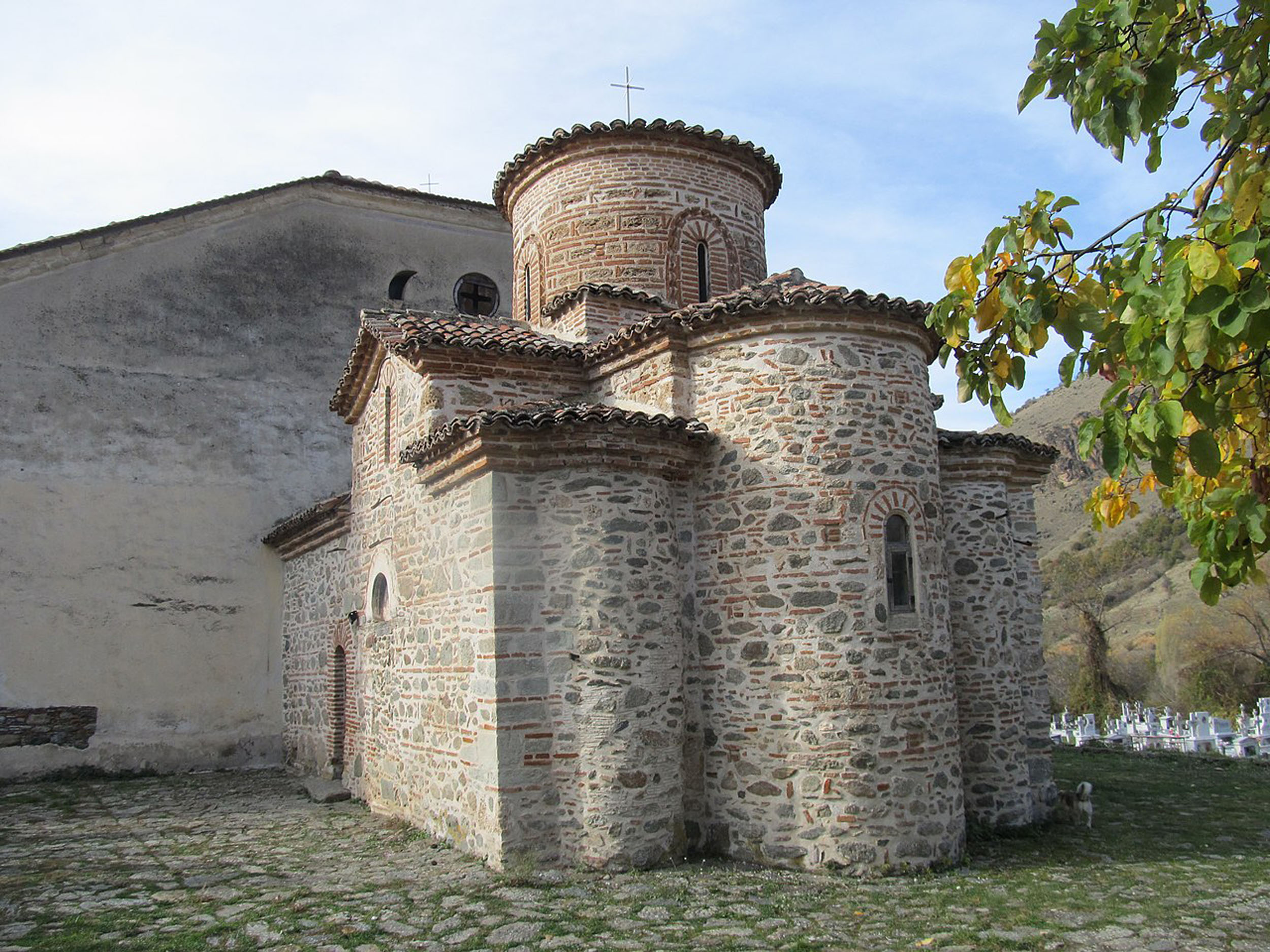
Numerous Byzantine monuments are preserved in the villages of Prespes. Of these, the small early type of cross-in-square church with a dome, built in the early 11th century in the village of Agios Germanos (formerly Germani) stands out. It is dedicated to St Germanos, Patriarch of Constantinople, who was established as a local saint after St Achillios. According to local tradition, the relic of St Germanos lies in the church. This was probably the episcopal church of Prespes after the abandonment of the basilica of St Achillios in the early 15th century. The west part of the church is attached to the sanctuary of a later large three-aisled basilica, which, according to the surviving dedicatory inscription, was erected in 1882. The masonry of the monument is interesting, consisting of alternating bands of stones and bricks, with brickwork letters in the vertical joints.

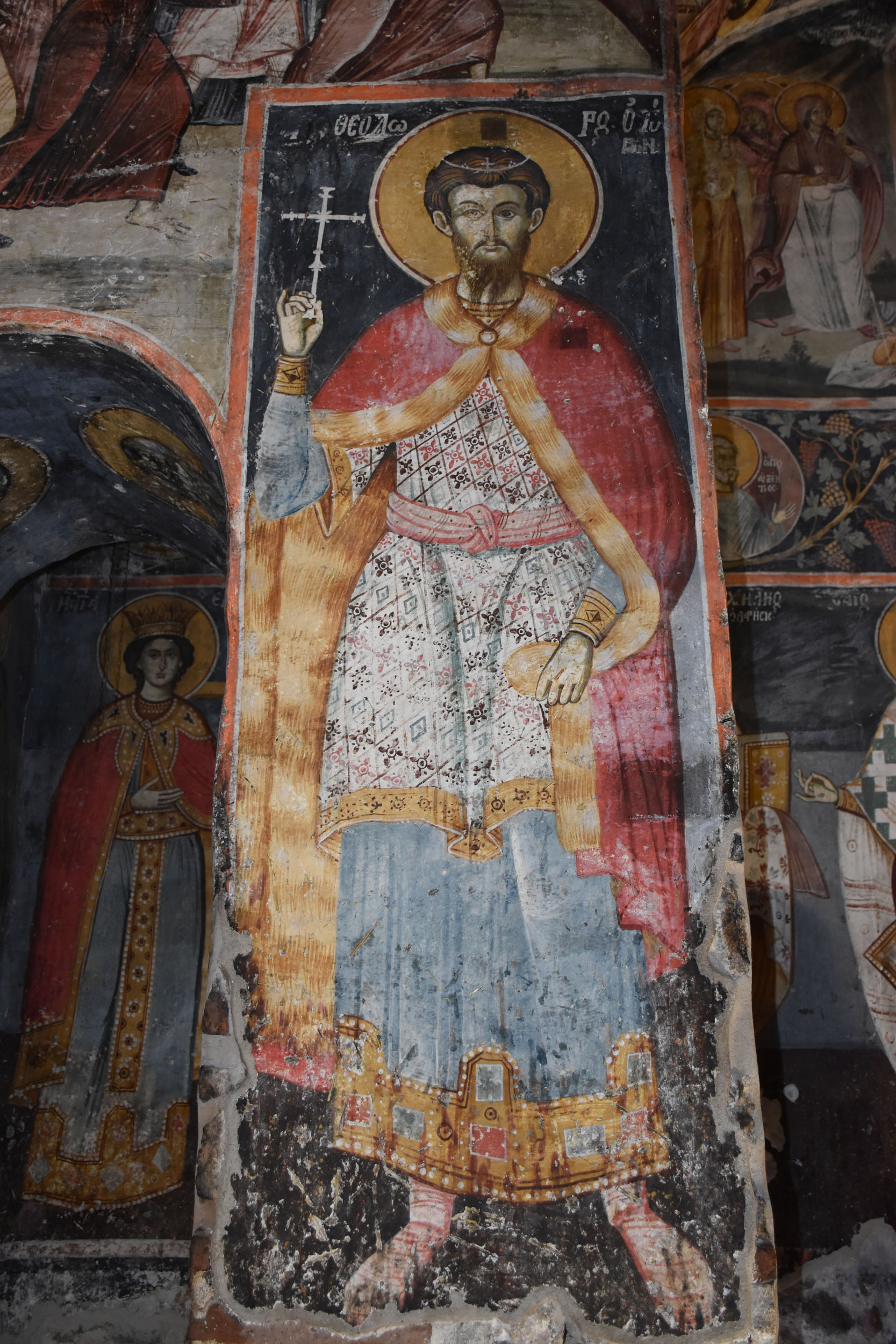
The church of St Germanos is richly painted with frescoes. According to an inscription, they are dated 1743, during the term of Bishop Parthenios, who is mentioned two years earlier in the dedicatory inscription of the katholikon of the Monastery of the Panagia Porphyra on the islet of Agios Achilleios. The frescoes of St Germanos are attributed to the same painters who executed the frescoes of Panagia Porphyra. The church of St Germanos also preserves traces of two earlier layers of frescoes, the first dating from the 11th century and the second from the late 12th or early 13th century.

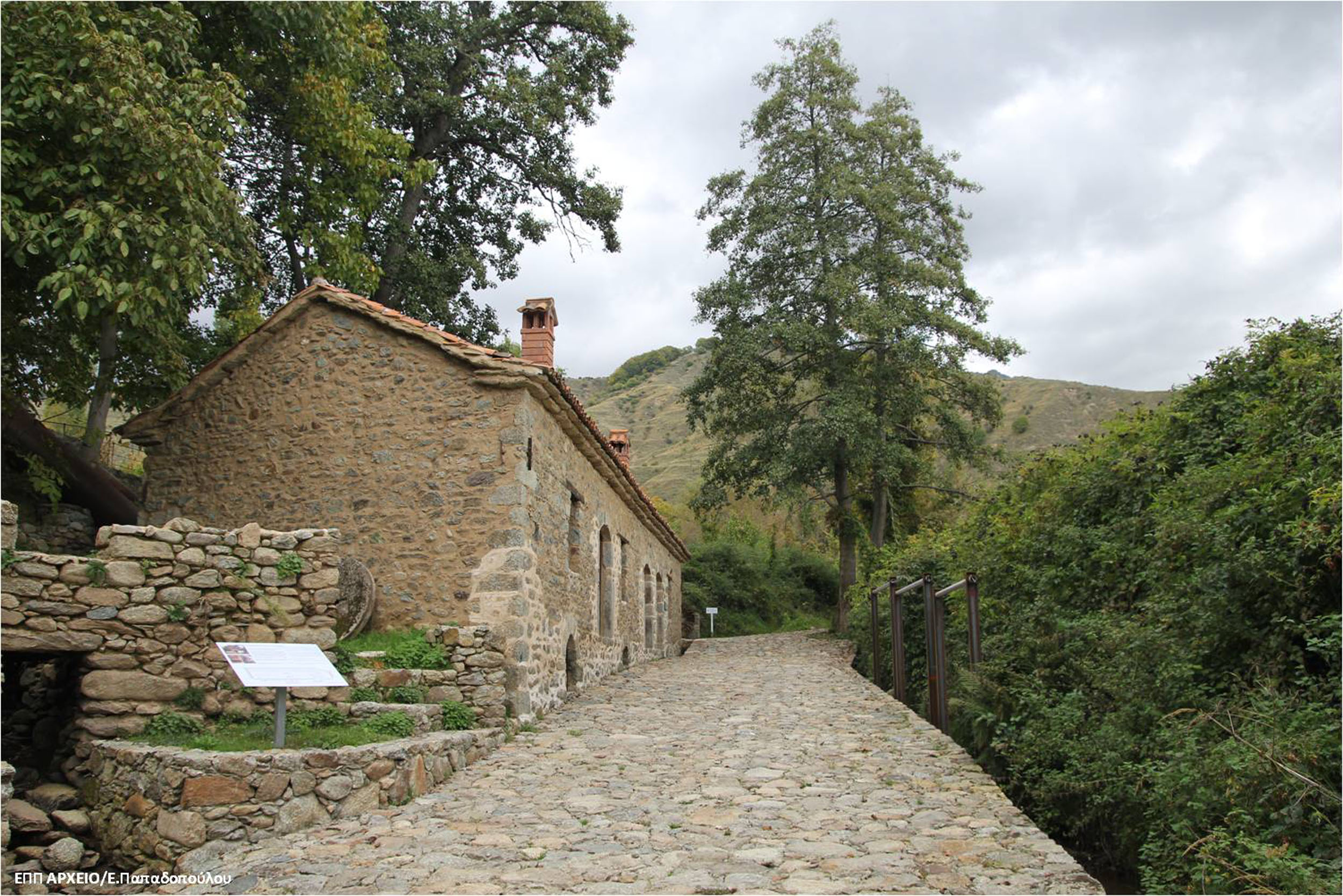
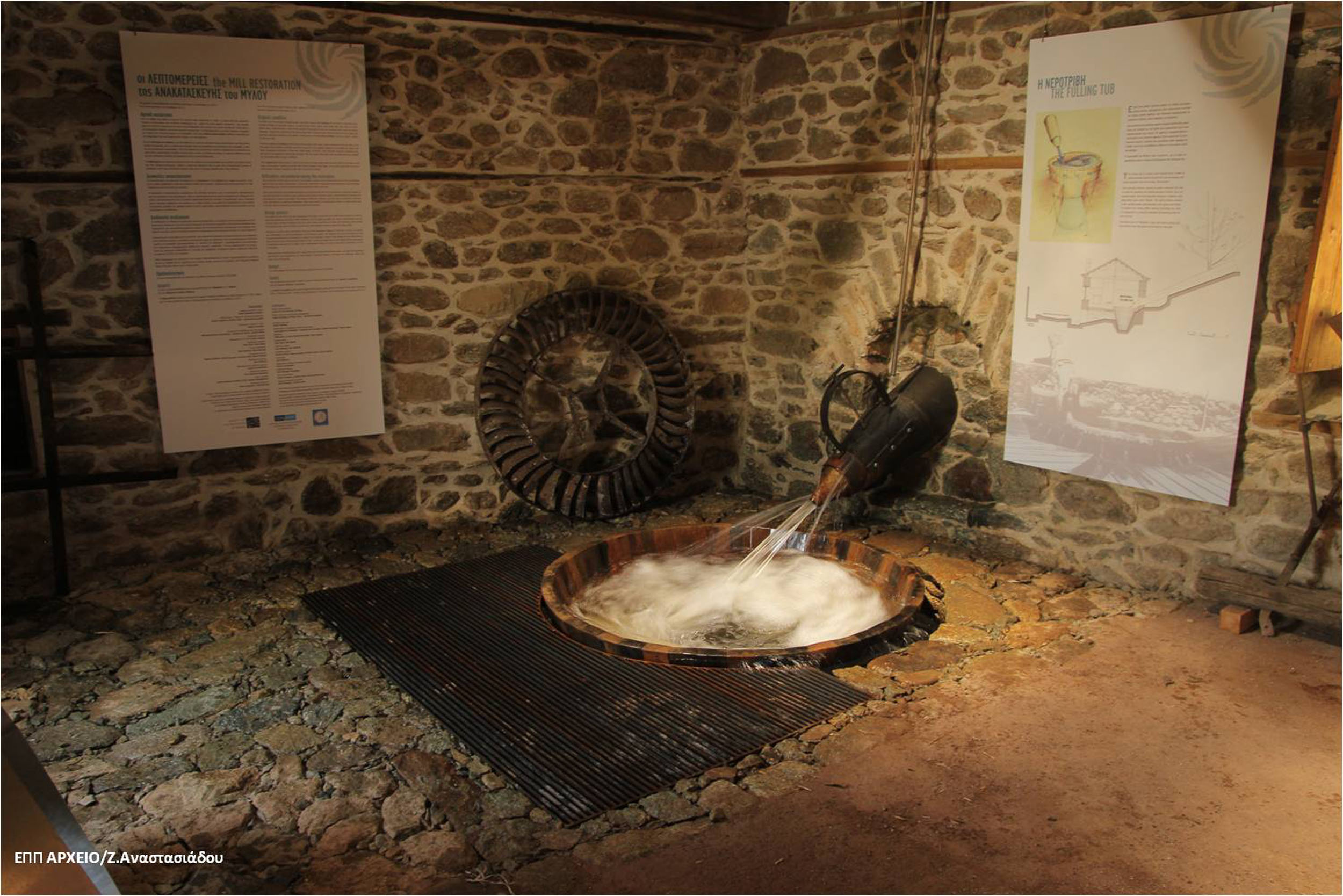
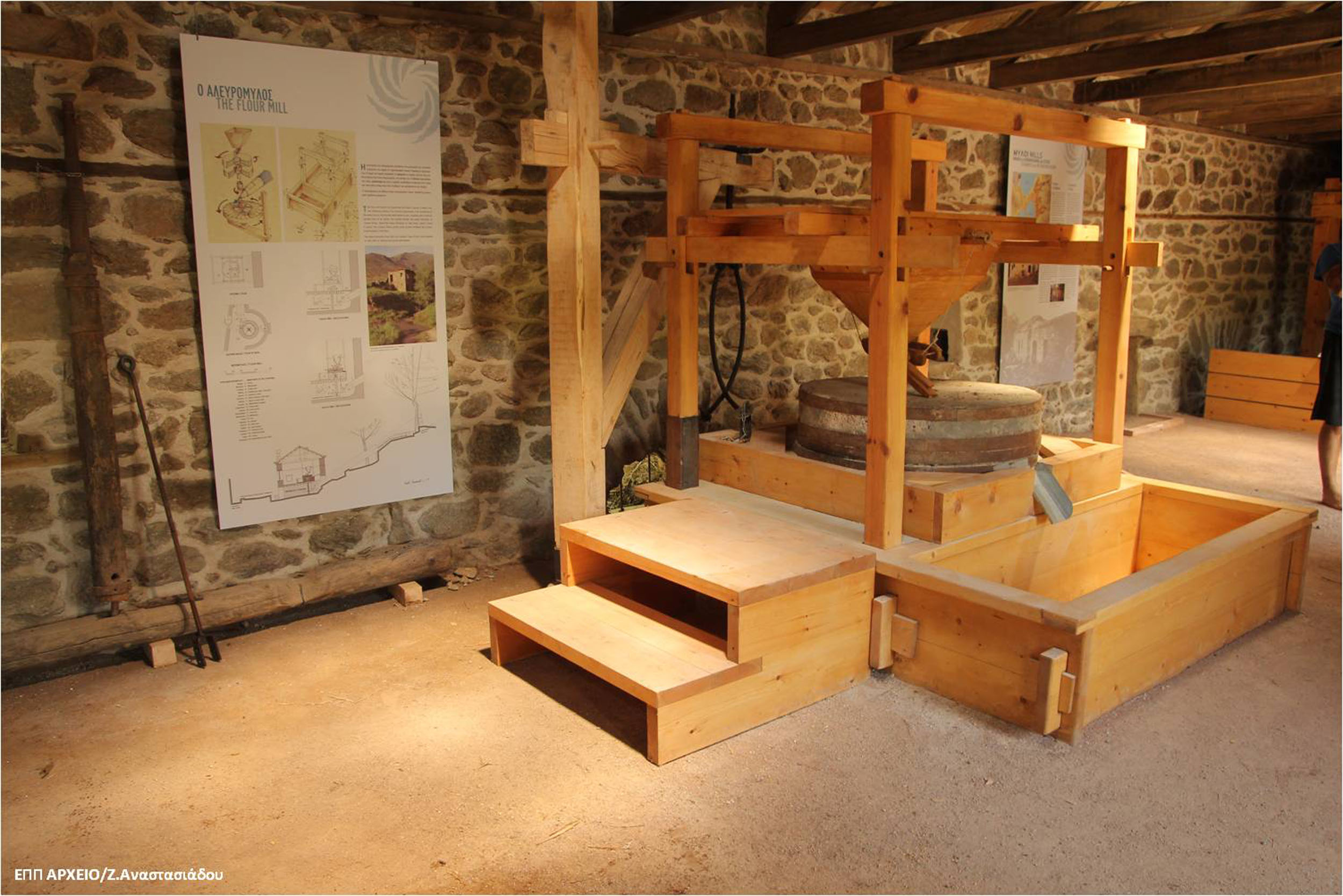
One of the many watermills that once existed in the area has been exemplarily restored in the village of Agios Germanos, winning the 2016 Europa Nostra Award, granted by the European Union. The watermill, built in 1930, is now open to the public, who can be guided through its mechanisms and surrounding area.

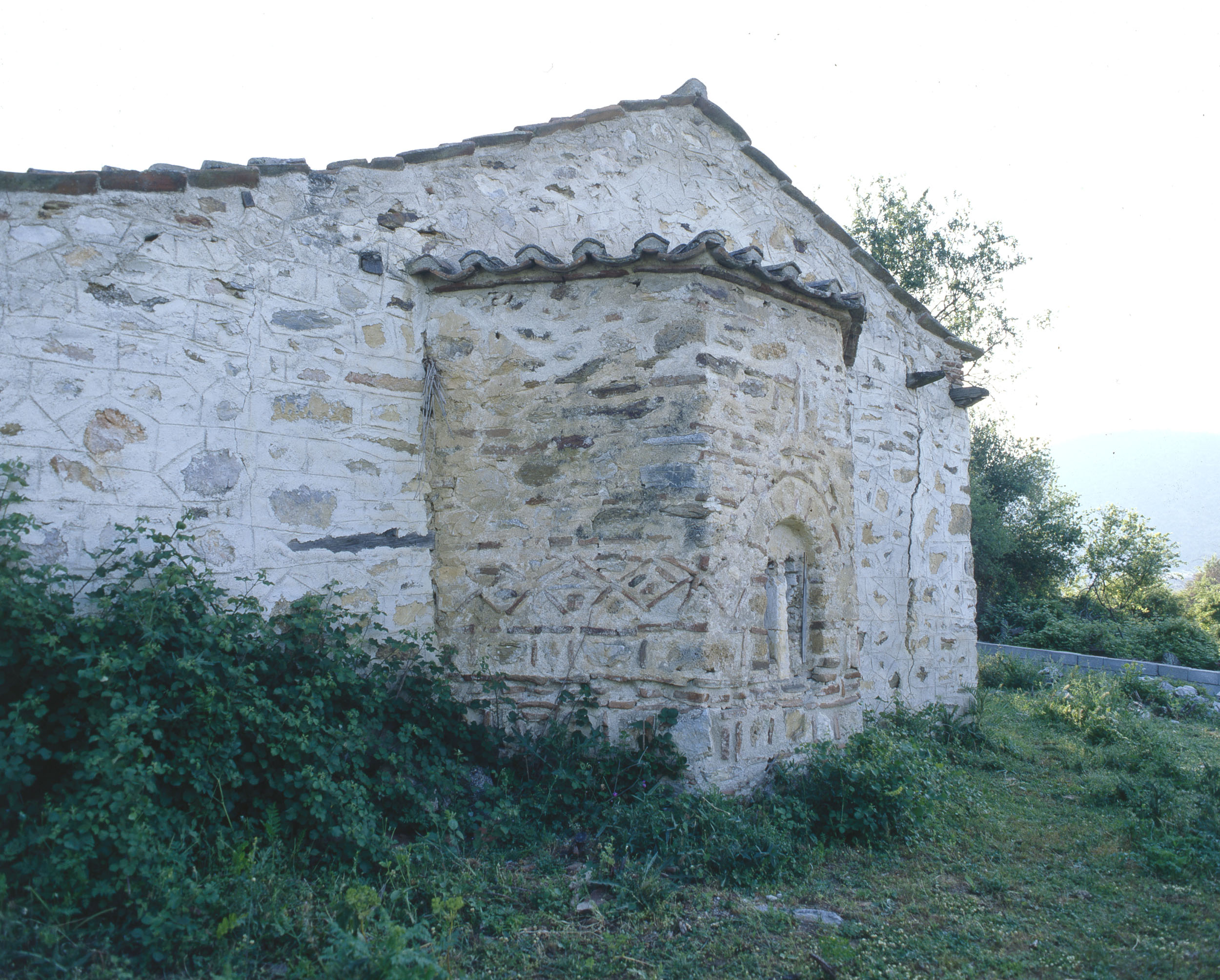
The church of St Nicholas in the village of Pyli (formerly Vineni), on the northwest bank of Little Prespa, is a particularly important one, although it is now in a dilapidated state. It is a single-nave triconch church with a dome, with the peculiarity that its north and south conches, as well as the prothesis and the diaconicon, are set in the thickness of the north and south walls. It stands out for its cloisonné brickwork façades with rich brickwork decoration and probably dates from the late 13th or the 14th century. The surviving frescoes, which are quite worn, are dated after the mid-14th century.

There are a multitude of churches in the villages of Prespes, mostly 19th-century three-aisled basilicas or simple single-nave churches. The remains of one of the oldest churches in the region are preserved in the village of Lefkona (formerly Popli). This is the small triconch church of St Anne, dated between the early 11th and the mid-12th century. Two layers of 12th- and 18th-century frescoes were uncovered during its restoration. In the village of Laimos (formerly Robous) is the church of the Presentation of Christ in the Temple, containing remarkable early-15th-century frescoes. The small church of St Nicholas (St Saviour) in the village of Platy (formerly Sterkovo) preserves rich fresco decoration, dated by an inscription to 1591.

Museum

Byzantine Collection of Agios Germanos of Prespes, village of Agios Germanos

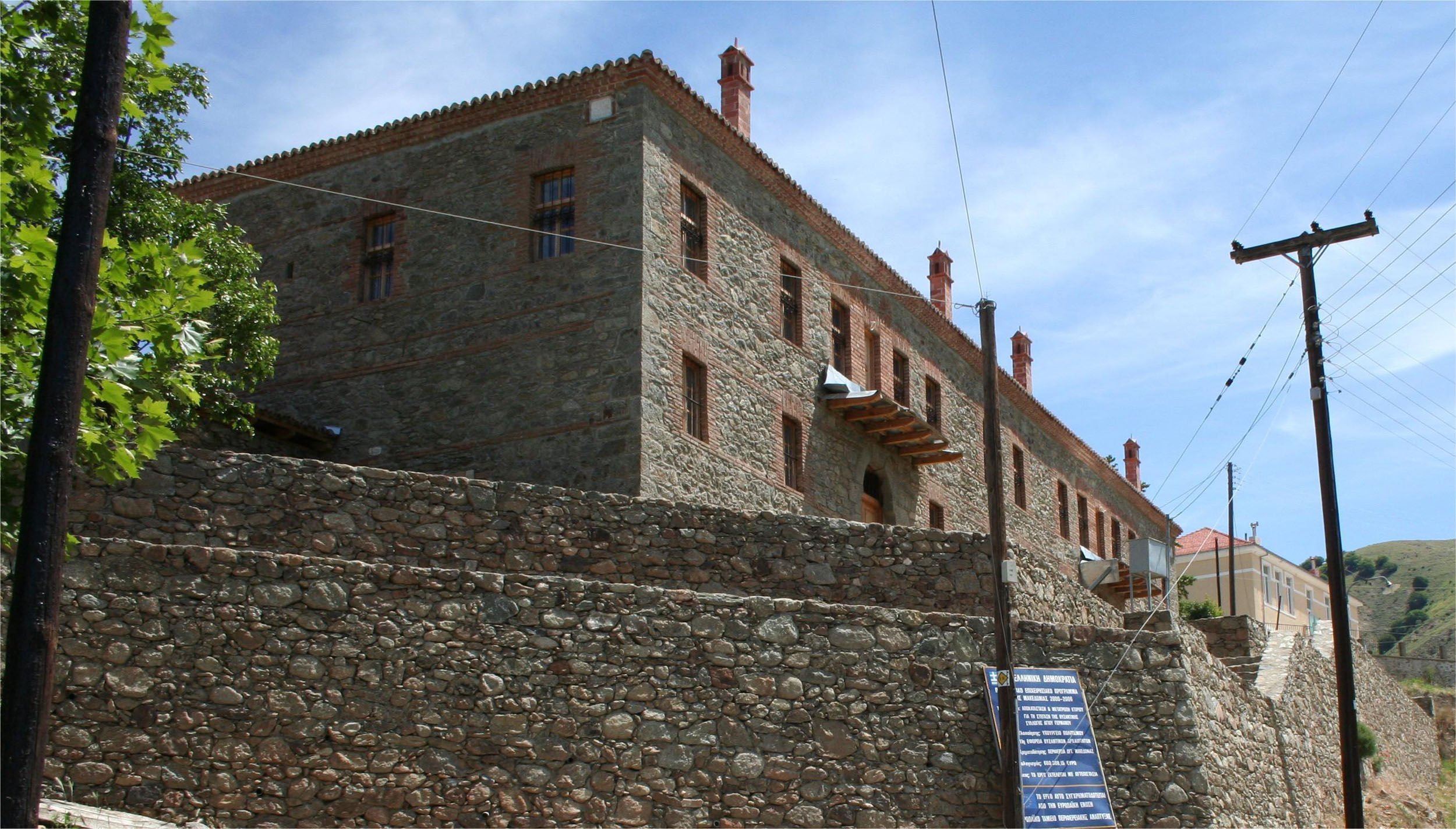
It is housed in an exemplarily renovated two-storey building from 1913, representative of the region’s traditional architecture. Through a wealth of informational material, it presents the history and monuments of the two Prespa lakes (the collection does not include exhibits).

Other stops in the Regional Unit of Florina

error: