Giannitsa

Giannitsa, a flourishing Ottoman city

Giannitsa, in the north part of the fertile plain of Thessaloniki – Giannitsa, is the most populous city in the Regional Unit of Pella today. It is one of the few cities in Greece that were founded by the Ottomans; Yenice-i Vardar, meaning “the new town near the River Vardar (Axios)”, was founded after 1384 by the famous general Gazi Evrenos Bey. He played a decisive role in establishing Ottoman rule in the Balkans. The great warlord’s fame is such that the Ottoman traveller Evliya Çelebi, who visited Giannitsa in the late 1670s, reports that in his day it was widely believed that Gazi Evrenos had managed to capture a total of 760 towns and castles. The conquests of Gazi Evrenos were continued by his sons Ali Bey and Isa Bey, as well as by his grandsons – the most important being Ahmed Bey – who fought and distinguished themselves on various fronts. As a reward for his services, Sultan Murad I (1362-1389) granted Gazi Evrenos many estates, particularly near the River Axios, to found a new city. According to the oral tradition, in order to build Yenice the Sultan gave him as much land as he could cover in a day’s ride.

The newly founded city, which Gazi Evrenos turned into a vakıf by appointing his descendants its administrators, quickly developed into one of the most important military, economic, religious and cultural centres of the Balkan Peninsula. The burial of Gazi Evrenos in the city he founded and lived in made Yenice a holy city of the Ottomans. A luxurious mausoleum (türbe) was erected over his grave, and his sons and other members of his family were subsequently interred there. The mausoleum gradually assumed the characteristics of a shrine.

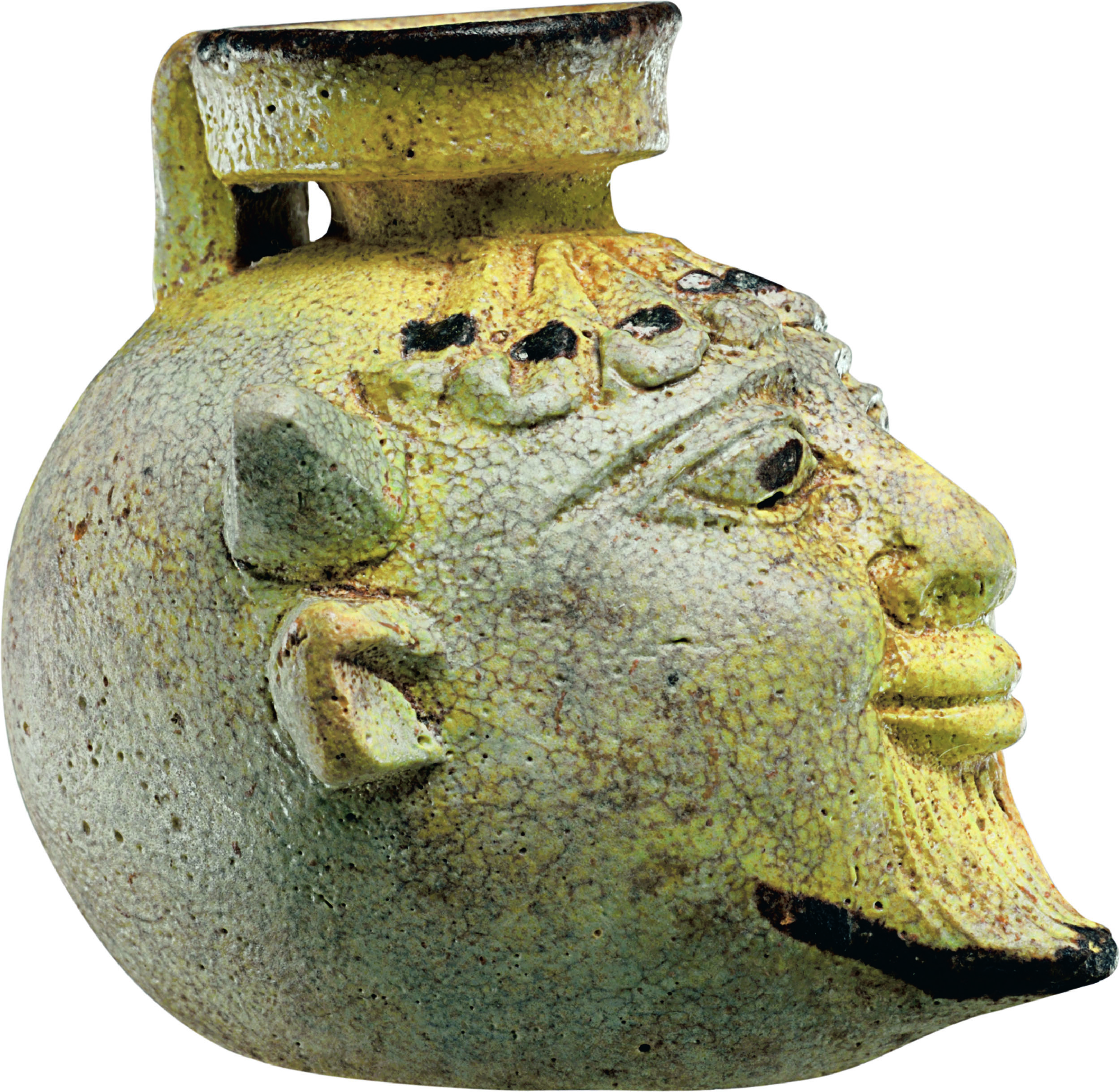
Αγγείο με κεφαλή του θεού Αχελώου από τάφο στο Αρχοντικό, 6ος αι. π.Χ. Α. Μ. Πέλλας / Faience vase with the head of the river god Achelous from a tomb of the Archontiko, 6th c. BC. Archaeological Museum of Pella

The fact that the “left branch” (Sol Kol) of the road of the Ottoman period, which largely followed the course of the earlier Via Egnatia, passed through Giannitsa played an important role in its growth during that same period. The city’s relationship with the road ensured direct communication with the major urban centres of the region: Thessaloniki to the east, Vodena (today’s Edessa), Florina, Monastir (today’s Bitola), Ohrid, Elbasan and Dyrrachium to the west. Yenice became an important station on this road, with all the necessary facilities for travellers, such as Kervansarays, hans, hammams and a post-station.

There is no evidence on the exact route of the Via Egnatia through the area in Roman times. We know from the Itinerarium Burdigalense that between Pella and Edessa was the changing station (mutatio) of Scurrio, which, according to one view, is located at Kato Voudristes, near the modern village of Aravissos, 12 km northwest of Giannitsa, at the foot of Mount Paiko. A large building has been excavated there, which was in use from the late 1st century BC to the early 5th century AD. This building, whose plan resembles a farmhouse (villa rustica) of the period, could have served the needs of the station of the ancient Via Egnatia.

History

In antiquity, the region looked very different to today, as the Thermaic Gulf penetrated as far as Pella and the foothills of Mount Paiko. Later, with the silting up of the Aliakmon, the Axios and the Echedoros, the sea receded and the great Lake of Giannitsa (Lake Loudias) was created. The lake, surrounded by wide marshes, was the most striking feature of the local landscape until it was drained in the 20th century (1928-1936).

The wider area of Giannitsa has been inhabited since prehistoric times. One of the best-known prehistoric sites here is the settlement of Archontiko on the northwest edge of the plain of Giannitsa. In the city of Giannitsa itself, excavations have revealed two prehistoric sites, Giannitsa A and Giannitsa B. The latter, at the southeast end of the city, in the area of the Old Market, is one of the most important prehistoric sites in Northern Greece. It was inhabited for a very long period of time, from the Early Neolithic (6500-5800 BC) to the Early Bronze Age (c. 2000 BC).

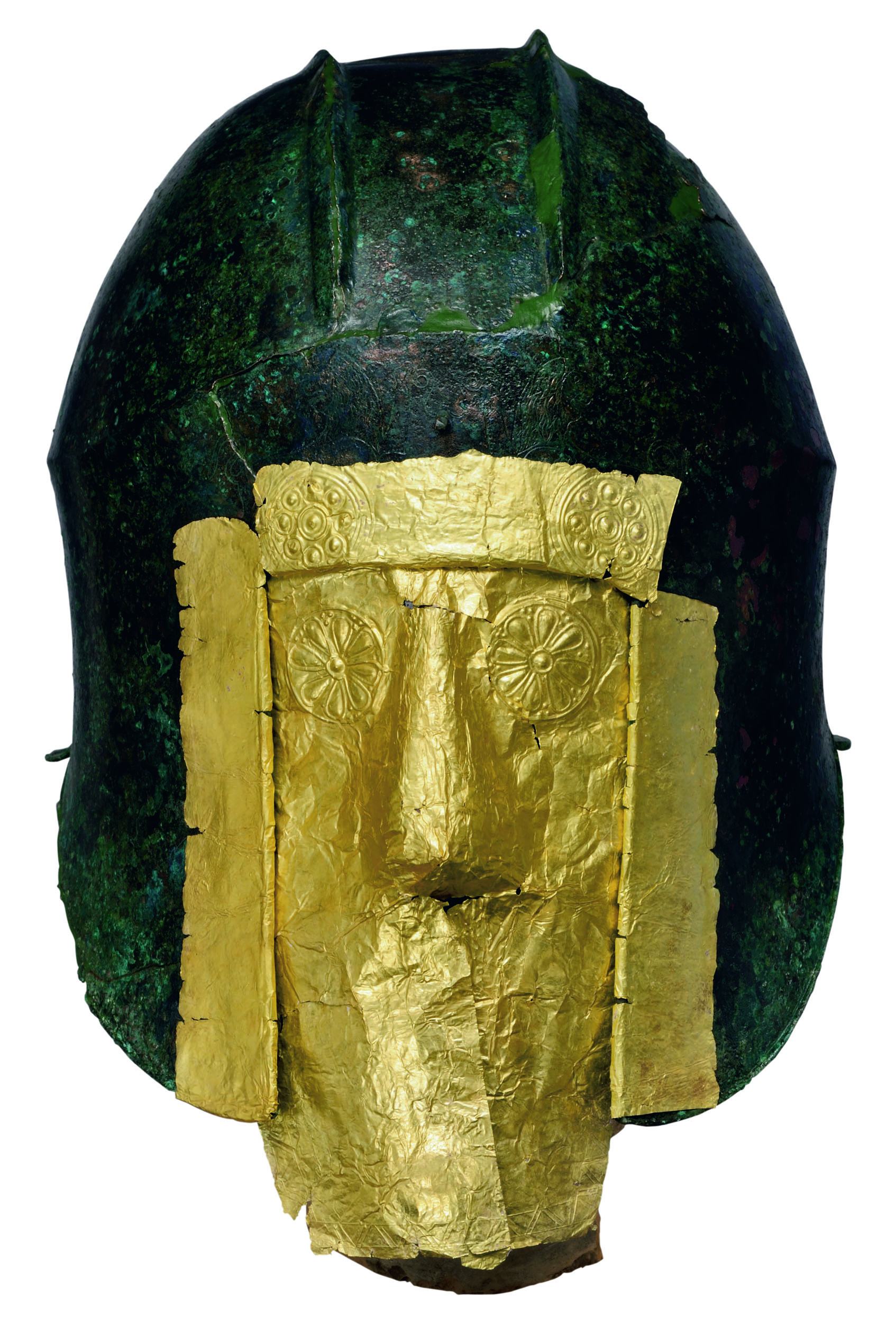
In antiquity, the Giannitsa area formed part of the geographical region of ancient Bottiaia and belonged to the Pellaia Chora, the territory of Pella, the capital of the Macedonian kingdom from the late 5th century BC onwards. The prehistoric tumulus of Archontiko continued to be inhabited in historical times, from the Iron Age to the late Byzantine period. A notable ancient settlement arose there, with extensive cemeteries from which particularly rich finds originate (now housed in the Archaeological Museum of Pella). Among other proposals, it has been suggested that this may be identified with the town of Tyrissa mentioned in ancient sources. Another of the most important ancient towns in the area was Cyrrhus, located at the Palaiokastro site, south of Aravissos. From the area of Giannitsa comes the famous marble head, a portrait bust of Alexander the Great, now exhibited in the Archaeological Museum of Pella (late 4th c. BC).

Χρυσή μάσκα με χάλκινο κράνος, ανασκαφή τάφου στο Αρχοντικό, 6ος αι. π.Χ. Α. Μ. Πέλλας / Gold mask with bronze helmet from a tomb in the Archontiko, 6th c. BC. Archaeological Museum of Pella

Little is known about the history of the area during the Byzantine period. It seems that there was already a Byzantine settlement on the site where Gazi Evrenos founded Yenice, as indicated by the finds from the excavations in the Old Market, where burials and pottery of the Late Byzantine period have come to light. The existence of an earlier Byzantine settlement is probably also suggested by the testimony of Evliya Çelebi (late 1670s), who, although he often indulges in fictional descriptions, states that there were two castles on the site where Yenice-i Vardar was founded, the walls of which were demolished by the Ottomans. The city remained unwalled ever since; indeed, during the Ottoman period, Yenice was never provided with fortifications of any kind.

Μαυσωλείο Γαζή Εβρενός/ Mausoleum of Gazi Evrenos (ΔΒΜΑ, φωτ. Στ. Στουρνάρας / DBMA, phot. St. Stournaras)

During Ottoman times, Yenice was designated the capital of the homonymous kaza, which belonged to the sancak of Selanik and was the seat of religious and military officials. Immediately after its foundation, the city was settled by Muslims, the dominant population group throughout the Ottoman period. Ottoman sources of the 16th and 17th centuries report that the city had 17 or 18 Muslim districts and only one Christian district. Ten or eleven of the Muslim districts bore the name of Gazi Evrenos or his descendants, demonstrating how strong a mark the founder’s family left on the city throughout the Ottoman period. In the next centuries, the Christian population of the city increased but Muslims still constituted the largest population group: at the end of the 19th century, Yenice had ten Muslim and four Christian districts.

When founding Yenice, Gazi Evrenos ensured that it was provided with all the public and religious buildings necessary to an Ottoman city, including a mosque, an imâret, a hammam and a kervansaray. He supplied the city with water by building a stone aqueduct which was repaired by his grandson Ahmed Bey. The latter played a particularly important part in the rebuilding of the city, constructing a mosque, a madrasa (islamic theological school), a single and a double (men’s and women’s) hammam, an imâret, a bedesten (closed market), a han, and many shops and fountains. The sons of Gazi Evrenos also endowed Yenice with public buildings: Ali Bey built school and Issa Bey built an imâret.

The picture of Yenice in the in the late 1670s is vividly portrayed by Evliya Çelebi. He says that it had 1,500 spacious, tile-roofed houses with vineyards and gardens, built far apart from each other. The city boasted 17 mosques built by prominent officials, the most important being the Iskender Bey Mosque in the marketplace. It also had a madrasa and seven primary schools. The city also had tekkes (dervish monasteries), three imârets (poorhouses), and three public and 70 private hammams. Two of the three public baths are still preserved today (the Gazi Evrenos Baths and the Sheikh Ilahi Baths), while the third, which he states was erected by Ahmed Bey in the marketplace, may be identified with the remains of the baths excavated near the Iskender Bey Mosque. The city was supplied with water by 22 fountains, the most notable of which was the four-spouted fountain in the marketplace, where, according to Evliya Çelebi, water flowed “from each spout to the width of a man’s arm”.

The picture that emerges from the Ottoman tax records is that Yenice had a strong urban character and much of its inhabitants’ income came from commercial activities. In the market, which was located in the Old Market, along the present-day Egnatia Street (formerly Monastiriou Street), agricultural products from the fertile environs were gathered and sold. According to Evliya Çelebi, the market had 740 shops, a bedesten and a bazaar. The bedesten, the covered market and luxury goods warehouse built by Ahmed Bey, demonstrates the commercial importance of the city, given that such buildings were only found in large and prosperous cities such as Thessaloniki, Serres and Larissa. For the convenience of merchants and travellers there were nine hans and a large kervansaray founded by Gazi Evrenos. The traveller Nikolaos Schinas, who passed through the city in the second half of the 19th century, mentions 25 spacious hans.

Οθωμανικά Μνημεία Γιαννιτσών / Ottoman Monumnets of Giannitsa (ΕΦΑ Πέλλας / Ephorate of Antiquities of Pella https://www.culture.gov.gr/DocLib/Ottoman_Giannitsa.pdf)
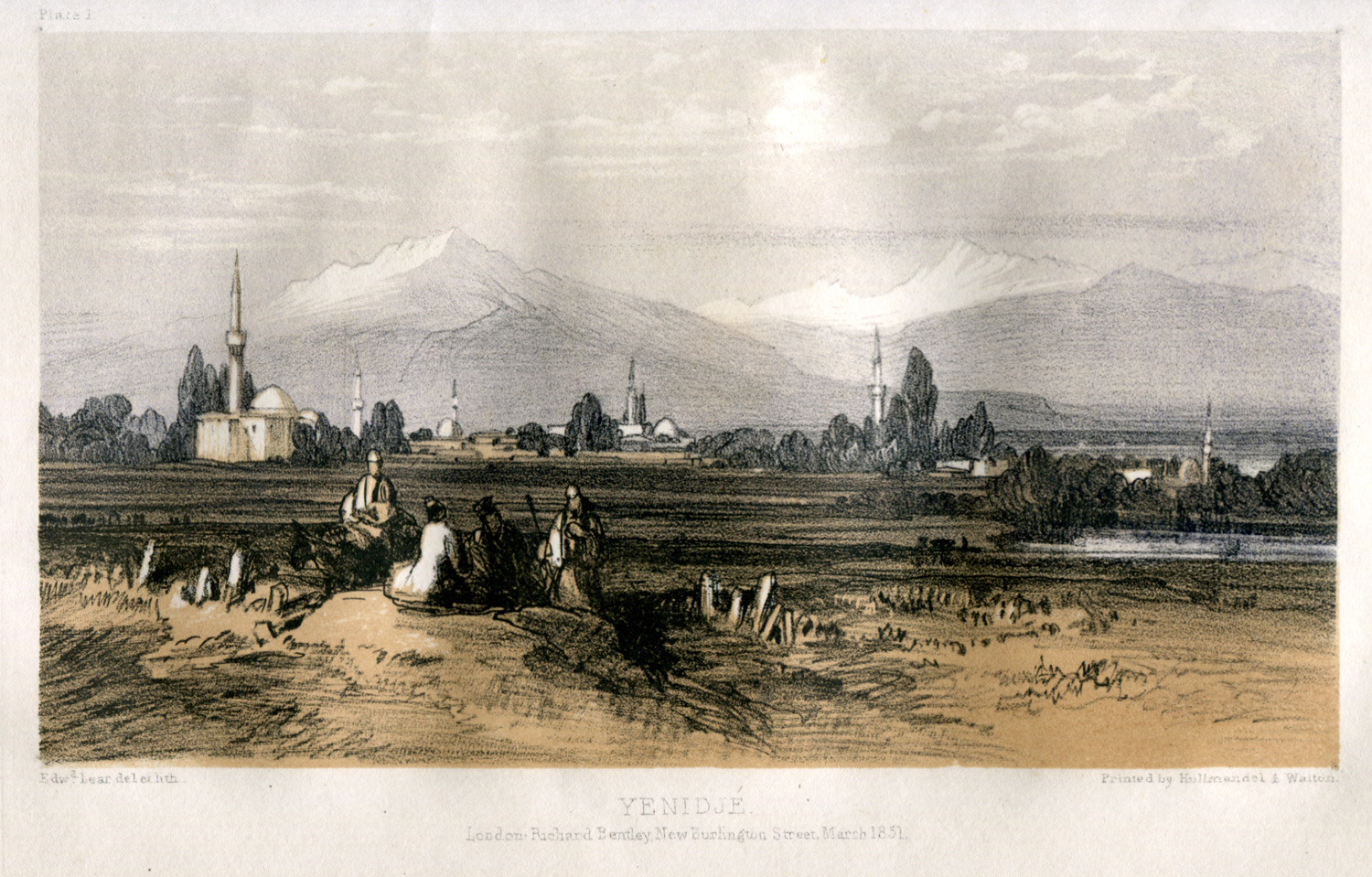
Γιαννιτσά / Giannitsa, Edward Lear 1851, φωτ. Βιβλιοθήκη Μουσείου Μπενάκη / phot. Benaki Museum Library

A flourishing artisan class appears in the Ottoman tax registers, including various craftsmen such as saddlers, goldsmiths, dyers and blacksmiths. According to Gabriele Cavazza, secretary to the Venetian ambassador to Constantinople/Istanbul Lorenzo Bernardo, who passed through the city in 1591, the manufacture of headscarves embroidered in silk and gold played an important role in the city’s economy. Evliya Çelebi reports that a large part of the inhabitants’ income came from making wooden spoons, plates and staffs, and also tobacco pipes.

Tobacco cultivation was an important source of income for the city. The tobacco of Yenice was highly aromatic and considered of superior quality, so much so that it was likened to silk and delivered by the merchants of Constantinople/Istanbul to the court of the Sultan. As Evliya Çelebi says, it was renowned throughout “the Ottoman Empire, Arabia and Persia”. According to Ottoman sources, 32 hectares of tobacco fields were cultivated in 1697, while 1,144 families were employed in the cultivation and trade of tobacco.

In addition to its economic prosperity, Yenice experienced a great cultural flowering. From the 15th century onwards, the city was home to renowned scholars who contributed to its emergence as a prominent cultural centre of the time. Kınalı-Zade, a 16th-century Ottoman historian, described the city as “a meeting place of poets and a wellspring of the educated”. Of the scholars who settled in the city, the “holiest of saints” Sheikh Ilahi stands out. Originally from Kütahya, he came to the city and founded a tekke at the invitation of Gazi Evrenos’s grandson Ahmed Bey. The mosque in which Sheikh Ilahi was buried was erected at the expense of Ahmed Bey and became an important shrine.

In modern times, the city did not experience the industrialisation that occurred in the neighbouring urban centres of Edessa, Veria and Naoussa. The wider area of Giannitsa was at the centre of the great national liberation struggles of the early 20th century. The swampy Lake of Giannitsa was one of the most important battlegrounds in the heavy clashes between Greeks and Bulgarians during the Macedonian Struggle (1904-1908). Later, during the First Balkan War (1912-1913), the decisive Battle of Giannitsa between Greeks and Turks took place here. The battle lasted two days (19-20 October 1912) and ended with the Greek army victorious. A fire broke out during the battle, destroying much of the city, especially the districts near the present-day Thessaloniki–Edessa highway. The region of Giannitsa was incorporated into the Greek State under the Treaty of Bucharest (28 July/10 August 1913). The makeup of the city’s population changed with the departure of its Muslim inhabitants and the settlement of large numbers of Christian refugees. The first influx of refugees was recorded during the Balkan Wars, but even more people arrived after the Asia Minor Catastrophe (1922) and the signing of the Treaty of Lausanne (1923). The city was renamed Giannitsa in 1926.

Monuments

Mausoleum of Gazi Evrenos (junction of Strantzis, Karaoli & Dimitriou, and Tavoulari Streets)

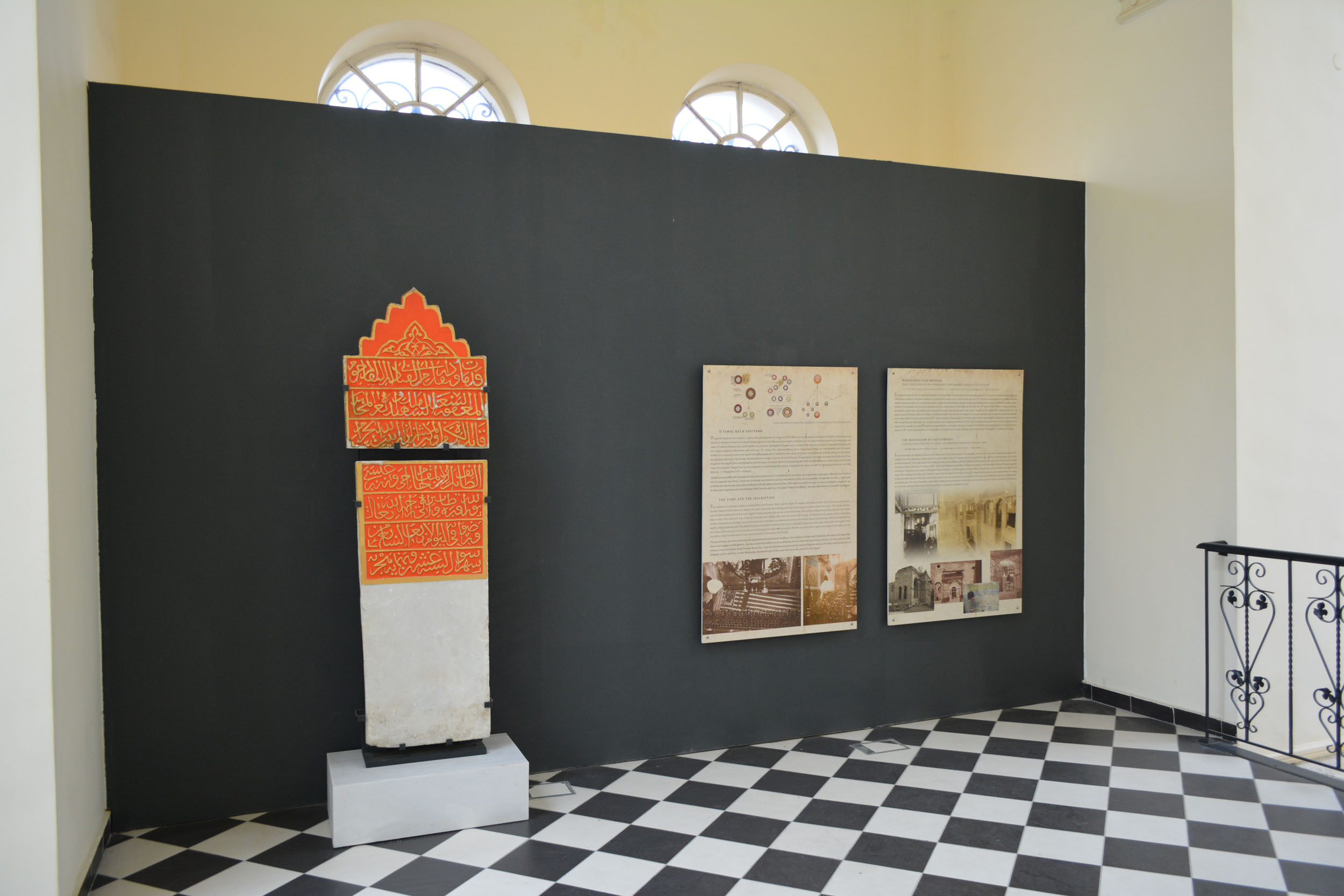
At a central point in Giannitsastands the mausoleum of the city’s founder, who, according to the inscription on his marble tombstone, died in 1417. The building, which today has a T-shaped floor plan, is the result of successive building interventions to the original early-15th-century nucleus. Initially, the building took the form of a one-room, square structure with a lead-covered dome, under which was the tomb of Gazi Evrenos. Later, with the burial of other prominent members of his family, the mausoleum was expanded and became a shrine. At the same time, with the addition of a mihrab and other spaces, the mausoleum also functioned as a mosque. In the 19th or early 20th century, the inner surrounding walls of the mausoleum were decorated with frescoes, of which only a small part, imitating marble revetment, has survived on the lower walls. The upper part of the walls was decorated with painted landscapes, probably of Giannitsa, some of which are preserved in photographs taken in the early 20th century. In 1885-1886 the mausoleum underwent extensive interventions, while a few years later, in 1908-1910, it was radically reconstructed, acquiring the form that we see today. After 1912, the mausoleum was converted into a cotton gin factory, but it has now been restored and is open to the public, occasionally hosting temporary exhibitions.

The bathhouse, also known today as the “Kaiaphas Baths” from the name of the owner after the Second World War, is preserved nearby, southeast of the Mausoleum of Gazi Evrenos, between Strantzis and Karaoli & Dimitriou Streets. It is built in cloisonné masonry and is one of the earliest Ottoman baths in Greece, dating from the end of the 14th century. It is a double hammam, with separate areas for men and women. According to Evliya Çelebi, the hammam of Gazi Evrenos was the most praiseworthy in the city “for its atmosphere, its building, its attendants and its carpets”.

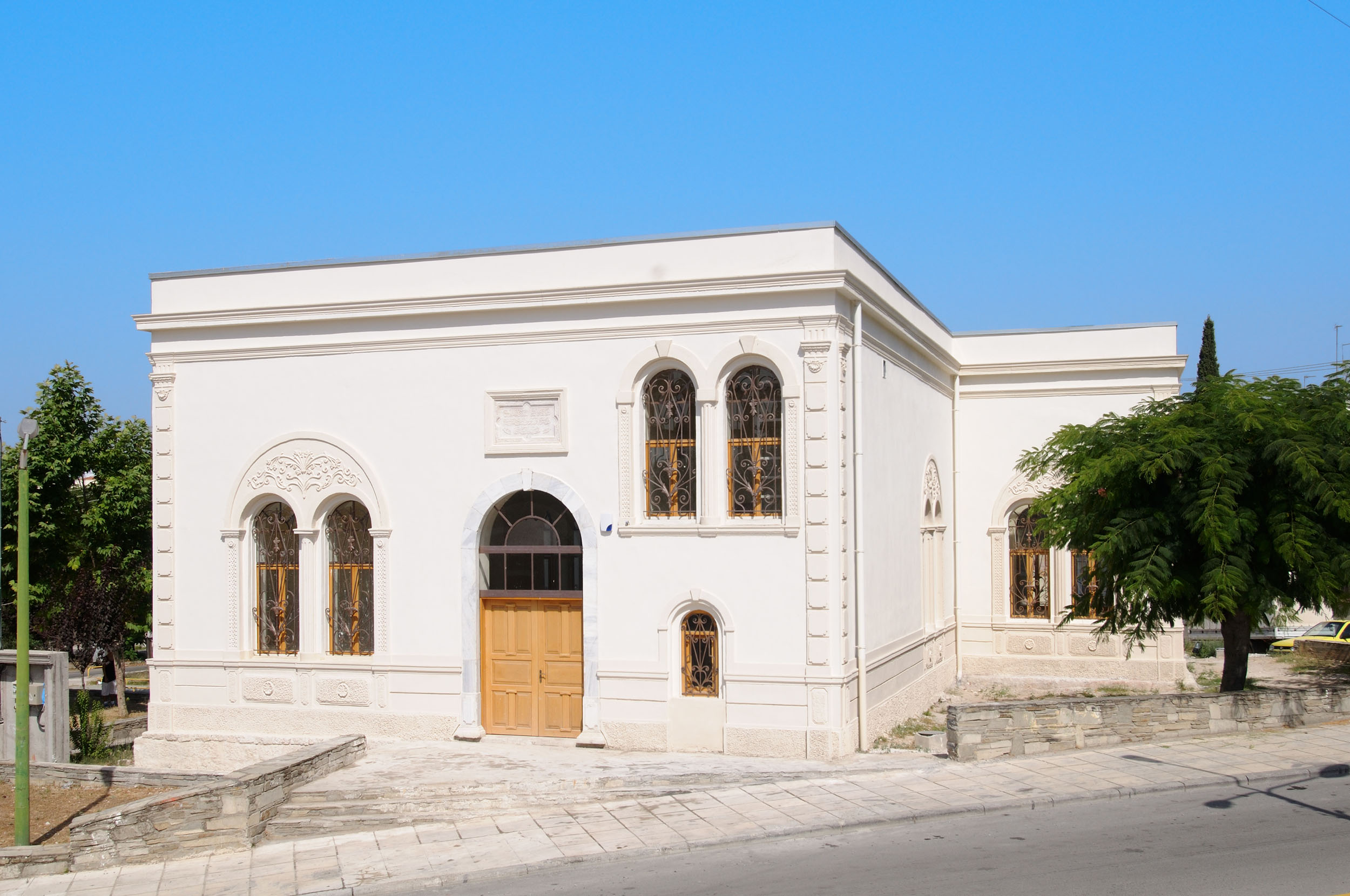
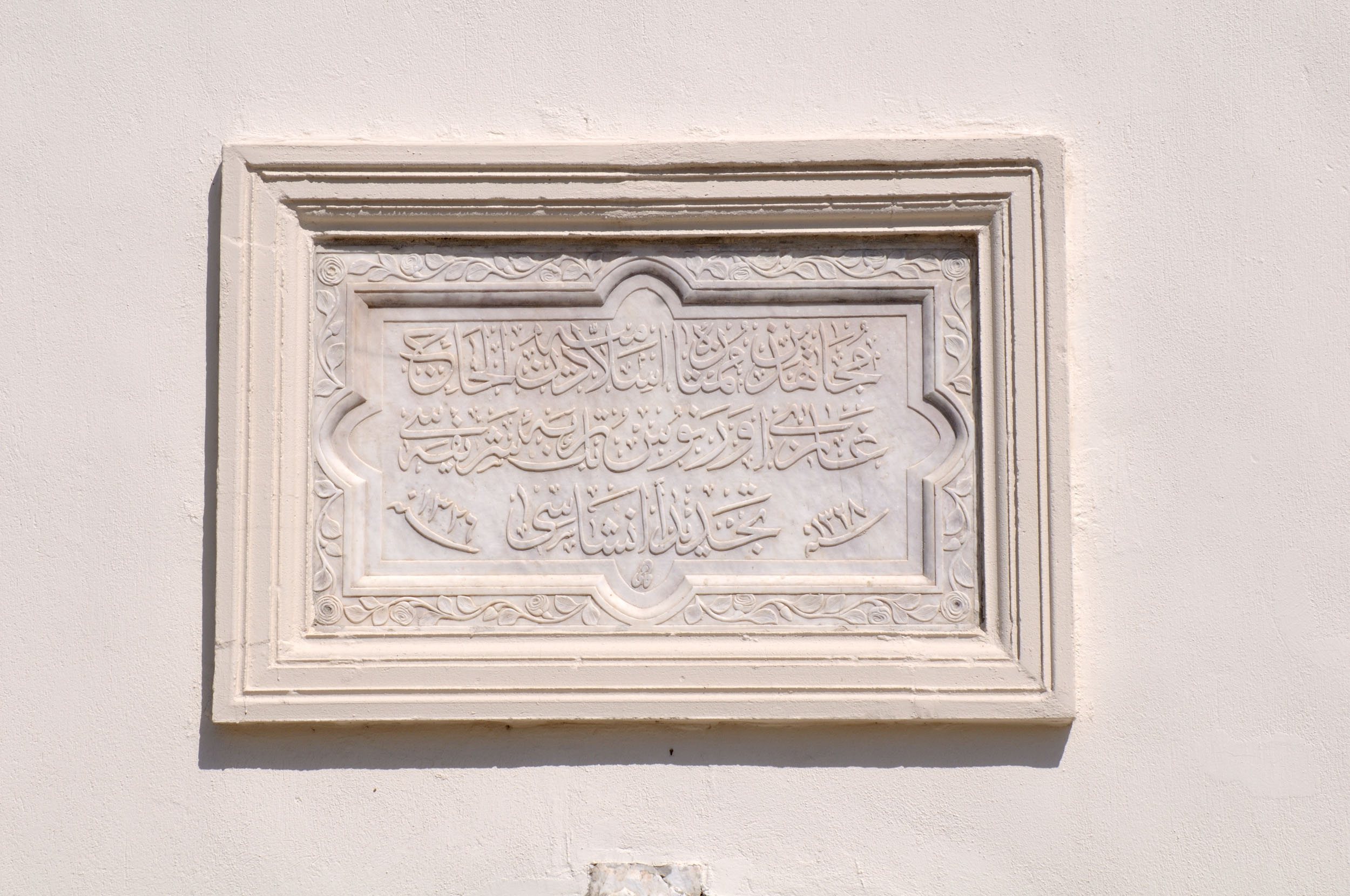
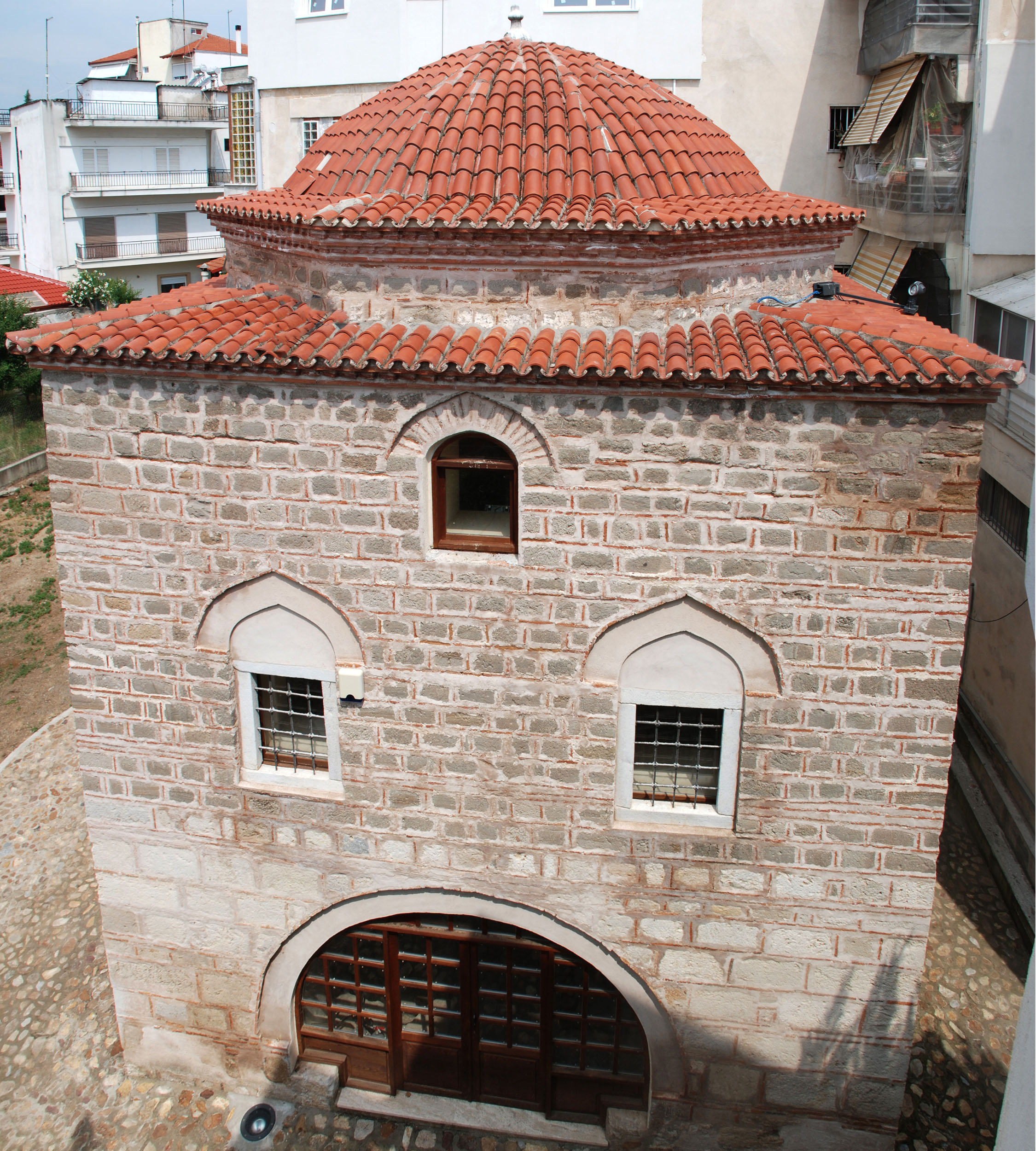
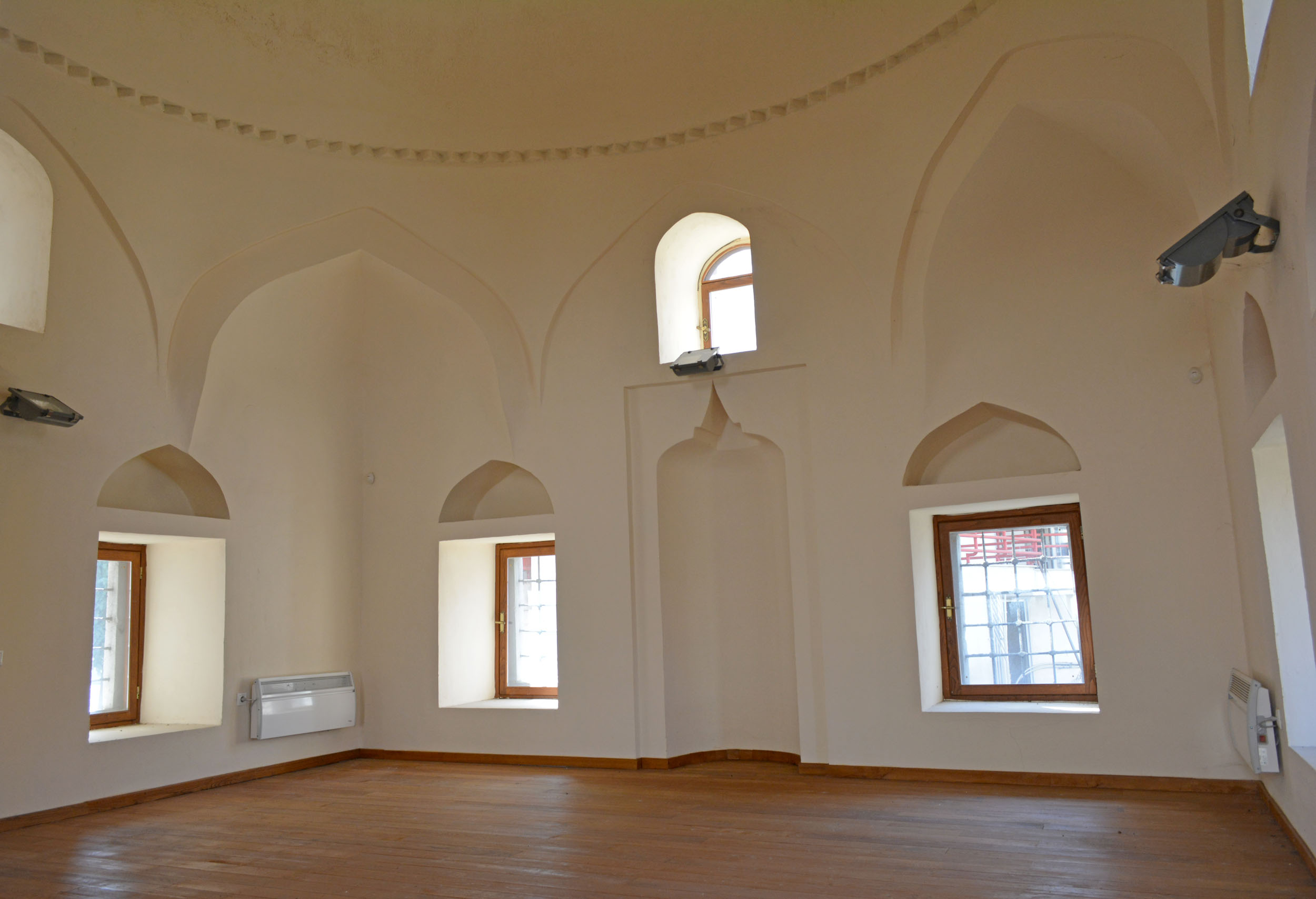
On a side street of Strantzis Street is the two-storey, almost square building, about 8 m. wide, roofed with a dome supported on an octagonal drum. The mescit is built in cloisonné masonry, dating it to the second half of the 15th century. The upper floor was accessed via an external wooden staircase which no longer survives. Inside on the upper floor is a semicircular mihrab. During the restoration of the monument (2010-2011), it was discovered that two large archways on the north and south sides of the ground floor form an open gallery through which a cobbled street passes. The building was previously believed to be the mausoleum (türbe) of Ahmed Bey Evrenosoglu, the grandson of Gazi Evrenos, but more recent research suggests that it was either a mekteb (primary school) or a mescid, a small neighbourhood mosque. The second explanation seems more likely: it was probably a small mosque integrated into a larger complex of buildings.

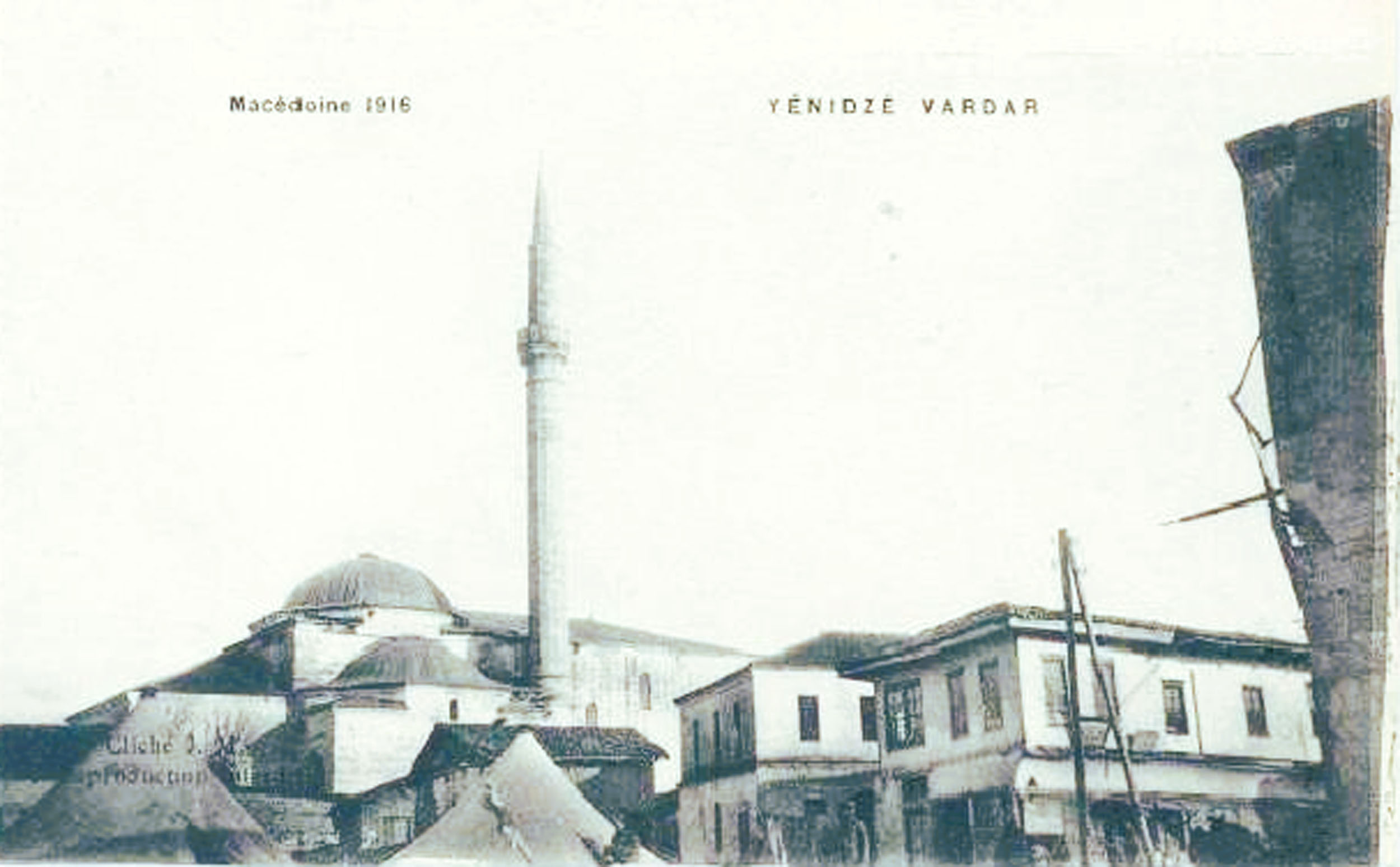
The mosque is at the western end of Giannitsa, on a low hill, inside the now-abandoned Kapsalis military camp. The mosque was erected in the second half of the 15th century by Ahmed Bey, the grandson of Gazi Evrenos, who was probably buried inside. In addition to the tomb of Ahmed Bey, the mosque also contained the tomb of the important saint and scholar Sheikh Ilahi, as well as those of other important figures of the city, and was considered a “great shrine”. The main prayer hall is almost square, measuring 9.30 m. a side externally, and is covered by a dome about 7 m. in diameter supported on an octagonal drum. According to Evliya Çelebi’s description, the dome was originally covered with sheets of lead. Against the northwest side of the mosque are the ruins of a rectangular portico, which was covered by two domes. The base, the shaft and part of the balcony of the minaret, preserved to a height of about 15 metres, survive.

φωτ. ΕΦΑ Πέλλας / phot. Ephorate of Antiquities of Pella

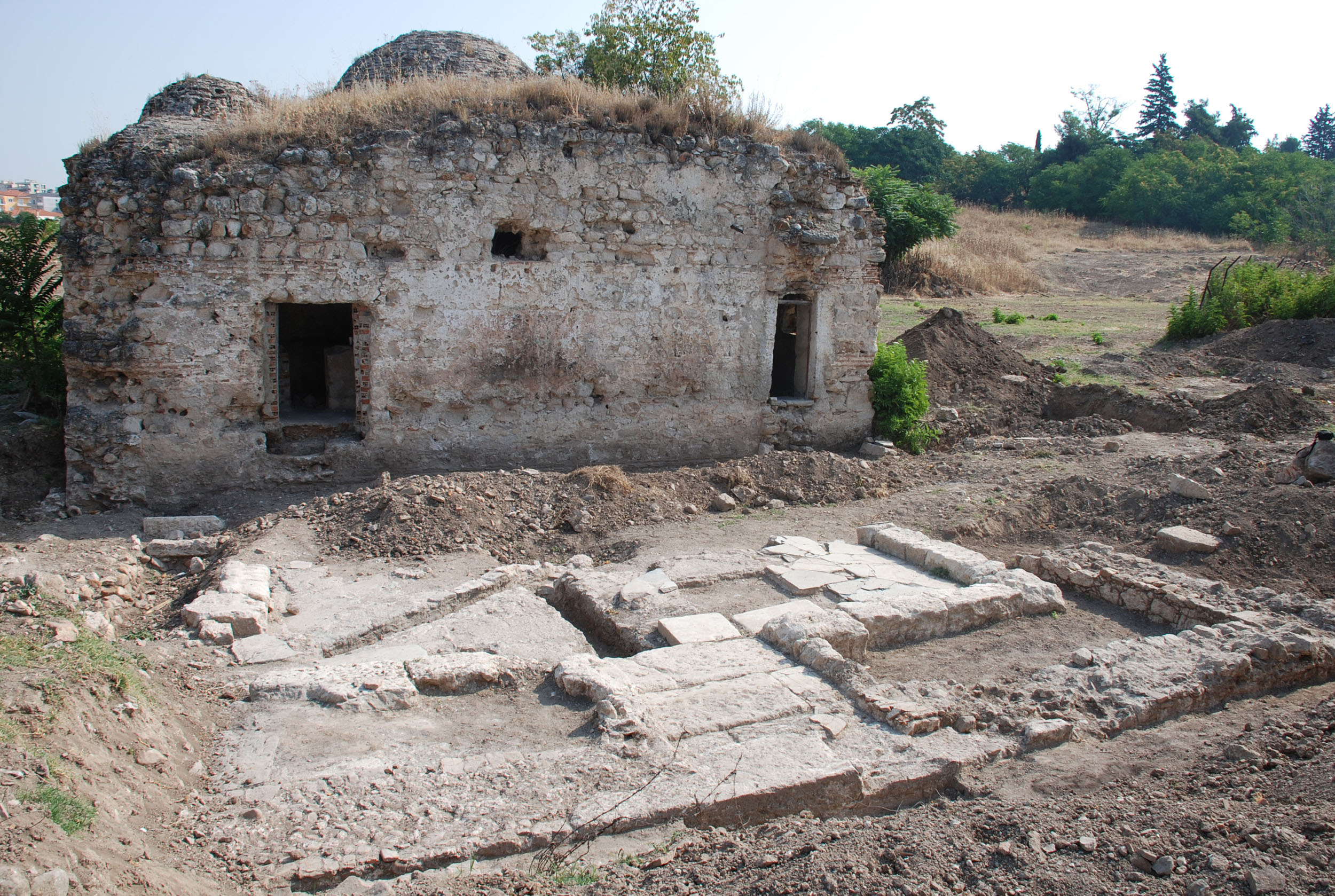
Approximately 350 m southeast of the Ahmed Bey Mosque, also inside the abandoned Kapsalis camp, is the bathhouse named after Sheikh Ilahi because of its proximity to the mosque containing his tomb. Like the mosque in question, the hammam is believed to have been built by Ahmed Bey at the end of the 15th century or between 1481 and 1512. It is a single bathhouse, of which, due to advanced deterioration, only the warm and hot rooms are now fully preserved. The baths were described by Evliya Çelebi, who praised their curative properties

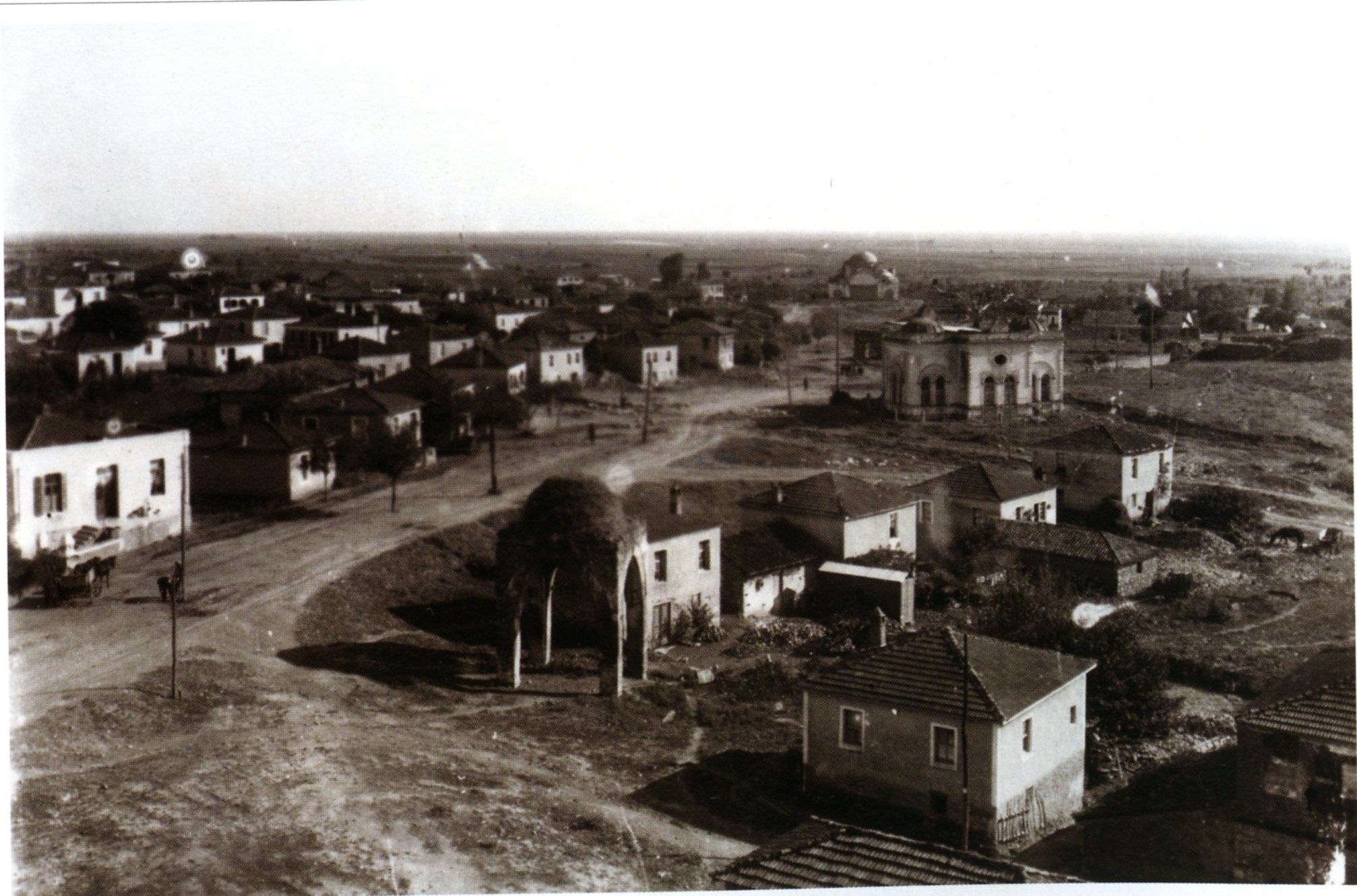
φωτογραφία του 1916 / photograph from 1916_Οθωμανικά Μνημεία Γιαννιτσών / Ottoman Monumnets of Giannitsa (ΕΦΑ Πέλλας / Ephorate of Antiquities of Pella https://www.culture.gov.gr/DocLib/Ottoman_Giannitsa.pdf)

The mosque is located , at the southern edge of Giannitsa, in the old Ottoman market. A large mosque measuring 710 sq.m., it is the principal Ottoman monument of the city. Due to its size and architectural form, it is ranked among the most important domed mosques in the Balkans. It is described by Evliya Çelebi as “the most ornate, exquisite mosque, with the largest number of worshippers”. It has a T-shaped floor plan and consists of a spacious square prayer hall, roofed with a large dome. Adjoining it on the north side is a wide, tripartite transverse room, roofed with a dome in the centre and semi-domes on the sides. The minaret, of which only the base survives, stood on the west side of the mosque. The mosque is currently in a poor state of preservation: its domes have collapsed and its original form has been significantly altered by the large-scale additions made to the building when it was converted into a cotton gin factory (the Dina Gin) in the 1950s. The mosque is believed to have been erected by Gazi Evrenos himself in the late 14th century. Iskender Bey, his great-grandson, after whom the monument is named, is credited with its extensive renovation circa 1510.

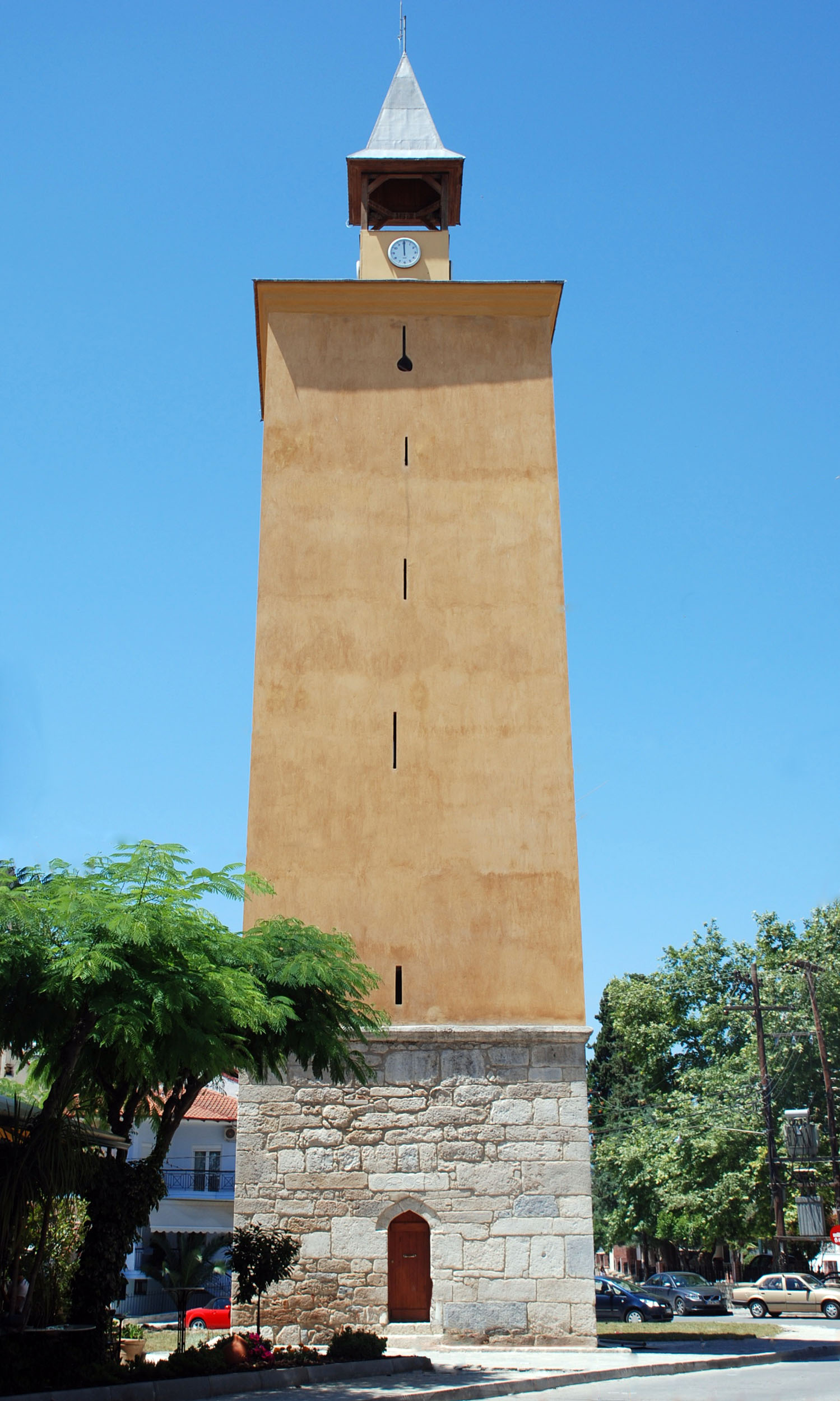
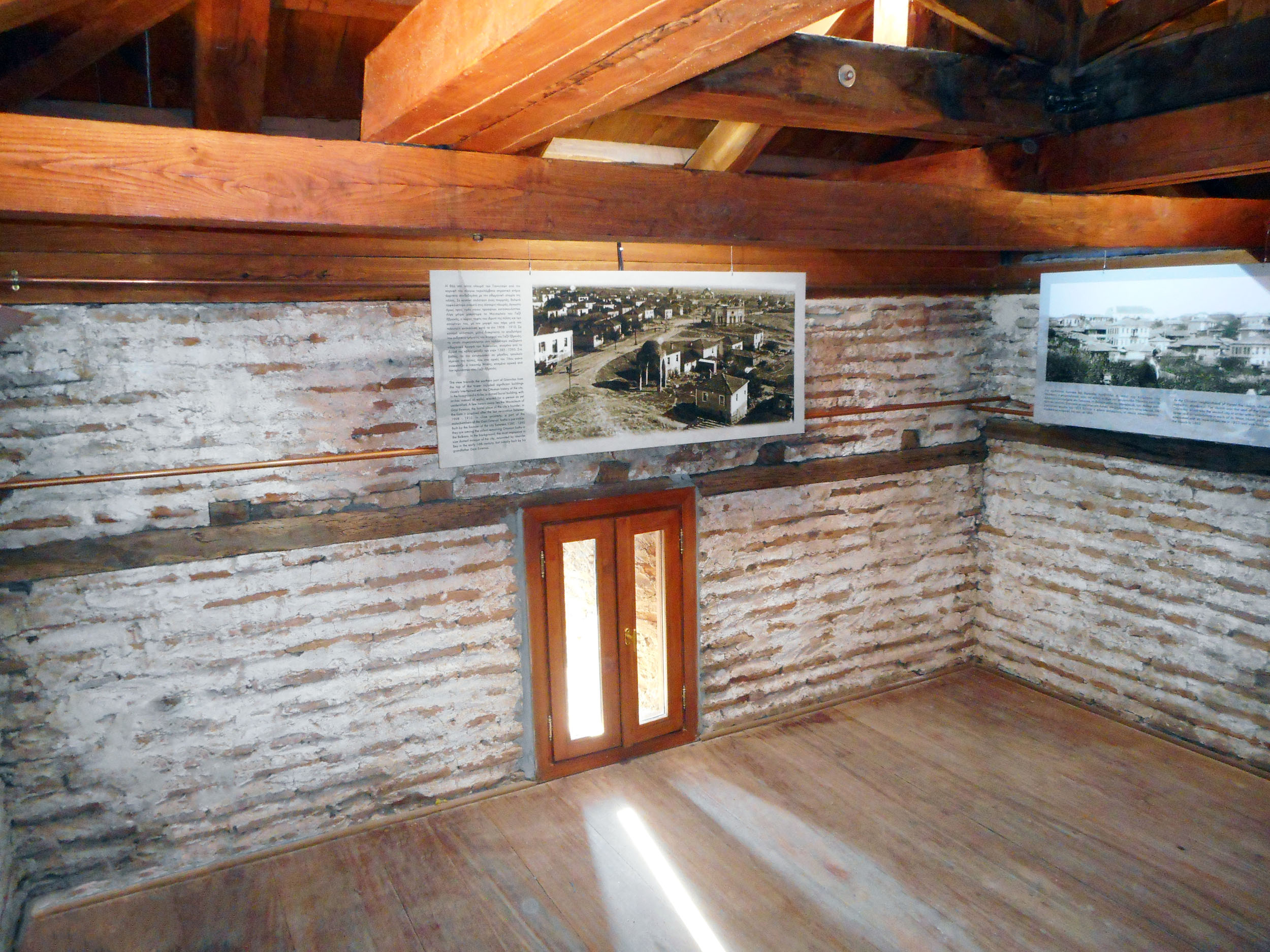
The Clock Tower stands north of the Mausoleum of Gazi Evrenos. It is thought to be the oldest surviving tower of this type in Greece, since, according to the surviving inscription, it was erected in 1753-1754 by Emir Serif Ahmed Evrenosoglu, a distant descendant of Gazi Evrenos. Multi-storey towers, which in the 19th and early 20th centuries also featured clock mechanisms that showed the time, were erected in most cities of the Ottoman Empire. The Clock Tower of Giannitsa, now restored, has a square plan with a door on the south side. Its base is made of stone, measuring 6 x 6 m. on the outside and almost 5 m. high. On it stands the 15-metre-high shaft of the tower, built of plastered brick. Inside, a wooden staircase connects the five floors and leads to the roof of the monument, crowned with a wooden turret. The turret once contained a bell that rang the hours, sometimes also serving as a reminder of Muslim daily prayers.

In the southeast part of the city stands the octagonal mosque which was converted into the church of St Paraskeve by Archimandrite Nikandros Papaioannou, a fighter in the Macedonian Struggle, in 1948. Its construction dates back to the 15th century, and it is believed to have served as a mausoleum, probably that of a descendant of Gazi Evrenos. Local residents say that the mosque belonged to a tekke (dervish monastery) and that there used to be a minaret in the place of the present bell tower.

The minaret is preserved on the east side of the city, in the space behind a block of flats, and stands against the wall of a car repair shop. It stands on a square base 3 m. high, and its cylindrical shaft, 1.8 m in diameter, is preserved to a height of 11.60 m. At the point of transition from the base to the cylindrical shaft is a band of Persian triangles, a decorative element also found in other monuments of Giannitsa (the minarets of the Ahmed Bey and Iskender Bey Mosques). The minaret, and consequently the mosque to which it belonged, dates from the second half of the 15th century.

The Ottoman Post-station, a long, rectangular stone stable building, is preserved half-ruined at the eastern entrance of the city, south of the Egnatia Street (formerly Monastiriou). The building is believed to have been the city’s central post-station for changing horses (menzilhane), serving the state postal system (ulak). The state couriers safely carried imperial orders and other official military or financial documents from Constantinople/Istanbul to the provinces. The couriers would leave their horses at a post-station after a six-hour ride, approximately every 50-60 km, and rest before continuing their journey. The head of each post-station was the menzilçi, who was appointed by the Sublime Porte and received a substantial sum of money in return for maintaining a certain number of horses at the couriers’ disposal. The post-station of Giannitsa, the only surviving one in Greece, dates from the second half of the 18th century. It measures approximately 200 sq.m. and could house 16 post-horses.

Opposite the Post-station, an excavation has brought to light the remains of a long building with rows of pillars which may have been the stables for the pack animals of one of the large hans of the city, or even the famous kervansarays of Giannitsa. The uncovered area of the building measures 248 sq.m. and, based on the pottery finds, dates from the late 15th or the 16th century. In the same area were found lime pits for leatherworking and scraps of leather associated with tanneries, which are known to have existed in the Old Market of the city.

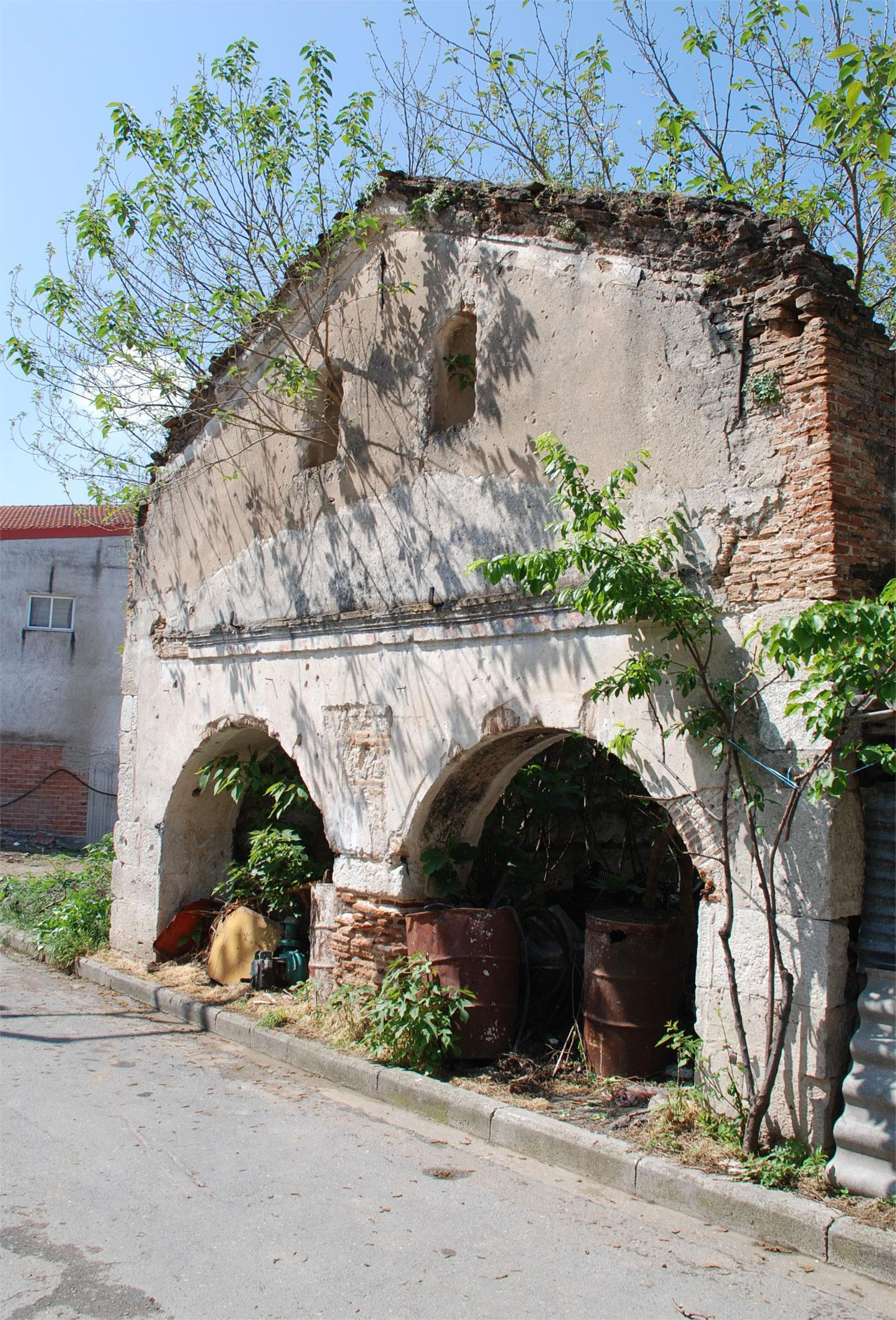
West of the Post-station, on the north side of today’s Egnatia Street (formerly Monastiriou), are two buildings with arched facades, a short distance apart, which served as shops and warehouses and date from the late 18th to early 19th century. The first has been restored and is located on Egnatia Street, while the second is on Isavron Street.

φωτ. ΕΦΑ Πέλλας / phot. Ephorate of Antiquities of Pella

A Neoclassical building of the early 20th century, it is located halfway along the pedestrian Eleftheriou Venizelou Street, the heart of the social and commercial life of the city. Until the Battle of Giannitsa (1912) the Ottoman Government House was on the ground floor, while the first floor was the residence of Emin Bey, a descendant of Gazi Evrenos and the last Ottoman governor of the city. Today it houses the Polykentron events venue.

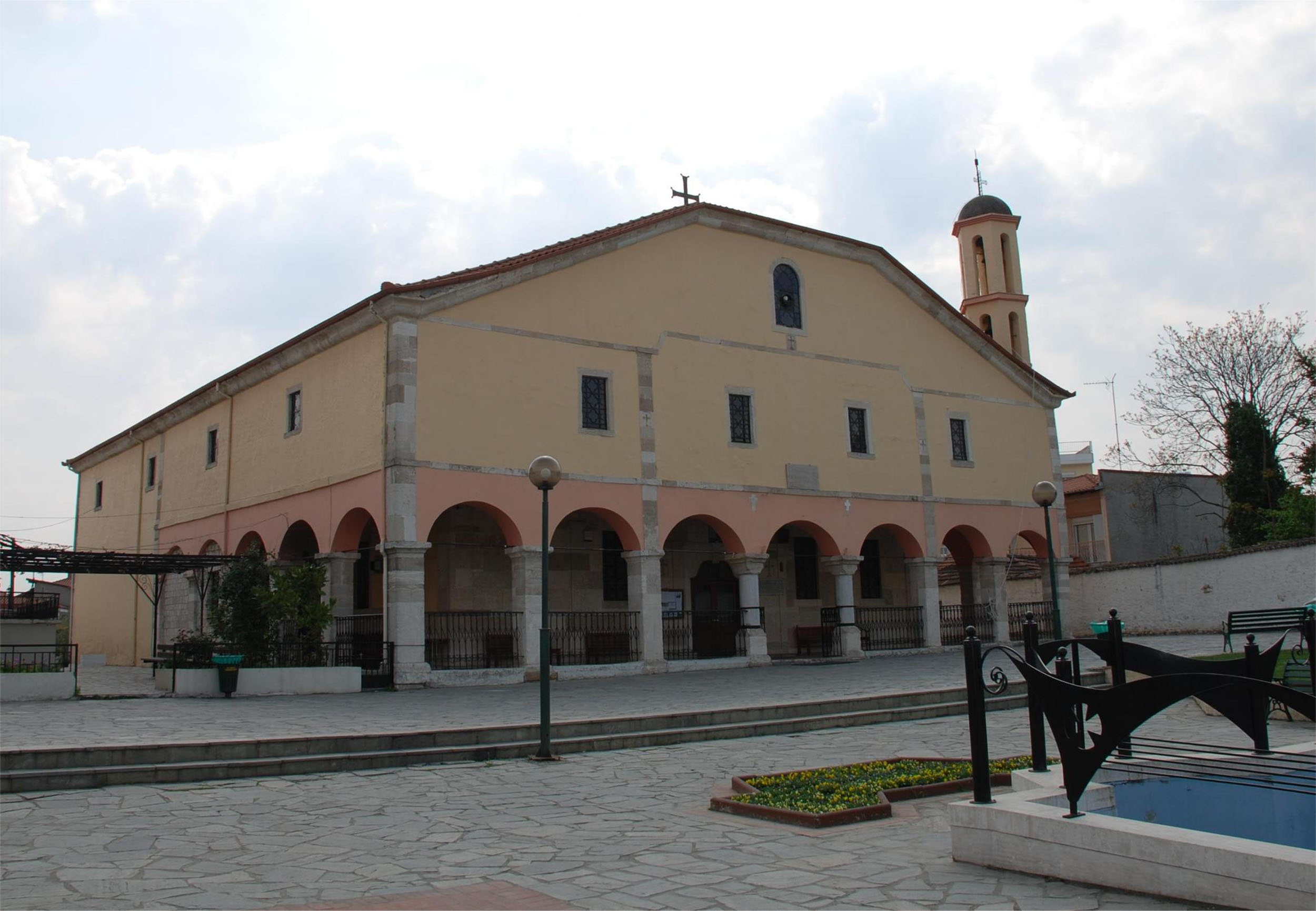
The church is located in the north part of the city, in the district called Varos in Ottoman times. It was the metropolitan church during the time when the Metropolitan of Edessa, Pella and Almopia resided in Giannitsa. This was the first Christian church in the city, a three-aisled basilica built in 1860 by a special firman (decree) of 1858 issued by Sultan Abdülmecid I (1839-1861) at the request of the Christian inhabitants. It is noteworthy that there had been no Christian church in the city until then, despite the large number of Christians.

φωτ. ΕΦΑ Πέλλας / phot. Ephorate of Antiquities of Pella

Museum

Historical and Folklore (35 Plastira St.)

The museum was founded in 1997 on the initiative of the “Philippos” History and Folklore Society of Giannitsa. Its rich collection presents the history of the city and aspects of the traditional life of its inhabitants.

Other stops in the Regional Unit of Pella

error: