Regional Unit of Kastoria: Tradition and contemporary culture

Performances and cultural events in the cycle of the year

The city’s many monuments, the beauty of nature, customs, traditions and contemporary art coexist harmoniously in Kastoria in every season of the year.

The New Year is welcomed with carnivals. On New Year’s Eve and New Year’s Day the events begin in Kleisoura, Argos Orestiko, Korisos, Lithia and Mavrochori, continuing in the city of Kastoria on Epiphany (6 January).

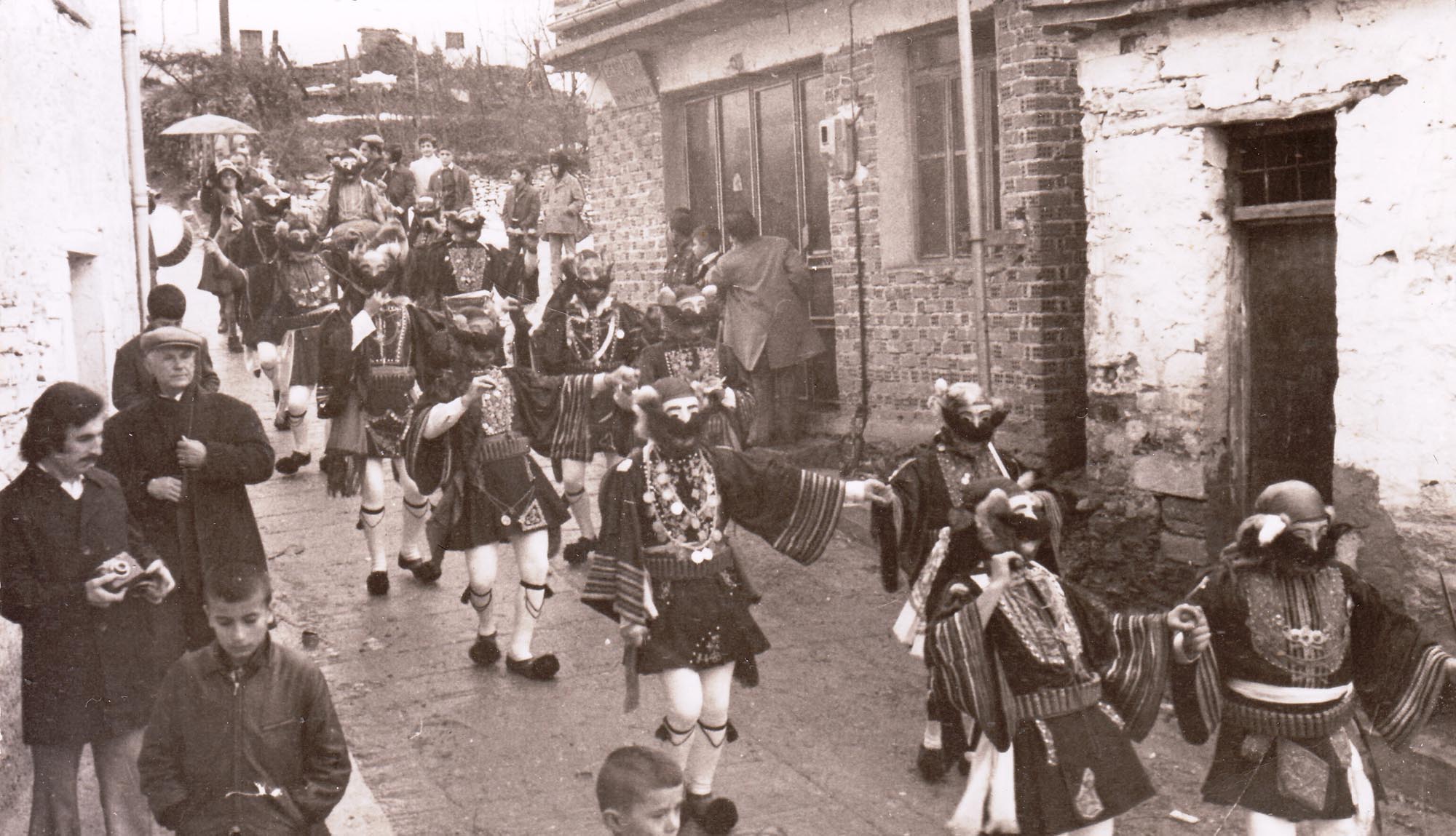
Καστοριά, Αργκουτσιάρηδες σε πατινάδα (1973), Διεύθυνση Νεότερης Πολιτιστικής Κληρονομιάς κατά παραχώρηση από το αρχείο Ν. Σιώκη, φωτ. Γ. Παπαδόπουλος/ Kastoria, Argoutsiarides performing in a singing and dancing procession (1973), Directorate of Modern Cultural and Intangible Cultural Heritage, courtesy of the N. Siokis archive, photo: G. Papadopoulos

In Kleisoura, a small town of Western Macedonia, the Argoutsiaria performance remains unchanged. A troupe of men in disguise, led by the Tserkezos (Circassian), roam through the main streets and squares with banter and dancing, playing zournades (shawms) and daouli drums. The Argoutsiarides, armatoloi (irregular soldiers) or fighters of the Macedonian Struggle according to the folk interpretation, clash with the Ottoman Gegas and free the Kokona (young woman). They all dance together in the central square and then visit cafes, tavernas and houses. Key elements of the costume are the swords and the off-white masks with crimson lips, a red headband, a hare-skin beard and a large black moustache made of sheep’s wool. The custom dates back to the Byzantine period. Over time, the kidnapping of the Gegas and the freeing of the Kokona were associated with the liberation of the region from Ottoman rule and with the Macedonian Struggle.

In Argos Orestiko, the three-day carnival includes a large parade of troupes of masqueraders with a strongly satirical air, and the Pateritsa, a customary dance performance by women in disguise.

In the neighbourhoods of Kastoria, the Ragoutsaria, a modern three-day carnival with brass bands, starts on the afternoon of Epiphany. On 8 January, carnival-goers and visitors gather for a fun evening of music and dance in Doltso Square (Emmanuel Brothers Square). The celebrations coincide with the Balkan Music Festival, featuring bands from Greece and abroad.

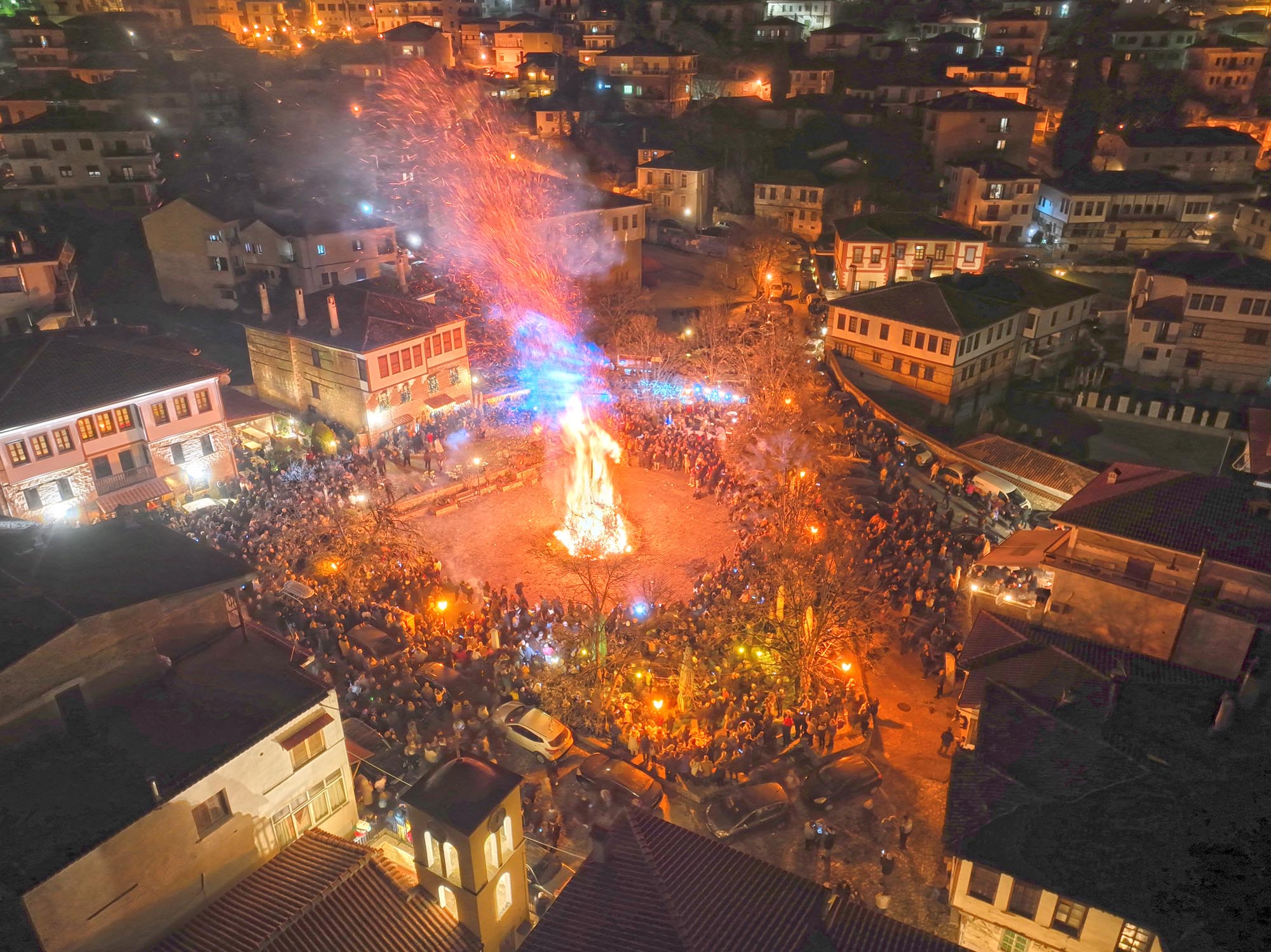
Customs of Apokries (Carnival Season) in the region of Kastoria are the boubounes, the palaipoules and the haskaris. Boubounes are the bonfires that are lit on Meatfare Sunday (the second Sunday before Lent) in Doltso, Apozari, Omonoia and other neighbourhoods. Participants jump over the burning coals “to throw off fleas and get rid of evil”. The similar palaipoules custom is performed in Argos Orestiko. Haskaris is a game played at home: the oldest person holds up a boiled egg on the end of a thread, and the others try to catch it in their mouths. The game marks the beginning of the Lenten fast.

Καστοριά, οι Μπουμπούνες στο Ντολτσό, φωτ. ευγενική παραχώρηση STUDIO TRASIAS/ Kastoria, Boubounes at Doltso, photo: courtesy of STUDIO TRASIAS
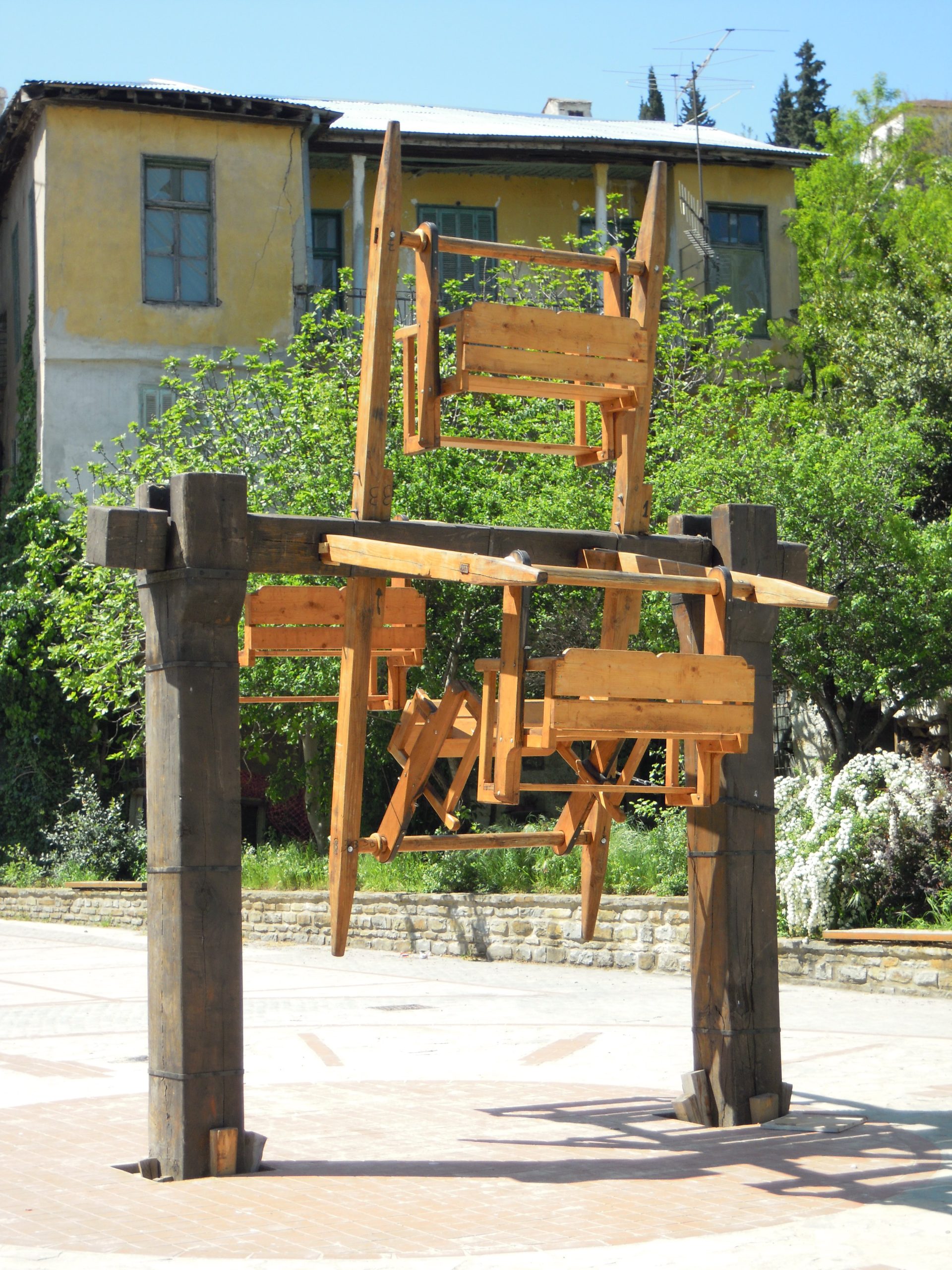
Η Ροδάνη στην πλατεία Απόζαρι, φωτ. Δήμος Καστοριάς/ The Rodani in Apozari Square, photo: Municipality of Kastoria

During Holy Week, local customs are revived in the city and villages of Kastoria. On Lazarus Saturday (the feast before Palm Sunday) and Palm Sunday in Korisos, the Lazarines, girls dressed in white, sing songs celebrating Spring and the rebirth of nature. On Holy Thursday, the Rodani, an eight-seater vertical wooden roundabout resembling a windmill, of folk construction and art, is set up in Apozari Square, entertaining young and old alike.

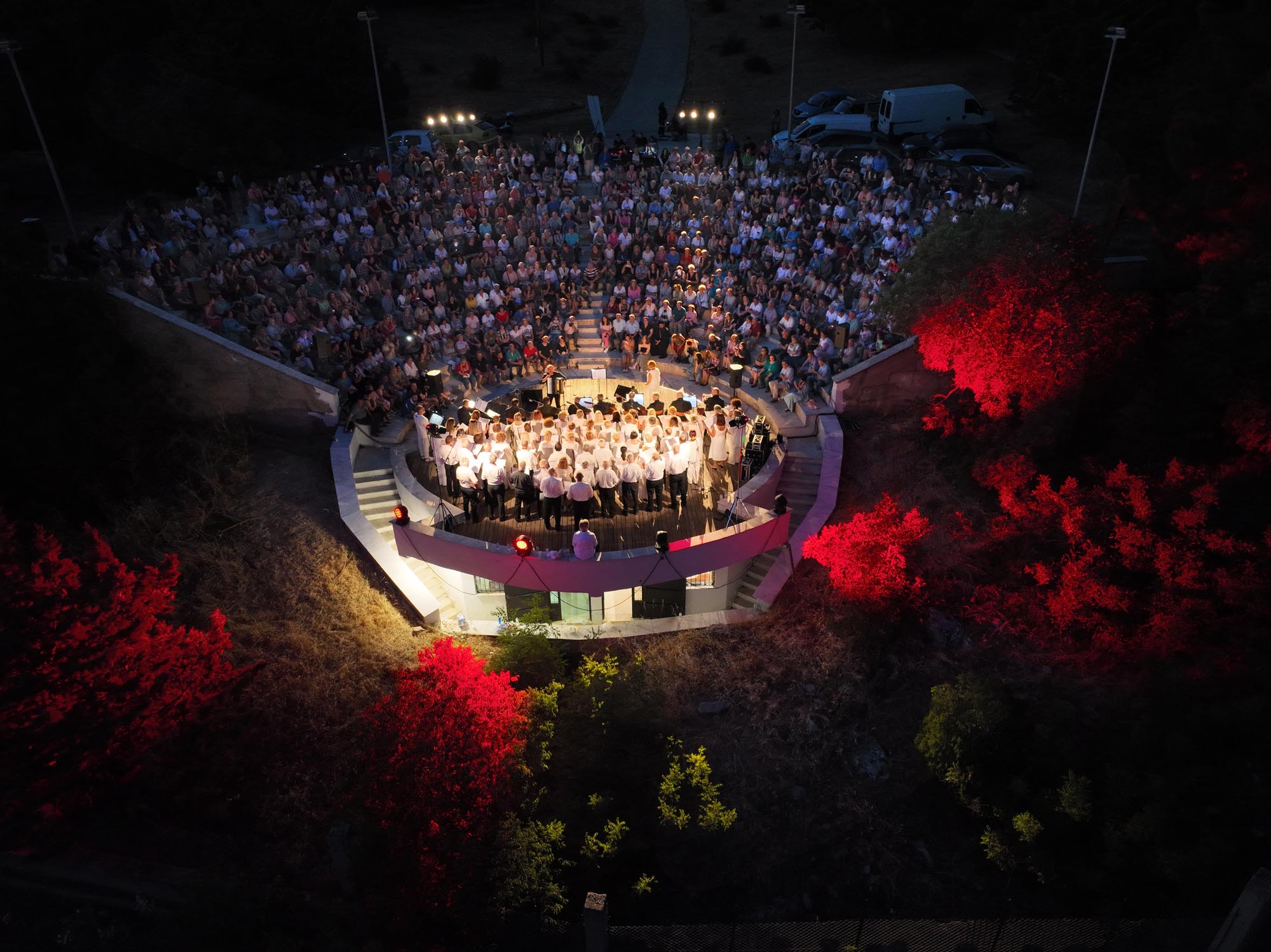
The Cultural Summer of Kastoria includes events in the courtyard of the Picheon Mansion and the Mountain Theatre. The Athanasios Christopoulos Cultural Association of Kastoria organises the Christopouleia each year, a series of events during which the annual activities of the Association are presented in open spaces of the city. The International Choir Festival is held in Argos Orestiko. In Vogatsiko, the birthplace of the Dragoumis family, the Dragoumeia festival is held in August over several days, with displays by dance associations and music.

Autumn is the season for harvesting and selling agricultural goods. In Argos Orestiko, the Trade Fair in the last week of September is an important age-old institution.

Καστοριά, Θέατρο Βουνού, φωτ. ευγενική παραχώρηση STUDIO TRASIAS/ Kastoria, Mountain Theatre, photo: courtesy of STUDIO TRASIAS

Other stops in the Regional Unit of Kastoria

error: