Kastoria

Kastoria, a “living museum” of Byzantine and post-Byzantine culture

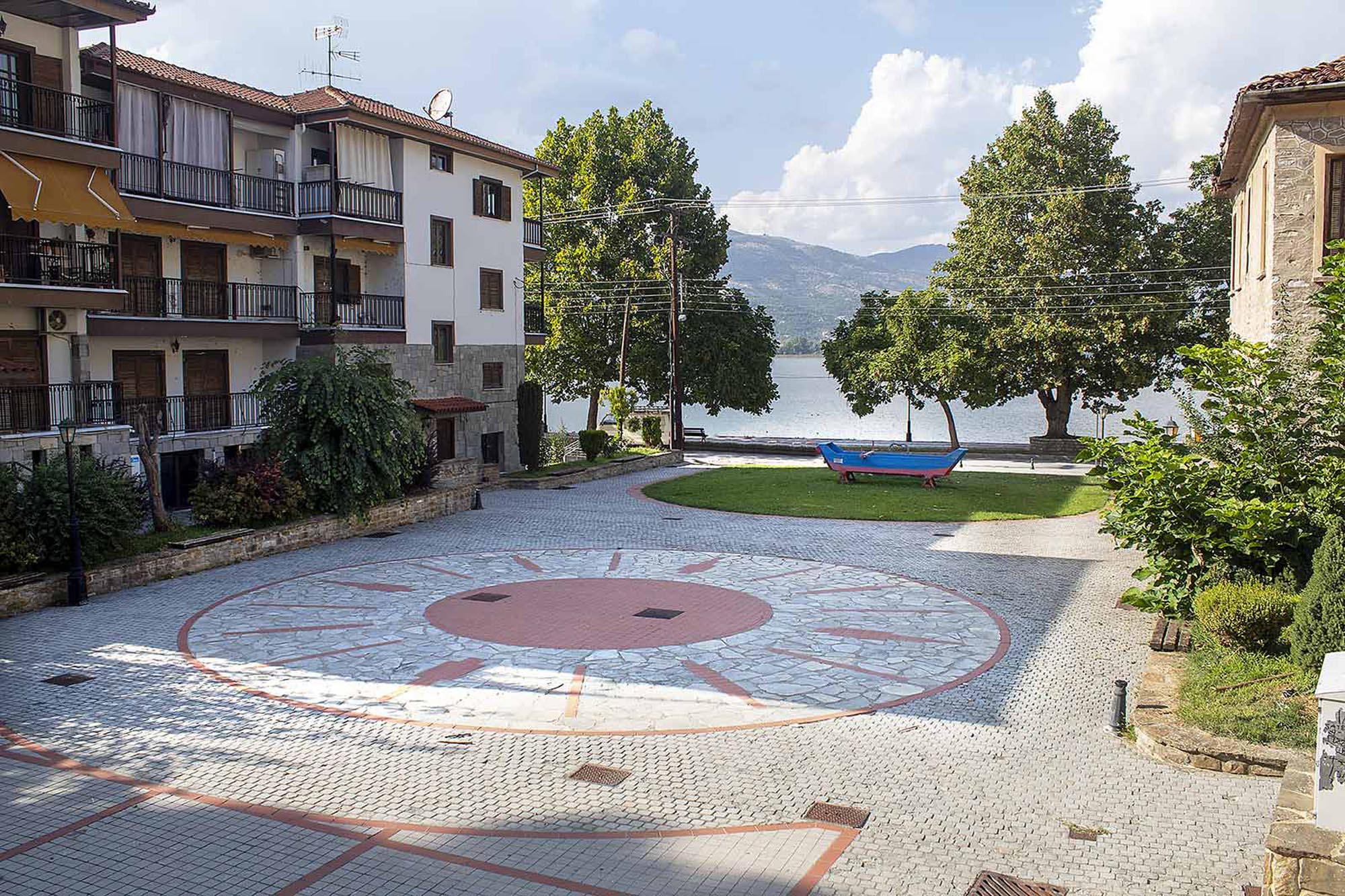
Kastoria, laid out amphitheatrically on the neck of a peninsula that juts into the lake of the same name (the ancient Lake Orestis), surrounded by the imposing mountain ranges of Gramos and Vitsi, is one of the largest cities of Western Macedonia today, boasting a unique natural beauty. For more than ten centuries, from the Middle Byzantine period (9th c.) to the present day, it has been an important political and economic centre of the wider region, with a remarkable cultural influence. The remains of its walls, its many churches – it is known in popular tradition as the city of “three hundred churches” – its important sets of monumental paintings and wealth of portable icons, often the work of notable local painters or workshops, its imposing mansions which blend in harmoniously with the beautiful natural environment of the lake, all make Kastoria a “living museum” of Byzantine and post-Byzantine art.

The economic and artistic prosperity of Kastoria was largely based on its key geographical location, a hub and starting-point of major roads. Two of these connected the city with the main trunk of the Via Egnatia: the first led north to Chlerino (present-day Florina), while the second headed east through the narrow Kleisoura Pass to meet the Via Egnatia in the territory of Eordaia. Another important road started at Kastoria, connecting the wider region of Western Macedonia with the Adriatic coast, following the course of the rivers Haliacmon and Devolis (Devoll, the ancient Eordaikos). It was this road that the troops of the First Crusade followed on their march to Constantinople in 1096, passing through the region of Kastoria. Two branches of this artery were used by traffic moving from Kastoria to Prespes and Ohrid. Another major road starting from Kastoria followed the course of the Haliacmon southwards.

History

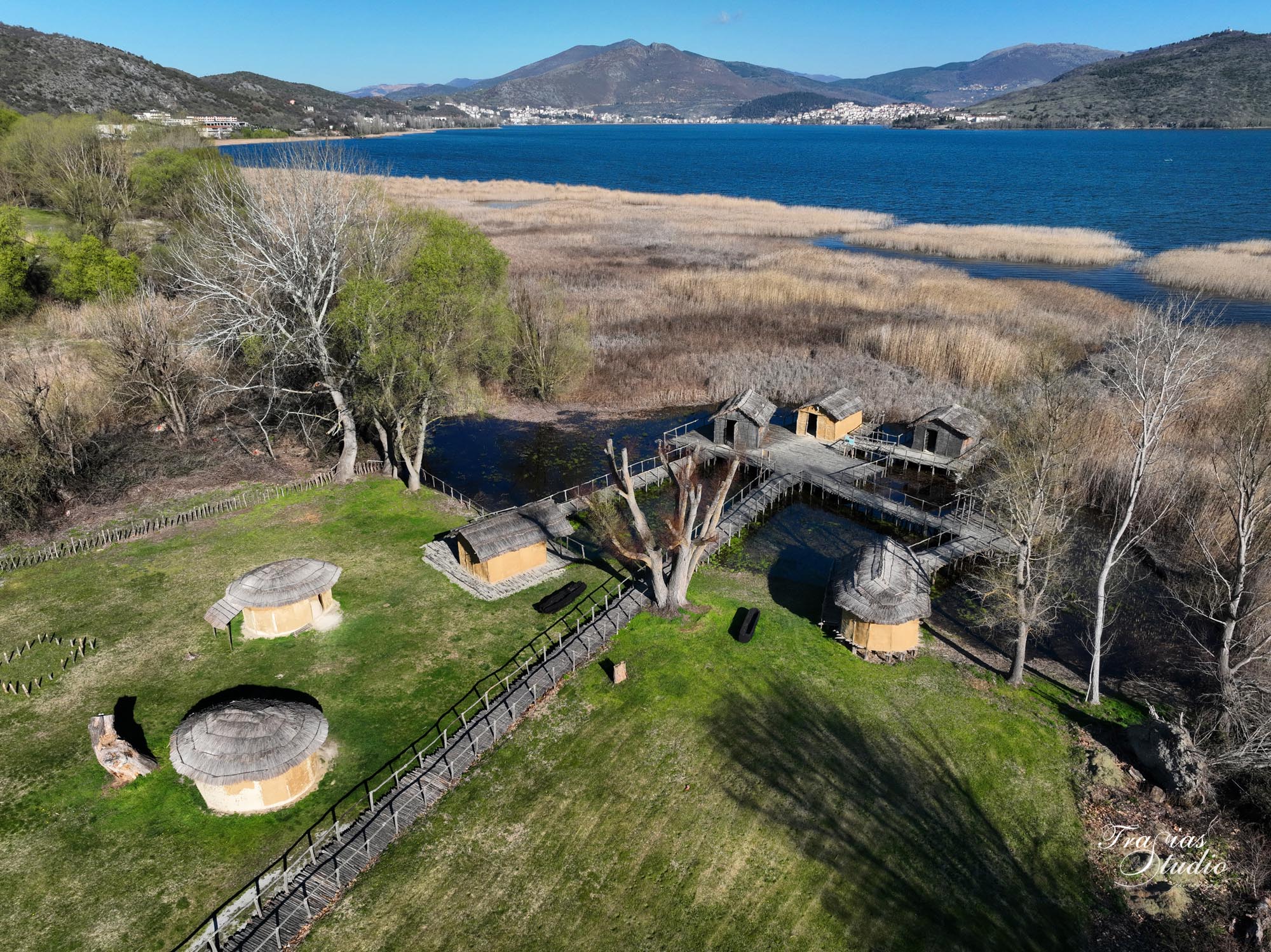
The area around the Lake of Kastoria was first inhabited in the Palaeolithic and Mesolithic periods (ca. 50000-7000 BC), based on the surface collection of stone artifacts. Habitation continued uninterrupted into ancient times, as we see from the large number of archaeological sites ranging in date from the Neolithic (5500 BC) up to at least the Late Hellenistic period (late 4th c. BC). The most important archaeological site in the area is the prehistoric lakeside settlement near the village of Dispilio, on the south bank of the lake. The site, which is open to the public, is one of the oldest settlements in Europe, founded at the end of the Middle and the beginning of the Late Neolithic period (5467-5324 BC), if not earlier, based on the samples taken from the wooden piles on which the houses of the settlement were supported. The piles were uncovered during the excavation in an excellent state of preservation due to the particular environmental conditions in the area.

Ανοικτό Μουσείο Δισπηλιού, αναπαράσταση του λιμναίου νεολιθικού οικισμού δίπλα στον αρχ. χώρο/ Open-Air Museum of Dispilio, reconstruction of the lakeside Neolithic settlement next to the archaeological site (Δήμος Καστοριάς / Municipality of Kastoria, Studio Trasias)
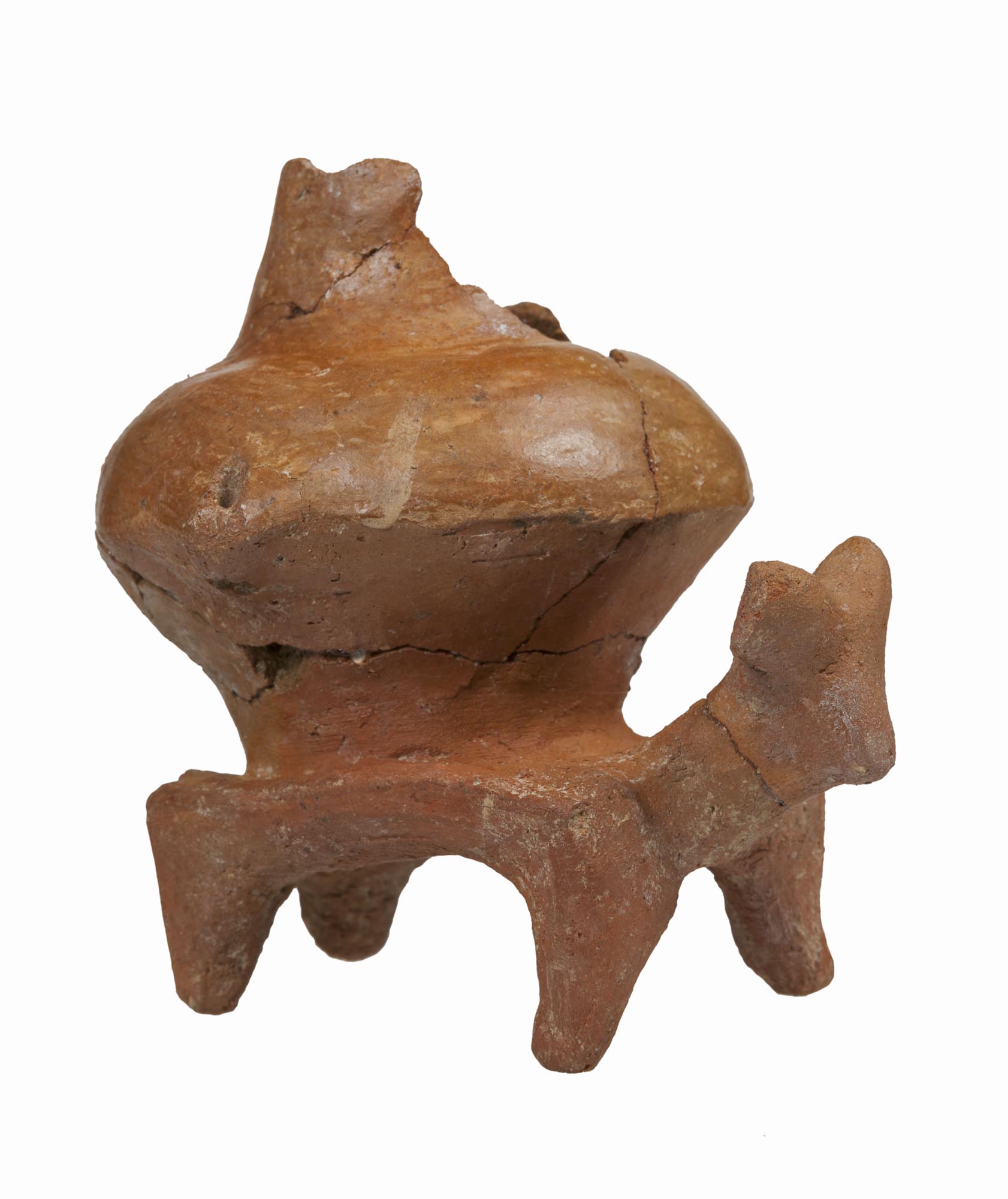
Δισπηλιό, πήλινο ειδώλιο με αγγείο/ Dispilio excavation, terracotta figurine with a vessel (αρχείο ΕΦΑ Καστοριάς / archive Ephorate of Antiquities of Kastoria)

In antiquity, Kastoria belonged to the territory of Orestis, a region of Upper Macedonia which was definitively incorporated into the Macedonian state in the reign of Philip II (359-336 BC). In 196 BC it surrendered to the Romans, although retaining special privileges. At the end of the 3rd century AD, the Roman emperor Diocletian founded Diocletianopolis at Armenochori, northwest of the modern village of Argos Orestiko. The archaeological site, which is open to the public, includes part of the fortified enclosure of the city, as well as the remains of secular buildings and two Early Christian basilicas.

According to the historian Procopius, Diocletianopolis, a thriving city destroyed by barbarian raids, was moved by the Emperor Justinian (527-565) to a safer, naturally fortified location on the “island” – that is, the peninsula – of the Lake of Kastoria. The new city, which was reinforced with a strong cross-wall (diateichisma) across the isthmus of the peninsula, was founded, according to the most widely accepted view, on the site of the ancient city of Orestis Celetrum. Important antiquities have been found at sites near Kastoria, but in the city itself few finds to date are connected with the ancient city of Celetrum: they include two inscriptions found set into the walls of later buildings. Similarly, with the exception of the surviving section of the wall of Justinian’s reign, no buildings of the Early Christian period have been found, apart from some sculptures, probably from older basilicas, reused in the Byzantine church of the Taxiarch of the Metropolis and the Kursum Mosque.

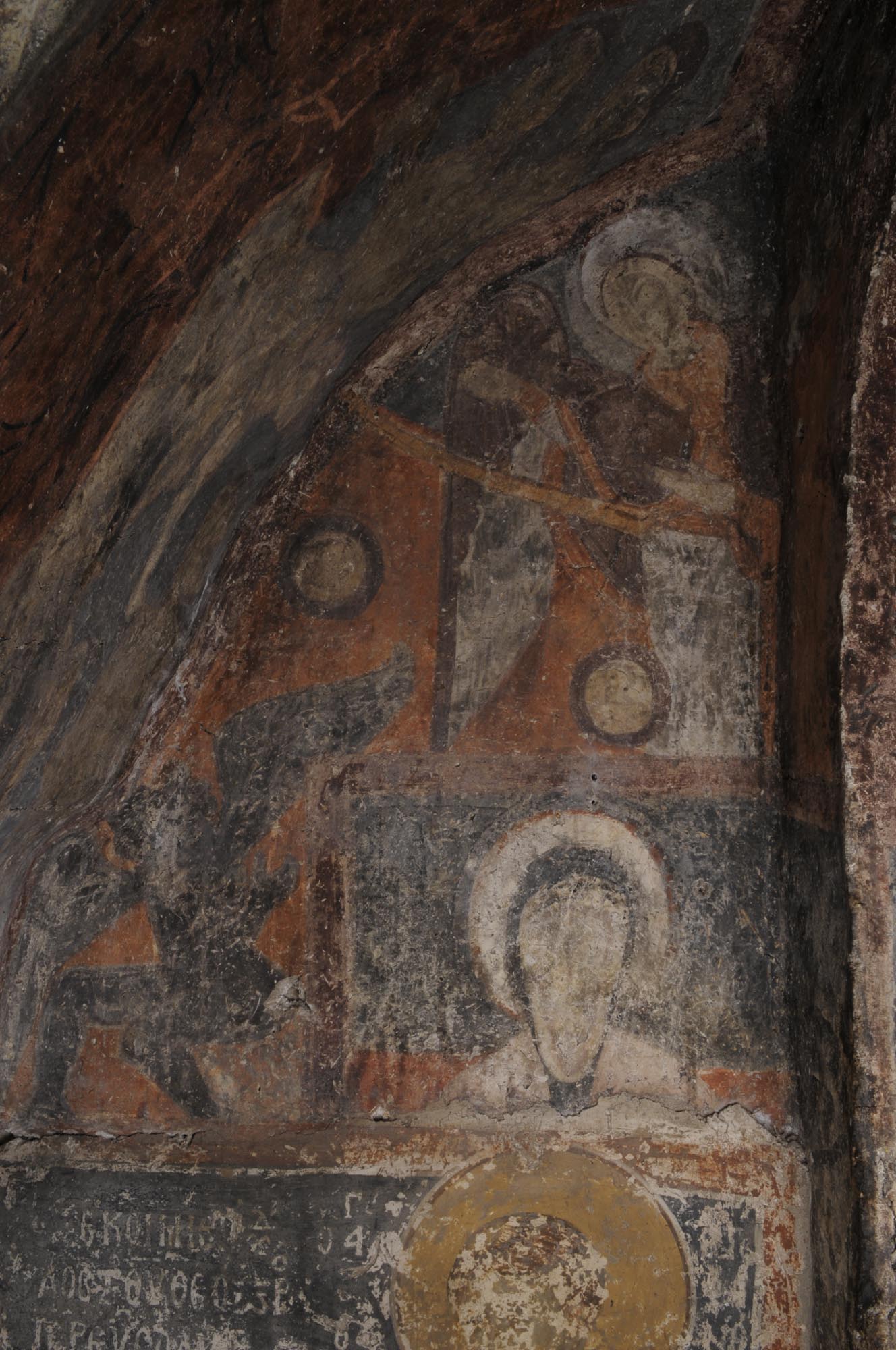
From the middle of the 9th century, when it was incorporated into the newly created Theme of Thessaloniki, the city began to flourish, as a remarkable number of churches and sets of frescoes of the late 9th and 10th centuries attest. These are particularly important for the study of Byzantine art, especially given the sparseness of monuments of this period in Greece. Some researchers place the extension of the Justinian wall, which surrounded the city on all sides, giving it the form of a strong castle-city, in the late 9th to early 10th century.

At the beginning of the 10th century, Kastoria came under intense pressure from the Bulgarians, first under Tsar Simeon and then, about half a century later, under Tsar Samuel, who conquered the city in 990. In 1018, the city was recaptured by Emperor Basil II Boulgaroktonos (the Bulgar-Slayer), who dismantled the huge Bulgarian state which had seized control of the whole of Macedonia west of Thessaloniki. From this time onwards, Kastoria is referred to as the seat of an episcopal see subject to the Archiepiscopate of Ohrid, and indeed a protothrone, i.e. “first-class” see. A little later, from the 11th century onwards, it is mentioned as the seat of a military theme.

In 1082, the Norman troops of Southern Italy and Sicily, led by Bohemond, invaded the Balkans and, following the Via Egnatia, captured Kastoria and most of Western Macedonia. The following year (1083), Emperor Alexios I Komnenos expelled the Normans from Kastoria, forcing them to abandon all their Balkan possessions (1085). A few years later (1096), during the First Crusade, the crusaders, again led by Bohemond, passed through the region, plundering Kastoria once more. In the late 11th century, the first Jewish inhabitants settled in the city, establishing a lasting presence there.

αρχείο ΕΦΑ Καστοριάς / archive Ephorate of Antiquities of Kastoria

In the 12th century, Kastoria experienced great prosperity and a cultural efflorescence, although after the middle of the century the wider region was plagued by local risings of populations of Serbian and Bulgarian origin, and probably suffered renewed depredations by the Normans of the Third Crusade (1185). The city enjoyed significant commercial growth, boosted by the presence of the Venetians, who were granted the privilege of trading in the city by a chrysobull issued by Emperor Alexios III Angelos in 1198. The city was home to senior ecclesiastical officials, who were highly educated and maintained close contacts with prominent intellectuals of the time, as well as wealthy secular lords who played a leading role in the city’s artistic production. Exceptional frescoes of this period are preserved in the churches of St Nicholas Kasnitzes and the SS Anargyroi or Holy Unmercenaries (second phase). The economic prosperity of the city is confirmed by the 12th-century Arab geographer al-Idrisi, who describes it as rich, pleasant and populous, with a large number of villages, and refers to its lake, which supplied the city with abundant fish.

 In 1204, following the division of the territories of the Byzantine Empire by the forces of the Fourth Crusade, Boniface of Montferrat, who had gained Thessaloniki, attempted to extend his rule into the surrounding areas. However, he failed to advance beyond Servia, meaning that the city of Kastoria was never conquered by the crusaders. Between 1215 and 1219, Western Macedonia was incorporated into the Despotate of Epirus. Kastoria was briefly occupied by the Bulgarians, and thereafter the region became the theatre of constant conflicts between the Despotate of Epirus and the Empire of Nicaea. In 1259, the victory of Michael VIII Palaiologos over the ruler of Epirus Michael II Komnenos Doukas at the Battle of Pelagonia marked not only the incorporation of Macedonia into the Empire of Nicaea, but also the beginning of the restoration of Byzantium, which was completed two years later with the Reconquest of Constantinople from the Franks (1261). This turbulent political period is reflected in the exterior frescoes of the katholikon of the Monastery of Panagia Mavriotissa.

At the beginning of the 14th century, Kastoria was initially controlled by the rulers of Thessaly, but in 1328 it peacefully entered the hands of Andronikos III Palaiologos. A few years later it was captured by the Serbs of Stefan Uroš IV Dušan, remaining in their possession until 1371. Then, probably after 1372, the city came under the rule of the Albanian lord of Berat, Andrea II Muzaka, who bequeathed it to his youngest son Stoya; the city remained under his jurisdiction until circa 1385.

During the 13th and 14th centuries, despite the turbulent times, the artistic activity of Kastoria continued to flourish interrupted. During these two centuries, and particularly in the second half of the 14th century, a significant number of churches were built or renovated and adorned with frescoes, and many portable icons were painted. The painting of the period is often of high quality, influenced by the great artistic centres of the time: Constantinople and especially Ohrid and Thessaloniki. Notable painters were active in and around the city. The surviving dedicatory inscriptions, valuable sources of a variety of information, as well as the dedicatory representations included in the wall paintings of the city’s churches, reveal the presence of foreign rulers in Kastoria, from Bulgaria, Serbia and Albania successively. Imitating the customs of the Byzantine lords, they paid for the construction/renovation and painting with frescoes of the churches of the Taxiarch of the Metropolis and St Athanasios of Mouzaki.

During the reign of Sultan Murad I (1362-1389), the city fell to the Ottomans. During the Ottoman period, Kastoria (Kesriye), one of the most populous cities in the Balkans and the largest in Western Macedonia, was vital to the administrative organisation of the region, especially in the 15th century, when southern Albania and North Macedonia formed the northern borders of the Ottoman state in the area. Kastoria was then the seat of a sancak and an eyâlet. From the 16th or 17th century onwards it became the seat of a kaza. Ottoman administrators and religious officials were granted timars and settled in the city. In the 15th century, the area of Kastoria was a ziamet and then a hâss of senior officials, and later a hâss of the Sultan (16th c.) and a hâss of Fatma Sultan, daughter of Sultan Ahmed I (1603-1617), enjoying substantial tax privileges.

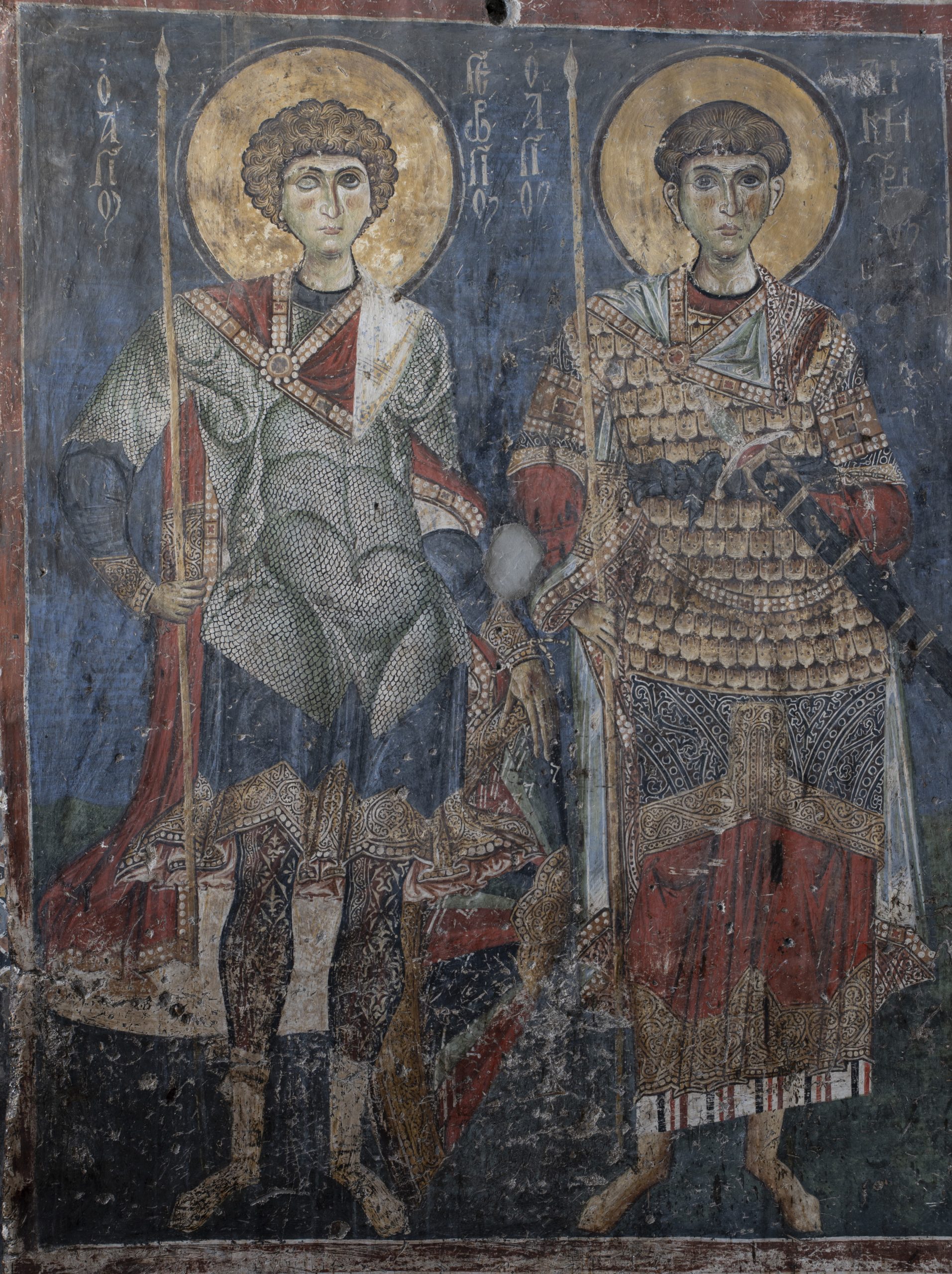
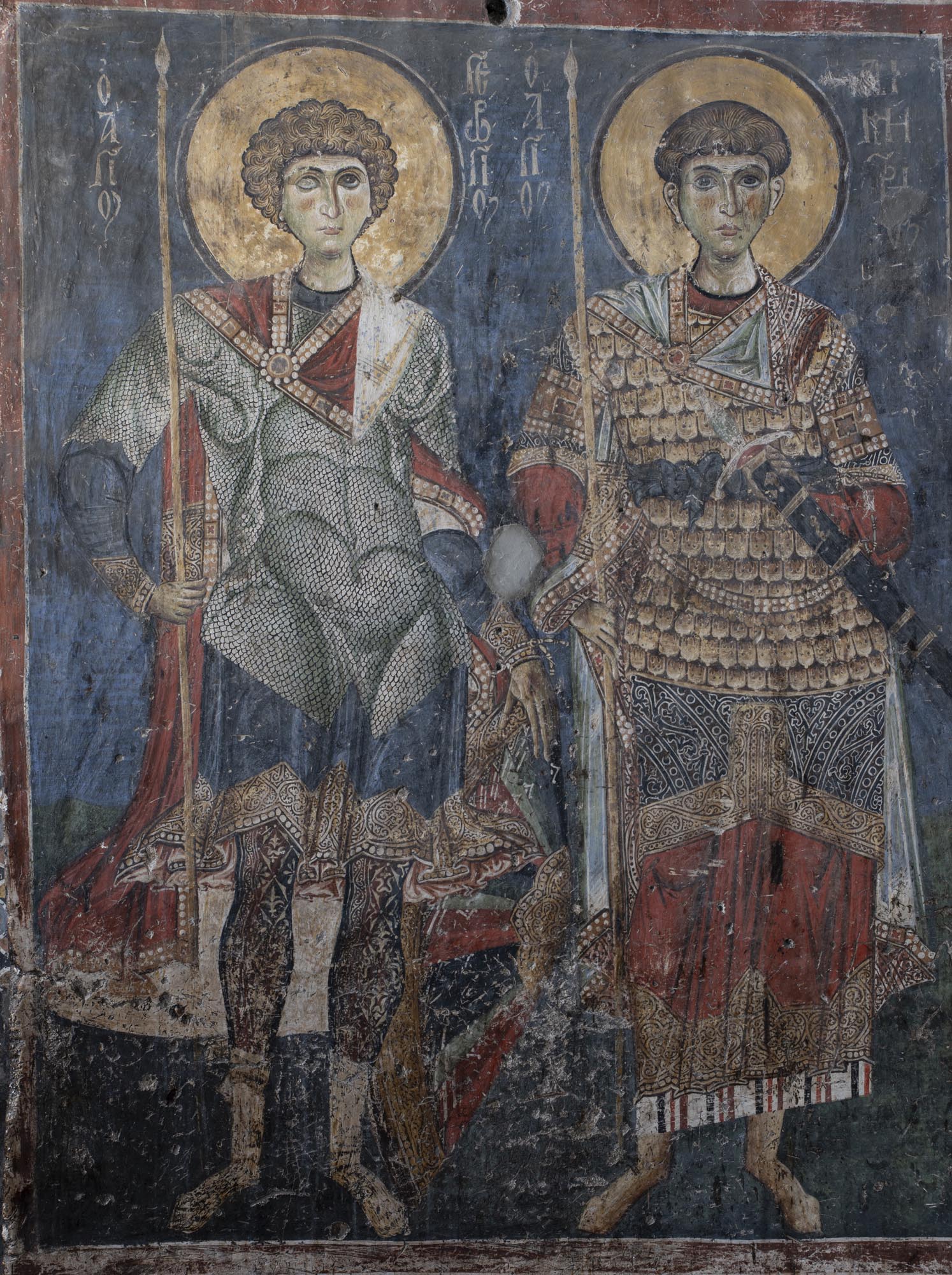
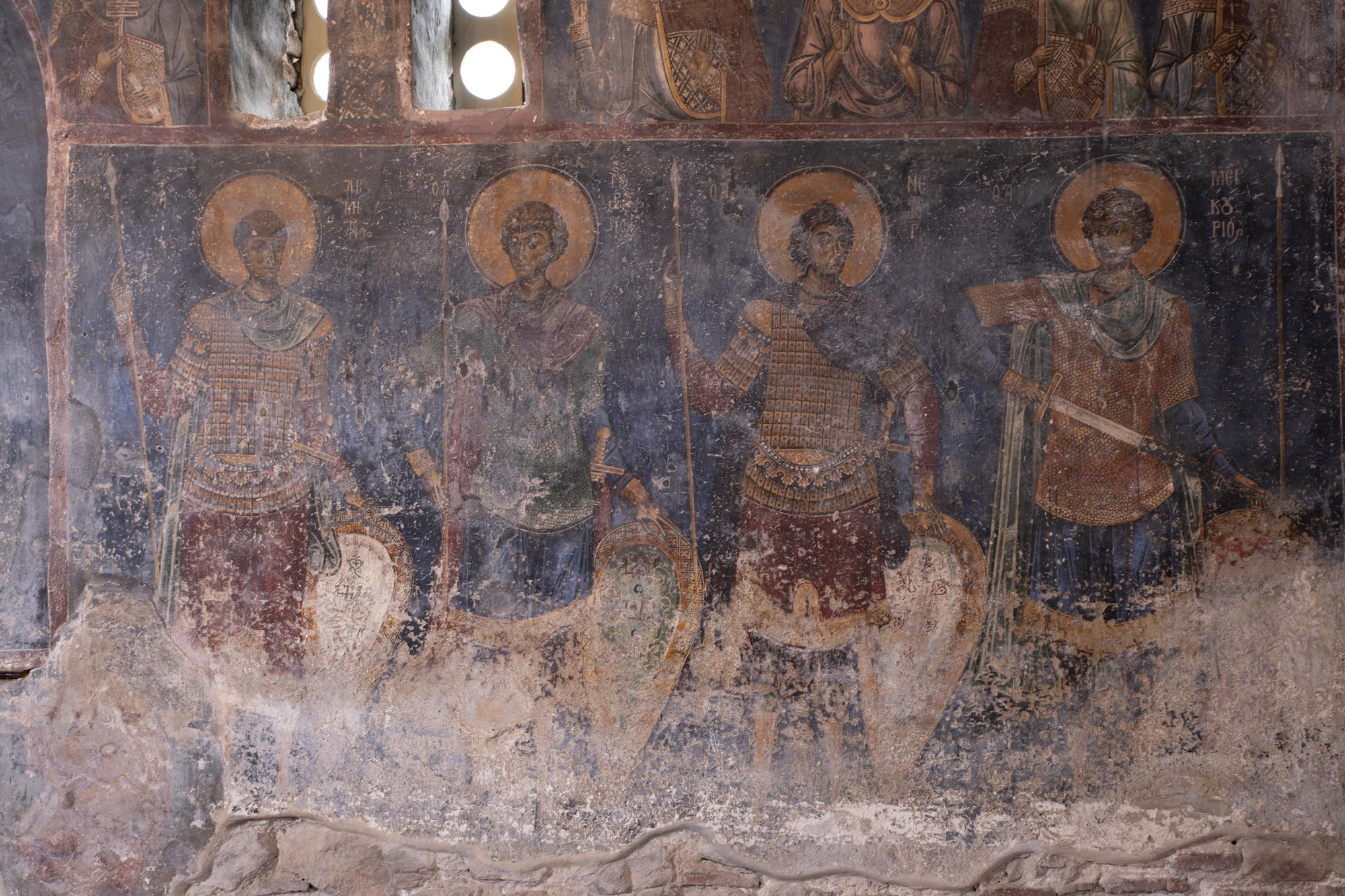
Στρατιωτικοί άγιοι Γεώργιος και Δημήτριος, ναός Αγίων Αναργύρων, τέλη 12ου αι. / Military saints St George and St Demetrios, Church of the SS Anargyroi, late 12th c. (ΕΦΑ Καστοριάς / archive of the Ephorate of Antiquities of Kastoria)

Kastoria was one of the few cities in the Balkans in which throughout the period Ottoman rule the Christian population outnumbered the Muslim, although the latter increased from the mid-16th century onwards. Its walls, unlike those of other Balkan cities, were not abandoned but remained in use throughout the Ottoman period. Most of the Ottomans settled in the castle, where the administration and the military garrison of the city were concentrated, and on the western shore of the lake outside the walls, near the neck of the peninsula, controlling access to the city. Kastoria originally had one Muslim quarter, while from the second half of the 16th century, as the Muslim population grew, three or four Muslim quarters are recorded. The Ottomans erected a relatively small number of religious and secular buildings, converting some of the Christian churches into mosques and tekkes (dervish houses). In addition to the district mosques, the city had seven mosques, seven tekkes of various orders and two hammams. There was significant building activity in the city between 1804 and 1821, when it was incorporated into the Pashalik of Ioannina under Ali Pasha, who implemented an ambitious programme of public works. Later, in the late 19th and early 20th centuries, important Ottoman administrative buildings were constructed, including a government house, a barracks, a prison, a customs house and a post and telegraph office. There were also two madrasas in the city and, from the 19th century onwards, Muslim educational establishments of all levels. The Kursum Mosque, one of the two madrasas, the barracks and the remains of one of the two hammams survive today.

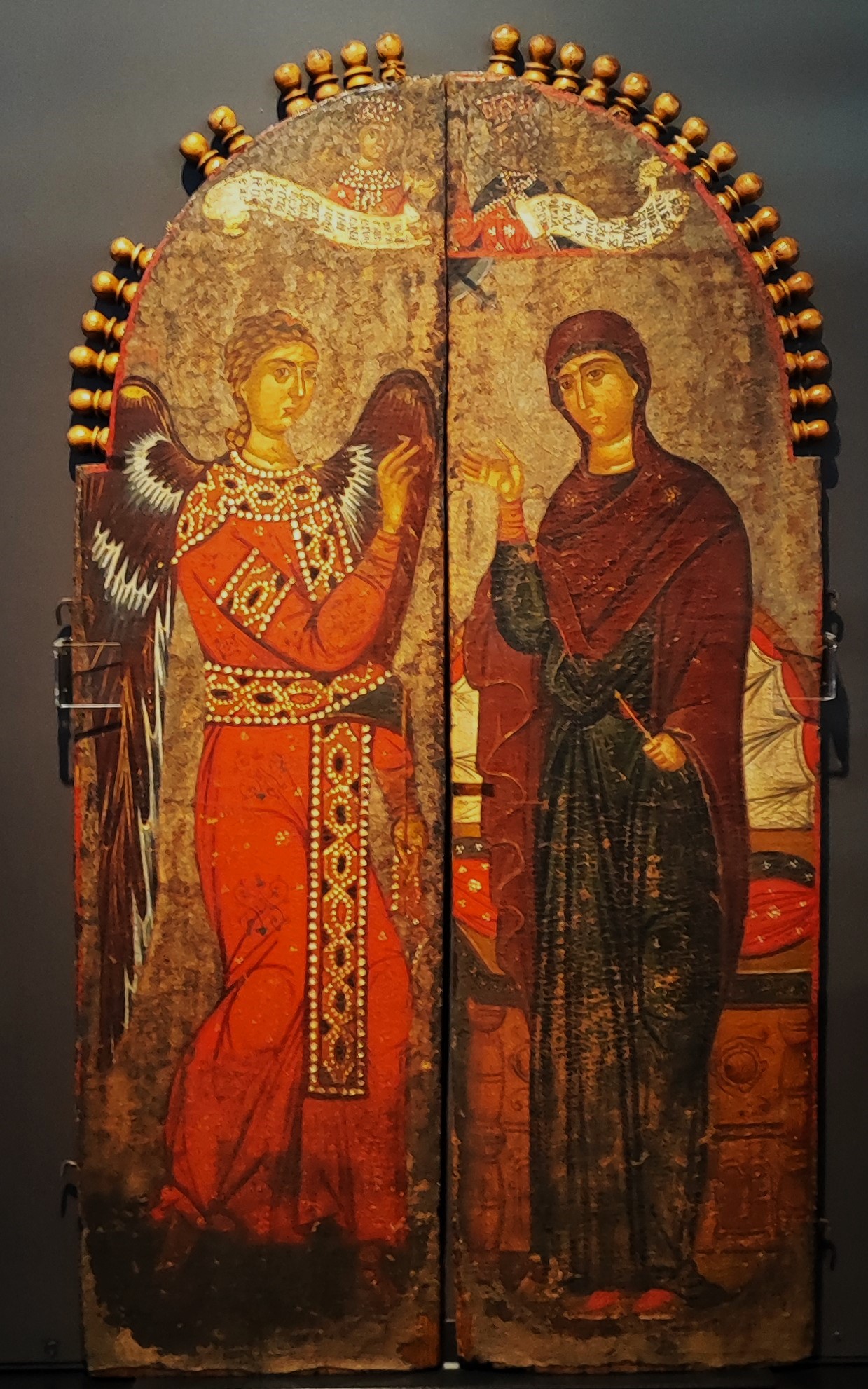
Βημόθυρο, έργο «Σχολής της Καστοριάς»/ Bema door, work of the “School of Kastoria” (ΕΦΑ Καστοριάς / archive Ephorate of Antiquities of Kastoria)

The Christian quarters of Kastoria were significantly larger than the Muslim quarters, although their number did not always remain constant, as they often changed boundaries and names. They occupied two-thirds of the city and developed to the east, outside the castle, on the north and south banks of the lake. The Jewish quarter was located outside the castle, in the southeast part of the city. Some of the city’s Christians had also settled within the castle, with an inner enclosure separating their district from the Turkish quarter.

The economy of Kastoria remained agricultural during the Ottoman period, based on farming (mainly rice and cereals) and livestock, as well as fish from the lake and timber from the forests of the region. At the same time, trade developed significantly in the hands of the Jews and Christians, who, being more numerous, dominated the economic life of the city. The craft sector was also highly developed, as is evident from the reference in a register dated c. 1455 to numerous city districts named after various professions, such as tailors, cordwainers, saddlers, goldsmiths, blacksmiths, coppersmiths and silk-makers. One of the most decisive factors in the development of the city’s economy was fur processing and the fur trade. The same register records for the first time the presence of furriers, the second-largest category of professionals in the city. A prosperous community of Kastorian furriers was established in Constantinople around the mid-16th century, even supplying the Sublime Porte. The Kastorian commercial agents were also among the most prominent members of the Greek community in Venice. The fur trade would reach its peak from the 17th to the mid-19th century, with Kastoria maintaining close commercial ties with other cities of Macedonia, Epirus and the Balkans, Central Europe and even Russia. The huge economic boom experienced by the city contributed to the creation of a powerful urban class whose representatives, such as Georgios Kastriotis and Georgios Kyritzis, were major benefactors of their birthplace. From the beginning of the 18th century, they funded, among other things, the first Greek educational institutions in the city, which attracted students from other Balkan cities.

After the Ottoman conquest, Kastoria remained the seat of an episcopal see subject to the Archiepiscopate of Ohrid, becoming a metropolitan see around 1532. The large and prosperous Christian community retained the privilege of exercising its religious duties, engaging in significant building activity. Artistic production flourished with notable local painters, whose names are often known, many of whom were influenced by the developing trends in the major artistic centres of the time. In the late 15th and early 16th century (c. 1481-1510), the city was the centre where the first major artistic movement in the Balkans after the Fall of Constantinople (1453), known as the School of Kastoria, arose. The anonymous painters who made up the school worked not only in Kastoria itself, where many portable icons and seven groups of wall paintings are preserved that are the work of the “School” – one of the most important sets of frescoes being that of the church of St Nicholas of the Nun Eupraxia (1485/6) – but also in other areas of Macedonia, Thessaly (Meteora) and the Balkans (North Macedonia, Serbia and Bulgaria), with influences seen as far away as Romania. Some of the most important painters of the 16th century also moved to Kastoria: they include the Theban Frangos Katelanos, one of the most important representatives of the School of Northwest Greece (church of Panagia Rasiotissa, 1553 and portable icons), or Onouphrios of Argos, protopapas (archpriest) of Neokastro (Elbasan) in Albania (church of the Holy Apostles of Eleousa, 1547, church of the SS Anargyroi (Holy Unmercenaries) of the Gymnasium, mid-16th century, and portable icons). Kastoria and Siatista are also the only cities in Macedonia where portable icons of the Cretan School, imported by wealthy merchants, mainly from Venice (late 15th-late 17th century), have survived.

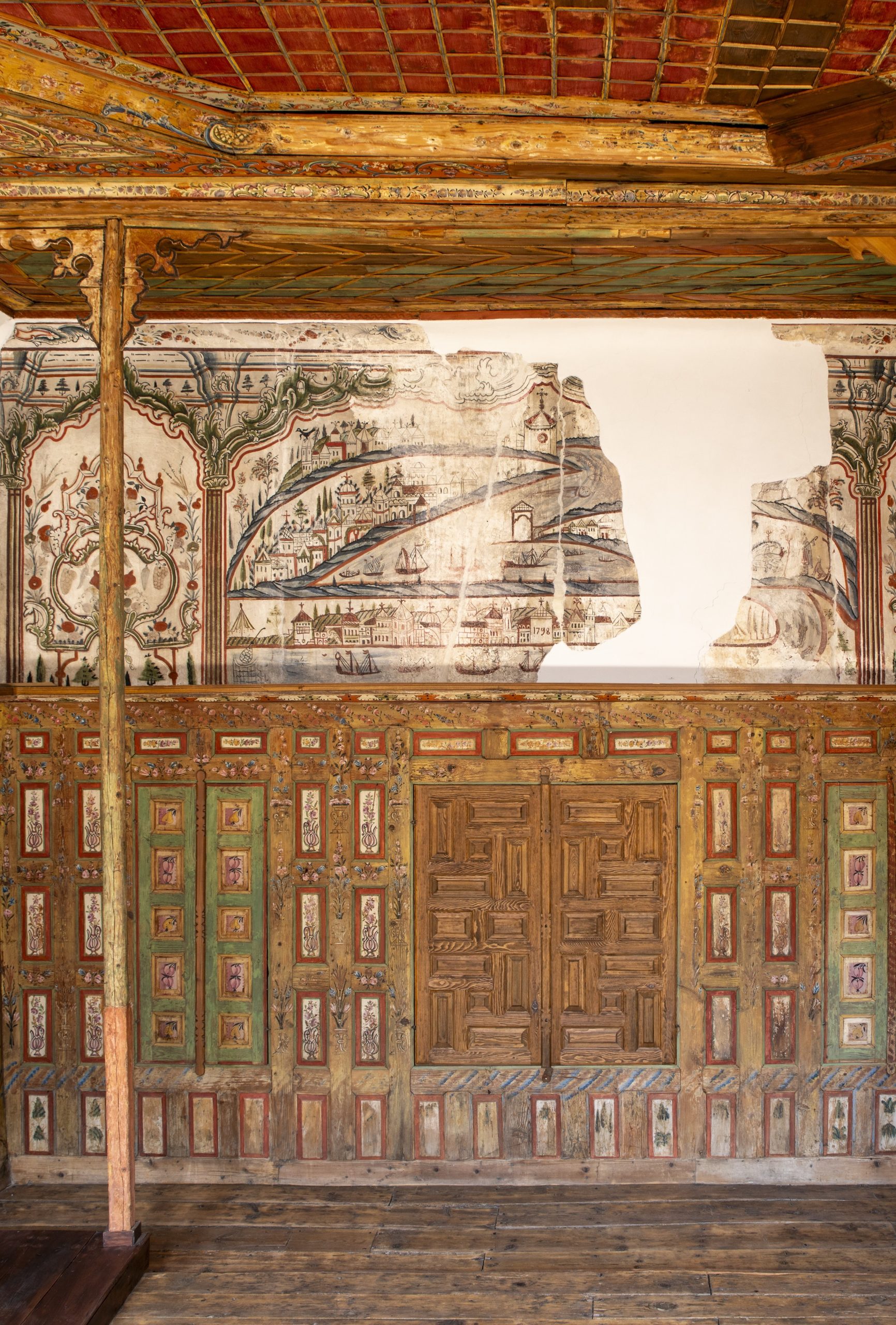
Αρχοντικό Τσιατσιαπά / The Tsiatsiapa Mansion (Αρχείο ΕΦΑ Καστοριάς / archive Ephorate of Antiquities of Kastoria)

In the late 19th and early 20th century, the volatile situation in Macedonia due to emerging national rivalries brought Kastoria to the forefront of the wars. In 1904, Pavlos Melas, one of the first Greek army officers to join the Macedonian Struggle (1904-1908), was killed by an Ottoman detachment in the village of Melas (formerly Statista, renamed after him) in Kastoria, now the home of the Pavlos Melas Museum. The tomb of Melas and his wife Natalia lies in the church of the Taxiarch of the Metropolis. Kastoria was incorporated into the Greek State a few years later, on 11 November 1912. The events of the 20th century that played a key role in the city’s history include the departure of its Muslim inhabitants and the settlement of Greek refugees, mainly from the coasts of the Black Sea and the Sea of Marmara, after the Asia Minor Catastrophe and the signing of the Treaty of Lausanne (1923), as well as the almost total extermination of the city’s thriving Jewish community by the Germans during the Second World War.

Monuments - Antiquities

Fortifications

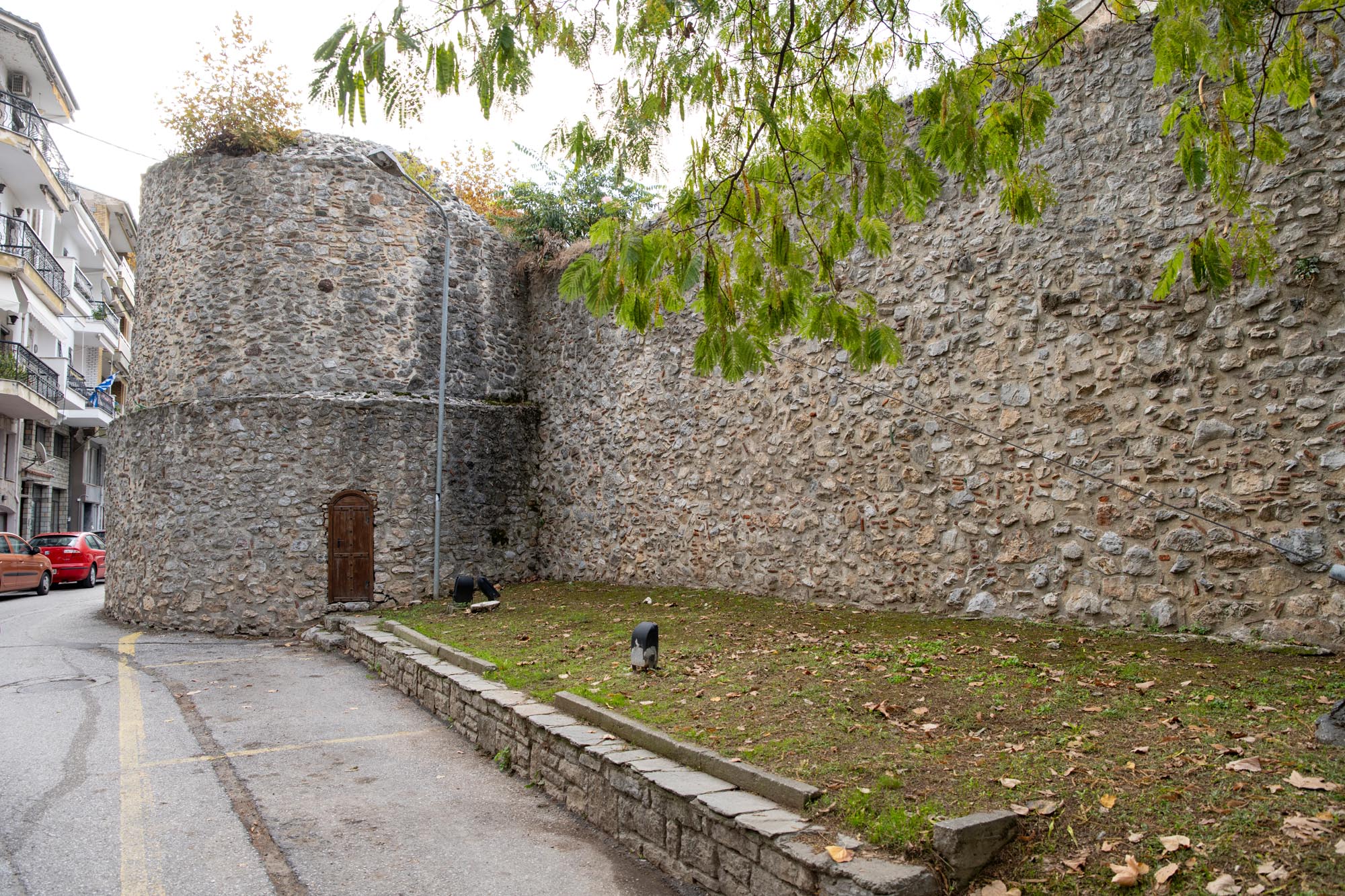
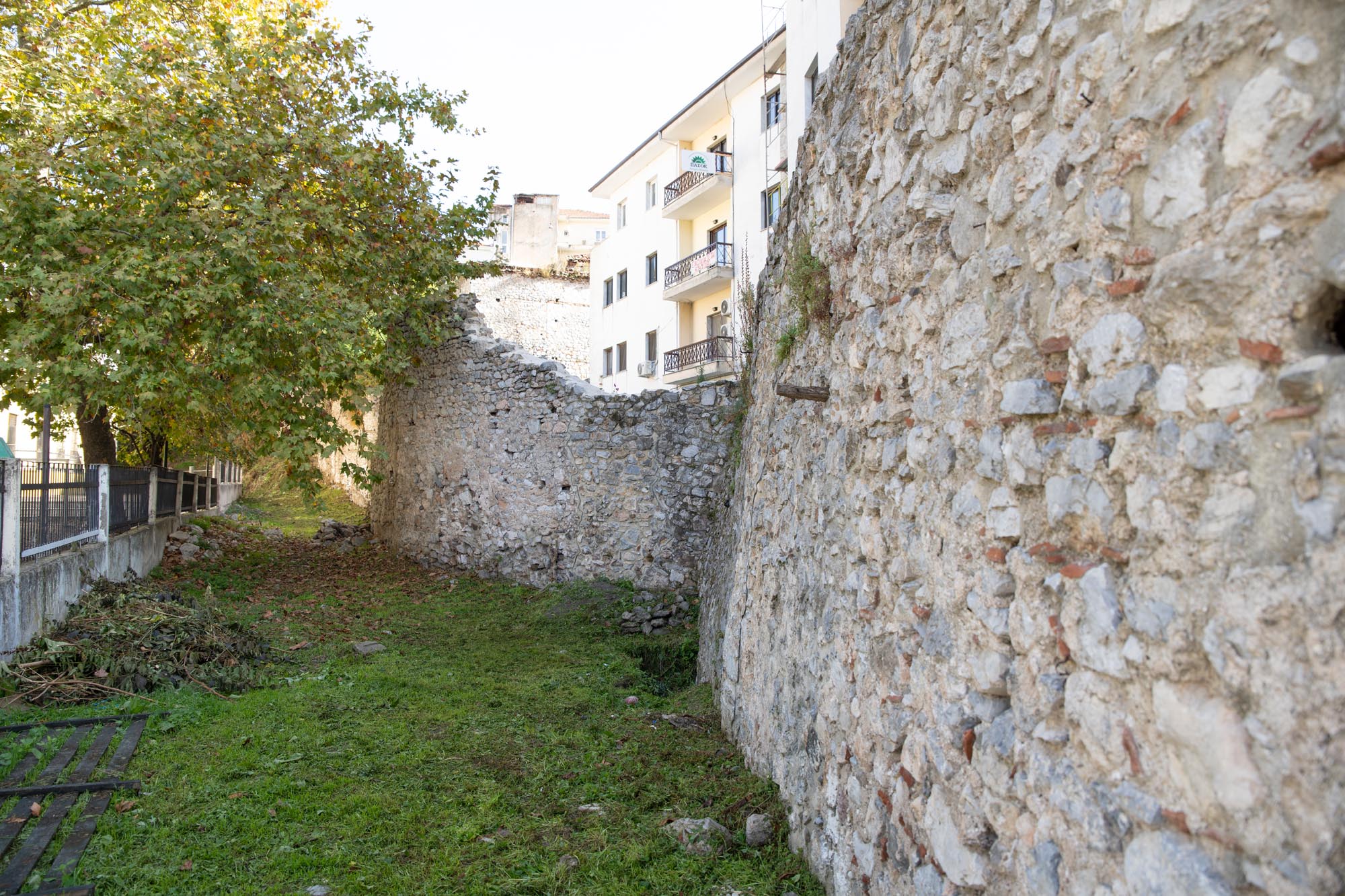
Τα τείχη της Καστοριάς, για τα οποία μιλούν με θαυμασμό οι βυζαντινοί συγγραφείς και οι ξένοι περιηγητές, αποτελούσαν για πολλούς αιώνες το κύριο χαρακτηριστικό της πόλης, έτσι ώστε να αποκτήσει την επωνυμία «της πολιτείας του Κάστρου». Διατηρήθηκαν σχεδόν ανέπαφα μέχρι τις αρχές του 20ού αιώνα, όταν άρχισαν να κατεδαφίζονται σταδιακά από τους Οθωμανούς, σε μια εποχή κατά την οποία οι αμυντικοί λόγοι που εξυπηρετούσαν έπαψαν να υφίστανται. Η οριστική τους καταστροφή, ωστόσο, επήλθε με την ταχύτατη ανοικοδόμηση της πόλης που έγινε μετά την εφαρμογή του εγκεκριμένου ρυμοτομικού σχεδίου του 1934. Σήμερα διατηρούνται ελάχιστα μόνο τμήματα της οχύρωσης, κυρίως στην περιοχή του Δημαρχείου και του Μεντρεσέ, καθώς επίσης και κοντά στον ναό της Παναγίας Κουμπελίδικης, στο ψηλότερο σημείο της πόλης, όπου τοποθετείται η ακρόπολη.

Η πρώτη οχύρωση της Καστοριάς τοποθετείται στα χρόνια του αυτοκράτορα Ιουστινιανού (527-565), όταν ανεγέρθηκε ένα ισχυρό τείχος στα δυτικά της πόλης, στον ισθμό της χερσονήσου, που αποτελούσε τη μόνη δίοδο της πόλης προς την ξηρά. Το ενισχυμένο με πύργους ιουστινιάνειο τείχος, γνωστό ως «διατείχισμα», έζωνε τον ισθμό από τη μία πλευρά της λίμνης μέχρι την άλλη και διέθετε τάφρο κατά πλάτος της χερσονήσου. Αργότερα, κατά τους βυζαντινούς χρόνους, σύμφωνα με ορισμένους ερευνητές στα τέλη του 9ου-αρχές 10ου αιώνα και κατά άλλους στον 11ο ή ακόμη και στον 14ο αιώνα, η οχύρωση της πόλης επεκτάθηκε προς τα ανατολικά. Η Καστοριά απέκτησε τότε τη μορφή μιας ισχυρής πόλης-κάστρου, έκτασης περίπου 295 στρεμμάτων, με τα τείχη της να την περιβάλλουν από όλες τις πλευρές. Ο οχύρωσή της παρέμεινε ανέπαφη κατά τους οθωμανικούς χρόνους, περίοδο κατά την οποία δέχτηκε επιμέρους επισκευές και συμπληρώσεις, ιδιαίτερα κατά την περίοδο που η Καστοριά είχε ενσωματωθεί στο πασαλίκι των Ιωαννίνων του Αλή Πασά (1804-1821).

The small single-nave timber-roofed church, with a later narthex to the west, stands at the southeast end of the city on the small peninsula “tou Stavrou” (of the Cross), near the church of the Taxiarch of the Metropolis. According to the surviving dedicatory inscription, it was erected and painted with frescoes in 1383/4 at the expense of hieromonk Dionysios and the brothers Teodor and Stoya Muzaka, scions of the Albanian family that controlled Kastoria for a brief period at the end of the 14th century, before the Ottoman conquest. The eschatological character of the iconographic programme of the church indicates that it was built as a private family chapel, in which the Muzaka brothers were to be buried. The high-quality frescoes are the mature work of a skilled painter with a theological education, who strongly influenced the monumental art both of Kastoria itself and of the regions within the sphere of influence of its workshops (Prespes, Southern Albania and Northern Epirus). The same artist also worked on the church of Panagia on the islet of Maligrad in the Great Prespa Lake (1368/9) and the church of Christ the Life-Giver in Borje, Korçë (1390).

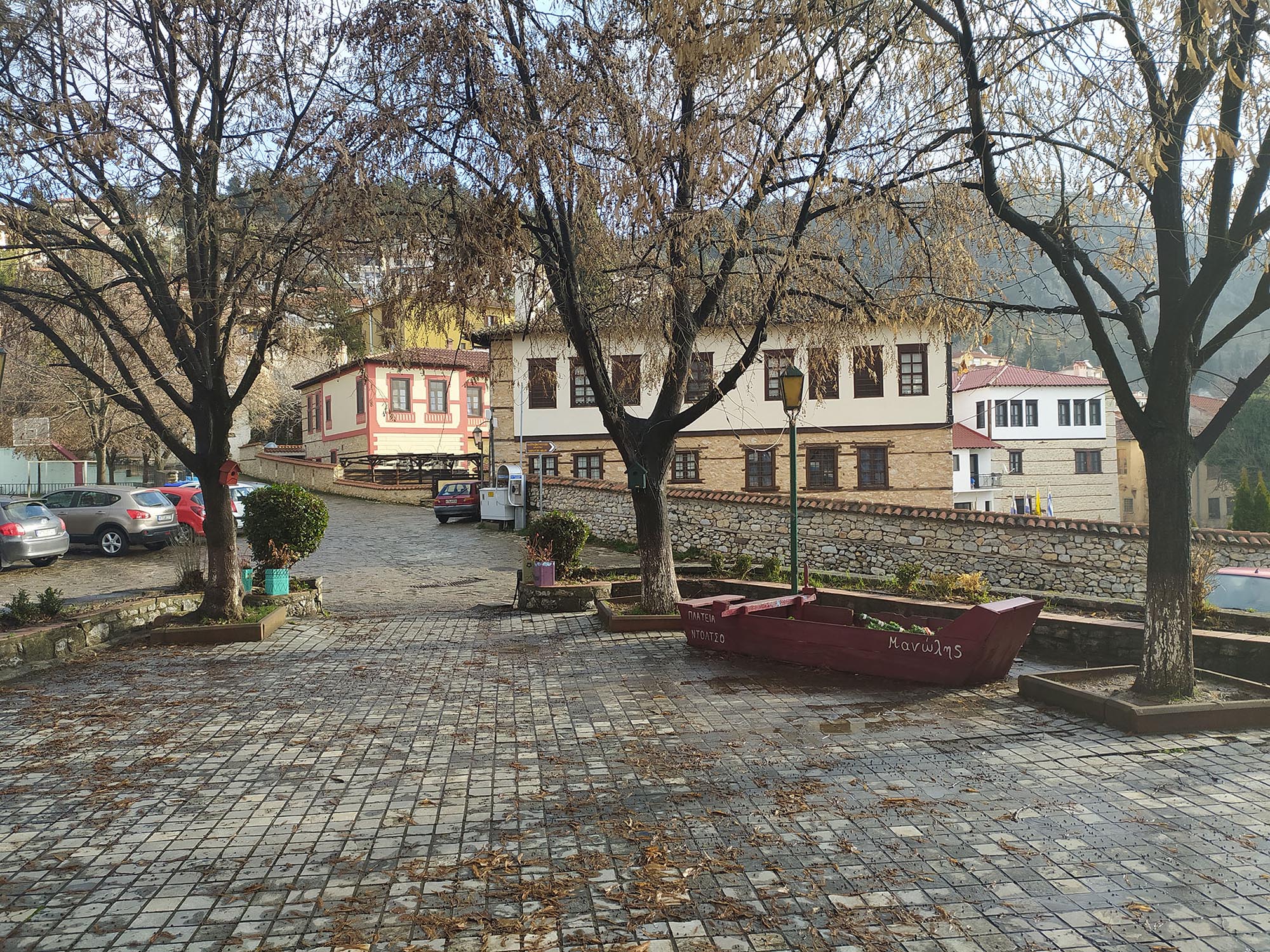
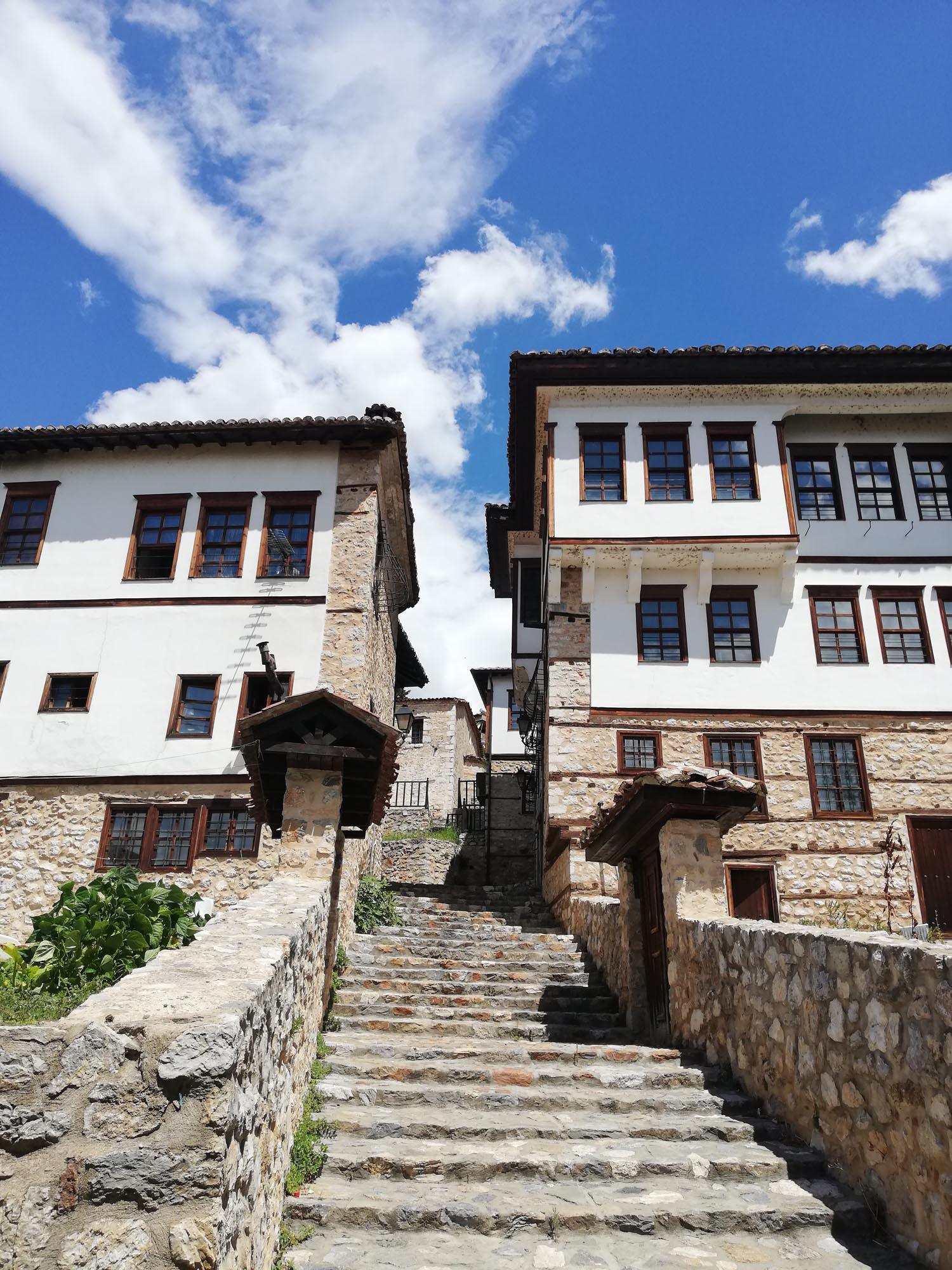
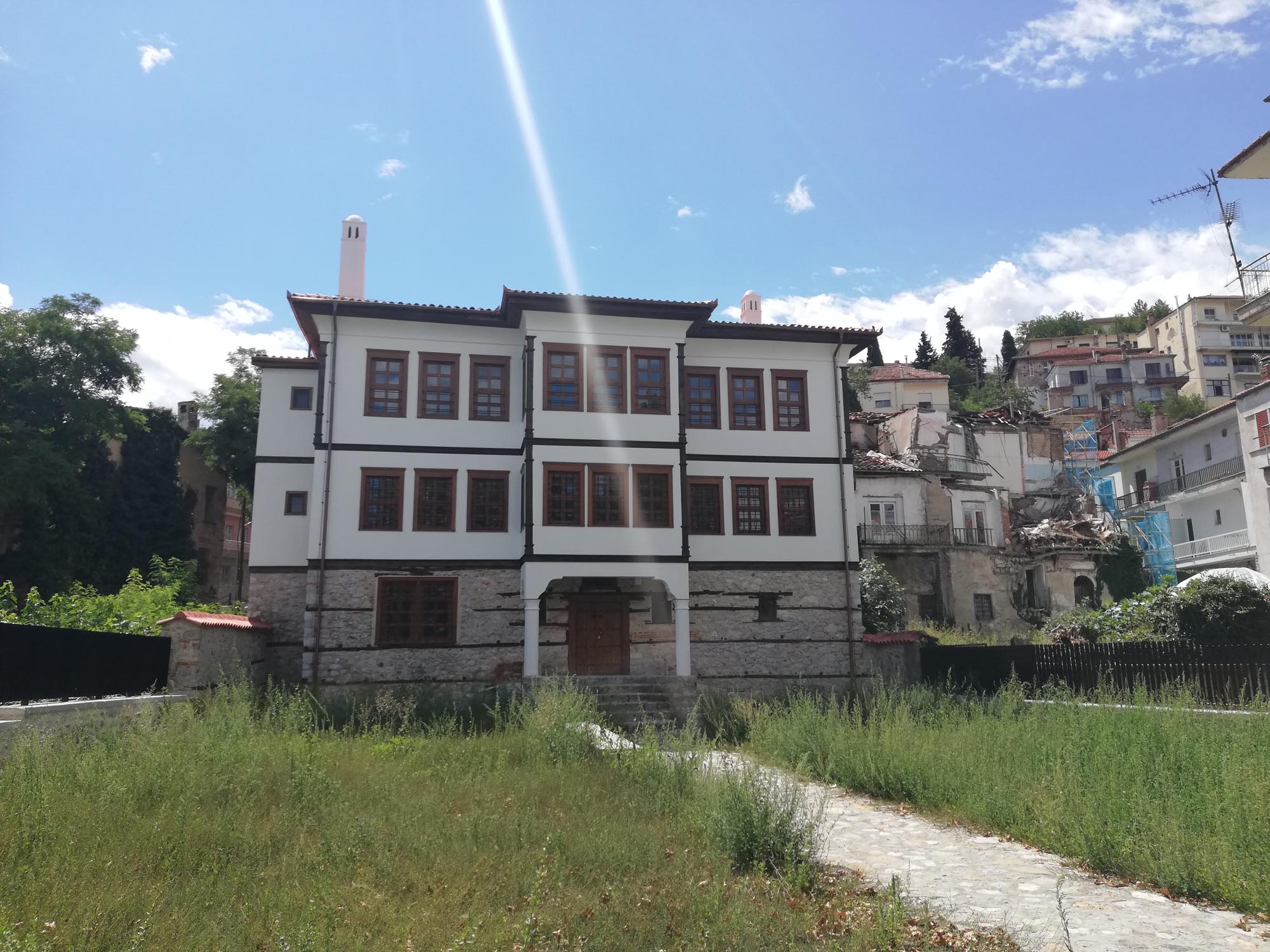
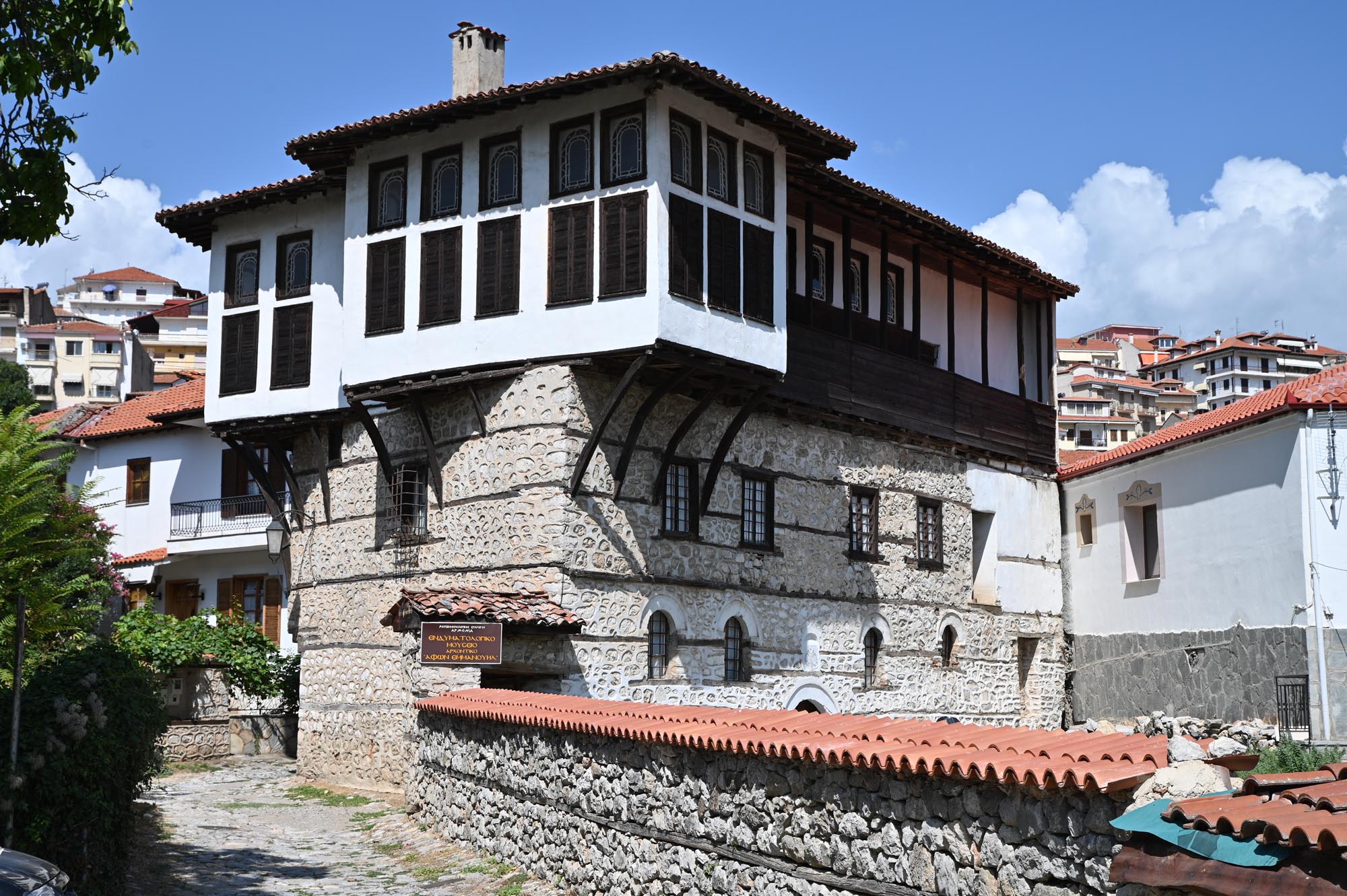
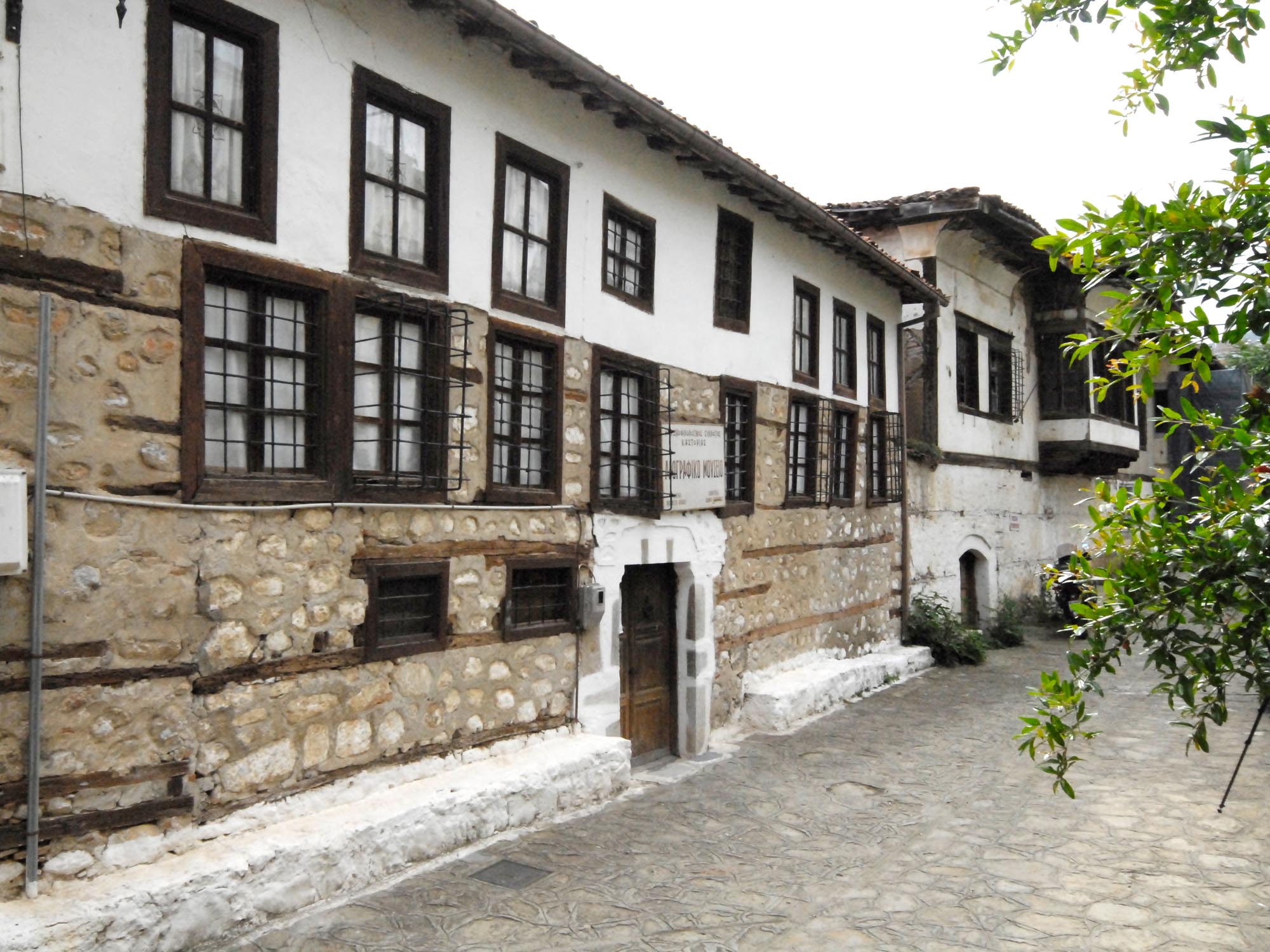
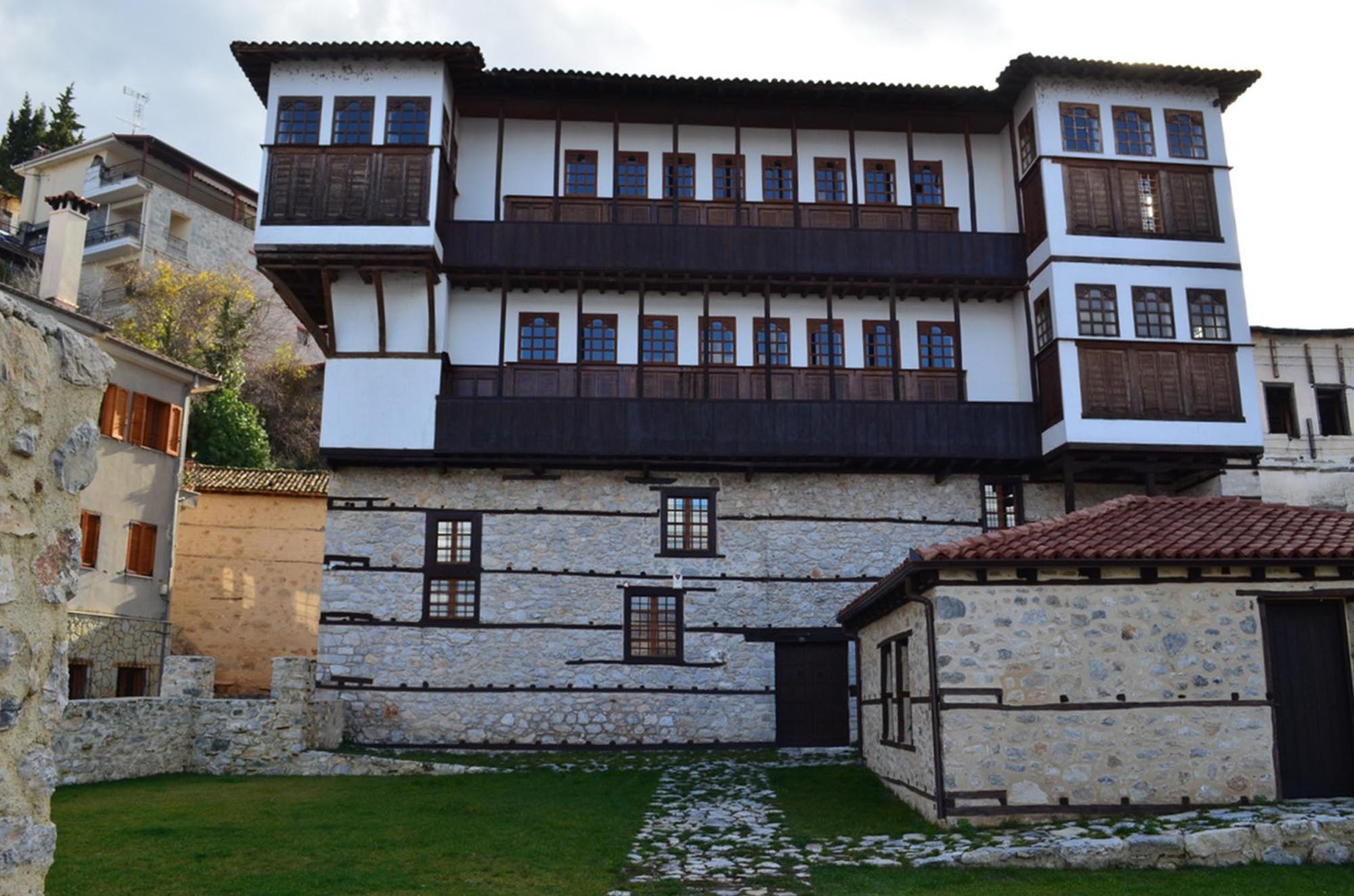
Most of the city’s mansions are concentrated in the districts of Apozari and Dolcho. Together with those of Siatista, Kozani and Veria, they are among the most remarkable examples of traditional Macedonian architecture, imposing due to their size and fortress-like construction. Like those of other Macedonian cities, they consist of a solid stone-built ground floor with few openings, and usually one or sometimes two timber-framed upper storeys constructed of lighter materials, with protruding şahnişins (overhanging covered balconies) and iliakoi (solaria, open wooden balconies) with many windows and transoms. On the ground floor there were generally auxiliary and storage rooms, while on the upper floors were the main living quarters, with the doxato, the richly decorated combined parlour and drawing room with a large hall for festivities, and the odades, the living rooms, which were divided into summer rooms and winter rooms with fireplaces. The mansions also often had a mezzanine, one room of which was used as a furrier’s workshop. In their paved courtyards, which were generally protected by a high wall, were ancillary outbuildings. In the mansions facing the lake, the courtyards, called avgates, extended to the shore of the lake in order to keep the boats secure.
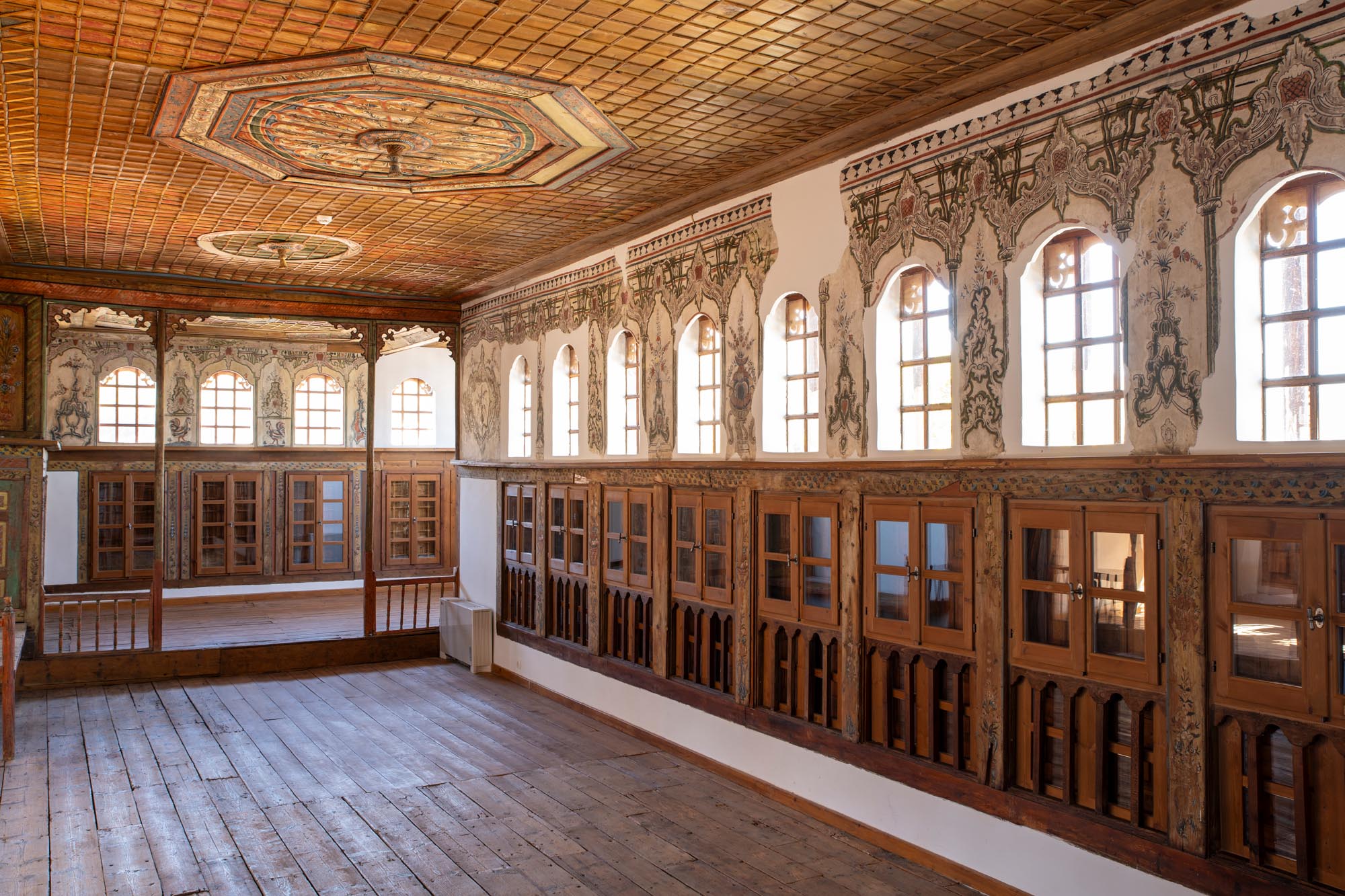
The mansions of Kastoria, apart from their architectural design, feature an impressive variety of façades and meticulous construction, harmoniously blending with the natural environment. The richest, such as the Tsiatsiapas (1754) and Na(n)tzis (mid-18th c.) Mansions, stand out for their ornate decoration with colourful stained-glass transom windows, plaster mouldings on the walls and ceilings, carved wooden ceilings, ornate wardrobes (mousandres), doors and other wooden structures, as well as wall paintings that are excellent examples of secular decorative painting.

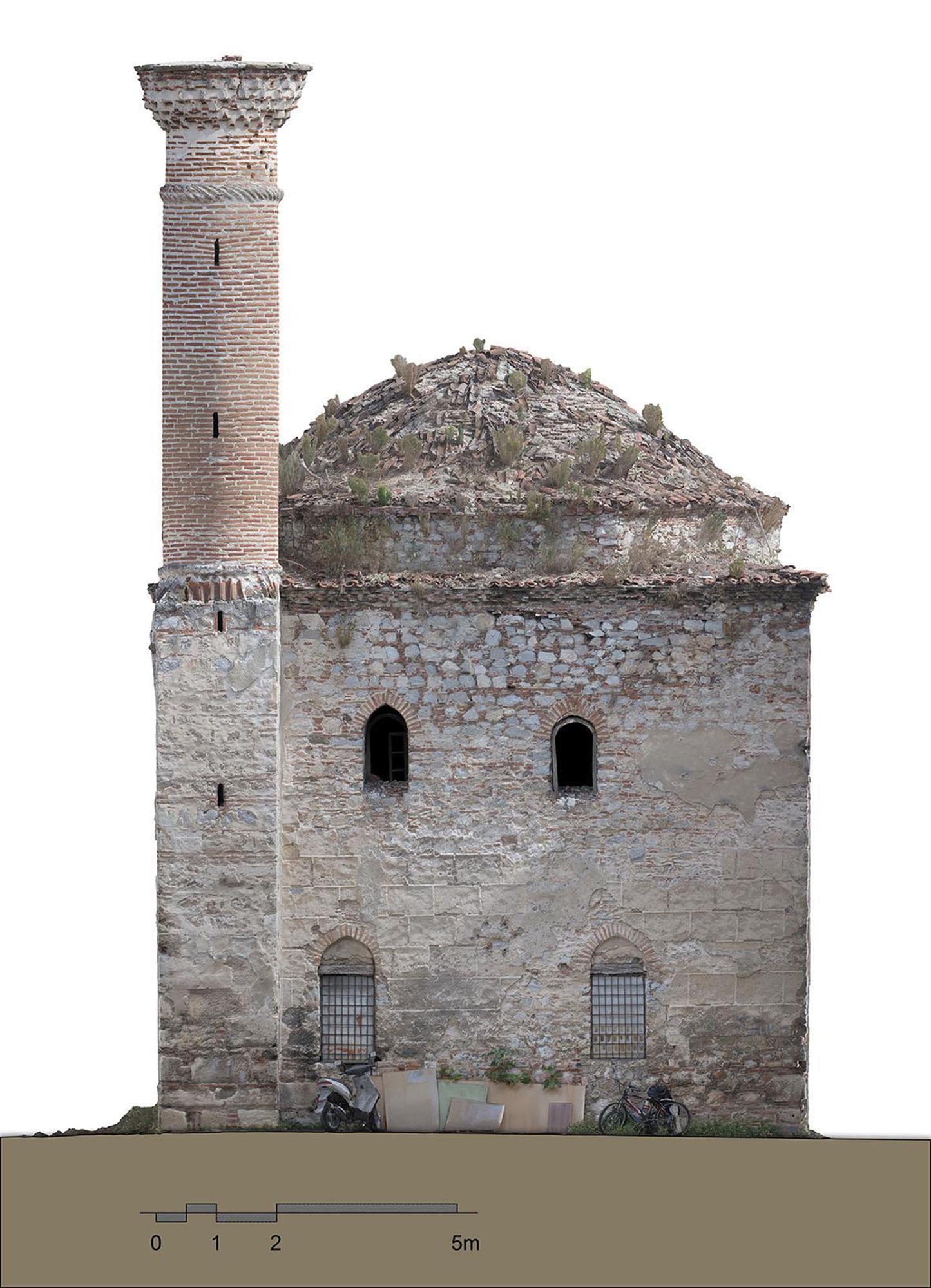
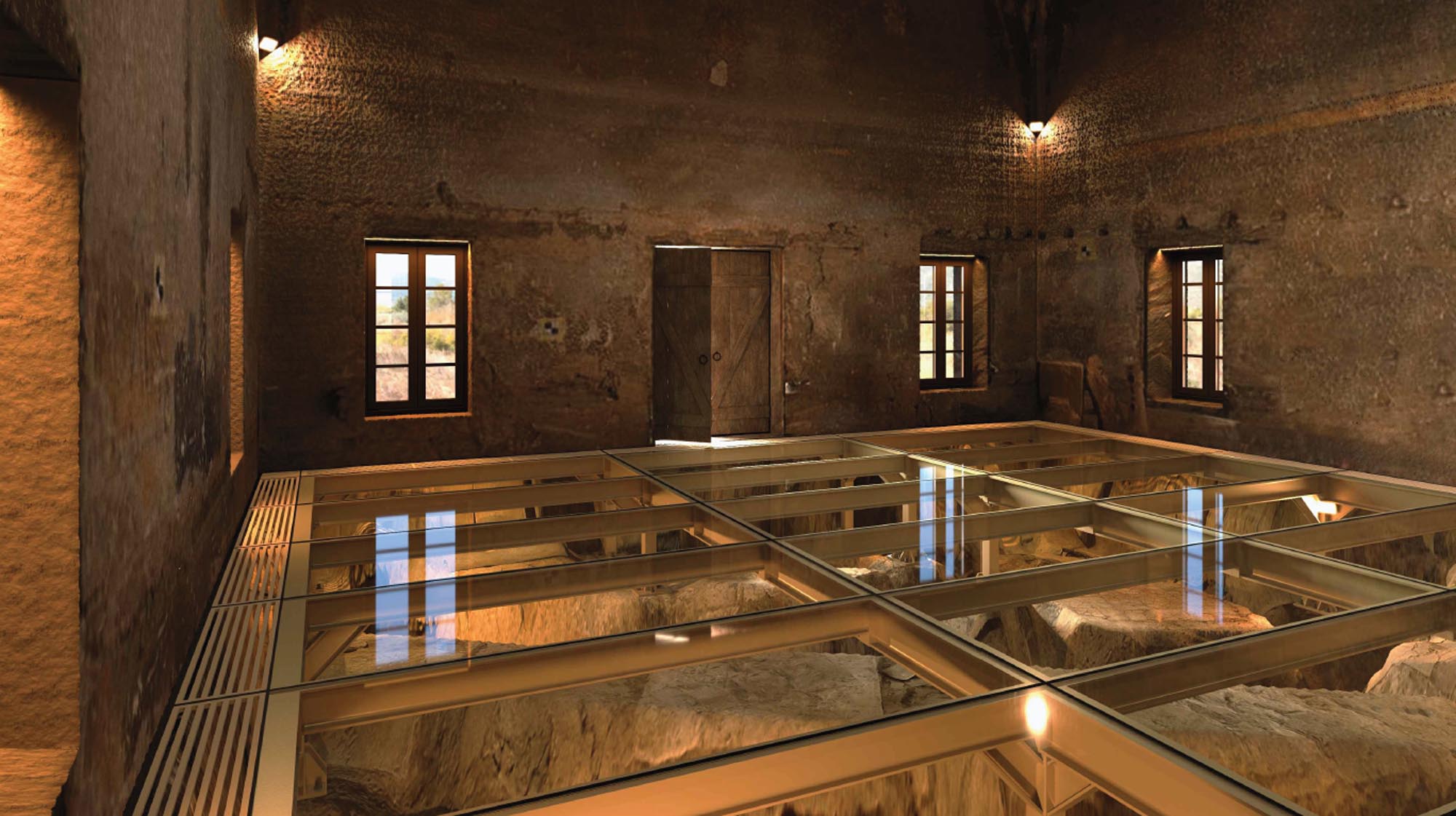
This is the only surviving mosque of the seven that Kastoria once boasted, located in Megalou Alexandrou Square, in the Oikonomou district, which formerly lay within the castle walls. Based on its architectural style and features, it dates from the 15th century and has been identified by researchers as the mosque of Sultan Mehmed mentioned by the Ottoman traveller Evliya Çelebi, although he does not specify whether he is referring to Mehmed I (1413-1421) or Mehmed II (1451-1481). It is a one-room building measuring 10 x 10 m, formerly roofed with lead sheets (kurşun), hence its name. The minaret in the northwest corner, 17.95 m high, is preserved in good condition. The excavation carried out as part of the restoration and conservation of the monument has brought rich finds to light, revealing the continuous habitation of the Oikonomou district, one of the oldest in Kastoria.
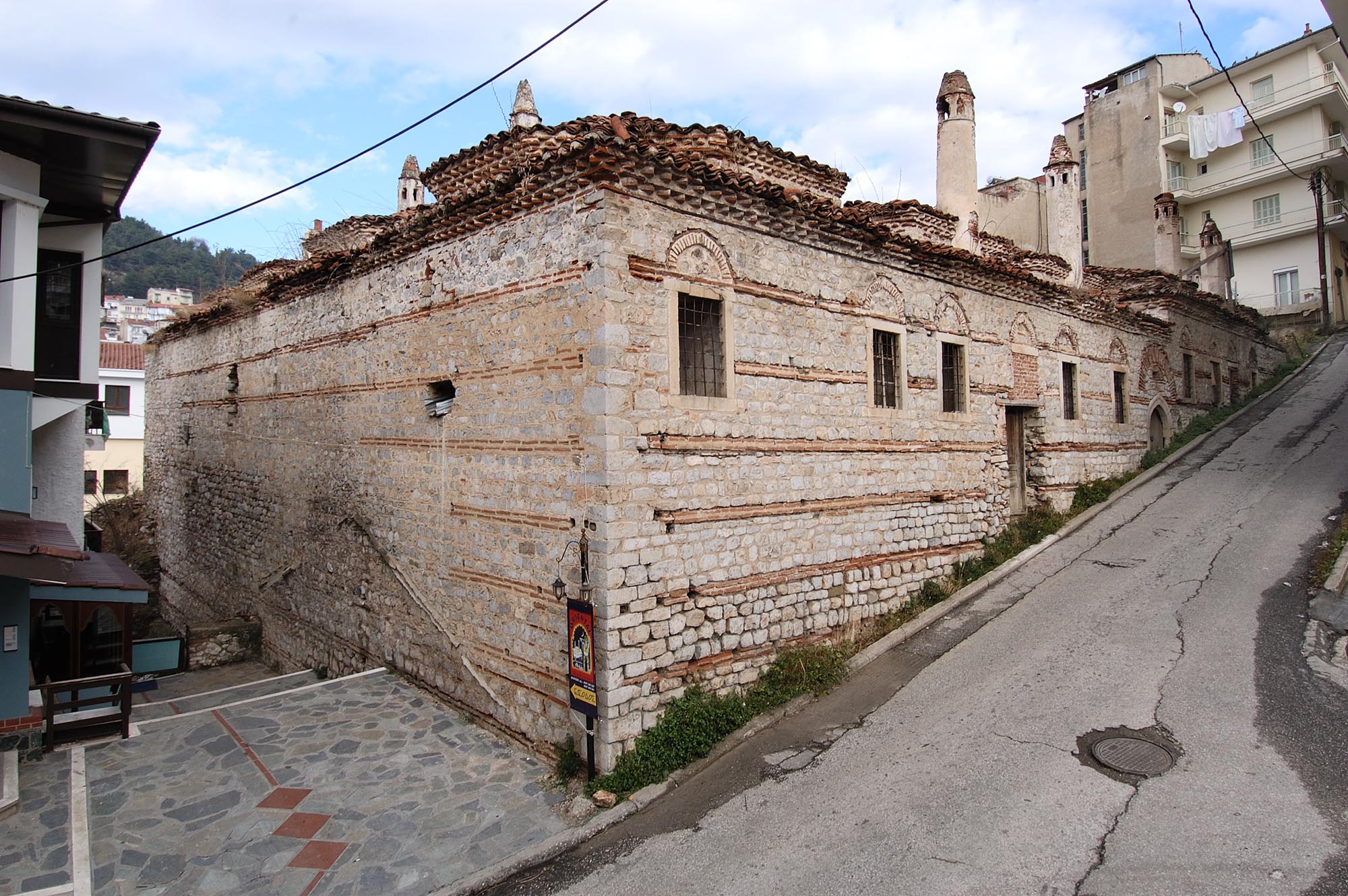
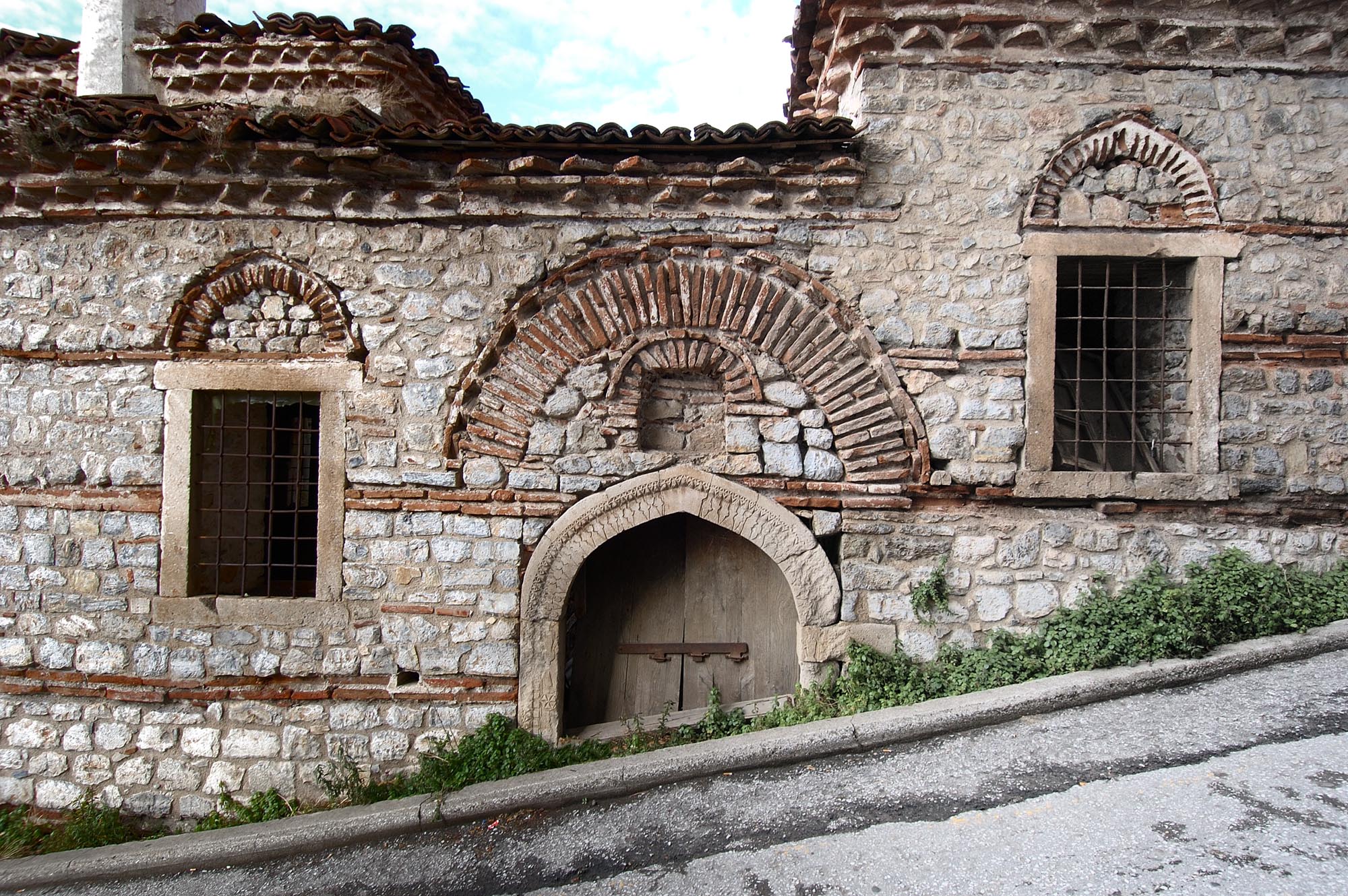
Near Davaki Square, in the west of the city, where the Muslim population lived, is the Ottoman madrasa (religious school) founded in the mid-18th century by Ahmed Pasha. Known as Kesriyeli Ahmed Pasha because he was from Kastoria, he held various offices and financed many public buildings. The madrasa flourished in the early 19th century but was gradually abandoned, and the building has been used for different purposes since the beginning of the 20th century. It has a square-U-shaped floor plan and consists of an open inner colonnaded courtyard, behind three sides of which are arranged 14 rooms, including classrooms, a library, students’ cells, a prayer room and a hammam.

The building is located on Gramos Street, near the south entrance of the city. It was rebuilt by the Ottomans in the first years after the Bulgarian Ilinden Uprising (1903) and is inextricably linked with the modern history of the city. The imposing building, a two-storey, elongated rectangular structure with a total area of about 1,200 m2, is one of the largest public buildings in the city.

Byzantine and post-Byzantine churches

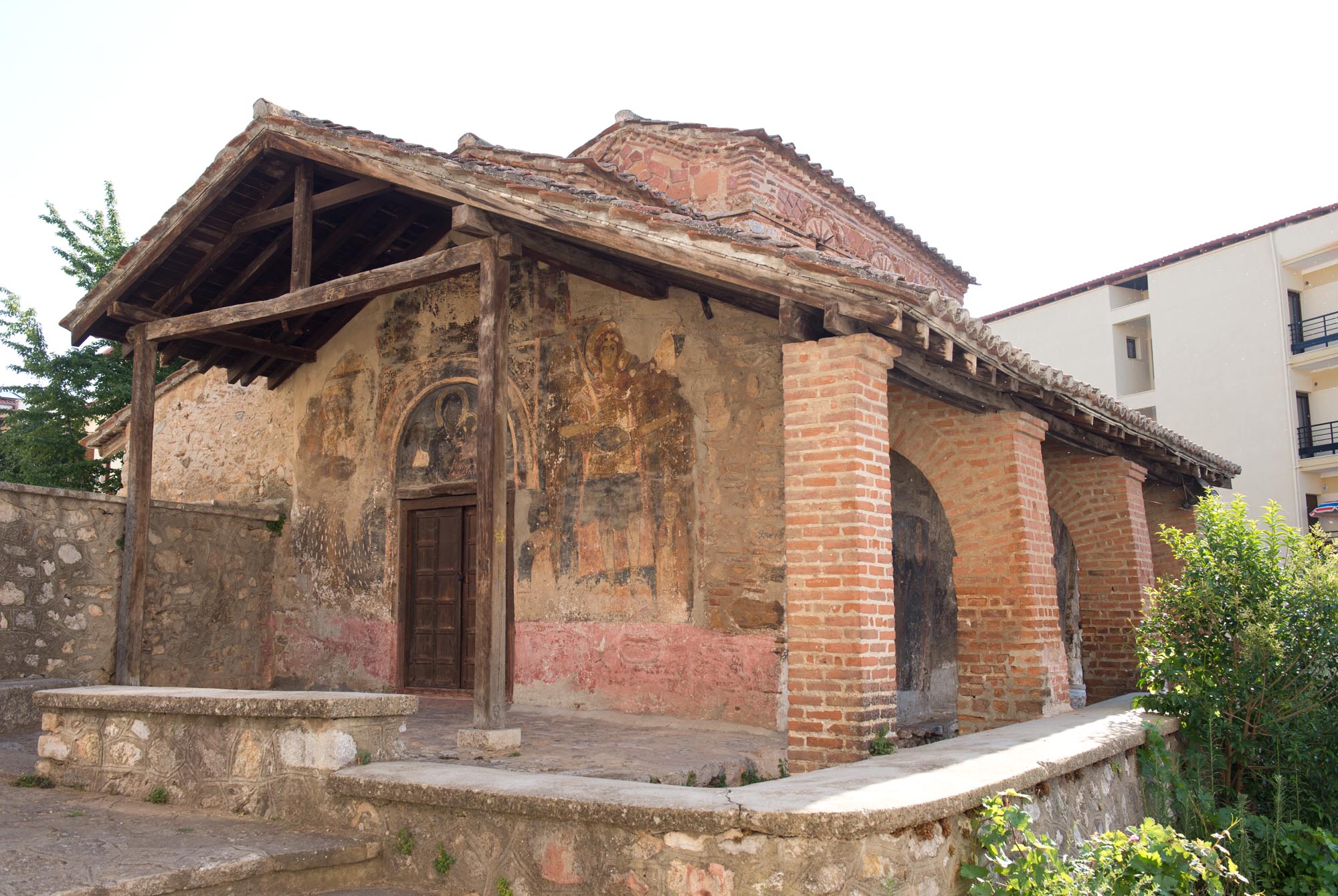
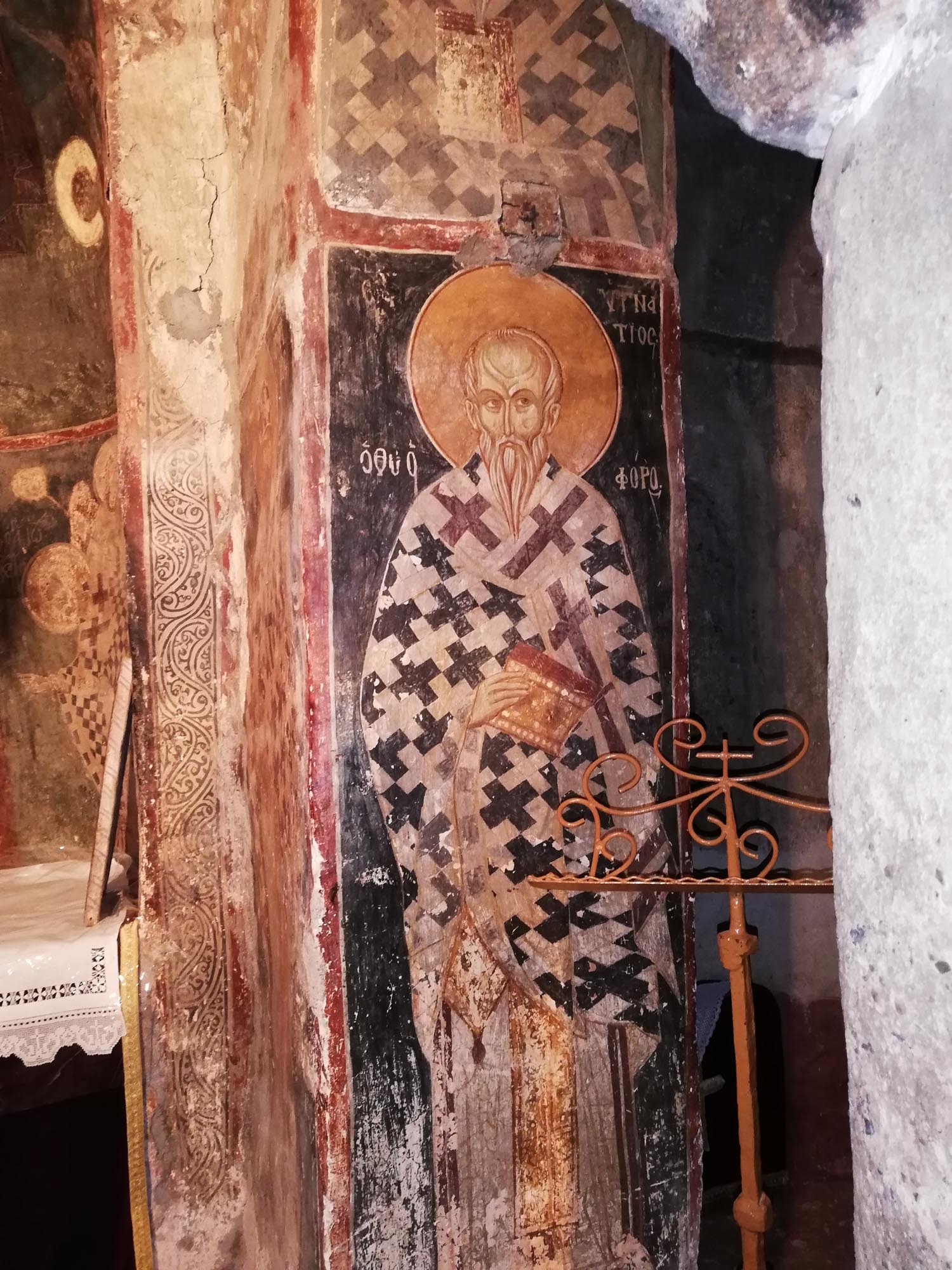
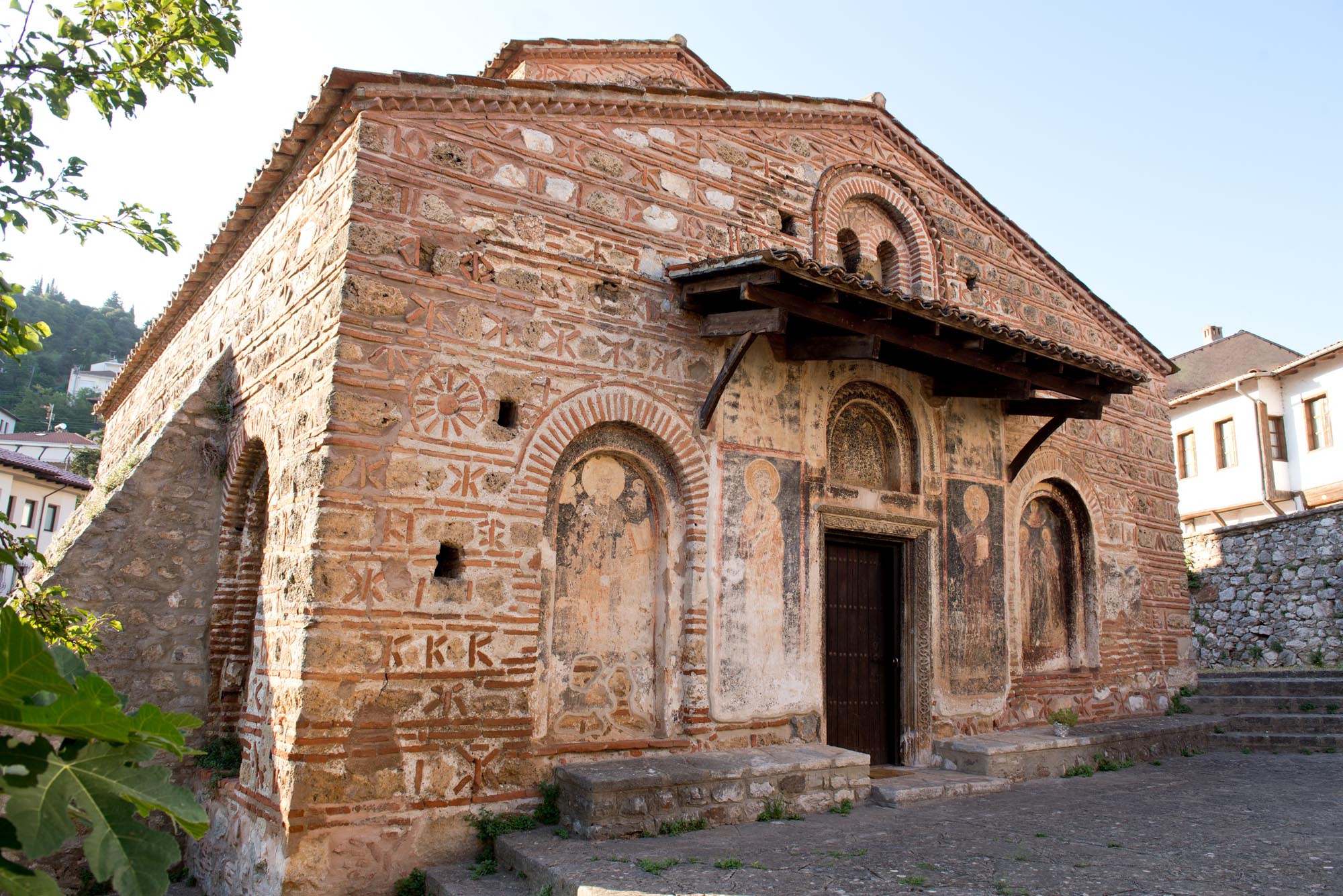
One of the main characteristics of Kastoria is its 70-odd churches, dating from the late 9th to the 19th century. Most of them are found in the districts of Apozari and Dolcho, with only a few in what was once the area within the city walls. In many cases, multiple layers of frescoes survive, testifying to the continuous use and constant renovation and repair of the churches over the centuries. They were mostly private family chapels, although some belonged to monasteries. Some were also used as funerary churches.

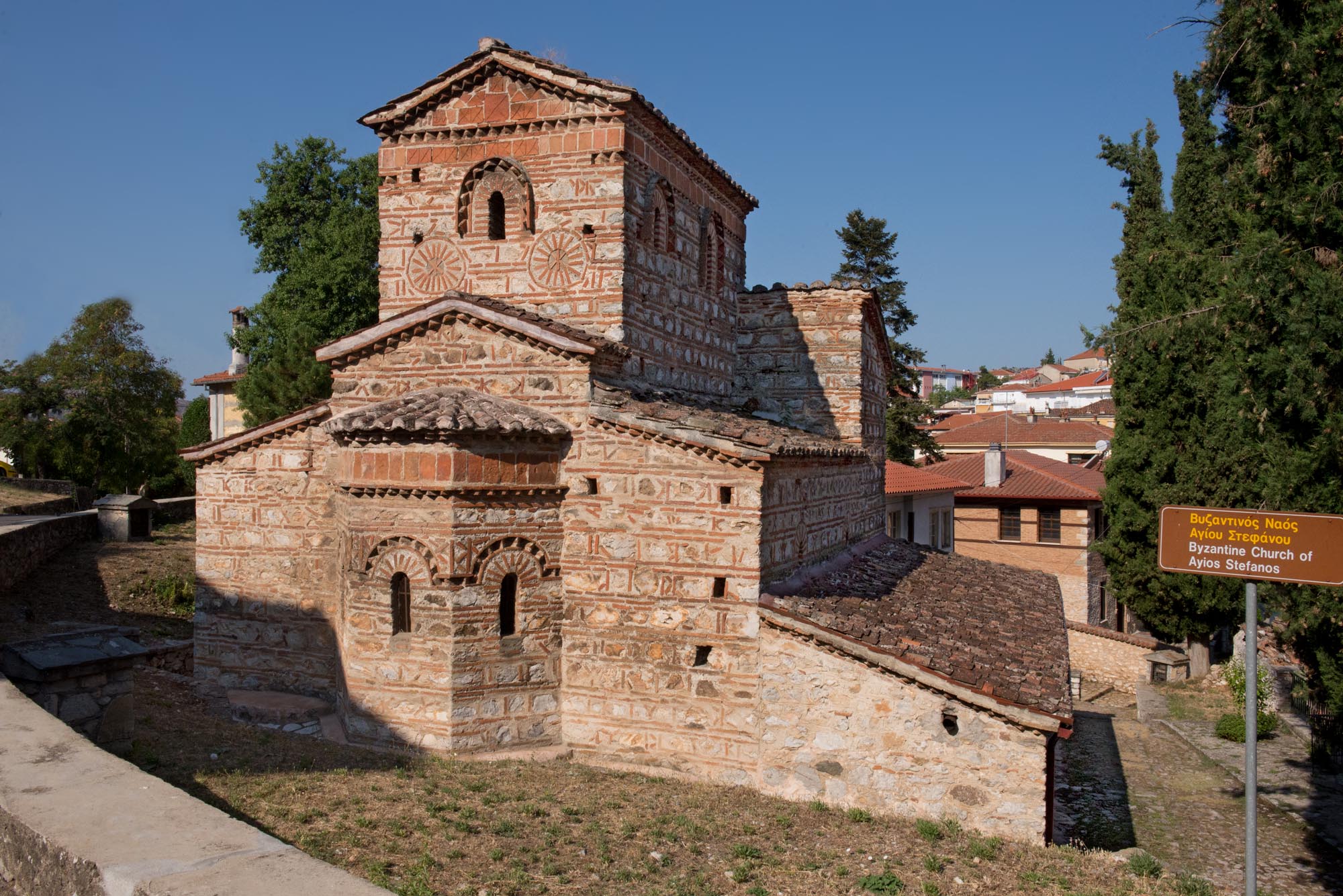
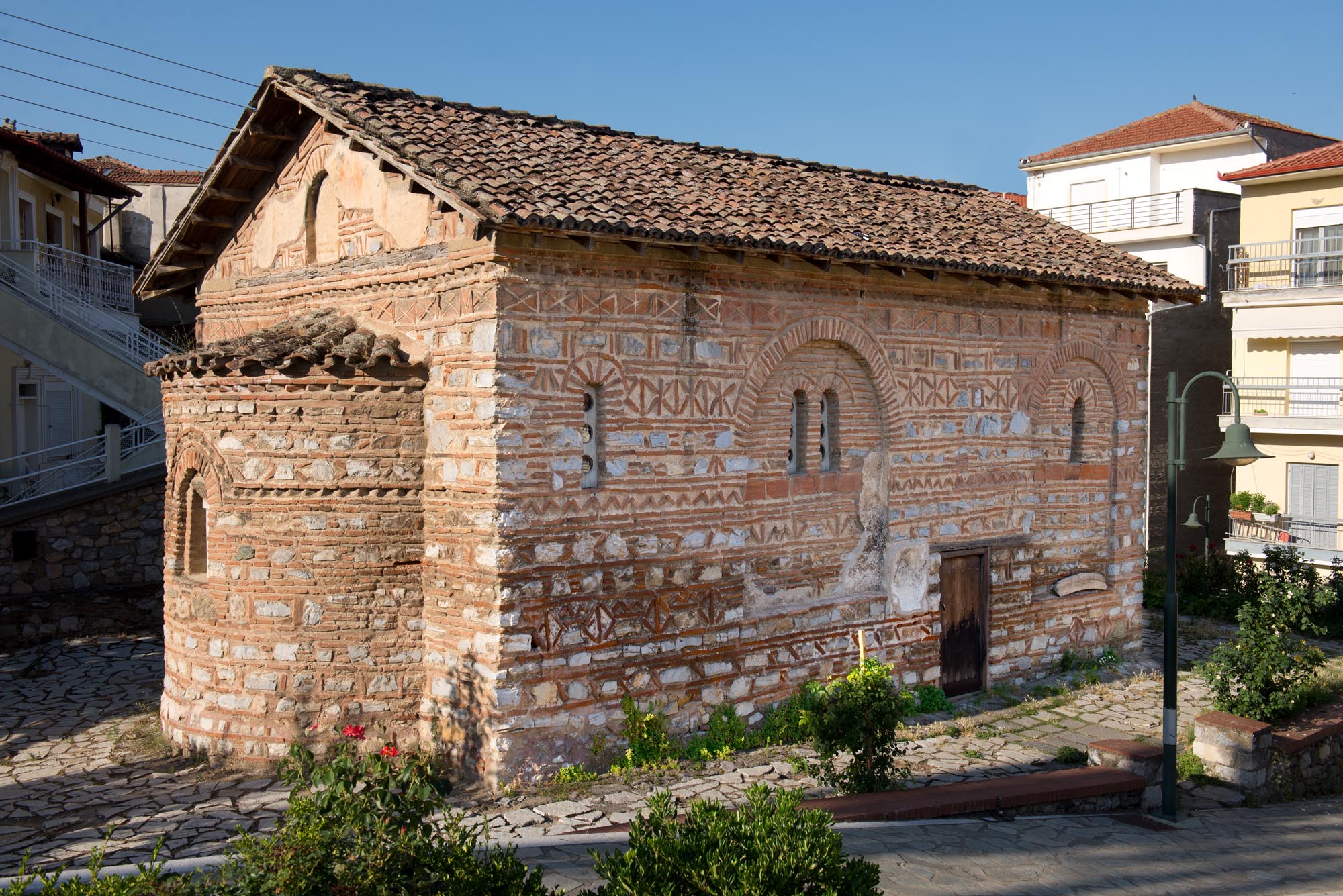
Most of the city churches are of the small single-nave or three-aisled basilica type, with the exception of the church of Panagia Koubelidike (meaning “domed”), which, as its name indicates, is a triconch church with a dome. Three of the oldest churches of the city (St Stephen, the Taxiarch of the Metropolis and the SS Anargyroi or Holy Unmercenaries) constitute a special category of monument, as they all belong to the same architectural type: a small three-aisled basilica with a narthex, with a distinctive raised central nave roofed with a barrel vault. The Byzantine churches of Kastoria stand out for their elaborate façades with abundant use of bricks, rich brickwork ornamentation and decorative blind arches. Combined with their characteristic two-tone façades of white stone blocks and red bricks, they feature the striking cloisonné masonry common in Western Macedonia. Another typical feature of the churches of Kastoria are the frescoes on their external façades. The churches of the post-Byzantine period, unlike the Byzantine ones, have plain external decoration.

Some of the most important churches of the city are presented below in chronological order.

Church of St Stephen

The church stands on a hill between the two traditional districts of Apozari and Dolcho, in the northeast of the city. It preserves interesting architectural features, such as a built synthronon in the conch of the sanctuary, which has led to the view that this was an episcopal church, a low built templon, and a gallery above the narthex, the only such gallery in Kastoria. Particularly important is the first layer of frescoes, which include an extensive scene of the Second Coming, the oldest in Greece, which is thought to be contemporary with the construction of the church (late 9th-early 10th c.). The second layer of frescoes (late 12th-early 13th c.) covers the vault of the nave, while the lower walls and the walls of the gallery are painted with a series of individual images, some of them dedicatory (13th-14th c.). 

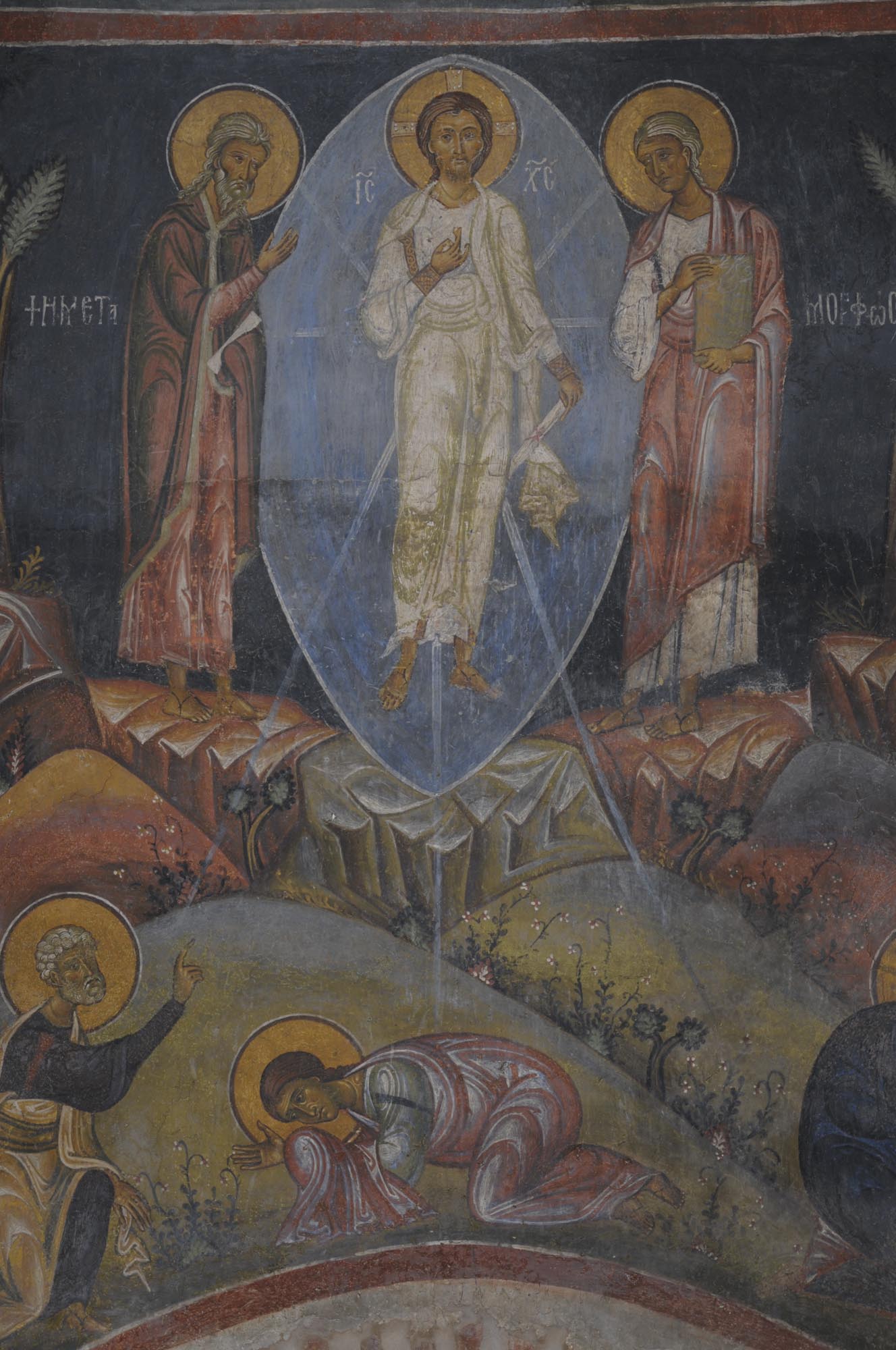
The church is located in the southeast of the city, near the modern Metropolitan Palace and the city cathedral, dedicated to three saints, which was rebuilt from the ground up in 1850-51. The church of the Taxiarch (the Archangel Michael) is believed to be roughly contemporary with that of St Stephen. The fragmentary first layer of frescoes inside the monument also dates from its construction. In the mid-13th century, the west front was painted with frescoes at the expense of the Bulgarian Tsar Michael II Asen (1246-1256), son of Ivan II Asen, who had conquered major cities of Macedonia in 1230. Michael is depicted with his wife Anna or his mother Irene, accompanied by a Greek supplicatory inscription. In 1359/60, “in the reign of Symeon Palaiologos and his son John”, according to the surviving inscription, which refers to the Serbian ruler, the brother of Stefan Dušan, in the same style that Byzantine emperors are recorded in inscriptions, hieromonk Daniel had the interior of the church painted with one of the most complete and remarkable sets of frescoes in Kastoria. Five portraits of deceased donors on the south exterior wall of the church are dated to the second quarter of the 15th century. They are valuable evidence of the society of the time, while also indicating, taken together with certain other elements such as the dedication of the church to the Archangel Michael, that this was a funerary church.

The church of the SS Anargyroi, the Holy Unmercenaries Cosmas and Damian, stands on a hill in the north of the city overlooking the Apozari district. It was built between the late 10th and early 11th centuries, based on the dating of its remarkable marble sculptural decoration and the first layer of frescoes, which are fragmentary, being covered by those of the second layer. The latter, among the most representative examples of late-12th-century art, represent the artistic trends of Constantinople and, according to the surviving scholarly inscriptions in the church, were created at the expense of the Theodore Lemniotes and Anna Radene, members of the local aristocracy, who are depicted with their son John in the north aisle. According to the prevailing view, two painters/workshops worked on the frescoes; the more skilled of the two is also responsible for the exceptional frescoes of the church of St George in Kurbinovo, North Macedonia (1191).

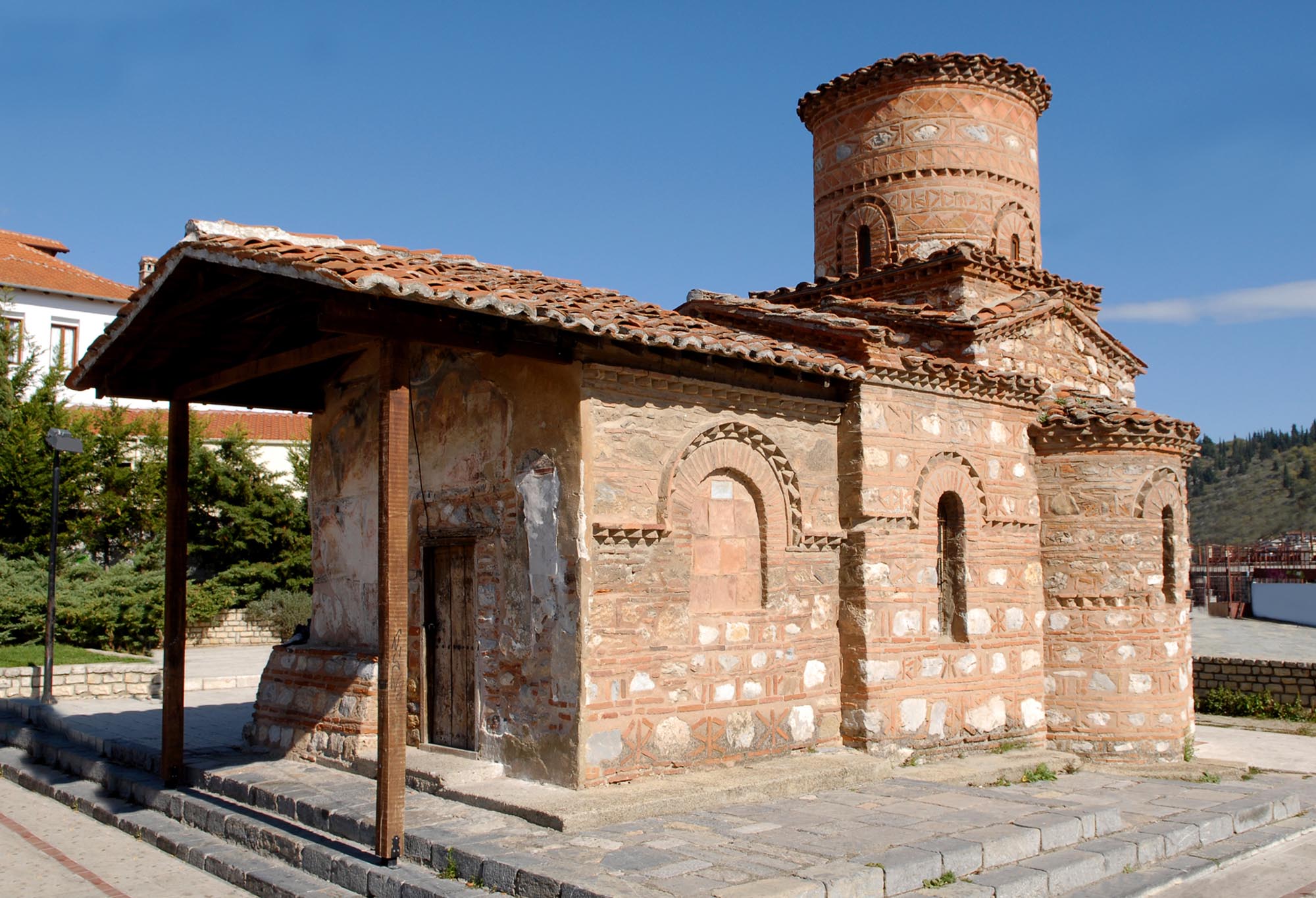
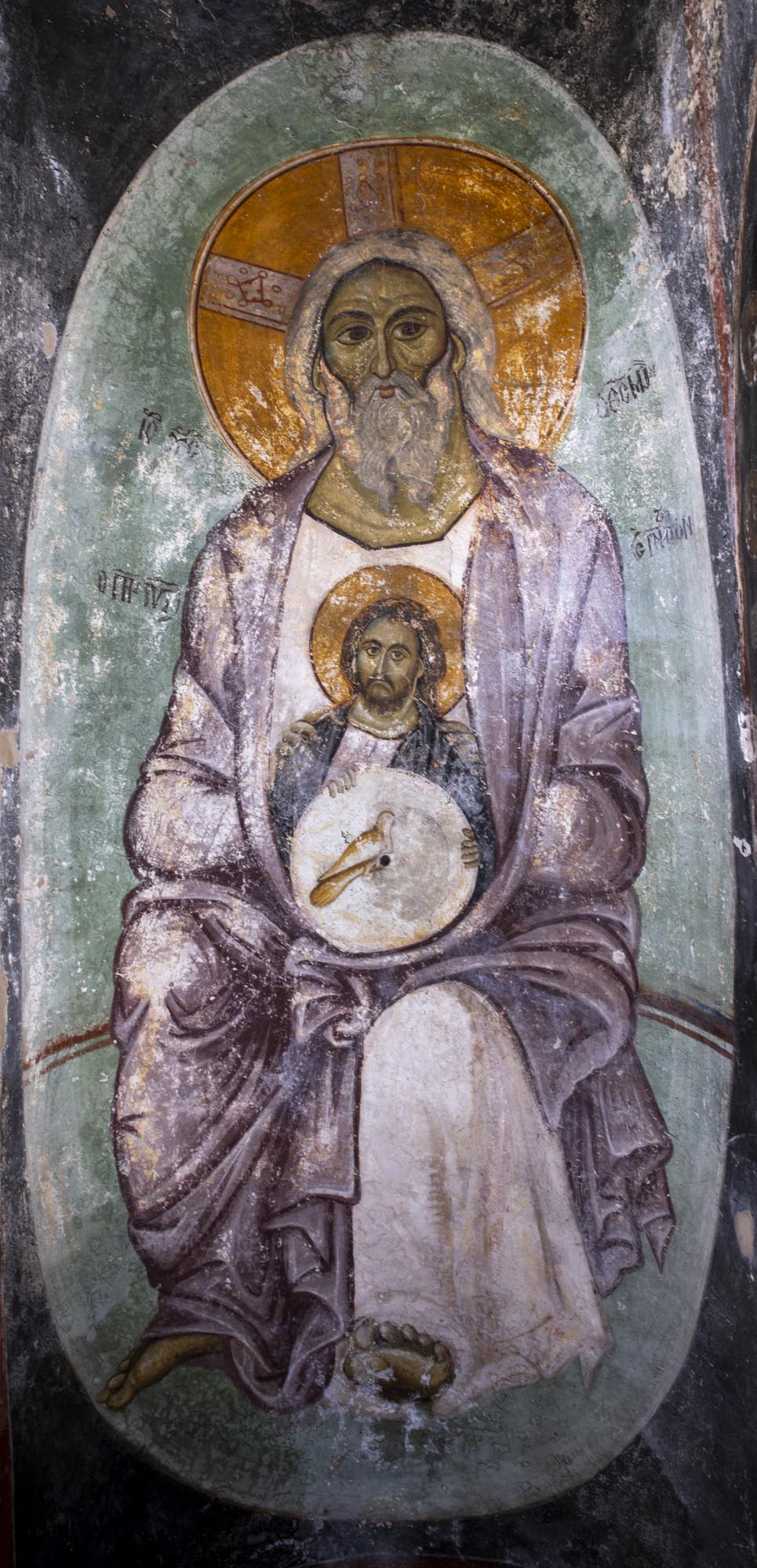
This is one of the churches within the castle, at the highest point of the city, in the part of the citadel close to the walls. It is one of the most characteristic Byzantine monuments of Kastoria, considered a city landmark. It is the only church in the city with a dome – koubelidike means “domed”. The high drum of the dome has rich decorative brickwork on the outside, comparable to similar examples in the Prespa region dated circa 1000 AD. The church has consequently been dated to the beginning of the 11th century, although it has also been placed between the middle of the 9th and the end of the 11th century. The monument contains frescoes dating from the mid-13th to the 18th century, with those of the first layer being particularly important and representative examples of Palaiologan art (c. 1260-1280). In 1495/6, according to an inscription, the donor Andronikos had the exonarthex added and decorated with external frescoes.

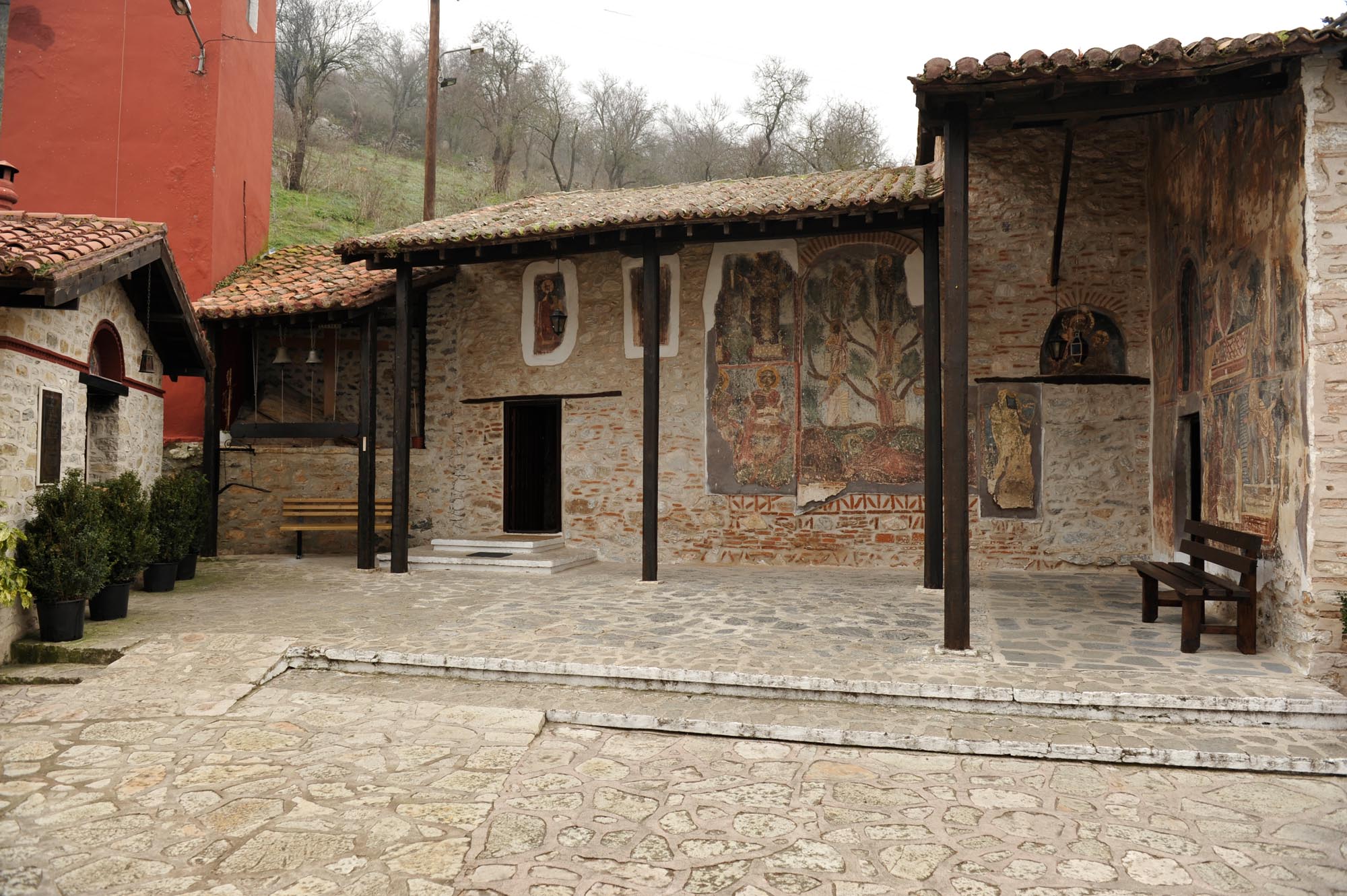
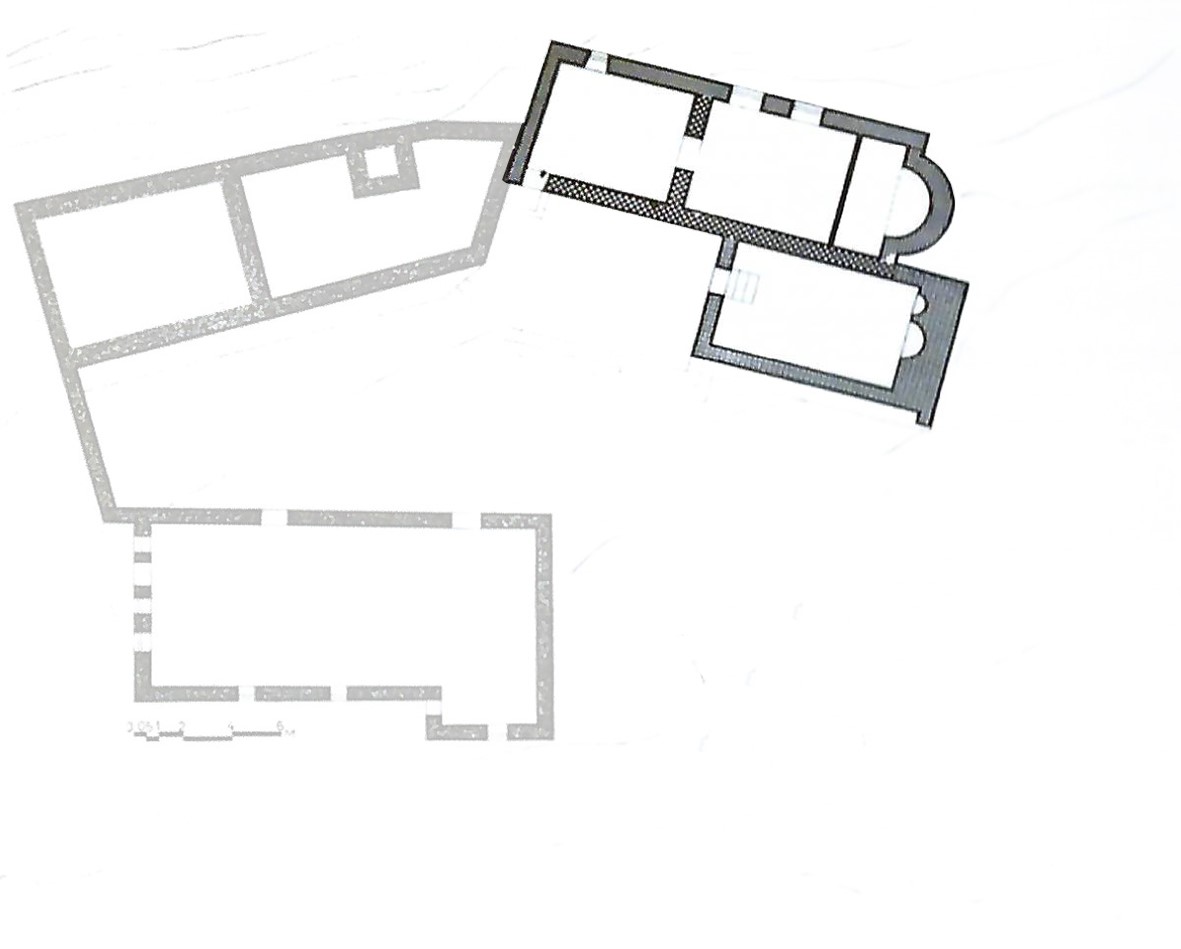
Of the once rich and famous monastery on the shore of the lake, about four kilometres southeast of Kastoria, some buildings of different periods, the church, the chapel of St John the Theologian, the hegoumeneion (abbot’s residence), some cells, a bell tower and a guesthouse survive today. Its date of foundation is unclear, placed between the 11th and the middle of the 12th century. It has also been claimed that the monastery was founded by Emperor Alexios I Komnenos (1081-1183), who expelled the Normans occupying Kastoria in 1083. It is believed that during the siege of the city, his forces, led by General George Palaiologos, landed at the monastery in boats in order to attack the enemy from the side of the lake.

The katholikon of the monastery, dedicated to the Dormition of the Virgin and altered today by various interventions, is a single-nave timber-roofed church with a later spacious lite (narthex) on the west side. Inside the church are preserved fragments of remarkable frescoes, most of which, although of uneven quality, are thought to belong to the same chronological phase in the early 13th century. A small part of the decoration is dated between 1259 and 1264, as are the frescoes on the exterior south wall, including the symbolic depiction of the Tree of Jesse and the figures of two emperors: Michael VIII Palaiologos (1259-1282), who recaptured the region in 1259, and what is probably Alexios I Komnenos. The exterior frescoes of the church are the only example in Greece – although similar ones survive on Byzantine monuments within the Serbian sphere of influence – of an iconographic programme using symbolism to serve the political aims of a ruler, namely Michael VIII, underlining his relationship with his predecessors, the Komnenoi, and legitimising his succession to the throne of the recently reclaimed Constantinople (1261).

The single-nave chapel of St John the Theologian was attached to the south side of the katholikon and painted with frescoes in 1552. Its rich decoration is signed by the painter Eustathios Iakovou, prothonotary of Arta, who a few years earlier (1536/7) had worked on the church of Panagia Molybdoskepasti in Epirus.

The small single-nave church, with a narthex on the west, is located in Omonoias Square in the southeast of the city. According to the prevailing view, the church was erected around 1170 at the expense of magister Nikephoros Kasnitzes who, according to the surviving scholarly dedicatory inscription, adorned the church with frescoes. He is depicted in the narthex with his wife Anna. The remarkable frescoes are related to the high-quality painted decoration of the church of St Panteleimon in Nerezi, North Macedonia (1164) and echo the art of Constantinople. In the narthex are scenes from the life of St Nicholas, the patron saint of sailors, whose cult became widespread in Kastoria due to the importance of the lake in the life of the city’s inhabitants.

The small single-nave timber-roofed church, with a later narthex to the west, stands at the southeast end of the city on the small peninsula “tou Stavrou” (of the Cross), near the church of the Taxiarch of the Metropolis. According to the surviving dedicatory inscription, it was erected and painted with frescoes in 1383/4 at the expense of hieromonk Dionysios and the brothers Teodor and Stoya Muzaka, scions of the Albanian family that controlled Kastoria for a brief period at the end of the 14th century, before the Ottoman conquest. The eschatological character of the iconographic programme of the church indicates that it was built as a private family chapel, in which the Muzaka brothers were to be buried. The high-quality frescoes are the mature work of a skilled painter with a theological education, who strongly influenced the monumental art both of Kastoria itself and of the regions within the sphere of influence of its workshops (Prespes, Southern Albania and Northern Epirus). The same artist also worked on the church of Panagia on the islet of Maligrad in the Great Prespa Lake (1368/9) and the church of Christ the Life-Giver in Borje, Korçë (1390).

Museums

Byzantine Museum (Dexamenis Square)

The museum collection consists of religious paintings (portable icons, templon doors and pieces of frescoes removed from buildings), which, taken together with the miniature artefacts, highlight the remarkable artistic flourishing of the city during the Byzantine and post-Byzantine periods.

The owners of the mansion, which was built around the middle of the 18th century, the brothers Ioannis and Panagiotis Emmanuel, were prominent figures of the city. They participated in the organisation of the Greek Revolution of 1821 and worked with Rigas Feraios, alongside whom they were executed by the Ottomans in Belgrade in 1798. The museum presents a rich collection of traditional costumes of Kastoria and the wider region.

The mansion of the Aivazis family dates from the late 18th or early 19th century and stands out for its rich interior decoration. The rich museum exhibits present various aspects of the daily life of a noble family of Kastoria. In the summer living room (oda) on the mezzanine is a reconstructed furrier’s workshop.


The museum is housed in a traditional 19th-century mansion in the same district. It was donated by Anastasios Delinanos and his wife Zoe Doikou to the Progressive Ladies’ Association of Kastoria. It includes a rich collection of women’s clothing and numerous exhibits (household items, embroideries, textiles, photographs, etc.), highlighting the traditional way of life of the inhabitants of Kastoria.

The museum is dedicated to the history of Macedonian Hellenism in the region of Kastoria and is housed in the traditional 18th-century mansion of the teacher Anastasios Picheon (1836-1913). Picheon played a leading role in the 1878 uprising that broke out in Western Macedonia following the signing of the Treaty of San Stefano and the creation of Greater Bulgaria.

Located approximately 10 km south of Kastoria, the museum hosts important finds from the entire territory of the present-day Regional Unit of Kastoria, which in ancient times belonged to the territory of Orestis, one of the kingdoms of Upper Macedonia. The name of Argos Orestiko (former Chroupista) is due to the ancient city of the same name, where the seat of the League of Orestis was located. The ancient city, according to the prevailing view, is located at the location of Paravela, a short distance northwest of Argos Orestiko, where excavations have brought to light the remains of an important Late Roman public building an Early Christian three-aisled basilica.

Other stops in the Regional Unit of Kastoria

error: