REGIONAL UNIT OF DRAMA: TRADITION AND CONTEMPORARY CULTURE

Cultural events in the city of Drama

Numerous events in the city’s museums, exhibition spaces, the Conservatory, cinemas and the Municipal Garden highlight local culture and contemporary artforms.
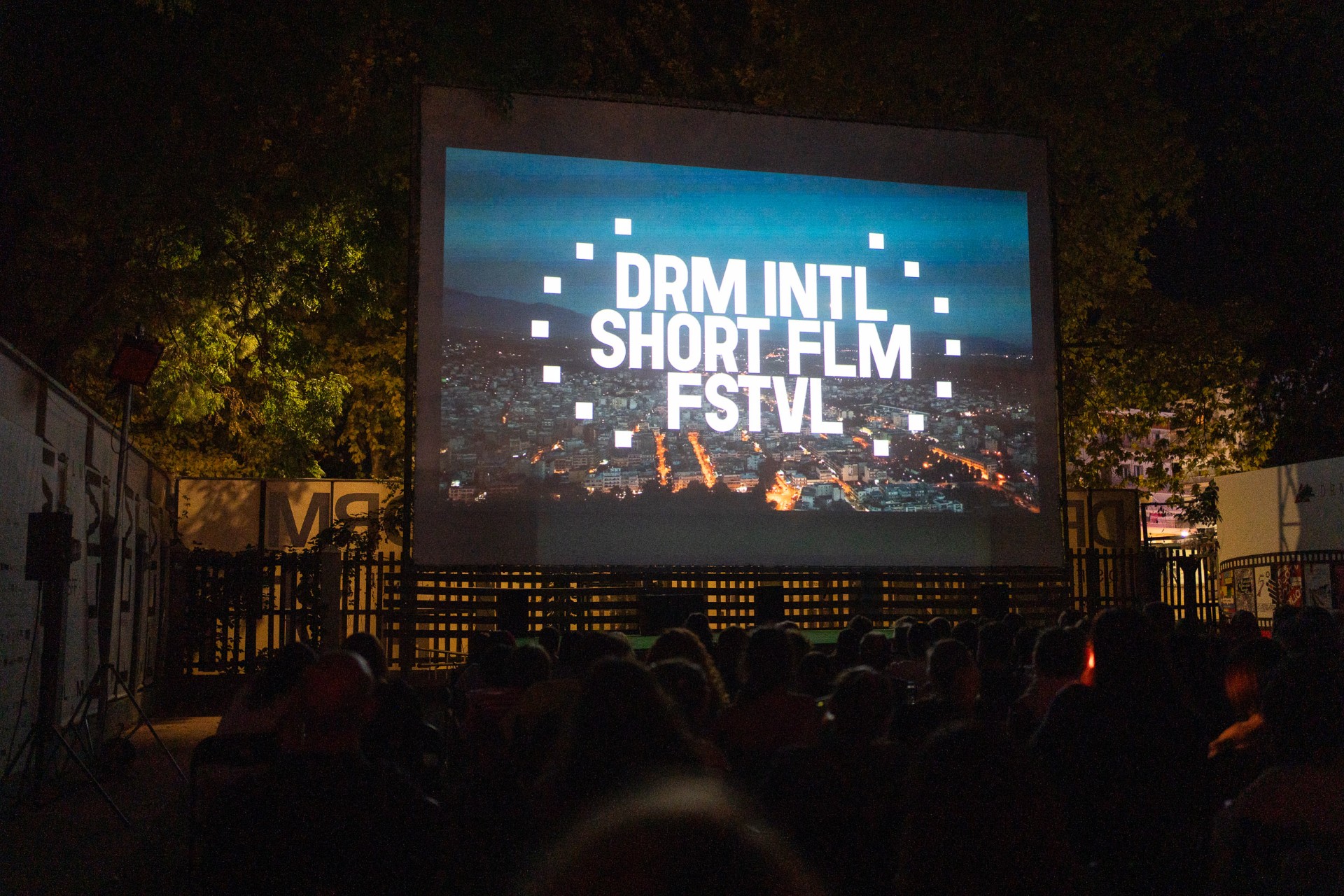
Δράμα, «Φεστιβάλ Ταινιών Μικρού Μήκους»/ Drama, International Short Film Festival, photo: www.dramafilmfestival.gr

The Drama International Short Film Festival, one of the most important of its kind in Europe, is held at the beginning of September. It started in 1978 with Greek films, later becoming a reference point for the cinematic art. It includes the Greek and International Competition sections as well as other parallel events.

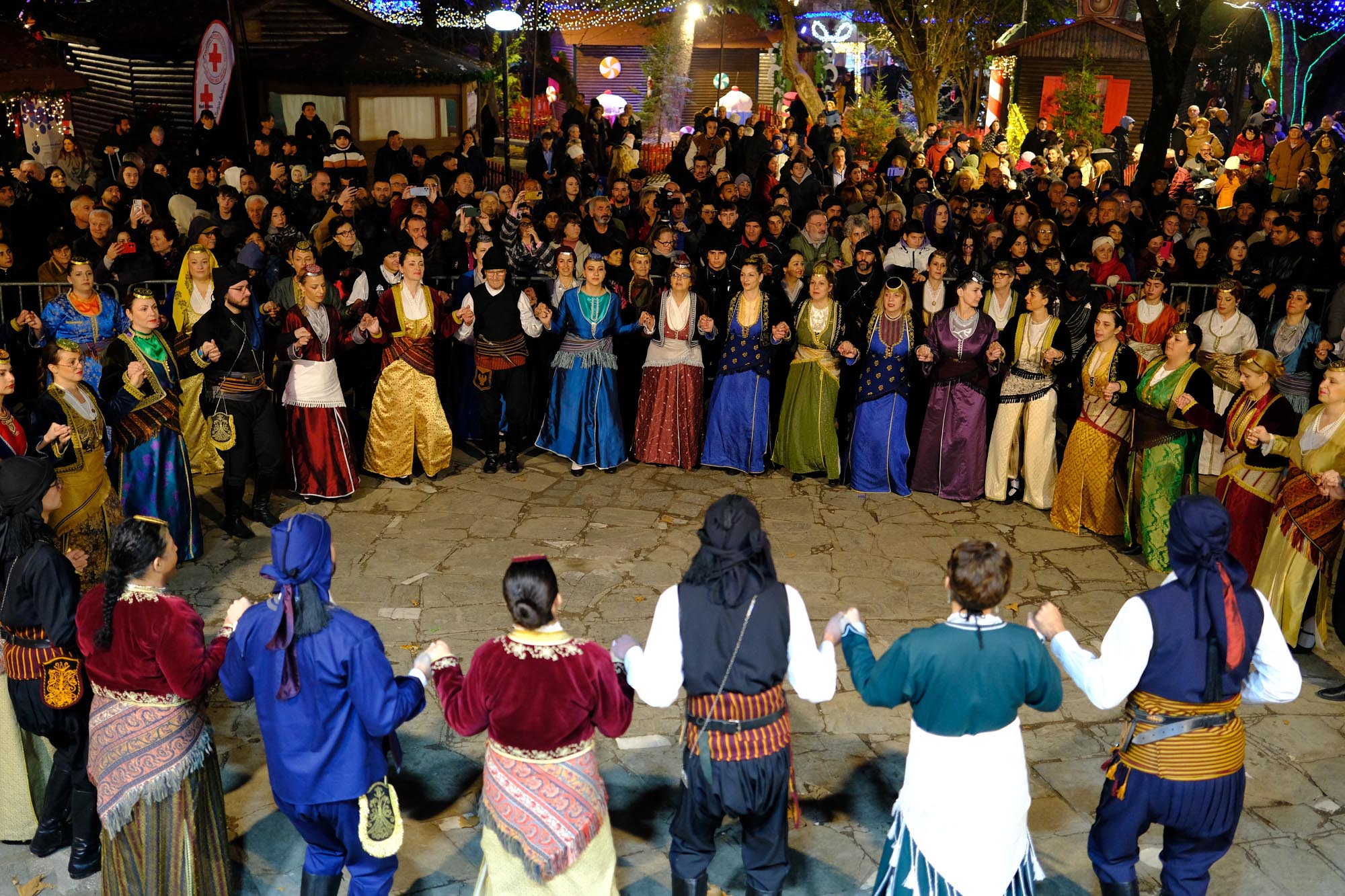
On 3 December, after the litany (procession of the icon) on the eve of the feast of St Barbara, the patron saint of Drama, a great customary celebration begins. The children of the city float illuminated wishing boats with their names on them in the waters of St Barbara’s springs. In the past, unmarried girls would go to the lake in groups and light candles, praying to the saint to grant them health and good fortune. On the same day, housewives prepare the sweet soup called Varvara, made from wheat, sesame, raisins, walnuts and sugar, a symbol of fruitfulness and prosperity.

Δράμα, χριστουγεννιάτικες εκδηλώσεις στον Δημοτικό Κήπο, φωτ. Δήμος Δράμας/ Drama, Christmas events at the Municipal Park, photo: Municipality of Drama

In May, the Dramoinognosia, a festival with concerts and artistic events, celebrates wine and the viticultural tradition of the region. In July, there are events over several days commemorating the incorporation of the city into the Greek State in 1913.

At the end of July and the beginning of August, the Local Youth Council of the Municipality of Drama organises the Dramaica Youth Festival, a music festival with bands from all over Greece.

Performances in the wider region

The mountain villages of Drama are the cradle of folk events in the wider Balkan region, with ancient Greek/Dionysiac origins but incorporated into the Christian tradition. Troupes of men in disguise with bells around their waists, performing satirical rituals and ceremonial dances, accompanied by bagpipes, tambourine and lyre, engage in mystical rites.

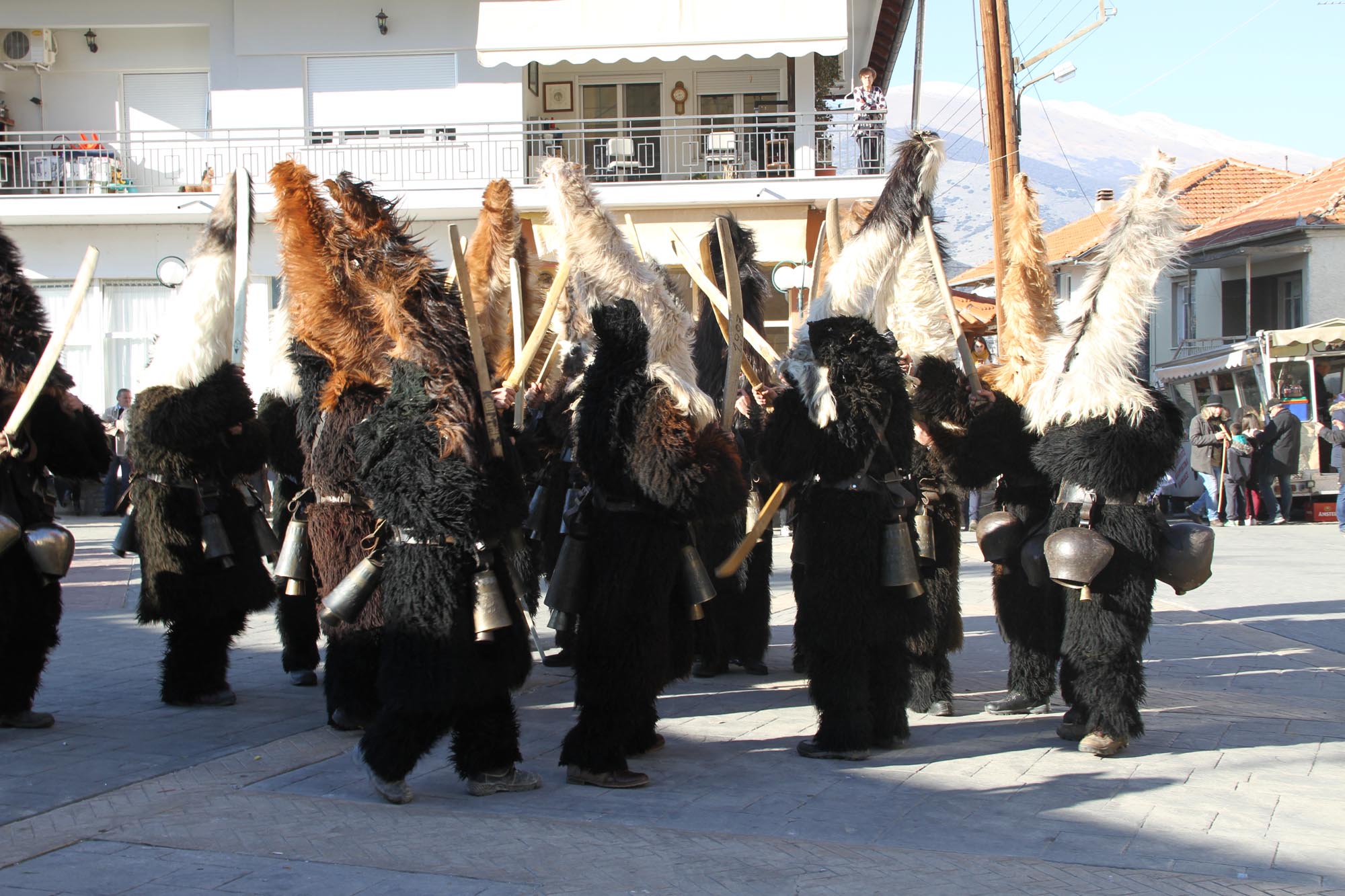
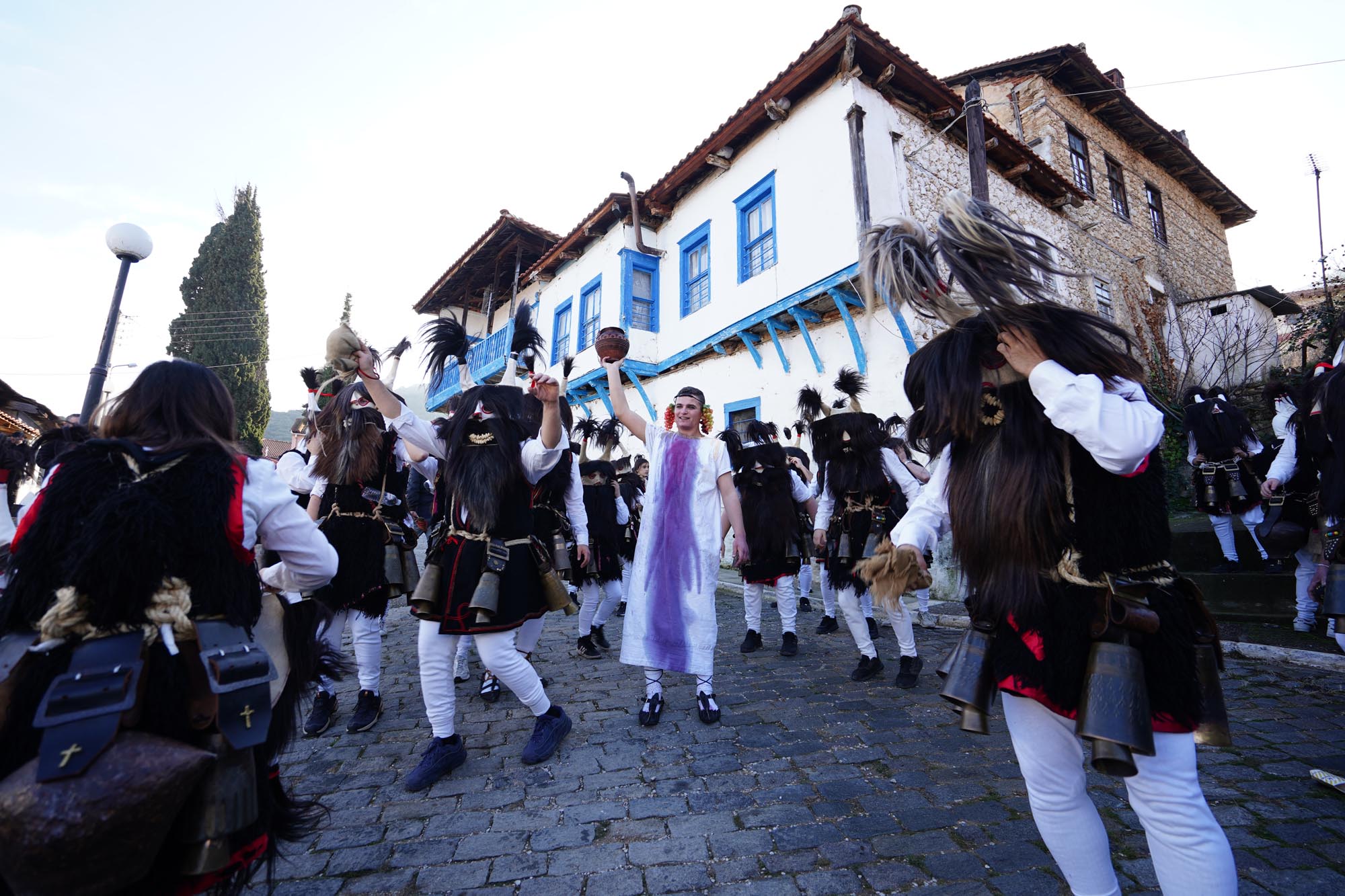
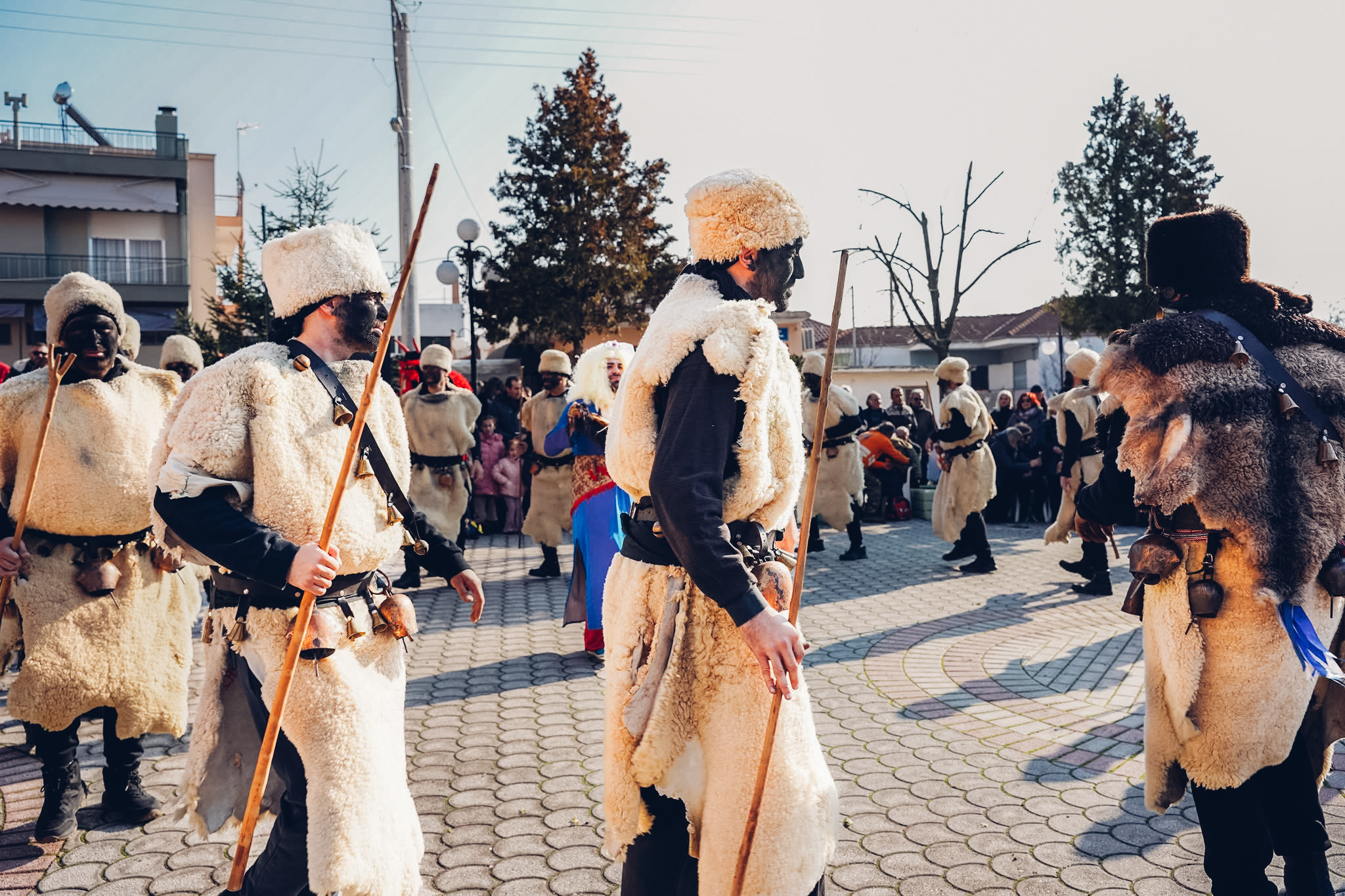
In Monastiraki, on Epiphany (6 January), the Arapides (“black men”, from the Turkish arap), a troupe of men in black capes and tall, pointed goatskin masks, with bells around their waists and wooden swords in their hands, accompanied by the Pappoudes (old men), the Giliges (brides) and the Tsoliades (Evzones), roam the streets, dancing to the music of three-stringed, pear-shaped Macedonian lyres and tambourines. In Kali Vryssi, after the consecration of the waters, the masked Babougera sing and dance in striking beast-like costumes with bells around their waists. On 8 January, a re-enactment of a satirical wedding takes place. Due to their importance, the Arapides of Monastiraki and the Babougera of Kali Vryssi have been inscribed on the National Inventory of Intangible Cultural Heritage.

Μοναστηράκι, Αράπηδες, φωτ. Δίκτυο Άυλης Πολιτιστικής Κληρονομιάς Δράμας κατά παραχώρηση του Μορφωτικού και Πολιτιστικού Συλλόγου Μοναστηρακίου/ Monastiraki, Arapides, photo: Network for Intangible Cultural Heritage of the Drama Region, courtesy of the Cultural and Educational Association of Monastiraki
Καλή Βρύση, Μπαμπούγερα, φωτ. Δίκτυο Άυλης Πολιτιστικής Κληρονομιάς Δράμας κατά παραχώρηση του Πολιτιστικού Συλλόγου Καλής Βρύσης/ Kali Vrysi, Babougera, photo: Network for Intangible Cultural Heritage of the Drama Region, courtesy of the Cultural Association of Kali Vrisi

In Pyrgos, Pagoneri, Xiropotamos, Petrousa and Volakas, the villagers also organise the satirical wedding, the goat-like disguises, the traditional feast with lyres and tambourines, to ward off evil and wish everyone a happy new year. In Volakas, the custom of the Bara is observed at Epiphany. The newlyweds of the past year are thrown in the village fountain for good health and fertility.

In the early 20th century, many refugees from Pontus on the southern coast of the Black Sea, Eastern Thrace and Cappadocia settled in the region of Drama. Despite the difficulties they faced on arriving, the refugees boosted the economy by cultivating the land and engaging in the crafts they brought from their homelands. The customs of the refugees enriched the popular culture of the region.

Καλλίφυτος, Μωμόγεροι, φωτ. Δίκτυο Άυλης Πολιτιστικής Κληρονομιάς Δράμας κατά παραχώρηση του Πολιτιστικού Μορφωτικού Συλλόγου Καλλιφύτου/ Kalliphytos, Momogeroi, photo: Network for Intangible Cultural Heritage of the Drama Region, courtesy of the Cultural and Educational Association of Kalliphytos

In Kalambaki, local culture is traced in the stories, music, dances, songs, customs and food of the refugees from Eastern Thrace, Kalfa in Constantinople, and Asia Minor. An important expression of the collective memory of the refugees from Kryonero in Eastern Thrace are the Kalanda, among the loveliest Greek carols, rich in tunes and lyrics. They are sung antiphonally from Christmas Eve to the dawn of Christmas morning by groups of young bachelors. The carols are accompanied by praise for the host and his family, the Afentis (Master), the Palikaros (Young Man), the Perdikoula (Young Woman) and the Korasio (Girl).

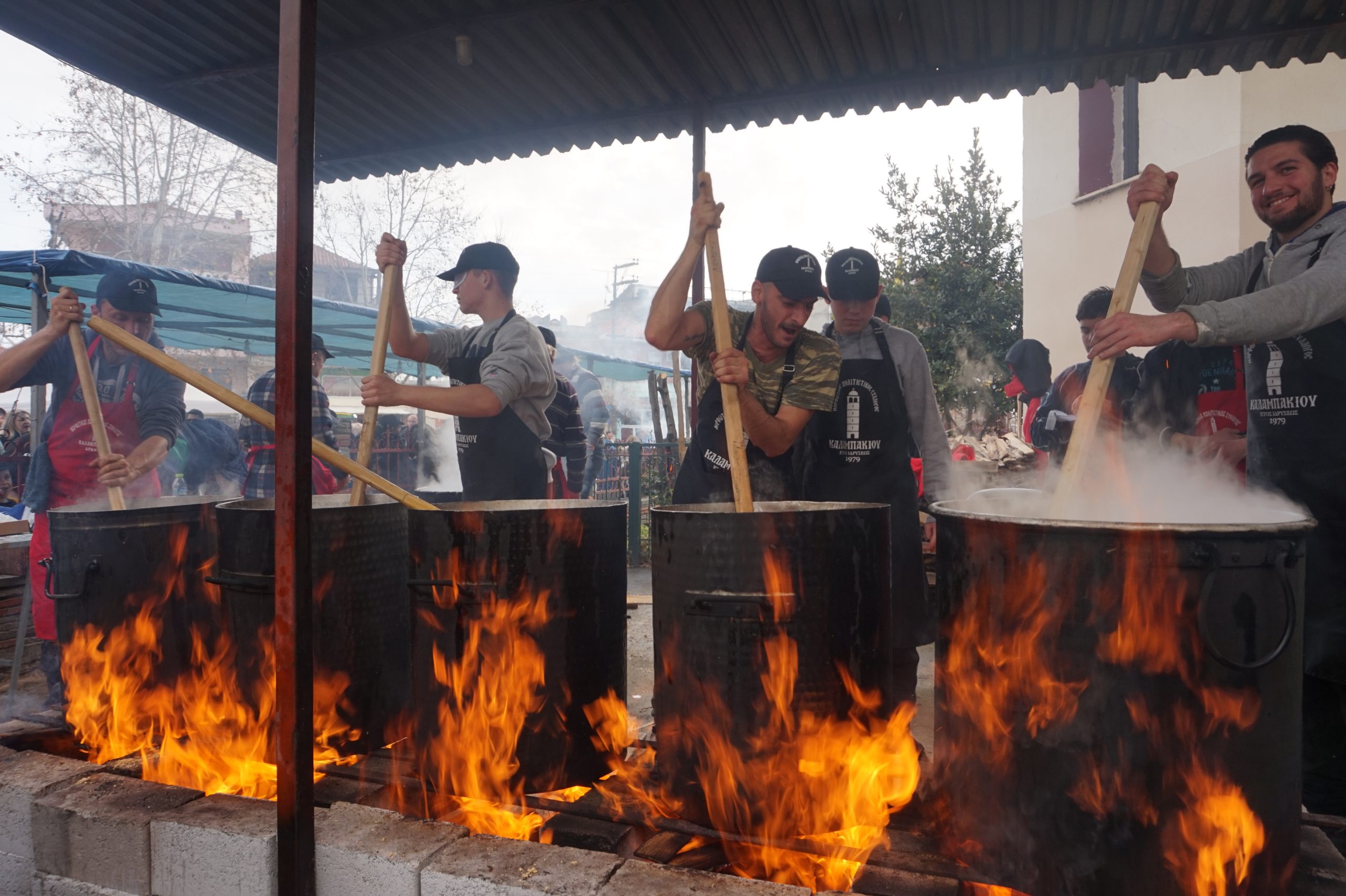
Another custom of Kalambaki originating in Eastern Thrace is the kourbani, an animal sacrifice in honour of St Athanasios, on the eve and day of his feast (18 January). This involves the collective preparation and consumption of beef boiled with bulgur wheat. Like the other customs of the village, it is an important expression of collective memory and community spirit.

Κουρμπάνι Αγίου Αθανασίου, φωτ. Δίκτυο Άυλης Πολιτιστικής Κληρονομιάς Δράμας κατά παραχώρηση του Μορφωτικού Συλλόγου Καλαμπακίου/ Kourbani of St Athanasius, photo: Network for Intangible Cultural Heritage of the Drama Region, courtesy of the Cultural Association of Kalambaki
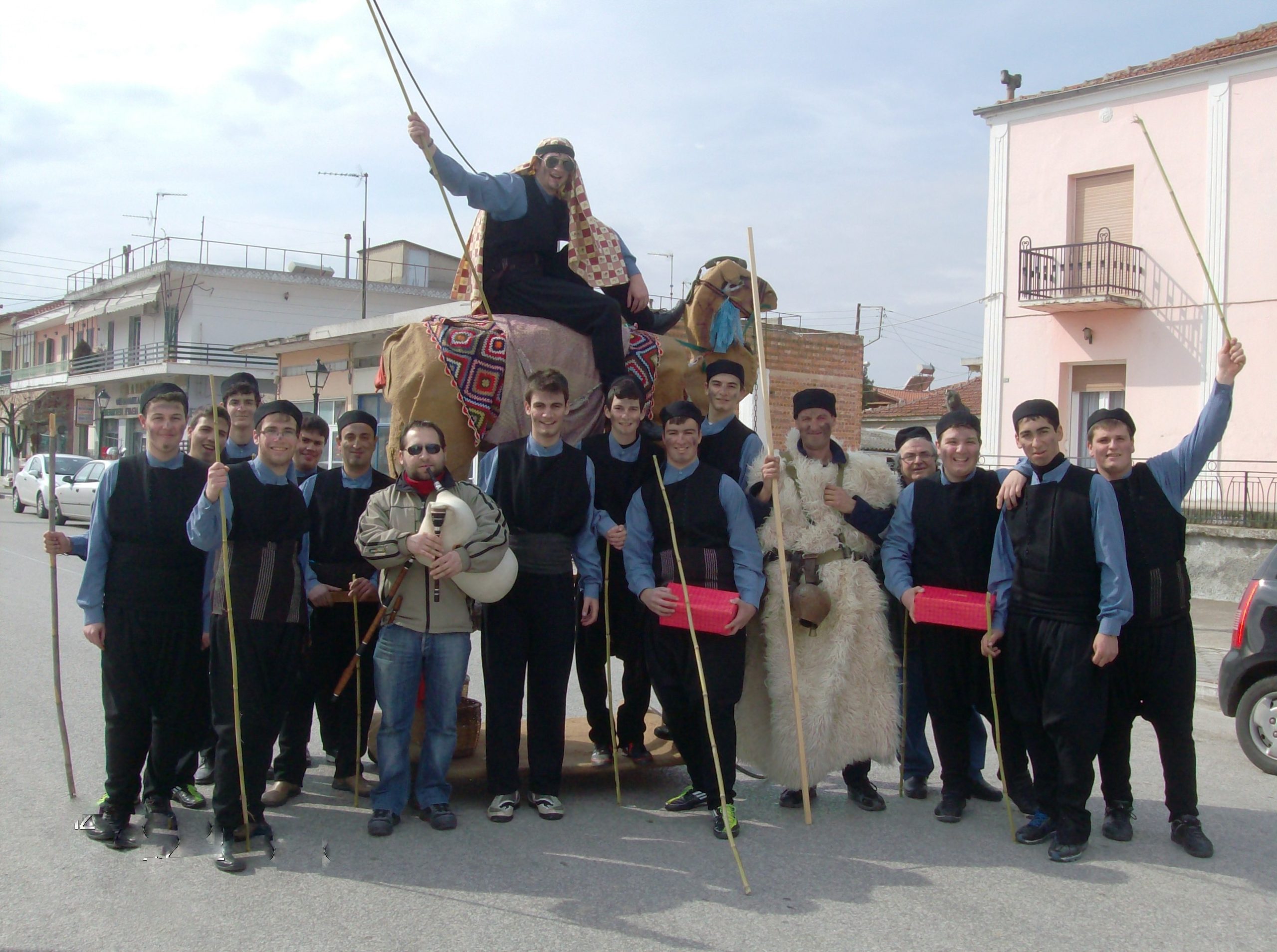
Καλογεροδευτέρα, Διεύθυνση Νεότερης Πολιτιστικής Κληρονομιάς κατά παραχώρηση του Μορφωτικού Συλλόγου Καλαμπακίου, φωτ. Ν. Παπακώστας/ The custom of Kalogeros on the third Monday of Apokries (Kalogerodeftera), Directorate of Modern Cultural and Intangible Cultural Heritage, courtesy of the Cultural Association of Kalambaki, phot. N. Papakostas

One of the most important rural customs performed by Thracian refugees in Kalambaki on the third Monday of Apokries (Carnival Season) is the Kalogeros (Good Old Man). The two protagonists, the Kalogeros and the Κing, together with the village youths, roam the streets with jokes and banter to the sound of bagpipes, lyre and daouli drum. In the afternoon, before the feast, they perform a symbolic sowing and ploughing ritual in the village square, intended to ensure the fertility and fruitfulness of the soil. All the above customs of Kalambaki have been inscribed on the National Inventory of Intangible Cultural Heritage.

Traditional and modern sporting institutions with deep roots

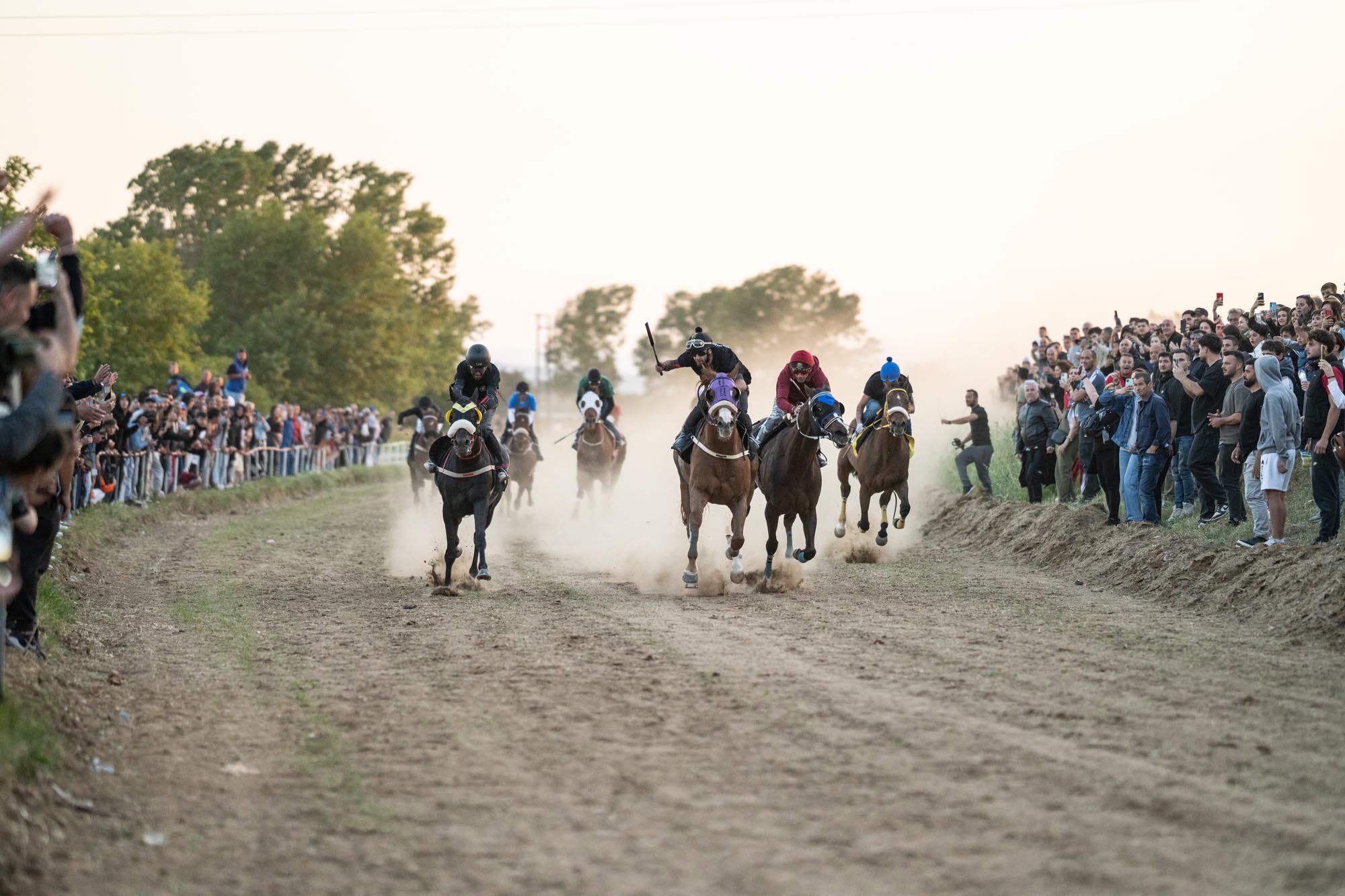
One of the most important cultural events of Drama is the Doxato Races and the customary horse parade on the feast-day of the city’s patron saint, St Athanasios (2 May). The event highlights the inhabitants’ love of horses through the ages. One of the most popular folk customs in Macedonia, it has been inscribed on the National Inventory of Intangible Cultural Heritage.

The annual regional Via Egnatia Festival is a modern sporting institution following the course of the ancient Via Egnatia. It includes a 10-kilometre run and other cultural activities.

Δοξάτο, Ιπποδρομίες, φωτ. Δίκτυο Άυλης Πολιτιστικής Κληρονομιάς Δράμας κατά παραχώρηση του Ιππικού Συλλόγου Δοξάτου, Δημοτικής Κοινότητας Δοξάτου/ Doxato, horse races, photo: Network for Intangible Cultural Heritage of the Drama Region, courtesy of the Equestrian Club of Doxato, Municipal Community of Doxato

Other stops in the Regional Unit of Drama

error: